
Erika Robuck's Blog, page 17
June 19, 2013
Historical Novelist Guest Post: Jolina Petersheim

I’ve had the pleasure to get to “know” Jolina Petersheim, author of the soon to be released novel THE OUTCAST, on social media, and she is a delight. She is also a gifted and passionate writer whose heart shines forth in every blog post and piece she publishes. It is because of this and because I am fascinated by a Scarlet Letter themed novel set in an Old Order Mennonite community, that I can’t wait to read her debut.

Jolina is here today to discuss her process of choosing names for her characters. She holds degrees in English and communication arts from the University of the Cumberlands. Though The Outcast is her first novel, her writing has been featured in venues as varied as radio programs, nonfiction books, and numerous online and print publications. Her website is syndicated with The Tennessean’s “On Nashville” blog roll, as well as featured on other creative writing sites. Jolina and her husband share the same unique Amish and Mennonite heritage that originated in Lancaster County, Pennsylvania, but now live in the mountains of Tennessee with their young daughter.
* * *
“I was born in an old log house. It contained eight rooms: four up and four down, with chimneys at both ends. There was a spring in the cellar which was used to cool butter, milk, and other perishables. It sat very cozily in a little valley almost all its own.”
~ Leah Miller Erb, circa 1932, recalling her early life in The David and Anna Miller Story
Thirty-four years ago, my parents discovered their family names in the same ancestral record book, The David and Anna Miller Story, making them think that they were related. They were engaged at this point, and briefly contemplated calling off the wedding until they read further in the book, which revealed that my mother’s Miller side had worked for my father’s Miller side. This was the only reason both Miller families were included in the same book.
Now, all these years later, I am using this same ancestral record to track down names that correspond with an Old Order Mennonite heritage and therefore fit within the Amish fiction genre, like my flawed heroine Rachel’s last name “Stoltzfus” in my debut novel, The Outcast. Here are a few more names that stood out on The David and Anna Miller Story’s branches of family trees: Christian Longencker, Amos Zimmerman, Jacob Brubaker, Ann Kauffman, Abraham Miller, Elizabeth Erb, Leah Nissley, Fanny Metzger.
Though based in Nashville, my literary agent, Wes Yoder, was raised Amish on a farm in Lancaster, Pennsylvania. He even attended my father’s Mennonite high school. Because of this heritage, he’s been able to help me understand the correct spelling of Pennsylvania Dutch names (similar to those above) that slip past my untrained eye.
Before we submitted The Outcast to publishing houses, Wes told me that the second narrator’s name, Benedict King, would not work. The Anabaptists (Amish, Hutterites, and Mennonites) had suffered persecution from the Catholics, so the odds were that no Anabaptist mother would name her child after a pope. My husband’s ex-Amish grandfather, Amos Stoltzfus, was the inspiration for my second narrator’s deceased perspective, so it seemed fitting that I would change the name from Benedict to Amos King, to honor Amos Stoltzfus’s memory.
Wes also informed me that the last name “Kauffman” is always spelled with two “f’s” (I had only used one), and that dried apple rings were actually spelled “schnitz” and not “snits.” Once these minor changes were fixed, and Tyndale House accepted the manuscript for publication, the editor pointed out that the use of Pennsylvania Dutch (a dialect of English influenced by Pennsylvania German) slacked off once Rachel left the Copper Creek Community.
To rectify this, I found a wonderful website that provided a table of Pennsylvania Dutch nouns. I learned a lot as I replaced Englisch nouns with Pennsylania Dutch: a basin became a weschbohl; stove became kochoffe; flowers became blummen. Pennsylvania Dutch is not recorded, so it is a rather difficult language to learn and speak. Even the person who composed the researched list admitted that he was not sure every word was spelled correctly. But the copyeditors at Tyndale double-checked every noun, trying to find the right spelling by comparing each word with the German language.
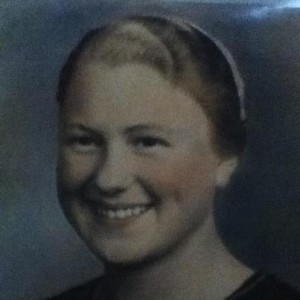
Fifteen years ago, if you would have told me one day I would be learning Pennsylvania Dutch nouns and pouring over names in The David and Anna Miller Story, I would have never believed you. However, here I am: thumbing through the same pages my parents once read, culling names from my ancestral family trees, and admiring the black-and-white images of my relatives who passed away long before my own birth. Once my daughter’s older, I hope she holds our Plain heritage close, so that it will be preserved for generations to come.
“Behold the work of the old
Let your heritage not be lost
But beneath it as a memory, treasure and blessing
Gather the lost and the hidden and preserve it for thy children.”
~excerpt from The David and Anna Miller Story
Website: http://www.jolinapetersheim.com
Facebook: https://www.facebook.com/#!/jolinapetersheimauthor?fref=ts
Twitter: https://twitter.com/Jolina_Joy
GoodReads: http://www.goodreads.com/author/show/6803052.Jolina_Petersheim
“Petersheim makes an outstanding debut with this fresh and inspirational retelling of Nathaniel Hawthorne’s The Scarlet Letter. Well-drawn characters and good, old-fashioned storytelling combine in an excellent choice for Nancy Mehl’s readers.” Starred review (Library Journal)


June 18, 2013
The Ugly. Keeping it real. (BAD reviews.)

I’ve just returned from a multi-city book tour. There were happy meetings and reunions, great Q&A sessions, bookstores converted to speakeasies, and at the last stop, a basket of champagne and strawberries from my publisher. I enjoy posting photos from readings and cities I visit to support those who support me–the towns, the bookstores, the reviewers, and the people–but I always hesitate before hitting “upload” because there are quite a few writers out there still trying to find an agent, facing rejection, and unable to get a publisher. This is the exact arrested state of publishing misery in which I resided for nearly a decade, and while I was happy for others and their success, on bad days, seeing it felt like lemon juice in a paper cut.
So, to counterbalance all of the “happy-happy”, and to illustrate that publishing is not all speakeasies and chocolate covered strawberries, I’m going to post excerpts from some of the negative reviews I’ve gotten along the way. These statements are what I think of every single day when I sit down to write. They reinforce the demon in my head that tells me I’m not worthy. They haunt me with every revision, every book proposal, and every public or private sharing of my work.
Hemingway said that if you believe the good reviews, you have to believe the bad. He also ripped off his shirt at a fancy dinner and punched a critic who called his overt masculinity a mask, hiding his true nature. I don’t advocate punching critics, but I won’t say that I haven’t fantasized about it.
In a sick way, I do think it is just as important to have negative feedback as it is to have the wonderful reviews that so many of you have given. I treasure the positive, and they are the sweet balm I need after what you’re about to see, but we need to be reminded that published art is for the public and doesn’t totally belong to us once we send it into the world.
After reading this, I don’t want any of you to comment with, “No, no, you’re work is lovely!” If you have the cajones to share some of your own bad reviews, do it. If you have a favorite bad review of mine, mention it. If you’d like to silently read and shake your head, go for it. Just remember at whatever stage of the publishing process you reside, it is always, always hard. Every day you have a handful of good and a handful of bad. It is an emotional roller coaster at every stretch, so make sure you fasten your big-girl pants for the ride.
Without further ado…
Hemingway’s Girl:
“[E]ven the dramatic arrival to the Florida Keys of a horrific fact-based 1935 hurricane can’t save Erika Robuck’s clichéd plot and soggy prose. Time to let poor Papa rest in peace.”
“In “Hemingway’s Girl”, the story is predictable and not very entertaining; even Hemingway ‘s character fails. It’s a quick read and asks little of its readers. Hemingway would hate it.”
“[I]t was nauseatingly lovey and cheesy at times, and not compelling to read.”
“Grooooooaaaan. Chick lit dressed up as historical fiction.” (**This is my favorite. I want it made into a sign to hang in my office.)
Call Me Zelda:
“It was for me a mistake to read Erika Robuck’s CALL ME ZELDA after having read [THE OTHER ZELDA NOVEL].”
“This is not a serious treatment of mental illness or of the tragedy of Zelda Fitzgerald. It’s cozy wish-fulfillment, the ultimate expression of Robuck’s desire to fix her subject.”
“[T]his book was just Dull, capital-D dull. Maybe two capitals: DDull.”
“CALL ME ZELDA is the sort of novel that is enjoyed by ladies who want a somewhat romantic story to pass the time while enjoying a good cup of coffee.”
Now, if you’ll excuse me, I need a good cup of coffee…with something strong in it.
Ouch.


June 14, 2013
Book Review: LOOKING FOR ME
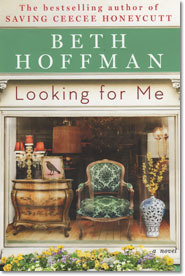
“…[T]onight, as I gazed into the dense woods, I took in a slow breath and gratefully accepted whatever offering might come my way. I thought about that old saying, how we can never go home again. But I think it’s more like a piece of us stays behind when we leave–a piece we can never reclaim, one that awaits our next visit and demands that we remember.” Beth Hoffman, LOOKING FOR ME
From the Publisher:
“Teddi Overman found her life’s passion for furniture in a broken-down chair left on the side of the road in rural Kentucky. She learns to turn other people’s castoffs into beautifully restored antiques, and eventually finds a way to open her own shop in Charleston. There, Teddi builds a life for herself as unexpected and quirky as the customers who visit her shop. Though Teddi is surrounded by remarkable friends and finds love in the most surprising way, nothing can alleviate the haunting uncertainty she’s felt in the years since her brother Josh’s mysterious disappearance. When signs emerge that Josh might still be alive, Teddi is drawn home to Kentucky. It’s a journey that could help her come to terms with her shattered family—and to find herself at last. But first she must decide what to let go of and what to keep.
Looking for Me brilliantly melds together themes of family, hope, loss, and a mature once-in-a-lifetime kind of love. The result is a tremendously moving story that is destined to make bestselling author Beth Hoffman a novelist to whom readers will return again and again.”
My Recommendation:
When I read Beth Hoffman’s SAVING CEECEE HONEYCUTT in 2010, I fell in love with her vivid prose, engaging southern style, and memorable characters, so I couldn’t wait to read her new novel LOOKING FOR ME. I was every bit as charmed and touched by this book, and I will forever be a fan of Hoffman.
LOOKING FOR ME is a layered novel. Multiple time periods and story lines keep the reader turning pages, but it is its themes of nature and family, past and present, and restoration that make the book resonate so deeply. From a battered old chest, to the forgotten elderly, to abused animals, Hoffman invites the reader to look deeply in places from which we sometimes turn away to see their true value and worth. Through tender care of others, Hoffman’s characters touch our hearts and invest us in their struggles and triumphs. After reading LOOKING FOR ME, there is a lot in the world that I will never look at the in the same way.
If you enjoy heartwarming and realistic family stories that span decades, I highly recommend LOOKING FOR ME. For more on Beth Hoffman, visit her website: http://bethhoffman.net/books


June 10, 2013
Review: THE CHAPERONE
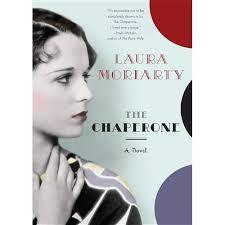
“Louise leaned against her window. Her cheeks were flushed, her eyes bright. No matter how she shifted in the window’s light, it seemed to love her face, its angles and its softness, her pale skin framed by the black hair. Cora stared at her grimly. Louise could afford to laugh. She was the beautiful daughter of indulging parents. She believed she was above everyone. Rules didn’t apply to her.” Laura Moriarty, THE CHAPERONE
THE CHAPERONE by Laura Moriarty was issued in paperback by Riverhead/Penguin. I reviewed it when it debuted in hardcover, but I loved it so much I wanted to re-post the review, and encourage fans of historical fiction to read it if you have not already done so.
The book begins in the summer of 1922, when the respectable, thirty-six-year-old Cora Carlisle takes a position as a chaperone to fifteen-year-old Louise Brooks, as she auditions for a dance company in New York. Louise may be young, but with her black bob, red lips, and provocative ways, she is much more worldly than her older companion.
Cora is a complicated woman with a past full of secrets, and she has her own motivations for applying to travel with Louise to New York. When they arrive, Cora finds her job much harder than she imagined. Trying to guide and keep track of her young charge while making discoveries about herself and her past becomes overwhelming, and she nearly loses control on all fronts.
THE CHAPERONE is a brilliant period piece with a captivating plot and cast of characters. Moriarty weaves Cora’s past expertly into her present, and gradually reveals a total picture of Cora, while liberating her from convention. As the title implies, THE CHAPERONE is more about Cora than it is about the young actress, though Louise’s rise and fall are just as fascinatingly portrayed.
Most of the action takes place during the summer of 1922, but the last third of the novel deals with the consequences of that time and the saga of the rest of the lives of Cora and Louise, showing that mere months in our lives can irrevocably change the course of the future.
If you enjoy period novels set in the twenties or strong family drama you will love THE CHAPERONE. It was a bestseller for good reason. If you read it, please let me know what you think.
THE CHAPERONE
by Laura Moriarty
Riverhead Trade Paperbacks; June 4, 2013; $16.00
978-1-59463-143-6


June 5, 2013
Book Review: A LIGHT BETWEEN OCEANS
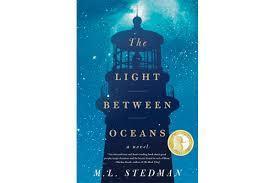
“Then he wakes and he’s in a place where there’s just wind and waves and light, and the intricate machinery that keeps the flame burning and the lantern turning. Always turning, always looking over its shoulder./If he can only get far enough away–from people, from memory–time will do its job.” M. L. Stedman, THE LIGHT BETWEEN OCEANS.
THE LIGHT BETWEEN OCEANS was published in July of 2013 and is 352 pages. I purchased an audiobook of the novel for my travels, and it was exquisitely narrated by Noah Taylor. Though it broke my heart over and over again, THE LIGHT BETWEEN OCEANS is one of my favorites of 2013.
Beginning in the years after the first World War in Australia, THE LIGHT BETWEEN OCEANS is the story of Tom Sherbourne, a decorated war veteran who seeks employment and solitude as a lighthouse keeper on Janus Rock, an isolated island far off the coast of the continent. On leave from the island, Tom meets and falls in love with spirited, young Isabel Graysmark, and the two marry and begin their lives together on Janus.
After a series of tragic miscarriages, a grieving Isabel hears the cries of a baby on the breeze. At first she thinks it is her imagination, but she quickly learns that a boat has washed ashore carrying a dead man and a baby–very much alive, and in need of care. Against Tom’s better judgment, he respects Isabel’s wish to wait on reporting the incident, and Isabel soon has the child at her breast. Days turn into weeks, which grow to months, and then to years, and the Sherbournes, at Isabel’s prompting, come to think of the baby they call Lucy as a gift from God for their own losses. The world believes Lucy belongs to them, and Tom and Isabel continue the lie until they are confronted with the terrible truth of Lucy’s parentage, forcing them to wake from their dream to a living nightmare.
THE LIGHT BETWEEN OCEANS is morally complex, beautifully written, and emotionally compelling. The characters are fully realized and layered, and face dilemmas to which there are no easy answers. Right and wrong become tangled until it is impossible to distinguish one from the other, and the human cost resulting from Tom and Isabel’s bad decisions and lies is high.
This is a book that wants to be discussed, so I recommend you read it with a book club or friend. The characters and their shared and private pain haunt me, and will continue to do so long after I’ve finished the story. I miss the characters, and know they have made a lasting impression on me as a reader and a writer.
If you enjoy evocative novels that challenge your beliefs, you will be entranced by THE LIGHT BETWEEN OCEANS. It is profoundly affecting, and is one of the best books I’ve read this year. I give it my highest recommendation.


June 3, 2013
Book Review: THE BOOKMAN’S TALE
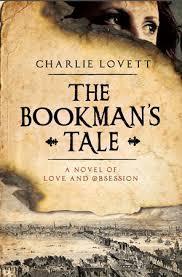
“He closed his eyes for a moment, imagining the cocoon of books shielding him from all danger, inhaling deeply that familiar scent of cloth and leather and dust and words. His rushing pulse began to slow, and when he opened his eyes he scanned the shelves for something familiar–a title, an author, a well-remembered dust jacket design–anything that might ground him in the world of the known.” Charlie Lovett, THE BOOKMAN’S TALE
THE BOOKMAN’S TALE: A NOVEL OF OBSESSION by Charlie Lovett was released today, and is 368 pages. I received an Advanced Reader Copy from the publisher, Viking, for possible review. It became clear to me early on that I would be happy to recommend this book, because I found it completely engrossing.
In a multi-period novel from Shakespeare’s time, to the Victorian era, to the late twentieth century, THE BOOKMAN’S TALE is the story of antiquarian bookseller, Peter Byerly, whose quest to find the artist of a watercolor that bears an uncanny resemblance to his late wife, becomes a struggle for life and death on both the physical and emotional level. Embedded in the mystery of the portrait Byerly finds in an old book is the exploration of the famed debate over the true author of Shakespeare’s work.
While the plot of the THE BOOKMAN’S TALE is intricately woven, the story is highly readable and compelling. There is a natural suspense generated from books set in many eras, and the added layer of intrigue in this novel surrounding Shakespeare’s writings makes it impossible to put down. Bibliophiles will delight in Byerly’s search through famed Shakespeare forgeries and references, but it is the extreme reverence for the written word and the binding of it that makes THE BOOKMAN’S TALE a love letter to reading and writing.
Fans of Kostova’s THE HISTORIAN and works of literary suspense will devour THE BOOKMAN’S TALE. For more on the author or the novel, visit Charlie Lovett’s website at http://charlielovett.com/.


May 14, 2013
Author Interview: Amy Sue Nathan
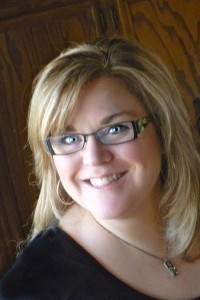
Amy Sue Nathan is the host of popular blog Women’s Fiction Writers, and a novelist. Her work has appeared in The Chicago Tribune, The New York Times online, The Washington Post online, and The Huffington Post. Amy’s debut novel, THE GLASS WIVES, published on May 7th. She was kind enough to answer my interview questions and give us some insights on her new novel. I’m thrilled for her, and can’t wait to read THE GLASS WIVES.
1. What inspired you to write your novel?
I think the inspiration was more me compelled to tell a certain story. A few years after my divorce, my ex-husband died. My life had changed tremendously over the ten years before that. We moved around the country, settled in, moved again, then divorced and then he passed away unexpectedly. I didn’t want so much to tell the story of what happened to my family, but of what happens to anyone when their life doesn’t turn out as they planned. I also felt strongly about giving a voice to single moms who are often (at least in my experience) looked at as though they’re missing something and their families are looked at as broken. I wanted to help change the perception I experienced.
What is your favorite part of the writing process?
I love writing but I’d say my favorite part of the process is editing and polishing, taking basic and sometimes raw ideas and making them do and say exactly what I intend them to do. It took me two days to rewrite the first page of The Glass Wives based on one suggestion from my editor. It was exhausting, but the act of moving things around on the page, adding words for clarity and cadence (and removing words for the same reasons) is what I’d consider a perfect way to spend many hours.
What part of the process is not your favorite?
Starting. It seems silly but starting is hard for me. I know it’s just a matter of “butt in chair” and “open the doc” but it’s daunting to begin anything new. There’s an excitement as well and I have to let that take over.
If you could go back in time, what would you have told your unagented/unpublishered writing self?
I would tell myself all the time, rejections, uncertainty, doubt, and dismissals would all add up to something fabulous!
What is your favorite novel of all time? You’re asking me to pick a favorite?
Okay. If I have to pick one I’d say, THE BORROWERS. I just love the idea that there is a reason things are missing around the house.
What is your first memory of writing?
Writing a big binder full of poems with a friend in sixth grade. I think I wrote stories before that too, but that was a big project for us. One poem was about an amusement park and it was called Wonderland. The binder was red. That’s all I remember.
What do you most want readers to take away from your novel?
I hope that THE GLASS WIVES imparts the idea that there are many ways to be a family. Qualifiers, subsets, and labels bother me, when all are valid, equal, and worthy of that uncomplicated yet significant term: family.
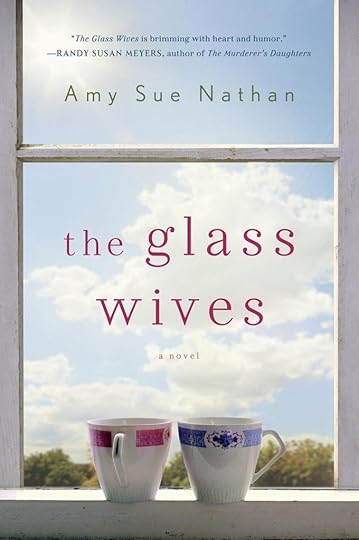
To learn more about Amy and her novel, visit her website:


May 8, 2013
Author Interview: M. J. Rose
I’ve been a long-time fan of M. J. Rose. Her fiction is so evocative, imaginative, and layered that it rises above genre historical or suspense writing. Her latest novel, SEDUCTION, received a starred review from LIBRARY JOURNAL, which calls the book: ”A luxurious, sensual experience for the reader….fully engrossing.”
M. J. was kind enough to answer the questions on my author interview. Her answers are amusing and thought-provoking, and I can’t wait to read SEDUCTION.
1.What inspired you to write your novel?
Two things.
Fantine, in Les Miserables by Victor Hugo is such a tragic and heartfelt character. For a long time after reading the book I wondered who inspired Hugo to create her? No one knows for sure… and being a writer I knew it probably wasn’t as obvious as it one might guess.
But what hooked me was stumbling on the fact that Victor Hugo spent two years of his life – while he was working on Les Miserables – conducting séances in order to contact his dead daughter. What drives a man known for his logic and reason to visit with spirits and believe he’s talking to the devil? Hugo participated in over 100 séances and claimed he spoke to everyone from Jesus to Napoleon to Dante.
2.What is your favorite part of the writing process?
My second draft.
3.What part of the process is not your favorite?
Reading the first pass page proofs. I can never ever believe, no matter how many times I do this, how much rewriting I still want to do at that point.
4. If you could go back in time, what would you have told your unagented/unpublishered writing self?
Buy stock in Amazon.
5. What is your favorite novel of all time?
Rebecca by Daphne du Maurier
6. What is your first memory of writing?
Sitting at the IBM Selectric typewriter with the silver ball in my grandfather’s office typing out a story about a man (who was not a clown) but wore giant sized red shoes and a hat that had wings on it that allowed him to fly. I remember how magically the ball moved and seeing the letters appear.
7. What do you most want readers to take away from your novel?
I want them to be entertained and have a great reading experience and take away the resolve to read all of my books.  But seriously, I write for me because of the escape it offers me – the cherry on top is the privilege of having people read and respond so positively to my stories.
Thank you, M. J.!
For more on M. J. and her books, please visit her website:
http://www.mjrose.com/content/


May 3, 2013
Adopt an Indie Bookstore
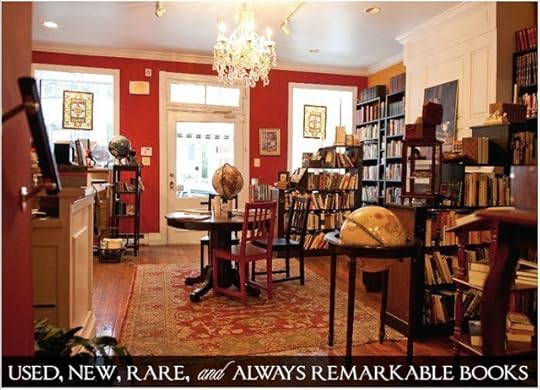
I’m delighted to announce that I’ll be partnering with the Annapolis Bookstore in Annapolis, Maryland to send signed copies of my novels to readers all over the U.S. I have received many requests from people near and far for signed books, and this will not only support an independently owned bookstore that enhances the community, but it will give me a way to get books to you.
The Annapolis Bookstore does not yet have a cart on their website, so you’ll have to call (Mary or Janice will answer) if you’d like to order a book: 410-280-2339 . Shipping and handling will be $3.00. Please specify when you call to whom you’d like your book inscribed.
Thank you for helping me support local businesses.
Novels available:
Receive Me Falling
Call Me Zelda (starting May 7th)


May 1, 2013
Book Giveaway: Call Me Zelda

With less than one week until the publication of my new novel, CALL ME ZELDA (May 7th), I wanted to share some exciting news about new and old books, thank all of you for your support and enthusiasm, and run a pre-pub giveaway. News first:
CALL ME ZELDA:
CMZ has been selected for Penguin’s What the World is Reading program, one of their six recommended trade paperback releases of 2013.
CMZ has been featured in Harper’s Bazaar Magazine, the Wall Street Journal, and USA Today for the Fitzgerald trend in books and film.
Audio and Large Print Rights have sold for CMZ.
Book Trailer: http://bit.ly/XbDhk6
Pre-order: http://bit.ly/Zlp1Ym
Appearances: http://bit.ly/QdJbhI
HEMINGWAY’S GIRL:
I’m honored that HG has been selected for Penguin’s Read Pink program in 2013 to support the Breast Cancer Research Foundation.
Audiobook and Large Print Rights have been sold for HG, as well as foreign rights in Hungary and Poland.
If you’ve read HG, please consider leaving a review at your favorite online retailer or book sharing site: http://bit.ly/wH9peh
RECEIVE ME FALLING:
RMF, my first self-published book, has continued to do well. As a courtesy to old and new readers, the ebook is now permanently available for Kindle at $2.99. http://amzn.to/12SwmOZ
GIVEAWAY:
Share this blog post on Twitter and tag me (@ErikaRobuck) for a chance to win a copy of CALL ME ZELDA. The contest will run through Saturday, May 4th, at 8:00 pm EST.
I can’t thank all of you enough for your kind support, especially those readers and book clubs who have been with me since my self-publishing endeavors. It is a great blessing to be able to do what I love, and to share it with all of you. I hope to see you on the book tour for CALL ME ZELDA.



