Matthew Dicks's Blog, page 15
June 28, 2025
Empty ice cream trucks!
Here’s one of the most impressive, hilarious parenting moves I’ve ever heard of in my life:
A mother I know, whose children are truly amazing humans, told her children that when the ice cream truck is playing music, it means they’re all out of ice cream.
She allowed this lie to persist for years.
I’m clearly not as opposed to ice cream or ice cream trucks as this parent, so this wouldn’t be something I would do. However, the moxie, the ingenuity, the hilarity, and the ability to say no to her children are so impressive.
As a teacher of 26 years and a parent for nearly two decades, I can confidently assert that it’s a parent’s inability to say no to their children that is most damaging to kids.
It’s not easy, of course, but as Matthew Dicks once said in a novel, “The hard thing and ther right thing are often the same thing.”
Saying no to ice cream in such a clever way — deflecting constant questions and persistent pleas via lies and subterfuge — is so impressive.



June 27, 2025
My Google Portrait has arrived!
For about two years, I have been collaborating with Google Labs to create a “Portrait” of myself — an AI-powered version designed to help people tell better stories.
Google has trained this Portrait on my philosophy and teaching related to storytelling, and then I met with the team on several occasions to prompt, adjust, and tweak the Portrait so it could capture my speech patterns, tone, and general demeanor.
It was a fascinating process. One of the biggest challenges for the engineers was to get my Portrait to speak as directly and honestly as I do.
Artificial Intelligence is generally designed to be polite, which apparently does not accommodate my willingness to speak plainly and directly to people.
As the engineers increased the level of directness, the Portrain began to sound rude, requiring further adjustments.
As we discovered, I often say things that could be construed as impolite or unkind, except that I say these things after establishing a trusting relationship with a person, and I often use humor to balance the directness, which the AI can’t do.
I am also quick to point out my own mistakes and flaws when helping someone identify theirs, which makes it easier for them to hear. Vulnerability, it turns out, is an exceedingly powerful force in communication.
The Portrait can’t really do that, either.
But ultimately, I think we’ve reached a point where it genuinely sounds like me, including my voice, which is uncanny.
It’s been quite a couple of years of work with the team, but the result, launched today, is a version of myself capable of helping people learn to find and tell better stories. The AI only offered about a quarter to a third of what I teach — enough to help people find and produce a good story with real craft supporting it, without giving away too much.
Eventually, the Portrait will direct people to my work for more information, including my books, instructional videos, and other resources.
Check it out here: https://bit.ly/4eoqgif

June 26, 2025
Lot of problems at The Hilton, but one was unforgivable
While in Miami last week, I stayed at the Gale South Beach, Curio Collection by Hilton.
It was not a good experience.
The hotel, except for my room, was mildly air-conditioned. Friends came on Sunday to watch me speak and couldn’t believe how poorly air-conditioned the public spaces were.
We spent about two hours in the lobby before heading over to the convention center, and it was uncomfortable and annoying.
The elevators, by contrast, were exceptionally hot, like unadorned saunas capable of vertical motion.
The hotel also has no desks. Nothing in my room. Nothing in either of the two lobbies. If you wanted to sit down and do some work, it was happening on your lap, which was the case for me for four long days.
I’ve never stayed in a hotel in my life that didn’t have a desk somewhere in the building for guests to use.
My room was also less than ideal. It was small, containing a bed, a half-sized closet jammed with a safe and refrigerator, and a single nightstand with three drawers for my clothing.
That was it.
My bed also lacked a fitted sheet, even though I had taken the bed apart twice and left a note for housekeeping. This meant that every night, I found myself on a sheet that was eventually twisted, wrinkled, and disheveled.
All of this was terrible, especially given I was in the hotel for four days, but the worst part was this:
I arrived on Friday before the 4:00 PM check-in time, so after spending a couple of hours in a poorly air-conditioned public area, I went to the front desk to claim my room.
No rooms were ready, I was told.
“It’s four o’clock,” I said.
“That’s when check-in begins,” the man behind the counter told me.
“Begins?” I asked. “I travel a lot. That is not a thing. Check-in and check-out are actual times. Not the suggestion of times. You’re not being honest with me.”
“Fine,” the man said, apparently conceding the point. “But no room is ready yet, sir. We’ll text you once we have a room for you.”
After waiting an hour for a text message, I returned to the desk at 5:00 and was told that one room was ready, but it had no windows. “I can give it to you,” the man said. “But I wouldn’t take it if I were you.”
I agreed. Four days in a windowless room in Miami?
At 5:25, I was told two more rooms were ready, but neither had a working television. I wasn’t sure if I would be watching any TV during my stay, but two rooms without working televisions isn’t a great look.
“Fine,” I said. “I’ll take one of those.”
“Give me a minute to get things ready,” he said. He returned to the counter, and then a minute later, he said, “Mr. Dicks, another room with a working TV just became available. Windows, too.”
He sounded excited.
I was not. I should’ve been given a room 90 minutes earlier, and windows and a working television seem like the bare minimum to expect from any hotel.
Here’s the worst part:
There were five young men behind the counter during the entire time I waited, doing nothing while housekeeping furiously cleaned rooms throughout the hotel.
Five men handling a single desk at a hotel while guests waited for rooms that should’ve been ready long ago.
It was apparent to me that the manager on duty of the Gale South Beach, Curio Collection by Hilton sucks. Maybe not as a human being, but absolutely as a manager.
One person—possibly the manager—should have been staffing the front desk, while the other four staff members, regardless of their position, should have been cleaning rooms or assisting housekeeping with room cleaning.
When I managed McDonald’s restaurants and we needed more Big Macs than my grill team could produce, I went to the kitchen and began flipping burgers alongside my team.
When the drive-thru wasn’t running efficiently because the orders were large or the team wasn’t cooperating, I stepped in and helped.
If I saw trash in the dining room and had no one to clean it, I cleaned it myself.
I swept, mopped, cooked, and cleaned, and did everything else necessary to ensure my customers had the best experience possible.,
At the Gale South Beach, Curio Collection by Hilton, at least half a dozen people were unable to check in at 4:00, but we all watched as five men behind the counter twiddled their thumbs instead of getting rooms ready.
It was a joke—a poorly run disaster of an operation.
Good managers are willing to roll up their sleeves and work like hell when necessary to ensure an outstanding customer experience every time. The manager of Gale South Beach, a Curio Collection by Hilton, failed in this regard. He stood side by side with his employees as they did nothing to rectify the situation.
For several reasons, I will not be staying at Gale South Beach, Curio Collection by Hilton again, and I may reconsider staying in any Hilton property in the future. But the primary reason will be that I don’t trust the people running the place to look out for my best interests and work hard to ensure a quality stay in their establishment.
I can forgive many things, but I cannot forgive laziness, dishonesty, and neglect of basic customer needs.

June 25, 2025
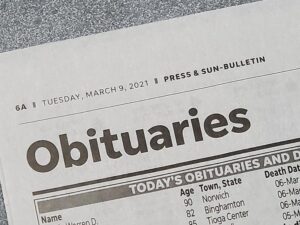
Mr. Dicks Obit
One of my former students wrote an obituary for me.
Not only is it hurtful, but it’s well-researched.
I’m so impressed.
_______________________________________
Obituary: Mr. Dicks (Born 1 B.C. – ????)
Teacher. Survivor. Balding icon.Mr. Dicks—known to some as “Mr. D,” to others as “Sir Please Don’t Yell At Me,” and to one student in particular as a living menace—has reportedly passed away for the third or fourth time. Sources remain unclear due to conflicting reports of resurrections, bee stings, and raccoon involvement.A fifth grade teacher with a flair for intimidation, Mr. Dicks lived a life most would not survive once, let alone repeatedly. Among his many accomplishments:Survived being hit by at least three different cars, including one during a McDonald’s curbside delivery.Died from a bee sting and then un-died, likely out of spite.Flew through a windshield in a car crash, then was insulted by bystanders who apparently thought CPR meant “criticism per respiratory.”Owned a raccoon. Enough said.Was arrested three times, for reasons never quite clarified but assumed to involve chaos and maybe property damage.Taught countless children, terrifying and inspiring them in equal measure, dating back to the Roman Empire.He is survived by his raccoon (believed to be immortal), several traumatized siblings who were also hit by cars, and generations of students who are both grateful and emotionally scarred.In lieu of flowers, please send traffic cones, bee repellent, and a strongly-worded email from a former student who once placed 5th in America at Kids Lit Quiz and never let him forget it.Rest in chaos, Mr. Dicks. May heaven have fewer vehicles._______________________________________I really do bring out the best in them.
June 24, 2025
My lifelong conversation with Arthur Miller and “The Crucible”
Last week, my family and I saw “John Proctor Is the Villain” on Broadway, on the recommendation of a client.
It’s fantastic. As I was walking up the aisle to exit the theater, I thought, “I’d see that play again tomorrow.”
I loved it for many reasons, but one of my favorite aspects of the play is the way it centers on a class of high school students reading and debating Arthur Miller’s 1953 play, “The Crucible.”
When you love the arts like I do, your life can sometimes feel like a journey through the work of an author or artist.
I first read “The Crucible” in high school, where I learned about the Salem Witch Trials and how Arthur Miller used that time in American history to comment on Joseph McCarthy and the Red Scare of the 1950s.
Then I read the play again in college, diving deeper into the story and craft.
Then I saw its first revival on Broadway in 2002 starring Liam Neeson and Laura Linney.
I sat beside actress Nastassja Kinski.
After seeing the revival, I found the play in my local library and read it again on my own
Twenty-three years later, I saw “John Proctor Is the Villain.”
I sat beside Charlie.
Suddenly, a play that I thought I understood for more than thirty years seemed entirely new to me. A window was opened, and I saw the characters and plot in a whole new way.
I feel like I’ve been in a lifelong conversation with Arthur Miller and this play, and each time, I see things from a different perspective. The play gets more interesting. Its depth and breadth expand. It raises new and more challenging questions.
This is the joy of engaging with art throughout your lifetime.
As you evolve, it, too, evolves, and can sometimes become new again.


June 23, 2025
I afford people the right to evolve
The family watched “Stand By Me” on Saturday night.
It’s an excellent film that I saw in the theater when it first came out, based on a Stephen King novella that I have read many times. But as Clara pointed out, it’s a movie also filled with language and slurs that only the vilest people use today.
But here is what I told Clara:
Every generation uses language that future generations consider inappropriate, hateful, and vile. If you think we have reached the pinnacle of wisdom, respect, and kindness, you are filled with ignorance and hubris.
A decade or two from now, we will look back on the language used at this moment and wonder what the hell we were thinking, just as I look back on the language I used in high school and think, “How could I have thought that was okay?”
This is why I always afford people the opportunity to evolve.
Thinking that we should all evolve our thinking and language simultaneously is not realistic nor fair.
This is not to say that I condone language that offends or demeans others, and I firmly oppose the action of people who harm others, but if I use the words “undocumented immigrant” to describe someone who came to the United States outside of the legal means, but another person uses a phrase like “illegal immigrant,” I don’t naturally assume that person is a monster.
I don’t support or approve of “illegal immigrant,” and I may attempt to educate the person if possible, but I am also affording them the opportunity to evolve because there was a time when most of us used “illegal immigrant,” thinking it was perfectly fine.
I’ve just moved beyond that language faster than others.
Also, it’s possible that “undocumented immigrant” will be considered wrongheaded and cruel in the future, too.
Again, to think we have reached the apex of respectful and appropriate communication would be stupid. We are all monsters in the eyes of future generations.
So, when someone is wrongheaded in their thinking or choice of words, I try to guide them along the continuum, as a young woman did for me a few years ago when she pointed out the problematic nature of the word “savage” — a word I had been using all the time.
Today, I avoid the word, but honestly, I also miss it.
And while it’s become popular to shift from “homeless” to “unhoused person” for many good reasons, I still use “homeless” because I was once one of those unhoused people and still prefer “homeless” to describe myself at that time in my life.
But perhaps I need to evolve, too. If you think so, afford me the opportunity to do so, especially if I’m someone you consider an ally.
If that wrongheadedness or language is causing others to suffer in meaningful ways, I will naturally stand opposed to it, but if their thoughts and opinions are foolish or misguided but their own, I am willinging to forgive them of their lack of enlightenment, just like I forgive the teenage version of myself for my lack of enlightenment and those boys in “Stand By Me” for the same.
As a friend was fond of saying:
“The truth is one. The path is many.”
Some paths are longer than others. I try to afford people the opportunity to reach the finish line in their own time whenever possible.

June 22, 2025
Small men in fancy cars
I’m on South Beach in Florida for the next four days.
I’m speaking at the Million Dollar Round Table at the Miami Convention Center — a keynote for about 8,000 people on the mainstage, plus a couple of five-minute bits of storytelling improv and a less formal talk to a couple of hundred people.
Last night, I was standing on a corner, waiting for the light to change, when I saw a family crossing perpendicular to me. They were crossing against the light, which isn’t advisable, but it looked like they had plenty of time to get across.
That was when a man in a red sports car sprinted up the street, which is a thing here:
Men in sports cars accelerating to maximum, almost unbelievable speeds from one light to the next.
It’s crazy.
The cars are so loud, too, which makes dining outside annoying. The constant roar of the engines drowns out all conversation.
In this case, I was worried that a little girl trailing the family might not make it across the street quickly enough, so I stepped off the corner and sort of shuffled her along. This caused me to end up standing beside the man in his sports car — a convertible — when the light changed to red. I must have been staring down at him with a look of anger or disgust because he looked up at me and said, rather aggressively, “What?”
“Your very fancy car goes so very fast. You must be so proud.”
He shouted a less-than-creative two-word response at me.
“So very fast,” I repeated in a singsong voice and quickly walked away. I wasn’t worried about him leaping from his convertible and challenging me, but you never know what people will do.
Especially men who are willing to risk the lives of pedestrians on a main thoroughfare to show off.
Elysha would kill me if I got in a fight on a street corner in South Beach.
It’s so odd to me:
Men with expensive, fancy cars can’t see that sprinting their loud vehicles down the street for a block or two is a screaming, lights-and-siren indication of their inner weakness and fragility.
It’s a sad and pathetic cry for help.
A confident person who possesses genuine self-worth does not attempt to garner the attention of others by driving a fancy car fast. It’s neither impressive nor admirable.
It’s stupid.
Doing so is a desperate plea for attention. A desire to prop up a large but fragile ego. A signal of a lack of maturity, common sense, and decency.
This town is apparently full of them.

June 21, 2025
Grounded for life
My former fifth-grade students — now seniors — returned to the elementary school where I have been watching for 26 years to walk the hallways one more time before graduating from high school. My current batch of students, alongside the rest of the kids in our school, lined the halls and “clapped them down” as they marched through the school, just as they had done seven years ago as fifth graders headed off to middle school.
One of my former students who later came back to say hello was especially dear to me. I had known her since she was a baby before she became my fifth-grade student.
I had actually changed her diaper at least once — a fact she never appreciated me bringing up.
More importantly, she was the last student whom I ever lifted off the ground.
About a month into the school year, I picked her up, tossed her on my shoulder like a sack of potatoes, and began carrying her across the room. She had partnered with her best friend again after I told her to find someone new, so I picked her up and was moving her to another group when my new principal entered the room.
“What are you doing?” he asked in a panic.
“Teaching reading,” I said. I really had no idea what he was talking about.
“Not that,” he said, “Why are you carrying that student?”
“Oh, I said. “I do this all the time.”
I told him that I would pick up students and move them to where they needed to be when they were annoying me. I didn’t do it every day. Just every now and then, when needed.
“It’s my thing,” I said.
Honestly, I think I saw it as perfectly natural. As a father who carried his kids in his arms and on his shoulders until they were too big to lift, and as a former Scout leader who would toss boys on his back or shoulders to carry them when they were tired or couldn’t get across a stream, I saw my students similarly:
Kids whom I cared for in the same way I cared for my own children or any other child.
Kids whom I loved.
So why wouldn’t I treat them the same?
A minute or two later, I was standing in the hallway with my principal, being told I could never lift a student off the ground like that again.
I couldn’t believe it. I had been carrying students for nearly two decades, including the former principal’s own daughter, who was my student years before.
No problem. No big deal.
Apparently, it was now.
So, although I’m a rule bender and sometimes a rule breaker who is always looking for an edge, I’m never blatantly insubordinate. When told not to do something, I don’t unless I can find a way around it semantically.
But there was no getting around this one. The instruction was clear and unequivocal.
So for the past seven years, students in my classroom have remained firmly on the ground, despite my occasional desire to lift them and carry them across the room.
“You’re the last student I will ever toss over my shoulder and carry across a room,” I told my former student, now all grown up and headed for college.
She thought this was a travesty.
Although I understand why I’ve been told not to lift kids off the ground and can see the rationale behind the decision, I agree with her. In our effort to remove risk from our world, we’ve created a sanitized, bubble-wrapped environment that is decidedly less fun and doesn’t give children the opportunity to take risks, learn from their stumbles, and grow from their falls.
As we continued to talk, my former student was appalled at all the other things that have been stripped from students since her days in my class:
Field trips, overnight camping trips, the stage in my classroom, select musical groups, competitive field day, and yes, my proclivity to lift kids off the ground and move them where I wanted.
“That’s terrible,” another one of my former students said. “They’ve taken all the best things. All the things I remember most.”
I agree.
“Why?” asked another. “Why did they take away all those great things?”
My answer is the same I give to anyone who wonders why something has been taken away from children in any school system:
It made adults’ lives easier.
Whenever something joyous, memorable, or epic is taken from students, it’s always done to simplify the lives of adults.
In my 26 years of teaching, I have never heard an administrator say:
“We are going to stop this fun, memorable, life-changing experience for children but replace it with something equally fun, memorable, and life-changing.”
Nope. It’s always subtraction. The equation is never rebalanced. As a result, children suffer.
And these things —bits of splendor and joy—are always taken away to make things easier on adults under the guise of recapturing instructional time, risk management concerns, changes due to the pandemic, or budgetary reasons, which is always a way of saying:
Funding this will be hard, and finding the time and resources required to make this happen will be hard, and we don’t want to undertake another hard thing, even if it would mean the world to the kids.
Want to know what’s important to kids?
Ask kids.
Ask my former students, ready to head off to college, about what was most meaningful to them during their time in elementary school.
They know better than anyone.
Granted, picking kids off the ground and hauling them to the other side of the classroom is probably not necessary, and I suspect that a fair number of parents would disapprove, so my principal probably did me a solid by bringing an end to this habit, even though it was perfectly fine for two decades.
But the other losses suffered by students across our country, as budgets are squeezed, teachers are overworked, and visionary leaders are replaced by efficient managers, are a tragedy.
School can’t only be about reading, writing, and math. It can’t be a place absent of fun, hilarity, and joy. It can’t be as forgettable as a day at the office.
Kids do best — academically, socially, and behaviorally — when they are having fun. Looking forward to the next day. Doing things they will remember forever.
When adults stop making that a significant focus of the school day, they fail children. They ensure that only the most motivated and supported kids succeed while leaving behind scores of children who require inspiration, purpose, joy, hilarity, and fun to get ahead.
My former students know this. They know it well.
Adults should, too.

June 20, 2025
Anxiety begone!
Many of the drugs and pharmaceuticals humans consume are not processed by our bodies and enter waterways via the toilet.
This is why scientists have found amounts of caffeine, antidepressants, antibiotics, and other pharmaceuticals in aquatic habitats.
To find out what happens to fish when they swim in this medicinal soup, researchers gave 730 Atlantic salmon in Sweden a dose of the anti-anxiety medicine clobazam and then observed them as they tried to get through a dam.
The fish on anti-anxiety medication traveled through two hydropower dams more quickly, and a higher percentage of the medicated fish ultimately reached the sea, overcoming the obstacles more efficiently.
Atlantic salmon are apparently experiencing high levels of anxiety, and medication apparently helps.
Astounding.
This isn’t to say we should be medicating Atlantic salmon, even if it makes them better at swimming upstream. Messing with nature in a chemical way never seems wise.
But I know that medication for anxiety can be enormously helpful to humans. I have seen the positive effects of anti-anxiety medication in friends, students, and loved ones. I don’t quite understand it because, unlike those people, and perhaps the Atlantic salmon, I almost never experience anxiety and therefore don’t really understand it well, probably for a few reasons:
I’m a relentless, almost oppressively optimistic person who genuinely believes that most things turn out well in the end.
I’m constantly aware that I was once homeless, jailed, and tried for a crime I did not commit. I was the victim of a violent crime that had left me with a lifetime of PTSD. I once went headfirst through the windshield of a car and required CPR to restore my life. Anonymous cowards once attempted to destroy my career through conspiracy and unprecedented libel.
I survived all these things. Almost every day seems excellent by comparison.
I also maintain a constant, purposeful historical perspective. Though times may seem fraught with peril and injustice, I know that we are still better off than Americans who lived through the Civil War, the Great Depression, and World War II. We’re still better off than Americans drafted to fight in Vietnam in a time of social upheaval and stagflation. We’re still better off than any black American who lived through slavery and Jim Crow.
I remember the fear, sadness, and anger of 9/11 and remind myself that today, despite its outrages and political monstrosities, is still better than that day.
Elysha says I’m also the best compartmentalizer she’s ever known, and my therapist has said the same thing. When there is a problem that might produce anxiety in me, I can conveniently put it away until it needs to be addressed.
I suspect this isn’t something that people can learn to do. You can either ignore a problem until the time is right or not.
My high level of self-confidence also makes me believe that I can ultimately solve all problems, which often makes anxiety seem almost silly.
I also don’t use drugs or consume alcohol, which have been linked to increased levels of anxiety.
I exercise daily, which is known to reduce anxiety.
All of these things are exceptionally helpful to reducing and even eliminating anxiety, and many of these strategies are doable by people who want to reduce their own anxiety, but most important, I suspect, is this:
My brain is simply not primed for anxiety. Some people possess imbalances in neurotransmitters like serotonin, which can produce anxiety. Others are genetically predisposed to anxiety. I also don’t suffer from conditions like obsessive-compulsive disorder, which can cause anxiety. My brain, at least until now, does not cause me to experience anxiety on a biological or chemical level.
Lucky me.
It also means you can’t remove anxiety from people simply by telling them to look at the bright side of life. You can’t sing “Tomorrow” from Annie and expect it to change a person’s disposition. You can’t tell them to “Buck up!” or “Stop worrying” and expect change.
This is like asking a one-legged person to climb stairs faster. For some people, it can’t be done.
People could do things like exercise, meditate, and stop using drugs and alcohol, and for some, that might help, but for many, it’s simply a matter of brain chemistry.
Perhaps the case for the Atlantic salmon, too, who I assume are incapable of optimism, compartmentalization, historical perspectives, personal reflection, or self-confidence.
A fish’s brain is not capable of complex thought.
But it appears to respond well to medication.Astounding.

June 19, 2025
A government by the Fox New host
So far, Trump has selected at least 19 former Fox News hosts, journalists, and commentators for senior positions in his second term as President.
Of those, seven were working for Fox at the time Trump tapped them for their government position.
This is a government of TV personalities and propagandists.
We’ve certainly moved on from Trump’s first term’s failed promise of “the very best people.”
I suspect that Trump discovered that the “very best people” thought he was uninformed, incompetent, and self-serving, so he’s decided to go with sycophants instead.