Angela Slatter's Blog, page 67
December 9, 2015
And Then interviews: Amanda Wrangles
Clan Destine Press is bringing out a new anthology And Then, and you can read interviews with the authors here over the next few weeks. There is also an Indiegogo campaign, to which y’all can contribute here.

2015 author pic
The lovely Amanda Wrangles chats about her tale in today’s And Then interview.
What inspired “ Come Now, Traveller ” ?
Almost all my short stories to date have been in the crime genre, so the challenge of writing something outside that area really appealed to me. A lot of my work centres around the sea – I’ve lived and worked by (and in!) the ocean for many years, and it definitely calls to me creatively. Admittedly, I did set out to write something romantic (again, the challenge) with no murder or mayhem, but of course the story had other ideas. The main protagonist is a sea-faring ship – The Davee Trader – and has been with me for a long time, filling up notebooks, just waiting for the right opportunity to use her.
What appealed to you about this project?
The freedom to pretty much go for it and finally give The Davee Trader some air.
What advantages does a long-short form offer?
My story is one of the shorter tales in this collection, but at eight thousand words, it’s still considered long. No tough maximum word count is pretty liberating, it means not having to shave everything down to bones. At the same time though, I adore the discipline of short form, so this is the best of both worlds.
The future of short fiction is …
More. I think short fiction is becoming more mainstream. Our brains are becoming wired to reading snippets online, so I think – and hope – more readers are discovering the beauty of a well-crafted short.
What’s next for you?
After two of my mentors (the equally fabulous Marianne de Pierres and Alison Goodman) read “Come Now, Traveller”, they both hit me with a bunch of questions: What happened before? What happens next? From there, I’ve been working on a series of interlinked short stories all set in the same Davee Trader world. I’m also about halfway through a science fiction novel, which again has its toes in the ocean, but in a much darker place than “Come Now, Traveller”.
Amanda Wrangles likes to grow food and bake cupcakes and write stories about murder, monsters and steampunk ships. She was the first prize winner of the 2009 Scarlet Stiletto Award and her short crime fiction is published in ‘The Second Cut – Award Winning Thrillers’ by Sisters in Crime and The Crime Factory’s ‘Hard Labour’. Her first novel, a fantastical – and rather sexy – comedy, ‘Arrabella Candellarbra & the Questy Thing to End All Questy Things’ was co-written with Kylie Fox under the pseudonym A.K. Wrox and is published by Clan Destine Press. She is currently working on a SFF novel and a series of nautical steampunk short stories. The mother of three boys, her home is filled with skateboards, smelly knee-pads, dogs and books.


December 8, 2015
And Then interviews: James Hopwood
Clan Destine Press is bringing out a new anthology And Then, and you can read interviews with the authors here over the next few weeks. There is also an Indiegogo campaign, to which y’all can contribute here.
 Author James Hopwood (aka David Foster) talks about his tale, “The Lost Loot of Lima”.
What inspired your story/novelette?
Even for fiction projects, I always like to start off with something real. I like readers to think, even if it is for only a second, that the story they are reading could happen in real life – in their world. In this instance, I discovered an old photo of a tourist sign that once stood in the coastal township of Queenscliff, Victoria. The sign suggested in 1821, feared pirate, Benito ‘The Bloody Sword’ Bonito, buried a portion of his treasure – the famous Loot of Lima – in a cave on the shore of Swan Bay – where Queenscliff now stands. The cave entrance was dynamited, and Bonito sailed out of Port Philip Bay, only to be set upon by a British Man-O-War. Bonito and his crew were captured and executed… and the treasure remains hidden to this day.
As I continued my research into the Loot of Lima and Bonito, more and more astonishing material came to light. But most importantly, it provided a great starting point for my story ‘The Lost Loot of Lima’.
What appealed to you about this project?
Quite simply the opportunity to write Australian content for an Australian publisher. Over the last few years I have written many high-adventure stories – mainly for the American market. I’ve tackled foreign legionnaires, mad-dog cowboys, spies – both British and American, costumed superheroes, warrior women on a frozen tundra, and displaced Americans in far-flung places – but rarely do I get to write about my own back yard. It’s nice to bring my imagination back home.
What advantages does a long-short form offer?
I am probably not the best person to ask. I am extremely biased. As a New Pulp writer most of my work is around 10,000 to 30,000 words. It’s figuratively where I live as a writer, so I am a strong advocate for short stories and novellas. I love stories that are stripped of bloat and fluff. I appreciate some stories need a longer treatment, and that’s fine, but I also see some 400 to 600 page monsters and can’t help but think they would be better served stripped down to 180 pages. Get to the point. Give the readers what they want, and get out fast!
The future of short fiction is …
Very strong indeed. E-Books and E-Readers have made short stories viable once again. Not so long ago, short stories could only exist in anthologies. And hey, that’s great too – I mean, that’s where I got my start, but now there’s an opportunity to release single stories or even a series of shorts at an affordable price. Readers can now follow a series, or a character and be updated with regular instalments. It’s an exciting time in publishing. It’s great for writers, and great for readers.
What’s next for you?
Mmmm [scratches chin]. There’s so much on the verge of being released, it’s a little bit frightening. The Legends of New Pulp Anthology is just around the corner from Airship 27. I have finished edits on my next retro-spy thriller The Ambrosia Kill, which should be out early next year from Pro Se Productions. January and February (touch wood) will see two new instalments in the Vengeance Single Shot series. And there’s a few other projects I am not at liberty to discuss yet, but it’s all good. 2016 is shaping up to be exciting year.
James Hopwood is the pen name of action adventure writer David J. Foster. He is the author of the retro-spy thrillers, The Librio Defection, The Danakil Deception, and The Ambrosia Kill (coming soon). His short fiction has been published by Sempre Vigil Press, Crime Factory, Airship 27, and Pro Se Productions.
Writing as Jack Tunney, he also scribed King of the Outback, Rumble in the Jungle, and The Iron Fists of Ned Kelly, books in the popular Fight Card series.
David lives in Melbourne, Australia.
You can find out more at his website http://permissiontokill.com/
December 7, 2015
Bestiary stuff
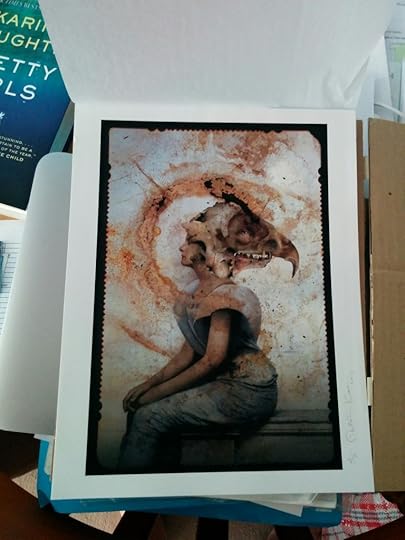
This morning I have finally cleared the latest sedimentary layer off the table so I can now see my projects and all the work I need to do! One of the things I did at last was open the print of the gorgeous Viktor Koen artwork that I wrote about for the bestiary/exhibition guide (thanks to Ellen Datlow for the invite). Now to get it framed.
And Then interviews: Narrelle M. Harris
Clan Destine Press is bringing out a new anthology And Then, and you can read interviews with the authors here over the next few weeks. There is also an Indiegogo campaign, to which y’all can contribute here.
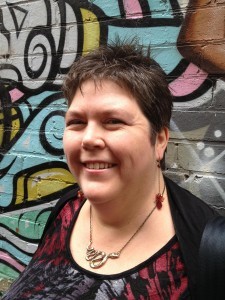 Today Narrelle M. Harris discusses “Virgin Soil”.
What inspired your story/novelette?
The idea of virgin sacrifices and the trope that they’re always about the slaughter of girls who haven’t yet had sex. I wanted to explore some different ideas about what it could mean, and then I wanted to marry that with the idea that sometimes, to do good, things that are not good have to be done too. I loved the idea of people who were really good guys at heart, but they had to do what looked like dark magic to achieve their goals. The magician equivalent of those who have to take out the trash.
What appealed to you about this project?
I loved the idea of an anthology of adventure stories – stories with an Australian flavour but full of dash and derring do! Basically, I wanted to *read* it.
What advantages does a long-short form offer?
You can tell a solid story but keep it short and snappy – yet with enough scope for a little world building: something that might be a foundation story for a bigger world, too. It’s allowed me to experiment a bit with an idea that I might expand later.
The future of short fiction is …
Looking healthy. The nature of ebooks means one-shots can be sold, as well as anthologies. I think, too, with people feeling so time pressured and reading for short stints on social media, the short form is an ideal length.
What’s next for you?
I’m putting the finishing touches on a novel commissioned for UK’s Improbable Press – The Adventure of the Colonial Boy: a Holmes/Watson romance set in Australia in 1893. After that, I have a bunch of short stories I’ve promised to several markets, and then onto the third of the Gary and Lissa vampire novels, Beyond Redemption, for Clan Destine Press. I’ve got two other novels out for consideration at present too, so fingers crossed 2016 will be a busy publishing year for me.
Narrelle M Harris writes crime, horror, fantasy, non-fiction and erotica. Her books and novellas include Fly By Night, Showtime, Witch Honour and Witch Faith, Melbourne-based vampire books The Opposite of Life and Walking Shadows and an upcoming Holmes/Watson romance, The Adventure of the Colonial Boy (2016). Recent romance series include Talbott & Burns, Secret Agents, Secret Lives, and Birds of a Feather. Find out more at www.mortalwords.com.au
December 6, 2015
And Then interviews: Emilie Collyer
Clan Destine Press is bringing out a new anthology And Then, and you can read interviews with the authors here over the next few weeks. There is also an Indiegogo campaign, to which y’all can contribute here.
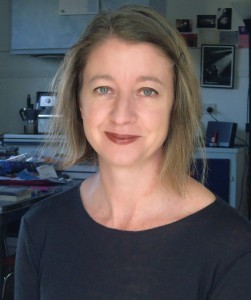 Today Emilie Collyer talks about her story “The Panther’s Paw”.
Take one anti-social, introverted, gifted animal communicator. Add one rich kid, life of the party boy. Force them together in a high stakes, deep sea chase. Set it in a solar punk future. Mix. Meet Eliza Wild and Dash Besen. It’s going to take a new kind of odd couple to save this world.
What inspired your story/novelette?
I’d read an article about this emerging genre called solar punk ( http://www.abc.net.au/environment/articles/2014/11/10/4122309.htm ) and was fascinated. I loved the idea of science fiction writing that helped us imagine a better world rather than the many versions of dystopia we have become accustomed to seeing. I was excited to set a story in such a world (not to mention the god-like rush of creating the kind of future I want to see). The challenge of course was to still provide a sense of drama, danger and adventure. If my heroes weren’t up against a faceless oligarchical corporation or totalitarian government or post-apocalyptic wasteland, what would they be up against? This challenged me to drill down to human (and other sentient being) motivators like the desire for power, knowledge and revenge. From there I started to play and soon discovered my adventurous duo.
What appealed to you about this project?
The challenge of writing a rollicking adventure story was thrilling and scary. I write a lot of speculative fiction and plays and there is often a mystery at their heart. But to consciously create an adventure duo and write a story for them felt like a new and wonderful challenge. I also loved the idea of being included in an anthology with so many different and diverse writers, and so many writers who I hugely admire.
What advantages does a long-short form offer?
For me, in this story specifically, it’s all about world building. Because I’ve set the story in an imagined future I had to give enough time in the story for the reader to (hopefully!) get a full sense of the world. That would have been tricky with a limited word count. I also love the idea of continuing to write in this world and for these characters, so the longer format meant I could spend some time on character development. The duo meet at the start of the story so their relationship is very new and develops along with the reader. It appeals to me that readers get to spend long enough with these characters that they’d be curious about what might happen to them next.
The future of short fiction is …
Varied, exciting, energised, packed with potential. There is no shortage of talented writers, both novice and experienced, who are intrigued by short form fiction and grapple with it or come back to it time and again. Readers continue to devour short fiction in all kinds of shapes, formats and genres. Online creates more opportunities for writers and readers to meet across countries, cultures and borders which is also terrifically exciting.
What’s next for you?
My play The Good Girl is having its premiere US season off broadway in New York at 59E59 Theaters in February 2016. The play had a short season at Melbourne Fringe in 2013 where it won Best Emerging Writer Award. It’s a sci-fi play about a world in which all sex work is performed by robots and deals with questions of power, gender, consciousness and ethics. I’m thrilled to have received a Melbourne City of Literature grant so I can go over to attend rehearsals of the play and be there for the opening week. Other than that, I’m excited that my short story “In The Slip” will appear in coeur de lion’s Dimension6 Issue 7, and I have a novel, new play and a bunch of speculative stories on the boil.
Emilie Collyer is an award winning playwright and author. Her play The Good Girl (2013) won Best Emerging Writer Melbourne Fringe, a Green Room nomination and will have its US premiere in New York in February 2016. Dream Home (shortlisted 2013 Patrick White Award) had a critically acclaimed and sold out season at Darebin Arts Speakeasy in 2015. Her spec fic stories have twice won the Cross Genre category in the Scarlet Stiletto crime writing awards as well as a Second Prize win. Recent publications include stories in Allegory (USA) and Cosmic Vegetable (USA). Emilie has two collections of short fiction published with Clan Destine Press.
Website: www.betweenthecracks.net or connect via Twitter @EmilieCollyer
December 3, 2015
And Then interviews: Kat Clay
Clan Destine Press is bringing out a new anthology And Then, and you can read interviews with the authors here over the next few weeks. There is also an Indiegogo campaign, to which y’all can contribute here.
 Today award-winning photographer and writer Kat Clay discusses her And Then project – and Dennis the Budgerigar of Doom.
What inspired your story/novelette?
“In the Company of Rogues” came out of the first novel I ever started writing, back when I was in high school. I created a world that was a satire of fantasy, probably after reading too many Terry Pratchett books, where people lived in a disgusting town called Pidderill and their main industry was sewage and chicken farming. I often ponder why there are so many tropes in epic fantasy and love to satirise them. One of those tropes was the wandering rogue, who slept with a thousand women without any consequences. I wondered what would really happen to a rogue who rogued too much… and the logical conclusion was that he would contract an STD. So my story is about Randall the Rogue who has to go on a quest to cure himself, with the assistance of his familiar, Dennis the Budgerigar of Doom. And I decided to reuse that world I came up with in my high-school years.
What appealed to you about this project?
It sounded like so much fun! Honestly, it’s a fantastic collection of authors given free reign on a great genre. When Lindy approached me about being in it, I was just finishing up the Rogues story, so it was perfect timing.
What advantages does a long-short form offer?
I’m getting better at writing shorter stories, but I still struggle with a word count under 5000. I love being able to explore the characters more and tell their story. I find it easier to write long form than short, and I have a great admiration for those who can convey meaningful stories with the least words possible – poets especially!
The future of short fiction is …
I am excited about what can be done with short fiction and what will be done. I want to see more experimentation with form and voice, which is something that short fiction can explore by merit of its format. Also more dastardly rogues.
What’s next for you?
I am plotting a new crime novel, which I’m incredibly excited about, and I continue to write short stories across the venn diagram that is dark fantasy, weird fiction, horror and crime. My goal for 2016 is to finish this book and get some more fiction out into the ether.
Kat Clay is an award-winning photographer and writer from Melbourne, Australia. Her weird-noir novella, Double Exposure, was released with Crime Factory in 2015. In the same year, she was awarded a Melbourne UNESCO City of Literature Travel Grant. Kat has written non-fiction articles for both travel and academic magazines, including The Victorian Writer, Literary Traveler, TNT, Travel Weekly, Matador Network and Weird Fiction Review.
December 2, 2015
And Then interviews: Sophie Masson
Clan Destine Press is bringing out a new anthology And Then, and you can read interviews with the authors here over the next few weeks. There is also an Indiegogo campaign, to which y’all can contribute here.
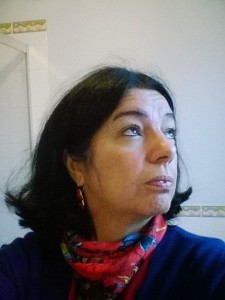 Today the lovely Sophie Masson talks about “The Romanov Opal.”
1. What inspired your story/novelette?
My story, “The Romanov Opal”, is inspired by many things: an abiding interest in all things Russian, a love of spy/mystery capers featuring amateur spy pairs (rather in the mould of Agatha Christie’s Tommy and Tuppence stories); and a visit I made some years ago to Lightning Ridge, home of the best black opal in the world, and a very colourful place full of colourful characters!
2. What appealed to you about this project?
The And Then project immediately appealed to me because it offered an opportunity to really enjoy myself writing a story that was pure escapist fun! And so it proved to be!
3. What advantages does a long-short form offer?
The advantages of a long short form is that you have so much more potential to flex the story muscles, to really enrich the texture and enhance character, whilst not subject to the same pressures as either a short story or a full length novel. It is, I think, a very playful form–at least it was for me!
4. The future of short fiction is …
The future of short fiction is bright! There was a time when anthologies were hard to sell and people said the short form was dying … but that has changed completely and we’re seeing more and more anthologies around.
5. What’s next for you?
At the moment–and for the next three years!–I am working on a PHD in creative writing centred around a YA speculative fiction novel, The Ghost Squad, which I have always wanted to write but never had the time to concentrate on. I’m loving the experience so far! I have also had two picture book texts accepted by Little Hare, so they’ll be coming out in next couple of years, which is very exciting! I am also writing other picture book texts, and also, wearing another hat, as small publisher, working on our Christmas Press publishing list. There is never a dull moment!
Born in Indonesia of French parents and brought up in Australia and France, Sophie Masson is the award-winning and internationally-published author of over 60 books,for adults,young adults,and children. She is also co-founding director of Christmas Press, a small publisher specialising in beautiful picture books for children featuring retold folk and fairy tales,with a new imprint,Eagle Books, to specialise in adventure novels for readers 11 and up. Sophie is on the Board of the Australian Society of authors,the Small Press Network,and the New England Writers’ centre. She has served on the Book Industry Collaborative council and the Literature Board.
December 1, 2015
And Then interviews: Jack Dann
Clan Destine Press is bringing out a new anthology And Then, and you can read interviews with the authors here over the next few weeks. There is also an Indiegogo campaign, to which y’all can contribute here.
 Jack Dann, Australia’s Godfather of Spec-fic, answers a few questions.
What inspired “The Talking Sword”?
Well, the excellent author, editor, publisher, and pal Paul Collins asked me for a YA story for his anthology Fantastic Worlds, which was also bought by Bruce Coville for his Shapeshifters series. Commissions usually wake me from my sleep of procrastination. Anyway, I thought it would be fun, so I started noodling with ideas; and, somehow, I kept hearing the voice of my pal Harlan Ellison. (That happens sometimes .) And then I had the idea of the hero’s journey done as Jewish schtick and … well there was this sword and it just starting talking. So if you wanted to be an Arthurian hero and earn your, er, spurs; and if you were given such a miraculous sword … what can I say, but “Oye Vey!” Well, actually, I did say a little more than that in the story.
What appealed to you about this project?
In a word: “fun”.
What advantages does a long-short form offer?
It’s a difficult form of fiction to write. It’s compression, creating a universe in a shot-glass; but, whoo-boy, when it’s done right, it kicks. Read Salinger’s “A Perfect Day For Bananafish” and tell me you didn’t take a quick intake of breath after reading that last sentence.
The future of short fiction is …
Everyone says they love short fiction, but it’s always been a tough sell. (That spoken by an inveterate anthologist.) But it’s a delicious form, and I would suggest it will live on and retain a small but discerning audience.
What’s next for you?
Just about finished my PhD. (Telling people I’m a ‘mature-age student’ usually elicits a belly-laugh, but it’s nice to be able to ask: “Which is the best discount: student or senior?” And thanks to the good offices of the University of Queensland, I have a novel finished which will be sent to my agent in New York next week. (And, eventually, there will be a nonfiction book on counterfactual fiction.) A collection of my holocaust stories entitled Concentration is forthcoming: in her introduction to the volume, critic and scholar Marleen Barr writes: “Dann is a Faulkner and a Márquez for Jews. His fantastic retellings of the horror stories Nazis made real are more truth than fantasy.” (I do like the Faulkner/Marquez bit .) Also forthcoming is a showcase anthology entitled Dreaming in the Dark, which will launch the new imprint PS Australia, of which I’m the publishing director. And I’ve got a terrific story in the anthology by a terrific writer named … Angela. A collection of poetry entitled Poems From a White Heart is also in the cooker.
Jack Dann is a multiple-award winning author who has written or edited over seventy-five books, including the international bestseller The Memory Cathedral, which was 1 on The Age Bestseller list, and The Silent, which Library Journal chose as one of their ‘Hot Picks’ and wrote: “This is narrative storytelling at its best… Most emphatically recommended.” Locus called his novel The Rebel: an Imagined Life of James Dean “a significant and very gripping novel…alternate history with passion and difference.” A companion volume of stories entitled Promised Land has been published. This collection, as well as The Rebel, The Silent, and The Man Who Melted are also available as audio books. His other short story collections include Timetipping, Visitations, The Fiction Factory, and Jubilee, which has recently been published in ebook format. Satalyte Publishers have just released a new ‘unexpurgated’ edition of The Rebel entitled The Rebel: Second Chance.
Other publications include: the short novel The Economy of Light; the autobiography Insinuations; and a special edition reprint of Dann’s 1981 novel Junction. He is the co-editor, with Janeen Webb, of Dreaming Down-Under, which won the World Fantasy Award, and his anthology Ghosts by Gaslight, co-edited with Nick Gevers, won the Shirley Jackson Award and the Aurealis Award. His Magic Tales anthology series, edited with Gardner Dozois, is now available ebook format. A collection of Jack’s holocaust stories entitled Concentration is forthcoming. In her introduction to the volume, critic and scholar Marleen Barr writes: “Dann is a Faulkner and a Márquez for Jews. His fantastic retellings of the horror stories Nazis made real are more truth than fantasy.”
Also forthcoming is a showcase anthology entitled Dreaming in the Dark, which will launch the new imprint PS Australia, of which Dann is the publishing director; a collection of poetry entitled Poems From a White Heart, and a new novel (which is still under wraps).
Jack lives in Australia on a farm overlooking the sea. You can visit his website at www.jackdann.com and follow him on Twitter @jackmdann.
And Then interviews: Maria Lewis
Clan Destine Press is bringing out a new anthology And Then, and you can read interviews with the authors here over the next few weeks. There is also an Indiegogo campaign, to which y’all contribute here.
Today, author Maria Lewis chats about her And Then project.
 What inspired “The Bushwalker Butcher”?
“The Bushwalker Butcher” was inspired by a trip I took up to the Blue Mountains to interview a real-life Yowie hunter (a Yowie is Australia’s version of Big Foot). I wanted to do a grown-up riff on Scooby Doo, complete with the ‘you damn meddling kids!’ angle, but it’s obviously a lot darker given the serial killer and body count.
What appealed to you about this project?
Generally speaking, I like to write what I like to read and an adventure anthology was so up my alley it’s down my street. Specifically though, I wanted to create a mystery tale that centred around two female leads who worked in a newsroom together. Having started as a police reporter and grown up in a newsroom for over a decade, I wanted to capture that camaraderie and special bond that develops between colleagues in a high-pressure environment like that. Crime-fighting lady best friends are also my jam.
What advantages does a long-short form offer?
It’s a great way to taste-test characters and a world with an audience, gauge their reaction and decide whether there’s the potential to expand it in further works. Some of my favourite fictional heroes started in long-short form tales as it’s a great bite-sized version of the wider themes you want to examine.
The future of short fiction is …
Multi-media: embracing the plethora of ways there are to tell stories.
What’s next for you?
I have another anthology coming out on December 14 with Harper Collins – Hot Stuff: Surfer Love – where I wrote a story about an all-girl surfing gang. My main thing though is my debut novel Who’s Afraid? which is released in Australia in January through Hachette and worldwide in July with Little Brown Books. The sequel is set for release in 2017.
Maria Lewis is an author and journalist based in Sydney, Australia. Getting her start in a newsroom covering police rounds as a teenager, she soon moved into writing about entertainment with her work featured in The Daily Mail, Empire Magazine, Huffington Post, The Daily and Sunday Telegraph, Penthouse, New York Post, Daily Life, Junkee, News.com.au and many more. She has appeared as a pop culture commentator on SBS, ABC and Nine. The co-host and producer of the Eff Yeah Film & Feminism podcast, she also contributed a story to Harper Collins Hot Stuff: Surfing Love anthology. Her debut novel Who’s Afraid? is released in Australia in January through Hachette and worldwide in July with Little Brown Books. The sequel is expected in 2017.
November 30, 2015
And Then interviews: Jack Dann
Clan Destine Press is bringing out a new anthology And Then, and you can read interviews with the authors here over the next few weeks. There is also an Indiegogo campaign, to which y’all contribute here.
 Jack Dann, Australia’s Godfather of Spec-fic, answers a few questions.
What inspired “The Talking Sword”?
Well, the excellent author, editor, publisher, and pal Paul Collins asked me for a YA story for his anthology Fantastic Worlds, which was also bought by Bruce Coville for his Shapeshifters series. Commissions usually wake me from my sleep of procrastination. Anyway, I thought it would be fun, so I started noodling with ideas; and, somehow, I kept hearing the voice of my pal Harlan Ellison. (That happens sometimes .) And then I had the idea of the hero’s journey done as Jewish schtick and … well there was this sword and it just starting talking. So if you wanted to be an Arthurian hero and earn your, er, spurs; and if you were given such a miraculous sword … what can I say, but “Oye Vey!” Well, actually, I did say a little more than that in the story.
What appealed to you about this project?
In a woid: “fun”.
What advantages does a long-short form offer?
It’s a difficult form of fiction to write. It’s compression, creating a universe in a shot-glass; but, whoo-boy, when it’s done right, it kicks. Read Salinger’s “A Perfect Day For Bananafish” and tell me you didn’t take a quick intake of breath after reading that last sentence.
The future of short fiction is …
Everyone says they love short fiction, but it’s always been a tough sell. (That spoken by an inveterate anthologist.) But it’s a delicious form, and I would suggest it will live on and retain a small but discerning audience.
What’s next for you?
Just about finished my PhD. (Telling people I’m a ‘mature-age student’ usually elicits a belly-laugh, but it’s nice to be able to ask: “Which is the best discount: student or senior?” And thanks to the good offices of the University of Queensland, I have a novel finished which will be sent to my agent in New York next week. (And, eventually, there will be a nonfiction book on counterfactual fiction.) A collection of my holocaust stories entitled Concentration is forthcoming: in her introduction to the volume, critic and scholar Marleen Barr writes: “Dann is a Faulkner and a Márquez for Jews. His fantastic retellings of the horror stories Nazis made real are more truth than fantasy.” (I do like the Faulkner/Marquez bit .) Also forthcoming is a showcase anthology entitled Dreaming in the Dark, which will launch the new imprint PS Australia, of which I’m the publishing director. And I’ve got a terrific story in the anthology by a terrific writer named … Angela. A collection of poetry entitled Poems From a White Heart is also in the cooker.
Jack Dann is a multiple-award winning author who has written or edited over seventy-five books, including the international bestseller The Memory Cathedral, which was 1 on The Age Bestseller list, and The Silent, which Library Journal chose as one of their ‘Hot Picks’ and wrote: “This is narrative storytelling at its best… Most emphatically recommended.” Locus called his novel The Rebel: an Imagined Life of James Dean “a significant and very gripping novel…alternate history with passion and difference.” A companion volume of stories entitled Promised Land has been published. This collection, as well as The Rebel, The Silent, and The Man Who Melted are also available as audio books. His other short story collections include Timetipping, Visitations, The Fiction Factory, and Jubilee, which has recently been published in ebook format. Satalyte Publishers have just released a new ‘unexpurgated’ edition of The Rebel entitled The Rebel: Second Chance.
Other publications include: the short novel The Economy of Light; the autobiography Insinuations; and a special edition reprint of Dann’s 1981 novel Junction. He is the co-editor, with Janeen Webb, of Dreaming Down-Under, which won the World Fantasy Award, and his anthology Ghosts by Gaslight, co-edited with Nick Gevers, won the Shirley Jackson Award and the Aurealis Award. His Magic Tales anthology series, edited with Gardner Dozois, is now available ebook format. A collection of Jack’s holocaust stories entitled Concentration is forthcoming. In her introduction to the volume, critic and scholar Marleen Barr writes: “Dann is a Faulkner and a Márquez for Jews. His fantastic retellings of the horror stories Nazis made real are more truth than fantasy.”
Also forthcoming is a showcase anthology entitled Dreaming in the Dark, which will launch the new imprint PS Australia, of which Dann is the publishing director; a collection of poetry entitled Poems From a White Heart, and a new novel (which is still under wraps).
Jack lives in Australia on a farm overlooking the sea. You can visit his website at www.jackdann.com and follow him on Twitter @jackmdann and [www.facebook.com/jack.dann2].