
Jonathan Harnum's Blog, page 32
June 4, 2018
Want a Free Book? Subscribe to the Six-Bullet Saturday Newsletter
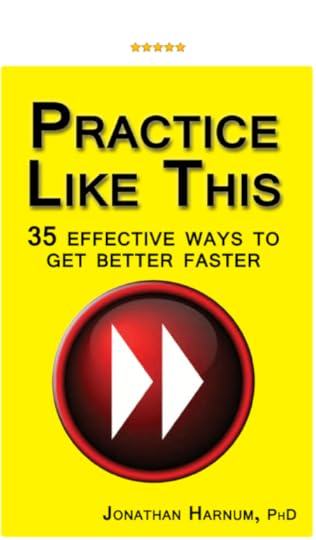
Want the free color eBook edition of Practice Like This? Sign up for 6 Bullet Saturday.
6-Bullet Saturday is a newsletter that gives you six things I thought worth sharing every week. Mostly it’s about practice, and I always include specific tips or exercises or drills that I use to help me and my students get better.
The newsetter will also have links to music- and practice-related books I’m reading, gear I use, and strategies and techniques worth trying out. I’ll only include things that I think help with practice. There could be quotes, and just about anything else I’ve found during the week that’s good enough to share, including new music (or new to me, anyway). Hope you enjoy it!
Get the 6 Bullets every Saturday morning and use or peruse the contents over the weekend.


May 27, 2018
“Practice Like This” : $.99 For 19 Hours
From the 27th (today) through the end of the month, this short gem of a book is on sale.
Only 99 cents on day one,
then the price goes up every day until June 1. check it out here!
[image error] https://amzn.to/2J9KCzC
May 24, 2018
Born This Way? Nope. Do this instead.
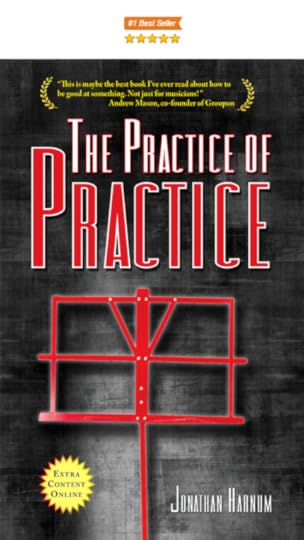
This infographic below from The Practice of Practice is making the rounds. It’s one of the more powerful ideas from the book. The way we think about ability shapes how we approach learning anything. Check it out.
Want to print it? No problem! Find the free, high-resolution, printable PDF (11×15) on the book’s extras page, under Chapter 6.
Don’t have a copy of the book? You can get it in many formats here. First-time Audible customers can listen for free! (It’s also in Spanish, Italian, and Chinese).
This graphic is from Chapter 6: Motivation for Mastery
[image error]
May 21, 2018

April 25, 2018
The Practice of Practice: Now in Chinese!練習之道 | Pubu 電子書城
[image error]It’s official! The Practice of Practice is now available in Chinese! Super excited! It’s also out in English (of course), Spanish, and Italian.
Source: 練習之道 | Pubu 電子書城
February 22, 2018
Free Practice Books (en Espanol tambien)
Two practice books are free for the rest of February.
One in English, one in Spanish.
Grab a copy, and please
tell your friends and students
on Facebook, Twitter,
or any other social media. Thanks!
A Kindle reader for any phone or computer is free and you can find it here.
Details below:
La Practica de la Practica (eBook),
gratis from February 23-28, 2018.
En España
En Mexico
en el resto del mundo
want to read it in English? Go here, or listen to
the audiobook here (first-timers get it free).
Practice Like This:
35 Effective Ways to Get Better Faster
[image error]
http://amzn.to/2ECDaaA
Get the free Kindle edition of
Practice Like This:
35 Effective Ways to Get Better Faster
From 2-23-2018 through 2-27-18
listen to
the audiobook here (first-timers get it free).
Advertisements
January 13, 2018
Interview with Jonathan Harnum
An interview on practice with yours truly over at The Aspiring Guitarist from a few months back. You can also get it via podcast. Check it out!
[image error]To hear the interview, head over to http://theaspiringguitarist.net/the-practice-of-practice/
It’s always fun to chat about practice, and I always learn something, but it’s never a long enough convo to get all the good stuff out there. If you want more gems, get one of my books and learn it all for yourself.

September 28, 2017
How to Become Great at Just About Anything
Listen to this greata Freakonomics podcast. Listen now. And these. Or listen to the same ideas in the audiobook version of The Practice of Practice. Better yet, do it all!


September 26, 2017
Why Do Beginners Quit?
Angela Duckworth has spoken out about Grit, an essential element for achieving success. But early on, no matter what you’re doing, there are lots of hurdles to overcome. Here are some musical hurdles to avoid altogether, if you can. Every little bit helps.
But the real reasons that students quit is often beyond their own understanding.
Here are reasons students quit, and ways to combat them:
Parents need to find music just as important as other subjects. The sad truth is that many non-music teachers and administrators do not find music equally as important as math or English language-arts, but parents need to. Besides, you wouldn’t let your child quit math, would you? Many kids would jump at that opportunity. Music is a core subject…period. The more parents treat it as such, the less students will quit.
Students don’t know how to get better. Without the proper tools and practice habits to get better at anything, students will become frustrated and want to quit. It is the role of the music educator and the parents to give students ownership over their learning. Teachers must teach students why, how, where, and when to practice, and parents must obtain minimal knowledge about how students learn music in order to properly support them at home.
Parents and students think they aren’t musically talented. Sure, there are some kids who pick up an instrument and sound decent immediately, but they will hit a wall later and have to work hard to overcome it. Most everyone else won’t sound that great at first. Playing a musical instrument is a craft that, if practiced correctly, is something that all children can find success in. As long as students know how to practice and that it needs to be done regularly, they will get better.
Students discontinue playing over the summer. Statistics show that students who do not read over the summer find themselves extremely behind once school starts. The same goes for playing an instrument. A year of musical instruction can quickly go down the tubes over the summer vacation if students do not find small ways to play once in a while. Picking up an instrument for the first time after a long layoff can be so frustrating that a student will not want to continue into the next school year.
The instrument is in disrepair. A worn down cork, poor working reed, or small dent can wreak havoc on a child’s playing ability. Sometimes the malfunction is so subtle that the student thinks they are doing something wrong, and frustration mounts. Students, parents and teachers need to be aware of the basics of instrument maintenance and be on top of repairs when needed.
Teachers don’t create enough performing opportunities during the year. The best way to motivate students musically is through performance. Weeks or even months on end of practicing without performing for an audience gets old very quick, and student will definitely quit. Teachers should schedule performances every six weeks or so in order for students to stay engaged and practicing. Parents can help by creating small performance opportunities at home — a Friday night dinner concert or a planned performance for visiting family members are great ideas.
There is not enough “fun”music to practice. It’s very important for parents to be aware of music that interests their child, because it exists in sheet music form for download or purchase. It’s important that all students play music that is aligned to their interests in addition to other pieces that are worked on in school.
Other activities are pulling at the child. Between art lessons, sports, karate, and other activities, parents grow weary of having “one more thing” to be on top of schedule-wise. Parents need to understand that the enduring social and psychological benefits of music are as enormous as those of sports — in the same and different ways. Budget time accordingly and children will have 10 minutes a day to practice an instrument, for sure.
Much like any worthwhile venture, practicing a musical instrument has its ups and downs. Kids need to be reminded to practice, of course — but they should not be constantly pushed, and they should not be completely left alone. It’s a balancing act where sometimes the parents will need to give their child a break for a few days and other times will need to bribe them to practice. Either way, all children are capable of thriving with a musical education, and students will indeed thank their parents for not letting them quit.
About the author:
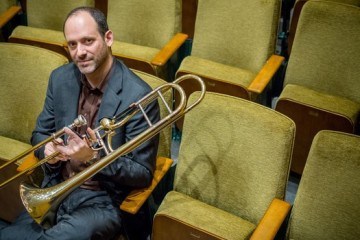
A GRAMMY® nominated music educator, Anthony Mazzocchi has performed as a trombonist with the Los Angeles Philharmonic, New Jersey Symphony, San Diego Symphony, San Diego Opera, Riverside Symphony, Key West Symphony, in various Broadway shows and numerous recordings and movie soundtracks.
Tony has served as faculty or as a frequent guest lecturer at The Juilliard School, Manhattan School of Music, New York University, and Mannes College of Musi c. He has taught students from K-college, and has served as a district Director of Fine and Performing Arts in the South Orange/Maplewood School District. Tony has been a consultant for arts organizations throughout the NY/NJ area.
Tony blogs about how to be a successful music parent at The Music Parent’s Guide. He has written a method book for music teachers called The Band Director’s Method Book Companion.
Tony is currently Associate Director of the John J. Cali School of Music at Montclair State University in New Jersey. He is also Executive Director of the Kinhaven Summer Music School in Weston, Vermont. Tony is a clinician for Courtois – Paris.


September 24, 2017
Improve with Improv: Card Game to Facilitate Musical Creativity
In The Practice of Practice is a chapter that covers how world-class musicians (yes, even classical musicians) use improvisation to improve their playing. You should do it, too.
Trouble with improvising or composing? Here’s a tool for you:
[image error]



