
Jennifer Chase's Blog, page 71
July 4, 2011
Are There Two Varieties of Psychopaths?
 I came across an interesting article explaining that psychopaths may come in two varieties: psychopaths who are incarcerated for criminal acts and psychopaths who may never be incarcerated or caught for their criminal activities.
I thought this was an interesting concept to ponder.
The article was based on the working theory that there is a difference between psychopathic individuals who exhibit these types of behaviors and end up in psychiatric facilities or prison and those who seem to evade the law.
Psychopathic behavior relates to the Axis II Personality Disorders. Individuals who fit the definition of psychopathy also meet the diagnostic criteria for antisocial personality disorder and commit the majority of violent crimes. The psychopathic personality disorder is generally associated with crime and violence in addition to having the severe characteristics of superficial charm with the lack of insincerity, truthfulness, and remorse.
Many times we hear about psychopaths and it evokes images of serial killers from major motion pictures like Silence of the Lambs or Zodiac. This is always great information and research for crime fiction. But in fact, individuals who exhibit psychopathic behaviors can be anyone in society like a neighbor, boss, family member, politician, or even friend.
Interestingly, there have been studies from the University of Southern California in Los Angeles that suggests, through stressful tasks, would produce an increase in heart rates in male psychopaths that have eluded criminal prosecution than convicted psychopaths. It was further suggested that the increased heart rate and heightened physiological reaction to stress might assist in their ability to evaluate risky situations in order to benefit from their criminal activities.
It all seems to boil down to whether or not psychopaths who commit crimes can make the right decision based on their physiological reaction to stressful condition, and whether or not law enforcement will catch them.
The concept of two varieties of psychopaths definitely warrants more study and consideration when approaching crime scenes and conducting investigations in order to learn more about how and why these types of individuals commit specific types of crimes.
Blog: www.authorjenniferchase.com/
Website: www.jenniferchase.vpweb.com/
Crime Watch Blog: www.emilystonecrimewatch.wordpress.com/
Book & Crime Talk: www.blogtalkradio.com/jennifer-chase/
Books: Compulsion = Dead Game = Silent Partner = Screenwriting


July 2, 2011
Cadaver in my Garden

What you are about to read is a true account of an actual event. The names haven't been changed because no one will care.
First, let me start at the beginning, don't worry it won't take long. I moved to the country about five years ago. It's lovely with wide-open spaces, room to breathe, tons of trees, and wildlife. Many times when I wake up in the morning I think that I'm at a vacation house instead of my own home. Also, I can jump in my car and drive ten to fifteen minutes and I'm on the beach. It's the best of both worlds. It's a perfect place for a writer to work.
My academic and consulting background is in forensics and criminology. Basically, I study crime and criminals. I love to blog about all kinds of things pertaining to these fields. I don't know about you, but I seem to gravitate toward any new information about crime, criminals, and serial killers.
I would like to think of myself as being aware of what's going on around me. I pay attention to who is near me either at home or out in the community. I'm a detail oriented person who has a lot of curiosity thrown in for good measure. So you can imagine my surprise when I was taking a break from writing one afternoon from my newest crime fiction addition to the Emily Stone Series and I smelled… well… something dead. There was absolutely NO mistaking that smell. Unlike what was reported during the Casey Anthony Trial. You might think since I live out in the country it's most likely a dead animal, like a pack rat, squirrel, or even (heaven forbid) a neighbor's cat. Right?
Wrong.
Or, should I say dead wrong.
I smelled this dreadful "odor" for a couple of days. I looked around in my flowerbeds and around some potted plants, to no avail. I decided to ask my husband if he'd smelled the "dead" smell. Maybe he had some insight?
"Honey, it smells like something's dead in the front yard."
He agreed with me. "I smelled it too. You mean you haven't found it yet?" He said with a cynical smile, knowing how much it irked me not being able to find its source.
I told him that I was going to hunt it down no matter what. The temperature was rising and it was going to ratchet up to all time stinkfest soon.
I began at my front door and used my nose. I wasn't going to quit until I found the source of the smell. I felt like I was Emily Stone in one of my novels hunting down a serial killer. I was on a mission. My two Labs padded obediently behind me, curious at what their alpha mom was going to do and why. The stink kept getting stronger and stronger. I knew I was close… So I followed my nose so to speak…
The smell was the strongest at where my husband's work truck and equipment was stored. We searched, but there was nothing there.
It was very curious indeed.
I just had to know where that horrific smell was coming from. Now it was personal, I was going to stay outside until I found the little decomposing critter.
Then it hit me… an actual Oprah aha moment.
I turned and looked under a large bottlebrush bush and there it was! It was… one of the most striking, amazing looking lily's I'd ever seen. The plant was three feet tall and the deep magenta bloom was at least twelve inches long. I remembered something a gardening neighbor told me about this plant. It actually SMELLS just like ROTTING FLESH! Yes, you read correctly – rotting and decomposing flesh. I can't imagine anyone planting this plant in their garden or even near their house. It's called appropriately by many street names: stink lily, voodoo lily, cadaver lily, dragon lily and so on. Its "official" name is Dracunculus vulgaris. The photo posted above is the actual culprit or victim in my garden.
I finally found the cadaver in my garden. I've now closed the investigation.
Case solved!
Here's a short link to this article: http://wp.me/p1wDmU-c5
Blog: www.authorjenniferchase.com/
Website: www.jenniferchase.vpweb.com/
Crime Watch Blog: www.emilystonecrimewatch.wordpress.com/
Book & Crime Talk: www.blogtalkradio.com/jennifer-chase/
Books: Compulsion = Dead Game = Silent Partner = Screenwriting


June 29, 2011
California's Attempt to Ban Sales of Violent Video Games to Minors Loses in Supreme Court

My second novel, Dead Game, features the popular online gaming culture, an activity in which players usually assume fake identities and live in a fantasy world. In Dead Game, some of the men and women who engage in a virtual murder mystery find themselves the victims of very real crimes.
My state of California recently made an attempt to keep some of the bloodier and more explicit video games out of the hands of children, perhaps in part out of concern that actual crimes or acts of aggression could eventually occur. But, the Supreme Court decided that such a measure would infringe on the First Amendment rights of young people.
Currently, there is a voluntary rating process that the gaming industry can use on its products in order to provide some guidance for parents. But, California and several other states have argued that this information is not enough and that government must intervene to protect kids from graphic images. The justices, however, determined it should be left in the power of parents and other adults purchasing the games for children to decide if the violence or sexual overtones are too much to bring into their homes.
The two justices who offered a dissenting opinion in this case argued that the First Amendment does not extend to speech (specifically, in this instance, violent images) directed at kids that does not first go through the filter of a parent's permission. So, there should be nothing wrong with requiring an adult to make the purchase.
The kids in 2011 certainly aren't playing Pac Man and Donkey Kong anymore. What are your thoughts on the abundance of graphic video games out there today?
Should there be a ban on the purchase of these products by minors, or should that decision be left out of the government's hands?
Blog: www.authorjenniferchase.com/
Website: www.jenniferchase.vpweb.com/
Crime Watch Blog: www.emilystonecrimewatch.wordpress.com/
Book & Crime Talk: www.blogtalkradio.com/jennifer-chase/
Books: Compulsion = Dead Game = Silent Partner = Screenwriting


June 27, 2011
Woman Arrested for Filming a Traffic Stop

My first two novels, Compulsion and Dead Game, feature a vigilante crime fighter named Emily Stone. This woman takes it upon herself to track down the most dangerous criminals in her community and then anonymously hands over the evidence she has collected to police before quietly moving onto the next case. She uses surveillance equipment, determination, and great instinct to bring many violent offenders to justice.
In Rochester, New York, another Emily recently took the law into her own hands. The twist here, though, is that she was tracking the law itself.
Emily Good was arrested in May for filming a traffic stop that was occurring outside her home. Although she never left her front yard, she was ordered by the officers on the scene to go inside because they felt her presence was threatening. Ms. Good refused to leave her yard or to stop filming and she was eventually arrested. She is now facing the misdemeanor charge of obstructing governmental administration.
The video captured by Ms. Good found its way onto YouTube and now has become quite a sensation, with viewers arguing over where this amateur cameraperson had every right to film from her yard or if she should have followed police orders and filed a complaint later if she desired.
We should find out very soon what a judge thinks of Emily Good's decision to fight authority with a video camera.
But, in the meantime, what do you think? Was Ms. Good within her rights to film the traffic stop? Or, could her presence have been a distraction that placed the safety of the officers in danger? Let me know what you think!


June 26, 2011
Photography Sunday — Wildlife of the Monterey Bay

I'm so fortunate to live in a beautiful area full of wildlife. Here are some additional photos of some of the wonderful animals that inhabit my area.
Hope you have a relaxing weekend!
Enjoy!


June 24, 2011
Responsibilities of a Crime Scene Investigator
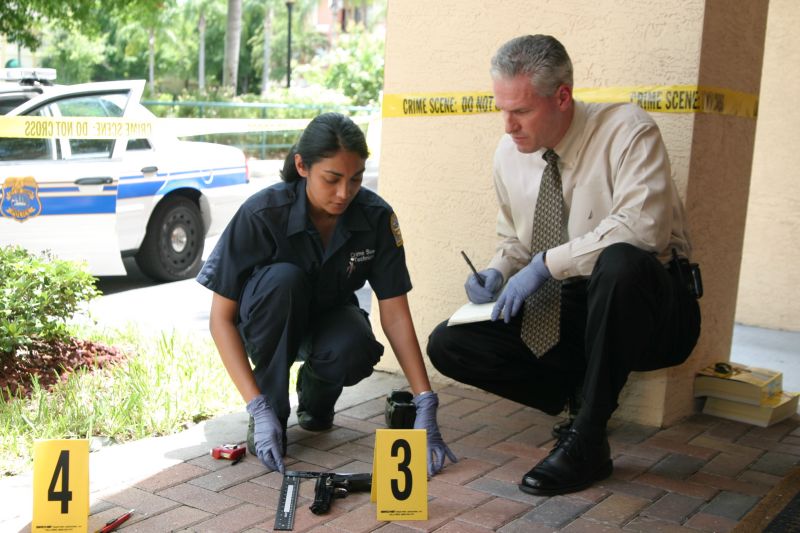
The job of a crime scene investigator isn't glamorous or exotic as it's portrayed on popular television shows. It is extremely important and necessary for any criminal police investigation in order to find out who committed the crime and to bring the perpetrator(s) to justice.
In my novel Dead Game, Emily Stone tracks down serial killers and uses techniques of crime scene investigators in order to gather evidence anonymously for the police. She uses procedures that many investigators use at homicide crime scenes and she is careful not to disturb potential evidence. She takes identifying photos from various distances and searches potential crime scenes in a grid pattern.
In "real" life, there are many different law enforcement personnel to help the investigator to determine what happened and who committed the act.
What are the main objectives of a crime scene investigation?
1. Reconstruct the incident.
2. Determine the sequence of the events that led up to the incident.
3. Establish the mode of operation (MO) of the perpetrator(s).
4. Uncover the motive for the crime.
5. Find out everything the criminal(s) may have done at the crime scene.
6. Discover, if any, property that was stolen from the scene.
7. Recover and process all physical evidence at the scene.
The actual examination of the crime scene is a thorough and exhaustive effort for the investigator. There are many things that must be considered and the best way to proceed. Generally, the investigator must begin to reevaluate the sequence of events, being careful not to miss anything in the initial search. A systematic survey of the scene including the immediate surroundings, both indoors and outdoors should be implemented. Absolutely everything should be written down as it's discovered, along with a detailed diagram of the scene, which should be clear, concise, and meticulous.
If at all possible, using two crime scene investigators to examination a crime scene is the best and most effective technique. The team should work in a cooperative manner together, not on separate tasks. Two people can cover much more than just one person. A common technique is that one investigator discovers aspects and clues about the scene and reports it to the other investigator to write down. When the search is completed, the two investigators begin again, this time switching positions. This system can be quite effective in not missing any key piece of evidence that will assist in solving the crime.
Blog: www.authorjenniferchase.com/
Website: www.jenniferchase.vpweb.com/
Crime Watch Blog: www.emilystonecrimewatch.wordpress.com/
Book & Crime Talk: www.blogtalkradio.com/jennifer-chase/
Books: Compulsion = Dead Game = Silent Partner = Screenwriting


June 23, 2011
Vote For Your Favorite Cop Thriller

When I'm not busy writing, promoting, or researching my next novel, I love to watch cop thrillers. It's a great escape and you never know where your next idea will come from.
I've put together some of my favorite cop thrillers and I would love to find out if you agree. I made sure there were some old as well as new films included. Like, The Departed (photo above) of Leonardo DiCaprio and Jack Nicholson. Great scene!
Vote for your favorite!
If you don't like any of them, then leave a comment with your favorite picks.



June 22, 2011
Offender's Signature vs. Modus Operandi
 Sometimes it's confusing for people to differentiate between a criminal's signature versus the criminal's modus operandi when they commit a specific crime.
Are they the same?
No, they are distinctly different because one feeds on emotional needs, while the other is a procedure.
Modus operandi is the method that is used to commit the crime and signature behavior is what helps to serve the criminal's emotional and psychological needs.
A modus operandi or MO refers to the method or procedure that a criminal uses when committing a crime. It comes from the Latin phrase meaning "mode of operation". Basically, all criminals have a method of operation that encompasses the habits, techniques, and any peculiarities of behavior. The method can stay the same, but it will often grow and change over time as the criminal becomes more skillful at committing a specific crime.
If an investigator or detective establishes the MO in a homicide case, they would refer to the forensic analysis of the crime scene.
Here are a few examples of a criminal's MO:
The type of restraints used on the victim, wound patterns, and type of fiber of the restraints.
Type of weapon used, such as knife, blunt object, or gun.
Tape found on victim that was used to bind hands and cover mouth.
Tools used to gain entry to victim's home.
Attack could be from when the victim exits their vehicle or walks through a dark parking garage.
Time of day that the offender chooses to commit the crime, such as nighttime or early morning.
Lack of fingerprints that would indicate the offender used gloves.
All of these examples constitute a criminal's MO in committing a crime.
A signature refers to the distinctive behaviors that help to serve the criminal's psychological and emotional needs. Physical evidence helps to establish the signature behaviors of the criminal who committed the specific crime.
Again, the investigator or detective for a homicide case would refer to the forensic analysis for this type of evidence in regard to the signature behaviors at the crime scene.
Here are a few examples of criminal signatures:
Level of injury to the victim, minimal or excessive.
Specific location or sequence to the criminal act.
Ejaculation, urination, and/or defecation at the crime scene.
Specific type of weapon used.
Personal items taken from victim.
Specific type of victim targeted that refers to age, race, occupation, or other physical characteristics.
Anything specifically left at the crime scene, such as a note or object.
An easy way to remember the difference is that a criminal's MO refers to the way the crime is committed and the signature is what is beyond that it takes to commit the specific crime.
To read more about criminal modus operandi or signature behaviors, check out these books:
Crime Classification Manual
By John E. Douglas, Ann W. Burgess, Allen G. Burgess and Robert K. Ressler
Crime Reconstruction
By Jerry Chisum & Brent E. Turvey
Criminal Profiling
By Brent Turvey
The Anatomy of Motive
By John Douglas and Mark Olshaker
Blog: www.authorjenniferchase.com/
Website: www.jenniferchase.vpweb.com/
Crime Watch Blog: www.emilystonecrimewatch.wordpress.com/
Book & Crime Talk: www.blogtalkradio.com/jennifer-chase/
Books: Compulsion = Dead Game = Silent Partner = Screenwriting


June 21, 2011
Award Winning Thriller Dead Game Visited Some Great Blogs Today

Synopsis:
In this Video Game, 'Game Over' Means You're Dead
In her independent efforts to catch child killers, Emily Stone discovers the evidence that the cops can't—or won't—uncover. Now, this covert investigator is back on the hunt for the world's most sick and twisted murderers. But even with help from ex-police detective Rick Lopez, this time she's facing her most dangerous opponent yet.
The headlines in the San Jose Mercury News blare updates on a serial killer who seems able to slaughter with impunity. Men, women—it doesn't matter; the victims serve only to satisfy a perverted need to kill. The killer watches the moment of death on multiple computer screens, over and over again. The only connection is that they're all devotees of the latest video-game craze—a sophisticated brain-puzzler called EagleEye.
When the killer goes after Lopez's law-enforcement mentor, Lopez and Stone decide to give the cops a little extra, unsolicited help. What follows takes them deep inside a shocking high-tech world, a kind of social-networking community for serial killers. But when they start getting too close to the truth, all hell's going to break loose.
Now, Stone and Lopez become the killer's next target as Stone must make a difficult decision to leave the ones she loves in an all-or-nothing effort for survival. Can they stay alive long enough to blow the whistle on this unlikely perpetrator?
Available in paperback and ebook (99 cents) formats at Amazon, Barnes & Noble, Smashwords, and most book retailers.
Dead Game visited these two great blogs today:



Obsessed with Books at an Early Age
 Many of my early childhood memories involve all of the great books that I had the opportunity to read. I was a typical kid who loved to be outdoors whenever I could, but I loved my weekly visits to the local library. I would grab books, stack them high, and take them up to the librarian. They would be books about animals, adventures, mysteries, and anything else that grabbed my attention. I loved books!
As I got a little bit older, my book choices were always about solving mysteries and going on great adventures. The Adventures of Pippi Longstocking, Nancy Drew Mysteries, and The Secret Garden definitely made a lasting impression on me. From that point, I read The Lion, The Witch, and The Wardrobe, The Hobbit, The Count of Monte Cristo, and many other timeless classics.
I had always dreamed of one day writing a book of my own and it was in the back of my mind as I ventured through the ups and downs of life. There were so many thriller and suspense authors that inspired and influenced me to write my first novel, such as Dean Koontz, Stephen King, Jeffrey Deaver, John Connelly, John Grisham, and many others. You could say that all of these experiences with books in my life paved the way for me to become an author.
Reading at an early age and being read to has some amazing benefits for children and for the continuing development that will affect the rest of their lives. It has been established that just reading 20 minutes a day aloud to young children can help to strengthen relationships, promotes curiosity, encourages better listening and language skills, and overall helps to establish a strong reading foundation. Just by reading aloud together, a child's reading skill can be mastered over time.
"The magic of this process is the simplicity of action", stated by The Children's Reading Foundation. They also suggest making the reading time together an important and happy part of life. A child's brain develops faster during the early years and acts like a sponge that soaks up information with enthusiasm and the willingness to learn. Build upon and nurture that wonderful gift of reading.
It has been suggested that the best time for children to start learning to read is when they are very young, generally at the preschool level.
Here are some tips for laying a strong reading foundation for children:
Build a new vocabulary through books, experiences, and interactions.
Observe others reading and enjoying books.
Recognize that words are made up of sounds.
Experience and pretend to read familiar books, poems, and alphabet books.
Enjoy and discuss a variety of books that are read aloud by others.
I have to wonder if I didn't love books and reading at an early age if I would be so curious and enthusiastic about forensic science and criminal psychology. Makes you wonder?



