Liane Spicer's Blog, page 6
July 7, 2012
Whatever happened to the hunks? Channing Tatum
 I stumbled across
Channing Tatum
five years ago while looking for yummy photos for my (then) monthly hunk post. My favourite fishing site was one I discovered back in 2002, mostbeautifulman.com. In the photo I remember best Tatum is dressed (barely) in briefs and a tattered straw hat as he sprawls back against something. Let me tell you, that photo stopped me in my tracks. Still does. Just as striking as the pose and body were the face and expression. I went back to that photo several times, was struck afresh by the sensual appeal each time but never got around to posting it. Why? I think his age might have been a factor: he just looked so young! Insolent, gorgeous - but just too damned young for my demographic.
I stumbled across
Channing Tatum
five years ago while looking for yummy photos for my (then) monthly hunk post. My favourite fishing site was one I discovered back in 2002, mostbeautifulman.com. In the photo I remember best Tatum is dressed (barely) in briefs and a tattered straw hat as he sprawls back against something. Let me tell you, that photo stopped me in my tracks. Still does. Just as striking as the pose and body were the face and expression. I went back to that photo several times, was struck afresh by the sensual appeal each time but never got around to posting it. Why? I think his age might have been a factor: he just looked so young! Insolent, gorgeous - but just too damned young for my demographic. Never forgot him, though. Last night my niece insisted that I watch the trailer for something called Magic Mike. I did, just to appease her - and there was Tatum in all his stunning glory, in a movie in which he plays - get this - a male stripper. Still very young, but all grown up now. Think I died and went to heaven right there and then.
 So, any of you ladies want to accompany me to Movietowne to watch this, give me a shout. Be warned, though; there will be screaming. Lots of it. Gnashing of teeth. Palpitations and hyperventilation. Tears of joy. Fists bitten to shreds and fisticuffs in the aisles. Think you can handle it? Well - see you there! Remember to check your inhibitions at the door or they will be trampled to death by the thundering female herd.


July 2, 2012
Passages: Rosa Guy
 Two revered authors passed on in June: Ray Bradbury in California, and
Rosa Guy
in Manhattan, New York.
Two revered authors passed on in June: Ray Bradbury in California, and
Rosa Guy
in Manhattan, New York.Rosa Guy, without ever knowing it, was responsible for one of the great serendipities in my life. When I started the query process for my first novel I discovered a website that listed literary agents who accepted e-mail queries. My current agent, Susan Schulman, was one of those who responded immediately to the first batch of e-queries I sent. I later learned from Susan that my query had stood out initially because I'm from Trinidad, the birthplace of one of her favourite authors - Rosa Guy.
Ms. Guy, who hails not only from my homeland but also my home town, did not hang around Trinidad for long. She went to join her parents in New York at the age of seven, but her mother died shortly after. Within a few years her father also died, and her round of orphanages and foster homes began. Her young adult (YA) books draw heavily on her experience of coming of age in New York without parents, money or family stability.
In her obituary in the NY Times, she is described as "one of the 20th century's most distinguished writers for young adults". Ms. Guy pioneered the exploration of tough, realistic themes in YA fiction - themes such as race, class, poverty, death and sexuality. In one of her books a teenaged character embarks on a lesbian relationship with another girl, a subject which was taboo in children's literature at the time.
She is best known for her trilogy of YA novels, The Friends (1973), Ruby (1976) and Edith Jackson (1978). Her novels for adults include My Love My Love , Measure of Time , and Bird at my Window . She was one of the founders of the Harlem Writers Guild in 1950 and a key figure in the civil rights movement of the 50s and 60s. Her gifts to literature and to humanity are immeasurable.

Two revered authors passed on in June: Ray Bradbury ...
Two revered authors passed on in June: Ray Bradbury in California, and
Rosa Guy
in Manhattan, New York.Rosa Guy, without ever knowing it, was responsible for one of the great serendipities in my life. When I started the query process for my first novel I discovered a website that listed literary agents who accepted e-mail queries. My current agent, Susan Schulman, was one of those who responded immediately to the first batch of e-queries I sent. I later learned from Susan that my query had stood out initially because I'm from Trinidad, the birthplace of one of her favourite authors - Rosa Guy.
Ms. Guy, who hails not only from my homeland but also my home town, did not hang around Trinidad for long. She went to join her parents in New York at the age of seven, but her mother died shortly after. Within a few years her father also died, and her round of orphanages and foster homes began. Her young adult (YA) books draw heavily on her experience of coming of age in New York without parents, money or family stability.
In her obituary in the NY Times, she is described as "one of the 20th century's most distinguished writers for young adults". Ms. Guy pioneered the exploration of tough, realistic themes in YA fiction - themes such as race, class, poverty, death and sexuality. In one of her books a teenaged character embarks on a lesbian relationship with another girl, a subject which was taboo in children's literature at the time.
She is best known for her trilogy of YA novels, The Friends (1973), Ruby (1976) and Edith Jackson (1978). Her novels for adults include My Love My Love , Measure of Time , and Bird at my Window . She was one of the founders of the Harlem Writers Guild in 1950 and a key figure in the civil rights movement of the 50s and 60s. Her gifts to literature and to humanity are immeasurable.
June 10, 2012
Ray Bradbury: A Legend is Gone
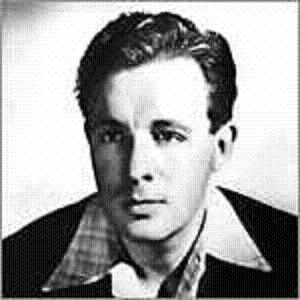 When I read that
Ray Bradbury
had died in California, my first thought was that I'd had no idea he was still alive. This was partly due to the fact that in my mind, all the the truly legendary writers have already passed on. He was 91.
When I read that
Ray Bradbury
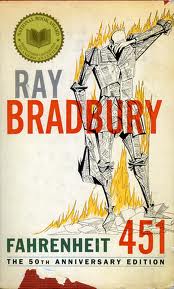
had died in California, my first thought was that I'd had no idea he was still alive. This was partly due to the fact that in my mind, all the the truly legendary writers have already passed on. He was 91.I've read just two of Bradbury's works: Farenheit 451 (of course) and more recently, Zen in the Art of Writing . Farenheit is the kind of science fiction I love - great stories featuring heroic characters who are idealistic to the bone, with strong sociological themes that make them all the more compelling. These stories tend to be chilling: the dystopias they present are all too possible, even probable. Many are projections of conditions and trends that already exist in society. As Bradbury himself has said, "I don't try to describe the future. I try to prevent it."
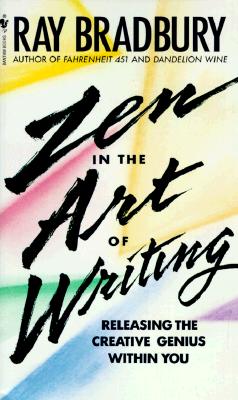
When I read Zen in the Art of Writing a few years ago I discovered that many of Bradbury's famous quotations on the craft were lifted from that book. There's a reason these quotations have become common coin: they contain a wealth of wisdom condensed from the author's experience:
 "Stuff your eyes with wonder, live as if you'd drop dead in ten seconds. See the world. It's more fantastic than any dream made or paid for in factories." (Hear that, people? Put down the danged iPhone, go outside and look at the stars!)
"I know you've heard it a thousand times before. But it's true - hard work pays off. If you want to be good, you have to practice, practice, practice. If you don't love something, then don't do it." (Writers, there are no short-cuts. Grease up those elbows and get to work!)
"Don't think. Thinking is the enemy of creativity. It's self-conscious, and anything self-conscious is lousy. You can't try to do things. You simply must do things." (Hope y'all are listening. Save the thinking for the editing phase.)
"You must stay drunk on writing so reality cannot destroy you." (Reality is a bitch. I often wonder how many of us would be locked up in jails or psychiatric facilities if we didn't have our creative outlets.)
 Ray Bradbury
lived his words; we can do worse than to live by them. The literary community has lost a great author, an invaluable contributor to that filigree that stretches back into the dim past from the books, films and songs of today, through the oral traditions to the stories imagined in dark caves. His bibliography - the novels, short stories, plays, screenplays, teleplays, children's literature and non-fiction - is staggering, and the works are as popular today as they were in the 50s. The author lives on through them.
Ray Bradbury
lived his words; we can do worse than to live by them. The literary community has lost a great author, an invaluable contributor to that filigree that stretches back into the dim past from the books, films and songs of today, through the oral traditions to the stories imagined in dark caves. His bibliography - the novels, short stories, plays, screenplays, teleplays, children's literature and non-fiction - is staggering, and the works are as popular today as they were in the 50s. The author lives on through them.— Liane Spicer

May 7, 2012
Indie publishing: The New Author - Doing It All
 It used to be so simple. Excruciating, depressing, and usually doomed to failure - but simple.
The writer wrote a book then tried to find a literary agent to sell it. IF s/he found one and IF the book sold to a traditional publisher, all was well; being published brought its own trials, but s/he had crossed over onto hallowed 'published' ground. For the ones who did not succeed in selling to a traditional publisher, there were options: stop writing, write on in the hope that one day a publisher would be interested in something, or go the self-publishing route, often referred to as vanity publishing.
Publishing oneself, just a few years ago, was the mark of 'failed writer'. Reviewers wouldn't touch the books. Bookstores wouldn't buy them. Few readers knew they existed and many regarded them as poorly written, unedited 'slush pile' rejects. These blighted books piled up in boxes in authors' garages and slowly mouldered along with the dreams of their creators while the owners of vanity presses laughed all the way to the bank.
Much has changed in the space of a few years, fuelled by digital technology, the print-on-demand model, Amazon, e-readers, Smashwords, tablets, smart phones, social media - revolutionizing the way books are marketed and read. Bestselling, traditionally published authors are 'going indie', the new label that attempts to circumvent the pejorative connotations of the term 'self-publishing'. Indie authors are appearing on bestseller lists, even brand new indie authors.
When my agent sold my first book in 2007 I believed I'd follow the same pattern for every book I ever wrote: submit to agent, who would submit to publishers, who would take control of the works from there on out. I never thought I'd publish a book myself; that meant 'failed author', remember? I never thought I'd become a New Author.
What is a New Author? He or she:
Has been traditionally published at some point, orHas never been traditionally published, orIs both traditionally and indie published, orIs an established writer who indie publishes only his or her backlist.Makes all crucial decisions regarding his or her books, from cover designs to release dates, pricing to promotion.Is often a writer, publisher, cover designer, editor and publicist, among other things.Is savvy enough to hire experts to do the jobs he or she can't do effectively such as cover design and formatting for various digital platforms.Knows the value of professional editing and never puts a self-edited, sub-standard book peppered with errors on the market.Earns royalties of 35-85 percent of sales compared to the 2-15 percent that obtained previously.
Are you a New Author? Are you doing it all? How is this working for you? Please share your stories with us.
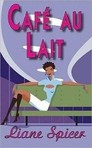
—Liane Spicer is the author of two contemporary romance novels, Café au Lait (Dorchester 2008) and Café Noir (May 2012). She also writes mainstream, literary and speculative fiction under a variety of pen names. Find her on Facebook and Twitter (@Wordtryst Press).

April 1, 2012
Indie publishing follow up: Coming up for air
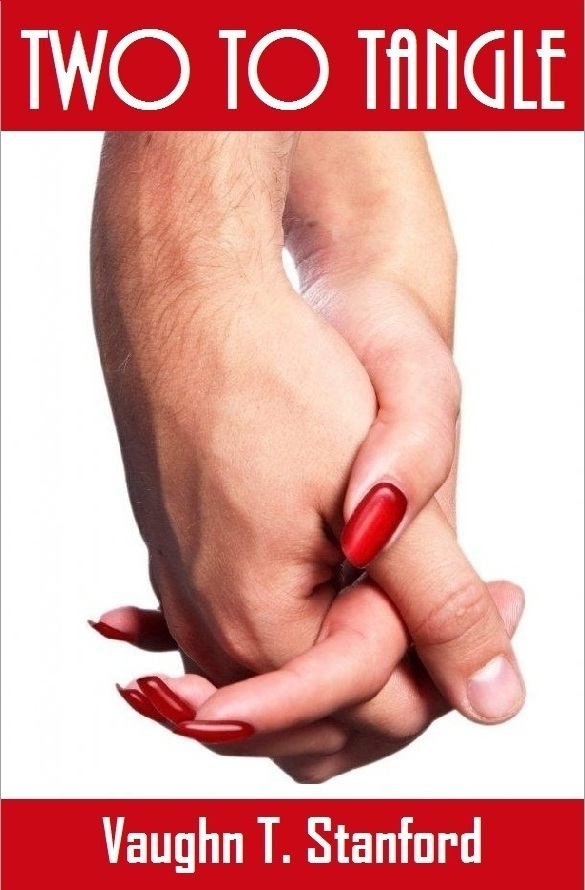 In
Taking the Plunge
in December 2011 on Novel Spaces, I discussed my decision to start a micropress to publish some of my own fiction as well as the work of a few other authors. The initial plan was to launch in December 2011, but since I had a file full of books about the process to read, covers to design and execute, formatting to learn and intricacies of Smashwords/Kindle etc. to explore, I figured a more reasonable time frame would be January.
In
Taking the Plunge
in December 2011 on Novel Spaces, I discussed my decision to start a micropress to publish some of my own fiction as well as the work of a few other authors. The initial plan was to launch in December 2011, but since I had a file full of books about the process to read, covers to design and execute, formatting to learn and intricacies of Smashwords/Kindle etc. to explore, I figured a more reasonable time frame would be January. Stuff kept happening, though, and I pushed my self-imposed deadline further and further away. I vacillated with decisions: publish through Smashwords or go straight to Kindle and take advantage of the KDP Select programme? Do the formatting and covers myself or shell out some cash for these services? Most unexpected of all was my own resistance to taking this big step. I am grateful to Vaughn T. Stanford, author of the first three stories in my lineup, for his patience as I responded to his many enquiries as to when the venture would get off the ground with just one word: "Soon."
 Vaughn had planned to make February 19 a double celebration: my birthday and the launch of the press. As we sat in a restaurant on the water enjoying my birthday lunch and discussing the project, I offered up another "Soon". His response was, "Are you afraid?" I could not even summon indignation that he should ask me, the great adventurer (snigger), about... fear. At that moment I resolved to have the first book live on Kindle in time for
his
birthday, March 6. I was inundated with other work but I spent most of the evening and night of March 6 formatting, writing descriptions, tags and the lot, and at 2AM I finally put the book to bed. I watched the status go from 'In review' to 'Publishing' and finally to 'Live'.
Two to Tangle
had been born, with
The Letter
and
Desire
following hot on its heels. Wordtryst Press was (finally) up and running.
Vaughn had planned to make February 19 a double celebration: my birthday and the launch of the press. As we sat in a restaurant on the water enjoying my birthday lunch and discussing the project, I offered up another "Soon". His response was, "Are you afraid?" I could not even summon indignation that he should ask me, the great adventurer (snigger), about... fear. At that moment I resolved to have the first book live on Kindle in time for
his
birthday, March 6. I was inundated with other work but I spent most of the evening and night of March 6 formatting, writing descriptions, tags and the lot, and at 2AM I finally put the book to bed. I watched the status go from 'In review' to 'Publishing' and finally to 'Live'.
Two to Tangle
had been born, with
The Letter
and
Desire
following hot on its heels. Wordtryst Press was (finally) up and running.I cannot begin to describe the euphoria that hit me once I completed that first crucial step. Next in line are my second romance novel Café Noir , an erotic short story by Nyx and a short story by Nnande Aku, the pen name I've decided to use for some of my non-romance genre fiction. Once those covers are ready I'll click that 'publish' button - and then the journey will really begin.
Coming soon: Official launch of Wordtryst Press. Stay tuned!

February 28, 2012
Nostalgic for my roses
 TiffanyI've been a fanatic rose lover ever since the morning I stepped outside and discovered that the bud on my mother's new Tiffany hybrid tea had opened overnight. Up to that point in my life - I was about nine years old - I had never beheld such beauty, and rarely have since. The perfectly formed petals had a silvery sheen, and in the early morning there were droplets of dew or raindrops that caught the sunlight, forming glistening diamonds in the round. I squatted as close to the bloom as I could, inhaling the famous perfume and just trying to absorb the reality of such an extravagance of beauty.
Fast forward twenty-something years. I had recently moved to a little valley in the north of the island with my son and, joy of joys, there was a garden. The landlord gave his permission for me to plant a few roses along the front wall and the first bush I purchased was, of course, Tiffany. I also got Princesse de Monaco, Garden Party, Olympiad, and another of my mother's favourites, Queen Elizabeth.
 Garden PartyThe roses gave us a lot of joy during those years despite the never-ending battle with black spot in our damp, humid valley. The first blooms on the Garden Party were the hugest I've ever seen on a bush - glorious creamy globes that glowed in moonlight. Olympiad became my favourite red rose ever despite efforts by other enthusiasts to woo me to the likes of Chrysler Imperial and Mister Lincoln. Princesse Monaco is outstanding in form, colour and the sheer number of blooms on the bush in any flush. I remember my son shocking a neighbour across the street by identifying a new rose she had bought, Double Delight. (He had fallen in love with it in my books and wanted me to get him his own bush. In typical kid fashion, he loved the bi-coloured and candy-striped varieties that I found way too garish.)
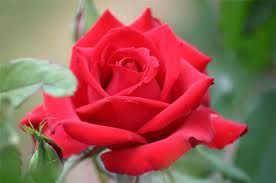 OlympiadWe left that valley in 2000 and went off on our various adventures. I bounced around a few countries and for the last few years have been living in my mom's house in a different part of that same valley. Things are different now, though. She has a garden, but doesn't grow roses and even if she did, they would be
her
show; she is very territorial about her yard.
OlympiadWe left that valley in 2000 and went off on our various adventures. I bounced around a few countries and for the last few years have been living in my mom's house in a different part of that same valley. Things are different now, though. She has a garden, but doesn't grow roses and even if she did, they would be
her
show; she is very territorial about her yard. Princesse de MonacoI miss my roses. My vases are packed in boxes (like most of my books, photo albums and other treasures). I look forward to the day when I'll have a garden of my own once more, with roses I raised from scratch. I want to get up in the morning and cut one perfect Tiffany bud, with the dewdrops still on, for my desk. Of such are the great joys of my life made.
February 22, 2012
In the nude
 I live on an island located within spitting distance of the equator and the setting on the regional thermostat is stuck at HOT. I don't thrive in heat; it makes me want to do nothing more strenuous than lie around and pant while fantasizing about diving headfirst into a pool filled with chilled watermelon cubes, or having a clutch of buff, dedicated young men in togas take turns at sliding ice cubes all over my skin. Focusing on anything that takes actual effort, such as writing, is really asking too much.
The first thing I do on entering the house is strip; once I'm in the privacy of my home I wear little or nothing. I've written roughly half a million words of fiction, most of them in the buff (or close), late at night when the air has cooled enough to render me capable of coherent thought.
My relatives and friends who know of my aversion to clothing are unanimous in their verdict: "Girl, you're CRA-ZY!" I was therefore delighted to stumble across an article this week that proved I was not alone in my strange (to others, utterly natural to me) predilection for writing au naturel. These famous authors did not live in the tropics, to my knowledge, so heat and humidity could not have been that much of a problem for them, but they're kindred naturist spirits.
Agatha Christie liked to write in the bathtub. (Sounds lovely, but I'm a shower gal.)Benjamin Franklin liked to take 'air baths' where he sat around naked in a cold room for a couple hours while he wrote. (Air baths rock!)D.H. Lawrence, author of the controversial erotic novel Lady Chatterley's Lover (one of my favourites), liked to climb mulberry trees in the nude before coming down to write. (Um, no. No splinters in delicate crannies, thank you.)Ernest Hemingway, author of A Farewell to Arms and other classics, wrote nude, standing up, with his typewriter about waist level. (His cousin Edward Hemingway opened Britain's oldest nudist colony, a nine-bedroom chateau called Metherell Towers, back in the 1930s. Cool!)Victor Hugo, author of Les Misérables and The Hunchback of Notre-Dame, overcame writer's block by having his servant take all of his clothes away for the day leaving him nude with only pen and paper so he'd have nothing to do but sit down and write. (Wasn't life simple before they invented the Internet...)I'm in such great company. I can't help wondering, though: Are there other closet naturist writers out there - or am I the last survivor of an almost extinct species?

February 14, 2012
Thank you, Whitney. ♥♥♥ you always!
Wanted to write about how much her music has meant to me, about the beauty of that peerless voice, about the way great gifts always seem to exact their price in pain, how I agonized for her, how the "celebrity" industry cannibalizes its own, how one can have everything yet never have it all. But I've read too much and heard too much and seen too much these past few days. I'm sick of all the words.
Thank you for the music. I'll try to take the advice in this song. It's not working right now, though...

Thank you for the music. I'll try to take the advice in this song. It's not working right now, though...
January 31, 2012
Novel Spaces: Giveaways!
Novel Spaces: Giveaways!: To be entered in this month's giveaway, please leave a comment on the Giveaways! page. This month's titles are:
Act of Grace by Karen Simpson (Fantasy, hard copy) The Unrepentant Rake by Barbara Monajem 9Historical Romance, Digital) The Check Your Luck Agency by Cara d'Bastien (Urban Fantasy, Digital, various formats available)
Act of Grace by Karen Simpson (Fantasy, hard copy) The Unrepentant Rake by Barbara Monajem 9Historical Romance, Digital) The Check Your Luck Agency by Cara d'Bastien (Urban Fantasy, Digital, various formats available)