
 Sign in with Facebook
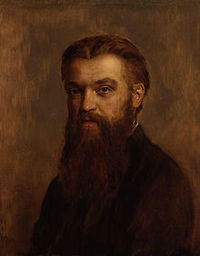
William Kingdon Clifford’s Followers (21)


William Kingdon Clifford
Born
in The United Kingdom
May 04, 1845
Died
March 03, 1879
Genre


|
The Ethics of Belief
—
published
1877
—
15 editions
|
|

|
Ethics of Belief and Other Essays (Great Books in Philosophy)
by
—
published
1999
—
9 editions
|
|

|
Etica, scienza e fede
by
—
published
2013
|
|

|
A Treasury of Modern Asian Stories
by
—
published
1961
—
5 editions
|
|

|
Lectures and Essays by the Late William Kingdon Clifford, F.R.S. (Volume 1)
—
published
1879
—
18 editions
|
|

|
The scientific basis of morals : and other essays, viz. : right and wrong, the ethics of belief, the ethics of religion
—
published
2014
—
35 editions
|
|

|
The Common Sense Of The Exact Sciences
—
published
2007
—
61 editions
|
|

|
Lectures and Essays by William Kingdon Clifford; Volume 2
—
published
2015
—
44 editions
|
|

|
Mathematical Papers by William Kingdon Clifford (Ams Chelsea Publishing, 210)
by
—
published
1882
—
32 editions
|
|

|
Legendary Mathematicians Biography SET: Exploring the Lives of Mathematical Pioneers by William Kingdon Clifford
by |
|
“It is wrong always, everywhere, and for anyone, to believe anything upon insufficient evidence.”
― Ethics of Belief and Other Essays
― Ethics of Belief and Other Essays
“In like manner, if I let myself believe anything on insufficient evidence, there may be no great harm done by the mere belief; it may be true after all, or I may never have occasion to exhibit it in outward acts. But I cannot help doing this great wrong towards Man, that I make myself credulous. The danger to society is not merely that it should believe wrong things, though that is great enough; but that it should become credulous, and lose the habit of testing things and inquiring into them; for then it must sink back into savagery.”
― Ethics of Belief and Other Essays
― Ethics of Belief and Other Essays
“To sum up: it is wrong always, everywhere, and for anyone, to believe anything upon insufficient evidence.
If a man, holding a belief which he was taught in childhood or persuaded of afterwards, keeps down and pushes away any doubts which arise about it in his mind, purposely avoids the reading of books and the company of men that call into question or discuss it, and regards as impious those questions which cannot easily be asked without disturbing it — the life of that man is one long sin against mankind. […]
Inquiry into the evidence of a doctrine is not to be made once for all, and then taken as finally settled. It is never lawful to stifle a doubt; for either it can be honestly answered by means of the inquiry already made, or else it proves that the inquiry was not complete.
“But,” says one, “I am a busy man; I have no time for the long course of study which would be necessary to make me in any degree a competent judge of certain questions, or even able to understand the nature of the arguments.”
Then he should have no time to believe.”
― Ethics of Belief and Other Essays
If a man, holding a belief which he was taught in childhood or persuaded of afterwards, keeps down and pushes away any doubts which arise about it in his mind, purposely avoids the reading of books and the company of men that call into question or discuss it, and regards as impious those questions which cannot easily be asked without disturbing it — the life of that man is one long sin against mankind. […]
Inquiry into the evidence of a doctrine is not to be made once for all, and then taken as finally settled. It is never lawful to stifle a doubt; for either it can be honestly answered by means of the inquiry already made, or else it proves that the inquiry was not complete.
“But,” says one, “I am a busy man; I have no time for the long course of study which would be necessary to make me in any degree a competent judge of certain questions, or even able to understand the nature of the arguments.”
Then he should have no time to believe.”
― Ethics of Belief and Other Essays