
Marc Tyler Nobleman's Blog, page 87
February 21, 2014
“The Kryptonite Kid” (1979 novel involving Superman) - interview with author’s family
“I thought it was really neat how Sally didn’t know you was really Superman and so she loved you for yourself and not for everything else. I love you for yourself also.”
—The Kryptonite Kid, page 14
I keep an eye out for all things red, yellow, and blue. Well, not quite all things…I am mostly interested in lesser-known things. That is how I discovered The Kryptonite Kid, a brave, heartbreaking, fondly remembered 1979 novel by Joseph Torchia, who passed away in 1996.
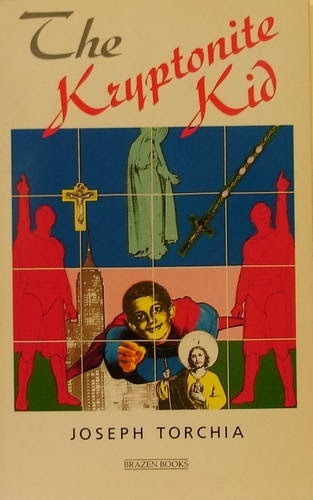
(The quotation above is from Jerry, the elementary school-aged protagonist, and “Sally” is a character in a Superman story Jerry read.)
The novel was critically acclaimed by everyone from Publishers Weekly to The New Republic. It was an ALA Best Book for Young Adults. Of special note, legendary New Yorker critic Pauline Kael: “No other author has treated the effects of Pop mythology with such grace and feeling.”
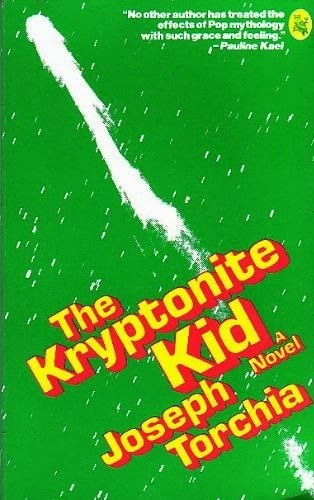
(Joseph was featured in the 3/6/80 issue of The Advocate, in an article starting on page 20. Can anyone please email me a scan of that article?)
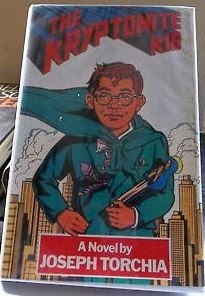 UK edition
I was so moved by the semi-autobiographical story that I reached out to Joseph’s family (brother Joseph and niece Erika) to interview them; they also put me in touch with his legal representative, Jeff Adams. I’ve done an interview like this before with emotional effect.
And this time, something unexpected and exciting came out of it; the family is interested in reissuing the book (originally published by Holt, Rinehart and Winston).
Up, up, and there’s a way…
Enjoy the interview.
Tell me about Joseph.
Jasper: Born in 1946, Joseph was the third child of four (arriving four years after me). Due to our significant age difference, we were not extremely close growing up and we had our own friends.
In high school, he excelled in English. He graduated from Johnsonburg (PA) High School in 1964 (I believe), attended California University of Pennsylvania for the first two years of college, and then transferred to the University of Florida in Gainesville, where he majored in journalism (graduated in 1968?).
He joined the Peace Corps in Ankara, Turkey (1971). Afterwards, he worked as a feature writer at the West Palm Beach Post in Florida. He wrote a feature about having his nose done (before/after, etc.). There are some great shots of this laying around somewhere.
In the ‘70s, he moved to San Francisco and wrote for the San Francisco Examiner and Chronicle. During that time, he wrote some fascinating pieces, such as his experience living as a homeless person would in the Tenderloin for two weeks.
In the ‘80s, he moved to Napa to focus on his novel writing and photography (black and white). As writing was not extremely lucrative, his photography/portrait career was what paid the bills.
Jeff: Extremely friendly, smart, creative, curious, talented. Probably the most creative person I have ever known, with a drive to communicate, to find rewarding channels for his imagination…which was unstoppable. Very childlike in his wonder about anything that interested him, very deep feeling, very giving of himself. People of all kinds were drawn to him.
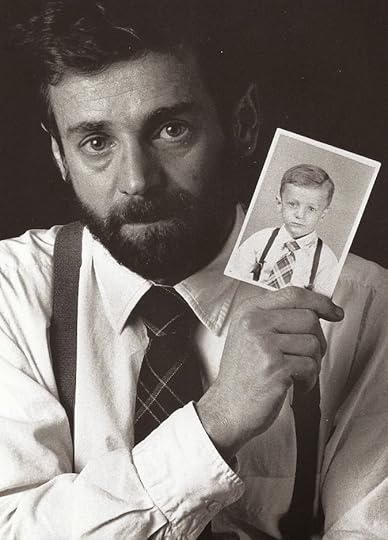
Jeff, how did you meet Joseph?
Jeff: One of my hobbies is book collecting. For example, I have built probably the foremost collection of the American author Don Marquis, best known for the tales of Archy the cockroach and Mehitabel the alley cat. Living in NYC in the late 1970s and early 1980s, I thought at one point I might like to collect a living author at beginning of a promising career. When I read The Kryptonite Kid, I thought I had my author and contacted Joseph, then living in San Francisco, to ask him to sign my book. A correspondence developed, a literary friendship really, which continued when my wife and I moved to San Francisco in 1984; we all became good friends, right up to his passing in 1996. A couple of years ago I was able to place his literary archive at Stanford University.
What inspired him to write The Kryptonite Kid?
Jasper: The Kryptonite Kid was Joseph’s first novel. As kids, the one thing we had in common was that we bought every Superman, Batman, Superboy, every Marvel comic that came out every week for 10 cents. We were Superman fanatics since we could read. I may have gotten him hooked. Our favorite was Superman (I liked Captain Marvel, too). We would share the comic books. When we went off to college, our mom threw them all away. Our dad had a coin collection that we also worked on together.
 Joseph and Jasper
How autobiographical is the book?
Jasper: Very much so. We grew up in a small paper mill town in northwestern Pennsylvania—Pulpsburg in the book, Johnsonburg in reality. Johnsonburg was inhabited predominately by Italian and Polish people and had a large Catholic community. Both Joseph and I attended Catholic school for primary and middle school. We walked a half-mile to school, over the B&O and the Pennsylvania railroad tracks, coming home every day for lunch. We had our main dinner at lunchtime. Our mom was an amazing cook and she cooked a big meal every day.
In 1944-45, when I was two or three years old, I walked out on the roof of our apartment building, looked down at the kids walking to school, and said, “Wanna see me jump?” Cousin Theresa ran in to tell my father and he came out and pulled me off the roof. From the years of recounting, my father’s eyes were bloodshot for days afterwards. [This inspired a pivotal scene in the novel.]
 50th wedding anniversary of Joseph’s parents; Joseph in dark tie and glasses, Jasper with mustache
Was Joseph a Superman fan as an adult?
Jasper: Huh. (thinks about this) Not sure, but assume he was. As for me, I stopped buying them when in high school.
Did he like superheroes in general, or was it only Superman in particular?
Jasper: Superheroes in general.
Given that it was in part based on his own life, was it hard for him to write the book?
Jasper: I know he had to rewrite it twice (publisher made some significant changes). It was done on an IBM Selectric typewriter.
Jeff: I doubt it was hard to conceive the format but very important for him to get it just right, which would be true of anything he did. He could obsess on an artistic challenge but live happily with the result, and move on. He lived with words, knew their power, was enormously tough on himself in rewrite phases. This was his first novel and though he was already a professional journalist, this was fiction—which by my estimation was as real to him as anything in life. And he was quite proud of The Kryptonite Kid not only for getting it right but also because it touched so many people.
Erika: I heard from Jeff that the publisher wanted him to use the correct spelling of words in the letters to Superman. [The book is epistolary, the narrator is a seven-year-old, and the letters are printed unedited from “child-speak.”] Ugh.

What was the family reaction to the book?
Jasper: They were very proud of him. However, my dad didn’t read the book. Theresa Ann, who was the eldest sibling in the convent…not sure if she read it.
Why didn’t your dad read it?
Jasper: I don’t know why Papa didn’t read Joey's book. Maybe he did and I don’t know. Sorry I can’t give you any facts concerning this.
What was Joseph’s reaction to the media response to the book?
Jasper: He was very happy with the response he got from Pauline Kael.
Did he ever hear from DC Comics (publisher of Superman) about the book?
Jasper: He had a couple comic strips that he wanted to include in the book, but they would not allow their inclusion.
Did he ever hear from any organizations dedicated to protecting abused children about the book? Did he ever hear from the church?
Jasper: Not that I know of.
Was there ever talk of Joseph writing a sequel?
Jasper: Not that I know of.
Jeff: No, other than the piece he published in Gay Sunshine. I don’t have a recollection of the piece except that it took the concept well beyond what a mainstream reader would find relatable. I do not believe it was excised from the novel, but an isolated area of the concept that he felt he could explore with authority and for a specific audience.
Was there interest in developing the story as a movie?
Jasper: Yes. There are two screenplays written (in his archives), but neither was picked up.
Jeff: I would say very definitely, and at least one screenplay was developed with a collaborator. Also, similar interest in seeing it as a play.
Did Joseph write any other books after As If After Sex (1983)? If so, did he try to get them published? If not, why did he stop writing?
Jasper: Yes, he wrote two other books that were not published: Purgatory, PA and Edible Variety (don’t know years). He also [wrote] short stories—one on Flannery O’Connor, who was his favorite writer. He never really stopped writing, that I know of.
Jeff: Yes, The Edible Variety was completed, I believe at least a couple of drafts. He was also in development stages on a work we called the “Turkey Book.” His agents may have shown The Edible Variety around but I do not recall why it didn’t get into print. But for sure he did not stop writing.
Tell me about his photography.
Jeff: He was a professional photographer, working independently for local businesses and other customers. He also did fine art photography on his own time, working with teachers and refining techniques in practice. It was his source of income, but also a new and exciting channel for his creative energies.
 1994
1994
When and how did he die?
Jasper: He died in 1996 of AIDS-related cancer.
Was he in a relationship when he died, and if so, is the family still in touch with that person?
Jasper: No, he was not in a relationship at the time. He was living alone. He had many close friends in Napa.
What did you first think when I approached you about doing an interview?
Jasper: Anything that would help The Kryptonite Kid to be republished or the screenplay revived would be fantastic.
Anything else you’d like to add?
Jeff: As an artist he was just hitting his stride and was devastated—as were his friends—that he would not live to realize his full potential. I would be honored to play a role in giving new life to The Kryptonite Kid for new generations of readers. Ease into the pop mythology conceit, but be prepared for the deeper subjects as the story unfolds. Very quickly, you realize this is not a children’s book—but perhaps one for adults who wonder exactly when they exited childhood.
I think Joseph Torchia poured himself, and his empathy for people, into this haunting novel. You see it in the twin prologue/epilogue.
And you thank him.
—The Kryptonite Kid, page 14
I keep an eye out for all things red, yellow, and blue. Well, not quite all things…I am mostly interested in lesser-known things. That is how I discovered The Kryptonite Kid, a brave, heartbreaking, fondly remembered 1979 novel by Joseph Torchia, who passed away in 1996.

(The quotation above is from Jerry, the elementary school-aged protagonist, and “Sally” is a character in a Superman story Jerry read.)
The novel was critically acclaimed by everyone from Publishers Weekly to The New Republic. It was an ALA Best Book for Young Adults. Of special note, legendary New Yorker critic Pauline Kael: “No other author has treated the effects of Pop mythology with such grace and feeling.”

(Joseph was featured in the 3/6/80 issue of The Advocate, in an article starting on page 20. Can anyone please email me a scan of that article?)
 UK edition
I was so moved by the semi-autobiographical story that I reached out to Joseph’s family (brother Joseph and niece Erika) to interview them; they also put me in touch with his legal representative, Jeff Adams. I’ve done an interview like this before with emotional effect.
And this time, something unexpected and exciting came out of it; the family is interested in reissuing the book (originally published by Holt, Rinehart and Winston).
Up, up, and there’s a way…
Enjoy the interview.
Tell me about Joseph.
Jasper: Born in 1946, Joseph was the third child of four (arriving four years after me). Due to our significant age difference, we were not extremely close growing up and we had our own friends.
In high school, he excelled in English. He graduated from Johnsonburg (PA) High School in 1964 (I believe), attended California University of Pennsylvania for the first two years of college, and then transferred to the University of Florida in Gainesville, where he majored in journalism (graduated in 1968?).
He joined the Peace Corps in Ankara, Turkey (1971). Afterwards, he worked as a feature writer at the West Palm Beach Post in Florida. He wrote a feature about having his nose done (before/after, etc.). There are some great shots of this laying around somewhere.
In the ‘70s, he moved to San Francisco and wrote for the San Francisco Examiner and Chronicle. During that time, he wrote some fascinating pieces, such as his experience living as a homeless person would in the Tenderloin for two weeks.
In the ‘80s, he moved to Napa to focus on his novel writing and photography (black and white). As writing was not extremely lucrative, his photography/portrait career was what paid the bills.
Jeff: Extremely friendly, smart, creative, curious, talented. Probably the most creative person I have ever known, with a drive to communicate, to find rewarding channels for his imagination…which was unstoppable. Very childlike in his wonder about anything that interested him, very deep feeling, very giving of himself. People of all kinds were drawn to him.

Jeff, how did you meet Joseph?
Jeff: One of my hobbies is book collecting. For example, I have built probably the foremost collection of the American author Don Marquis, best known for the tales of Archy the cockroach and Mehitabel the alley cat. Living in NYC in the late 1970s and early 1980s, I thought at one point I might like to collect a living author at beginning of a promising career. When I read The Kryptonite Kid, I thought I had my author and contacted Joseph, then living in San Francisco, to ask him to sign my book. A correspondence developed, a literary friendship really, which continued when my wife and I moved to San Francisco in 1984; we all became good friends, right up to his passing in 1996. A couple of years ago I was able to place his literary archive at Stanford University.
What inspired him to write The Kryptonite Kid?
Jasper: The Kryptonite Kid was Joseph’s first novel. As kids, the one thing we had in common was that we bought every Superman, Batman, Superboy, every Marvel comic that came out every week for 10 cents. We were Superman fanatics since we could read. I may have gotten him hooked. Our favorite was Superman (I liked Captain Marvel, too). We would share the comic books. When we went off to college, our mom threw them all away. Our dad had a coin collection that we also worked on together.
 Joseph and Jasper
How autobiographical is the book?
Jasper: Very much so. We grew up in a small paper mill town in northwestern Pennsylvania—Pulpsburg in the book, Johnsonburg in reality. Johnsonburg was inhabited predominately by Italian and Polish people and had a large Catholic community. Both Joseph and I attended Catholic school for primary and middle school. We walked a half-mile to school, over the B&O and the Pennsylvania railroad tracks, coming home every day for lunch. We had our main dinner at lunchtime. Our mom was an amazing cook and she cooked a big meal every day.
In 1944-45, when I was two or three years old, I walked out on the roof of our apartment building, looked down at the kids walking to school, and said, “Wanna see me jump?” Cousin Theresa ran in to tell my father and he came out and pulled me off the roof. From the years of recounting, my father’s eyes were bloodshot for days afterwards. [This inspired a pivotal scene in the novel.]
 50th wedding anniversary of Joseph’s parents; Joseph in dark tie and glasses, Jasper with mustache
Was Joseph a Superman fan as an adult?
Jasper: Huh. (thinks about this) Not sure, but assume he was. As for me, I stopped buying them when in high school.
Did he like superheroes in general, or was it only Superman in particular?
Jasper: Superheroes in general.
Given that it was in part based on his own life, was it hard for him to write the book?
Jasper: I know he had to rewrite it twice (publisher made some significant changes). It was done on an IBM Selectric typewriter.
Jeff: I doubt it was hard to conceive the format but very important for him to get it just right, which would be true of anything he did. He could obsess on an artistic challenge but live happily with the result, and move on. He lived with words, knew their power, was enormously tough on himself in rewrite phases. This was his first novel and though he was already a professional journalist, this was fiction—which by my estimation was as real to him as anything in life. And he was quite proud of The Kryptonite Kid not only for getting it right but also because it touched so many people.
Erika: I heard from Jeff that the publisher wanted him to use the correct spelling of words in the letters to Superman. [The book is epistolary, the narrator is a seven-year-old, and the letters are printed unedited from “child-speak.”] Ugh.

What was the family reaction to the book?
Jasper: They were very proud of him. However, my dad didn’t read the book. Theresa Ann, who was the eldest sibling in the convent…not sure if she read it.
Why didn’t your dad read it?
Jasper: I don’t know why Papa didn’t read Joey's book. Maybe he did and I don’t know. Sorry I can’t give you any facts concerning this.
What was Joseph’s reaction to the media response to the book?
Jasper: He was very happy with the response he got from Pauline Kael.
Did he ever hear from DC Comics (publisher of Superman) about the book?
Jasper: He had a couple comic strips that he wanted to include in the book, but they would not allow their inclusion.
Did he ever hear from any organizations dedicated to protecting abused children about the book? Did he ever hear from the church?
Jasper: Not that I know of.
Was there ever talk of Joseph writing a sequel?
Jasper: Not that I know of.
Jeff: No, other than the piece he published in Gay Sunshine. I don’t have a recollection of the piece except that it took the concept well beyond what a mainstream reader would find relatable. I do not believe it was excised from the novel, but an isolated area of the concept that he felt he could explore with authority and for a specific audience.
Was there interest in developing the story as a movie?
Jasper: Yes. There are two screenplays written (in his archives), but neither was picked up.
Jeff: I would say very definitely, and at least one screenplay was developed with a collaborator. Also, similar interest in seeing it as a play.
Did Joseph write any other books after As If After Sex (1983)? If so, did he try to get them published? If not, why did he stop writing?
Jasper: Yes, he wrote two other books that were not published: Purgatory, PA and Edible Variety (don’t know years). He also [wrote] short stories—one on Flannery O’Connor, who was his favorite writer. He never really stopped writing, that I know of.
Jeff: Yes, The Edible Variety was completed, I believe at least a couple of drafts. He was also in development stages on a work we called the “Turkey Book.” His agents may have shown The Edible Variety around but I do not recall why it didn’t get into print. But for sure he did not stop writing.
Tell me about his photography.
Jeff: He was a professional photographer, working independently for local businesses and other customers. He also did fine art photography on his own time, working with teachers and refining techniques in practice. It was his source of income, but also a new and exciting channel for his creative energies.
 1994
1994When and how did he die?
Jasper: He died in 1996 of AIDS-related cancer.
Was he in a relationship when he died, and if so, is the family still in touch with that person?
Jasper: No, he was not in a relationship at the time. He was living alone. He had many close friends in Napa.
What did you first think when I approached you about doing an interview?
Jasper: Anything that would help The Kryptonite Kid to be republished or the screenplay revived would be fantastic.
Anything else you’d like to add?
Jeff: As an artist he was just hitting his stride and was devastated—as were his friends—that he would not live to realize his full potential. I would be honored to play a role in giving new life to The Kryptonite Kid for new generations of readers. Ease into the pop mythology conceit, but be prepared for the deeper subjects as the story unfolds. Very quickly, you realize this is not a children’s book—but perhaps one for adults who wonder exactly when they exited childhood.
I think Joseph Torchia poured himself, and his empathy for people, into this haunting novel. You see it in the twin prologue/epilogue.
And you thank him.


February 20, 2014
Pine Road Elementary, Huntingdon Valley, PA

Of late I have been spoiled by superb school visits, and met no exception on 2/19/14 at Pine Road School in Pennsylvania (my first author appearance in the state).

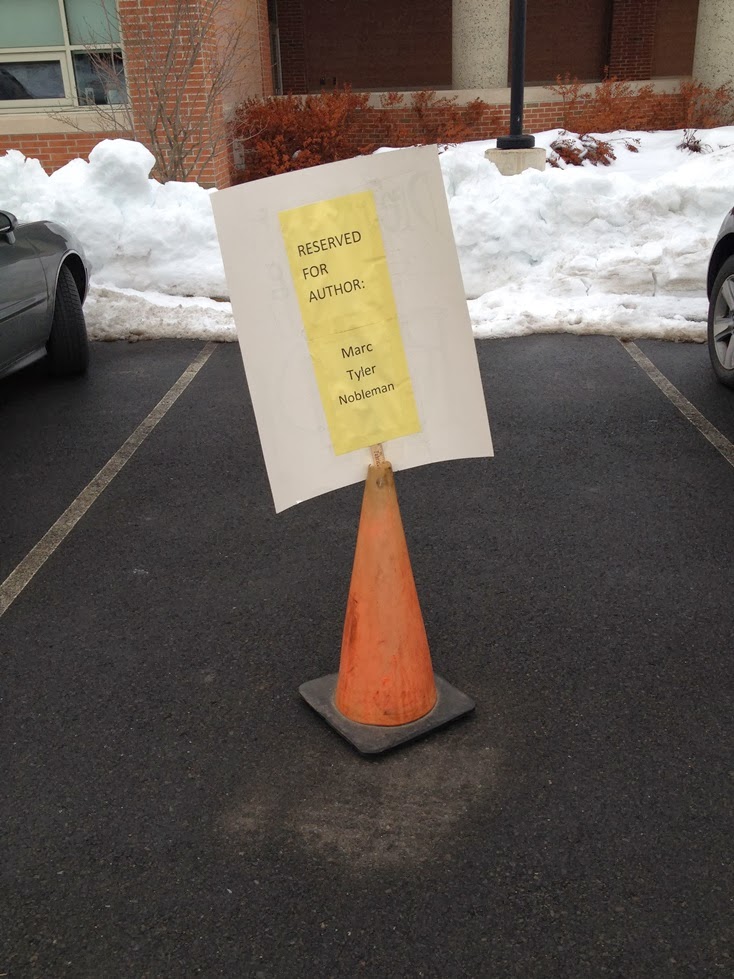 Special thanks to librarian Keith Crowell, who was an absolute pleasure to work with.
This school was the second ever at which students and staff dressed as superheroes for my visit. As it happens, the first was precisely a week prior.
Pine Road sold a pine tree's worth (sorry) of books, including Vanished: True Stories of the Missing. I'd not thought about the fact that the opening story in the book (about 2nd grader Erica Pratt) took place in Pennsylvania.
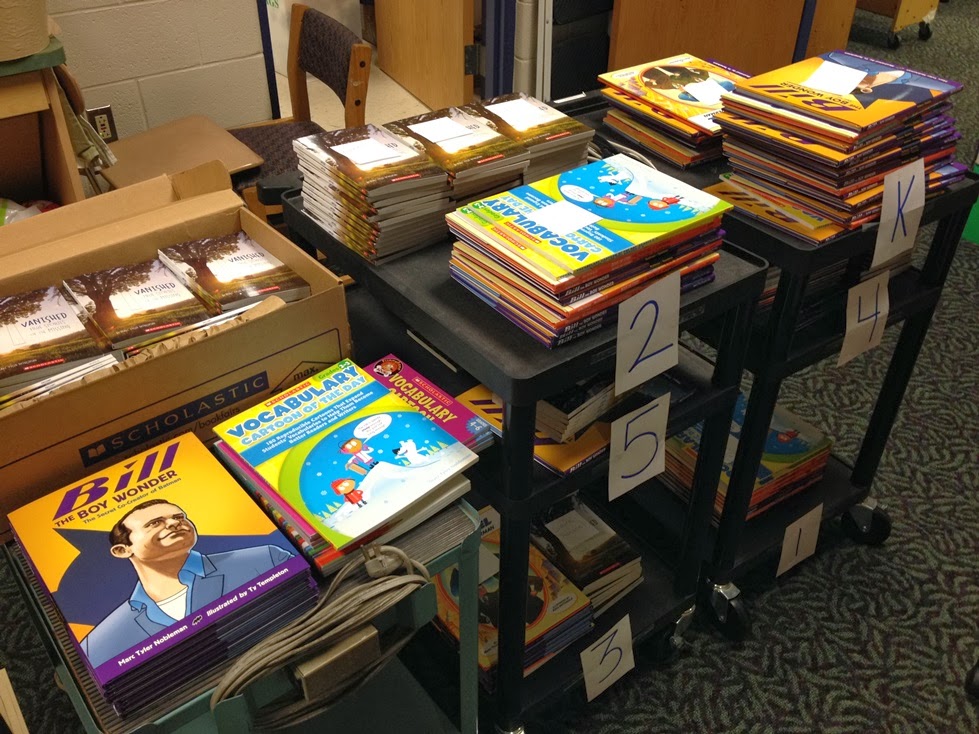
After my Superman/Batman/Siegel/Shuster/Finger talk, a 4th grade girl came up to me and said that she thought she was going to start crying while I told the saddest parts of the Bill Finger story. I told her that it would have been okay and that others have, including me.
A 4th grade boy asked me, "What is your perspective on misery and what is your perspective on joy?"
Definitely a first for me, and a profound one at that. I stammered out an answer-by-blindside that did not involve Bill, though in retrospect it could have. His story is that odd blend of both.
 photo by Ellen Zschunke; note Batgirl
February 19, 2014
Best of the blog 2013
This blog launched on 2/19/08.
Every February 19, I share what I feel have been the best posts of the previous twelve months.
This year's medalists:
speaking
at a school visit in Tanzania, what made an especially big impact—literallythe aftermath of the Tanzania UFOdelivering Chris Crutcher's keynotea Plum Creek Literacy Festival attendee's reaction to my presentationbeing welcomed by trumpetsBill Finger and I go to Texas
promotion
74 years after he co-created Batman in New York City, Bill Finger makes the New York TimesBill the Boy Wonder: The Secret Co-Creator of Batman on NBC News/Today Show/MSNtalking Bill Finger on Kevin Smith's Fat Man on Batman podcastThe Very Hungry Caterpillar meets BatmanBill the Boy Wonder around the worldone way to get people talking about the subject of your book
research
Facebook is also Findbooksecrets hidden in Bill the Boy Wondertrying to reach Jerry Siegel in 1994original (and in some cases final) interviews with eight writers/artists of the Golden/Silver Age of ComicsBill Finger and gay culturethe sole Bill Finger screen credit...for Superman
publishing
kidlit authors read aloud a bad review of their own booksis Bill the Boy Wonder a children's book?rules I broke in Boys of Steel: The Creators of Supermanguess the picture bookunused covers for Bill the Boy Wondernonfiction invasion at International Reading Association Convention 2013
miscellaneous
why Bill the Boy Wonder should have received an Eisner nominationdespite significant support from both the public and the press, Google did not give Bill Finger a doodle on his 100th birthdayoriginal interviews with ingenues of iconic 1980s music videoscomic book scripts I wrote for Batman: The Brave and the Boldghost hunting authorsproposing a Bill Finger memorial in New York CityJerry Siegel and Joe Shuster are not heroesBill Finger's sole granddaughter and great-grandson meet their publickids write letters to Bob Kane as Bill Finger's son (warning: profound thoughts)solving the mystery of the Wonder Twins movie posterSuperman turns 75funny signs from my travelswhere art tells the story in Bill the Boy WonderBoys of Steel with Boys of Steel"The Bloodhound Gang" - where are they now?my earliest published workthe first actor to play Bill Fingerthree junctures at which Bob Kane could have acted noblythe eeriness of a music video produced four days before 9/11the shape of the border of Bill Finger's yearbook portrait
Every February 19, I share what I feel have been the best posts of the previous twelve months.
This year's medalists:
speaking
at a school visit in Tanzania, what made an especially big impact—literallythe aftermath of the Tanzania UFOdelivering Chris Crutcher's keynotea Plum Creek Literacy Festival attendee's reaction to my presentationbeing welcomed by trumpetsBill Finger and I go to Texas
promotion
74 years after he co-created Batman in New York City, Bill Finger makes the New York TimesBill the Boy Wonder: The Secret Co-Creator of Batman on NBC News/Today Show/MSNtalking Bill Finger on Kevin Smith's Fat Man on Batman podcastThe Very Hungry Caterpillar meets BatmanBill the Boy Wonder around the worldone way to get people talking about the subject of your book
research
Facebook is also Findbooksecrets hidden in Bill the Boy Wondertrying to reach Jerry Siegel in 1994original (and in some cases final) interviews with eight writers/artists of the Golden/Silver Age of ComicsBill Finger and gay culturethe sole Bill Finger screen credit...for Superman
publishing
kidlit authors read aloud a bad review of their own booksis Bill the Boy Wonder a children's book?rules I broke in Boys of Steel: The Creators of Supermanguess the picture bookunused covers for Bill the Boy Wondernonfiction invasion at International Reading Association Convention 2013
miscellaneous
why Bill the Boy Wonder should have received an Eisner nominationdespite significant support from both the public and the press, Google did not give Bill Finger a doodle on his 100th birthdayoriginal interviews with ingenues of iconic 1980s music videoscomic book scripts I wrote for Batman: The Brave and the Boldghost hunting authorsproposing a Bill Finger memorial in New York CityJerry Siegel and Joe Shuster are not heroesBill Finger's sole granddaughter and great-grandson meet their publickids write letters to Bob Kane as Bill Finger's son (warning: profound thoughts)solving the mystery of the Wonder Twins movie posterSuperman turns 75funny signs from my travelswhere art tells the story in Bill the Boy WonderBoys of Steel with Boys of Steel"The Bloodhound Gang" - where are they now?my earliest published workthe first actor to play Bill Fingerthree junctures at which Bob Kane could have acted noblythe eeriness of a music video produced four days before 9/11the shape of the border of Bill Finger's yearbook portrait
February 17, 2014
Bill the Boy Republican
Interesting email over the transom recently: the man who wrote this article—who happens to be the father of the then-9-year-old boy the article is about—asked me if Bill the Boy Wonder: The Secret Co-Creator of Batman is suitable for a now-12-year-old. Meaning is he too old for it.
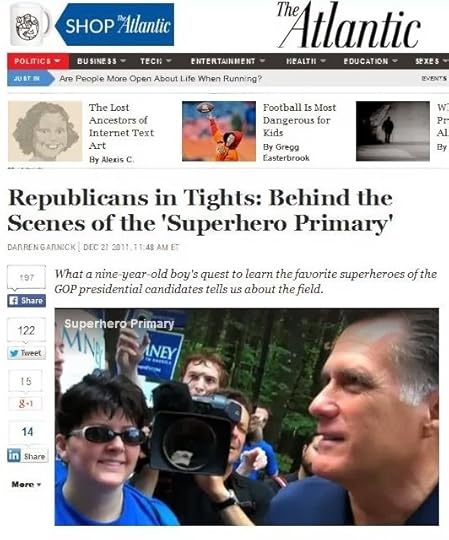
My all-purpose answer: you’re never too old for Batman.
Nice to meet you, Darren, and thanks for writing. Ari, please let me know what you think of the book.

My all-purpose answer: you’re never too old for Batman.
Nice to meet you, Darren, and thanks for writing. Ari, please let me know what you think of the book.
February 16, 2014
Compound word schools in Connecticut

On 2/11/14, I had the pleasure of speaking at Buttonball Elementary School in Glastonbury and the next day at Wintergreen Interdistrict Magnet School in Hamden; both in Connecticut, both wonderful experiences, both arranged by longtime friends (thank you, Rachel Kramer Cohen and Ingrid Ellinger Doviak), and both, as noted in the post title, compound words.
At Buttonball, a class summarized what they got out of the presentation (and this is, of course, heartening):
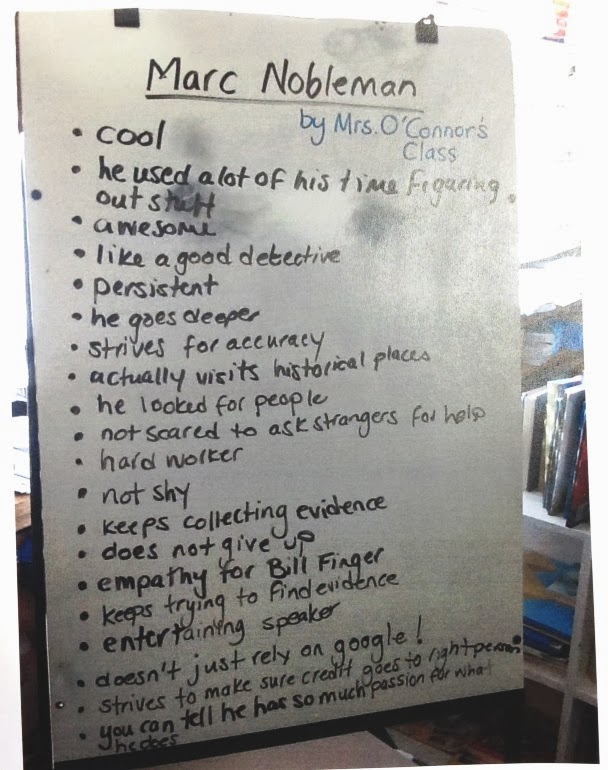
At Wintergreen, both students and staff dressed as superheroes for my visit; schools often create dynamic displays to welcome authors, but this was the first time any school got into the spirit sartorially:


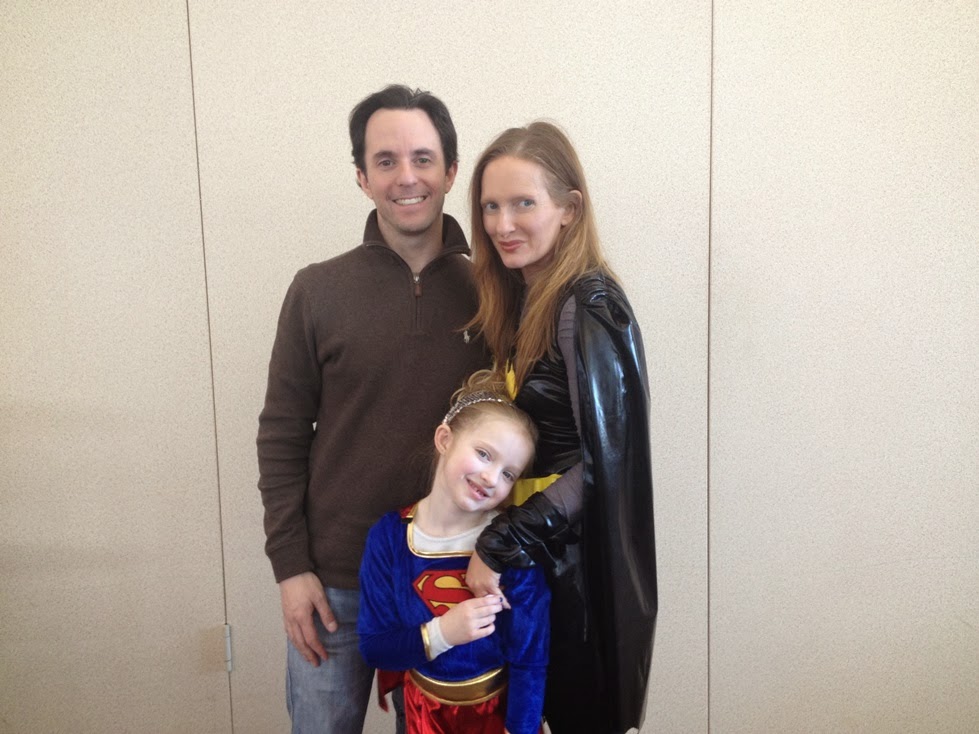 with Ingird/Batgirl and her daughter/Supergirl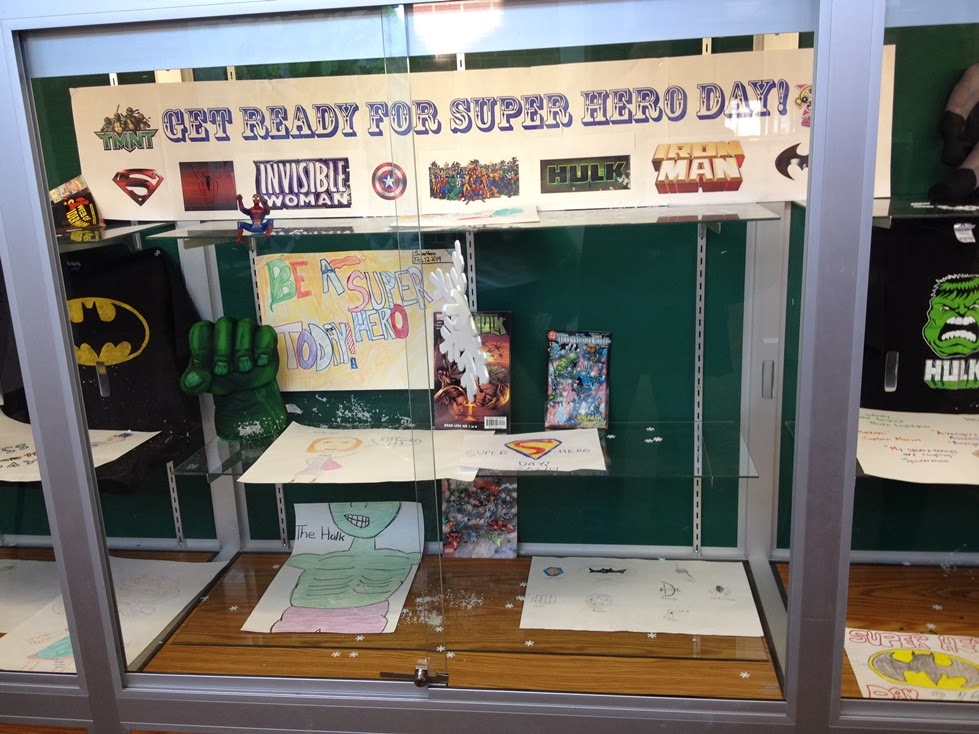
Thank you again to all who made these visits possible.
February 15, 2014

February 13, 2014
Dispatch from Tanzania: influencer list
My kind host from my January 2014 visit to an international school in Tanzania sent me the following a few weeks after:
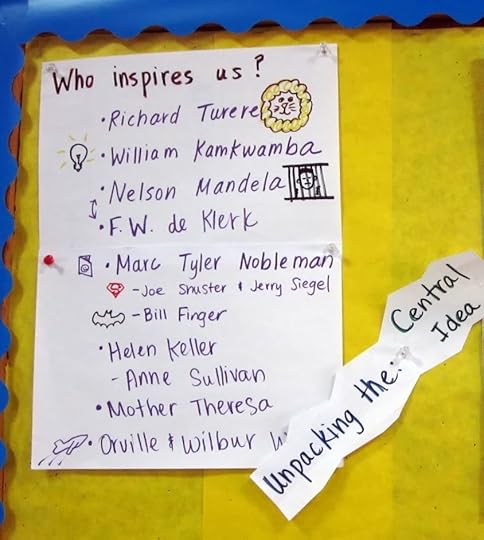
It is at once humbling and heartening. I am most thrilled about seeing Bill, Jerry, and Joe on the list, in such distinguished company (not including me).

It is at once humbling and heartening. I am most thrilled about seeing Bill, Jerry, and Joe on the list, in such distinguished company (not including me).
February 12, 2014


February 11, 2014
"Thirty Minutes Over Oregon": spring 2016
Japanese pilot Nobuo Fujita’s flight over a U.S. state in 1942 was historic yet little-known; it was also quick—the title of my book about this postulates that it lasted only thirty minutes.
My journey to publish this book has lasted seven years.
And on 1/10/14, I finally reached the horizon: Jennifer Greene of Clarion Books made an offer.
I’m beyond thrilled to announce that the book will land in spring 2016.
Thank you to all who have believed in this story.
The best part of it starts now.
From Publishers Marketplace (2/10/14):
Bombs—and jaws—will drop.
My journey to publish this book has lasted seven years.
And on 1/10/14, I finally reached the horizon: Jennifer Greene of Clarion Books made an offer.
I’m beyond thrilled to announce that the book will land in spring 2016.
Thank you to all who have believed in this story.
The best part of it starts now.
From Publishers Marketplace (2/10/14):
Boys of Steel author Marc Tyler Nobleman’s Thirty Minutes Over Oregon, the true story of Nobuo Fujita, the Japanese WWII pilot who became the first and still only person to bomb the United States mainland from a plane—and who returned twenty years later to apologize—to Jennifer Greene at Clarion, for publication in Spring 2016, by Emily van Beek at Folio Literary Management.
Bombs—and jaws—will drop.


