
Marc Tyler Nobleman's Blog, page 21
October 24, 2019
Speaking on the Queen Mary 2 cruise ship
It’s been claimed that the “three most written-about subjects of all time are Jesus, the Civil War, and the Titanic.”
From October 11-18, my three most talked-about subjects were Batman, fairies, and the Queen Mary 2, which (probably in large part because it was my first cruise) reminded me of the Titanic.
Cruise ships like to provide nonstop stimulation for their passengers, especially on days at sea when no excursion options exist. I believe this is why cruises began to invite all kinds of experts and enthusiasts to speak on board. I am now one of those enthusiasts.
It took roughly a year of prep before stepping foot onto the gangway, and I’m not talking about my lectures (as they are called in the cruise biz). I mean learning best practices for being a cruise lecturer plus the logistics of scheduling travel of any kind.
In recent years, it seems, the role of cruise lecturers has expanded; they are now expected to be available to guests even when they are offstage. We’re there to share, then to interact at any point if guests would like to chat. (Of course, most speakers would be recognizable only to those passengers who have attended their lectures, and fewer than 100 of my ship’s 2,600 passengers did so. Always a lot of competition!)
My cruise (Quebec-Halifax-New York) lasted six days, two of which were at sea, so I was scheduled for two lectures: one on 10/15, the other on 10/17. First talk (Bill Finger) went well. Second one (fairies)…went.
Well, I think it went well to the audience, but unbeknownst to them, in the two hours before I spoke, I got seasick…four times. I still wasn’t myself when I went onstage, but (by land or by sea) the show must go on. And I had taken steps to feel better, including something I don’t normally do (onstage or otherwise): I chewed gum. Specifically ginger gum, because ginger can reduce nausea.
This was my last full day on the ship, and the only day when the sea was rough. Apparently, it was one of the choppiest days at sea the ship had experienced in a while. The stage was gently rocking the whole time I was on it, but I did my best to keep my mind on my material and somehow managed to get through it.
Then I slept most of the rest of the day.
Thank you to Cunard and cruise agent Tim Castle for inviting me on board. It was a privilege and a pleasure.
Highlights:
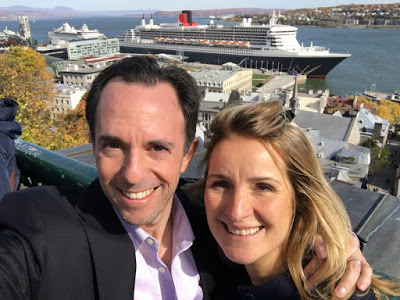 My wife Daniela and I before boarding, with the ship behind us.
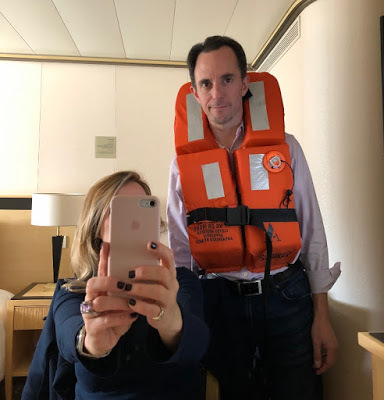 The lifejacket fit.
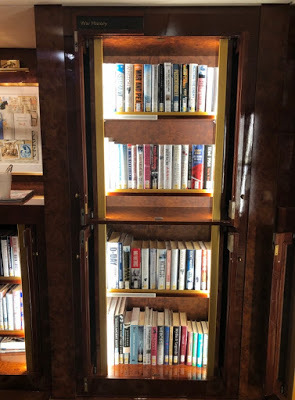 The ship’s library. The bookcases were illuminated.Every night, every one of them had to be lockedmanually.
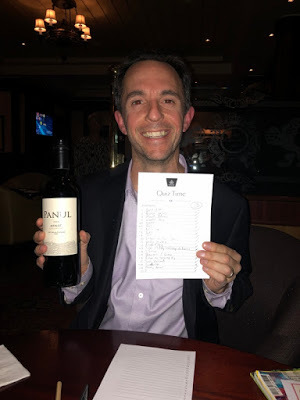 On our first night, I played the 10 pm movie trivia in the ship’s pub.I won a bottle of wine.
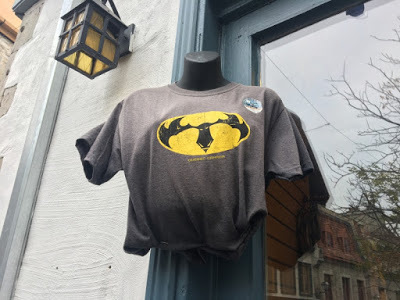 Batmoose. (It’s Canada.)
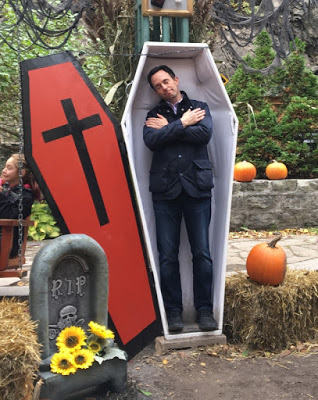
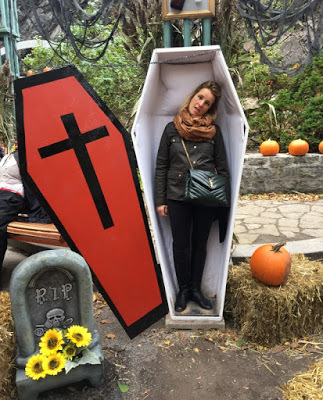
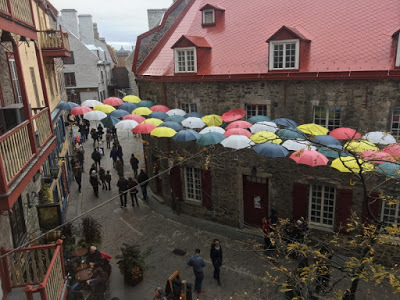
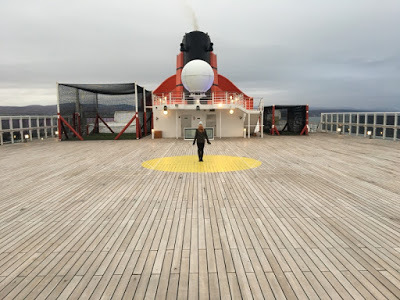 Daniela on the top-deck helipad.
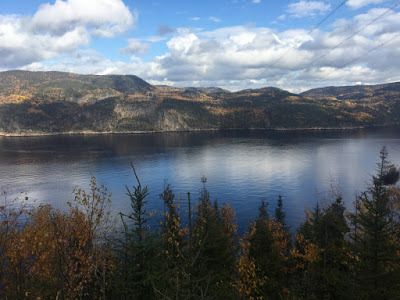 Saguenay, Quebec. We took a boat tour on the fjord.
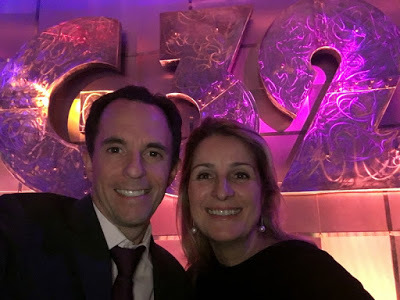 The ship’s nightclub, G32. Most of the passengers were in their sixtiesor older. G32 was not crowded.
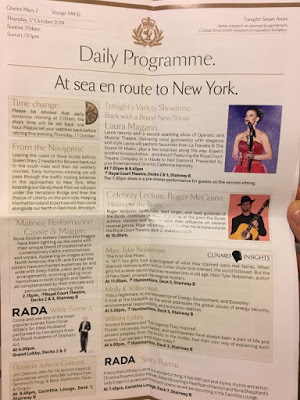
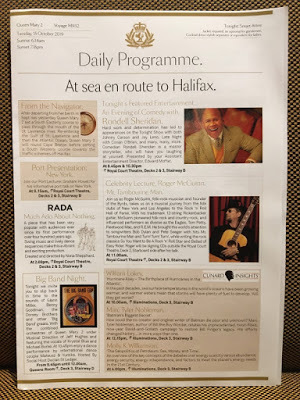 Every night, the program for the following day was slid under the door.This one announces the first of my two lectures. One of the other speakerswas Roger McGuinn, frontman of the Byrds. He shared some greatanecdotes about the 1960s rock and folk scene.
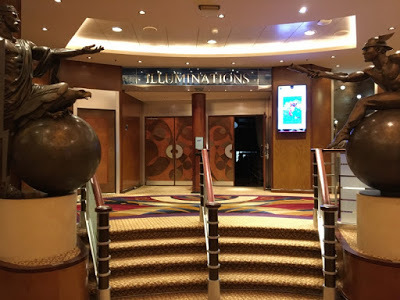 The entrance to the auditorium where lecturers spoke andwhere movies were shown (none of which we went to).
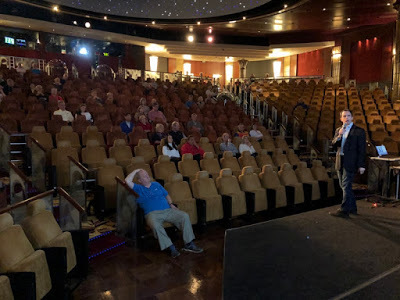 That guy in the front row sat there for both of my talks andboth times kept his hand on his head the whole time.
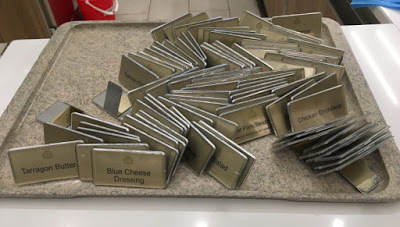 A few dozen of the hundreds of small placards identifyingfood options at the buffet.
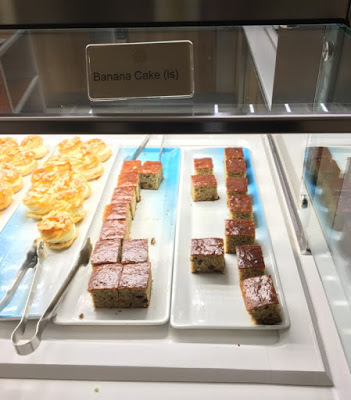 My favorite item at the buffet. (See my author bio for The Chupacabra Ate the Candelabra.)
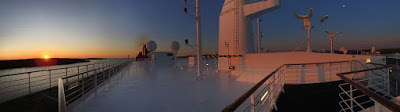
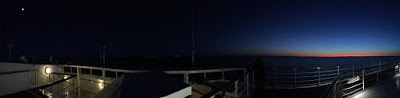 Sunrise as we pulled into Halifax.
That white dot at top left is the moon.
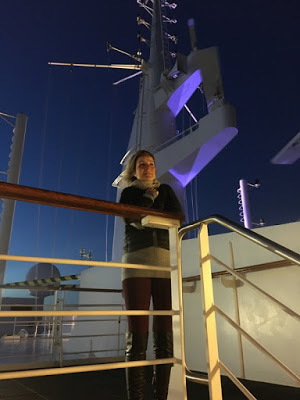 Just before 6 am.
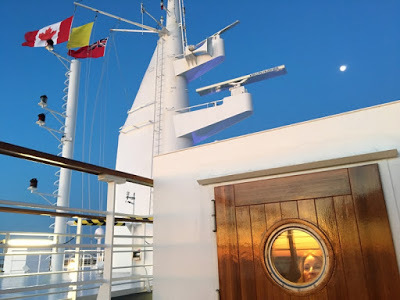 Just after 6 am. (Daniela is behind the porthole.)The yellow flag signals that the ship is free of disease.
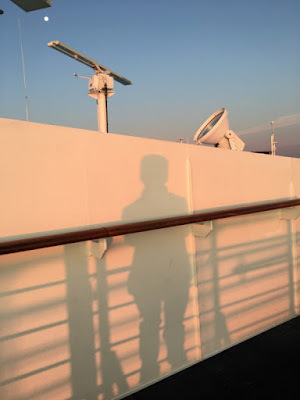 My sunrise shipboard shadow with the moon still visible.
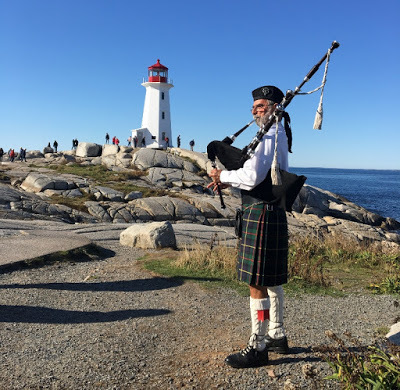 Peggy’s Cove, Halifax. Lighthouses and bagpipersare both fun to observe, so here is a two-for-one.
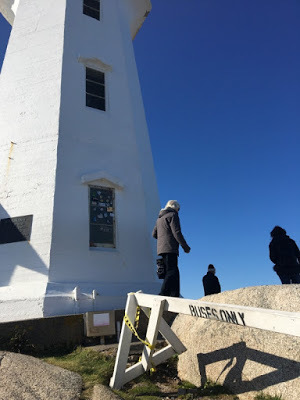 I thought it was funny to see a “Buses Only” barricadehaphazardly misplaced on the rocky terrain surroundingthe lighthouse.
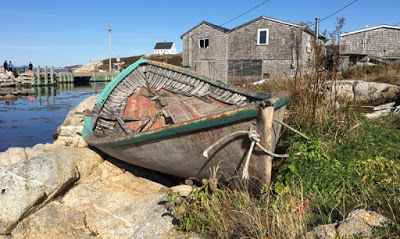
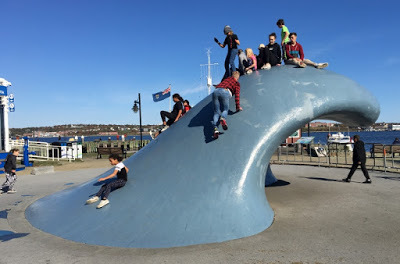 A cool wave slide in Halifax.
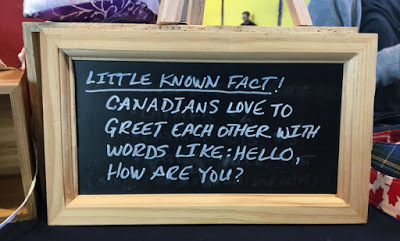 A funny yet sad sign at a pier craft market in Halifax that catersto the cruise crowd. Come on, people—be considerate!
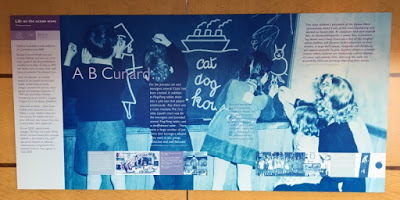 One of many historical signs on board, this oneabout how the ship kept children entertained.
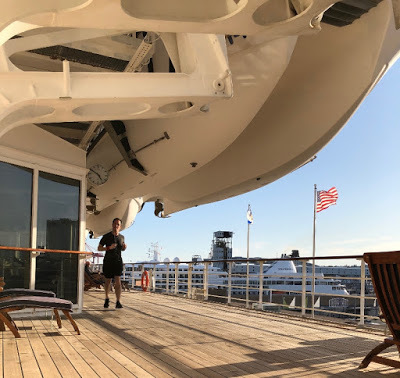 The running path on board was deck 7, the only deck that encircledthe ship. Three laps roughly equaled one mile. I ran it twice; a third day I had to run on a treadmill at the gym due to wet weather.
Time-lapse of one (walking) lap around deck 7.
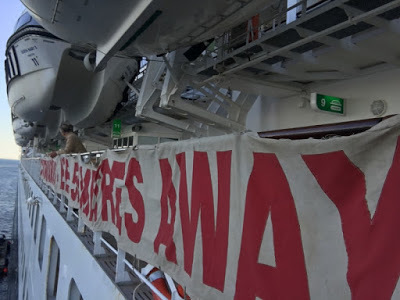
 To photograph this long banner asking other ships to keep a safe distance,I had to stretch my arm out over the water. If that seems reckless, it won’t compared to this.
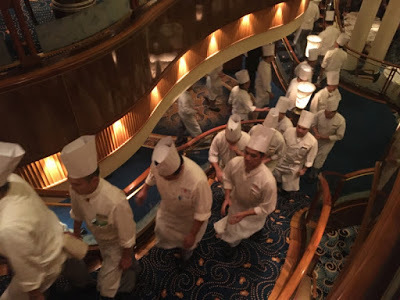 During the second-to-last dinner, the 160+ chefs who worked in
the biggest restaurant on the ship were invited out
for a hearty round of applause.
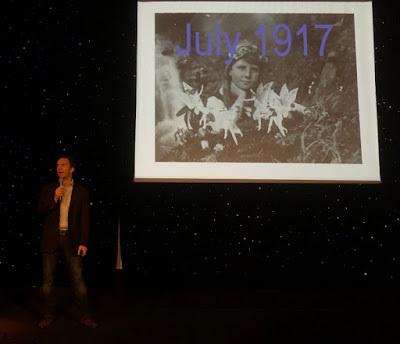 My second ship lecture (but first while seasick).
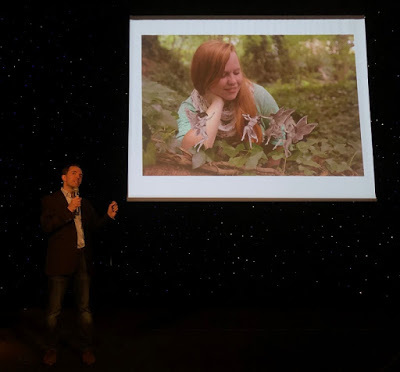 Showing off Eliza Wheeler’s bewitching illustrator photofor Fairy Spell.
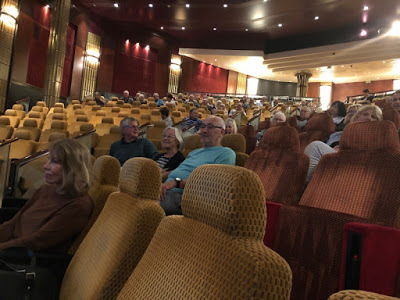
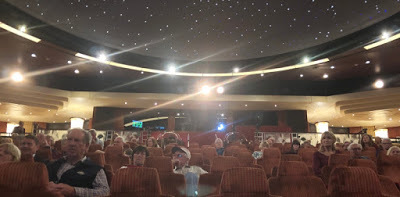 Hard to tell here, but I had a bigger turnout for the second lecture.
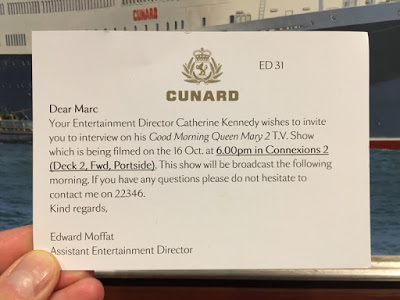
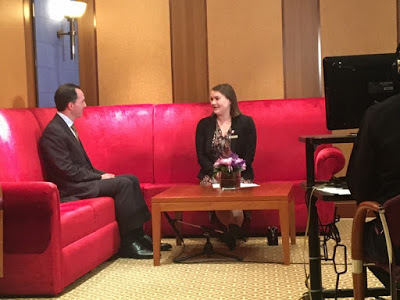
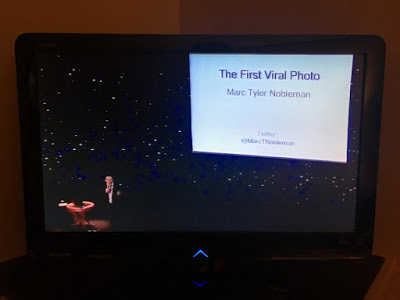
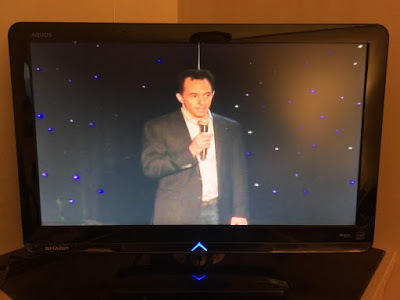
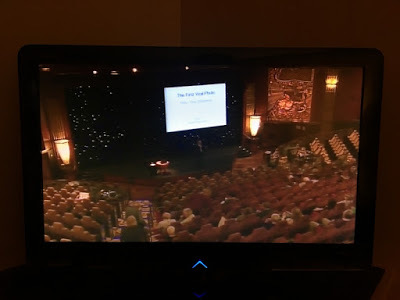 Ship lectures were filmed to be broadcast on a loopon a channel on the stateroom TVs.
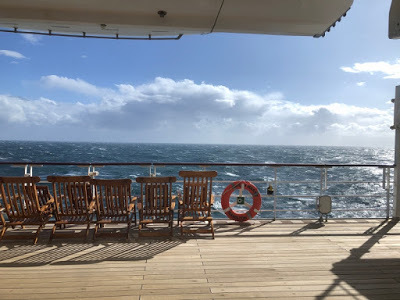 My wife took this postcard-ready photo on the day the seawas roughest.
The ship going under the Verrazano Bridge (3-foot clearance)
in New York.
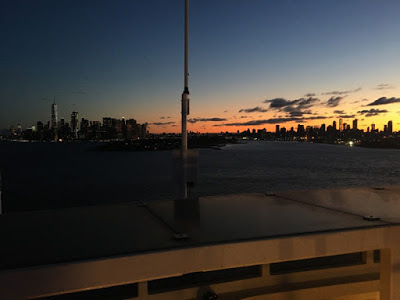 Pulling into New York at sunrise.
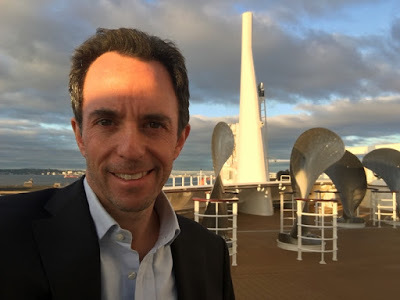 Posing with spare propellers.
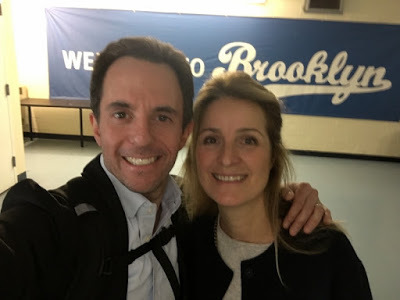 Back in the USA.
From October 11-18, my three most talked-about subjects were Batman, fairies, and the Queen Mary 2, which (probably in large part because it was my first cruise) reminded me of the Titanic.
Cruise ships like to provide nonstop stimulation for their passengers, especially on days at sea when no excursion options exist. I believe this is why cruises began to invite all kinds of experts and enthusiasts to speak on board. I am now one of those enthusiasts.
It took roughly a year of prep before stepping foot onto the gangway, and I’m not talking about my lectures (as they are called in the cruise biz). I mean learning best practices for being a cruise lecturer plus the logistics of scheduling travel of any kind.
In recent years, it seems, the role of cruise lecturers has expanded; they are now expected to be available to guests even when they are offstage. We’re there to share, then to interact at any point if guests would like to chat. (Of course, most speakers would be recognizable only to those passengers who have attended their lectures, and fewer than 100 of my ship’s 2,600 passengers did so. Always a lot of competition!)
My cruise (Quebec-Halifax-New York) lasted six days, two of which were at sea, so I was scheduled for two lectures: one on 10/15, the other on 10/17. First talk (Bill Finger) went well. Second one (fairies)…went.
Well, I think it went well to the audience, but unbeknownst to them, in the two hours before I spoke, I got seasick…four times. I still wasn’t myself when I went onstage, but (by land or by sea) the show must go on. And I had taken steps to feel better, including something I don’t normally do (onstage or otherwise): I chewed gum. Specifically ginger gum, because ginger can reduce nausea.
This was my last full day on the ship, and the only day when the sea was rough. Apparently, it was one of the choppiest days at sea the ship had experienced in a while. The stage was gently rocking the whole time I was on it, but I did my best to keep my mind on my material and somehow managed to get through it.
Then I slept most of the rest of the day.
Thank you to Cunard and cruise agent Tim Castle for inviting me on board. It was a privilege and a pleasure.
Highlights:
 My wife Daniela and I before boarding, with the ship behind us.
 The lifejacket fit.
 The ship’s library. The bookcases were illuminated.Every night, every one of them had to be lockedmanually.
 On our first night, I played the 10 pm movie trivia in the ship’s pub.I won a bottle of wine.
 Batmoose. (It’s Canada.)


 Daniela on the top-deck helipad.
 Saguenay, Quebec. We took a boat tour on the fjord.
 The ship’s nightclub, G32. Most of the passengers were in their sixtiesor older. G32 was not crowded.
 Every night, the program for the following day was slid under the door.This one announces the first of my two lectures. One of the other speakerswas Roger McGuinn, frontman of the Byrds. He shared some greatanecdotes about the 1960s rock and folk scene.
 The entrance to the auditorium where lecturers spoke andwhere movies were shown (none of which we went to).
 That guy in the front row sat there for both of my talks andboth times kept his hand on his head the whole time.
 A few dozen of the hundreds of small placards identifyingfood options at the buffet.
  My favorite item at the buffet. (See my author bio for The Chupacabra Ate the Candelabra.)
 Sunrise as we pulled into Halifax.
That white dot at top left is the moon.
 Just before 6 am.
 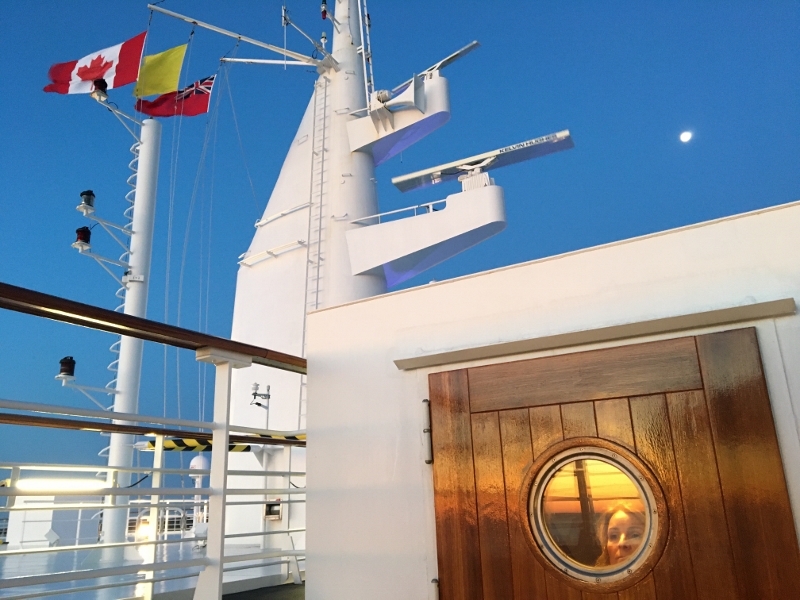 Just after 6 am. (Daniela is behind the porthole.)The yellow flag signals that the ship is free of disease.
 My sunrise shipboard shadow with the moon still visible.
 Peggy’s Cove, Halifax. Lighthouses and bagpipersare both fun to observe, so here is a two-for-one.
 I thought it was funny to see a “Buses Only” barricadehaphazardly misplaced on the rocky terrain surroundingthe lighthouse.
 A cool wave slide in Halifax.
 A funny yet sad sign at a pier craft market in Halifax that catersto the cruise crowd. Come on, people—be considerate!
 One of many historical signs on board, this oneabout how the ship kept children entertained.
 The running path on board was deck 7, the only deck that encircledthe ship. Three laps roughly equaled one mile. I ran it twice; a third day I had to run on a treadmill at the gym due to wet weather.
Time-lapse of one (walking) lap around deck 7.

 To photograph this long banner asking other ships to keep a safe distance,I had to stretch my arm out over the water. If that seems reckless, it won’t compared to this.
 During the second-to-last dinner, the 160+ chefs who worked in
 the biggest restaurant on the ship were invited out
for a hearty round of applause.


 My second ship lecture (but first while seasick).
 Showing off Eliza Wheeler’s bewitching illustrator photofor Fairy Spell.
 Hard to tell here, but I had a bigger turnout for the second lecture.
 Ship lectures were filmed to be broadcast on a loopon a channel on the stateroom TVs.

 My wife took this postcard-ready photo on the day the seawas roughest.
The ship going under the Verrazano Bridge (3-foot clearance)
in New York.
 Pulling into New York at sunrise.
 Posing with spare propellers.
 Back in the USA.


October 23, 2019
Thrive LOUD podcast with Lou Diamond
I rarely do podcast interviews these days but couldn’t resist accepting the kind invitation of Lou Diamond to talk with him on Thrive LOUD.
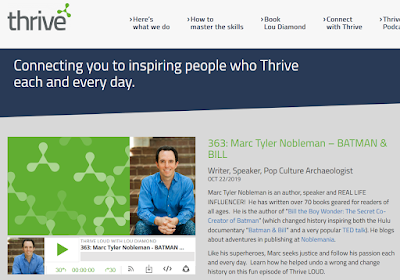
Lou (who happens to be the husband of a friend I met in high school in a Jewish youth group) is such a nice guy who is also a busy guy who nonetheless takes the time to get to know his podcast guests before the interview. He genuinely wants to help people. He listens. And he’s the reason to listen to the podcast!
Event planners take note: he’s also a charismatic, inspirational keynote speaker.
He is not, however, the also-charismatic Lou Diamond Phillips.
Thanks again, Lou.

Lou (who happens to be the husband of a friend I met in high school in a Jewish youth group) is such a nice guy who is also a busy guy who nonetheless takes the time to get to know his podcast guests before the interview. He genuinely wants to help people. He listens. And he’s the reason to listen to the podcast!
Event planners take note: he’s also a charismatic, inspirational keynote speaker.
He is not, however, the also-charismatic Lou Diamond Phillips.
Thanks again, Lou.
October 20, 2019
Student feedback from the Montessori School of San Antonio
On 9/17/19, I had the privilege of speaking to young people at the Montessori School of San Antonio. They further honored me by sending a stack of thank you notes. Some comments that moved me, amused me, or both:
“You are very funny and nothing was boring. Please come back and tell us more! We will miss you!”“Your methods for finding information are amazing. Whenever I do research, I’m sure you’ll come to mind.”“After your presentation, I was happy the whole day!”“I enjoyed you telling us your crazy awesome stories. You held my attention the whole entire time. I really hope that the other schools appreciate you as much as we did! You inspired me to start writing a book of my own, thanks!”“Honestly, it was the best presentation I have ever seen at [our school]. I had so much fun listening to [it]. I liked how you were funny, and how you got the audience involved.”“Your presentation was outstanding! It was one of the best presentations I have ever seen! I loved it because of how interactive it was.”“Your presentation was like one of the best presentations I’ve ever seen. I like how you present because you keep everybody interested.”“You are probably the best presenter in the whole world.”“I enjoyed it and it was funny and sad, normal and mad.”“I liked how [your presentation] was funny, but also factual.”“Not to be a broken record but again, I loved your presentation!”“We all loved your wonderful and engaging presentation, and it especially inspired me.”
“You are very funny and nothing was boring. Please come back and tell us more! We will miss you!”“Your methods for finding information are amazing. Whenever I do research, I’m sure you’ll come to mind.”“After your presentation, I was happy the whole day!”“I enjoyed you telling us your crazy awesome stories. You held my attention the whole entire time. I really hope that the other schools appreciate you as much as we did! You inspired me to start writing a book of my own, thanks!”“Honestly, it was the best presentation I have ever seen at [our school]. I had so much fun listening to [it]. I liked how you were funny, and how you got the audience involved.”“Your presentation was outstanding! It was one of the best presentations I have ever seen! I loved it because of how interactive it was.”“Your presentation was like one of the best presentations I’ve ever seen. I like how you present because you keep everybody interested.”“You are probably the best presenter in the whole world.”“I enjoyed it and it was funny and sad, normal and mad.”“I liked how [your presentation] was funny, but also factual.”“Not to be a broken record but again, I loved your presentation!”“We all loved your wonderful and engaging presentation, and it especially inspired me.”
October 12, 2019
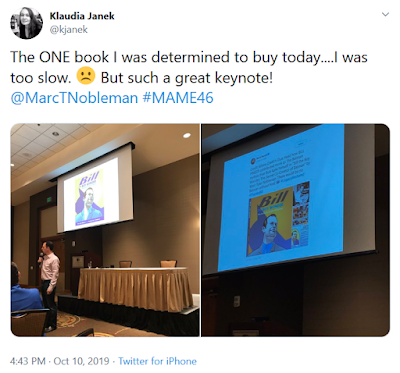
Michigan Association for Media in Education conference 2019 opening keynote
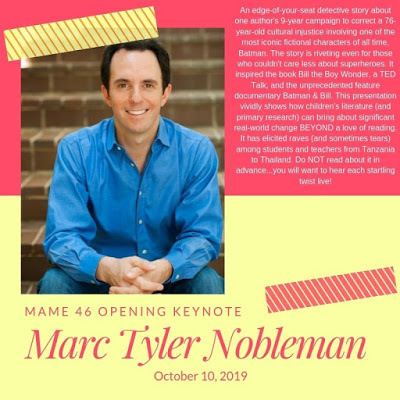
Thank you to MAME, especially Cat Kerns and Klaudia Janek, for your efforts to bring me to Michigan to open your lovely conference! It was an honor.


October 11, 2019

October 4, 2019
First official Batman-related credit for Jerry Robinson
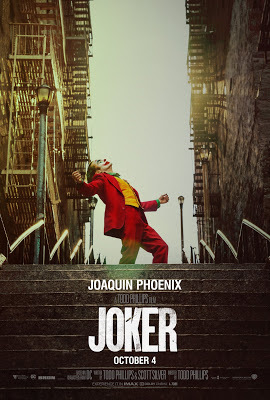
The Joker is not the first Batman antagonist to headline a standalone live-action movie. (Catwoman beat him by 15 years.)
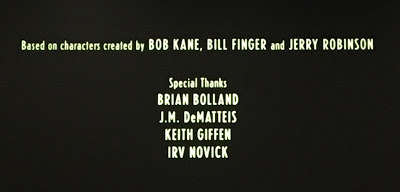
Yet Joker, which opened today, does have a significant first up its sleeve: Jerry Robinson, early Batman ghost artist and co-creator of not only the Joker but Robin, is finally credited—and on equal footing with Bob Kane and Bill Finger. No "with"!
Yet Joker, which opened today, does have a significant first up its sleeve: Jerry Robinson, early Batman ghost artist and co-creator of not only the Joker but Robin, is finally credited—and on equal footing with Bob Kane and Bill Finger. No "with"!


September 27, 2019
Sensitivity adjustment in my school visit presentations
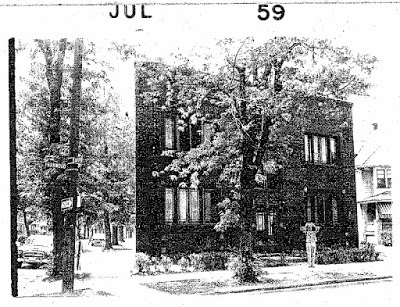
I believe I began talking about Boys of Steel: The Creators of Superman at schools even before the book came out in 2008. My presentation includes the two photos I uncovered of the small apartment building where then-teenaged Joe Shuster lived in the 1930s.
The first photo (which I found at the Cleveland Public Library) was taken in 1959:
The second (which the Cleveland City Planning Commission located for me) was taken in 1974:
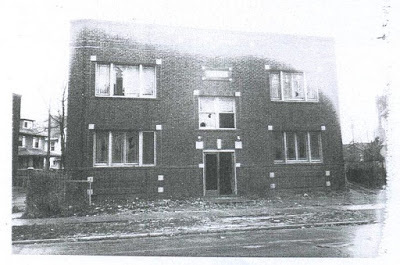
For years, I would transition from the first to the second image while saying “The other photo I found of Joe’s apartment was taken fifteen years after this one, and as you can see, the neighborhood had gone downhill.” I would then explain that soon after, the building was demolished.
A couple of years ago, I realized that my wording could be hurtful to certain kids. While it was clear that the neighborhood had changed from what I think would have been considered middle class to a lower-income population, some would construe the word “downhill” as pejorative. It is also subjective; some people of lesser means would describe themselves as content whereas some of greater means are miserable. The physical condition of their environment does not factor significantly into their outlooks.
Surely some kids in some of my audiences lived in buildings that were in a state similar to Joe’s.
Though no one has ever called this word choice to my attention, I felt badly that I had let it go unchecked for so long.
Now I say that “the neighborhood had changed,” which I feel is both fair and non-judgmental.
The first photo (which I found at the Cleveland Public Library) was taken in 1959:

The second (which the Cleveland City Planning Commission located for me) was taken in 1974:

For years, I would transition from the first to the second image while saying “The other photo I found of Joe’s apartment was taken fifteen years after this one, and as you can see, the neighborhood had gone downhill.” I would then explain that soon after, the building was demolished.
A couple of years ago, I realized that my wording could be hurtful to certain kids. While it was clear that the neighborhood had changed from what I think would have been considered middle class to a lower-income population, some would construe the word “downhill” as pejorative. It is also subjective; some people of lesser means would describe themselves as content whereas some of greater means are miserable. The physical condition of their environment does not factor significantly into their outlooks.
Surely some kids in some of my audiences lived in buildings that were in a state similar to Joe’s.
Though no one has ever called this word choice to my attention, I felt badly that I had let it go unchecked for so long.
Now I say that “the neighborhood had changed,” which I feel is both fair and non-judgmental.
September 25, 2019
"New York Times" writer Nicholas Kristof and "Thirty Minutes Over Oregon"
In 1997, I saw this obituary in the New York Times:
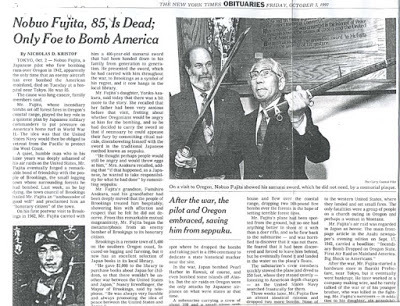
In 2007, I began to write a picture book on Nobuo Fujita.
In 2014, after around 50 rejections, I sold the manuscript to Clarion (Houghton Mifflin Harcourt).
In 2018, the book came out.
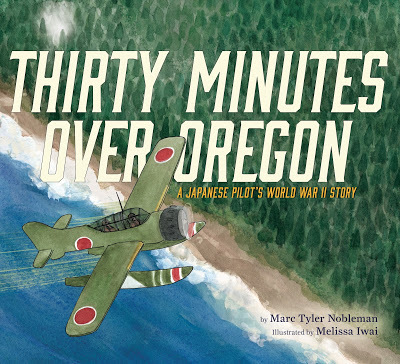
In 2019, I reached out to the man who wrote that obituary 22 years ago, Nicholas Kristof, by both tweet and email; he replied by both.
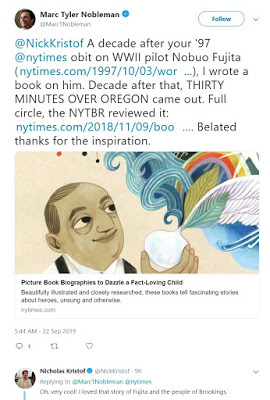
I sent him a copy of the book that he helped inspire.
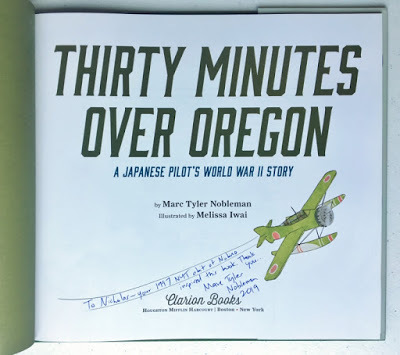

In 2007, I began to write a picture book on Nobuo Fujita.
In 2014, after around 50 rejections, I sold the manuscript to Clarion (Houghton Mifflin Harcourt).
In 2018, the book came out.
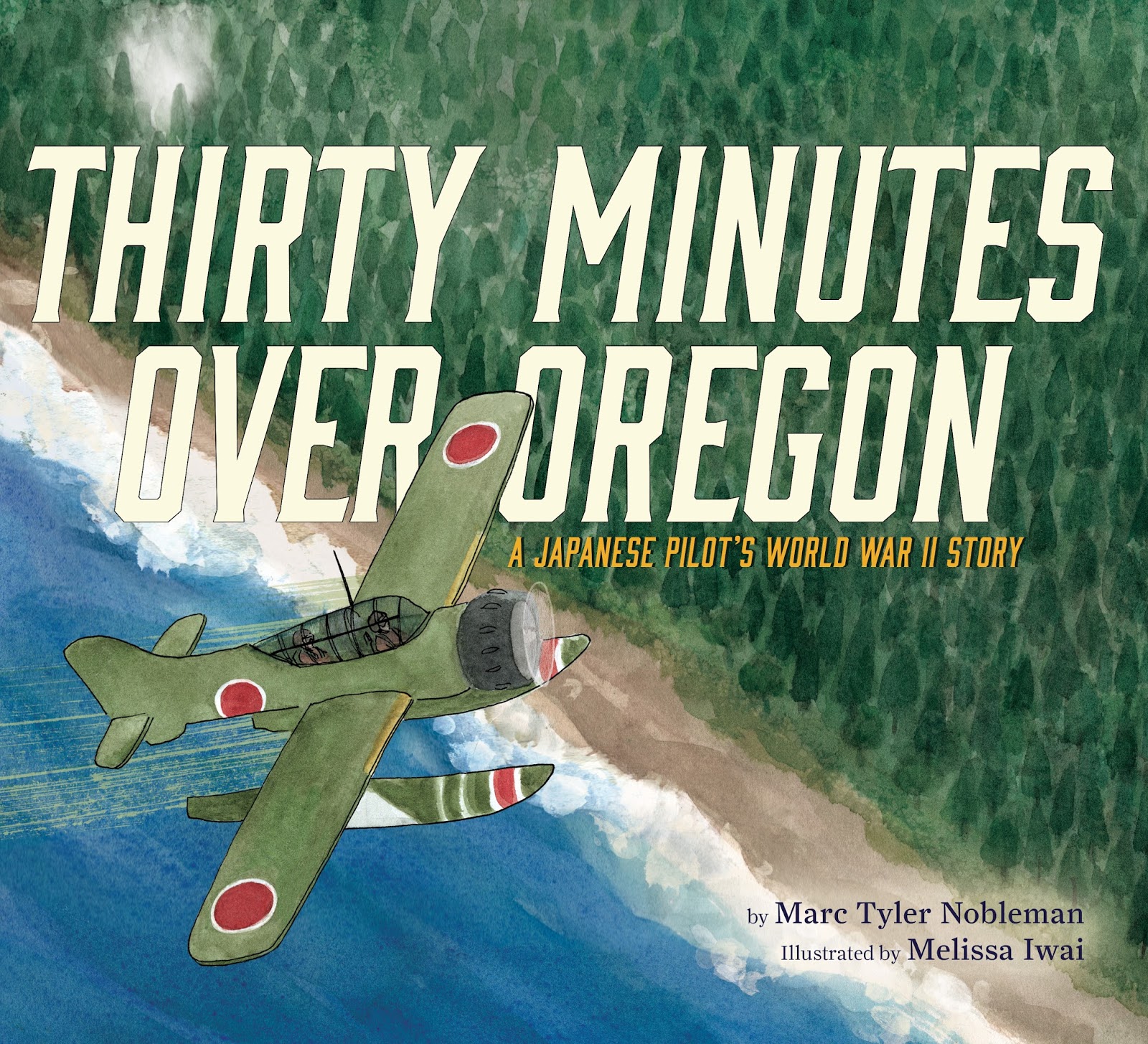
In 2019, I reached out to the man who wrote that obituary 22 years ago, Nicholas Kristof, by both tweet and email; he replied by both.

I sent him a copy of the book that he helped inspire.

September 24, 2019
“Booklist” interview features quirky questions
Kathleen McBroom kindly interviewed me for the 9/19 issue of Booklist.

Most of her questions are ones I haven’t gotten before (which I appreciate!):
In another interview, you referred to some negative feedback you received when you first pitched the idea for Thirty Minutes over Oregon, a story about friendship and forgiveness. What were the objections?In your author’s note for Thirty Minutes over Oregon, you end with a question about the Japanese pilot Nobuo Fujita: “He went from fighting to uniting. Which took more courage?” Have you ever gotten any feedback from kids about this, either in letters or during school visits?The thing I like best about your books is how you spark inquiry in kids through revealing tiny morsels of information that have been overlooked. How did your interest in these types of forgotten facts begin?While we’re talking about research and inquiry, I was struck by something you included in your author’s note for Fairy Spell. You wrote, “Having the internet doesn’t mean you can kick back and think less. On the contrary, it forces you to think more.” Would you care to elaborate on that?You are always profoundly respectful of the people in your books. You never say anything really damning about Bob Kane; you stress your belief that Frances and Elsie, the girls from Fairy Spell, had no intent to perpetuate a nationwide hoax; you very effectively explain how well-educated adults fell for the fairy photos ruse; and you portray Nobuo Fujita from Thirty Minutes over Oregon as a truly remorseful person who was willing to apologize for his wartime actions. Why is it important for you to portray these characters so sympathetically to young audiences?Your brief bio from Fairy Spell says that “he believes in a number of things that haven’t yet been proven.” I’m not sure if you wrote this or not, but it makes me wonder—with a philosophy like that, might you have any concerns about being taken in by some fantastic claim someday, like your fellow writer Sir Arthur Conan Doyle, who championed the fairy photos?
Thank you, Kathleen and Booklist!

Most of her questions are ones I haven’t gotten before (which I appreciate!):
In another interview, you referred to some negative feedback you received when you first pitched the idea for Thirty Minutes over Oregon, a story about friendship and forgiveness. What were the objections?In your author’s note for Thirty Minutes over Oregon, you end with a question about the Japanese pilot Nobuo Fujita: “He went from fighting to uniting. Which took more courage?” Have you ever gotten any feedback from kids about this, either in letters or during school visits?The thing I like best about your books is how you spark inquiry in kids through revealing tiny morsels of information that have been overlooked. How did your interest in these types of forgotten facts begin?While we’re talking about research and inquiry, I was struck by something you included in your author’s note for Fairy Spell. You wrote, “Having the internet doesn’t mean you can kick back and think less. On the contrary, it forces you to think more.” Would you care to elaborate on that?You are always profoundly respectful of the people in your books. You never say anything really damning about Bob Kane; you stress your belief that Frances and Elsie, the girls from Fairy Spell, had no intent to perpetuate a nationwide hoax; you very effectively explain how well-educated adults fell for the fairy photos ruse; and you portray Nobuo Fujita from Thirty Minutes over Oregon as a truly remorseful person who was willing to apologize for his wartime actions. Why is it important for you to portray these characters so sympathetically to young audiences?Your brief bio from Fairy Spell says that “he believes in a number of things that haven’t yet been proven.” I’m not sure if you wrote this or not, but it makes me wonder—with a philosophy like that, might you have any concerns about being taken in by some fantastic claim someday, like your fellow writer Sir Arthur Conan Doyle, who championed the fairy photos?
Thank you, Kathleen and Booklist!
September 23, 2019
Powers activating in San Antonio
The week of September 16, I spoke at schools and a conference in San Antonio.
In my school presentation, I typically show a Super Friends drawing I made at age 8. On 9/19/19, at San Antonio Academy, an 8-year-old asked who the two in purple are.
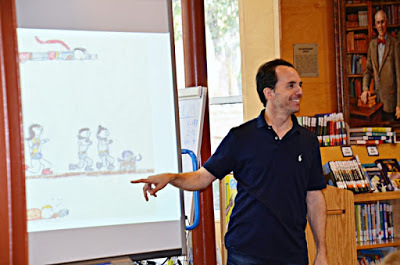
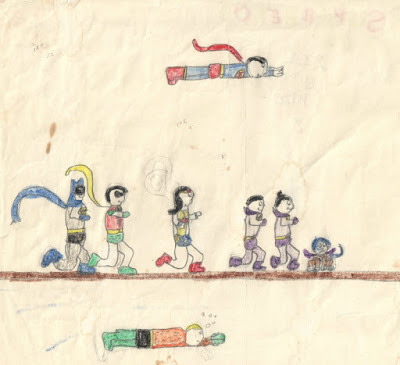
As I began to explain the Wonder Twins, a teacher spontaneously came up to help demonstrate...
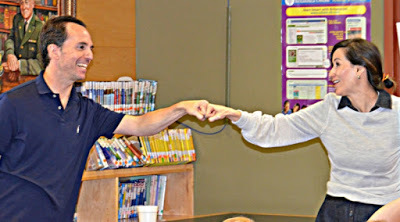
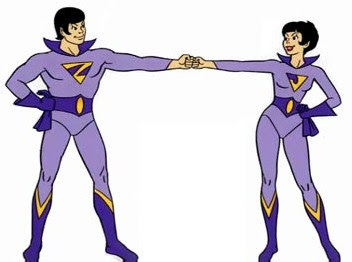
Which, as will be no surprise, was a first for me. And hopefully not a last.
Adding to the memorable visit, the boys showed their empathy by giving the presentation a standing ovation.
Though it was probably all because of the Wonder Twins reenactment...
In my school presentation, I typically show a Super Friends drawing I made at age 8. On 9/19/19, at San Antonio Academy, an 8-year-old asked who the two in purple are.


As I began to explain the Wonder Twins, a teacher spontaneously came up to help demonstrate...


Which, as will be no surprise, was a first for me. And hopefully not a last.
Adding to the memorable visit, the boys showed their empathy by giving the presentation a standing ovation.
Though it was probably all because of the Wonder Twins reenactment...


