
Jeremy Keith's Blog, page 19
December 13, 2023
Stuck in the dock
I was impressed with how Safari now allows you to add websites to the dock:
It feels great to have websites that act just like other apps. I like that some of the icons in my dock are native, some are web apps, and I mostly don���t notice the difference.
For all intents and purposes, this is a desktop application created without a single line of Swift or Objective-C, or any heavy Electron wrappers.
Oh, and the application can work offline! Service workers, and browser storage are more than stable enough to handle a variety of offline loading patterns. These are truly exciting times to be building for the web!
There was one aspect that I was particularly pleased with. External links:
Links within a Safari-installed web app respect your default browser choice.
Excellent! Except it���s no longer true. At least not in some cases. The behaviour is inconsisent but I���m running the latest version of Safari on the latest version of Sonoma, and now external links in a Safari-installed web app are broken. They just stay in the same application.
I thought maybe it was related to whether the website���s manifest file has the display value set to ���standalone��� rather than, say, ���minimal ui���. Maybe the ���standalone��� instruction is being taken literally? But even when I change the value I���m still getting the broken behaviour.
This may sound like a small thing, but it completely changes the feel of using the web app. Instead of feeling like ���I���m using an app that just happens to be on the web���, it now feels like ���I���m using a web browser but with fewer features.���
I���ve been loving having Mastodon as a standalone app in my dock. It used to be that if I clicked on a link in a Mastodon post, it would open in my browser of choice (Firefox) where I could then bookmark it, or do any other tasks that my browser offers me. Now if I click on a link in Mastodon, I���m stuck in the same ���app���. It feels horribly stifling.
I can right-click on a link and get options that still keep me in the same app, like ���Open link��� or ���Open Link in New Window.��� To actually open the link in my web browser, I have to select ���Copy Link���, then go to my web browser, open a new tab, and paste the link in there.
This is broken. I hope it isn���t intentional. Maybe I���m just at the receiving end of some weird glitch. If this stays this way, I���ll probably just remove the Safari-installed web apps from my dock. They feel pointless if they���re just roach motels.
I���d love to file a bug for this, but this isn���t a Webkit bug, it���s a Safari bug (and the Webkit bug tracker is at pains to point out that Webkit and Safari are not the same thing). But have you ever tried to file a bug with Apple? Good luck!
Anyway, I sincerely hope that this change will be walked back. Otherwise websites in the dock are dead in the water.


December 12, 2023
button invoketarget=”share”
I���ve written quite a bit about how I���d like to see a declarative version of the Web Share API. My current proposal involves extending the type attribute on the button element to support a value of ���share���.
Well, maybe a different attribute will end up accomplishing what I want! Check out the explainer for the ���invokers��� proposal over on Open UI. The idea is to extend the button element with a few more attributes.
The initial work revolves around declaratively opening and closing a dialog, which is an excellent use case and definitely where the effort should be focused to begin with.
But there���s also investigation underway into how this could be away to provide a declarative way of invoking JavaScript APIs. The initial proposal is already discussing the fullscreen API, and how it might be invoked like this:
button invoketarget="toggleFullsceen"They���re also looking into a copy-to-clipboard action. It���s not much of a stretch to go from that to:
button invoketarget="share"Remember, these are APIs that require a user interaction anyway so extending the button element makes a lot of sense.
I���ll be watching this proposal keenly. I���d love to see some of these JavaScript cowpaths paved with a nice smooth coating of declarative goodness.
December 11, 2023
After the end
I was doing some housekeeping on my website recently, tidying up some broken links, that kind of thing. I happened on the transcript and video for the talk I gave two years ago called ���Sci-fi and Me.���

I really enjoyed preparing and giving that talk. It���s the kind of topic I���d love to speak/podcast about more.
Part of the structure of the talk involved me describing ten topics that might be encountered in the literature of science fiction. I describe the topic, mention some examples, and then choose one book as my pick for that topic.
For the topic of post-apocalypse stories, I chose Emily St. John Mandell���s Station Eleven. I love that book, and the equally excellent���though different���television series.

I���ve written in the past about why I love it:
Station Eleven describes a group of people in a post-pandemic world travelling around performing Shakespeare plays. At first I thought this was a ridiculous conceit. Then I realised that this was the whole point. We don���t have to watch Shakespeare to survive. But there���s a difference between surviving and living.
You���ve got a post-apocalyptic scenario where the pursuit of art helps giving meaning to life. That���s Station Eleven, but it also describes a film currently streaming on Netflix called Apocalypse Clown. Shakespeare���s been swapped for clowning, the apocalypse is set in Ireland, and the film is a comedy, but in a strange way, it tackles the same issue at the heart of Station Eleven: survival is insufficent.

I really enjoyed Apocalypse Clown, mostly down to Natalie Palamides���s scene-stealing performance. It very much slipped by under the radar, unlike the recent Netflix production Leave The World Behind

If you haven���t watched Leave The World Behind yet, stop reading please. Because I want to talk about the ending of the film.
SPOILERS
I never read the Rumaan Alam novel, but I thoroughly enjoyed this film. The mounting dread, the slow trickle of information, all good vibey stuff.
What I really liked was the way you can read the ending in two different ways.
On the large scale, we hear how everything that has unfolded is leading to the country tearing itself apart���something we see beginning to happen in the distance.
But on the smaller scale, we see people come together. When the final act was introduced as ���The Last One��� I thought we might be in for the typical trope of people turning on one another until there���s a final survivor. But instead we see people who have been mistrustful of one another come to help each other. It felt very true to the reality described in Rebecca Solnit���s excellent A Paradise Built In Hell.
The dichotomy between the large-scale pessimism and the smale-scale optimism rang true. It reminded me of The Situation. The COVID-19 pandemic was like a Rorscharch test that changed as you zoomed in and out:
I���ve noticed concentric circles of feelings tied to geography���positive in the centre, and very negative at the edges. What I mean is, if you look at what���s happening in your building and your street, it���s quite amazing how people are pulling together.
But once you look further than that, things turn increasingly sour. At the country level, incompetence and mismanagement seem to be the order of the day. And once you expand out to the whole world, who can blame you for feeling overwhelmed with despair?
But the world is made up of countries, and countries are made up of communities, and these communities are made up of people who are pulling together and helping one another.
December 2, 2023
adactio.com on Mastodon
I���ve been on Mastodon since 2017, but now my website is on there too. I���m @adactio@mastodon.social. My website is @adactio.com@adactio.com���search for adactio.com in your Mastodon client of choice.
What���s the difference? Well, with my mastodon.social account, I���m syndicating stuff���most of my notes, and all of my journal���and including a link back to the original source here on my site. With the adactio.com account, it is the original source.
I thought about migrating over to my adactio.com account from my mastodon.social account, but I actually like having a separate profile. I browse Mastodon a lot more than I post, and browsing is a lot easier to do with a regular account.
If you���d like your website to be available on Mastodon, Bridgy Fed is the magic tool that makes it available. You���ll need to be able to send webmentions, and you���ll need to configure some .well-known directives. If you���ve you���ve already got webmention-sending set up, it���s all quite straightforward (though you will also need to update your HTML to include a link back to fed.brid.gy in each entry you want syndicated).
For some reason the syndication didn���t seem to be working at first, but then when I followed @adactio.com@adactio.com from my @adactio@mastodon.social account, it started working. Maybe there needs to be at least one follower.
Also, my links don���t seem to be showing up on Mastodon even though it looks like everything is posting okay. Not sure what that is about.
Anyway, if you want to follow me on Mastodon, you now have a choice. There���s me, @adactio@mastodon.social, or there���s my website, @adactio.com@adactio.com.
December 1, 2023
Sessions
Brighton has a thriving Irish music scene. Some sessions are weekly���every Sunday afternoon in The Bugle and every Wednesday evening in The Jolly Brewer. Some are every two weeks, like the session in The Fiddler���s Elbow. Others are monthly, like the session in The Dover Castle and the session in The Lord Nelson.
So it sometimes happens that if the calendar aligns just right, there are many sessions in one week. This was one of those weeks. I managed a streak of five sessions in a row.
The first was the regular Sunday afternoon session in The Bugle.
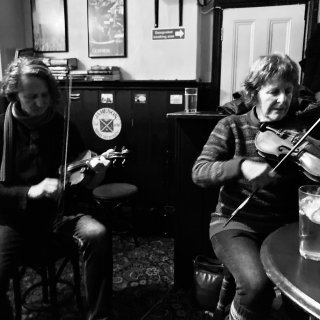
Then on Monday, it was The Fiddler’s Elbow.

The night after that there was a one-off session in the Hand in Hand, which will hopefully become a regular monthly occurrence.
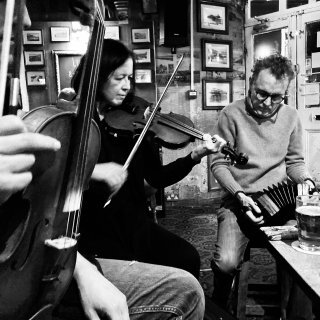
On Wednesday it was the regular session at The Jolly Brewer.
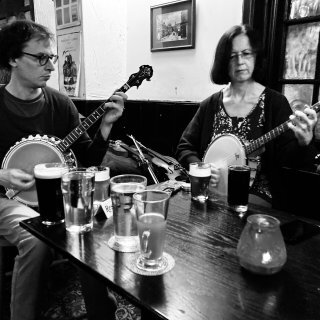
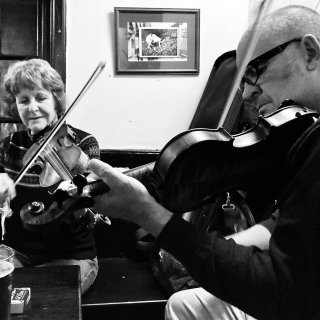
Finally on Thursday it was the monthly session at The Lord Nelson.
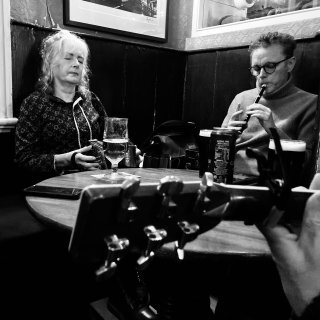

I’m very lucky to have so many opportunities to play the music I love with my fellow musicians. I don’t take it for granted.
November 20, 2023
Lost in calculation
As well as her personal site, wordridden.com, Jessica also has a professional site, lostintranslation.com.
Both have been online for a very long time. Jessica���s professional site pre-dates the Sofia Coppola film of the same name, which explains how she was able to get that domain name.
Thanks to the internet archive, you can see what lostintranslation.com looked like more than twenty years ago. The current iteration of the site still shares some of that original design DNA.
The most recent addition to the site is a collection of images on the front page: the covers of books that Jessica has translated during her illustrious career. It���s quite an impressive spread!
I used a combination of CSS grid and responsive images to keep the site extremely performant. That meant using a combination of the picture element, source elements, srcset attributes, and the sizes attribute.
That last part always feels weird. I have to tell the browser what sizes the images will displayed at, which can change depending on the viewport width. But I���ve already given that information in the CSS! It feels weird to have to repeat that information in the HTML.
It���s not just about the theoretical niceties of DRY: Don���t Repeat Yourself. There���s the very practical knock-on effects of having to update the same information in two places. If I update the CSS, I need to remember to update the HTML too. Those concerns no longer feel all that separate.
But I get it. Browsers use a look-ahead parser to start downloading images as soon as possible, so I understand why I need to explicitly state what size the images will be displayed at. Still, it feels like something that a computer should be calculating, not something for a human to list out by hand.
But wait! Most of the images on that page also have a loading attribute with a value of ���lazy���. That tells browsers they don���t have to download the images immediately. That sort of negates the look-ahead parser.
That���s why the HTML spec now includes a value for the sizes attribute of ���auto���. It���s only supposed to be used in conjunction with loading="lazy" (otherwise it means 100vw).
Browser makers are on board with this. You can track the implementation progress for Chromium, WebKit, and Firefox.
I would very much like to see this become a reality!
November 19, 2023
How green is my server?
The Session does very well in terms of performance. You can see the data from the Chrome UX Report (CRUX).
What���s good for performance is good for the environment. Sure enough, The Session gets a very high score from the website carbon calculator:
Hurrah! This web page achieves a carbon rating of A+
This is cleaner than 99% of all web pages globally
But under the details about hosting it says:
Oh no, it looks like this web page uses bog standard energy
The Session is hosted on DigitalOcean, who tend to be quite tight-lipped about their energy suppliers. Fortunately others have done some sleuthing to figure out which facilities are running on green energy.
One of the locations to get the green thumnbs up is the Amsterdam facility housed by Equinix. That���s where The Session is hosted.
I���m glad that I was able to find out that the site is running on 100% renewable energy, but I wish I didn���t need to go searching to find this out. DigitalOcean need to be a lot more transparent about the energy sources for their hosting facilities.
November 16, 2023
The complete line-up for Patterns Day ���and a workshop!
The line-up for Patterns Day is complete! You���ll be hearing from eight fantastic speakers on March 7th 2024 here in Brighton.
I really like the mix of speakers we���ve got���
Half of the speakers will be sharing what they���ve learned from design systems in their organisations: D��bora from LEGO, Mary from the Financial Times, Yolijn from the Dutch government, and Samantha from University College London. That���s a good spread of deep dives.
The other half of the speakers can go broad across design systems in general: Vitaly on design patterns, Rich on typography, Geri on accessibility, and Jina on ���well, absolutely everything to do with design systems!
I���m so happy that I could get the line-up to have this mix. If you have any interest in design systems at all���whether it���s as a designer, a developer, a product manager, or anything else���you won���t want to miss this. Early bird tickets are ��225.
But wait! That���s not all. If you really want to dive deep into interface design patterns, then stick around. The day after Patterns Day, Vitaly is running a one-day workshop:
In this in-person workshop with Vitaly Friedman, UX consultant and creative lead behind Smashing Magazine, we���ll dive deep into dissecting how to solve complex design problems. Whether you���re working on a complex nested multi-level navigation or creating enterprise grade tables, this workshop will give you the tools you need to excel at your work.
Places are limited. There isn���t room for everyone who���s going to be at Patterns Day, so if you���and your team���want to learn design pattern kung-fu from the master, get your workshop ticket now! Workshop tickets are ��445.
November 15, 2023
UX London returns in 2024
Put the dates in your dairy: UX London 2024 will be on June 18th, 19th, and 20th.
Better yet, grab a ticket right now. There are super early-bird tickets available until this Friday.
If you want a flavour of what to expect, check out the speakers that are already confirmed: Brad!, Ben!, Tshili!, and more!
It���s early days but I can tell you what to expect from each day. The first day will be themed around research. The second will have a focus on product design. The third day will be themed around design systems and design ops.
As usual, there���ll be a mix of talks and workshops: a single track of inspirational talks in the morning, followed by a choice of practical workshops in the afternoon.
We���ll be in a new venue next year too���right in the heart of London.
See you there!
November 9, 2023
HTML web components
Web components have been around for quite a while, but it feels like they���re having a bit of a moment right now.
It turns out that the best selling point for web components was ���wait and see.��� For everyone who didn���t see the benefit of web components over being locked into a specific framework, time is proving to be a great teacher.
It���s not just that web components are portable. They���re also web standards, which means they���ll be around as long as web browsers. No framework can make that claim. As Jake Lazaroff puts it, web components will outlive your JavaScript framework.
At this point React is legacy technology, like Angular. Lots of people are still using it, but nobody can quite remember why. The decision-makers in organisations who chose to build everything with React have long since left. People starting new projects who still decide to build on React are doing it largely out of habit.
Others are making more sensible judgements and, having been bitten by lock-in in the past, are now giving web components a go.
If you���re one of those people making the move from React to web components, there���ll certainly be a bit of a learning curve, but that would be true of any technology change.
I have a suggestion for you if you find yourself in this position. Try not to bring React���s mindset with you.
I���m talking about the way React components are composed. There���s often lots of props doing heavy lifting. The actual component element itself might be empty.
If you want to apply that model to web components, you can. Lots of people do. It���s not unusual to see web components in the wild that look like this:
The custom element is just a shell. All the actual power is elsewhere. It���s in the JavaScript that does all kinds of clever things with the shadow DOM, templates, and slots.
There is another way. Ask, as Robin does, ���what would HTML do?���
Think about composibility with existing materials. Do you really need to invent an entirely new component from scratch? Or can you use HTML up until it reaches its limit and then enhance the markup?
I don���t think we should see web components like the ones you might find in a huge monolithic React app: your Button or Table or Input components. Instead, I���ve started to come around and see Web Components as filling in the blanks of what we can do with hypertext: they���re really just small, reusable chunks of code that extends the language of HTML.
Dave talks about how web components can be HTML with superpowers. I think that���s a good attitude to have. Instead of all-singing, all-dancing web components, it feels a lot more elegant to use web components to augment your existing markup with just enough extra behaviour.
Where does the shadow DOM come into all of this? It doesn���t. And that���s okay. I���m not saying it should be avoided completely, but it should be a last resort. See how far you can get with the composibility of regular HTML first.
Eric described his recent epiphany with web components. He created a super-slider custom element that wraps around an existing label and input type="range":
You just take some normal HTML markup, wrap it with a custom element, and then write some JS to add capabilities which you can then style with regular CSS!�� Everything���s of the Light Side of the Web.�� No need to pierce the Vale of Shadows or whatever.
When you wrap some existing markup in a custom element and then apply some new behaviour with JavaScript, technically you���re not doing anything you couldn���t have done before with some DOM traversal and event handling. But it���s less fragile to do it with a web component. It���s portable. It obeys the single responsibility principle. It only does one thing but it does it well.
Jim created an icon-list custom element that wraps around a regular ul populated with li elements. But he feels almost bashful about even calling it a web component:
Maybe I shouldn���t be using the term ���web component��� for what I���ve done here. I���m not using shadow DOM. I���m not using the templates or slots. I���m really only using custom elements to attach functionality to a specific kind of component.
I think what Eric and Jim are doing is exemplary. See also Zach���s web components.
At the end of his post, Eric says he���d like a nice catchy term for these kinds of web components. In Dave���s catalogue of web components, they���re called ���element extensions.��� I like that. It���s pretty catchy.
Or we could call them ���HTML web components.��� If your custom element is empty, it���s not an HTML web component. But if you���re using a custom element to extend existing markup, that���s an HTML web component.
React encouraged a mindset of replacement: ���forgot what browsers can do; do everything in a React component instead, even if you���re reinventing the wheel.���
HTML web components encourage a mindset of augmentation instead.
Jeremy Keith's Blog

- Jeremy Keith's profile
- 56 followers

