
Christine Valters Paintner's Blog, page 96
December 30, 2017
New Year Blessings + Wisdom of the Body (starts in a week!)
 Dearest monks and artists,
It is a quiet Christmas season for us here in Galway. After returning from a beautiful trip to Prague and Vienna for ancestral pilgrimage, John and I both promptly got the flu. I spent all of Christmas day in bed with a fever, barely able to stand up. We were planning on a quiet time anyway, but now the enforced solitude of illness is our companion.
Of course it never feels good to be unwell, I am grateful that I am able to really let down and allow myself to heal during this time. I have not had a cold or flu in a year, so am offering my body lots of gratitude for its fortitude and carrying me through so many seasons so well. And I am extending lots of tenderness for what she needs right now to rest and recover.
I am also aware of illness as an experience of descent. We often fight getting sick so much because we don’t want to slow down, we have things to do, people to serve, lists of things to accomplish. Illness demands that we approach life from a place of vulnerability, of not being in full control, of having to admit our need for others.
In the descent that illness demands there can also be a kind of initiation if we are open to a way of life that is slower, gentler, kinder to ourselves. We are given space to rest into the grace of simply being, recognizing that for a time we are unable to do and we are still whole and beautiful. We are called to see the sacred at work in the hot tea, the long naps, the chicken soup, and the friends who offer their support.
I love these days of the Christmas season between Christmas day and the feast of Epiphany. They feel like time outside of time, full of reflection and dreaming. Lying feverish in my bed has only amplified that timeless quality. I awoke the other day with the words “Wisdom’s Sanctuary” on my heart. I sat with it for a long while, not so much trying to figure it out, but to dwell inside the words and see what they stirred. I think this may be my word for 2018 – a call to create sanctuary space for ancient wisdom, in a world so desperately hungry for it. I imagine I will have more to say about it soon.
As we move toward a new year, notice if your mind is drawn toward making resolutions. Resolutions are usually based in a sense of lack about ourselves, something we need to “fix” so I try to be aware of how I talk to myself. And if there was ever a time of year for advertising to make us question the beauty of our bodies, now would be it. All the promises of a “new you” are seductive. But what if you gave yourself a gift instead? What if you made a commitment to fall in love with your body instead, just as it is? Even in the midst of illness? Even in the midst of its limitations? What if you approached it through trust rather than dissatisfaction? Offered tenderness rather than harsh criticism?
Join us for a powerful journey of returning home again: The Wisdom of the Body online retreat starts in a week! Drawing on wisdom from contemplative and monastic pathways, with weekly live webinars, guest teachers, and a facilitated forum, this will be a place of rich exploration and discovery. If you are someone who identifies as a woman, we’d love to have you join us. (My apologies to the men of the community, but we have a wonderful retreat coming up for Lent on the scriptures you would be most welcome to join led by John.)
For a bonus reflection on Embracing Mystery in the New Year click this link>>
May the year ahead be full of love for this moment now and embodied delight.
With great and growing love,
Christine
Christine Valters Paintner, PhD, REACE
Photo © Christine Valters Paintner


December 23, 2017
Christmas Blessings ~ A Love Note from Your Online Abbess
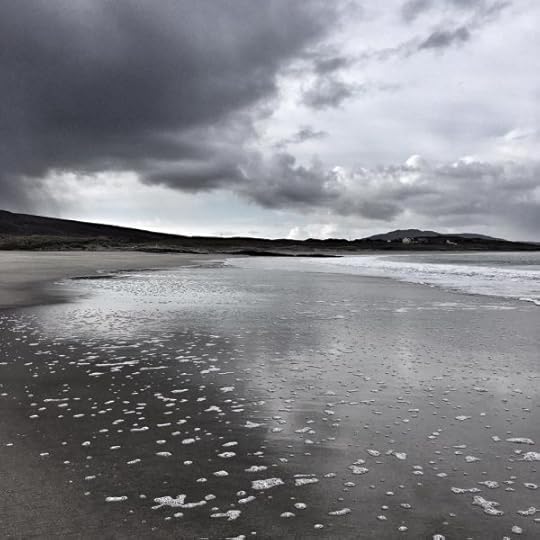 The Risk of Birth
This is no time for a child to be born,
With the earth betrayed by war & hate
And a comet slashing the sky to warn
That time runs out & the sun burns late.
That was no time for a child to be born,
In a land in the crushing grip of Rome;
Honour & truth were trampled by scorn-
Yet here did the Saviour make his home.
When is the time for love to be born?
The inn is full on the planet earth,
And by a comet the sky is torn-
Yet Love still takes the risk of birth.
—Madeleine L'Engle
Dearest monks and artists,
All of us at Abbey of the Arts want to wish you the most joyful of Christmas blessings. As the 17th century German mystic Angelus Silesius wrote: "“I must be the Virgin and give birth to God.”
The heart of the Christian tradition is the incarnation, the belief that God dwells in tender flesh and continues to be birthed again and again.
With this feast we celebrate the risk of birth arising from the impulse of love. In the midst of so much sorrow and suffering in the world, to bring forth our own deepest dreams takes courage. To believe that when we follow the leadings of the Spirit that we can contribute to a world of deeper peace and reconciliation requires hope. To bring forth the vision, the seed of new possibility, demands great love.
May you find yourself inspired by courage, infused with hope, and embraced by love.
With great and growing love,
Christine
Christine Valters Paintner, PhD, REACE
Photo © Christine Valters Paintner
December 16, 2017
Winter Solstice ~ A Love Note from Your Online Abbess
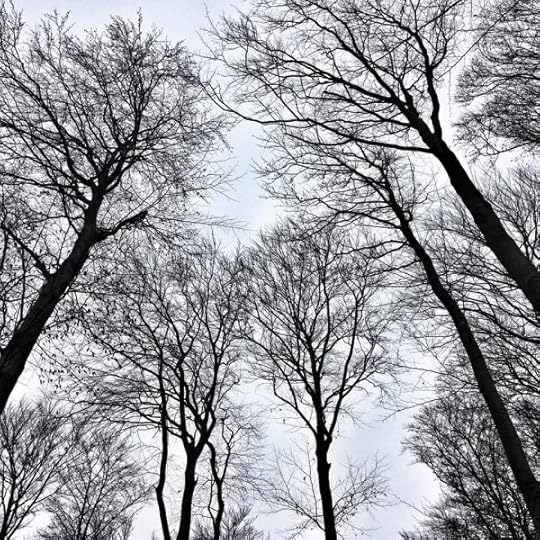 A major obstacle to creativity is wanting to be in the peak season of growth and generation at all times . . . but if we see the soul’s journey as cyclical, like the seasons . . . then we can accept the reality that periods of despair or fallowness are like winter – a resting time that offers us a period of creative hibernation, purification, and regeneration that prepare us for the births of spring.
—Linda Leonard, The Call to Create
Dearest monks and artists,
This reflection is excerpted from our Sacred Seasons online retreat for the Celtic Wheel of the Year:
The Winter Solstice is another profound moment of pause and turning in the great cycle of the year. In Galway our apartment windows face east and south, so one of the great gifts I experience through the seasons is watching the sun make her pilgrimage across the horizon from summer solstice to winter solstice. It is quite a long journey, and on December 21st she will rest at her point furthest south, appearing to stand still for three days before making the return journey again in the long walk toward summer. It is a rhythm of journey, pause, and return, again and again. It reminds me a great deal of walking a labyrinth and the way I follow the path inward, pause and receive the gifts at the center, and then begin to move more fully out into the world carrying the light that is growing.
I love winter, especially Irish winters which are so rainy and grey, so conducive to lighting candles and making a cup of tea. I adore the bare branches that reach up to the sky, their stark beauty, the way they reveal the basics. I love the quietness of winter, fewer people outside.
Linda Leonard’s quote above speaks right to the heart of the gift of honoring the seasons. When we recognize that spring and summer always lead to autumn and winter, in our own lives we will perhaps resist the times of releasing and resting that come to us.
To go in the dark with a light is to know the light.
To know the dark, go dark. Go without sight,
and find that the dark, too, blooms and sings,
and is traveled by dark feet and dark wings.
—Wendell Berry
This poem speaks to me most pointedly about what embracing the darkness means. It does not mean carrying a light into the dark, it means walking right into the darkness and exploring its landscape so that our other senses become heightened and attuned to the sound of seeds jostling deep beneath the black soil, to hear the slow in and out breath of animals in hibernation, to feel our own heartbeats and the heartbeats of those we love, to experience the pulsing of womb-sounds within us just before the water gets ready to break.
Winter invites me to rest and contemplation, to making time for quiet walks in the few hours of light. The God of winter invites me into a healing rhythm of rest and renewal, of deep listening in the midst of stillness, of trusting the seeds sprouting deep within that have been planted. There is a harshness to this winter God as well, winter speaks to me of loss, it is the landscape of my grief in all its beauty and sorrow.
With great and growing love,
Christine
Christine Valters Paintner, PhD, REACE
Photo © Christine Valters Paintner
December 13, 2017
Wisdom of the Body Interview with Guest Teacher Aisling Richmond
Starting January 8, 2018 we will be offering a 10-week online retreat for women – The Wisdom of the Body: An Online Companion Retreat to the Book.
This retreat is for every woman who wants to reclaim her body as sacred, heal a lifetime of thoughts and judgments, offer compassion and love to this tender vessel, and remember that the incarnation means this body is holy. With weekly live webinars (recorded if you miss them), a vibrant and lovingly facilitated forum for sharing your experiences, and weekly offerings from some wonderful guest teachers.
For three weeks, Christine Valters Paintner will be hosting video interviews with our guest teachers so you can get to know their wonderful work a bit more and get a taste of what our online program will offer you.
Aisling Richmond, M.A is a teacher, therapist and soul guide living in the West of Ireland. She loves to share with others a juicy, embodied, and creative approach to life. Aisling holds three teaching qualifications in Yoga, Conscious Dance, and Somatics, and is a fully accredited Somatic therapist. In 2011 she earned her Masters degree in Movement Research, which focused on dance as a spiritual practice and healing art. Aisling teaches weekly Yoga classes, runs Somatic Wisdom courses, and works as a therapist to help people to overcome life challenges through Somatics or body-mind wisdom. She runs retreats set in the beauty spots of Ireland, inviting people into a deeper connection with nature. Having worked collaboratively with many organisations including Amnesty International, Aisling has also been a guest lecturer with both Galway and Limerick Universities. Her passion is to support each person's soul growth, and invite a home-coming to the wisdom and wonder of our sacred bodies. Visit Aisling's website here>>
Pour yourself a cup of tea and settle in for this half-hour conversation about the wisdom of the body and the gifts that come from tending to it with compassion.
Register here: The Wisdom of the Body: An Online Companion Retreat to the Book
December 12, 2017
Monk in the World Guest Post: Kristen Vincent
I am delighted to share another beautiful submission to the Monk in the World guest post series from the community. Read on for Kristen Vincent's reflection on prayer beads and the mystery of God.
Last year my friend Thayer gifted me with a set of prayer beads. It could have been an ironic gift given that I make prayer beads for a living; it’s not as if I was in need of a set. Instead, the gift was deeply touching. Clearly, Thayer wanted to make a set of beads for me and was confident enough to give them to me. I loved that. The beads were gorgeous: shiny black Czech glass week beads paired with red and black cruciform beads, set off by red and metallic seed beads and a silver pewter cross. Thayer chose black, she explained, to represent the Mystery of God.
Her timing was perfect. A year or two earlier I might not have received this gift of black prayer beads well. As the survivor of childhood trauma, blackness represented the dark, death, a place where scary things happened. Bedtime was particularly difficult; turning off the lights created space for intrusive thoughts and even night terrors. And the idea of mystery was discomforting: it was the unknown, a place in which anything could happen, a void where you could get lost or even lose yourself.
That God was described as Mystery did not help. Why had God allowed me to be traumatized as a child? Where had God been? Why hadn’t God protected me? And where was God now in the midst of my fear? Why did God seem so distant in the dark? To me, that was the mystery.
In 2009 I began praying a desperate prayer for peace. Over time I was led to enroll in The Academy for Spiritual Formation, a two-year program that combines academic learning with spiritual disciplines and community. The Academy is modeled on a monastic rhythm of prayer, worship, community, silence, and solitude. This rhythm created the space I needed to heal. For the first time I was still enough to hear God’s voice. I recognized that God had never abandoned me all those years ago; indeed, God was with me every second, giving me the strength to endure the trauma and cope with its aftermath. God had carried me until I was ready to heal. And God was now present to hear me speak my truth, ask my hard questions, rage and cry and vent, then carefully begin to piece together a new sense of self that was based in God’s Deep Love.
Not surprisingly, it was around this time the darkness began to lose its sense of danger. The night terrors faded away. I could sleep.
Then Thayer gave me this beautiful set of prayer beads, black to represent the Mystery of God. Thayer – who knew my story and had watched me heal – somehow understood that I was ready to experience God’s Mystery in a new way. And she was right. Because it was only when she offered that gift of black prayer beads and explained the meaning of the color that I felt God’s Mystery. I felt its depth, its power, its richness, and its grace. I felt its triumph and its humility. Most of all, I felt its abiding peace.
Now I look forward to bedtime. I turn out the lights, put on an eye mask, then cover my head with blankets to block out all hope of light. I purposely look deep into the blackness. I don’t see anything. I don’t hear anything. Best of all, I don’t have to do anything. I can just be. It is “i am” with “I AM.” I can rest – really rest – and know that God is with me and in control. There’s no need to be on guard against anything. I can relax and release my entire being to Mystery.
I have taken this same sense of rest and release into the day. Using Christine Valters Paintner’s suggestion, I received a seven-word prayer at the beginning of the year: “Help me release and receive your peace.” I sit with my black set of prayer beads, close my eyes, and repeat this prayer with each bead. I do this until I begin to feel it: that sense of release, that rest, that peace. That is how I’m learning to live in Mystery surrounded by God’s deep love.
 Kristen Vincent is author of several books on prayer and prayer beads, including A Bead and a Prayer: A Beginner’s Guide to Protestant Prayer Beads, and Beads of Healing: Prayer, Trauma, and Spiritual Wholeness. Kristen is a graduate of Duke Divinity School and The Academy of Spiritual Formation (#34) and loves to write and lead retreats. Visit her online at www.prayerworksstudio.com and www.beadsofhealing.com.
December 9, 2017
Give Me a Word 2018: 9th Annual Giveaway

SHARE YOUR WORD FOR 2018
In ancient times, wise men and women fled out into the desert to find a place where they could be fully present to God and to their own inner struggles at work within them. The desert became a place to enter into the refiner's fire and be stripped down to one's holy essence. The desert was a threshold place where you emerged different than when you entered.
Many people followed these ammas and abbas, seeking their wisdom and guidance for a meaningful life. One tradition was to ask for a word – this word or phrase would be something on which to ponder for many days, weeks, months, sometimes a whole lifetime. This practice is connected to lectio divina, where we approach the sacred texts with the same request – "give me a word" we ask – something to nourish me, challenge me, a word I can wrestle with and grow into. The word which chooses us has the potential to transform us.
What is your word for the year ahead? A word which contains within it a seed of invitation to cross a new threshold in your life?
Share your word in the comments section below by January 6, 2018 and you are automatically entered for the prize drawing (prizes listed below).
A FREE 12-DAY ONLINE MINI-RETREAT TO HELP YOUR WORD CHOOSE YOU. . .
As in past years, I am offering all Abbey newsletter subscribers a gift: a free 12-day online mini-retreat with a suggested practice for each day to help your word choose you and to deepen into your word once it has found you. Even if you participated last year, you are more than welcome to register again.
Subscribe to our email newsletter and you will receive a link to start your mini-retreat today. Your information will never be shared or sold. (If you are already subscribed to the newsletter, look for the link in the Sunday email).
WIN A PRIZE – RANDOM DRAWING GIVEAWAY ON JANUARY 6TH!
We are delighted to offer some wonderful gifts from the Abbey:
One space in our upcoming New Year's online retreat – The Wisdom of the Body
One space in our online program Sacred Seasons: A Yearlong Journey through the Celtic Wheel of the Year
4 people will win their choice of our self-study online retreats
So please share your word (and it would be wonderful to include a sentence about what it means for you) with us below.
Subscribe to the Abbey newsletter to receive ongoing inspiration in your in-box. Share the love with others and invite them to participate. Then stay tuned – on January 6th we will announce the prize winners!
December 6, 2017
Wisdom of the Body Interview with Guest Teacher Betsey Beckman
Starting January 8, 2018 we will be offering a 10-week online retreat for women – The Wisdom of the Body: An Online Companion Retreat to the Book.
This retreat is for every woman who wants to reclaim her body as sacred, heal a lifetime of thoughts and judgments, offer compassion and love to this tender vessel, and remember that the incarnation means this body is holy. With weekly live webinars (recorded if you miss them), a vibrant and lovingly facilitated forum for sharing your experiences, and weekly offerings from some wonderful guest teachers.
For three weeks, Christine Valters Paintner will be hosting video interviews with our guest teachers so you can get to know their wonderful work a bit more and get a taste of what our online program will offer you.
Betsey Beckman, MM is nationally acclaimed as a spirited dancer, storyteller, teacher of SpiritPlay and dancing Spiritual Director. With her extensive repertory of sacred storydances, she is regularly featured as artist/presenter at national conventions as well as local churches. She earned her Masters in Ministry degree from Seattle University, her certificate in Movement Therapy from the Institute for Transformational Movement, and is a certified InterPlay leader. As dancer, choreographer, author, mother, wife, teacher and spiritual director, she is passionate about living life fully and fostering creativity in all those with whom she shares life and ministry. Betsey’s publications include books (she is co-author of Awakening the Creative Spirit: Bringing the Expressive Arts to Spiritual Direction), recordings, and The Dancing Word series of DVDs on embodied prayer. She offers the gift of playful improvisation whenever possible. Read Betsey's previous guest post for the Abbey here>>
Pour yourself a cup of tea and settle in for this half-hour conversation about the wisdom of the body and the gifts that come from tending to it with compassion.
Register here: The Wisdom of the Body: An Online Companion Retreat to the Book
December 5, 2017
Monk in the World Guest Post: Dotti Delff
I am delighted to share another beautiful submission to the Monk in the World guest post series from the community. Read on for Dotti Delffs' reflection, Spiritual Practicals.
When I first heard of spiritual practices I thought you had to be Catholic or Greek Orthodox or some sort of woo-woo denomination to practice them. Then about twelve years ago, I was talking to a friend who had just completed a Benedictine spiritual formation program. I had no idea what such a program would involve but something inside me said, “I have to do that.” Two days later, I was sitting in a large room of strangers who were speaking a new language, and who seemed way close to God.
For the next two years I learned about prayer, listening, journaling, silence, meditation, spiritual direction and other spiritual practices. I learned what the word “intentional” meant. I learned my Enneagram type and began to make sense of the thoughts and behaviors that had baffled me most of my life. I was introduced to Benedict and his Way. I saw nuns protest violence in war and take to the streets to do spiritual direction with homeless people. I was drawn into this mystical life with God that I had always desired but had never encountered in my evangelical Southern Baptist church.
At first I was overwhelmed. I understood that “practice” means ongoing attempts, but I just couldn’t practice like everyone else seemed to so naturally. I had my moments and these kept me going while I waited for the practices to become easier and not so mystical. I wanted God just to slip them into me one day when I wasn’t looking. I was missing the point of spiritual practice, but starting out I was all the raw material I had to work with. I assumed I did these practices for my own benefit, but they seemed so disruptive. I had a busy life filled with people and responsibilities. I needed more time. I needed a quieter life. I needed to go away to be alone with God.
Then after recovering from cancer, I started to work out again and ended up in a class called “therapeutic yoga,” intended for people with injuries or challenges. While the trends dictated adding more heat and speed to yoga classes, this one was slow and cool. There were no mirrors (which I highly recommend) and our mats became our islands, our own small piece of the earth. What I loved most about the class was my teacher’s ability to break down a pose into its components, recruiting and warming up parts of our bodies until we combined them to build the final pose.
This method of thinking led me to reflect on my life in the same way. What were the components to becoming more intentional with God? I soon found myself contemplating my everyday life and the small things I could do to build a spiritual practice. They were small things, components of larger practices, like focusing on my breathing as I cleaned up the kitchen, but they fit who I am.
So I began to call them “spiritual practicals” instead of practices. While practices seemed large and lofty, I was pleased to look up “practical” in my dictionary and find it means “relating to what is real rather than to what is possible or imagined, likely to succeed and reasonable to do or use, appropriate or suited for actual use.” This shift in focus, with its implication for success in everyday use, felt like an invitation to me.
One of my favorite spiritual practicals came about when I tripped over the phrase “practice suffering” in a devotional I was reading. The more I thought about it, the more my heart grew curious. “Why would I want to do that? Don’t I suffer enough?” Then I realized, “No, I don’t—not really.”
Long lines at grocery stores. Traffic that’s not moving. Last-minute cancellations. These “first-world problems” are mostly out of my control, yet they make me furiously frustrated. If my anger or frustration is disproportionate to my situation, which almost always involves waiting, then I have not suffered enough to take my eyes off myself. Whether it is waiting for my turn in traffic, or waiting for an answer to prayer, I can teach myself to relax in the present moment.
There are two ways I can accomplish this: 1) Once a day, just say no to convenience and comfort. Instead, choose the longest line. Refuse dessert. Drive slower. Test my own patience. Practice waiting. 2) Bring my attention to the present moment by asking what is this situation saying to me right then.
In Romans 5:3 Paul says, “suffering produces perseverance.” I don’t really think he was talking about waiting in line or delayed gratification. He was referring to suffering because of belief in Jesus. Most of us don’t face that kind of suffering regularly. And I suspect if we can’t say no to an extra dessert, or wait patiently for the light to change, we don’t stand a chance when the really tough stuff happens.
Studying my own life and, in a sense, putting a frame around a small aspect and naming it, creates intention. It speaks to my roots that began in the pews of a Southern Baptist church but also to my deep wellspring of desire to know God in a way that bears no explanation. I’ve learned spiritual practices are both personal and universal—and always practical.
 Dotti Delffs, from Michigan, is a caregiver to older people who want to stay in their own homes. She loves all things having to do with spiritual practice. She is trained as a counselor and spiritual director.
Wisdom of Mary and the Sacred Feminine (Advent retreat starts today!) ~ A love note from your online abbess
 Dearest monks and artists,
This reflection is an excerpt from the first day’s reflection in our Advent retreat online that begins today where we explore the various titles and names for Mary.
Mary has gone by many names in the Christian tradition. My approach to these names is influenced strongly by Jungian thought on the archetypes. Archetypes are universal energies that we all experience through dreams and collective symbols. I am drawn to the names of Mary because I believe that their multitude of images points to images we hunger for and ultimately find within ourselves. Mary can be a mirror for our deepest sacred longings.
Mary is also the counterbalance to a tradition where the divine has been heavily masculinized and patriarchal. We need the masculine energies in their healthy forms, just as we need the feminine in her life-giving aspects. This retreat welcomes you to embrace both.
One of my favorite books about Mary is by Jungian author David Richo – Mary Within Us: A Jungian Contemplation of Her Titles and Powers (recently released under a new title – When Mary Becomes Cosmic: A Jungian and Mystical Path to the Divine Feminine). In it he writes that Jesus and Mary offer us windows into the essential self. His book draws on the Litany of Loreto which names Mary in a variety of ways. “Litany titles are fields of energy in the spiritual world. They describe what is in us potentially and what we are called to display in and disperse into the universe.”
We begin with the title of Mary as Virgin, because it is perhaps one of the most familiar. Marion Woodman, another great Jungian teacher and writer, describes the virgin archetype (The Pregnant Virgin: A Process of Psychological Transformation) as having less to do with physical intactness and purity, as it does with emotional wholeness and sovereign power. The Virgin archetype is whole, belonging to herself, and impregnated with divine love. “She is who she is because that is who she is.” She is free of the dictates of family and culture. The Virgin reconciles all opposites within herself and has everything she needs within to bring new things to life.
Interestingly, in ancient times there were many stories about virgin births to indicate the heroic or divine nature of a person. David Richo writes that “The virginity of Mary means that incarnation is about the conception and birth of higher consciousness without the intercedence or necessity of any human agency i.e., ego. The Incarnation is a spiritual reality not a literal one.”
When the angel Gabriel visits Mary, she is given a choice rather than a demand. Mary is both active in her openness to choice and saying yes to the angel’s invitation, as well as surrendering to the divine desire: “Let it be done to me.” The divine unfolding is dependent upon Mary’s full “yes.”
The Virgin invites us to integrate both the feminine and masculine energies within us, cultivate a deep connection to the divine within, and open ourselves fully to our inner resources. She reminds us that ultimately we do not rely on anyone else for our sense of power and presence in the world other than the divine spark within.
We hope you will consider joining us for this sacred season ahead!
With great and growing love,
Christine
Christine Valters Paintner, PhD, REACE
Photo © Christine Valters Paintner
November 30, 2017
Writing on the Wild Edges: Participant Poems (Pamela Smith)
This past October we led one of our Writing on the Wild Edges retreats on the beautiful island of Inismor off the coast of Galway. We will be sharing some of the writing which participants gave us permission to share here in the next few weeks. Up next are poems by Pamela Smith.
Something about a Door
Something there is about a door,
Each evokes a closer knowing.
This door, unassuming grey and weather worn;
Another, cracked, abandoned in slouched disarray.
A ponderous roughly hewn door of darkened wood;
It’s neighbored door mantled in tendrils of gracious green.
A whimsical little red round door, childlike and welcoming;
The ordinary sturdy practical door, color carefully chosen,
The ornate pompous door with glass panels reflecting light…
All of them so strikingly unique yet reassuringly alike!
Passing through each one, a different voice:
A muffled thump, a time perfected creak, a brittle clink, a tenor voice, a vibrating clank, a tuneful jangle,
A decisive snap.
Opening or closing, deliberate or faltering,
Perhaps a glorious homecoming ; a fresh start
But equally a bittersweet departure; or permanent ending.
Standing on a threshold, I reach my hand toward the knob, the ring, the handle, the latch…
In the fleeting space of neutrality
comes an echo of re-membering.
A door I so surely had opened and reluctantly shut ,
Can, and will be, opened again
By my hand or….. yours!
The Bidding?
The thin place:
Grace
A Haiku for all who feel the clutch of grief:
Pain shards, relentless
Time feels tainted, healing stalled,
Hope waits it’s moment.
© Pamela Smith
 Pamela Smith lives in Southwest Harbor, Maine, surrounded by the many borders of the unique and beautiful Acadia National Park. She has two magnificent adult sons and one grandson whom she deeply treasures! Before recent retirement, she worked as a nurse massage therapist, which was both avocation and vocation; her work with bereaved clients led her to becoming a Hospice singer in a group she helped form. Music has always companioned her, especially now, as she figures out how to navigate retirement and living alone. When not singing Pamela can be found wandering in the Park, photographing, reading, zentangling, volunteering in the community, communing with soul friends, and being fully present to whatever and whomever the moment brings. She is also very much a pilgrim and finds great joy in being part of this sacred Abbey of the Arts.


