
Christine Valters Paintner's Blog, page 22
December 12, 2023
Monk in the World Guest Post: Berenice Chan
I am delighted to share another beautiful submission to the Monk in the World guest post from the community. Read on for Berenice Chan’s refection and poem “Uncertainty.”
I wrote this poem to use as a lectio passage with my follow-on group from the 2020 Abbey of the Arts course “Way of the monk, path of the artist”. The topic “uncertainty” came from a fascinating essay I heard on BBC Radio 3 by the entrepreneur, CEO, writer and keynote speaker Dr Margaret Heffernan. She defined “uncertainty” as: the “not-knowing” if something is going to happen or not. She explained how artists need to embrace uncertainty and how this actually brings freedom. As humans we tend to crave certainty but if we knew exactly what was going to happen to us each day, life would be very dull and there would be no choices to make. With Dr. Heffernan’s permission I distilled the essay into this poem so that we could reflect on where in our contemplative practice we could embrace uncertainty to a greater extent and thus find greater freedom to answer Gods call to be our true selves.
Uncertainty It’s the ‘not-knowing’How to begin?Will a new project come along?How to step into the unknown, agenda free?Being attentive to your surroundingsSensing the mood of the timesWaiting for a creative idea to formNot straining but following where that idea leads youArtists embrace uncertainty. It’s the ‘not-knowing’How to tolerate the fear?Setting off on a voyage with no destination in mindNo certainty you will arriveGetting lost on the way with no maps or signpostsWill I ever find my way out?Keeping on experimenting to find a way through“Feeling the fear and doing it anyway”Artists embrace uncertainty. It’s the ‘not-knowing’How to use our freedom?Choosing what to notice around us, the questions to askHaving the nerve to start a projectThe stamina to keep goingAnd the willingness to changeImagining a better world and who we could beArt gives us energy and makes life worth livingArtists embrace uncertainty. It’s the ‘not-knowing’When will your work be finished?Not settling for second bestHow many reworks are required?Art is never really ‘finished’It waits to be accepted, rejected, interpreted, rediscoveredThe artist themself changed by the work they produceArtists embrace uncertainty.Written by Berenice Chan, informed by Margret Heffernan essay on art and uncertainty via BBC Radio 3 in five 15 min episodes (used with permission):The benefit of doubt Where am I?In the bottom of the wellAre we done?Prepared minds
Berenice Chan recently retired from a career in engineering. Her spiritual journey has been influenced by Benedictine and Ignatian traditions. From discovering Abbey of the Arts in 2017 she has adopted the practice of contemplative photography, written her own rule and now enjoys improvisation through dance and playing her flute.
The post Monk in the World Guest Post: Berenice Chan appeared first on Abbey of the Arts.


December 9, 2023
My Heart Feels Lean ~ A Love Note from Your Online Abbess
Dear monks, artists, and pilgrims,
On Friday, December 15th we are pleased to welcome Wisdom Council member and long-time forum facilitator Melissa Layer to lead us in the mini-retreat My Heart Feels Lean: Behold the Darkness, Cradle the Light. This will be a sanctuary space to be met with tenderness in these days of Advent and holy gestation. Read on for Melissa’s reflection on the grace of conscious grieving.
December dusk falls early in Port Townsend on the wild Olympic Peninsula in Washington, where I live. This liminal time calls me to wander in forest and field and on beaches where powerful king tides surge. Moist fog and fragrant wood smoke swirl around me. There is a soft muted mystery not apparent in daylight’s clarity. As I return to my cedar-shingled cottage, I see warm lights in unshuttered windows and dinner preparations unfolding. Familiar feelings of yearning and longing stir in my chest. My heart feels lean, aching with a poignant bittersweetness. Susan Cain, the author of a book with this title, describes bittersweet as “a tendency to states of longing, poignancy, and sorrow; an acute awareness of passing time; and a curiously piercing joy at the beauty of the world.” I cradle these words, often simultaneously brought to tears and suffused with an upsurge of gratitude. Bittersweetness has been my enduring companion for as long as I can remember, and it is only now in my wise (s)aging years that I consent to its potent invitations.
November and December are significant for me in that 4 years ago my husband of 24 years died the day after Thanksgiving and our wedding anniversary was the day after Christmas. In hindsight now, it is significant to reflect upon those early grief-saturated days, not just for the piercing pain of loss, but for the moments of welcome comfort, beauty, and gratitude that inexplicably wove their way through the frightening numbness. There was the childlike comfort of my purple flannel pajamas and how a pink hot-water bottle was a warm weight on my aching chest in the empty bed; how the Olympic mountain range, blanketed in fresh snow against a blue sky, filled my eyes with tears of appreciation; and how I even laughed when a trickster breeze reversed itself, swirling my husband’s ashes across my cheeks and through my hair as I scattered them from a high bluff above the Salish sea. The coyote pack’s reverberating call and response in the frosty meadow beneath the night sky of sparkling stars gave voice to a keening that arose in my own throat.
Grief is an intimate experience and yet, as Cain writes, “… if we realize that all humans know loss and suffering, we can turn towards each other.” In my vocation as a psychospiritual counselor and interfaith spiritual companion, I work with those who are fissured and broken open through loss, including those living with cancers and chronic illness. I behold how “There is a crack in everything, that’s how the light gets in” (from Leonard Cohen’s Anthem). Attuned to Mystery’s breathing presence in nature, I offer metaphors via the naked winter trees as they are revealed in their stark vulnerability, with the frosted veins of their fallen leaves beneath them; or the meditative art of mandala making, knowing the wind or incoming tide will bring their teachings about impermanence. As grief hollows and empties us, we may discover an increased capacity for engaged connections with the other-than-human world and each other. There is an opportunity in this vulnerability for us to behold the extraordinary in the everyday ordinary. Tenderized and marinated by grief, we may discover the wisdom of France Weller’s words: “The work of the mature person is to carry grief in one hand and gratitude in the other and to be stretched large by them…Grief keeps the heart fluid and soft, which helps make compassion possible.”


~ ~ ~

Melissa Layer, MA, LMHC honors our unfolding journeys as invitations for creative, integrative meaning-making in BodyMindSpirit. Her sacred calling and training as a psychospiritual therapist and spiritual companion have taught her about the potency of thin places in thresholds and dark nights of the soul. Cultivating curiosity, Melissa offers expressive exploration of the Great Mystery through journaling, collaging, poem-making, dreamwork, visio and lectio divina, creation of rituals and altars, and engaged encounters with nature. Melissa offers her compassionate, attuned presence and deep listening with the ear of her heart from the Olympic Peninsula in Washington, where the Salish sea meets the evergreen forest. Visit Melissa’s website at MelissaLayer.com
Join us for this Friday, December 15th for a two-hour retreat to open ourselves gently to the graces that conscious grieving can bring through explorations in poetry, writing, and prayer.
With great and growing love,
ChristineChristine Valters Paintner, PhD, REACE
Images © Melissa Layer
The post My Heart Feels Lean ~ A Love Note from Your Online Abbess appeared first on Abbey of the Arts.
December 5, 2023
Monk in the World Guest Post: Mark Raphael
I am delighted to share another beautiful submission to the Monk in the World guest post series from the community. Read on for Mark Raphael’s reflection “Lessons from an Ischemic Stroke: Achieving a Newfound Asceticism and Conversatio.”
Stroke. The dreaded word that no 40-year old or their family wants to hear. On February 15, 2022 (the day after Valentine’s Day), I was admitted to the Emergency Room at a local area hospital here in Southern California near the college town of Claremont. Fortunately, and unfortunately, I did not have a female valentine on February 14th. My speech was slurred for two days since February 13th and my family thought it was Bells Palsy. Lo and behold it was indeed diagnosed as an ischemic stroke. My stay at the hospital was for eight days and throughout the only memory retained from the hospital experience was the hallway loudspeaker blaring to pause for a mindful moment. Fast forward to the present, and I have completed so much. I completed a year-long course which led to a Certificate in Italian Language from the University of Oxford, Oxfordshire, United Kingdom, swam 200 miles, and maintained my Catholic faith. Which brings me to the next phase of my faith journey: how to unite my recent health trials and challenges with Christ’s suffering all the while maintaining a daily spiritual practice, and, as a Benedictine Oblate, what the Benedictine promise of conversatio (change of heart) mean for this dramatic change of life direction and purpose.
Another dreaded medical term – autoimmune disorder. The cause of the stroke was determined by blood test results diagnosed by my primary care provider, rheumatologist, and neurologist to be Sjogren’s disease. In layman’s, non-medical terms, I will have to suffer from dry eyes, dry mouth, and an inflammatory joint response for the rest of my life. Turmeric pills also provided additional relief. The disease is also a known cause of stroke. I was lucky: the stroke appeared 10 millimeters away from having complete left-side of the body paralysis. The year-long recovery from the ischemic stroke was everything in fits and starts when it came to faith. Throughout, I realized that not only was my body attempting and striving to heal itself, but, moreover, there was a conversion of heart all the while a heart monitor the size of a drop of water was implanted in my chest area was keeping track of every moment for the next two years. I was yearning for a deeper a-ha profundity from my stroke, but alas it never came. Recovery is not at all-at-once solution, akin to the Big Law training which I had undergone 15 years prior, and subsequently left for a layperson’s religious practice. I had to accept my vegetable state of mind for the duration of the year of recovery with brief glimpses of awareness
In any recovery from a major medical accident, two religious principles are always in flux and no short-term determined solution or resolution is possible/feasible, at least at the outset: ascetism and conversatio. To speak on asceticism, the simple version is daily routinized practice that adheres to holiness. Often overlooked and understated is a daily exercise routine such as a yoga practice or even swimming for thirty minutes. I had an hour-long ascetical practice of swimming before COVID lockdown and swam 300-miles a year before my ischemic stroke. As a result of the stroke and the brain damage incurred, I had to reduce the amount of swimming per day to solely 30-minutes and live with a predicted swim mileage for the remainder of the year at 100 miles Yet, asceticism is flexible and not legalistic in terms of rule-abiding. Giving myself the space and grace to recover, an ascetical practice of swimming at most four times a week and at minimum three times a week has suited my weekly routine. Is it at the level of an hour of swimming a day for a year? Perhaps, that was a bit much in retrospect and a bit of a stretch as far as goals are concerned.
The inevitable result of a major medical episode and the involvement of a faith community is that the participants in prayer, the senders and recipients, undergo conversatio: as the body of Christ. As one songwriter put it succinctly: when the heart is open, the world is unveiled. That’s the religious beauty of the Benedictine tradition in that we share in each other’s sufferings and find religious liberation through spiritual community, even if we are monks In the world and not of the world. For starters, my father and I prayed the rosary every afternoon at 3:00 p.m. straight throughout my year-long stroke recovery. It was also during this time that I joined the Order of Malta as an Auxiliary member and began to volunteer at a local area hospital that did not contain my medical records. I, too, participated in a daily rosary through the Order of Malta. I found Christ in the hearts of those whom I served at the hospital, with a renewed interest in chaplaincy.
At about the same time, my Benedictine Oblate group changed to a different presiding priest, and with it came many humorous blessings with the nonstop puns and jokes. So, with two daily rosaries, a daily divine mercy chaplet, and a chorus of hearts and souls souls praying for me, I have indeed attained the change of heart, mind, and soul, which I was yearning for in the darkest of times in my year-long stroke recovery.
As a footnote: Throughout the pandemic/COVID lockdown here in Southern California, there were only several things that would occupy my time: prayer, Zoom Retreats, walks, and lap swimming. The wisdom of Dr. Christine Paintner’s Zoom retreats fomented an understanding of Christ’s suffering with her experiences endured from Rheumatoid Arthritis. I came upon the Abbey of the Arts, Galway, Ireland, through a Zoom retreat sponsored by Saint Andrew’s Abbey, Valyermo, California as a part of my Benedictine Oblate charism. I was immediately drawn to the relief I felt from hearing poetry, music, dancing, and participating in fellowship from being part of a larger community to have shared common religious experience and continue to receive blessings in the rustling of leaves and grass within the City of Trees and PhDs, Claremont, California.
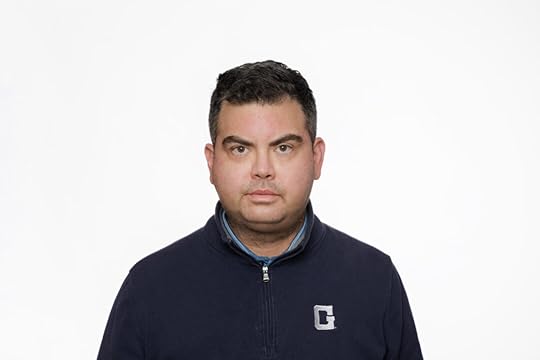
Mark Raphael, Oblate of Saint Benedict, has been a lay member of the Saint Andrew’s Abbey, Valyermo, California, oblate monastic community since 2014. He is currently in a graduate-level Italian Language program at the University of Oxford, United Kingdom, working on his second year. Furthermore, he has a Masters-level graduate certification in Mandarin Chinese from Cornell University and has a Bachelor of Arts in Philosophy from Santa Clara University. He has been an active participant in the Abbey of the Arts, Galway, Ireland, spiritual community since Fall 2020 and a member of its Sustainers Circle, since its inception. After a short stint in Big Law in Washington, DC, United States of America, he has devoted himself to lay ministry leadership at his local Catholic parish. He is currently active as a Cooperator of Opus Dei (hosting a once-a-month Men’s Spirituality Group), an Auxiliary Member of the Order of Malta, and a Chaplain at a local area hospital. For fun, he is training for his 200-hour Yoga Teacher Training certification, trains in the Bel Canto style, and listens to live video on demand music streams on various internet platforms.
The post Monk in the World Guest Post: Mark Raphael appeared first on Abbey of the Arts.
November 29, 2023
Give Me a Word Retreat ~ A Love Note from Your Online Abbess
Dear monks, artists, and pilgrims,
In ancient times, wise men and women fled out into the desert to find a place where they could be fully present to the divine and to their own inner struggles at work within them. The desert became a place to enter into the refiner’s fire and be stripped down to one’s holy essence. The desert was a threshold place where you emerged different than when you entered.
Many people followed these ammas and abbas, seeking their wisdom and guidance for a meaningful life. One tradition was to ask for a word – this word or phrase would be something on which to ponder for many days, weeks, months, sometimes a whole lifetime. This practice is connected to lectio divina, where we approach the sacred texts with the same request – “give me a word” we ask – something to nourish me, challenge me, a word I can wrestle with and grow into. The word which chooses us has the potential to transform us.
What is your word for the year ahead? A word which contains within it a seed of invitation to cross a new threshold in your life?
Share your word in the comments section below by January 6, 2024 and you are automatically entered for the prize drawing (prizes listed below).
WIN A PRIZE – RANDOM DRAWING GIVEAWAY ENTER BY JANUARY 6th!
One space in our Love of Thousands online companion retreat to the bookOne space in our online Lent retreat on A Different Kind of FastTwo people win a space each in their choice of self-study retreatsThree people will win a digital album of their choice. Three people win one of our Dancing Monk MedallionsPlease share your word with us in the comments below (and it would be wonderful if you included a sentence about what it means for you)
Winners will be announced on Sunday, January 12th.
If you would love a retreat experience to support you in listening for your word, letting your word ripen, and carrying your word into the year ahead, please join us for our Give Me a Word Advent and Christmas season retreat which begins today! I am joined by many wonderful guest teachers and there is a suggested practice for each day from now until Epiphany!
Join us tomorrow for our Contemplative Prayer Service where I will be joined by Simon de Voil and Polly Paton-Brown to reflect on the gifts of Mary for our journey.
With great and growing love,
ChristineChristine Valters Paintner, PhD, REACE
P.S. We are delighted to announce the release of Birthing the Holy: Dancing with Mary and the Sacred Feminine! This digital collection of 12 dances and companion teaching videos by Betsey Beckman and guest artists offers another beautiful resource for engaging with the gifts of Mary.
Image paid license with Canva
The post Give Me a Word Retreat ~ A Love Note from Your Online Abbess appeared first on Abbey of the Arts.
November 28, 2023
Monk in the World Guest Post: Janeen R. Adil
I am delighted to share another beautiful submission to the Monk in the World guest post series. Read on for Janeen Adil’s reflection and poem about liminality.
Thresholds and doorways make for evocative images; as a monk in the world, I am drawn to a spiritual contemplation of this between space. When we lean into mystery/Mystery, we can see liminal time as a place open to rich and fruitful potential. Rather than stopping in an uneasy pause, we can instead rest on the threshold, regarding the time here (however long or short) as holy, as one of blessing.
For a Liminal TimeI see you bridging the gap of thatbetween space of choices: What lies in weight behind, what lies in wait ahead.Are they really such opposites,standing as you are on the threshold?See if you can rest in this time and place, embracing an andto widen your gaze and broaden your spirit.Listen:Tehom el Tehom: Deep calls to deep, the old psalmist cries!Listen. And thenyou will come to know, in that liminal time and space:You are not in exile after all but in a place of wonder,one that is alight with possibility and one that may yet be aflame with desire.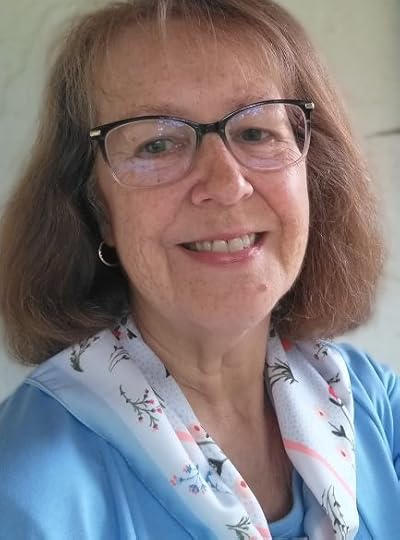
Janeen R. Adil is a spiritual director, writer, and teacher; within the United Church of Christ, she is Commissioned Minister of Christian Spirituality. She lives in eastern PA, in a farmhouse built by English/Welsh Quakers over 200 years ago. Her direction profile can be found at Spiritual Directors International, sdicompanions.org.
The post Monk in the World Guest Post: Janeen R. Adil appeared first on Abbey of the Arts.
November 25, 2023
Preparing for Advent + Prayer Cycle Day 7
Dear monks, artists, and pilgrims,
Today we share the final two audio podcasts of our 7-day prayer cycle on the theme of The Love of Thousands. The theme for morning is on ancestral earth and deep time, honoring that our ancestors are not just our human kin, but the mountains whose minerals form our bones and the seas that swim in our blood. We are connected to all of life. The evening theme is the love of thousands, bringing the whole journey through honoring angels, saints, and ancestors together.
Advent begins in a week! Every year before Christmas since 2008 we have posted an invitation on our Abbey of the Arts website, inviting people to listen for a word to guide them in the year ahead. I shared a few simple practices for listening and then ask them to share their word with the community. This has become a popular offering each year, something people look forward to and hundreds of people participate.
This year we have also decided to expand this experience into a 5-week online retreat for the Advent and Christmas seasons. For each of the 35 days from the first Sunday of Advent through to Epiphany we will be inviting you into a specific practice or reflection to support you to listen for your word, let your word ripen, and carry your word into the year ahead. I will be joined by several guest teachers.
The practices are not about resolutions or goal setting, they are not about achieving more in the new year or accomplishing tasks or goals. They are about listening for what is calling to you in a particular season of life. They ask us to trust a greater wisdom at work in the world.
The word might be a single word or a phrase or image and comes from the wisdom of the desert fathers and mothers, those elders who, in the second and third centuries, went to the deserts of Egypt, Syria, and Palestine to cultivate a life of radical simplicity and ongoing devotion to the presence of the divine in their lives.
A key phrase, repeated often in the Sayings of the Desert Fathers, is “Give me a word.” When a novice approaches one of the ammas or abbas and says “Give me a word,” they are not asking for a solution to life’s problems, but something that inspires more whole-hearted living.
A brother questioned Abba Hierax saying, “Give me a word. How can I be saved?” The old man said to him, “Sit in your cell, and if you are hungry, eat, if you are thirsty, drink; only do not speak evil of anyone, and you will be saved. (Hierax 1)
This tradition of asking for a word was a way of seeking something on which to ponder for many days, weeks, months, sometimes a whole lifetime. The “word” was often a short phrase to nourish and challenge the receiver. A word was meant to be wrestled with and slowly grown into over time.
Join us for this rich online retreat experience to help you deepen into the seasons of Advent and Christmas as a time of holy birthing in your own soul. We will begin with a live gathering online on Monday, December 5thand close with an online retreat on the feast of Epiphany, Saturday, January 6th. Both these sessions will be recorded and available for viewing following the events.
For those of you in the northern hemisphere looking for some creative inspiration during the winter season, I will be offering an online retreat (hosted by St. Placid Priory) on Writing into Winter next Saturday. This is a generative retreat where I will guide you in a series of contemplative and creative practices to spark the muse within.
On Thursday, November 30th Betsey Beckman will lead us in a free, joy-filled gathering to celebrate the release of the Birthing the Holy Prayer~Dance~Video digital collection. Many of these dances are featured in our Birthing the Holy prayer cycle. Join us!
With great and growing love,
ChristineChristine Valters Paintner, PhD, REACE
Image © Christine Valters Paintner
The post Preparing for Advent + Prayer Cycle Day 7 appeared first on Abbey of the Arts.
November 21, 2023
Monk in the World Guest Post: Susan Blagden
I am delighted to share another beautiful submission to the Monk in the World guest post series from the community. Read on for Susan Blagden’s contemplative photographs and poems inspired by the work of Thomas Merton.
As a contemplative photographer, coach and priest, I seek to live my days in a contemplative way. For me, this means paying attention to my external world in a way that often makes surprising connections with my inner world. My daily contemplative walk, complete with camera, invites me to be responsive rather than grasping. My reading on this particular morning had included a short extract of Merton’s writings that caught my attention: ‘The sky is my prayer; the birds are my prayer’. I was intrigued by this and carried it with me as I went on my walk. Observing this colony of terns, rather unexpectedly gifted me the experience of feeling that deep oneness which is at the heart of mystical prayer. As the birds rose ‘en masse’ over my head, Merton’s words came back to me. These are my reflections on that experience.
The sky is my prayer (after Thomas Merton)
 The sky is my prayer …
Vast, open sky-scapes
Dark and foreboding in the early morning light
A reminder that prayer does not always or immediately pierce the storm
As the sun peaked out from behind the clouds a rainbow appeared
Assurance of being remembered and deeply loved
But then more rain came,
gently at first before thundering down,
bouncing off the car
creating a sharp, metallic sound in the early morning air.
Yes, like prayer, sometimes bouncing, sounding empty and hollow …
And then the wind came and blew the remnants of clouds out to sea
A warm light crept over the horizon
The clouds thinned
Solid black gave way to vibrant blue
The world seemed to have expanded
Possibilities were emerging
Hope rose up through the break in the clouds
Yes, this is prayer: expansive, silent, heartfelt.
The birds are my prayer (after Thomas Merton)
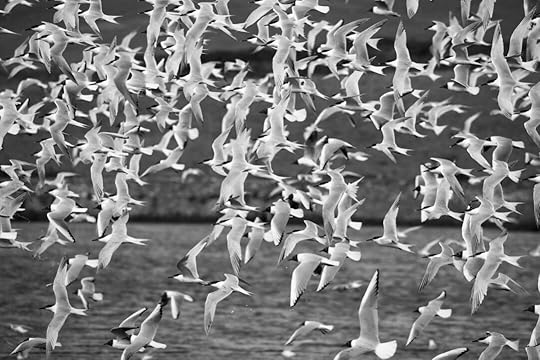 Tern colony, Ynys Môn, Wales, UKThese graceful birds are my prayer:
long-distance travellers navigating by moon, wind and tide
Living in daylight more than darkness.
Their arch-enemy, a hungry, greater black-backed gull
now scans the colony seeking food.
The birds rise in unison with a great whoosh
and then turn as one, giant swathe of birds
To fly back over the ground,
Hiding everything and confusing the great bird
by their sheer volume and graceful movement.
Prayer is like this: it too seeks the light
And may travel vast distances seeking grace and safety.
These birds remind us that we do not pray alone.
We are part of a great company of presences who pray
In the furthest, far-flung places of our world.
The birds are my silent prayer.
In that moment of uplift, I am one with them,
Rising with the whoosh of their wings
Confident of grace and community.
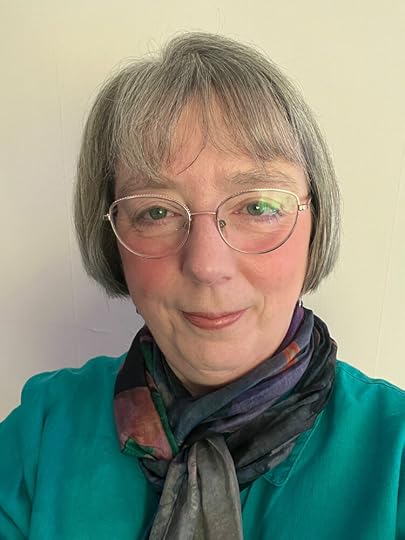
Susan Blagden (ACC/ICF) is a contemplative photographer, life coach, Anglican priest, and spiritual director based in North Wales, UK. The natural world and the Christian mystics are typically an integral part of Susan’s ministry. She is a keen citizen scientist and delights in overseeing the ecological management of her local churchyards. ContemplativeCamera.org
The post Monk in the World Guest Post: Susan Blagden appeared first on Abbey of the Arts.
November 18, 2023
Listening to the Call of the Monk in the World + Prayer Cycle Day 6
Dear monks, artists, and pilgrims,
Today we release the audio podcasts for Day 6 of our Love of Thousands prayer cycle with morning and evening prayer. The themes for the morning are cosmology, myth, and song inspired by the stories and music that has inspired our ancestors and still runs through our blood and bone. The evening theme is on becoming a wise and well ancestor ourselves, which means bringing our gifts fully into the world so those generations that come later will benefit (even if we don’t have children ourselves).
Each day when I awaken I listen to morning prayer of our prayer cycle and offer gratitude for all of you.
How amazing to think there are so many of you across this beautiful Earth who hear the call to be a monk in the world. The archetypes of monk, hermit, and anchorite/anchoress might seem odd in a world full of frenetic busyness, noise, and constant demands for our attention. But if you feel the pull to these ancient ways of being, Spirit is drawing you toward the still point at the heart of you and the heart of the world to live into a new way of being. What a gift to gather together to cultivate this path of love and presence.
I am feeling a bit nostalgic as it was 20 years ago this fall when John and I moved to Seattle after finishing our graduate studies and I stepped onto the grounds of St. Placid Priory, a small Benedictine women’s community. After falling absolutely in love with St. Benedict and St. Hildegard in my studies several years prior, I was longing to become an oblate.
An oblate is a lay person who lives out this path of monastic practice in their daily lives. You might wonder, can I really be a monk or hermit in the middle of the city or the suburbs or wherever I happen to live? In an office building or a fluorescent-lit grocery story?
Of course my response is a whole-hearted yes. If you feel the call – and I assume you are reading because you do hear it – the world needs you. The ancient monks tell us clearly that the cell or cave we withdraw to is in our hearts. This presence of the divine is wherever we are. We can claim a holy pause in the parked car or the waiting room or the bustling cafe for a few minutes to open ourselves to that divine love. An outer quiet place is a gift that we sometimes cannot access.
When I first visited St. Placid, Sister Lucy, the oblate director welcomed me warmly in that beautiful Benedictine way. I felt right at home among our ecumenical group, I loved that Episcopalians, Presbyterians, Methodists, Catholics, and many others including those who had left the institutional church were drawn to this community. The focus of our gatherings was praying lectio divina together, reflecting on the Rule, and supporting each other in living this monastic way in the ordinariness of our lives whatever their outer circumstances.
I was an oblate guest at St. Placid for a year, then entered a discernment year, before making my full commitment to this path through ceremony in 2005. Even though I have not lived near the Priory for 10 years now, I am still connected to Sister Lucy and the other sisters there, many of the oblates, and of course the many gifts of Benedictine wisdom which work their way into all my teaching.
As the years passed and I lived into this commitment as a monk in the world, I fell in love with the desert mothers and fathers. Their potent stories speak straight to the heart about the need for silence, working with our thoughts, inner peace, and deep love. They are so honest about the challenges of the heart we struggle with. Then moving to Ireland I was delighted to find that the ancient Celtic monks were profoundly influenced by the desert way, albeit in a wilderness instead.
During the pandemic, like many of you, Julian of Norwich also began to speak to my heart more deeply. As an anchoress she was walled into her cell in the heart of a city, with a window to the world to offer spiritual guidance to pilgrims and those seeking meaning in the midst of the suffering of her times which included plague and war.
These are the lineages which continue to shape me, which spark my joy each morning with gratitude for the deep wellspring I can draw upon and for this extended community I am woven into. They also help me cultivate my capacity to meet sorrow with compassion.
Following a spiritual path does not exempt us from challenges. We are humans and we will make mistakes. We will find ourselves distracted and far away from ourselves at times. Our hearts will break over personal losses and the terrible shattering happening all over the world over and over.
In my own life, I have written many times about my ongoing struggles with autoimmune and chronic illness which have worsened in recent years. We have not returned to hosting in-person programs because of my compromised immune system and greatly fluctuating energy levels. Embracing the way of the monk does not erase the pain and suffering, but it brings a connection to all the ancient ones who knew the divine presence in the midst of it.
When we enter the inner sanctuary, whether for a few minutes or a few hours, we are invited again and again to align ourselves to Love. Like the great mystic Howard Thurman writes, we listen for the “sound of the genuine” within. We are asked to welcome in all the difficult parts of self, we are called to make space for the grief, the wailing, the heartache, as well as the joy, gratitude, and delight the world offers. When we learn to welcome in more and more we meet the stranger with love as well and see the face of the divine there as Benedict so wisely advises us. Then we act on behalf of justice out of that in dwelling fountain of love.
Our particular Abbey community is about being dancing monks. What does this mean exactly? It is a path for those who also feel a call to follow the creative way and to bring beauty into the world. It is for those who honor the body as a source of tremendous wisdom. It is for those who long to join in the cosmic dance which Thomas Merton tells us about, and even while holding space for grief, we also enter into the play and delight that is also our birthright.
However you participate, whether through our morning and evening prayer in our prayer cycles (Day 1-6 of The Love of Thousands is now available along with four other themes), our monthly contemplative prayer services where we gather together in real time, our book club to expand our perspective on contemplative practice or participate in our mini-retreats and series to go deeper into particular topics. In addition to my own books and reflections we bring in a wide variety of guest teachers to share their wisdom with you as well so we can learn from one another.
We make all of our paid programs accessible through sliding scale options and additional scholarship requests. We have many free resources as well. If you are contemplating your end of year giving, know that we gratefully accept donations to help support this work. For US-based donors we have a fiscal sponsorship relationship with Fractured Atlas for our many non-profit based offerings so you can receive a tax deduction. For those outside of the US, we also welcome your support. Like most ministries we operate on a very simple budget while striving to pay our artists and teachers a living wage and produce the highest quality resources we can.
We recognize that not everyone has the financial resources to share. Your generosity of heart sustains us in this work. Your enthusiastic response to what we share keeps us going in joy. Thank you for all the ways you show up in the world, claiming the gifts of the monk as a path of transformation. May Peace infuse our hurting world, may Love heal the brokenness. It begins with each of us.
If you are seeking some creative inspiration during this holiday season, please join me for Writing into Winter, an online mini-retreat being hosted on December 2nd by the Benedictine sisters of St. Placid Priory. On Thursday, November 30th Betsey Beckman will lead us in a free, joy-filled gathering to celebrate the release of the Birthing the Holy Prayer~Dance~Video digital collection. Many of these dances are featured in our Birthing the Holy prayer cycle.
With great and growing love,
ChristineChristine Valters Paintner, PhD, REACE
Image © Christine Valters Paintner
The post Listening to the Call of the Monk in the World + Prayer Cycle Day 6 appeared first on Abbey of the Arts.
November 14, 2023
Monk in the World Guest Post: Amy Oden
I am delighted to share another beautiful submission to the Monk in the World guest post series from the community. Read on for Amy Oden’s reflection on the power of the contemplative stance during a time of disorientation.
It hit me first in my stomach, a gut punch I was not braced for: news that I would no longer be needed to teach a load of courses that I had, in one way or another, taught for almost 35 years. On one level, I knew this time would come. In fact, it needed to come. It was healthy and in the nature of things to pass the torch to the next generation. What’s more, I’d become more and more clear that I no longer really wanted to teach content-heavy courses, preferring instead courses that allowed me to accompany students in spiritual formation.
But I hadn’t realized it would happen now, this day I received the news. The shock stunned me, reverberating to my core. As I regained my breath, I began slow breathing, trusting breath to return me to myself.
The wisdom of the contemplative stance is precisely this: it roots us in ourselves, the real-life, true self where the image of God resides. When I can inhabit this contemplative way of being, I can slow down, experience the love that holds my life and gain eyes to see and ears to hear God’s own heartbeat, right here, even in the midst of this disorientation.
But I couldn’t stay there for long. My mind raced to figure out how to fill that now-empty space in my calendar. Should I text friends to see if they needed anyone to teach in the fall? Or send out emails to let folks know I was available? Maybe I could be a regular classroom aid in our public schools or work at the library. I began to craft a plan of action to ensure a full schedule for continuity of my work and identity.
Again, the contemplative posture nudged me to pause here, too. Perhaps this empty space was also an open space? Perhaps what appeared to be the end of this teaching load was also an invitation to simply stop and pay attention? What might it be like to not jump into action, to not start planning replacement activities but instead, to simply sit with this and listen?
Living as a monk in the world, for me, means trusting contemplative listening and presence to offer me a deeper path, a wisdom path, that my eager, managerial mind would never propose.
In this case, it meant attentive breathing. Then pausing to pay attention and this helped me be more available for the poem that would fall into my lap a few days later. It became a place to linger during this season of disorientation. By David Wagoner, the poem “Lost” offered me a resting place called Here while I waited, feeling lost in my own life, before setting out again.
Stand still. The trees ahead and bushes beside youAre not lost. Wherever you are is called Here,. . . Stand still. The forest knowsWhere you are. You must let it find you.(David Wagoner, Collected Poems, 1956-1976)I want to stand still. Here. Ask permission to know Here and be known. And let the forest find me.
I want to live in this poem a while. I want to trust that what first seemed to be a terrifying cliff’s edge might also be a fertile place or an abyss where I might learn to soar. If I have eyes to see. The contemplative life offers me those eyes.
For me, in this season, living as a monk in the world, looks like this:
Pause. Breathe. Pay attention.
Lean in to poetry, words that invite me beyond words.
So I can listen to what is, now.

Born and raised on the prairies of Oklahoma, Amy Oden has found her spiritual home under the wide-open sky. Amy is a seminary professor, retreat leader and spiritual director. Her passion is introducing ancient practices for following Jesus into the world today. For more about Amy, go to amyoden.com
The post Monk in the World Guest Post: Amy Oden appeared first on Abbey of the Arts.
November 11, 2023
BIBOLOVE InterPlay Experience + Prayer Cycle Day 5 ~ A Love Note from Your Online Abbess
Dear monks, artists, and pilgrims,
Today we release Day 5 of our Love of Thousands prayer cycle. Click the links above for morning and evening prayer on the themes of the Grieving Our Losses and Ancestral Pilgrimage.
This Friday we are offering a BIBOLOVE InterPlay Experience, led by Soyinka Rahim. Soyinka will invite us into a powerful space of amplifying love in the world through meditation, affirmation, visualization, and gentle movement.
Here is an introduction to the experience from Soyinka.
Hi! BIBOLOVE.Us
peace ,love, joy, happiness, health, grace, and ease people of the world
My name is Soyinka Rahim, GSP. I’m a Grassroots Spiritual Practitioner,
I am inviting you into a BIBOLOVE.Us practice
BIBOLOVE means “Breathe in, Breathe out LOVE.” We are vessels for love’s breath.
We are love, created by love, to create love, honoring SPIRITLOVE that moves through and around us and all things all the time. Knowing and believing we are love ignites a Supremelove that allows us to love and be loved.
In a moment of my depression, I did not want to live this life, and I asked SPIRITLOVE for a lifeline. Mama said God is a three-letter word for Love.
I asked SPIRITLOVE to give me something to live for, which then I was given: “BIBOLOVE, Soyinka. Breathe in love, Soyinka. Breathe out love, Soyinka.”
I enjoy sharing my gifts as a facilitator of Love in various settings including,
One-on-ones for spiritual direction
Family reunions for intergenerational interactive play
Openings and closings of small and large organizational meetings
Conferences – as weaver, weaving BIBOLOVE practices
I love to create and lead Affirmation Movement Meditations – for individual bodies and the collective body – celebrating SPIRITLOVE that connects all hearts and souls to A LOVESUPREME.
I love finding colorful ways to communicate my message. Four hearts – blue, red, green, and yellow – 


 is another way to write BIBO. Add four more red hearts – and you have BIBOLOVE. Blue heart – Our breath Red heart – Our selflove Green heart – Our earth Gold heart – Our highest frequency, which is A SUPREMELOVE. Our heart and soul connections.
I love traveling nationally and internationally, leading what I call BIBOLOVE.Us (.Us represents us!)
I lead –
Collective Breaths
Affirmation Movement Meditations
Storytelling
Reminders that we are the love we are waiting for.
We are all creative beings, artists of the world, breathing, talking, singing, walking, moving, dancing, directing our callings, having spiritual experiences in bodies, sharing our stories. We’re all created by the creator to create.
When we shine our lights of love, we see that we are all gifts of love.
An Affirmation Movement Meditation
I share:
“I’m a gift,
you’re a gift.
Together we create melodies with harmonies.
We’re making peace for the world to see.
When people experience the BIBOLOVE.Us Affirmation Movement Meditations, we are all reminded that we are one in divine order.
I am really excited to celebrate our heart and soul connection to A LOVESUPREME with Abbey of the Arts in November’s retreat. Come PPP – Pray, Play, and Part-ay with your BIBOLOVE practitioner!
Read the rest of Soyinka’s reflection and poem about BIBOLOVE.Us
Please join us Friday for a BIBOLOVE InterPlay Experience. We are also delighted to be hosting our monthly Centering Prayer session with Therese Taylor-Stinson on Wednesday.
With great and growing love,
ChristineChristine Valters Paintner, PhD, REACE
Image © Soyinka Rahim
The post BIBOLOVE InterPlay Experience + Prayer Cycle Day 5 ~ A Love Note from Your Online Abbess appeared first on Abbey of the Arts.


