
Christine Valters Paintner's Blog, page 131
May 16, 2015
The Journey Home – Pilgrimage of Resurrection through Creative Practice (a love note)
This is the seventh in a series of eight reflections over the season of Easter on making a pilgrimage of resurrection.
Word for Today: Blessing
The gospel reading for the seventh week of Easter shows us Jesus’ ascension, which is ultimately a journey home again. Our own pilgrimage of resurrection calls us home, but we may wonder how we know if we have reached the destination. In our endless seeking and searching, sometimes we miss the reality: home has always been with us. The pilgrimage was to learn how to see this in our daily lives.
 I sometimes describe the artist as one who creates out of the materials given, not necessarily the materials they wish they had. To be an artist of everyday life means to stay fluid and flexible, responding to the invitation in each moment. I don't believe that life is planned out ahead of time, but that God is immersed in a creative outpouring moment by moment and we are called to dance with whatever emerges. Sometimes it is not as we would want it, often this is because of the choices or limitations of others, or our own, not some God-given struggle to strengthen us. And yet, the divine presence is always there in the midst, helping us to create beauty right there.
Throughout our life pilgrimage, even in the midst of the strangeness and unknowing, I do have many moments of homecoming, glimpses of being able to see this place as holy. Moments of joy and a sense of rightness that I have said a wholehearted "yes" to the invitation to not take my life for granted and to not let opportunities for exploration and adventure pass me by. This is what the pilgrim must learn, not through books or words, but through a radical encounter with the home that dwells within.
If entered into mindfully and with a whole heart, each encounter on the road has the potential to transform. The pilgrim returns home not with all the answers, but with better questions: questions that bring the pilgrimage experience into daily life and reveal depth in all they see around them. Ultimately the pilgrimage leads us back home again. We always return bearing gifts for the community. We are always called back to share what we have been given with others. This will look different for each of us.
We are also called to a new relationship to “home.” A couple of years ago I became aware of a pattern of mine. I was away for three weeks teaching, which for me was an unusually long time. But I noticed that while I usually get homesick after about a week away, this time something had shifted and I wasn’t feeling this way. I certainly missed home, but I was aware of how my “homesickness” in the past would pull my attention away from the experience I was having.
I think we all long for home. Certainly The Wizard of Oz, that great archetypal film, invited us to remember that the power to go home is always with us. And while some physical places and landscapes feel more like home to us, ultimately it is in service to us discovering the primal home within each one of us.
Perhaps our pilgrimage ultimately invites us to rest into this question: Can you allow yourself to hold both the peace and unrest of your soul together? Can you see yourself as both an exile in the world and profound and intimately at home, in communion with all people and creation?
As we enter the final week of the Easter season, allow some time to be with your own expectations about where you “should” be at this point on the journey. Are you expecting some grand revelations? Were you hoping for clear answers? Did you have a vision for what “home” would look like? Can you release any thoughts about what the journey is supposed to look like and allow yourself to be where you are?
What if the journey has brought you exactly to this moment, full of everything you need to go home to yourself? What if you brought this awareness into your creative practice? Every journey has unfinished elements, more beasts to tame, more treasures to seek. And when we return from pilgrimage we come home in a new way, we bring gifts for those who have awaited us.
We sometimes think of the journey as a linear path to travel, when in reality we travel more in circles and spirals. We don’t arrive at the summit and proclaim ourselves done and complete. We arrive back at the desires which set us on the path in the first path, but perhaps with deeper wisdom or more doubts this time around.
Pilgrimage leads us home again, but that home is deep within each of us. We will cycle through our lives over and over, meeting old themes and habits again, being invited to release, to walk forward in trust, to embrace mystery many times.
You may feel like this journey is coming close to an end, when in reality it is just beginning. Now you carry the wisdom gleaned into the next cycle and season of your life.
At Abbey of the Arts, we are inviting the community to make a commitment to practice creativity daily in celebration of my new book being released in May 2015 The Soul of a Pilgrim: Eight Practices for the Journey Within (Ave Maria Press). Please join us (details available at this post).
With great and growing love,
Christine
Christine Valters Paintner, PhD
Click here to read this post at Patheos and share with others>


Soul of a Pilgrim Webinar Recording Now Available to View
The Parish Pilgrim: Cultivating Intentional Inner Journeys
Drawing on Christine Valters Paintner's newest book, The Soul of a Pilgrim: Eight Practices for the Journey Within, we will explore spiritual practices which can inspire us to live the pilgrim way even in our daily lives and in the midst of other commitments. From hearing the call to packing lightly, beginning again, being uncomfortable, and returning home, Christine will offer ways to coax a spirit of holy adventure in your parish through a series of reflections on the biblical stories of journeying.
May 15, 2015
May 16: Communion of Saints – Pilgrimage of Resurrection(A Creative Journey through the Easter Season)

Word for Today: Communion of Saints
 There might be wild beasts to encounter: the fierce ones in your own heart. But there are also powers there to help support and guide you. Remember that the threshold is full of shimmering presence.
—Christine Valters Paintner, The Soul of a Pilgrim: Eight Practices for the Journey Within
Reflective Question: Is there an ancestor, or spiritual saint or guide, you could call upon for assistance in times of trouble? Who do you sense from the great “cloud of witnesses” and “communion of saints” traveling alongside you, offering their wisdom through the veil?
Next steps:
 Let the word, quote, and question inspire your creative practice (Download the list of daily words here.) Use the hashtag #soulofapilgrim when sharing on social media.
Join the Holy Disorder of Dancing Monks Facebook group to share your art and writing with others.
Name your commitment to creative practice in the comments at this post (and enter the drawing to win a free copy of The Soul of a Pilgrim.)
Share this post with others and invite them to participate (they can sign up here)
Order a copy of Christine's newest book The Soul of a Pilgrim
Walk the Ancient Paths: Join us on pilgrimage to sacred landscapes>>
May 14, 2015
May 15: Wholeness – Pilgrimage of Resurrection(A Creative Journey through the Easter Season)
Word for Today: Wholeness
 Our life impulse calls us into community with ourselves, with others, and with the divine…. We are grounded in our wholeness and make choices from this place.
—Christine Valters Paintner, The Soul of a Pilgrim: Eight Practices for the Journey Within
Reflective Question: In what way does your life impulse call you to continue the difficult yet soulful journey you have begun?
Next steps:
Let the word, quote, and question inspire your creative practice (Download the list of daily words here.) Use the hashtag #soulofapilgrim when sharing on social media.Join the Holy Disorder of Dancing Monks Facebook group to share your art and writing with others.
Name your commitment to creative practice in the comments at this post (and enter the drawing to win a free copy of The Soul of a Pilgrim.)
Share this post with others and invite them to participate (they can sign up here)
Order a copy of Christine's newest book The Soul of a Pilgrim
Walk the Ancient Paths: Join us on pilgrimage to sacred landscapes>>
May 10, 2015
May 11: Anchor – Pilgrimage of Resurrection(A Creative Journey through the Easter Season)
Word for Today: Anchor
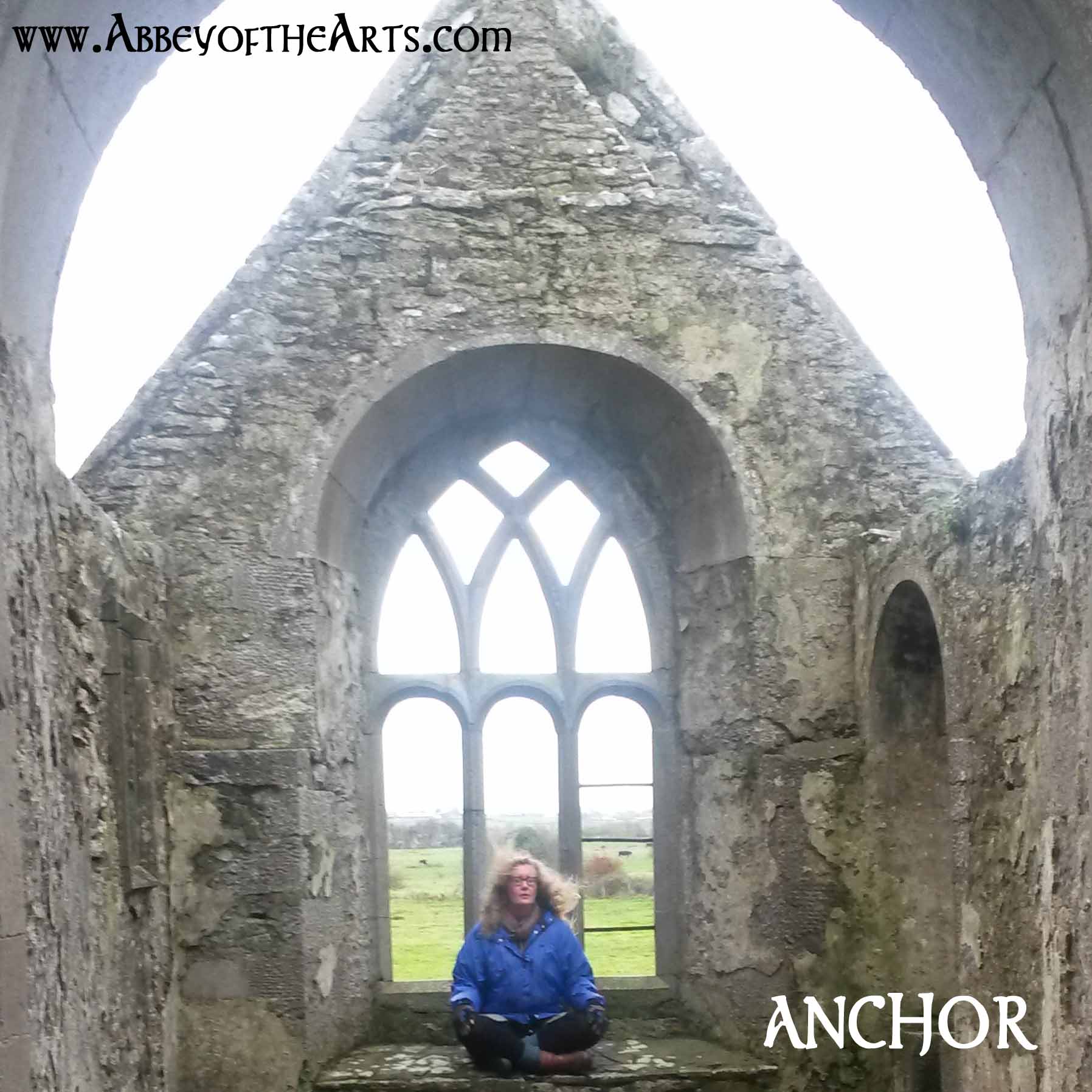 While on pilgrimage, time for silence is essential. I need this anchor, this connection to Source, to remember everything that I am and to not add up the sum of my parts. In the silence, I remember that my life is not wholly good or bad here. The discomfort and the exhilaration are both essential to my experience.
— Christine Valters Paintner, The Soul of a Pilgrim: Eight Practices for the Journey Within
Reflective Question: Can you allow yourself the time to learn how to deal with the ambiguities and the contradictions in your experience, knowing that on your journey, you will experience wild edges while being pushed beyond your boundaries?
Next steps:
Let the word, quote, and question inspire your creative practice (Download the list of daily words here.) Use the hashtag #soulofapilgrim when sharing on social media.Join the Holy Disorder of Dancing Monks Facebook group to share your art and writing with others.
Name your commitment to creative practice in the comments at this post (and enter the drawing to win a free copy of The Soul of a Pilgrim.)
Share this post with others and invite them to participate (they can sign up here)
Order a copy of Christine's newest book The Soul of a Pilgrim
Walk the Ancient Paths: Join us on pilgrimage to sacred landscapes>>
Summer Self-Study SALE
 Abbey of the Arts is offering a special Summer Self-Study SALE (now through June 14th), register for any two self-study retreats and receive a third of equal or lesser value for free (Live it to Give It does not count for the free gift, but you can count toward purchase of the first two). You have ongoing access to the materials and can participate at any time, so purchase two with the third free now and move through them at your own pace. With 15 programs to choose from!
If you have purchased a self-study program in the last month and want to take advantage of this offer, just register for the second program and let us know your free choice. By taking advantage of this special, you help support Abbey work to continue, while also getting an extra gift as a thank you.
Send an email to Liz at dancingmonk AT abbeyofthearts DOT com to indicate which two retreats you have registered for and which retreat you would like as a free gift and she will send you the access code.
May 9, 2015
Love as a Holy Direction – Pilgrimage of Resurrection through Creative Practice (a love note)
This is the sixth in a series of eight reflections over the season of Easter on making a pilgrimage of resurrection.
Word for Today: Love
In the gospel reading for the sixth Sunday, Jesus invites us to abide in love. Certainly this is a process, a pilgrimage journey toward the resurrection gift of love.
Think of all of the love songs, movies about love, poems about love, romance novels, paintings of love, and other expressions of what love is. In many ways love is the primal force behind our creative expression. We create art to understand more deeply what it means to be human. Part of what makes life worth living is our passion, our desire to be in relationship – with ourselves, with our beloveds, with the divine.
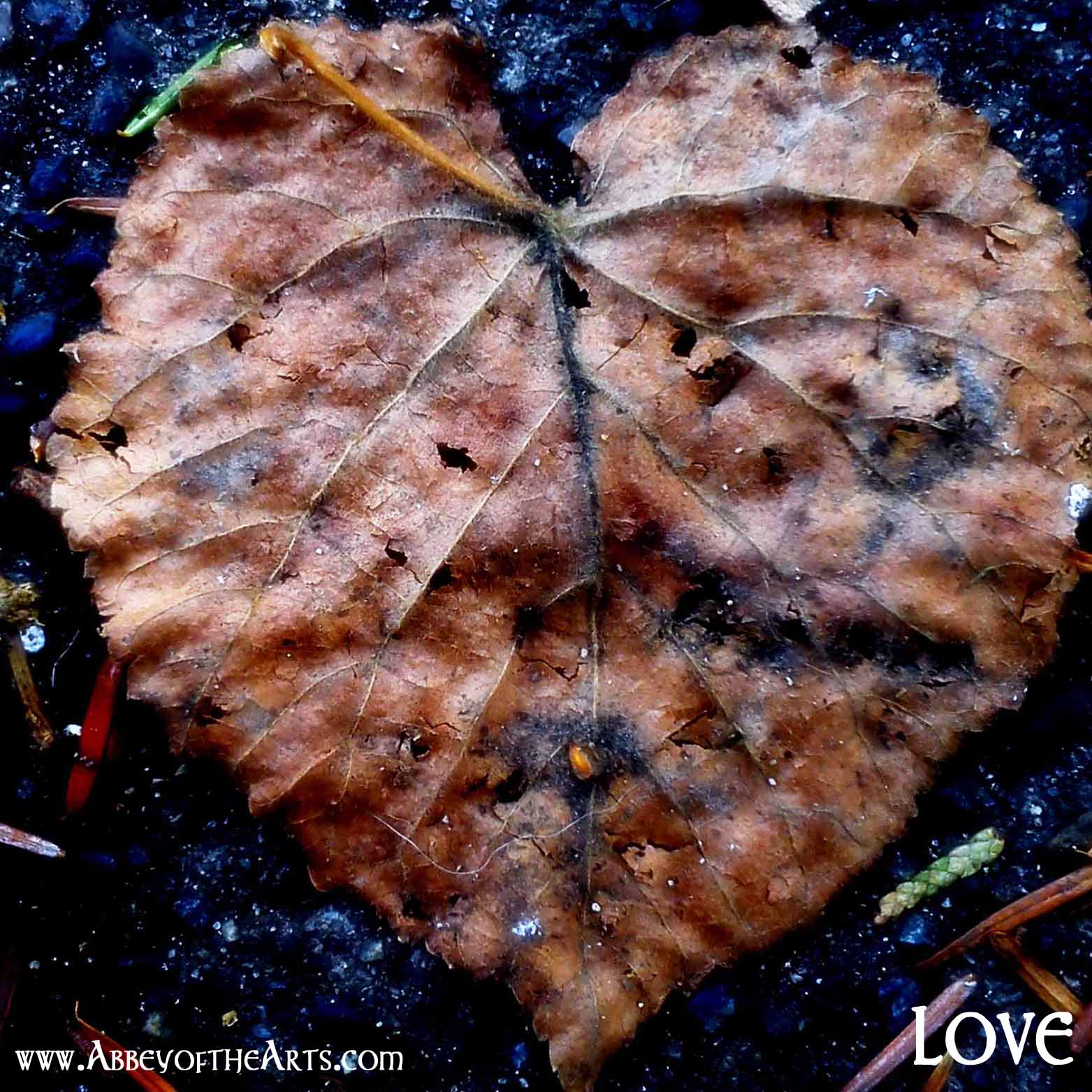 Why else would we take the terrible risk of stepping out into the world, revealing our vulnerabilities? What other force is able to compel us to speak our truth? We love people, creatures, ideas, values.
To be a lover in the world means to be aligned with what sparks our aliveness and passion. Lovers have a healthy sense of embodiment and savor the delights of having a body without shame. They relish the sense experience of life – the taste of a beautiful meal, the soft fur of a devoted pet, the shimmering of sunlight on water, the music of birds, the fragrance of jasmine. To abide in love is to celebrate beauty and that all of life is a work of art.
One of my favorite books is called Exquisite Desire and is on that glorious love poem which appears in the heart of the Hebrew Scriptures – the Song of Songs. It is an unabashedly sensual exploration and celebration of erotic love, of the deep desire we have for another person. Eros is what draws us out of ourselves and into the world. Through eros we are seduced into a passionate relationship with life. Rabbi Akiva who lived in the first century BCE said that the whole of Torah is holy, but the Song of Songs is the Holy of Holies.
In Medieval times, the Song of Songs became the exemplary image for the mystical union between person and Beloved. The language of longing was considered to be the perfect way to express how deep our own longing for God can be, and conversely, how much God longs for and desires us.
When we abide in love we can experience a sense of union with all there is. It is the source of spirituality, especially the mystical paths found in all religious traditions, a sense of the ultimate oneness of everything that is and seeking to experience that unity in daily life. Love calls us into connection with the world. In times when feeling disconnection and isolation is easier than ever, love calls us to step into the flesh and blood relationships, to engage, to risk, to be vulnerable.
Love is a source of joy but also leads to pain. When we love deeply, loss can be wrenching. When we love others, we experience their places of wounding. When they hurt, we hurt as well. Love calls us to be present to the full range of our emotional landscape.
The Jesuit priest Pedro Arrupe wrote: “Nothing is more practical than finding God, that is, than falling in a love in a quite absolute, final way. What you are in love with, what seizes your imagination will affect everything. It will decide what will get you out of bed in the mornings, what you will do with your evenings, how you spend your weekends, what you read, who you know, what breaks your heart, and what amazes you with joy and gratitude. Fall in love, stay in love, and it will decide everything.”
“What you are in love with . . . will affect everything.” How you spend your precious moments and what you allow to fill your heart is the call of our pilgrimage of resurrection, to always journey toward love and falling more in love with the world. Pause for a moment to consider this question: What are you in love with? I mean really passionate, head-over-heels, giddy with desire in love with? Have you let love seize your imagination, to take hold of you in an absolute way so that your day is spent contemplating ways to spend more time with your beloved? What you love might be a person or God, but it also might be an idea, a commitment you have.
As artists it takes courage to create when the world around us keeps saying that there are better things we could be doing with our time. There is often little recognition or money in being an artist, and yet I invite you to consider art-making and creativity an exuberant act of self-love. To say, “I am an artist,” is to remember the great love that calls to you moment by moment. To be an artist is to say I will no longer retreat and meet the expectations and conventions around me. I will risk loving myself and living from the brilliant and glimmering truth I find there.
At Abbey of the Arts, we are inviting the community to make a commitment to practice creativity daily in celebration of my new book being released in May 2015 The Soul of a Pilgrim: Eight Practices for the Journey Within (Ave Maria Press). Please join us (details available at this post).
With great and growing love,
Christine
Christine Valters Paintner, PhD
Click here to read this post at Patheos and share with others>
May 8, 2015
May 9: Resilience – Pilgrimage of ResurrectionA Creative Journey through the Easter Season
Word for Today: Resilience
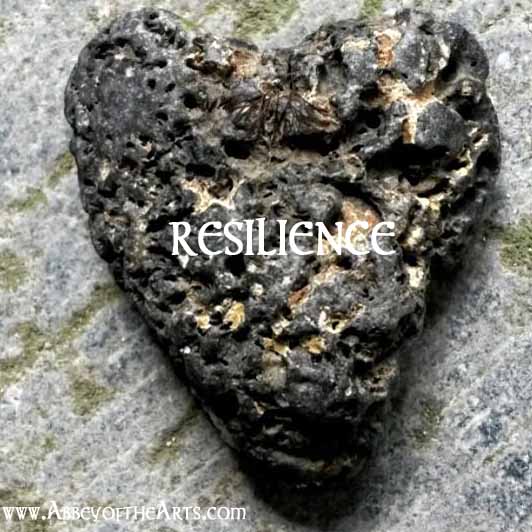 By staying present to the discomfort of life we grow in our resilience and our ability to recover from the deep wounds that life will offer us.
—Christine Valters Paintner, The Soul of a Pilgrim: Eight Practices for the Journey Within
Reflective Question: Can you embrace all the vulnerable places inside yourself, and in the process grow in compassion for both yourself and others?
Next steps:
Let the word, quote, and question inspire your creative practice (Download the list of daily words here.) Use the hashtag #soulofapilgrim when sharing on social media.Join the Holy Disorder of Dancing Monks Facebook group to share your art and writing with others.
Name your commitment to creative practice in the comments at this post (and enter the drawing to win a free copy of The Soul of a Pilgrim.)
Share this post with others and invite them to participate (they can sign up here)
Order a copy of Christine's newest book The Soul of a Pilgrim
Walk the Ancient Paths: Join us on pilgrimage to sacred landscapes>>
May 7, 2015
May 8: Monk – Pilgrimage of ResurrectionA Creative Journey through the Easter Season
Word for Today: Monk
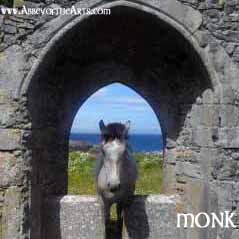 The root of the word “monk” is monos, which means one or single. It isn’t so much about marital status as it is about the condition of one’s heart. When I try to live as a monk, I commit to living my life with as much integrity as possible.
—Christine Valters Paintner, The Soul of a Pilgrim: Eight Practices for the Journey Within
Reflective Question: How might you answer the monk’s call to live from a commitment to singleness of heart?
Next steps:
Let the word, quote, and question inspire your creative practice (Download the list of daily words here.) Use the hashtag #soulofapilgrim when sharing on social media.Join the Holy Disorder of Dancing Monks Facebook group to share your art and writing with others.
Name your commitment to creative practice in the comments at this post (and enter the drawing to win a free copy of The Soul of a Pilgrim.)
Share this post with others and invite them to participate (they can sign up here)
Order a copy of Christine's newest book The Soul of a Pilgrim
Walk the Ancient Paths: Join us on pilgrimage to sacred landscapes>>
Monk in the World guest post: Hilary Lohrman
I am delighted to share another beautiful submission for the Monk in the World guest post series from the community. Read on for Hilary Lohrman's reflection on finding the sacred in the ordinary:
I am writing on behalf of the ordinary.
Nothing special, nothing especially interesting. Just the simple, daily, ordinary content of life and the discovery that God resides in exactly that.
When I was a younger woman, I had spiritual ambitions (though I wouldn’t have described it that way, of course}. Perhaps to become a priest, or possibly a spiritual director with a large, successful practice. At the very least, I would be a model Benedictine Oblate, guiding and teaching others how to follow the monastic way of life. I rather divided my life into the spiritual—i.e. important–and everything else, which was less so. I fulfilled some of my ambitions, working full-time as a pastoral assistant in a busy parish and completing a training program as a spiritual director. I became an Oblate group leader. Respected as a teacher and a retreat leader, I accomplished a great deal for God.
Fast forward a decade and a half, and how things changed. Following our move from Kansas City to a small farming community, I felt completely lost. My husband had grown up here and his family was well known. On the other hand, I knew no one, and certainly no one knew me. Life moved at a much slower pace and my gifts—or what I thought were my gifts—had no audience. I was angry and bereft. I really hated where I found myself and longed to return to what seemed like glory days. (Oh, to be back in Egypt!)
A wise Benedictine sister once told me, “When you feel like running away, it is usually because you are sick of yourself.” I certainly felt like running away, but that, of course, was impossible. I loved my husband and I loved our beautiful home in the country, with its woods and fields. I was responsible for the three beautiful horses in the pasture, along with an assortment of dogs and cats. No escape. I was stuck here, in what felt like a spiritual desert.
And we all know what happens in the desert. Burning bushes and exile and wandering and God speaking on a mountain and dry bones piling up. The desert is a place of prophets and demons, promises and doubts. The desert is a place where the food is provided directly from the hand of God, and is NOT what you want.
In the city, I had been introduced to the monastic Rule of St. Benedict and had pledged to live according to those values as a Benedictine oblate. I loved Mount St. Scholastica, my home monastery. I loved the Sisters, the Liturgy of the Hours, and the sense of timelessness I found there. It nourished my soul and the Rule was like a study trellis upon which my faith could grow. The core values of the Rule—stability, obedience, and conversion—became the organizing principles of my spiritual life. I loved the Rule and the centuries of spiritual riches behind it.
However, it was when I was separated from my faith community and all the roles I played within it, that I discovered I needed the Rule. When all the external support was taken away, how was I to live? When I had no one to teach or guide or lead, how was I to live? When I looked up and saw only desert, how was I to live? (Can these bones live?)
Stability. Obedience. Conversion.
Stability: Don’t run away. God is here. Right here.
Obedience: God is speaking. In this person, in this situation, in this place of need or hurt or loss. Listen.
Conversion: Let yourself be changed. Rest in God’s love. Trust. You will not be abandoned, you will be made new.
A faithful student, I had studied the Rule and followed the Rule (not perfectly) and knew in my heart that the monastic path was my path. But Mount St. Scholastica, while an amazing gift, was not the place where God was leading me. The beloved Sisters were not the community that God had established for me. I was called to live as a monk in my world.
What does this look like? Taking time to make eye contact and greet each store clerk I meet. Opening our home to host the wedding of a young neighbor. Adopting a frail, elderly horse, bound for slaughter if a home could not be found. Maintaining a faithful correspondence with friends now at a distance. Being ridiculously patient with puppy accidents, injured cats, and neighbors who support the National Rifle Association. It looks like surrendering my prejudices and preferences on a daily basis, and extending Benedictine hospitality to most unlikely angels.
It is knowing bone-deep the truth that the implements of the kitchen and barn are every bit as holy as the plate and chalice on the altar.
When God led me into the desert of unwanted change, God intended to heal that part of me that divided life into segments of holy and not-so-holy. God invited me into intimacy in the ordinary. God’s face reveled in the face of my spouse, my dogs, my scraggly barn cat, and my horses. In my neighbors and the man who delivers my packages from amazon.com.
There is no place where God is not.
The lesson from the desert: don’t run away. I am here. Trust and you will be made new. The monk in the world walks with God In this ordinary, extraordinary place, a place where God says silently, always and everywhere I am with you.
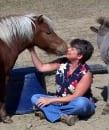 Hilary Lohrman is a lay woman and Benedictine oblate of Mount St. Scholastica Monastery in Atchison, Kansas, US. She makes her home in rural northern Indiana with her husband, Ed, three dogs, two cats, two horses, and one very cheeky donkey. She is a mother, grandmother, retired RN, and sometime spiritual companion/director.


