Christopher Tuthill's Blog, page 3
October 9, 2025
The Body, by Stephen King (1982)
“It’s hard and painful for you to talk about these things … and then people just look at you strangely. They haven’t understood what you’ve said at all, or why you almost cried while you were saying it. That’s the worst, I think. When the secret stays locked within not for want of a teller but for want of an understanding ear.”

Today I’m looking back to the 1980s again, a decade that was very good for commercial horror. From his excellent collection Different Seasons, The Body is probably my favorite King story. He’s incredibly prolific and has written lots of great stories and novels, but I find the realism of this one very gripping. It’s not a horror tale, exactly, but more a story of friendship and growing up.
By now almost everyone knows this story about four twelve-year-olds in Castle Rock, and their quest to see a dead body. These children all come from difficult circumstances, but form an unbreakable bond in this story, and King makes it all seem so real that we can easily relate to them. The main character, Gordie, is a storyteller, a stand in for King, I guess, since he also graduates from the University of Maine and becomes a successful writer.
I know many of King’s fans enjoy the vampires, monsters, and supernatural horror of his stories, and I like them as well and have read many of them. But to me, King is at his best when he tells a more restrained, realistic tale like this one. He’s a master of horror, I know, but I think what has given him such popularity and staying power are his observations on working class and poor lives lived in everyday kinds of places. It makes his characters quite sympathetic.
The other stories in this book are quite good, as well. Apt Pupil, Rita Hayworth and the Shawshank Redemption, and the Breathing Method are all great novellas. Three of them, of course, were made into very successful Hollywood films. Most writers would be thrilled to have even one story as successful as any of these, but King has always been in a league of his own.


October 8, 2025
Fevre Dream by George RR Martin (1982)
George RR Martin is known for his groundbreaking fantasy novels, but back in 1982 he wrote this gem of a vampire book, about a down on his luck steamship captain, Abner Marsh, who makes a bargain with an odd man, Joshua York: he gets to have his dream ship, financed completely by the mysterious stranger, but he must transport the man, his friends, and their cargo, no questions asked. As you might imagine, this arrangement does not go as planned. It’s a fun read with plenty of adventure and scares. If you enjoyed the Song of Ice and Fire novels, I think you’ll love this book. There are some interesting characters, weird plot twists, great writing, and of course, vampires.

According to Martin, his book sales around this time were poor, and contributed to his decision to become a TV writer. For years afterward, he worked on things like The Twilight Zone and Beauty and the Beast, until he wrote A Game of Thrones in 1996, which marked his return to novels. I’ve enjoyed everything he wrote. Armageddon Rag is another excellent read, this one about a cursed rock band. His short stories, science fiction novels, and Wild Cards series are also worth checking out. I only hope we get Winds of Winter sometime soon.
Fevre Dream (1982) by George RR Martin
George RR Martin is known for his groundbreaking fantasy novels, but back in 1982 he wrote this gem of a vampire book, about a down on his luck steamship captain, Abner Marsh, who makes a bargain with an odd man, Joshua York: he gets to have his dream ship, financed completely by the mysterious stranger, but he must transport the man, his friends, and their cargo, no questions asked. As you might imagine, this arrangement does not go as planned. It’s a fun read with plenty of adventure and scares. If you enjoyed the Song of Ice and Fire novels, I think you’ll love this book. There are some interesting characters, weird plot twists, great writing, and of course, vampires.
According to Martin, his book sales around this time were poor, and contributed to his decision to become a TV writer. For years afterward, he worked on things like The Twilight Zone and Beauty and the Beast, until he wrote A Game of Thrones in 1996, which marked his return to novels. I’ve enjoyed everything he wrote. Armageddon Rag is another excellent read, this one about a cursed rock band. His short stories, science fiction novels, and Wild Cards series are also worth checking out. I only hope we get Winds of Winter sometime soon.
October 7, 2025
The Haunting of Hill House, by Shirley Jackson (1959)

“It was a house without kindness, never meant to be lived in, not a fit place for people or for love or for hope. Exorcism cannot alter the countenance of a house; Hill House would stay as it was until it was destroyed.”
I’ve been writing about a number of unnerving books this month, but The Haunting of Hill House might be the finest of them all. You can read it as a haunted house story, which it is, but I can only think of a handful of books that truly scared me, made me feel so unsettled that I couldn’t stop thinking about the book, or that kept me up at night. Shirley Jackson was such a fine writer that I can’t recommend this book, or her other works, highly enough. The trials of Eleanor Vance in Hill House are some of the most upsetting things any horror character has ever had to endure, and I found myself terrified for her as I read this book. Without giving anything away, there is a scene involving the possible presence of a supernatural entity that is one of the most the most disturbing passages I have ever read.
What makes The Haunting of Hill House work so well is that Jackson doesn’t rely on cheap scares or obvious explanations; you go along with the story without thinking. You sympathize with Eleanor and the other characters and before you know it you are tangled up in their fears and disappointments and terrors. It’s scary because Jackson makes it all seem so real and believable; usually, when reading in this genre, it is easy to set aside your feelings and realize it’s just a ghost story. Jackson makes that much harder by making her characters seem so human, by telling her tale so well.
If you only have time to read one book this season, it should be this one. There are lots of great horror writers, but Jackson was just a great writer, period, and I don’t think anyone has ever surpassed her achievement in this genre. Her short stories are also essential reading for any student of fiction.
October 6, 2025
The Case Against Satan (1962) and The Exorcist (1971)
Both of these were popular novels long before my time, but when I was in college in the 1990s, I was quite taken with the film version of The Exorcist, which to me is one of the scariest movies ever made. Since William Peter Blatty’s novel of the same name was first published in 1971, there have been no end of books and movies about exorcism of varying quality; such films are practically their own industry at this point. People sure enjoy reading books and watching scary films about demonic possession.

Ray Russell’s The Case Against Satan, originally published in 1962, is an excellent, tightly paced and disturbing read about a case of possession and exorcism involving a young girl. It predates Blatty’s novel by nine years, so it is probably the first novel of its kind. It’s a very different read from the Exorcist, told with more attention to psychology and spiritual matters. Russell was a fine writer of Gothic tales, and I highly recommend his short stories. There are a couple of good books that collect most of them, including the very creepy Sardonicus.

The Exorcist reads more like a page turning thriller than Russell’s work. The story is more over the top, which fans of the film will recognize. If you like this genre of horror movie, I think you owe it to yourself to read this book and see where it started. Russell’s less well-known book is also a must read. Both novels do a great job of bringing this ritual to life; even if you aren’t Catholic, or don’t believe that possession is something that exists, I still think the books are well worth reading for their treatment of the topic. You can read them on the level of enjoying a good scare, but I feel that there is more here in the way Russell and Blatty discuss the nature of evil, the possibility that ‘the adversary’ exists. Many of us still believe in a spiritual life, and here we also see the belief in the dark side of that world. Both of these books stayed with me long after I read them–I found that their reputations are well-earned.
The Case Against Satan and The Exorcist
Both of these were popular novels long before my time, but when I was in college in the 1990s, I was quite taken with the film version of The Exorcist, which to me is one of the scariest movies ever made. Since William Peter Blatty’s novel of the same name was first published in 1971, there have been no end of books and movies about exorcism of varying quality; such films are practically their own industry at this point. People sure enjoy reading books and watching scary films about demonic possession.
Ray Russell’s The Case Against Satan, originally published in 1962, is an excellent, tightly paced and disturbing read about a case of possession and exorcism involving a young girl. It predates Blatty’s novel by nine years, so it is probably the first novel of its kind. It’s a very different read from the Exorcist, told with more attention to psychology and spiritual matters. Russell was a fine writer of Gothic tales, and I highly recommend his short stories. There are a couple of good books that collect most of them, including the very creepy Sardonicus.
The Exorcist reads more like a page turning thriller than Russell’s work. The story is more over the top, which fans of the film will recognize. If you like this genre of horror movie, I think you owe it to yourself to read this book and see where it started. Russell’s less well-known book is also a must read. Both novels do a great job of bringing this ritual to life; even if you aren’t Catholic, or don’t believe that possession is something that exists, I still think the books are well worth reading for their treatment of the topic. You can read them on the level of enjoying a good scare, but I feel that there is more here in the way Russell and Blatty discuss the nature of evil, the possibility that ‘the adversary’ exists. Many of us still believe in a spiritual life, and here we also see the belief in the dark side of that world. Both of these books stayed with me long after I read them–I found that their reputations are well-earned.
October 4, 2025
A Night in the Lonesome October, by Roger Zelazny (1993)
This novel is a wonderful seasonal treat by the legendary Zelazny. Each of the chapters is a night in October, told from the point of view of Snuff, a dog who is the companion of Jack the Ripper. Sherlock Holmes, Dracula, Dr. Frankenstein, the Wolfman, and various other spooky characters haunt the pages of this book, each with an animal familiar, all playing a game that will determine the fate of humanity. I found this book to be a tremendously appealing conceit, such a fun read and so well told. If this kind of story sounds appealing to you, do not delay: sit back, relax, pour yourself a cup of tea and enjoy it by the fire–you won’t be disappointed. If it doesn’t sound appealing to you, that makes me sad and I’d encourage you to try it anyway.

A Night in the Lonesome October, by Roger Zelazny
This novel is a wonderful seasonal treat by the legendary Zelazny. Each of the chapters is a night in October, told from the point of view of Snuff, a dog who is the companion of Jack the Ripper. Sherlock Holmes, Dracula, Dr. Frankenstein, the Wolfman, and various other spooky characters haunt the pages of this book, each with an animal familiar, all playing a game that will determine the fate of humanity. I found this book to be a tremendously appealing conceit, such a fun read and so well told. If this kind of story sounds appealing to you, do not delay: sit back, relax, pour yourself a cup of tea and enjoy it by the fire–you won’t be disappointed. If it doesn’t sound appealing to you, that makes me sad and I’d encourage you to try it anyway.
October 3, 2025
The Sketch-book of Geoffrey Crayon, Gent., by Washington Irving (1819)
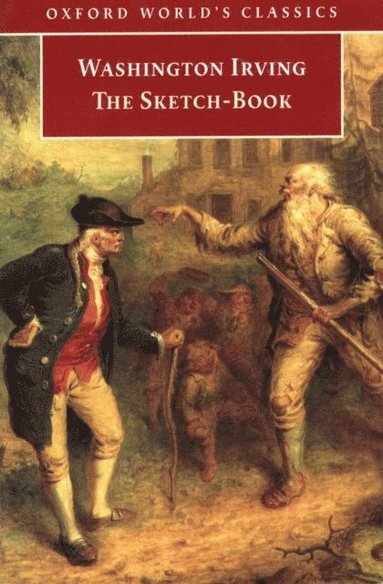
The centerpieces of this are, of course, the Legend of Sleepy Hollow and Rip Van Winkle, both of which stand the test of time as well as any seasonal tales I’ve read. I go back to these every year and have read them aloud to my children more than once. Disney’s animated Ichabod and Mr. Toad does a pretty respectable job of bringing Sleepy Hollow to life; in my view it’s probably the best adaptation of the tale, complete with Bing Crosby crooning and narrating his way through.
The entire Sketch-book is quite worth reading; it includes some great Christmas tales, as well, and some ghost stories, essays, and tales of a trip to England, all told by the good humored, erudite narrator, Mr. Diedrich Knickerbocker.
Rip Van Winkle is such an amusing story, and I am particularly struck by how poor hen-pecked Rip doesn’t miss a beat, or his wife, when returning from his two decadeslumber in the Kaatskills, though he is surprised to learn there has been a revolution. Diedrich states humorously: “Rip, in fact, was no politician; the changes of states and empires made but little impression on him; but there was one species of despotism under which he had long groaned, and that was–petticoat government. Happily, that was at an end; he had got his neck out of the yoke of matrimony, and could go in and out whenever he pleased, without dreading the tyranny of Dame Van Winkle.” He happily returns to a life of idleness and lives with his now grown daughter.
Sleepy Hollow has become such a part of American culture that it would feel wrong to not read it every fall, at some point. Several years ago, I made a pilgrimage to Sunnyside, Irving’s home near the town, which I highly recommend. Irving was one of America’s first professional authors, and well-known in his lifetime as such. It is fun to visit his estate in the fall. There are some great guided tours and events each weekend for children. The nearby cemetery, where he was laid to rest, is also worth a visit.
What strikes me most about reading this tale is the humor of it, and the tongue in cheek manner Irving uses. It’s a lively tale that feels modern; to me its no wonder Irving found such a ready audience for his writing. I highly recommend reading it and the rest of the Sketch-book this fall.
The Sketch-book of Geoffrey Crayon, Gent., by Washington Irving
The centerpieces of this are, of course, the Legend of Sleepy Hollow and Rip Van Winkle, both of which stand the test of time as well as any seasonal tales I’ve read. I go back to these every year and have read them aloud to my children more than once. Disney’s animated Ichabod and Mr. Toad does a pretty respectable job of bringing Sleepy Hollow to life; in my view it’s probably the best adaptation of the tale, complete with Bing Crosby crooning and narrating his way through.
The entire Sketch-book is quite worth reading; it includes some great Christmas tales, as well, and some ghost stories, essays, and tales of a trip to England, all told by the good humored, erudite narrator, Mr. Diedrich Knickerbocker.
Rip Van Winkle is such an amusing story, and I am particularly struck by how poor hen-pecked Rip doesn’t miss a beat, or his wife, when returning from his two decadeslumber in the Kaatskills, though he is surprised to learn there has been a revolution. Diedrich states humorously: “Rip, in fact, was no politician; the changes of states and empires made but little impression on him; but there was one species of despotism under which he had long groaned, and that was–petticoat government. Happily, that was at an end; he had got his neck out of the yoke of matrimony, and could go in and out whenever he pleased, without dreading the tyranny of Dame Van Winkle.” He happily returns to a life of idleness and lives with his now grown daughter.
Sleepy Hollow has become such a part of American culture that it would feel wrong to not read it every fall, at some point. Several years ago, I made a pilgrimage to Sunnyside, Irving’s home near the town, which I highly recommend. Irving was one of America’s first professional authors, and well-known in his lifetime as such. It is fun to visit his estate in the fall. There are some great guided tours and events each weekend for children. The nearby cemetery, where he was laid to rest, is also worth a visit.
What strikes me most about reading this tale is the humor of it, and the tongue in cheek manner Irving uses. It’s a lively tale that feels modern; to me its no wonder Irving found such a ready audience for his writing. I highly recommend reading it and the rest of the Sketch-book this fall.