Brian Jay Jones's Blog, page 14
May 16, 2015
Just One Person: An Excerpt from JIM HENSON: THE BIOGRAPHY
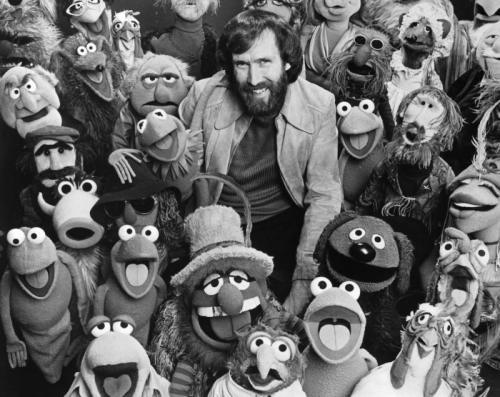
A NOTE FROM BRIAN:
I usually prefer to celebrate a subject’s date of birth rather than observe the day he died. But it’s worth noting that twenty-five years ago today — May 16, 1990 — Jim Henson passed away at 1:21 a.m. in New York.
Readers of Jim Henson: The Biography often tell me that they find the chapter on Jim’s death to be both sad and fascinating, especially as the circumstances of Jim’s death have, for the last two-and-a-half decades, been misinterpreted, misreported, or just plain misunderstood. I appreciate hearing that readers find this portion of the book as gratifying as they do heartbreaking. You can thank the Henson family for their openness in discussing Jim’s death, and for providing me with the honor — and responsibility — of reading Jim’s medical records from that day in May 1990.
As we remember Jim on the occasion of his passing, then, I thought I’d do something a bit different. I’m posting below — perhaps for only a limited time — an excerpt from the chapter “Just One Person,” from Jim Henson: The Biography, on the days leading up to and including Jim’s death. We’ll begin on Saturday, May 12, 1990, with Jim and his daughter Cheryl flying to North Carolina to visit his father Paul and stepmother Bobby.
* * * * *
On the morning of Saturday, May 12, after two days of seemingly nonstop meetings at One Seventeen, Jim and Cheryl boarded a USAir flight at LaGuardia Airport, and touched down in Norfolk, Virginia, a little after 10:00 a.m. Jim wasn’t feeling well again; while he didn’t have a fever, his throat was still sore, his nose was running, and he had picked up a slight cough. “It seemed like a cold or flu,” said Cheryl. But he felt well enough to carry his own bags and drove their rental car the seventy miles south from Norfolk to rural Ahoskie, North Carolina, where they checked into a motel near Paul and Bobby’s home.
Jim and Cheryl spent the rest of Saturday with Paul and Bobby, playing croquet on the lawn, sipping tea with lots of ice, and chatting casually in the kitchen. “This was a place where Jim was always at home, embraced with love and easy companionship,” said Cheryl. After dinner, Jim—along with an assortment of cousins and extended family—retired to the Hensons’ screened-in “secret porch,” watching the sun go down as they swapped stories and swayed silently in gliders or creaked in rocking chairs. “We just laughed and had a wonderful time,” said Bobby. Jim was “a little sniffily,” she recalled, but would never say he was sick. Rather, he said he “just didn’t feel good”—which was more than anyone had ever heard him complain about his health.
Sunday morning, however, Jim said he felt worse, and went back to bed in his motel room, sleeping in until nearly lunchtime. Around noon, his cousin Stan Jenkins came to pick up Jim and Cheryl to drive them back out to Paul and Bobby’s for lunch. Jim mentioned during the short car ride that he still wasn’t feeling well and had taken Advil—and Stan, a physician, advised Jim to see a doctor the moment he was back in New York (it would later be incorrectly and unfairly reported that Stan had examined Jim and missed the warning signs of pneumonia, an accusation that haunted Stan for years). Jim tried to eat, but had little appetite. His cough had worsened, sometimes rasping so violently that he coughed blood—something he disclosed to no one at the time, preferring not to worry his family. By late afternoon, Jim shakily mentioned that he might try to catch an earlier flight back to New York. There were other factors to consider, too; beginning at ten the next morning he was scheduled to spend all day in a recording session for a Disney show, and wanted to make sure he, and his voice, were rested enough. Bobby, who thought Jim “looked kind of bad,” told him to go. “Nobody knew that Jim was that ill,” Bobby said. “I knew he’d been tired. I chalked it up to that.”
What no one suspected was that Jim was in the early stages of pneumonia brought on by a rare group A streptococcal bacterial infection—an infection that may possibly have invaded Jim’s system as he struggled with the mild case of strep throat during his Arsenio Hall appearance in early May. The question of how and why such a rare and terrible infection should strike an otherwise healthy, robust person remains one of the great, unjust mysteries of Jim Henson’s life. All that is known for certain is that as he left Paul and Bobby’s that afternoon, the streptococcal bacteria were already slowly spreading through Jim’s lungs and organs.
* * * * *
Jim and Cheryl drove back to Norfolk, where they were able to swap their 9:45 p.m. flight for an earlier one, and arrived back at LaGuardia early Sunday evening. “He was really tired,” said Cheryl. As they walked through the airport, Jim cleared his throat and tested his voice in anticipation of the recording session the next morning, repeating, “Hi, ho, Kermit the Frog, here!” several times, trying to shake the same thickness that had fogged his voice on Arsenio Hall a week earlier. A car service drove both Jim and Cheryl home, dropping Jim off at the Sherry-Netherland first. As Jim climbed out of the car, he told Cheryl he was going straight to bed.
Only he didn’t. John had been staying with him at the Sherry-Netherland for some time—it was John, in fact, who was helping Jim train Disney performers to play the role of Sweetums for the Muppet*Vision 3D show—and when Jim came in the door, John was racing around the apartment, experimenting with a small Steadycam. Always the gadget junkie, Jim couldn’t resist taking the camera, and went whizzing around the apartment with it until his knees suddenly buckled. John took the camera away and led his father to the bedroom. “Dad, you’re sick,” John said. “Sick people lie in bed. They don’t run around trying Steadycams. Go lie in bed.’” Jim finally crawled into bed, and John sat down next to him, rubbing his back, until Jim fell asleep.
Jim awoke on Monday morning “feel[ing] lousy”; his voice was wrecked, and he was starting to have trouble catching his breath, both symptoms of the bacterial pneumonia that was now rapidly eating away at his lungs. Jim called his assistant, Anne Kinney, and asked her to cancel not only his 8:30 breakfast meeting, but also the all-day recording session for the Muppets on Location that was starting at ten. “This was big news,” said Kinney; Jim had never missed a recording session before, much less canceled one. Jim may have had a whim of steel, but to the Muppet performers, he was also their iron man, never absent. “No one could remember Jim ever calling in sick,” said Dave Goelz. Kinney stopped in later that morning to check on Jim and deliver some soup; at the same time, Jane called the apartment and spoke briefly with him. She had been upset with Jim about something the night before, and had called Cheryl, looking for him so they could discuss it—but Cheryl had informed her that Jim was sick in his apartment, trying to sleep, and advised her to wait until morning to call him. Now, as she spoke on the phone with Jim, Jane became concerned. “He said he’d had a very rough night,” recalled Jane.
Late in the afternoon, Jane dropped by Jim’s apartment to check on him, bringing along a pot of chicken soup. Jim had just gotten out of a warm bath and was getting ready to go back to bed—anything, he told Jane, to stop his heart from beating so fast. “I probably should have realized how serious that was, and he should have, too,” said Jane—but Jim insisted he merely needed to sleep. “Do you want me to stay?” Jane asked quietly. Jim nodded. “I wish that you would.”
Jane firmly shooed John out of the apartment—“she basically kicked me out”—and put Jim to bed. But he couldn’t sleep; in addition to his rapid heartbeat, he was coughing violently and having difficulty catching his breath. Jane sat with him, speaking to him quietly and trying to get him to relax. Toward evening, Cheryl stopped in with more soup (“Everyone was coming in trying to give him chicken soup,” said Jane). Cheryl thought her father looked terrible, and considered staying the night—but Jane had already sent John away, and was insisting that she “did not want anyone else around.” Cheryl lingered for a while, but eventually complied with Jane’s wishes and went back to her apartment, where she called Lisa in California. “I’m really worried,” she told her older sister.
Over the next few hours, Jane settled into Jim’s guest bedroom, but spent most of the night making tea and sitting with Jim in his bedroom as he sipped it delicately. “We just talked,” said Jane. “There was no discussion of broken marriage or anything like that. We were just there together.” None of the Henson children was surprised Jim had asked Jane to stay with him. “He and Mom were always just really fond of each other,” said Brian Henson. Agreed Cheryl, “she was his best friend for so much of his life. He loved her and wanted her to be happy. He just couldn’t make her happy himself. . . . Of course it is complicated; life is.”
Around 2:00 a.m., Jim’s breathing became more labored; it hurt his abdomen to cough, and with each raspy bark he was coughing blood. Jane had finally had enough, and insisted on calling a doctor, but Jim refused. “Just rub my back,” he said, rolling over onto his stomach. “Try to calm down my breathing.” As Jane massaged Jim’s back, he laughed weakly. “Maybe I’m dying,” he said darkly. But by 4:00 a.m., even Jim could no longer joke about his condition: his heart was racing, and he was struggling for breath. “Okay,” he finally told Jane. “I’ll go to the hospital”—but he made the request grudgingly. “He really didn’t want anyone else to be disturbed by his pain,” said Jane.
However, now that Jim was ready to go to the hospital, Jane suddenly didn’t know what to do. “We really didn’t know anything about hospitals,” she said later, almost apologetically. Jim suggested she call the reliable—and discreet—Arthur Novell, who was managing a press event out in San Francisco that evening. While Novell never considered himself to be Jim’s “fixer,” Jim held him in high regard as a confidant whom he could trust implicitly. “In every family,” said Anne Kinney wryly, “there are some people that can manage things.” Additionally, Novell knew his way around New York and its operations with a savvy that rivaled any cab driver or politician. If there were anyone in the Henson organization who could get Jim to a hospital quickly and quietly—even all the way from San Francisco—it was Novell. Jane made the call.
It was just after 1:00 a.m. in San Francisco when the phone rang in Novell’s hotel suite. “I’m here with Jim at the apartment,” Jane blurted out immediately.
“Is everything all right?” asked Novell.
“No,” said Jane. “Here’s Jim.”
Jim came to the phone, breathing heavily. “I’m very sick,” he said quietly.
The normally unflappable Novell felt the ground drop out from underneath him. “It was so out of character for him to even utter those words,” he said. Novell ran through several quick potential courses of action in his head, then told Jim he would make some phone calls. “Jim, it’ll be okay. I love you,” Novell assured him.
Jim thickly murmured his thanks, then added quietly, “Arthur . . . just look after them for me.”
Novell’s eyes stung with tears. “In the back of my head,” he recalled later, “I said, ‘I’m losing Jim.’”
Novell’s phone calls produced results almost immediately. A private car was dispatched to meet Jim in front of the Sherry-Netherland. The driver had been instructed to bring along a wheelchair to carry Jim down to the lobby, but Jim—who had gotten fully dressed and cleaned up—insisted on taking the elevator down nineteen floors and walking out to the car himself, even pleasantly waving to the doormen as he crawled into the backseat beside Jane. The car sped for New York Hospital on East 68th Street, less than two miles away, but the driver, unfamiliar with the layout of the hospital, pulled up at the main entrance, instead of the emergency entrance tucked between two buildings around the corner. “We’ll just get out here,” Jim said—“Jim never wanted to put anybody out,” said Novell—and walked the half block to the emergency room where he slumped into a chair. As he was whisked away into the examination room, he raised a hand and waved weakly to Jane. “See you later,” he croaked, trying to smile. “I feel like I’m in good hands.” He was formally admitted into New York Hospital at 4:58 a.m., the morning of Tuesday, May 15.
* * * * *
At the time of his admission to New York Hospital, Jim’s blood pressure was normal and he wasn’t running a fever—but his heartbeat was irregular, and preliminary blood tests showed his kidneys were failing rapidly. At 6:00 a.m., Jane called Cheryl, who arrived to find Jim on a gurney with an oxygen mask strapped to his face, and held his hand as he waited to be examined by a team of critical care specialists. By 6:30, specialists had determined Jim was suffering from severe pneumonia and kidney failure and recommended he be moved immediately to the Intensive Care Unit. Shortly thereafter, he slipped into unconsciousness.
By 8:00 a.m., Jim could only only breathe with the assistance of a breathing tube; by 10:00, doctors noted that he was not responding to any stimulation at all—“no movement, no response,” except to “deep pain.” The antibiotics being pumped into his system had little effect. In the five hours since entering the hospital, Jim’s body had almost completely shut down. He would never regain consciousness.
At One Seventeen, phones had been ringing all morning. Cheryl had phoned both Anne Kinney and David Lazer to let them know of Jim’s condition, and Lazer had sped from Long Island to the hospital, where he went into executive mode, briskly making phone calls from the pay phone outside Jim’s room and displaying the calm that had made him The Muppet Show’s prince regent. The first call was to Bernie Brillstein, waking the agent up in California to let him know what had happened. “I’m here at New York Hospital,” Lazer told Brillstein. “Jim just came in. I just came here. He may not make it.”
Brillstein was stunned speechless. “You’re kidding.”
It fell to Anne Kinney, manning the phones at her desk outside Jim’s third floor office at One Seventeen, to pass the word on to employees and the Muppet performers throughout the day—and their responses were much the same as Brillstein’s. “I couldn’t believe it,” said Dave Goelz. “Jim was so vital and indestructible.” “I lost it. I pretty much cried myself to sleep,” said Kevin Clash, who was so stunned he nearly wandered away from his apartment without wearing shoes. Steve Whitmire, notified in Atlanta by Frank Oz, found it “hard to even hear it.” Oz himself was typically blunt: “God, it was awful.”
And it was awful. Around noon, when physicians inserted a feeding tube into Jim’s stomach, a massive amount of blood was extracted, indicating that Jim was bleeding severely in his stomach and intestines. Then, at 12:55 p.m., he went into cardiac arrest. “It happened insanely fast,” said John Henson, who had walked to the hospital from One Seventeen. Doctors were able to revive him, but “they were saying he’d be a vegetable,” said John. “I went back to [One Seventeen] and just stared at the wall. I couldn’t believe it was happening.”
Throughout the late afternoon and evening, family and a few close friends came to stand vigil outside Jim’s room. After Jane, Cheryl, John, and David Lazer, Lisa, who had the furthest to go, was actually the next to arrive, having taken the first available flight from Los Angeles. All she could think about during her flight, she said later, was “that he would want to see his grandchildren. I kept repeating, ‘you want to see your grandchildren, you want to see your grandchildren,’ like a mantra. . . . But I never even spoke to him. He was already unconscious and on life support by the time I got to see him.” The flowers Jim had sent to celebrate her promotion were still fresh and colorful on her desk at Warner Brothers.
Heather, attending school at the Rhode Island School of Design, was making her way down from Providence and would arrive late in the evening. Brian, meanwhile, had been in England working—and despite scrambling to make arrangements to get to New York as soon as possible, he would arrive too late to see his father alive. Frank Oz had also come to camp in the hospital, as had Jerry Nelson, Michael Frith, and Kathy Mullen. Steve Whitmire and his wife, Melissa, who had taken the last flight from Atlanta that evening, would arrive shortly after midnight. All of them took turns sitting by Jim’s bed, holding his hand and talking to him.
Around 11:00 p.m., Jim’s condition worsened. His blood pressure plunged, requiring physicians to administer CPR. He then went into full cardiac arrest—his second heart attack in ten hours—though doctors managed to revive him yet again. His chest tube was replaced with a larger one, and a second tube was inserted in his left side to increase the drainage from his lungs. With his breathing dangerously weak, he was placed on a jet ventilator to increase his oxygen intake.
Finally, just after 1:00 on Wednesday morning, Jim’s blood pressure bottomed out; his heart had stopped beating. A medical team rushed to his bedside to administer CPR and inserted a chest tube, which immediately gushed enormous amounts of blood and fluid, indicating massive hemorrhaging in his chest and lungs. Doctors continued applying CPR without success, then used a defibrillator to try to shock his heart into starting. Jim’s body tensed, then sagged; the charge to the defibrillator was increased and tried again, three more times. Jim jerked sharply each time; more blood and fluid erupted through the tubes in his chest. Then he slumped back, and went limp.
Jim Henson died at 1:21 a.m. on Wednesday, May 16, 1990. He was fifty-three years old.
* * * * *
The Henson family was summoned by doctors, who gently broke the news, then escorted the family into the room to see him. Jim “was so bloated, he didn’t even look like himself,” said Jane. John lay across his father’s body and hugged him. “I love you, Daddy,” he whispered, then left the room, sobbing uncontrollably. Heather, the last of the Henson children to arrive—was steered gently to Jim’s bedside by Jane, who put her mouth close to Heather’s ear. “Let him go,” Jane said softly. “Just say goodbye and let him go.’”
Out in the waiting area, Oz quietly informed the others of what had happened, then he and Lazer disappeared to start making phone calls. It was hard to even cry, remembered Steve Whitmire. “A few tears were around,” he said, “but everyone was just stunned. We just couldn’t believe this had happened.” Jerry Nelson sat and tried to console John, who was staring at the carpet, crying and gasping uncontrollably. “He was really devastated,” said Nelson. “All the kids were.”
All night long and into the morning, word spread through the Henson organization. Kevin Clash remembered receiving a call at 5:00 a.m. giving him the news. Dave Goelz, who caught a plane from California after learning Jim was ill, called the hospital during his layover in Chicago. “A custodian answered,” said Goelz. “He said no one was around. That’s when I knew Jim had died.” Sesame Street performer Fran Brill heard the news that morning from a casting director as she waited her turn to audition for a voiceover. “My heart stopped,” she said.
By daybreak, performers and employees began trickling into the offices at One Seventeen. “I remember growing up, when there’s a loss everybody comes to the house and you eat and you just stay around,” said Clash. “The offices became a house. . . . I remember . . . doing nothing else but going over to [One Seventeen] and staying there until the afternoon or early evening and then going home—and doing that for five days. We couldn’t do anything else.” By late morning, every space at One Seventeen was packed with friends, colleagues, and coworkers, most of whom could do little more than try to comfort one another, hugging each other and dabbing their eyes with tissues as Muppets stared lifelessly from tables in the workshop. Jim’s third floor office, however, sat respectfully empty. “Everybody was walking wounded,” said Cheryl later. “Everyone felt so close to my dad . . . everyone had a very intense, personal relationship with my father.” 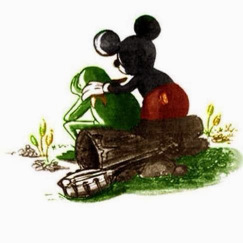 Later, a hand-drawn card was placed on the grand piano in the town house’s main library, a sympathy card from the Imagineers at Disney, who had loved playing in Jim’s world as much as he had in theirs. On the front, a despondent Kermit the Frog sat on a log in front of a blazing sunset, a discarded banjo behind him, his head in his hands; next to him sat Mickey Mouse, with a consoling arm draped around Kermit’s shoulders. No words were needed.
* * * * *
The Henson family had retreated to Jim’s apartment—dazed, shocked, and trying to rest. Several lawyers from the Henson’s legal team knocked on the apartment door, wanting to discuss the impact of Jim’s death on the still unsigned Disney deal—an expected, though ill-timed, interruption that the recently arrived Brian Henson dealt with by listening patiently and intently as the lawyers explained their concerns. “W were thrown into having to deal with the legal complexity before we had time to breathe much less mourn,” remembered Cheryl. “It was all devastating . . . [but Brian] was relatively clearheaded, and together with Lisa dedicated themselves to figuring it out.” The attorneys had one other bit of business to conduct as well, handing over a sealed envelope from the law firm of Kleinberg, Kaplan, Wolff & Cohen. There were no legal documents inside, only two letters addressed to the Henson children.
They were from Jim.
Dated March 2, 1986, they were letters he had written during a quick weekend visit to France while mixing audio for Labyrinth—the same weekend, in fact, when he had written the buoyant Muppet Voyager proposal for IBM Europe. Jim had filed the letters with his personal attorneys, and asked that they be delivered to his children in the event of his death. Now, suddenly—remarkably—in the middle of sadness and chaos, it seemed Jim was there again, calmly taking charge. “Today I am sitting here in the lovely room of La Colombe d’Or in St. Paul de Vence,” Jim had written, “with lovely thoughts about life . . . and thinking I should write this note sometime . . . also of death:
I’m not at all afraid of the thought of death, and in many ways, look forward to it with much curiosity and interest. I’m looking forward to meeting up with some of my friends who’ve gone on ahead of me, and I’ll be waiting there to say hi to those of you are still back [here].
Since I consider death a rather joyous step forward into the next stage of things, I’d like to lay out a few thoughts as to what might happen when I leave this place.
I suggest you first have a nice, friendly little service of some kind, hopefully using the talents of some of the good people who have worked with me over the years. It would be nice if Richard Hunt, if he’s still around, would talk and emcee the thing. It would be lovely if some of the people who sing would do a song or two, some of which should be quite happy and joyful. It would be nice if some of my close friends would say a few nice, happy words about how much we enjoyed doing this stuff together—and it would be good to have some religious person read a few quotes by some of the great teachers to remind us how this is all part of what is meant to be.
Incidentally, I’d love to have a Dixieland band play at this function and end with a rousing version of “Saints” . . .
Have a wonderful time in life, everybody. It feels strange writing this kind of thing while I’m still alive, but it wouldn’t be easy to do after I go.
With all my love to you all,
Jim



May 14, 2015
Thank the Maker! (Or at Least Wish Him Happy Birthday!)
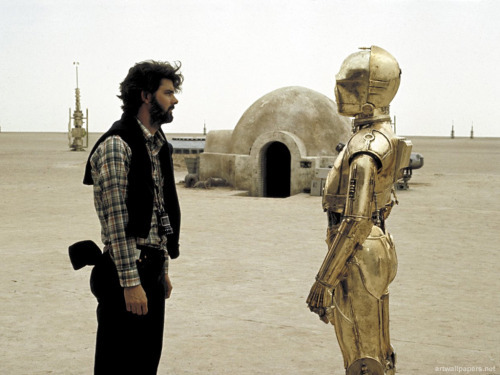 Happy Birthday to George Lucas, who turns 71 years old today. The Force is strong with this one.


May 12, 2015
Plutarch Time!
 One of the best things about being a member of Biographers International Organization (BIO) is that each year, we get to vote for the recipient of the Plutarch Award, presented to the best biography of the year.* This is the only international literary award given by biographers to biography, which makes it pretty neat. (It was inspired in part by the Edgar Award, presented each year by the Mystery Writers of America, and the Nebula, given annually by the Science Fiction Writers of America.)
Here’s how it works: each year, a select committee of biographers puts together a list of ten nominees for the year’s best biography.** This list is presented to BIO members in good standing, who then make their selection by secret ballot. The winner (and three runners-up) will be announced (in suitably dramatic fashion, since I’m the one tasked with putting together the ceremony) at BIO’s Annual Conference, which will be held the first weekend in June at the National Press Club in Washington, DC.
I should add for the record that as president of BIO, I don’t sit on the Plutarch Nomination Committee, and have no role in of the selection of the ten nominees; like all BIO members in good standing, my responsibility is to simply vote for the book on the list I think is the best.
And what a list it is this year–an interesting, diverse, even somewhat eclectic group of biographies, any of which would be a worthy winner. Wanna see? I won’t make you wait. Here are the ten books nominated for the 2015 Plutarch, listed alphabetically by author:
Nigel Hamilton, The Mantle of Command: FDR at War, 1941-1942 (Houghton Mifflin Harcourt)
Jeff Hobbs, The Short and Tragic Life of Robert Peace (Scribner)
John Lahr, Tennessee Williams: Mad Pilgrimage of the Flesh ( W. Norton & Company)
Hermione Lee, Penelope Fitzgerald: A Life (Knopf)
Helen Rappaport, The Romanov Sisters: The Lost Lives of the Daughters of Nicholas and Alexandra (St. Martin’s)
Andrew Roberts, Napoleon: A Life (Viking Adult)
Richard Norton Smith, On His Own Terms: A Life of Nelson Rockefeller (Random House)
Will Swift, Pat and Dick: The Nixons, An Intimate Portrait of a Marriage (Threshold Editions)
Edward White, The Tastemaker: Carl Van Vechten and the Birth of Modern America (Farrar, Straus and Giroux)
N. Wilson, Victoria: A Life (Penguin Press)
I’ll be back here in mid-June to let you know who the winner is. And if you’d like to see a list of previous winners (and nominees), click here.
* In 2015, we vote on biographies published in 2014, which is why the medallion reads “2014”
** As a result of this process, we have NO SAD PUPPIES. (And we send kind thoughts to our friends at the Hugo Awards. Lost? Click here for more information on this year’s Hugo kerfluffle.)


April 7, 2015
Remembering Stan Freberg
 Man, this one hurts. The great Stan Freberg has passed away at age 88.
I had the great pleasure of interviewing Freberg around 2012 when I was doing research on Jim Henson. I was very excited to make the phone call, as I was a huge fan of his, and when I mentioned how much I loved his “Banana Boat” parody, Stan immediately dropped into that great voice and did a bit of it on the phone (“I came through the window!”)
So what does Stan have to do with Jim Henson and the Muppets? Glad you asked.
In the early days of the Muppets, when Jim Henson was doing Sam and Friends here in DC on our local NBC station, Jim used to have the Muppets lip-synch to comedy records–which more often than not meant he was gonna use one of Freberg’s. Here’s a few of the members of the cast of Sam and Friends (specifically Moldy Hay and Hank and Frank) lip-synching to Freberg’s “C’est Ci Bon,” probably sometime in 1955 or 1956. Take a look, and I’ll be back with you after the video:
Wasn’t that great? Now, an interesting coda to all this: back in the 1950s, there was never much thought given to clearing records for usage, which likely would have involved paying royalties–an expensive proviso, especially for a college student, which is what Jim still was in 1957. The strategy, then, was to ask forgiveness instead of permission–and when any wounded artist brought their concerns to Jim’s attention, most gave way after meeting Jim and watching the Muppets.
That was true for Freberg as well, who in 1957 learned that his records were being used without attribution (or recompense!) and went storming down to WRC-TV one evening to take up the matter with Jim personally. Once he actually saw Jim (and Jane) performing to his records, he immediately melted. Shortly thereafter, he sent Jim an enthusiastic telegram. “I take it all back,” Freberg wrote. “This is one of the greatest acts I have ever seen [and I] am honored to let you use my records for ever and longer.” And so they did.
Miss ya already, Stan.


April 3, 2015
Still Great at 232 Years.
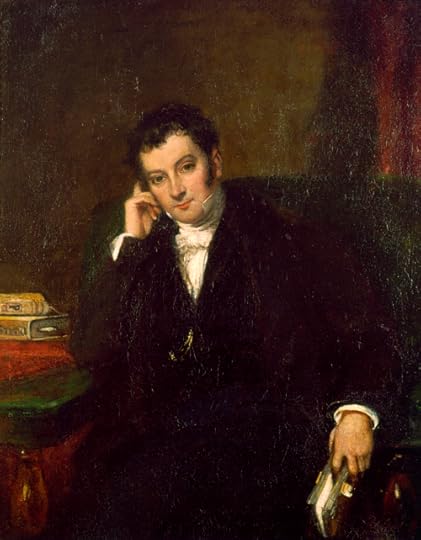
“Little minds are tamed and subdued by misfortune; but great minds rise above them.” — Washington Irving, “Philip of Pokanoket : An Indian Memoir,” from The Sketch Book (1820)
Happy Birthday to Washington Irving, born on this day in 1783. Celebrate his birthday by reading a great American short story–for he pretty much invented the form, you know.


February 24, 2015
Making Progress — and Messes
I’m deep into Chapter 4 (or 5, depending on how I break these things up), and my desk is officially a disaster.
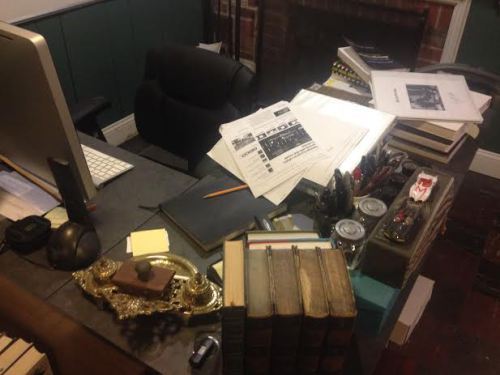
And how’s your week shaping up?


February 11, 2015
(No) Wonder From Down Under!
I spent a few moments on the phone yesterday with Eoin Cameron from ABC in Perth discussing Jim Henson and the Muppets — and wouldn’t you know, it’s already available for your listening pleasure. If you’ve got eight minutes, click here if you wanna listen. And my thanks to Eoin for having me on.


February 5, 2015
It’s 2015! Remember Me?
Ugh, I haven’t updated this blog since October? Really? That makes this officially the Longest I’ve Gone Without Updating. Sorry about that–but I’m hoping I’ve got a decent excuse, as I’m hard at work on George Lucas. In fact, I’ve written nearly 50,000 words, and I’m not even to Star Wars yet.
However, I’m sticking my head out to let you know that I’m Mississippi-bound later this month, where I’ll be talking about Jim Henson and the Muppets as part of the 26th annual Natchez Literary and Cinema Celebration. This year’s theme is “Bigger Than Life: Extraordinary Mississippians,” and Jim’s about as extraordinary as they come. But you don’t need me to tell you that. I’ll be speaking on Saturday, February 28, at 3:30 at the convention center as one of the NLCC’s Family Day events.
I’m really looking forward to this one. If you’re in Mississippi or vicinities thereabout, come on by.


October 29, 2014
Washington Irving, Ichabod Crane, and Diane Rehm
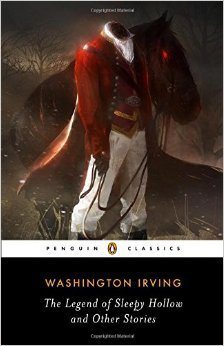 I had a terrific time talking Washington Irving on The Diane Rehm Show this morning. “The Legend of Sleepy Hollow” was (appropriately) chosen as the book for their monthly “Readers Review,” and I sat on a panel with two incredibly sharp experts on literature, film and media, professors Caetlin Benson-Allot of Georgetown and Sian Silyn Roberts of Queens College.
Me, I was there mostly to provide the background on Irving, though I did get to chip in and comment on the story every once in a while. I was also fascinated by the interest in how Irving may have come up with the name Ichabod Crane — it was the topic of both an e-mail that was read on the air as well as a phone call. It was fascinating to hear that the name has a Hebraic origin, but when it comes to Irving . . . well, I’ll let you listen to the show and you can hear what I had to say. If you missed it, not to worry: you can listen to the entire show right here.
And if you’re listening, and wanna know exactly which version of “Sleepy Hollow” we’re reading from and want to read along, it’s this one.


October 28, 2014
River Recap
Last weekend, I officially had one of the best times ever at the James River Writers conference — a really terrific two days of panels and talks, presentations and conversations. I had the pleasure of staying in Richmond at the home of my colleague Dean King (whose book on the Hatfields and McCoys, The Feud, continues to win one well-deserved prize after another), where I discovered to my delight that I would also be bunking with his agent and editor (not in a weird way, mind you) — which meant each evening ended sitting around a table with great conversation. And bourbon.
As I mentioned the other day, I had plenty to do, from talking Jim Henson (twice!) to sitting on two panels, including a really fascinating session on research — and I say fascinating, because it was a real learning experience for me, since I was the only non-fiction writer sitting up on the dais. Usually, I’m at a conference filled with biographers where research is pretty much what we do, so a panel on research usually turns into war stories and measuring contests. Here, it was a lot of fun to hear about the kinds of research fiction writers and poets use to inform and inspire their work without necessarily worrying about every last neurotic detail of the research, as we non-fictionalists tend to do. Good stuff.
I sat on the research panel, by the way, with Hugh Howey, the current guru of self-publishing, who’s as charming a speaker and presenter as you’ll ever see. That meant that the ringside seat I had for Hugh’s discussion/debate on the state of the publishing industry with former Little, Brown editor Geoff Shandler–who is also one of the smartest and most charming speakers you’re likely to see–was destined to be one of the conference’s hottest seats. The session didn’t disappoint–and moderator Erica Orloff did yeoman’s work keeping things both raucous and civil as Hugh and Geoff went at it for nearly an hour.
It was a tough room for Geoff; Hugh’s one of the guys who’s made it big in self-publishing, and his passionate Screw The Man And Keep The Money narrative was an appealing one embraced by much of the room, even as Geoff just as passionately shot it full of holes and urged writers not to rush to give away or devalue their own work in defiance of The Man. All in all, it was a spirited discussion, and ultimately the two of them did their best to agree to disagree–but as an industry, this discussion and debate is far from over.
Another New To Me experience was attending the conference’s Sunday afternoon Pitchapolooza session, in which writers were given one minute at the microphone to pitch their book to a panel of editors and agents. It takes spectacular guts to stand up in a crowded room and pitch your book for critique–so, well done all you gutsy writers who took your moment at the mic. Oh, and the winning pitch that day? It came from an absolutely charming thirteen-year-old who had clearly rehearsed and re-rehearsed her pitch for her urban fantasy novel. Practice matters.
For me, the best part of the weekend was just sitting and talking with so many talented writers, poets and playwrights, all of whom had something interesting to say and were passionate about saying it. As I noted above, it was one of the best times I’ve had at a conference.
So: Thank you, James River Writers, for having me and taking such good care of all of us. I had a wonderful time, and I hope to come back.