Dennis Bailey's Blog, page 3
January 23, 2017
The Case for Rain Before the Flood, Part II
@dbaileyauthor
Welcome back to our investigation of the prospect of rain showers on the earth before the Great Flood. When last we looked, the only thing we knew for certain from an examination of the Scriptures is that it hadn’t rained before man, that rain isn’t mentioned again in the Bible until the flood, and that God had provided other means (rivers) to water the Garden of Eden beyond the mist described in Genesis 2.
The next and perhaps most essential argument in favor of a pre-flood rain occurs as a result of the fall of man. Prior to this, it is clear God’s intention was to provide a comfortable life for man in paradise, which began with his placement there as recorded in Genesis 2:15: “Then the Lord God took the man and put him in the garden of Eden to tend and keep it.” The Lord went on to give him the freedom to eat of every tree of the garden, except one, of course, and provided him with a suitable companion. In fact, the whole of Chapter 2 speaks of a beneficent Creator whose pleasure it was to give a life of peace and prosperity to those He had created—in a utopia made expressly for them.
Did it rain on the earth before the #GreatFlood? @dbaileyauthor shares his thoughts https://ctt.ec/S5v6h+ #Noah #Bible
Click To Tweet
Contrast this to the Lord’s demeanor toward Adam when the first couple are caught in their disobedience, documented in Genesis 3:17:
“Cursed is the ground for your sake; In toil you shall eat of it All the days of your life. Both thorns and thistles it shall bring forth for you, And you shall eat the herb of the field. In the sweat of your face you shall eat bread Till you return to the ground …”
Can there be any doubt about what is taking place here? In His anger, God has signaled an end to man’s paradisiacal lifestyle, a decision He later solidifies when He forever drives Adam and Eve from the garden at the end of Chapter 3.
Now consider this. Man had just been sentenced to a life of hardship. It is, therefore, difficult to picture Adam sweating profusely from his face were he surrounded by a cooling mist or vapor. More likely, after man was expelled from the garden, he worked the land under the sun and counted on the early and latter rains provided by God, as remains the case today. So in this context, the curse is the catalyst for the beginning of rain on the earth. It’s the theory that makes the most sense. And it is supported by centuries of recorded history of man’s adversity battling the land after the fall.
In Genesis 4, we learn that Abel was a keeper of sheep and Cain a tiller of the ground, occupations no doubt shared by their descendants. A thousand years later, Lamech referenced the garden curse when he named his son in Genesis 5:29. “And he called his name Noah, saying, ‘This one will comfort us concerning our work and the toil of our hands, because of the ground which the Lord has cursed.’” In fact, we know that agriculture was the primary occupation and means for survival during Biblical times. It’s hard to imagine either of these pursuits, the raising of livestock or the cultivating of the land, being successful without the complementary life sustaining benefits of sunshine on the one hand, and intermittent periods of rain on the other. Ask any farmer today if he thinks the tilling of the soil isn’t as grueling as it was six thousand years ago.
And then we have Noah himself, who didn’t seem ignorant of rain when God told him about it in Genesis 7:4-5. “For after seven more days I will cause it to rain on the earth forty days and forty nights, and I will destroy from the face of the earth all living things that I have made. And Noah did according to all that the Lord commanded him.”
Yes, but what about the rainbow? Some have sought to rely on the fact that since no rainbows are reported before the flood, there must not have been any rain. They base this on what scientists tell us causes rainbows, raindrops refracting sunlight. But this theory completely discounts the omnipotence of God, Who tells us He set His rainbow in the cloud as a promise not to ever again destroy the earth by flood. So important was this promise, that nine verses of Scripture are dedicated to the subject, with the Lord stressing the significance of the rainbow covenant three times in those nine verses (Genesis 9:9-17). Given this emphasis, it seems reasonable to deduce this was a precedent setting first instance of the rainbow, not rain, on the earth, and that every other instance since then is meant to be a reminder of that covenant.
So what are we to infer? I suspect that at the end of the age, we’ll find Noah sitting in heaven with a big grin on his face like the cat that swallowed the canary as we all gather around waiting for the answer. But until then, I believe the Bible gives us enough information to draw our own conclusion. The Scriptures are clear that at the creation of the earth a mist did indeed cover the land, and that’s all. But later, and certainly after the fall, and for the next 1650-plus years until the flood, rain would have been required to sustain those plants and herbs the Lord had cursed man to cultivate in the sweat of his brow. Elementary, Watson. And that’s just one Christian cop’s view.
What do you think?


January 16, 2017
The Case for Rain Before the Flood, Part I
@dbaileyauthor
During research for my upcoming novel set during the time of Noah’s Ark, I found myself confronted by the age-old dilemma of whether or not it rained on the earth before the flood. It is a question that has no doubt dogged mankind since Moses penned the book of Genesis over three thousand years ago. As a former law enforcement officer and longtime criminal investigator, I decided to approach the question as I would any other case—by using my powers of logic and deductive reasoning. Yes, just like Sherlock Holmes.
Like any good detective, I began my investigation with an examination of the crime scene, which in this case is the current body of documented evidence on the subject. What I found is that arguments against an antediluvian rain basically fall into one of two camps: those who believe their interpretation of Scripture says so, and those who argue against it on purely scientific grounds. Both sides present convincing arguments, especially the scientific lobby, who rely on such geological hypotheses as hydroplate theory, vapor canopy theory, and tectonic plate movement to support their position. Both sides are equally dogmatic in their convictions. Fortunately, the one thing they seem to agree on is that the Bible doesn’t specifically say whether or not it rained before the flood, which we know to be true. And yet, it is precisely this ambiguity that continues to fuel the debate.
With all due respect to supporters of both sides; however, in my view the answer lies in a simple, common sense reading of the Scriptures.
Did it rain on the earth before the #GreatFlood? @dbaileyauthor shares his thoughts https://ctt.ec/enBN0+ #Noah #Bible
Click To Tweet
Our first clue lies in Genesis 2:5-6, which says, “…before any plant of the field was in the earth and before any herb of the field had grown. For the Lord God had not caused it to rain on the earth, and there was no man to till the ground; but a mist went up from the earth and watered the whole face of the ground.” Many no-rain proponents point to these verses to support their belief that it did not rain before the flood. But, in fact, based on a strict interpretation of the Scripture, the only thing these verses suggest is that it did not rain on the earth before man. Instead, during this brief period before man was formed, the Lord provided a mist to hydrate the land, a natural and obvious progression of the processes taking place during the creation of the earth that began with His instruction to the waters in Genesis 1:1-7.
Others point to the fact that rain is not mentioned again until the flood, relying on an omission—never a strong defense—as indication there wasn’t any. Well, guess what? Sun isn’t mentioned either; in fact, the word doesn’t appear in the Bible until the time of Abram in Genesis 15:12. Still, I’m pretty sure it was up there in the sky somewhere (Genesis 1:16 mentions the “two great lights” God made to rule the day and night).
But what about after God created man? Verses 7-8 of Genesis 2 chronicle how God formed man out of the dust of the ground, planted a garden at the east end of Eden, and there placed the man He had formed. Genesis 2:10 says, “Now a river went out of Eden to water the garden, and from there it parted and became four riverheads.” Herein lies the first hurdle for those who contend the mist described in verse 6 above supports the theory there was no rain before the flood. If a mist was intended as the sole means for watering the earth, why was it necessary for God to provide a river to irrigate the garden? Or for that matter, the other four rivers He made to flow through and around the area of Mesopotamia at the time (Genesis 2:10-14)? It also seems to me running around naked in a garden surrounded by a full-time mist would have been an awfully uncomfortable environment for God to have provided for His finest handiwork.
So what do you think so far? Have you heard enough to convince you one way or the other? Join me next week as we again don overcoat, Calabash pipe, and magnifying glass in search of more clues to the truth about the existence or absence of pre-flood showers in part two of The Case for Rain Before the Flood.
January 6, 2017
31 Pearls of Wisdom from Proverbs
@dbaileyauthor
Happy New Year! Whether we call them resolutions or not, we all have things we’d like to accomplish in the coming year. For some, it’s to lose weight or begin an exercise program (usually, two mutually inclusive activities). For others, it’s to travel or maybe spend more time with family instead of at work. And still for others, it’s to save more and spend less, a desire many of us would like to see our federal government adopt.
One of the most popular (it seems to show up on nearly everyone’s top ten list) is the desire to read more. And what better place to begin a reading resolution than in God’s Word. Here to help you adhere to a reading plan are 31 of my favorite verses from the book of Proverbs, one for each day of the month of January. You can receive this free gift by signing up for my blog updates/newsletter. The list includes blank spaces for you to record your own personal favorites, which I’d be honored to have you share with me in the Comments section below.
Again, Happy New Year, and happy reading.
December 13, 2016
A Christmas Gift for You
@dbaileyauthor
Tired of the hustle and bustle of the holidays, with all the running around from place to place or even website to website? All the decorating, the wrapping of gifts, the cooking and baking?
We all know the best part of the holidays is time spent with family and friends, so here’s a gift to help you plan an evening at home. I’ve compiled a list of my 10 favorite Christmas movies and I’m going to share it with you.
So put away your car keys, push away from the keyboard, grab your spouse and the kiddies and gather around the TV for some quality time spent watching one or all of these family-friendly movies.
To receive this free gift, sign up for my blog updates/newsletter. Then I’ll send you a link so you can download The 10 Movies of Christmas, a slightly biased recommendation of the ten best movies to watch during Christmas.
November 29, 2016
Researching Noah’s Ark
@dbaileyauthor
While my manuscript, Army of God, is currently being considered by a pair of prospective publishers, I thought I’d give you a glimpse into the research that went into writing this book. Despite the risks of dealing with such an iconic theme, there were two goals that I tried to keep in mind while I researched and wrote.
Goal Number One
Even though the book is a work of fiction, I took great care to ensure it remained faithful to the Bible. As with any story, I not only had to come up with the dramatic elements, but had to do my homework to make certain even those came through as real and accurate as possible.
Goal Number Two
Of course, my story begins and ends with Biblical narrative of the flood as described in the book of Genesis, Chapters 6-9. As you know, few details are provided about the character of Noah, other than the fact that he “was a just man, perfect in his generations,” and even less about the remaining seven members of his family. None of the women is identified by name, including Noah’s wife, only his three sons. And that brings me to my second goal for the writing, which was to bring to life these eight people to whom the world has always wondered. Not only by name, but through careful development of their respective characters.
In addition to the Holy Bible, I turned to several ancient Hebrew texts to provide supplemental historical information. Of particular usefulness were the writings of Josephus, the Jewish historian whose work, Antiquities of the Jews, is thought to be one of the most reliable non-Biblical accounts of the history of the world from a Jewish perspective. Chapter 3 of that work provides significant ancillary details about Noah and the flood not found in the Genesis story.
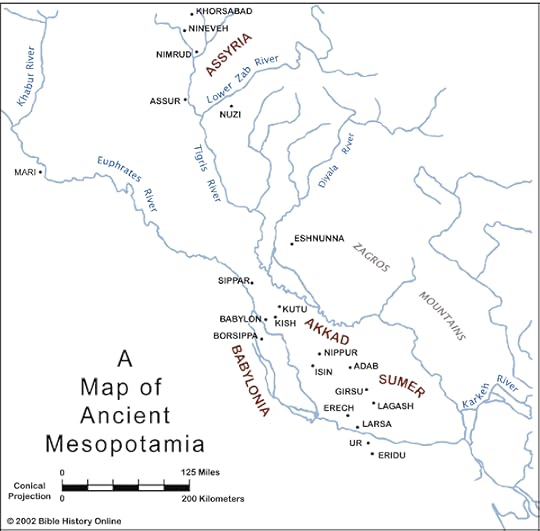 For purposes of plot, I’d decided to set my story in Eden, that unknown region of Mesopotamia first identified in Genesis 2. Most people, when they think of Eden, associate it with the famous garden first occupied by Adam and Eve. But in reality, Eden was a much larger area geographically. It included the land of Nod, that portion of territory to the east where Cain fled from the face of God after killing his brother. And while the Garden of Eden didn’t survive the flood, Mesopotamia and the Euphrates and Tigris Rivers did, thus providing the modern day reader with some familiar landmarks with which to orient themselves.
My Challenges
Naturally, the desire to maintain authenticity with the period being written about is the goal of any writer of historical fiction. Army of God presented numerous challenges in this regard, but three in-particular come to mind: time, food, and dialogue.
Since “seconds” and “minutes” are not used as a Hebrew unit of measurement in the Bible, equivalents were taken from the Talmudic period in order to make the depictions of time more authentic (18 parts = 1 minute; 1 part =3.3 seconds). For scenes where food was consumed, it was important to remember that Noah and his family were vegetarians. God hadn’t yet given them meat to eat, a blessing that wasn’t bestowed until after the flood. As for the dialogue, these exchanges were written in a Biblical style patterned after the diction used by early Old Testament characters Abraham and Moses. As is the case with most first drafts, the manuscript was filled with contemporary references and phrases. Thankfully, my writing mentor and editor caught most of these.
During the writing, I learned a very hard, but valuable lesson regarding authenticity: Double-check your facts before committing them to paper. Somehow, I had made the erroneous assumption that Shem was the youngest of the three of Noah’s sons, a mistake I didn’t discover until the novel was nearly completed. I don’t know where I had gotten this from, but it certainly wasn’t from the Scriptures, which makes it clear that Ham was the youngest, Shem the middle, and Japeth the oldest of the siblings. Because I had already developed my characters, I spent several weeks rewriting large sections of story and redrawing personalities to coincide with the actual birth order. It was a nightmare, and one I vowed never to repeat.
Now, it’s your turn. Where do you think Noah lived before the flood? Do you agree with my decision to make Eden the setting for my story? Given the present day location of the Euphrates and Tigris rivers (modern day Iraq), where do you think the Garden of Eden was located. Let’s start a dialogue.
March 16, 2016
Even With a Couple of Clichés, The Young Messiah Satisfies
@dbaileyauthor Welcome back to faith-based movie reviews. Today, 1492 Pictures The Young Messiah.

From The Young Messiah, Released March 11, 2016
Following his resurrection of a young tormentor in Egypt, a seven year-old Jesus, played by Adam Greaves-Neal, returns with his parents to Nazareth following the death of Herod the Great. But when news of the miracle reaches the younger Herod (Jonathan Bailey), he orders Roman centurion Severus (Sean Bean) to find and destroy the child. It is during the early days of this pursuit that Severus unknowingly saves Jesus’ life in the midst of a skirmish with local dissidents. I must pause here to give kudos to Director Cyrus Nowrasteh for his choice to resist the temptation to depict the battle in typical Hollywood fashion. There are no gratuitous presentations of gaping wounds, severed limbs, or swords entering body parts, and only a small amount of blood. And yet the fight is by no means lacking in power. Nowrasteh manages to convey the fear and intensity of the battle through the use of sound, which, admittedly, can be just as frightening to those of us with vivid imaginations.
While the young Messiah tries to come to terms with the significance of his newfound powers, Mary (Sara Lazzaro) and Joseph (Vincent Walsh) disagree on just how much they should reveal to him about his divine nature. Meanwhile, Herod’s paranoia over the child’s existence leads to increased pressure on the Roman commander to locate him. Near the end of the film the family arrives in Jerusalem, where the stage is set for a climatic confrontation between Severus and Jesus in the courtyard just outside the Holy Temple.
Greaves-Neal is warm and charming as Jesus, playing the part with a naiveté and innocence that belies his character’s supernatural abilities or his future place in history. Lazzaro and Walsh are equally convincing as the boy’s earthly parents, exercising appropriate amounts of love and discipline toward the child while at the same time harboring fears for his safety. Bean’s character is easily the most conflicted. Though he is duty-bound to carry out the assassination, he is also scarred by having participated in the slaughter of the sons of Israel seven years prior. Bailey’s Herod is not only paranoid, but delusional, seeing serpents where none exist and leading to periods of emotional and mental instability. My favorite performance comes from Christian McKay, who plays the young Messiah’s uncle, Cleopas. Huge and gregarious on-screen, McKay steals several scenes with his bigger than life portrayal.

From The Young Messiah, Released March 11, 2016
Despite the freshness of the subject matter, loosely based on the Anne Rice novel, Christ the Lord: Out of Egypt, Director Nowrasteh borrows several conventions from previous films. Fans of The Passion of the Christ will experience feelings of déjà vu at the first appearance of the demon (Rory Keenan), a black robed figure strangely reminiscent of the Satan character in Mel Gibson’s film. Gibson chose a bald female actress to play the part; here, Nowrasteh outfits Keenan with long curly blonde hair and a dark beard. In both movies, the father of lies is only visible to Jesus. A later confrontation between Severus and Jesus will remind some of the stare down between the Christ figure and the Roman commander who challenged him for giving water to condemned prisoner Judah in the movie Ben Hur.
The movie receives three out of five projectors for the originality of its screenplay and the execution of its storyline, while its plausible portrayal of a young Jesus as an inquisitive, yet obedient, child earn it four out of five fish.
While not quite the character study of Clavius in the movie, Risen, The Young Messiah is nonetheless a very entertaining and satisfying film. And like its family-friendly predecessor, it is likewise worthy of your Easter movie dollar.
For the movie’s overall entertainment value, 3/5 projectors.
For its portrayal of Jesus, 4/5 fish for Christian friendliness. 
February 22, 2016
Faith-based Movie Reviews – Risen
@dbaileyauthor Welcome to faith-based movie reviews. For believers, by a believer. Here you’ll find unbiased evaluations of current and past motion pictures with a spiritual component—all presented from a Christian worldview. Movies are evaluated both for entertainment value and Christian-friendliness. First up, Sony Pictures Risen.
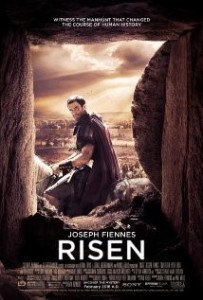 The story opens with the crucifixion, attended by Roman tribune Clavius, played by Joseph Fiennes, an obedient commander in the service of Pontius Pilate. Following the Resurrection, and under pressure from Jewish leaders and a pending visit from Caesar, Pilate orders Clavius to find the body of the risen Lord. What follows is a systematic and sometimes gruesome (several bodies are unearthed) search for the remains. When this fails, Clavius resorts to a series of interrogations of famous Gospel stalwarts to locate the eleven remaining apostles before experiencing a revelation that challenges his beliefs. From here, the film shifts into a higher gear when Clavius joins the disciples in fleeing Jerusalem—and an incensed Pilate—across the desert to the Sea of Galliee to meet his destiny.
Besides Fiennes stellar execution, the film is ripe with solid performances from its supporting cast. Peter Firth plays a convincingly tough, yet paranoid Pontius Pilate; Tom Felton, as Lucius, is the perfect fawning sycophant to his mentor Clavius; and Maria Botto, though she enjoys very little screen time, brings beauty and grace to the character of Mary Magdalene.
Of particular note is director Kevin Reynolds’ handling of the character of Jesus. Exquisitely underplayed by Chris Curtis, it’s a complete reversal from his chilling portrayal of Hispanic gang lord Smiley in 2001’s Training Day. His performance as Yeshua is quiet, yet strong and engaging. It’s reminiscent of the sparse on-screen presentation of the Christ figure in Ben Hur. Director Reynolds keeps the focus on Clavius, which is where it should be. This movie is about the transformation of his character more than the Resurrection itself.
My wife and I truly enjoyed this movie, which was just as moving, if not as brutal, as the last great Jesus film, The Passion of the Christ. If you’re looking for an inspiring way to spend an hour and forty-seven minutes, Risen is the perfect film for Easter.
For the movie’s solid fictional storyline, four out of five projectors. For its fidelity to the Gospel, five fish for Christian friendliness.
December 4, 2015
Who is Dennis Bailey and Why Should I Care?
 Welcome.
Since I know there are literally thousands of web and blog sites out there, I’d like to thank you for taking the time to visit mine. I assume that if you’re reading this, it’s because you want to know something more about me and my life as an author. Despite the mystique surrounding the art of writing, there is nothing mysterious about being a writer. I’m a husband, father, and retired police detective. And like so many others who have made writing a second career, I pull from experiences in my former occupation to help develop characters for my stories.
Above that, I’m a passionate lover of the Word of God, a fact you may have already deduced from the design of my website. My first novel, Army of God–currently in the hands of my agent as we discuss publishing options–is taken from the book of Genesis and tells the story of how the animals of Noah’s Ark rose up to defend it against an invading army.
Why Should You Care? So now that you know a little something about me, you may be asking yourself, “Why should I care?” What makes this guy different from the thousands of other authors (some of whom are also ex-cops) out there? Hopefully, it’s because I seek to focus on you the reader rather than me the writer. To begin with, though I may draw on my experience in understanding the perverse criminal mind from my days as a police investigator, I don’t write police stories. I write adventure stories. Big, sweeping epics and apocalyptic thrillers based on historical events, many of which originate, or are at least influenced by the Scriptural record. Stories that get your heart pounding–stories filled with action, suspense, and a touch of romance thrown in for good measure. Army of God is one such title, the first of my novels to employ this tried and true formula.
My goal, as I know it is with every writer, is to reach you on an emotional level, to not only leave you entertained, but also feeling exhilarated, enthralled, and inspired by the reading experience. Maybe even exhausted. I know there are many other things you can do with the 13 hours it takes the average person to read a 400-page novel. I would be honored to learn you had chosen to spend that time lost in a story of mine.
Be sure to sign up for regular updates so you don’t miss anything. This is where I’ll provide news and information on the publication progress of Army of God, as well as announcements about forthcoming titles. And don’t forget to leave your thoughts and questions in the comments section below.
I look forward to hearing from you.
Blessings,
Dennis