
Timothy Miller's Blog, page 22
April 4, 2021
Calvin Trillin
 “A new regulation for the publishing industry:
The advance for a book must be larger than the check for the lunch at which it was discussed.”


April 3, 2021
John Watson, Groupie
I fear I’ve done John H. Watson a grave disservice. This blog should after all really be named The Strange Cases of John. I’m leaning shamelessly on the incandescent fame of Sherlock Holmes, even as John did. After all, Holmes may be the hero of the stories, but John is certainly the protagonist. Doyle
 made that decision when he changed his name from off-putting Ormond Sacker to plain John Watson. Holmes is more of a mentor in the stories. It is through John’s eyes we experience the action. And it is John who is the founder of Holmes fandom, the original groupie. We are all John Watson.
 That’s right, I said groupie.
What better way to express the Holmes/Watson relationship? A completely unbalanced relationship, in which Holmes is always the star, and Watson garners what recognition he can by association, assiduously chronicling his successes (and even at times his failures, for the purpose of displaying his intimacy with his hero) And what better candidate for groupiedom? A damaged child who has developed a penchant for danger, seeking out another damaged soul who shines far brighter than himself? It’s classic groupie psychology. If Watson were alive today, he’d wear a Guns’n’Roses t-shirt.

Wait, damaged child? Of course. Why do you think Watson never mentions his family, and Holmes’s only sparingly? (And Holmes returned the favor, in return for Watson's concealing his past.)
The one thing we know about Watson’s family, thanks to Holmes’s rather perfunctory analysis of his pocket watch, is that he had a brother, a drunkard who frittered away his fortune (what was left after his father's frittering) and died young. The watch was inherited from their father.
There are a few inferences one can make from this, which Holmes refrained from saying out loud: John's brother, Harry was an older brother, who inherited not only the watch but most of his father’s wealth. He was the favorite son, who also inherited Henry's genes for incipient alcoholism. Both resented John’s discreet words of caution when they drank. His father beat John regularly when he was in his cups. The only reason he did not beat his wife as well was that she had abandoned him when John was young and gone back to her people in England--after he thrashed her once within an inch of her life.
She had pleaded to let her take the boys, at least John, knowing he would never let Harry go, but he was implacable, refusing even to let them see her letters, which finally dwindled away as the years passed. John didn't know even where she was for years, until he gained fame through his connection with Holmes. That was when she reached out to him--for money. She was always a practical woman, and assumed John had inherited something--a notion which John did not try to disabuse her of. It was enough for him to know that she read his chronicles in The Strand. It was in reaction to this treatment that John always treated women so honorably, so fastidiously.
John had a wicked temper of his own, which led him to Afghanistan--away from his father. But he left it on the battlefield there. By the time he returned to England, the drink had killed Henry and Harry both. Depression replaced his anger, along with a certain buttoned-down British attitude, which might have led him to join Holmes in his addiction--but he had already seen the destruction caused by addiction, and quietly set about to cure Holmes--succeeding eventually (Whether he enlisted the help of Dr. Freud, only Nicholas Meyer can say).
He was addicted to excitement though, and mortal risks, the same as Holmes (a condition well captured by the writers of Sherlock ). He would dare any danger, any humiliation, to be next to his star. And thanks to John, we’ve been trying to get next to Sherlock Holmes ever since.
Please leave a comment
April 1, 2021
Roger Angell
 “Since baseball time is measured only in outs, all you have to do is succeed utterly; keep hitting, keep the rally alive, and you have defeated time. You remain forever young. Sitting in the stands, we sense this, if only dimly. The players below us—Mays, DiMaggio, Ruth, Snodgrass—swim and blur in memory, the ball floats over to Terry Turner, and the end of this game may never come.”― Roger Angell
Angell
“Since baseball time is measured only in outs, all you have to do is succeed utterly; keep hitting, keep the rally alive, and you have defeated time. You remain forever young. Sitting in the stands, we sense this, if only dimly. The players below us—Mays, DiMaggio, Ruth, Snodgrass—swim and blur in memory, the ball floats over to Terry Turner, and the end of this game may never come.”― Roger AngellPlease leave a comment
March 31, 2021
Profile in Trivia
I was talking to a friend the other day (actually, my best friend, herein referred to as Rainbow Trout) and he asked me what was the deal in San Juan Hell with all the
 verbiage underneath my profile picture. Well, no one's ever asked me that before--I suspect no one's ever noticed it before-- but I suppose I should explain for his benefit, and for anyone else too shy to point out out that my new clothes look just like my birthday suit.
Novelist–well, that's the easy one. Novel-writing is what you do when you hang up your apron after twenty-five years tending bar.
Kibbitzer–You may be familiar with this one. Let's say you're playing a fame of chess, or poker, or Monopoly, pr really any game that's not Candy Land. There is inevitably a guy standing behind you who is not in the game, looking over your shoulder and giving you horrendously bad advice on your next move. That, my friend, is a kibbitzer.
Raconteur–French for a story-teller, especially one particularly witty or amusing. From this you may gather that French is the last refuge of the egotist.
Sans-culotte—Also French, and I wanted to include flaneur and croque-monsieur as well. bit I ran out of space. Sans-culotte literally means pantless, but before you get the idea that I'm hanging out in the altogether (I might be and I might not), a bit of further
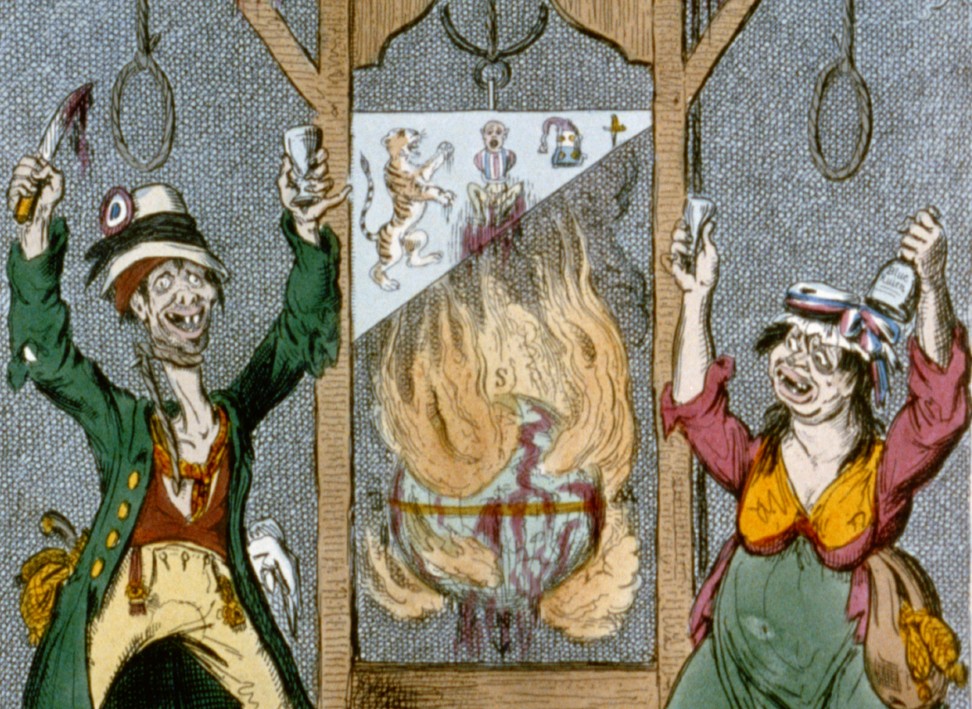 explanation. The sans-culottes were the lumpenproletariat* at the heart of the French Revolution, the ones Marie Antoinette wanted to eat cake. They were radical democrats, sort of like Bernie Sanders with the mittens off. They did wear trousers--they just didn't sport the fashionable silk knee-pants of the aristos. This is my political stance.
Tralfamadorian–if you know you Vonnegut, you know the Tralfamadorians, little aliens who look like plumber's friends, with a hand where their head should be, in which is set a single eye. They also live in four dimensions, which means that they can see all of time--and choose, quite sensibly, to live in the good times. This is my philosophical stance.
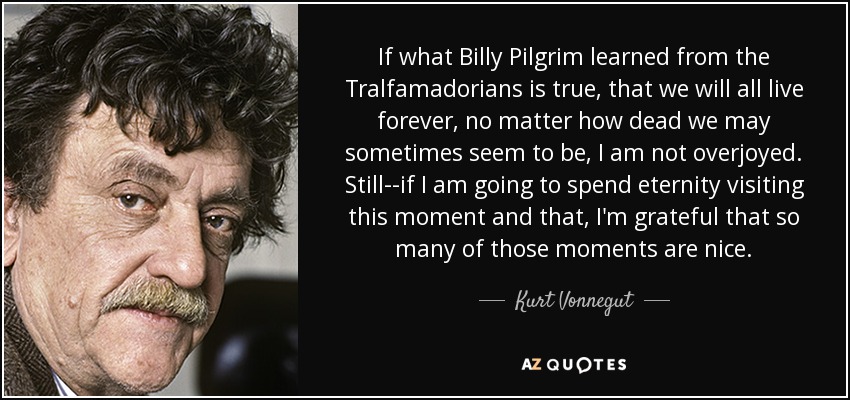
Dylan Thomist– is my own coinage, taken from the Welsh poet Dylan Thomas, especially in homage to his great poem The Force That Through the Green Fuse Drives the Flower (written when he was only 19) that expresses an intense identification with all of creation. This is my religious stance.

So there you have it--a rare example of a tedious shorthand. I hope it was worth it.
*Lumpenproletariat--Marx's term for the class of beggars, thieves, and prostitutes below the proletariat proper.
March 29, 2021
Stephen Dobyns
 “Hesitancy is the surest destroyer of talent. One cannot be timorous and reticent, one must be original and loud. New metaphors, new rhythms, new expressions of emotion can only spring from unhindered gall. Nothing should interfere with that intuition--not the fear of appearing stupid, nor of offending somebody, nor jeopardizing publication, nor being trivial. The intuition must be as unhindered as a karate chop.”― Stephen Dobyns
Dobyns
“Hesitancy is the surest destroyer of talent. One cannot be timorous and reticent, one must be original and loud. New metaphors, new rhythms, new expressions of emotion can only spring from unhindered gall. Nothing should interfere with that intuition--not the fear of appearing stupid, nor of offending somebody, nor jeopardizing publication, nor being trivial. The intuition must be as unhindered as a karate chop.”― Stephen Dobyns
Goodreads Gods
Well, my Goodreads giveaway is over. 2800 people vied for ten copies of my autographed novel. There must have been blood in the streets.
And I thought I'd contact the winers to see if they wanted any particular inscription. The personal touch, you know? And I did contact a couple of them. But then I got this message from the Goodreads gods:
 `
`Well, fair enough. I don't want to spam anybody. But if there's a chance in hell any of the winners read this post and would like a personalized note, contact me sooner than later. Congratulations! I never win these things.
Do You Know This Man?
Of course you do. You've seen this picture of him in every tasteful little coffee-shop or bistro you've ever frequented. It's so ubiquitous that it's almost invisible. And there's his name right on the poster, Aristide Bruant. French guy, right?
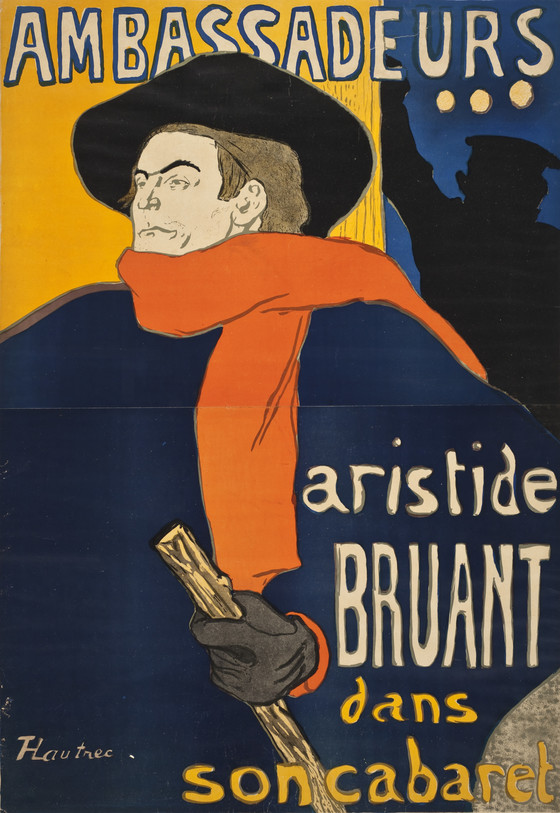
You might even know that the poster is the work of Toulouse Lautrec, the little guy, the godfather of posters.
But do you know Aristide Bruant, who was anything but tasteful? As a matter of fact, he was the Andrew Dice Clay/ Ozzie Osborne of his time. He was an outlandish cabaret owner whose main attraction was himself, entertaining his customers by parading on the bar top, singing and insulting everyone who came to see him, and everyone was the bourgeois, slumming it up in dangerous Montmartre (or La Butte, as the hilly region of Paris was called). And the bar he packed them in at was The Mirliton.
The what?
The Mirliton, which basically means "the kazoo" in French. It's also a favorite vegetable in Cajun cooking, which caused me no end of trouble along about the third draft of The Strange Case of the Dutch Painter.
 But maybe we'd better back up, to the bar where Bruant made his name:
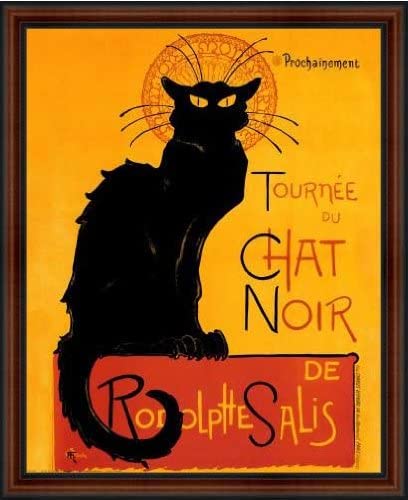
 Le Chat Noir in Montmartre, which I know you've heard of, because once again, you've seen the poster--probably in that same cool little bistro, just across from the poster of Bruant. Bruant became so well known there that when the club closed, he opened his own--at the very same site. The walls were decorated with Lautrec's masterworks, which the bourgeois crowd mainly ignored. Lautrec held court there most nights--until some place The Moulin Rouge opened up down the street.
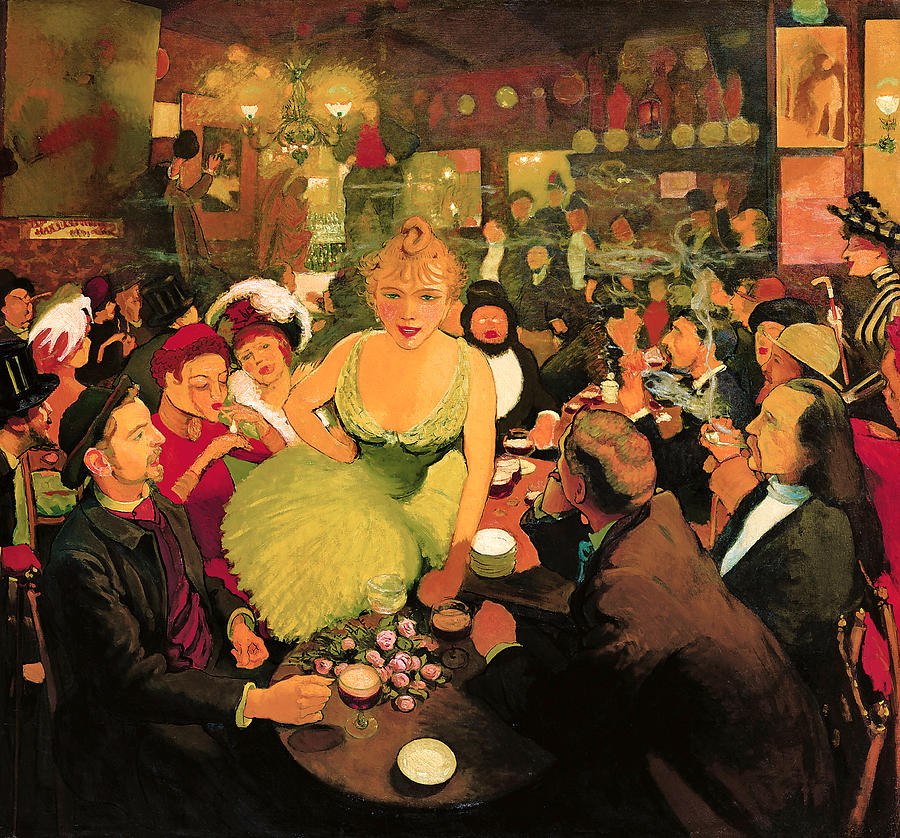
Here's how I imagined the place:
This then was the Cabaret Le Mirliton, just one of several down-at-the-heels establishments pocking the Boulevard Rochechouart that promised song and dance and bonhomie, or alternately enough noxious drink to make the first three superfluous.
Le Mirliton was of the first kind. As soon as we were inside the door, we were greeted by smoke and noise and the booming voice of the proprietor himself. “My God, look at these two! Have the sewers backed up all the way to Montmartre?”
There was Bruant, striding up and down the top of the bar in the same costume we’d seen in the posters, a gamekeeper’s outfit with a scarlet shirt and scarf, an opera cape and wide-brimmed black hat. He pointed a rattan cane at us and said, “See how they gawk? Like sheep about to be sheared! Mutton-heads!”
Interior if Le Mirliton by Louis Anquetin
 St. Lazare, a song by Bruant
 March 28, 2021
Agatha Awards
The nominees for this year's Agatha Awards have just been announced.
 Now I'm a neophyte in this area, and of course I would not even be eligible for consideration until next year (I should be so lucky), so no knots in my stomach this year. But this is award season for mysteries: the king-daddy of them all, the Edgars (named after Edgar Allen Poe, and if I have to tell you who the Agathas are named after, your disinterest in mysteries is profound), has announced their nominees already, and you can find them here.Here's a little bit about Malice Domestic, the folks who award the Agathas.
"Established in 1989, Malice Domestic is an annual fan convention that takes place each year in Maryland, just outside of Washington, D.C. Malice celebrates the Traditional Mystery, books best typified by the works of Agatha Christie. The genre is loosely defined as mysteries which contain no explicit sex, or excessive gore or violence."
So why should you care? Well, you're always looking for reading recommendations, aren't you? And why should I care? Because James Ziskin, my Seventh Street stable-mate and an all-around mensch has had his Sherlock Holmes pastiche, “The Twenty-Five-Year Engagement,” has been named a finalist for the Agatha for Best Short Story. So I've got someone to root for.
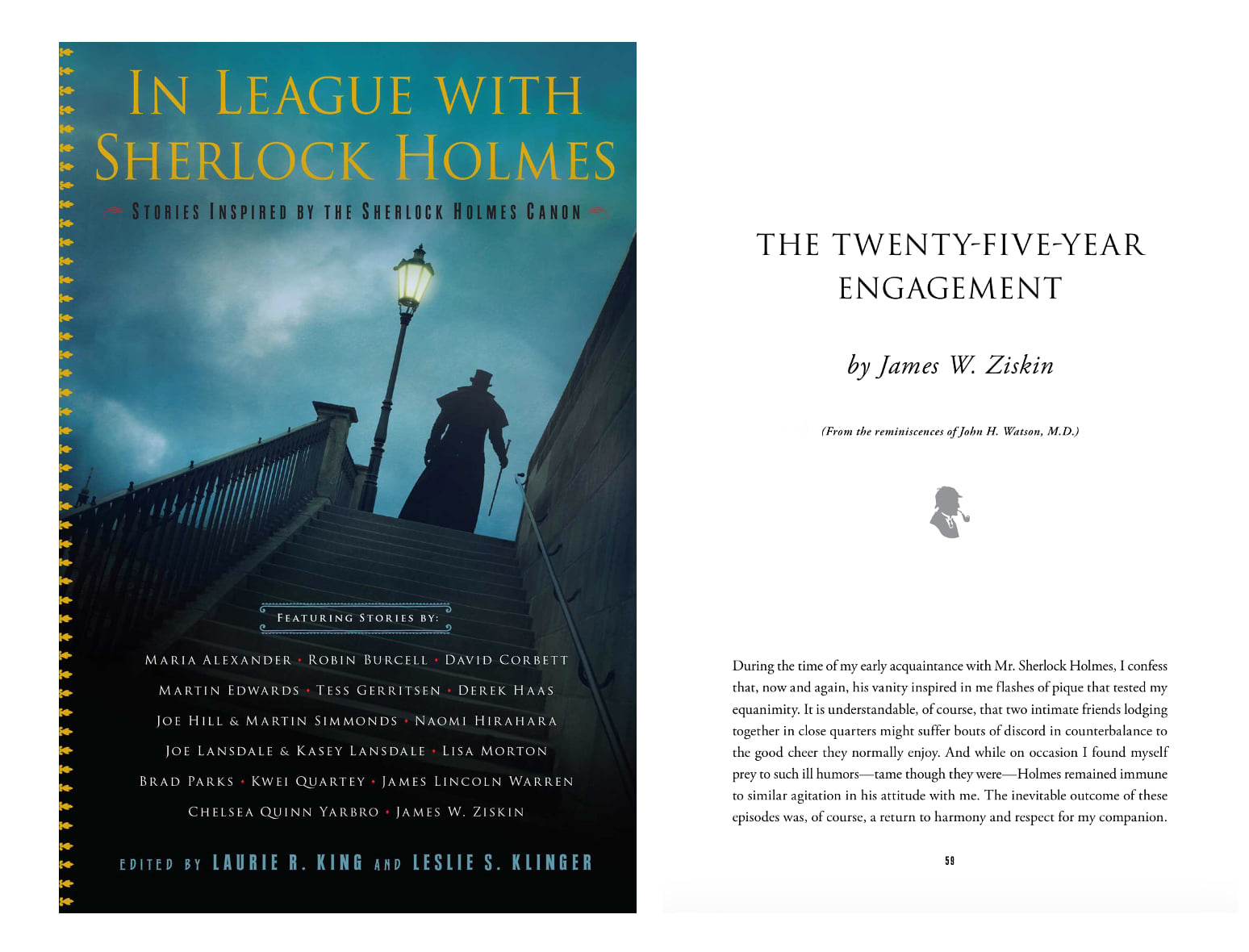 And you can find the book here, So you'll have someone to root for, too.

