
Timothy Miller's Blog, page 17
February 2, 2022
Historical Novel Society review of the Dutch Painter
From the Historical Novel Society:
 "While the book contains deft Holmesian plotting and a plethora of historical tidbits, the real draw for me is the extraordinary voice of Miller’s narrator: hilariously pompous, erudite, and evocative. The
sheer riot of his descriptions captivates and invites readers to linger over the sentences rather than rush headlong through the story."
For the entire review, check out the Historical Novel Sociey:


February 1, 2022
Interview with Nerds that Geek/The Dutch Painter
NTG: Do you think Sherlock Holmes would have good taste in art? Why / why not?
 Timothy Miller: Watson claimed that he had dreadful taste in art, but then Watson was something of a Philistine himself. But I think Holmes would have been more apt to analyze art, to try to derive clues from it rather than simply enjoy it. I think he would have been more comfortable with abstract art, Kandinsky, for instance, which would have allowed his mind. to release its grip, the same way that improvisation on the violin did.
For the full interview on The Strange Case of the Dutch Painter, visit Nerds That Geek.

January 24, 2022
Sherlockians and Doyleans: Review
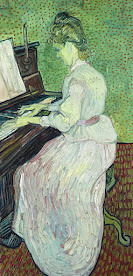
From Peter Blau of Sherlockians and Doyleans:"Timothy Miller’s The Strange Case of the Dutch Painter (Jersey City: Seventh Street, 2022; 264 pp., $17.95) has Sherlock Holmes (using the alias Vernet in Paris in 1890, investigating forgery of great art and eventually the death of Vincent Van Gogh; Vernet is accompanied and assisted by a Dr. Lermolieff (who is not Dr. Watson using an alias), and the tale is imaginative, nicely told, and full of twists and turns.
I hope Miller continues . . . he had great fun with Eliza Doolittle . . . and it will be interesting to see what his next book's about. . ."
January 18, 2022
My 5 favorite art heist films
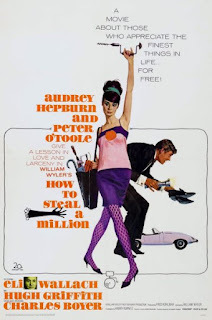 You know my new novel is about the murder of Vincent van Gogh. But it's also about a daring art forgery ring, because I love art heist tales.
 "The days when you could walk out of the Louvre with the Mona Lisa under your arm are over. There are all sorts of safeguards now—electric eyes, pressure sensors, lasers, which in the movies at least, must usually be overcome by dangling the thieves from the ceiling. I love art-heist stories."
For 5 of my favorite heist films, visit: Fresh FictionJanuary 17, 2022
What Is Pastiche in Literature, and Why Is Sherlock Holmes Perfect for It?
 "That’s right. Pastiche is a French word, as you may have guessed, but it’s borrowed from the Italian, which literally means macaroni pie. Here are some synonyms, which might give you a clue what we’re up against: clutter, collage, farrago, gallimaufry, litter, mishmash, omnium-gatherum, patch-work, ragbag, and stew."
To read thw rest of the article, go to Writer's Digest:
Foreword review of The Dutch Painter
"With a compelling central mystery, the novel makes excellent use of familiar historical figures to evoke a complex social world. In addition to its overarching case, the book makes moves to address the “locked-room mystery” of Holmes as a person. "
For more:
January 4, 2022
The thrill is not gone.
Obligatory pic of author with second-born book hot off the presses.
 [image error][image error]11Whit Neill, Betsy Hannas Morris and 9 others
December 22, 2021
Free!
Here's what you've been waiting for.
I'm giving away my life-blood (12 copies) on Goodreads.
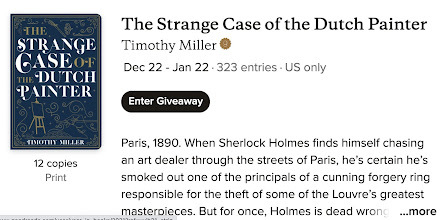
Autographed with bookplates.
Get it while it's hot.
October 1, 2021
First Review of The Dutch Painter
So...it's still available to subscribers only on Booklist, but I have the okay to share with you the first review of
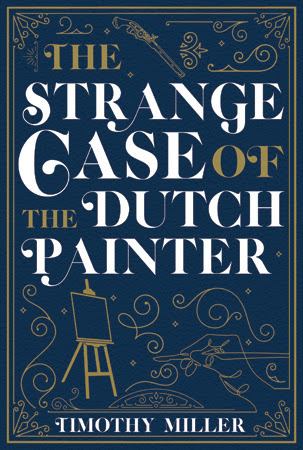 The Strange Case of the Dutch Painter:
The Holmes pastiche industry rolls on. This time we don't have a newly unearthed Watsonmanuscript with a waspish Holmes and boneheaded Watson. Rather, the great man isconcealing his identity under a borrowed name, Vernet. Appropriate, since he's distantly relatedto the artistic Vernet family and the case he's working is art theft. The ersatz Watson, there to aidthe investigation, is art maven Lermolieff, who understands his job is to observe Holmes-Vernetas well as record the investigation. He has much to offer, from first finding the bloodhound "acarnival attraction that took in clues and spat out solutions," to understanding that deduction"was a mask for his real passion: justice." Their inquiry takes them through the Parisian art worldin the waning nineteenth century and features encounters outlandish and entertaining. Holmesinvestigates van Gogh's suicide and crosses swords—literally—with Gauguin, while Lermolieffgets the world's first electroshock treatment. It's a fine tale, stylishly written.— Don Crinklaw


