
Chris Chan's Blog, page 25
June 24, 2021
The Spy Who Wrote Mysteries
The Spy Who Wrote Mysteries
There are some famous writers who drew upon their personal experiences with spycraft in their novels. John le Carré and Ian Fleming both had backgrounds with espionage. So did Joyce Porter.
Joyce Porter was a Cold War spy for Britain. Though the details of her exploits are largely hidden from the public, she served in the women’s military branch during the closing years of the Second World War, leading into work in the Women’s Royal Air Force, learning Russian, and then serving Britain’s interests in the Cold War.
We don’t know many details about her exploits, though it has been released that towards the end of her career she was involved in recruitment. At one point, she was on a mission to a secret collective in the Soviet Union, where as a “reluctant guest” she was “entertained with enough vodka to kill anyone but a Russian.”
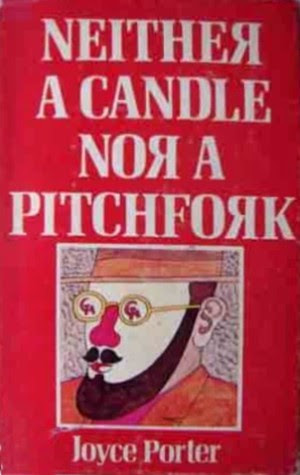
Porter drew upon her professional experiences in her four Eddie Brown spy thrillers, particularly Sour Cream with Everything and Neither a Candle Nor a Pitchfork and in her comedic takedown of the Soviet Union, The Package Included Murder, where the Hon Con goes on a cheap vacation and comes across repeated homicide attempts and a dysfunctional socio-political system.

My book on Joyce Porter, Murder Most Grotesque: The Comedic Crime Fiction of Joyce Porter, will be released by Level Best Books later this summer!
–Chris Chan
Chris Chan’s first book, Sherlock & Irene: The Secret Truth Behind “A Scandal in Bohemia” was released on August 27thfrom MX Publishing, and is available for sale at Amazon.com and the MX Publishing website, as well as at Book Depository (with free worldwide shipping there). It is also available in a Kindle edition.


June 19, 2021
The Chan Test
The Chan Test
One of the problems I have with much of contemporary literature and popular culture can be summed up in four words: The young characters stink. They’re boring, one-dimensional, and have no agency of their own. They’re peripheral to the plot and aren’t allowed valid emotions, other than to back up the life choices of the adults in their lives. I was disgusted by the ending of a famous novel, where a young boy sees one parent cheating, and is totally fine with it because based on no hard information whatsoever, he assumes they’re in love, and the kid tacitly supports the dissolution of his family because the parents are pursuing their own happiness, and one parent’s total abandonment of the family produces no signs of distress from the boy.
This is not how real children think. A real child would feel betrayed, frustrated, and furious, even if he couldn’t find the words to express his emotions. This is lazy, shoddy writing, created to create the result the author wanted at the expense of psychological truth. It’s part of a silly trend, where children have no part to play in the plot other than to validate their parents’ questionable decisions or to be briefly adorable.
Much has been made of the Beschdel Test, which judges the way that women are written in a creative work by asking if two women have a conversation with each other that is not about a man. The Chan Test asks how children are treated in a creative work by asking: “Would there be any real difference to the work if the kid were replaced with a cute puppy?” If the answer is “yes,” the work passes the Chan Test. Think about it. In how many TV shows, movies, and books could the child be replaced with a little dog with no serious changes to the plot? Many of, say, Roald Dahl’s books, like Matilda, Danny the Champion of the World, and The BFG feature a strong young character who is instrumental to driving the plot or righting a wrong. Many prominent movies, TV shows, and books fail the Chan Test miserably.

I’ve tried to address this in my own writings, and in these recent reviews for The Strand of Big Little Lies Season 2 and Hellfire, I talk about works and how they connect to the Chan Test.
Can you think of any recent examples that pass or fail the Chan Test?
–Chris Chan
Chris Chan’s first book, Sherlock & Irene: The Secret Truth Behind “A Scandal in Bohemia” was released on August 27th from MX Publishing, and is available for sale at Amazon.com and the MX Publishing website, as well as at Book Depository (with free worldwide shipping there). It is also available in a Kindle edition.
June 11, 2021
Story Profile: “The Switched String”
Story Profile: “The Switched String”
In one of the latest entries in The MX Book of New Sherlock Holmes Stories, (Part XXV: 2021 Annual (1881-1888)), my story “The Switched String” starts out with an intriguing situation. Holmes is playing his violin, when he discovers something is amiss. One of the high-quality strings on his Stradivarius has been replaced with a cheap, inferior string. Why would someone do that? What could possibly be gained by tampering with Holmes’ violin? How did someone break into 221B to do so? Is this all a prank, or is something more sinister the motive?
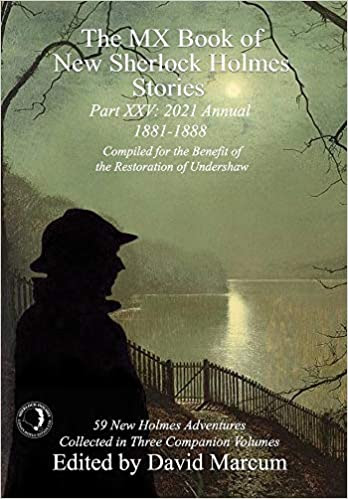
The MX Book of New Sherlock Holmes Stories, Part XXV: 2021 Annual (1881-1888) is available through Amazon and the MX website. To reiterate, the proceeds of this book and all other books in the series go to support Underhill, a school based in one of Sir Arthur Conan Doyle’s former homes that helps children with special needs.
–Chris Chan
Chris Chan’s first book, Sherlock & Irene: The Secret Truth Behind “A Scandal in Bohemia” was released on August 27thfrom MX Publishing, and is available for sale at Amazon.com and the MX Publishing website, as well as at Book Depository (with free worldwide shipping there). It is also available in a Kindle edition.
June 4, 2021
What the Heck Did I Just Read?
What the Heck Did I Just Read?
I got the idea for this blog post based on a conversation I just had with friends on the Golden Age Detection discussion forum on Facebook. The topic of conversation was sub-genres of the mystery story. An old issue of Ellery Queen Mystery Magazine divided stories into “Detective Stories” and “Crime Stories.” In my way of thinking, all detective stories are crime stories, but not all crime stories are detective stories. A detective story centers on a character trying to solve a crime, whereas a crime story might be told from the perspective of the criminal, or the victim, or innocent bystanders, or one of many other possibilities. I suppose that there are other subgenres, including “Heist Stories” and “Mysterious Goings-On that Don’t Turn Out to be Actual Crimes” as well.
Many crime stories I’ve read recently seem to include a crime as an afterthought. Not even an afterthought. A veiled, hinted possibility. I recently wrote:
Some of the stories I read didn't really fit a genre. Some were "A guy rambles on about his crummy life for three pages and then hints he might commit a violent act but it's ambiguous" stories, and there were also, "Two guys have a conversation that might or might not lead to a crime but the end scene featuring one of the guys freaking out is too vague to be clear on what's happening." Sometimes I think there should be a genre called "What the heck did I just read?"

Indeed, this seems to be very popular in the short story field, not just in the mystery field. A tale rambles on for a while, and then concludes with a final scene that is deliberately unclear. Now, this can be very effective if done well– not knowing for sure how the narrative plays out can make a story more memorable or more haunting. I don’t demand that everything be tied up with a nice little bow– even Agatha Christie ended a Miss Marple novel by making it ambiguous whether a death was suicide or homicide. But a lot of these stories seem as if they can’t be bothered to come of with a proper ending. When I have to read the last two paragraphs ten times and still can’t tell what’s going on, well… it leaves me unsatisfied.
–Chris Chan
Chris Chan’s first book, Sherlock & Irene: The Secret Truth Behind “A Scandal in Bohemia” was released on August 27th from MX Publishing, and is available for sale at Amazon.com and the MX Publishing website, as well as at Book Depository (with free worldwide shipping there). It is also available in a Kindle edition.
May 29, 2021
Story Profile: “The Adventure of the Specious Spouse”
Story Profile: “The Adventure of the Specious Spouse”
In Belanger Books’ latest collection of new Sherlock Holmes stories, Stranger Than Truth, Holmes solves a bunch of cases connected to real-life figures from his time period such as Theodore Roosevelt, P.T. Barnum, Nellie Bly, the Elephant Man Joseph Merrick, Annie Oakley, the serial killer H.H. Holmes, and many more.
As you may have guessed, I have a story in the collection, where Holmes solves a case alongside the real-life lawyer and activist Grace Quackenbos Humiston, one of the first female lawyers in New York City. Over the course of her careers, she defended the downtrodden, uncovered cases of forced servitude, and solved a mysterious disappearance. These adventures earned her the nickname “Mrs. Sherlock Holmes.”

If you’re interested in learning more about the fascinating career of Grace Quackenbos Humiston, please check out Brad Ricca’s book Mrs. Sherlock Holmes.

In my story, Sherlock Holmes and Dr. Watson visit New York, only for Holmes to become increasingly annoyed by people who mistakenly believe he’s married to Grace Quackenbos Humiston. When she comes to Holmes for help clearing the name of one of her clients, it leads into an investigation into the seedy underbelly of the city.
Sherlock Holmes: Stranger Than Truth is available now.
–Chris Chan
Chris Chan’s first book, Sherlock & Irene: The Secret Truth Behind “A Scandal in Bohemia” was released on August 27thfrom MX Publishing, and is available for sale at Amazon.com and the MX Publishing website, as well as at Book Depository (with free worldwide shipping there). It is also available in a Kindle edition.
May 22, 2021
How I Discovered Joyce Porter
How I Discovered Joyce Porter
We discover our favorite authors in many different ways. Sometimes we’re given books as gifts– that’s how I discovered Agatha Christie and Sir Arthur Conan Doyle. Sometimes we do research for authors we hope we’ll like. That’s how I discovered G.K. Chesterton. And sometimes we stumble upon authors by accident. That’s how I met Joyce Porter.
I’m a big fan of radio drama. It’s been decades since it was popular in the United States, but the UK is still adapting lots of great stories for the radio (as well as creating original works). When visiting a BBC radio website, I discovered that one featured audio drama was a mystery featuring “Scotland Yard’s laziest sleuth.” It was advertised as being hilarious, and I felt I could use a laugh, so I listened to it and found the slovenly Dover highly entertaining. I discovered that this was part of a series based on Joyce Porter’s novels, and I eventually found and listened to the other four adaptations, plus the original story not based on Porter’s works but featuring her characters. All of them were great fun.
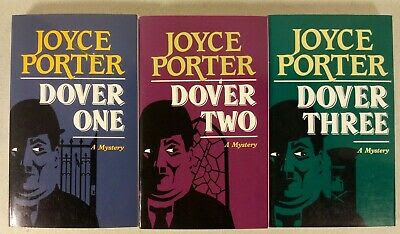
I did a little research, and found out Porter wrote twenty books. At the time, her Dover novels were just going out of print in the U.S., but I was able to find eight of her Dover books brand new for just a few dollars each, and inexpensive editions of her other three Dover books used. It was a lot harder to find affordable copies of the Eddie Brown and Hon Con books, as the Brown books hadn’t been released in paperback in the U.S. or published since their original release, and the Hon Con books were similarly out of print. I managed to find inexpensive copies of some of the books, and spent the next few years checking book websites regularly, as most used copies of the other books were quite pricey. Every so often, I’d find another book for less than ten dollars, and buy it. Finally, I had everything she ever published.
I had such fun with all of Porter’s books that I felt she deserved a wider audience. So with the Dover books finally being released as e-books in the U.S., I wrote a book about Porter to publicize her.
–Chris Chan
Chris Chan’s first book, Sherlock & Irene: The Secret Truth Behind “A Scandal in Bohemia” was released on August 27th from MX Publishing, and is available for sale at Amazon.com and the MX Publishing website, as well as at Book Depository (with free worldwide shipping there). It is also available in a Kindle edition.
May 15, 2021
Story Profile: “The Adventure of the Wisconsin Hodag”
Story Profile: “The Adventure of the Wisconsin Hodag”
I’ve mentioned August Derleth’s affectionate pastiche of Sherlock Holmes, Solar Pons, earlier on this blog. While Derleth crafted Pons to be in the same fictional universe as Holmes, due to copyright issues Holmes never actually appeared directly in a story alongside Pons. The legal situation has changed, and Solar Pons and Sherlock Holmes now solve cases together in a pair of anthologies by Belanger Books: The Meeting of the Minds: The Cases of Sherlock Holmes and Solar Pons Volume I and Volume II.
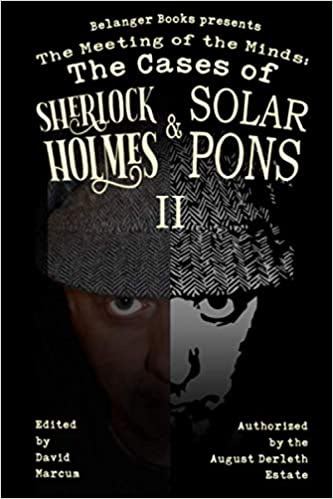
My story, “The Adventure of the Wisconsin Hodag,” appears in Volume II. Based on the real legend of a mysterious beast said to run rampant in the woods of Wisconsin, as well as the true story of how the executive offices of the President of the United States were relocated to Northern Wisconsin for one fateful summer, “The Adventure of the Wisconsin Hodag” has Holmes, Pons, and Pons’ friend Parker travelling to the American Midwest. August Derleth himself makes an appearance in this story that features sightings of a mythical beast, and a terrifying conspiracy with international implications.
Belanger Books is responsible for the revival of the Solar Pons series over the last couple of years, and with luck, anthologies like The Meeting of the Minds will earn the detective new fans.
–Chris Chan
Chris Chan’s first book, Sherlock & Irene: The Secret Truth Behind “A Scandal in Bohemia” was released on August 27thfrom MX Publishing, and is available for sale at Amazon.com and the MX Publishing website, as well as at Book Depository (with free worldwide shipping there). It is also available in a Kindle edition.
May 8, 2021
Mr. Bland Man
Mr. Bland Man
Everybody has their own preferences about what they like most about fiction. For me, I can’t connect with a book unless I can form some sort of emotional connection with the characters. I don’t necessarily have to like the people, though it helps. I can be annoyed by them, I can despise them, and in the best cases, I’m intrigued by them and wonder about the aspects of their lives outside of what’s recounted in the novel.
As I’ve been reading a lot of mysteries lately, I’m sad to say I’m often disappointed by the characters. All too often, I have the same disillusioned, brooding protagonist who’s licking the wounds of a failed relationship, is a total skeptic about everything, and is generally a cookie-cutter copy of a hundred other antiheroes just like him. One of the problems with reading a lot is when something’s unoriginal, it’s a lot easier to catch it. Ultimately, it’s a little sad to realize that the protagonists of fifty books are essentially interchangeable.

And the problem is, so many of these characters in fiction today are utterly bland and boring. None of them are in any way distinctive or memorable. Looking at the pantheon of great fictional detectives– Sherlock Holmes, Hercule Poirot, Miss Marple, Father Brown, Lord Peter Wimsey, Harriet Vane, Nero Wolfe, Archie Goodwin, Perry Mason, DCI Dover, the Hon Con… they’re all larger than life characters. Not only do they linger in the reader’s imagination forever, but it’s an extreme challenge for actors to play the roles without seeming too small for the part, and those rare actors who are able to embody the role properly become legends.
Writing is a challenge in the best of times, but creating characters that aren’t just well-developed, but are actually legends, is a true achievement, one that is all too rare these days. In the last thirty years, how many fictional detectives have actually entered the general public imagination? Indeed, in the last three decades, how many fictional characters outside of Harry Potter and a few other youth series have entered the popular imagination, if film and television adaptations are not taken into account. Not very many…
–Chris Chan
Chris Chan’s first book, Sherlock & Irene: The Secret Truth Behind “A Scandal in Bohemia” was released on August 27th from MX Publishing, and is available for sale at Amazon.com and the MX Publishing website, as well as at Book Depository (with free worldwide shipping there). It is also available in a Kindle edition.
April 30, 2021
Grading Mystery Plots
Grading Mystery Plots
Over the past year, due to multiple factors, I’ve been able to read way more contemporary crime novels than normal. In the last twelve months, I’ve read about two hundred mystery novels that were published in 2020. Some of them have been great, while others were… not so much. After reading this massive collection of contemporary contributions to the genre, I was struck by just how wide-ranging the quality of the plotting and cluing was. This goes beyond the level of the prose craftsmanship or the characterization. When reading a fair play mystery, one should be able to work alongside the detective, and before the solution is revealed, the intelligent and observant reader ought to have figured out the identity of the villain based upon some carefully placed clues scattered throughout the book.
In a review of the BBC series Father Brown that I wrote for Gilbert! Magazine a few years back, I wrote:
“I think that most deductive mystery plots can be assigned a letter grade. An “A” plot is clever, twisty, and unexpected, but there are still enough fair play clues for the intelligent and observant viewer to figure out whodunit. Most Agatha Christie mysteries can be categorized as “A” plots. A “B” plot still contains some elements of originality, but may include clichéd or overused elements, and the answer may be more obvious than in an “A” plot. A “C” plot has an obvious killer, often through using feints that point right in the killer’s direction, or because common tropes point in one direction, or the knowledge that the personal preferences of the writers will compel them to make certain plot choices (the fondness of some Law & Order writers to make the chief villain a rich white guy under any circumstances is an example). In a “C” plot, the killer can sometimes be determined through the process of elimination, since the first person arrested for the crime can be ruled out, the two young lovers are probably innocent, and the show is trying so hard to make the fourth suspect look guilty that you know it just has to be the fifth and last suspect. A “D” plot is a mystery that pulls a solution out of thin air, without sufficient clues to point in the killer’s direction. If the observant viewer can’t deduce the solution through logic, the writer has failed. A “F” plot is a mess– confusing, trite, and produces plot threads that go nowhere, with clues that point in a direction different from the official answer, and clues that are never properly explained.”
I was amazed by how many books published today qualify as a “C” or a “D” plot. All too often, there simply wasn’t any detection being done. Yeah, there were suspicions aplenty, but not enough clues pointed in the direction of a single person for the reader to make an informed accusation. Indeed, as Xavier Lechard, a Facebook friend of mine in the Golden Age Detection Facebook group noted, more and more, “detectives” in crime novels don’t do that much detecting. I agreed, saying that in so many books, the detectives just wander around, asking suspects questions, checking out a few locations, but the evidence they find applies to several suspects. The detectives don’t draw logical conclusions from the evidence, they simply stumble into a solution. Sometimes they walk in on the killer doing something incriminating, and other times there’s a spontaneous confession, often with little provocation. It’s as if the author was merrily writing along, and suddenly declared “Whoops! I’m on page three hundred! Better wrap this up– I’ll just pick a killer at random.”

And of course, when authors make their political views obvious throughout the book, it’s a pretty safe bet that the killer is The Sort Of Person The Author Does Not Like.
Even worse are the books that never explain the extraneous clues. These novels have enough red herrings to keep a seafood restaurant fully stocked for two years. Yet at the end, the evidence could be used to build a strong case against multiple characters. The only reason one person gets identified is the killer is because the “detective” looked at the bad guy wrong, and the fool spontaneously confessed.
Has anybody read a book recently that’s so poorly constructed it rates as a “D” or and “F?” Alternatively, has anybody found a book so cleverly clued that it’s earned an “A?”
–Chris Chan
Chris Chan’s first book, Sherlock & Irene: The Secret Truth Behind “A Scandal in Bohemia” was released on August 27th from MX Publishing, and is available for sale at Amazon.com and the MX Publishing website, as well as at Book Depository (with free worldwide shipping there). It is also available in a Kindle edition.
April 23, 2021
The Humor of Joyce Porter
The Humor of Joyce Porter
Joyce Porter is reported to have said ,“Personally, I wouldn’t read a funny detective story if you paid me.” While many English mystery authors may put some humorous dialogue here and there in their works, and others may have a silly scene here and there, there are very few mysteries from the British Golden Age that leave the reader the laughing from beginning to end.
Porter’s books work because she finds worthy targets for her humor. She never treats death as a laughing matter, as she has too much fun poking fun at living people. Hypocrites, bullies, fools, and the generally nasty are all grist for her mill. Most of the Dover novels feature a stable of suspects, the best of which have one terrible flaw that is magnified beyond the usual proportions in order to create a grotesque and laughable caricature, a monster embodying the flaws of humanity. Porter then ridicules these people, like lecherous old men, self-obsessed and domineering women who rule their hometowns through intimidation, shiftless young people, and so forth. Of course some perfectly nice people are presented as comic characters, whose pure hearts can’t disguise the fact that they are ridiculous in their overzealousness to help, or because their well-meaning cluelessness causes all manner of problems.
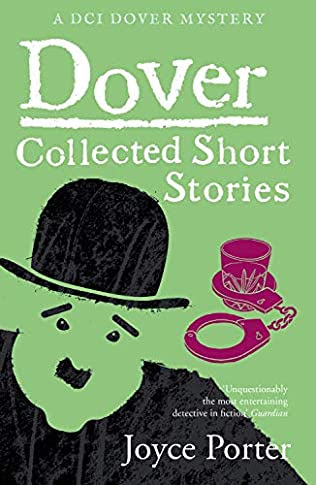
Of course, the heart of the humor comes from her central characters, like the slovenly and sluggish Dover, a man whose repulsiveness, boorishness, and selfishness are played up in a way that you’d never want to meet him in real life (and you’d go to any length to keep him out of your bathroom), but he’s always fun to read about because his hijinks are so amazingly over the top. Likewise, the Hon Con means well, but she puts so much thoughtless enthusiasm in all of her investigations that her failure to think situations through and her physical recklessness means that she invariably leaves a trail of destruction in her wake.
Joyce Porter’s humor isn’t about the wacky farce of impossible comic situations. It’s about taking a relentless look at the flaws that mar humanity… and chuckling at them.
–Chris Chan
Chris Chan’s first book, Sherlock & Irene: The Secret Truth Behind “A Scandal in Bohemia” was released on August 27th from MX Publishing, and is available for sale at Amazon.com and the MX Publishing website, as well as at Book Depository (with free worldwide shipping there). It is also available in a Kindle edition.


