Steph Gennaro's Blog, page 2
November 16, 2020
The Japanese Mindset in the Miso Cozy Mysteries Series
 For this post, I want to explore a theme in THE DAYDREAMER DETECTIVE FINDS HER CALLING, The Japanese Mindset. First, let me start by saying that the Japanese Mindset is not a rule nor is it a stereotype, though there are many Japanese people that don’t fit this mold at all. This mindset is a way the Japanese have evolved over time, and it’s something that is readily talked about by Japanese people and people who study Japanese culture. Go ahead and Google “The Japanese Mindset” and you’ll come across every kind of article on this including, my favorite, There is No Japanese Mindset. Lol.
Japanese society is changing, albeit slowly, but still changing. More women are going into politics or are serving on the executive boards of large companies in Japan. Yet, Japan is falling behind its pledge to add more women executives to companies, plenty of places still won’t hire women or they will hamper the progress of women in order to push more men to succeed. So, there’s a long way to go for gender parity which many young, ambitious women in Japan want.
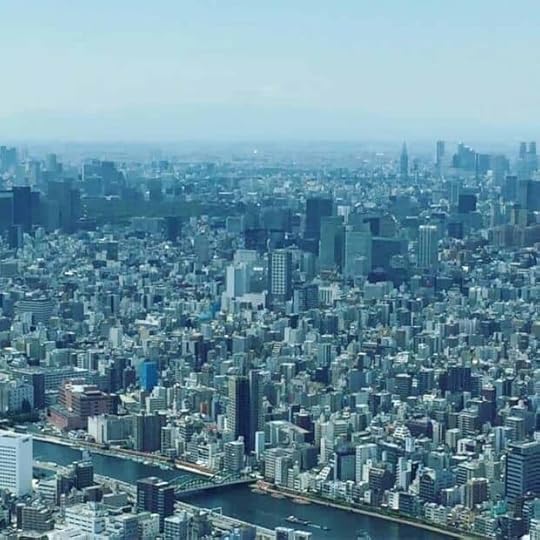
Setting aside whether this is right or wrong or whether this is cultural and not to be remarked upon by outsiders (because I know someone will say so), it is what’s happening in Japan today and has a direct influence on my own fictional stories that take place in Japan.
How does Mei, from the Daydreamer Detective, fit into Japanese society?
Mei’s the center of this story that I’ve been weaving for five books and two novellas now. She’s in her late 20s and there are things she wants out of life — a job that makes her feel enriched and happy, a family to love and take care, and a place within her community. But she’s always been a little too outspoken, a little too different, to ever truly fit in. And the Japanese Mindset is all about fitting in.
For centuries, Japan has had a communal mindset. As Spock would say, “The needs of the many outweigh the needs of the few, or the one,” and this is something that describes the Japanese Mindset perfectly.

For many quiet rural towns in Japan, in the past and now, neighbors rely on each other to survive. They share resources. They help repair each other’s houses. And they even share natural resources like water for their agricultural needs. If one person became selfish and decided that they needed the agricultural water from the canals for their rice paddies before someone else, the whole system would be thrown out of whack. The whole town could falter. Rural communities come together to decide on planting schedules, festivals, harvest times, etc. They all decide together and have the same ethical values — that the community is the most important part of their life. The community wins. This attitude is even carried into the cities now. It hasn’t left Japan. It has evolved.
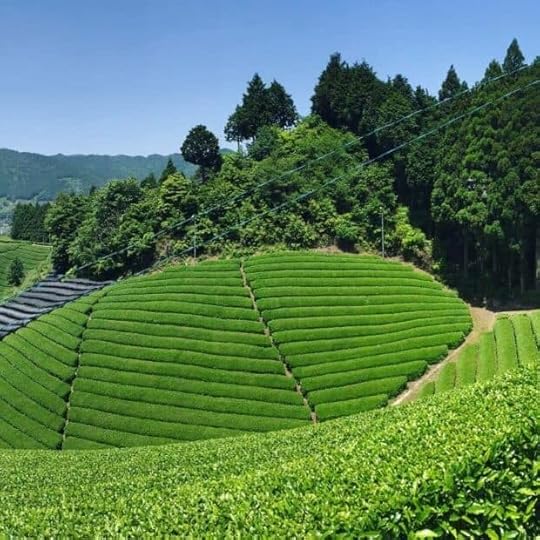
Mei has always struggled to be a part of the community. She grew up hating farming and hating her mother’s traditional cooking. She’s modern and outspoken. And if she had been better at being a part of her “community” in the city, she probably would have flourished there. But instead, she was fired and sent back home to the place where she always felt left out and alone.
Enter Yasahiro, the handsome and smart chef of the local slow-food restaurant. He also doesn’t really fit in, does he? The five years he spent in Paris learning to cook gourmet food changed him. His ideals are more European, more individual than communal.
Mei and Yasahiro make a good pair! They’re a lot alike, and though they both help the community in their own ways, they are still looked upon as different.
In THE DAYDREAMER DETECTIVE FINDS HER CALLING, we get to see both of them struggle with this “otherness.” Mei still wants to help her old-fashioned mother, but she doesn’t have the time to focus on her and her alone. Mei wants to spend more time at the tea shop where she helps elderly neighbors, but she also wants some independence to help solve crimes and be a mom. Yasahiro wants to serve the community with Sawayaka, but he’s become almost too famous for the small town and locals are getting upset. They both are trying to build a house, but strange things are happening on the property and sending workers to the hospital. Neither Mei nor Yasahiro believe in ghosts, so what is there to do?
Their struggles in this novel highlight the crossroads of being either an individual or part of the community.
I lifted the spoon from my bowl of stew slowly and asked myself one fundamental question. Was it worth it? Was all the bending-over-backwards favors and subjugating worth my health and happiness?
I had two choices moving forward. I could continue to put everyone else’s wants and needs first, above Yasahiro’s, Mari’s, or mine. Or I could start to assert some boundaries and rules for the sake of our sanity.
Thankfully, I knew Yasahiro was on my side.
How will Mei and Yasahiro manage their independent ways and still be a significant member of their community? You’ll have to read to find out!
I’m excited that, in this book, there was still so much more to explore of both Mei’s growth as a person and the evolution of her relationships with her friends and family, and also the town that she’s a part of.
The post The Japanese Mindset in the Miso Cozy Mysteries Series appeared first on Steph Gennaro.


November 2, 2020
Writing About Japan, Research, and Stereotypes
I am definitely not Japanese, though I often joke that I was Japanese in a former life (it’s the only way to explain my strong connection to Japan). I have a deep and abiding respect and admiration for the Japanese culture. I have studied Japan (and the Japanese language too, on and off) since 1998, and I consider myself to be pretty knowledgeable on their culture. But I am not Japanese. I never will be.
So what makes a white woman like me think that I can write Japanese characters?
Research, and lots of it.
Now, let’s think for a moment on writing anything. Very few authors can sit down and write any story without doing some sort of research. We can rarely rely solely on personal life experience. So, even though I’m writing outside of my race and culture, I would expect to have to do research about anything that I write.
It just so happens that I committed to writing cozy mysteries that take place in Japan. I sometimes wonder, “What was I thinking when I decided to write this story?” And then I laugh. Because I did have one particular goal in mind when I started writing the Miso Cozy Mysteries Series, and it was to educate people on Japanese culture. If you read my books and learn something about Japan, be it a few phrase words or different foods or clothing, that’s good enough for me. It means I succeeded in my goal and taught you something along the way.
Setting Goals
Each time I sit down to write a new book in this world, I make a clear set of goals for that book. There are my plot arc goals, individual character goals, and then the Japanese culture goals. Let’s put aside plot and character goals since most authors deal with those in every manuscript.
When I write a new book in the series, I try to do one or more of the following: introduce new Japanese vocabulary, highlight a period of Japanese history, tell a Japanese folktale, educate on a Japanese tradition, or celebrate a Japanese holiday. In most books, I hit all of these goals. For example, in OZONI AND ONSENS, I managed to: introduce new Japanese vocabulary, highlight Japanese New Year’s traditions, talk about hot springs and their rules, and show off new Japanese food.

Researching Each Goal
Once I have my Japanese goals set for each book, I research each one thoroughly before beginning my first draft. I use a multitude of mediums for research. First, there are all of the books on Japan I own (a sampling of which are featured above). Each one of them contains references on what I may be looking for, but at best, I may only get a brief sentence or two on the topic.
Once I have an idea of what I’m looking for, my next step is the internet. I find a lot of what I need on Wikipedia and the beauty of Wikipedia is the cross-article linking. Sometimes I know what I want to talk about, like the bathhouse that Kumi and her mother-in-law run. Doing research on bathhouses led me to paintings of Mount Fuji, and that led me to new thoughts about where I would take the story!
After Wikipedia, my next stop is usually YouTube. YouTube was where I walked the streets of Tokyo to remind myself of the sights and sounds there. YouTube helped me experience the sounds and space of a Japanese temple, and it also helped me understand the basic differences in language between different parts of Japan, the dialects.
But the best research I did on Japan happened seven years before I even wrote any of my books. My husband and I traveled to Japan in 2005, and it was the single best vacation of my life. I did not want to leave and come home. I felt very welcome and happy there. I took a million photos, we went on day trips, and I soaked in as much of Japan as I could.
I have been back to Japan two other times since then and I’m planning another trip for soon. Hopefully next year! The photo below shows my first time ever at Kamakura. I hope to go back there.

Writing outside your culture
 Let’s talk a little about stereotypes. Lots of people denounce stereotypes, right? Because a stereotype can be degrading, racist, and often wrong. But there’s a reason why stereotypes exist! A lot of people fit stereotypes on a superficial level, and they can be a good jumping off point for writing because the best part about stereotypes is booting them. Throwing them out the window. Shredding them to pieces.
There are a few Japanese stereotypes that many are familiar with: Japanese people are polite to a fault, Japanese people don’t like other people invading their personal space, Japanese people are perfectionists, Japanese people eat sushi all day every day, Japanese people are into anime and manga. Guess what? Most of these are false especially when describing ALL Japanese people. It does happen to describe many Japanese people. I’m sure there’s a few who eat sushi for breakfast, lunch, and dinner or maybe there are super polite Japanese people who are never mean to anyone. But Japanese people are just as varied as Americans or any other people on the planet.
What I enjoyed doing in the Miso Cozy Mysteries Series was introducing a few characters as stereotypical of Japanese behavior and then showing how they most certainly are not. Take Yasahiro Suga for example. Yasahiro is introduced as being this traditional Japanese chef with his pressed white and perfect veneer, but by the end of the book, we see his carefree side, the side that excited Mei. And he’s far from perfect too. He’s made a lot of mistakes and has a lot of regrets. He is a whole person, not a stereotype. Knowing the Japanese stereotypes first, researching them and understanding where they came from, helped me write better Japanese characters that both fit and debunked those same stereotypes.
I can’t stress how important research is on any project, but when writing outside of your culture, it’s paramount. I hear from a lot of authors about how they’re afraid to write outside of their culture, that they’ll “get it wrong.” I always tell them that if you do your research about the culture first, you won’t get it wrong! It’s easy to get simple things wrong like kimonos must be closed left over right side or not knowing the holidays because you didn’t research first. Everything after that is just your characters inhabiting the space you’ve provided for them. You build a whole person and then peel off the layers one by one until we, the reader, see their core.
The post Writing About Japan, Research, and Stereotypes appeared first on Steph Gennaro.
October 19, 2020
Japanese Izakaya Food
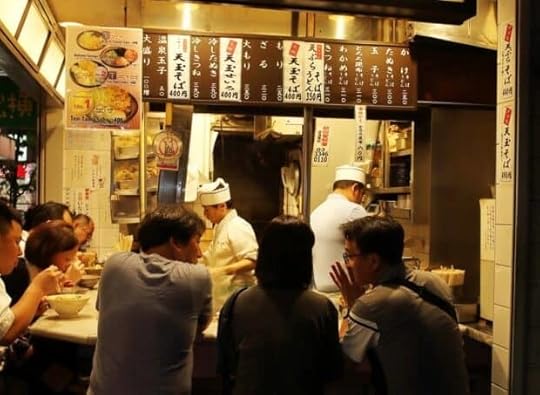
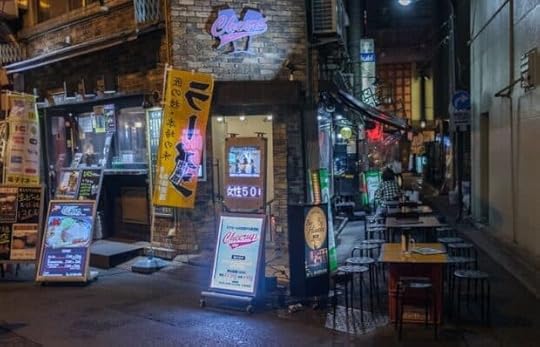
 When the work day is over, and it’s time to take a load off, grab a beer and get a bite to eat, the English have their pubs, and the Japanese have izakayas. Izakayas are a staple business in Japan. Every town has at least one, and Tokyo has thousands of them. Usually small and dark, out-of-the-way, tucked into a side alley or even in the back corner of a metro station, izakayas seat a small clientele every night. Their owners are sometimes the only staff, catering to a seated bar of maybe 8 to 10 customers. The larger izakayas will hold a few dozen people, but they are few and far between in Tokyo where there are over 160,000 restaurants.
I’m not going to lie to you, one of my life goals is to live in Tokyo and have the perfect neighborhood izakaya right downstairs where the owner knows my name, and I can get preferred seating. What a dream! That’s probably why for so many of my books including the Miso Cozy Mysteries, I was sure to include a well-known-in-town izakaya. I wanted a place where Mei and Yasahiro could gather with friends and family, a place for eating, drinking and sleuthing. Izakaya Jūshi (Izakaya Fourteen) was born of my many nights dreaming in bed of my own such place.

From Depositphotos.com – Editorial License
What is an izakaya like in Japan?
As I mentioned above, many izakayas can range in size from tiny little nooks to larger restaurant chains. The typical menu situation is usually nomihodai (all you can drink) or tabehodai (all you can eat). You eat or drink all you want for a set number of hours, then the bill is tallied and you leave. It’s not a pop-in and pop-out type meal.
From Depositphotos.com – Editorial License
Sitting in an izakaya for a meal means being there for a few hours. When you find an izakaya you like, you grab a seat and prepare for greatness. A wet, hot towel is first provided so that you can slough off the dirt of your day at work. You start your meal with beer and a lighter sushi, moving onto fried items and possibly some shochu (the Japanese equivalent of vodka), and finishing up with rice or noodles to fill your belly before heading home.
Some izakayas specialize in food like yakitori (grilled items including chicken, pork, seafood, and vegetables) or house-made tofu or pickles or ramen. The variety is staggering which is why this tradition of izakayas thrives so well in Japan. Many izakayas can exist in one town and not have an overlapping menu or clientele. When you factor in specialty drinks or cocktails, every izakaya becomes a gem.
What makes an izakaya special?
Sometimes it’s hard to pin down what makes a place special, you know? Maybe it’s the owner of the izakaya, an old woman who has owned the place for 45 years and knows what you like. Maybe it’s the decor? It’s hard to say! I looked at photos of izakayas for weeks and pinned down all of the elements that I loved about them before deciding on how describe them in my books. I guess I have my own izakaya already!
From Depositphotos.com – Editorial License
But the many people that I have known to live in Japan always talk about their favorite izakaya with glassed-over eyes and wistful expressions, remembering every meal and every drink they ever had there. I believe it’s a combination of things that makes an izakaya special to any one person. It’s the food, the atmosphere, the conversations exchanged there, and the jokes laughed over as each person pays their bills and stumbles into the streets home.
Need some izakaya at home?
I have this fantastic book called Izakaya: The Japanese Pub Cookbook that is full of delicious recipes and photographs of izakaya too. It’s a great introduction to izakayas and their food. If you can stop by an Asian grocery store and pick up some specialty ingredients, you’re good to go. But the best part of izakayas is really the atmosphere, so you also may want to look at this Pinterest board I put together of Izakayas not only in Japan but around the world. There may even be one in your town that you can go to! New York City has several, and I have friends across the country that report in to me about their favorites. My friend, Cori, loves Zen Box Izakaya in Minneapolis, and really, if you can get good izakayas in the middle of the Midwest, I’m sure there’s one nearby you can try out.
Check out my Pinterest board here: http://www.pinterest.com/spajonas/japanese-izakayas-izakaya-food/
Hopefully it’ll inspire you to Google nearby and try something out locally. Happy eating! Itadakimasu!
The post Japanese Izakaya Food appeared first on Steph Gennaro.
October 5, 2020
Top Ten Bento Box Ideas
Bento boxes are the equivalent of a packed lunch. The boxes themselves come in all shapes and sizes, some with compartments or little plastic lidded containers to hold a multitude of food. Bento boxes can be utilitarian or they can be fun! I’m dying to own a really cute Hello Kitty bento box with matching chopsticks. Collecting bento boxes could easily be an obsession of mine. I really need to stay away from ebay.
In The Miso Cozy Mysteries Series, Mei not only eats plenty of bento boxes but she sells them in her tea shop. She inherited a lot of bento boxes from a deceased friend, and she displays them right next to all the tea she sells too.
In general, a bento lunch will have at least 3 items but most likely more. Noodles or rice, salad, fish or meat, vegetables, dumplings, sushi… The variety is staggering. And a well-prepared meal by mom or a significant other conveys their love to you through food. What’s better than that?
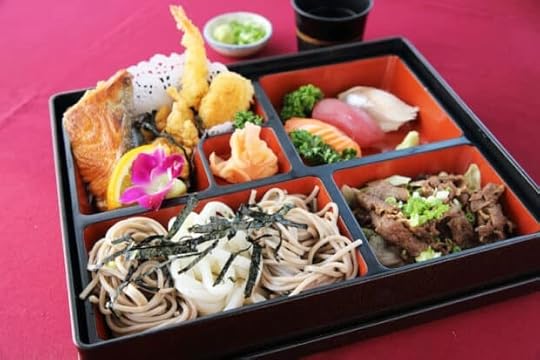
So, to get you started, here are my top ten bento box ideas:
10. Leftovers – I know this sounds like a cheat but it’s really the best way to get your bento started. You had beef stew last night for dinner, so put that in the box, add fresh carrots, a wedge of cheese, a packet of crackers, and a cookie and you’re good to go.
9. Onigiri – This is a Japanese staple food! Rice balls usually stuffed with something. You can stuff yours with cooked tuna or salmon, or try seaweed, or slice up some cucumbers and avocado to go inside. Buy an onigiri mold because they really help to get the ball into a shape for placing in your bento. Tip: place sheets of nori on the side to wrap your rice ball before eating. Don’t wrap them ahead of time! The nori will be wilted and tough to eat if it gets moist.
8. Hard-boiled eggs – And not just any hard-boiled eggs, get some egg molds! Ebay has hundreds of these and you can also buy them on Amazon. When you make your hard-boiled eggs, peel them while they’re still hot and press them into the mold. It’s important to do this while they’re still warm, otherwise it won’t work well.
7. Sliced meats – Or if you’re a vegetarian, your usual protein like baked tofu or even the fake deli meats, if you enjoy them. A protein in the meal that you can either handle with your fingers or chopsticks is a great addition.
6. Assortment of cut vegetables – Carrots, celery, cherry tomatoes. If you like Asian vegetables, go with seaweed salad, cooked lotus root, or bamboo shoots.
5. Veggie Sushi – Sushi is pretty easy to make at home. You’ll need sushi rice, nori, your vegetable of choice (avocado, carrots, cucumber, etc), and sushi rice seasonings (rice vinegar, sugar, salt). Cook your sushi rice in the rice cooker and add the seasoning. Then you can use plastic wrap and nori to roll it up. Here is one of many of great videos on Youtube to help.
4. Fried noodles – Go Asian and make fried noodles! I like these because they taste good cold. I’ll admit these fried noodles using packaged ramen look awesome. And these Supreme Soy Sauce Fried Noodles look like a winner as well.
3. Cut Sandwiches – Take you favorite sandwiches and cut them down to a more manageable size. Either slice them in half diagonally or use a large cookie cutter to spruce them up a bit.
2. A small dessert – I like to add a few packaged cookies or treats. Nothing too big. Fruit is also a good choice.
1. Create a theme – This is where it gets fun. Look through the Japanese Bento Box Ideas Pinterest board I made and get a feel for bentos that are themed. Lots of people do this as a hobby! Hello Kitty, Bunnies, Totoro, Cats, Hearts, Flowers, Ninjas… Whatever your passion, you can make it happen in a bento.

Hopefully these give you some ideas! If you’re wary of making your own, your local Japanese restaurant will usually have lunch bentos specials. Try one out!
Here are some great Japanese food blogs too, to get you started:
La Fuji Mama – Rachael, an American woman that lived in Japan, dishes out fantastic and easy meals with a heavy emphasis on Japan (she also cooks many cuisines from around the world)
Just Hungry/Just Bento – These two blogs will give you everything you need to know about Japanese food and plenty of recipes to make.
Humble Bean Blog – I love this blog because it’s divided easily into the types of recipes available. You’ll find a recipe for each part of your kaiseki meal here!
BentoLunch.Net
Happy Little Bento
Bento Monsters
And check out my Pinterest board on bentos! http://www.pinterest.com/spajonas/bento-box-ideas/
The post Top Ten Bento Box Ideas appeared first on Steph Gennaro.
September 21, 2020
Saké and Where To Start
Recently a friend of mine asked, “What’s the deal with hot saké? Is that an actual thing in Japan or just the way we serve it in America?” I have a feeling this is a very common question for Americans who know nothing about Japanese food besides sushi. They think saké is always served hot and there may be only a few varieties, and this couldn’t be further from the truth.
Let’s start with the basics. First of all, please do not call sake “SAH-KEY.” Saki is an entirely different word in Japanese, and you will get stares of incomprehension if you don’t pronounce it right. It’s “sah-kay” and sometimes in English we put an accent over the e to help you pronounce it correctly.
Ok, now that you know how to ask for it properly, you’re wondering, “Don’t I just ask for saké and take what they give me?” Depends. If you’re eating sushi at a little place not well-known for being authentic, probably. But if you’re lucky to happen upon a sushi restaurant or even an izakaya that serves a variety, this is where it gets fun!
What Is Saké?
Many think saké is on par with vodka or a similar clear alcohol, but really, it’s more like beer, and comes in just as many artisanal varieties and from many different regions just like beer in America. Saké is brewed, like beer is, but the main component is rice. If you’re looking for a hard alcohol made from rice, you should try shochu (and I’ll talk about that in the future). Saké is usually clear but can range in color, even taking on a caramel hue. It comes filtered and unfiltered, in big bottles and small, and is available in small handcrafted batches and from big distributors. Sounds familiar, right? And although beer is its own thing with many ingredients (and there are many different Japanese beers that are amazing too!), saké is its Japanese cousin. So, for this blog post and making saké easier to understand, I’ll use American beer comparisons.

Choosing Your First Saké
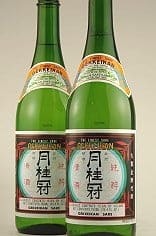 The most prevalent brand of saké in the U.S. is definitely Gekkeikan. I’m sure most people have seen it because it comes in small and REALLY large bottles. It’s what I would term as the Budweiser of saké, and I call it “The Gek” at home, as in, “Honey, bring a bottle of the Gek up from the basement, please!” I mainly use Gekkeikan for cooking, to be honest. It’s lower quality saké, in my opinion, but perfectly drinkable, if you drink it warm! The majority of lower quality saké is served warm to mellow out the harsh tones, and once it’s warm, I can put away a ridiculous amount of Gekkeikan. But, oh my god, the hangover!
So, in general, if this is the saké available to you, I highly recommend using it for cooking or drinking it hot on a night before you have a morning to recover. You have been warned. You can heat saké in a carafe by placing the carafe in a hot pot of water. If you’re short on time you can microwave it! Just make sure to stir it before serving to get rid of hot spots. I have just learned there are Japanese microwaves that have a saké button, like we have a popcorn button in the States. I love the Japanese.
If you have a liquor store that stocks other brands of saké, you’re in luck! There are a lot of decent saké sitting on liquor store shelves to choose from. This is where I, as a saké novice, have the most fun. The first thing I do when confronted with new saké is look at two things: the label and the price.
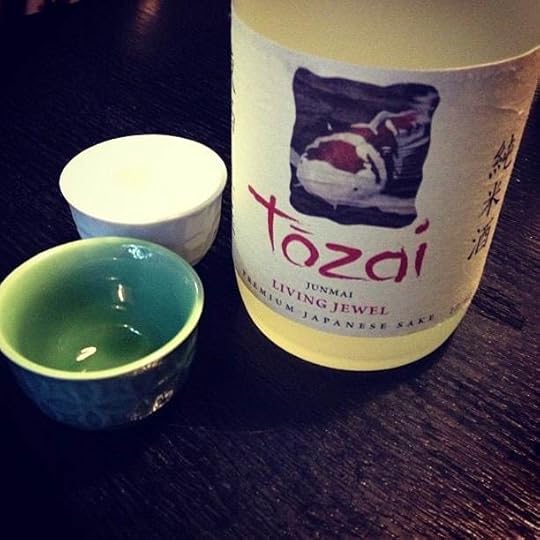
Here’s the label of my favorite “everyday” saké, Tozai “Living Jewel.” I find this at my local liquor store and it runs about $15 per bottle. $15 per bottle is what I consider to be the equivalent of buying Blue Moon beer over Budweiser, great for a small gathering of people sipping saké with a meal. There’s a lot you can learn from this label: grade, profile, prefecture (where it’s made), and the kind of rice used.
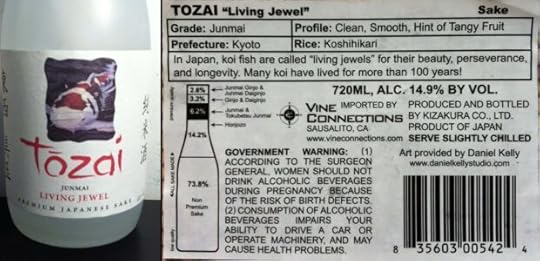
Tozai “Living Jewel”, my favorite store brand, and its back label
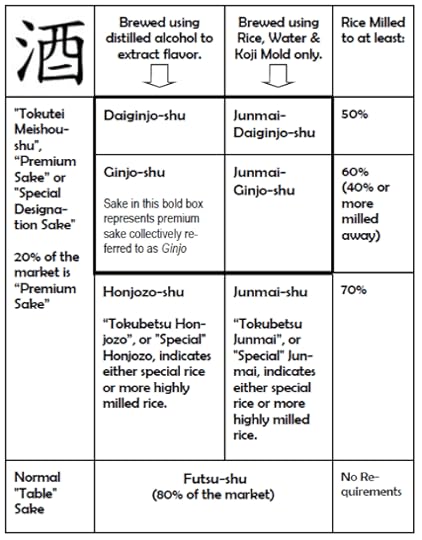
This chart gives you a good idea on how to read the saké label in the image above. I always drink tokubetsu junmai and above cold, and I like it for dinners at home. For hot saké, I drink the lower grade, Futsu-shu.
I always look at grade first. When I want a good, drinkable saké that’s served cold, I go with junmai grade or better. In general, the better the grade, the colder it’s served. When I drink Living Jewel, I pull it from the fridge and pour it into a double old-fashioned. No fancy saké cups. No pretensions. Just drink and enjoy.
So look at the label! Buy something in the junmai, tokubetsu (special) junmai, ginjo, or daiginjo (daiginjo being the best) grade.
Once you have a real interest and taste for saké and want more, try experimenting with saké from different regions. Recently, I’ve been buying from Iwate prefecture which was hit by the earthquake and tsunami. If you’re interested, here’s a great article from The Japan Times Online about Tohoku’s brewery one year on from the tsunami.
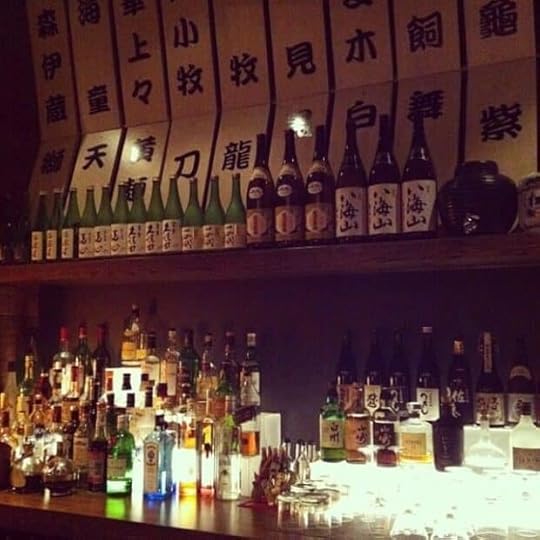
When I’m out at a saké bar in NYC, I buy Nanbu Bijin. It’s my favorite upscale saké from the Iwate prefecture.

If you’re wondering what kind of saké to drink when, then this scale is for you! But remember that you can drink saké just about any time. This scale is only for reference or if you’d like to be a little more sophisticated with your choices.
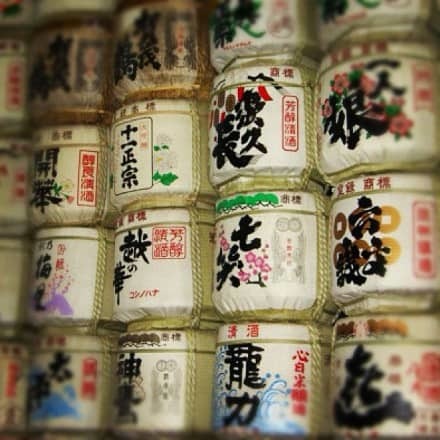
I’ve used plenty of my knowledge of saké in the Miso Cozy Mysteries Series. In MATSURI AND MURDER, we travel to Kayo’s hometown where her parents own a saké brewery.
Storing Your Saké
Rule of thumb: store saké how you bought it. If you bought it from the shelf, store it on the shelf. If you bought it from the cooler, store it in the fridge. If it’s served chilled, put it in the fridge ahead of time and then keep it there. Saké never goes bad! Seriously. I’ve bought saké, drank half the bottle, and then let it sit for up to three weeks before drinking more. It DOES change in flavor, though. Saké, as the brewer intended for it to taste, should be consumed within 24-48 hours of opening. When I’ve had a bottle in the fridge for a long time, I use it for cooking and then move onto a fresh bottle.
Feeling Adventurous?
You’re out at a nice Japanese restaurant, one that offers a wide variety of sakés, and are totally confused by the menu? Do yourself a favor, put on a smile and ask for a recommendation. I bet the waitstaff or bartender would be more than happy to help! In fact, if you can, ask for a tasting flight of saké. This is a great place to start. Try a few and figure out what you like best, then ask to see the bottle. I have been to many bars in NYC and done this. It’s not uncommon to find me taking out my iPhone and snapping a pic of the label so I won’t forget! It always makes the bartender smile.
Want more info?
I have three favorite saké books to recommend!
The Book of Saké: A Connoisseur’s Guide – This is great starter information with thorough background on types of saké, how to read the labels, how to pair saké with food, the regions and their styles.
Saké: A Modern Guide – Also great starter information but has a fun section full of saké cocktails and food to pair with saké.
The Saké Handbook – I use this to find common saké and learn more about it. It contains information on the top 100 brands and gives good tips for choosing a saké.
The post Saké and Where To Start appeared first on Steph Gennaro.
August 11, 2020
Female Sleuth Cozy Mysteries!
Today I have a very cool promotion to share with everyone! If you love female sleuths like Mei in the THE DAYDREAMER DETECTIVE, then you’ll love all these cozy mysteries with women leading the investigations!

→ Check out this Female Sleuth Cozy Mysteries promotion!
This promotion is available until August 31, 2020.
The post Female Sleuth Cozy Mysteries! appeared first on Steph Gennaro.
July 29, 2020
The Japanese Kotatsu
One of the beautiful things about Japan in the winter is the kotatsu. I’m sure this is something very foreign to most people so I thought I would expand on it today! A kotatsu is a low, heated table, a small, efficient way of heating a space rather than using central heating.
In THE DAYDREAMER DETECTIVE BRAVES THE WINTER, each of the homes mentioned in the book have a kotatsu and are used quite frequently. With the long winter ahead people will gather around the table, eat together, and be warmed from the feet up. The kotatsu is not unique to Japan. Low heated tables are quite common in other cultures as well, including in Iran, Afghanistan, Tajikistan, Spain, Portugal, and China, but the kotatsu has a special place in Japanese family life, and from basic kotatsu to deluxe versions with special lounging pillows, almost every home in Japan has one.

By Tim Notari (tastefulTN) – flickr.com (just a wee bit cropped), CC BY-SA 2.0, https://commons.wikimedia.org/w/index.php?curid=743925
There are two different kinds of kotatsu, one more modern and common than the other. In the past, kotatsu tables were heated from underneath using charcoal. High quality charcoal in Japan is virtually smoke-free, so it makes for a very good heating element. A low table placed over a pit with heated charcoal in it was the first iteration of the kotatsu. But if not careful, it could catch people or houses on fire, so its popularity died out as modern life took over. Now, kotatsu are heated using electrical elements. The table is then covered with a quilted blanket so heat may be trapped underneath. A stable tabletop is placed overtop the quilt, making a sandwich of the quilt and holding it in place. People can then eat or drink off the top! Even though the kotatsu is warm for both humans and animals alike, the warming effects are even more apparent while wearing a kimono. Sitting at the table, a kimono can be loosened from the waist down and the warm air can funnel up the fabric and heat the wearer all the way to his or her neck.
During the winter months, the kotatsu is the center of activity for a family. Meals are eaten at the kotatsu, television is watched, and naps are taken (though it is not a good place to sleep overnight). When people come to visit, the saké is brought out and everyone drinks together at the low heated table. There are days when I really wish I had a kotatsu of my own! In the meantime, I will continue to visit Mei in The Miso Cozy Mysteries Series and enjoy good food with her and her family around this wonderful invention, the Japanese kotatsu.
Don’t forget to continue with the Miso Cozy Mysteries Series!

Buy THE DAYDREAMER DETECTIVE BRAVES THE WINTER today!
The post The Japanese Kotatsu appeared first on Steph Gennaro.
July 15, 2020
Why Did You Switch To A Different Genre With THE DAYDREAMER DETECTIVE?
On my Other Name website, I was asked this question by a reader and I thought I would answer it here!
Diane asks me, “Why did you switch to a different genre with THE DAYDREAMER DETECTIVE?”
Great question, Diane! I often ask myself this very same question all the time. Lol. The prevailing opinions about self-published authors is that we should stick to one genre and build our audience there if we want to make money at being an author. “Make money” in my books would be over $1000 per month, which isn’t even minimum wage. Still, making $1000 per month is nothing to sneeze at. I make about that much PER YEAR, so that’s a goal for me to get to. Anyway, getting back to the question, every self-publishing expert will tell you that building an audience in your genre is necessary to having a long, money-making career as an indie author. They also say that if you want to write in more than one genre, you should get a pen name for the other genres so as not to confuse your readers. That’s what I’ve done here, I’ve moved my books over to Steph Gennaro to make it easier to distinguish between the two genres I write in.
So why would I switch? Let me tell you, this was a hard decision to make. I saw how I was doing with my sci-fi romance (it was only makes me $30/month on a good month in 2017) and I wondered if I just was never going to find an audience in sci-fi. It was totally possible that I never would, the signs pointed to NO, so I had to think hard about where to take my career next. I love writing mysteries (my sci-fi romances are mysteries at heart) and I loved the cozy mystery genre because I’m generally an upbeat writer who likes Happily Ever Afters. Cozy mysteries would be a good fit for me. I went for it and published my first on March 31st, 2016!
I’m still at the beginning of this journey! My first cozy mystery series is out, it has garnered some great reviews, and people seem to be enjoying it. Is it selling? Sometimes. Is it finding its audience? I hope so. Publishing is a hard business and overnight success is just not real for most of us. What mattered was finding the right path for me. Every decision I have made puts me closer to my goal!
Ultimately, the thing I’ve learned over the years is that I enjoy writing! I enjoy writing cozy mysteries and science fiction, so for the foreseeable future, I will concentrate on both, on this name and my Other Name.
So that’s why I switched! And I will soldier on, keep going until I have nothing left in me to give, which I hope is when I’m 90 or more.
Thanks for asking this question, Diane!
PS) I just listened to the Science Fiction and Fantasy Marketing Podcast this week and they discussed this very topic! They agree that genre hopping can be bad for your career, but Lindsey did point out that you may want to try a new genre if you’re not succeeding in the one you’re in. They did mention it’s like starting over, but I already knew that. So I’ll keep going with my two genres: cozy mystery and sci-fi!
If you have a question for me, too, leave it in the comments or feel free to send me a note via the contact page.
The post Why Did You Switch To A Different Genre With THE DAYDREAMER DETECTIVE? appeared first on Steph Gennaro.
July 1, 2020
Top 5 Traditional Japanese Dishes
When Mei first meets Yasahiro, the town’s newest bachelor chef, in THE DAYDREAMER DETECTIVE, it’s not all fireworks and lovelorn looks across the room. She’s been a fan of city-style fast food straight from the convenience store for the past ten years or more, and Yasahiro’s Japanese slow food cuisine makes her want to roll her eyes. In the beginning, she’s very skeptical, and even though he’s annoyed by her behavior, he still wants to prove to her that his food is better than anything you can buy at the local 7-Eleven.
When I think of typical traditional Japanese dishes, my mouth starts to water and I seek out the ingredients at my local grocer. Skipping over fresh, hot rice from the rice cooker, these are my top 5 traditional Japanese dishes.
Miso Soup – A staple at many Japanese meals, miso soup, made from miso paste dissolved in dashi stock and garnished with seaweed and tofu, is a light but hearty hot soup that is consumed at any time of the day. I usually make mine with packets from the store, but homemade is even better.
Sushi – Of course sushi! Probably one of the most well-known Japanese foods outside of Japan. It’s rice and raw fish or vegetables, rolled up in vinegared rice, and wrapped in nori seaweed. I make it at home occasionally, but I love it fresh from my favorite Japanese restaurant. In Japan, sushi was once “fast food,” eaten standing up with your fingers. Now, it’s that AND it can also be upscale and gourmet.
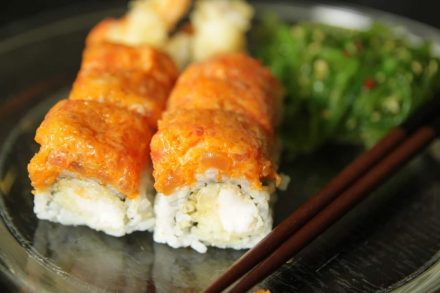
A super oishii sushi meal but sushi is just the tip of Japanese cuisine.
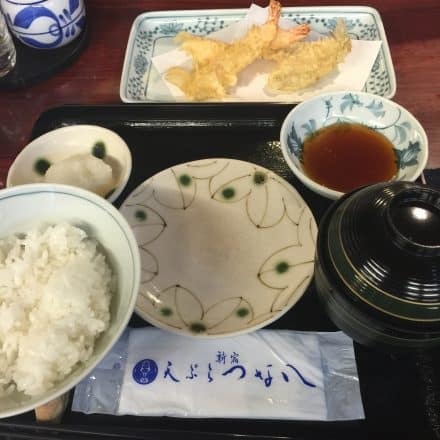
Tempura – Possibly one of my favorite Japanese foods, tempura refers to vegetables, fish, or meat, breaded and deep-fried, usually served with a dipping sauce and rice, but also can be put into noodle soup dishes. Sweet potato tempura is my all-time favorite. I’m getting hungry just thinking about it!
Yakitori – Walk any of the city streets in Japan and you’ll smell it, the sweet aroma of meat, fish, or vegetables cooked over charcoal. Chicken and beef yakitori, small bits on tiny wood skewers, are the most popular versions of yakitori. You’ll see them cooking over hot charcoals and someone diligently flipping them and fanning the smoke away. I love eel yakitori. Mmmm. And in the autumn, mountain vegetables cooked over charcoal are especially delicious.
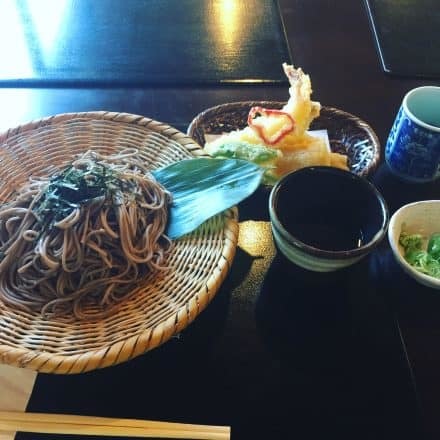
Soba and Udon – I had to put these two noodles together because they’re both quintessential Japanese dishes. Udon are white wheat noodles, usually thick and plump. Soba are darker, buckwheat noodles, usually cut thin. Both can be served in a variety of ways from cold with dipping sauces, in a bowl of soup or with curry ladled over them, or fried up with vegetables or meat. For an on-the-go meal, udon and soba cannot be beat. They’re filling, tasty, and affordable!
Now that I’m so hungry I could die, it’s time to go out and eat some delicious Japanese food!
Do you have a favorite Japanese dish? Tell me about it in the comments!
The post Top 5 Traditional Japanese Dishes appeared first on Steph Gennaro.
June 17, 2020
Top 5 Japanese Mysteries
Since I’m writing a mystery set in Japan for an English-speaking audience, I thought it might be fun to share my favorite Japanese mysteries, written about Japan or by Japanese authors. If there’s one thing to know about Japan before getting into their mysteries, it’s that they can be pretty graphic and gory. The first few I read were a bit disturbing, but I also couldn’t help but be drawn in by the stories. Maybe there’ll be a few here, you’d be interested in!
OUT by Natsuo Kirino – This is the quintessential Japanese mystery book because it’s based on actual events that occurred in Japan in the 1990s. This actually happened in my favorite park in Tokyo, Inokashira Park in Kichijoji, and I have since written this park into one of my other novels Summer Haikus (but I was careful to never mention the incident in that romance!) Anyway, body parts were found in trash bags in the garbage cans in this park and the murder was never solved. Since this murder happened, garbage cans have been removed from the park, and you have to take your trash with you when you leave. Out is murder mystery that uses this same technique to dispose of the body, but that’s only one little twisted piece of the puzzle. I promise you will never look at bento boxes the same way again.
ALL SHE WAS WORTH by Miyuki Miyabe – If you want a real look into Japanese culture, this is a good place to start. The crimes in this novel are mostly missing persons and credit troubles including theft, but you get the chance to see how the Japanese society is laid out and works so that people can game or move around in the system. I found this book fascinating for all the twists and turns along the way to the big reveal.
A WILD SHEEP CHASE and DANCE, DANCE, DANCE by Haruki Murakami – These two books comes as a pair and the mystery in them is both supernatural and not. As usual, Murakami draws from his background in magical realism to create a fantastical, other-worldly setting without leaving Tokyo. Who is the man in the sheep suit and what does he want? These books drew me in and captured me completely.
THE DRAGON SCROLL (Akitada Mysteries) by I. J. Parker – The Dragon Scroll is only the first book in a 15+ book series that takes place in ancient Japan. I’ve read the first five or six books in this series and really loved them. They’re not only clever mysteries but also give good insight into Japan’s past and the rules, cultures, and castes that shaped that time.
SHINJU (San Ichiro Novels) by Laura Joh Rowland – This is the one book on this list I haven’t read but has been on my Kindle waiting for me for a while. It comes very highly rated and talked about from friends, so I’m excited to start it. It also gives a lot of insight into Japanese culture and societal norms, along with a tragic murder of two people drowned in a river together. This is also a first book in a long series, so there’s plenty of reading material here!
These are only a taste of MANY mysteries set in Japan. Other authors you may want to consider in your search would be: Seicho Matsumoto, Keigo Higashino, Barry Lancet, and Sujata Massey (who writes the Rei Shimura Mysteries).