
Laura Resau's Blog, page 13
August 25, 2011
Reflections of a Conquistador, Afterward...

Hey all,
So, you may or may not know that during grad school in anthropology, I had an unusual research assistantship... I deciphered 500-year-old letters and journal entries written by Spanish conquistadores and missionaries about their misadventures in what is now the American Southwest. After I transcribed their scrawl on the computer, I translated it to English.
My main impression of these guys was, I must say, pretty bad. They behaved like drunken, horny, constipated frat boys much of the time (um, sorry to any devoted frat boy readers of mine out there). And in these guys' more "mature" moments, they elicited a shout of "You gotta be kidding me!" from me. I'm too lazy to find an exact quote at the moment, but they wrote stuff along the lines of, "We don't understand why these Savages don't want to embrace God's love..." and a few lines later, "We request permission to increase the Savages' punishment from 50 to 100 lashes for their disobedience." (Their disobedience included such diabolical atrocities as spiritual healing rituals and dances.) "Duh!" I'd shout at the ancient texts. "And you wonder why they don't want to be your best friend?!"
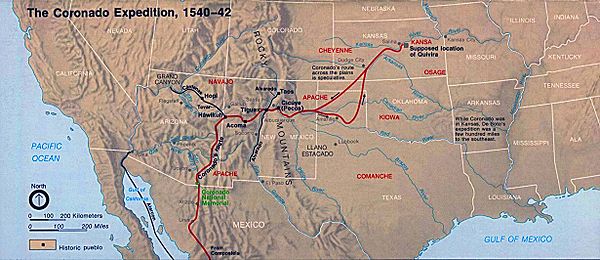
My overall opinion of most of these guys is low, although there were a few I liked, who showed evidence of deep thought, empathy, intellectual curiosity, and a bigger-picture understanding of what was happening. Here's something that Casteneda wrote in 1565, many years after his participation in an expedition in the Southwest. The quote's always struck me as so poignant that I have it taped in my writing area. The "they" that he refers to are the other guys who'd also come back from the expedition years earlier:
"Now, when they understand the situation they were in-- and see that they cannot enjoy it or re-live it-- now, when it is too late, they enjoy telling about what they saw, telling even about what they have lost.... especially those who are now as poor as when they went there.... I say this because I know several who have returned, who amuse themselves now by talking about what it would be like to go back and try to recover what has been lost..... while others try to find the reason why it was discovered at all. -- Casteneda, 1565, Spain
That feels so profound and multi-layered to me, especially that last part. I mean, we're talking about the conquest of the Americas... and it's just so human that those who participated would wistfully wonder, in their relatively old age, about the significance of the monumental event in their own lives and in the history of the world. There's this sadness and sense of regret that permeates all those layers, personal and historical...

Anyway, I thought I'd share that with you, since it's a quote I look at almost daily. And I've been noticing it even more lately since the new book I'm writing has some scenes in pre-Hispanic Mayan times... lately I've been taking out these dusty books I have on ancient Mayan cultures for research.
I won't tell you any more about the book for now... sorry to be mysterious, but it's at such an early stage, still taking form. I have about a hundred very rough pages written, and I'm LOVING this process. I'm at the blissful in-love stage, where the story feels exquisitely magical and I'm not ready to share it yet....
Thanks for reading!
*And Fort Collins friends, hope to see you at the party with Maria Virginia, coming up soon... Sept 8! See my events page for details.*
xo,
Laura (P.S. You might get the idea that this new book is historical fiction, but actually, that's just a tiny piece of it. It's mostly contemporary, and there's more magical/paranormal/supernatural/fantastical/speculative-fiction (whatever you want to call it) in this book that any of my other books. Okay, that's all for now! Bye!)
*photo credits: wikipedia


August 15, 2011
Deleted Scenes from THE QUEEN OF WATER...
Hi dear readers,
Like many writers of my generation (such as fellow Fort Collinite Becca Fitzpatrick), my early impression of creating a novel came from the movie Romancing the Stone. The first scene of the movie involves Kathleen Turner as a romance novelist, typing THE END on her manuscript and bawling at the catharsis.
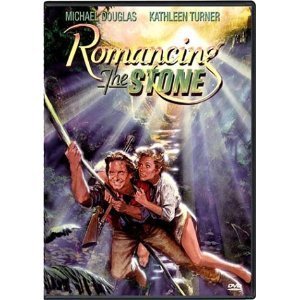
If I remember correctly, the next scene is basically her meeting with her editor about the manuscript-- implying that she (Joan Wilder) wrote the book beginning to end with no revising, cutting, adding, trimming.... and then, voila, THE END.
That is SO not my process (although, in all fairness, the "research" phases of my novel-writing have involved such adventures as potentially deadly bus wrecks on winding, muddy, cloud-forest roads in Latin America.)
My process, especially with The Queen of Water, involves writing two or three times as many scenes as actually end up in the novel. I think we (Maria Virginia Farinango and I) had over 1000 pages written for Queen over the years, which we ruthlessly had to chop chop chop (as if with machetes in the South American jungle....)
I thought you might be interested in seeing but one of the many, many pieces of manuscript that ended up being cut form the final version. This will be most meaningful to you if you've already read Queen. It was included in one of the first original chapters of an early draft, beginning when Virginia is still living with her parents. Note that it's rough, and never got revised or polished much, so the prose isn't anything special.... but it will give you an idea of the kinds of decision-making we had to do-- which parts of her life to keep and which to cut.... not easy!
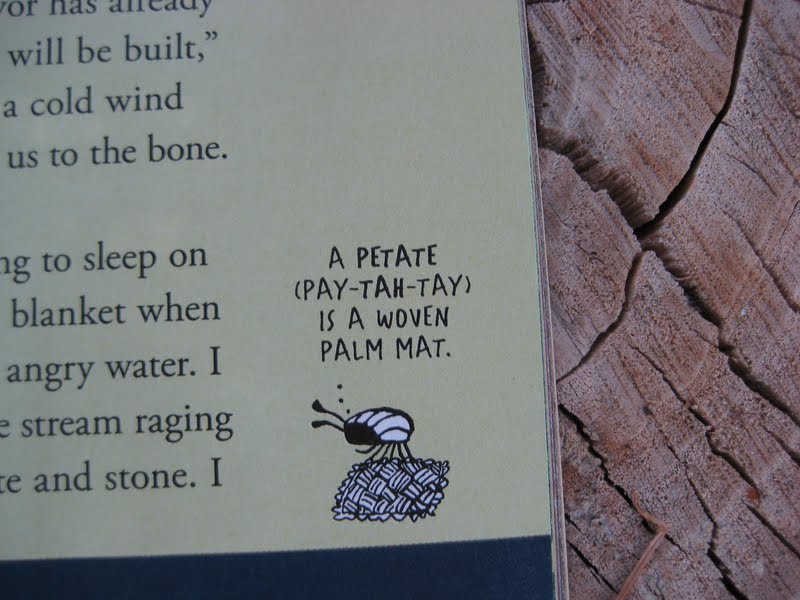
. . . There were people who drizzled me with words like cusaco, sweetie, honey: Uncle Gregorio and Aunt Virginia. Every time we visited, Uncle Gregorio would sit me on his lap and feed me cheese. "Here, cusaco, especially for you." And Aunt Virginia always gave me foam on the milk, the best piece of meat, a bowl of shiny blackberries. Uncle Gregorio and Aunt Virginia couldn't have children of their own. They had love inside them and no children to give it to, so they gave it to me. Of all the nieces and nephews, they chose me. Even though their house was smaller and poorer than ours—just one tiny room of earth and straw-- and even though it was higher in the mountains where cold winds blew, their house had a warm, peaceful feeling. I always felt filled up when I visited, my belly full of good food, my heart full of love. Uncle Gregorio didn't have his own crops like my family did, just some onion patches near the house. He'd owned fields before, but the mestizos tricked him with their papers and took away his land. So he traveled to the hot coast and worked at sugar cane plantations for months at a time, and he always brought back the sugar sap for me to drink, because I was his favorite. I remembered one time when he'd brought a drink called guarapo. The grownups had all been drinking it, and although no one had offered it to me, I'd poured some in my cup. It was sweet and strong and made my mouth tingle all the way down my throat to my chest. Delicious, I thought, just like honey, and I drank the whole cup. I felt glowing and happy at first, and then, suddenly dizzy, and the world began to spin. Next thing I knew, I'd fallen over, my face splat onto the dirt floor. The grownups stopped talking and stared. Uncle Gregorio looked puzzled for a moment and then a smile came over his face. "Virinia, cusaco, did you drink this guarapo? I pushed myself up and wobbled my head. "You drank this? Why, you're drunk, cusaco, aren't you!" And he laughed, and then all the grownups laughed and I laughed too, because it seemed very, very funny. Uncle Gregorio had me drink two cups of water, and then he put me on his lap and patted my back and said, "You're my treasure, Virginia." And I felt like a treasure, shiny as gold. So the night after Mamita told me she'd be happy if I left forever, I decided to leave forever. I would run away to Aunt Virginia and Uncle Gregorio, people who wanted me. As I drifted off, Mamita's hurtful words faded a little, and instead, I heard, my daughter, she can do it. I can do it, I said to myself. I can leave forever.# Early the next morning, when the first rooster crowed, I got up and prepared for my journey. In the blue light of dawn, I wrapped my other anaco and blouse in a scrap of fabric, and headed to Aunt Virginia and Uncle Gregorio's house. I remembered the road because it was the route to fields we sometimes worked, high in the mountains. I walked for a long time as the sun rose and started making its arc across the sky. Whenever I heard the rumble of a car, my stomach jumped and I hid in bushes at the roadside until it passed in a cloud of dust. I didn't want anyone stealing me. I'd heard that sometimes people did that, mishos They stole children. The farther into the mountains I walked, the fewer houses I passed. Quinoa fields replaced cornfields; in these parts, it was too cold for corn to grow. The wind grew stronger, tearing at my clothes and burning my eyes. I stayed warm enough, though, because the uphill walking made my heart beat fast and my blood rush. Once the sun moved to the top of the sky and started sinking toward the mountains, I started feeling very hungry and wondered if I'd get there before dark. I picked up my pace and sang my favorite song, The Little Radish, over and over again. Finally, late in the afternoon, I rounded the curve and there was Aunt Virginia's and Uncle Gregorio's hut. I walked inside and stood there as my eyes adjusted to the darkness. "Virginia!" my aunt cried. "Cusaco! What are you doing here? Who did you come with?" Slowly her figure came into focus. She was crouched by the cooking fire, a half-peeled potato in one hand, and a knife in the other. Her eyes were wide circles of surprise. "No one," I said. "I came alone." "Alone?" "My mother told me to leave the house." And here my voice started wavering and the tears leaked out. "She said they didn't want me anymore." "What!" Aunt Virginia's face turned red as a radish. "Your mother's lucky to have a little girl like you. She should love you and care for you." I sniffed and wiped my nose with the back of my hand. "Come here, cusaco. Sit down and drink some milk." I knelt by the cooking fire, on the woven mat. Aunt Virginia ladled me a cup of milk with plenty of foam on top. I gulped it down in one long swig and she ladled another cup. After the soup was ready-- potato and cheese—she served me the biggest potatoes and watched me eat. The milk and cheese came straight from their cows, and it was delicious and silky-creamy. Soon Uncle Gregorio came home, and when he saw me, his mouth dropped open. "Virginia, cusaco, what are you doing here?" I started crying all over again when I told him Mamita's words. He patted my shoulder. "Cusaco, your parents are probably worried and looking for you." "No, they aren't," I hiccupped between sobs. "They don't want me." Uncle Gregorio looked at Aunt Virginia. Her lip quivered like water about to boil. Then Uncle Gregorio put me on his lap and said, "All right, cusaco, you can stay with us."#
Every day, I worked in the potato fields with Aunt Virginia and Uncle Gregorio. I ate lots of cheese and drank lots of milk topped with foam. No one insulted me or yelled at me or called me a brat. I did not miss Mamita or Papito. In the evenings, when it was cold and my feet felt chilled and numb, Uncle Gregorio held my feet in his rough hands until my feet warmed up. When he asked me if my feet felt warm yet, I said, "Not yet, Uncle," because I wanted his hands to stay wrapped around my feet. One day, as Uncle Gregorio and I were pulling weeds in the potato field, the owner of the field, a mestizo, swaggered up to us, in that special way mestizos swagger, as though they own everything, not only the land beneath their feet, but the people on the land, too. He lived in a big white hacienda nearby, and he often stopped by and spoke to me. "You're a smart little girl," he would tell me, and ask me some questions, and I would answer, and he would chuckle, and then continue on his way. But this day, after he told me I was smart, he turned to my uncle and said, "Could you give her to me?" My skin grew cold with sudden fear. No! I screamed inside. Don't give me to that misho! If I went with the misho, I might disappear. And I didn't want to disappear, especially now that I was with people who loved me and called me cusaco. I looked to Uncle Gregorio and held my breath. Uncle Gregorio smiled and shook his head. "Sorry, Patroncito, but Virginia is our treasure." That evening by the light of the kerosene lamp, I said, "Uncle Gregorio, I'm glad you didn't give me away to that misho." Uncle Gregorio set me on his lap and said, in a soft voice, "Oh, Virginia, cusaco, how could you think I'd give you away? You're going to stay with us." His voice trembled. "You're our daughter now."# One day, after weeks of bliss, I was outside playing, when I saw Mamita walking up the path toward the house. Fear split my insides like a machete through wood. I ran inside the house and hid, curled up in the corner by the guinea pigs. Soon I heard Mamita's voice, just outside, talking with Aunt Virginia, who was feeding the chickens. I prayed Aunt Virginia would tell Mamita that I was her daughter now and send Mamita away. But no, they were talking and laughing. I stayed quiet, wishing I could melt into the shadows, or maybe turn into a guinea pig until Mamita left. Aunt Virginia came in the house, and Mamita followed. My muscles clenched. Mamita spoke to me in a flat voice. "Why did you leave without telling us?" I didn't answer. "You're a disobedient brat who does whatever she wants." Aunt Virginia said, "If she gives you so much trouble, why not let us keep her? You know how much we want a child." Mamita laughed. "Sure, I'd love you to take her off my hands. You'd be doing me a favor." "I'm serious. We love her." Aunt Virginia's eyes shone like deep mountain lakes. "Virginia's smart and obedient and we'll treat her as our daughter." Something washed over Mamita's face, the understanding that my aunt really wanted to keep me. Mamita's smile straightened into a thin, hard line. "How could you think I'd give up my daughter? There's enough food in our house for all my children. How could I give her up? She's my daughter." And at that moment you could almost believe that my mother really truly wanted me. Aunt Virginia was quiet for a moment, and then she said in nearly a whisper, "You have other children, and I've noticed you don't treat Virginia as well as them." Mamita turned her face away so all I could see was the whites of her eyes. She was angry. "Sister-in-law," Aunt Virginia said. "God hasn't given us children. Do you know how much…" Her face seemed to crack open like an egg. "Please." Tears filled her eyes. "We'll bring Virginia to visit you often." Mamita spoke to me. "We're leaving. Let's go, Virginia." In a kind of daze, I wrapped my extra anaco and blouse in my scrap of fabric and said goodbye to Aunt Virginia. She dropped to her knees on the floor and watched me follow Mamita out of the house. On the long walk back, I tried not to cry. I tried to tell myself it was better this way, because after all, I had missed my brother and sister a little. And Aunt Virginia and Uncle Gregorio were very poor and it might have been hard for them to feed an extra mouth. And I did eat a lot. Their cow could barely keep up with all the milk and cheese I devoured. # My time with Aunt Virginia and Uncle Gregorio gave me a dose of love that would help me through the months and years that followed. Not long after I left, Aunt Virginia and Uncle Gregorio would adopt a little girl, Josefina, who reminded them of me. Josefina would marry at age fourteen, like most girls in their village, and start having babies a year later. Her husband would beat her ruthlessly, and when she couldn't bear it any longer, she would abandon him and her children. Would that have been my fate if I'd stayed? Sometimes I wonder if that small life with my aunt and uncle was simply not my destiny. I wonder if the bad things that blocked my path forced me to find another path—a path that would lead to a better place around the bend. A path that was rocky and steep, but lined with hidden berries and cool springs and treasures waiting to be discovered. A path that allowed me to choose which words to listen to. My daughter, she can do it. Yes, I can do it. Yes, anything is possible if I want it enough. These were the words I would stubbornly choose. These were the words that would save me. #
Hi-- me again! Hope that was interesting for you. I was attached to that chapter because my husband and I were unable to have a baby, and I could really empathize with Virginia's aunt and uncle, who longed for a child so desperately, but were unable to have one.... and meanwhile, they had to see this girl they loved being abused and neglected so terribly... really tragic. But ultimately, we decided to cut this scene because it didn't really give much new information about the dynamic of Virginia's immediate family, it introduced characters who would never come back into the story, and it didn't make the story feel more urgent.
In early drafts, there were several chapters (maybe a hundred pages or so) that occurred before Virginia even left her village to leave with the mestizos. We felt there wasn't enough narrative tension in these chapters to draw readers in.... so we condensed many of these chapters to very short flashbacks and incorporated them as memories woven into the action after Virginia goes to live with the mestizos.
Enough for now-- this post is long enough! Thanks for reading....
Cheers,Laura

Like many writers of my generation (such as fellow Fort Collinite Becca Fitzpatrick), my early impression of creating a novel came from the movie Romancing the Stone. The first scene of the movie involves Kathleen Turner as a romance novelist, typing THE END on her manuscript and bawling at the catharsis.
If I remember correctly, the next scene is basically her meeting with her editor about the manuscript-- implying that she (Joan Wilder) wrote the book beginning to end with no revising, cutting, adding, trimming.... and then, voila, THE END.
That is SO not my process (although, in all fairness, the "research" phases of my novel-writing have involved such adventures as potentially deadly bus wrecks on winding, muddy, cloud-forest roads in Latin America.)
My process, especially with The Queen of Water, involves writing two or three times as many scenes as actually end up in the novel. I think we (Maria Virginia Farinango and I) had over 1000 pages written for Queen over the years, which we ruthlessly had to chop chop chop (as if with machetes in the South American jungle....)
I thought you might be interested in seeing but one of the many, many pieces of manuscript that ended up being cut form the final version. This will be most meaningful to you if you've already read Queen. It was included in one of the first original chapters of an early draft, beginning when Virginia is still living with her parents. Note that it's rough, and never got revised or polished much, so the prose isn't anything special.... but it will give you an idea of the kinds of decision-making we had to do-- which parts of her life to keep and which to cut.... not easy!
. . . There were people who drizzled me with words like cusaco, sweetie, honey: Uncle Gregorio and Aunt Virginia. Every time we visited, Uncle Gregorio would sit me on his lap and feed me cheese. "Here, cusaco, especially for you." And Aunt Virginia always gave me foam on the milk, the best piece of meat, a bowl of shiny blackberries. Uncle Gregorio and Aunt Virginia couldn't have children of their own. They had love inside them and no children to give it to, so they gave it to me. Of all the nieces and nephews, they chose me. Even though their house was smaller and poorer than ours—just one tiny room of earth and straw-- and even though it was higher in the mountains where cold winds blew, their house had a warm, peaceful feeling. I always felt filled up when I visited, my belly full of good food, my heart full of love. Uncle Gregorio didn't have his own crops like my family did, just some onion patches near the house. He'd owned fields before, but the mestizos tricked him with their papers and took away his land. So he traveled to the hot coast and worked at sugar cane plantations for months at a time, and he always brought back the sugar sap for me to drink, because I was his favorite. I remembered one time when he'd brought a drink called guarapo. The grownups had all been drinking it, and although no one had offered it to me, I'd poured some in my cup. It was sweet and strong and made my mouth tingle all the way down my throat to my chest. Delicious, I thought, just like honey, and I drank the whole cup. I felt glowing and happy at first, and then, suddenly dizzy, and the world began to spin. Next thing I knew, I'd fallen over, my face splat onto the dirt floor. The grownups stopped talking and stared. Uncle Gregorio looked puzzled for a moment and then a smile came over his face. "Virinia, cusaco, did you drink this guarapo? I pushed myself up and wobbled my head. "You drank this? Why, you're drunk, cusaco, aren't you!" And he laughed, and then all the grownups laughed and I laughed too, because it seemed very, very funny. Uncle Gregorio had me drink two cups of water, and then he put me on his lap and patted my back and said, "You're my treasure, Virginia." And I felt like a treasure, shiny as gold. So the night after Mamita told me she'd be happy if I left forever, I decided to leave forever. I would run away to Aunt Virginia and Uncle Gregorio, people who wanted me. As I drifted off, Mamita's hurtful words faded a little, and instead, I heard, my daughter, she can do it. I can do it, I said to myself. I can leave forever.# Early the next morning, when the first rooster crowed, I got up and prepared for my journey. In the blue light of dawn, I wrapped my other anaco and blouse in a scrap of fabric, and headed to Aunt Virginia and Uncle Gregorio's house. I remembered the road because it was the route to fields we sometimes worked, high in the mountains. I walked for a long time as the sun rose and started making its arc across the sky. Whenever I heard the rumble of a car, my stomach jumped and I hid in bushes at the roadside until it passed in a cloud of dust. I didn't want anyone stealing me. I'd heard that sometimes people did that, mishos They stole children. The farther into the mountains I walked, the fewer houses I passed. Quinoa fields replaced cornfields; in these parts, it was too cold for corn to grow. The wind grew stronger, tearing at my clothes and burning my eyes. I stayed warm enough, though, because the uphill walking made my heart beat fast and my blood rush. Once the sun moved to the top of the sky and started sinking toward the mountains, I started feeling very hungry and wondered if I'd get there before dark. I picked up my pace and sang my favorite song, The Little Radish, over and over again. Finally, late in the afternoon, I rounded the curve and there was Aunt Virginia's and Uncle Gregorio's hut. I walked inside and stood there as my eyes adjusted to the darkness. "Virginia!" my aunt cried. "Cusaco! What are you doing here? Who did you come with?" Slowly her figure came into focus. She was crouched by the cooking fire, a half-peeled potato in one hand, and a knife in the other. Her eyes were wide circles of surprise. "No one," I said. "I came alone." "Alone?" "My mother told me to leave the house." And here my voice started wavering and the tears leaked out. "She said they didn't want me anymore." "What!" Aunt Virginia's face turned red as a radish. "Your mother's lucky to have a little girl like you. She should love you and care for you." I sniffed and wiped my nose with the back of my hand. "Come here, cusaco. Sit down and drink some milk." I knelt by the cooking fire, on the woven mat. Aunt Virginia ladled me a cup of milk with plenty of foam on top. I gulped it down in one long swig and she ladled another cup. After the soup was ready-- potato and cheese—she served me the biggest potatoes and watched me eat. The milk and cheese came straight from their cows, and it was delicious and silky-creamy. Soon Uncle Gregorio came home, and when he saw me, his mouth dropped open. "Virginia, cusaco, what are you doing here?" I started crying all over again when I told him Mamita's words. He patted my shoulder. "Cusaco, your parents are probably worried and looking for you." "No, they aren't," I hiccupped between sobs. "They don't want me." Uncle Gregorio looked at Aunt Virginia. Her lip quivered like water about to boil. Then Uncle Gregorio put me on his lap and said, "All right, cusaco, you can stay with us."#
Every day, I worked in the potato fields with Aunt Virginia and Uncle Gregorio. I ate lots of cheese and drank lots of milk topped with foam. No one insulted me or yelled at me or called me a brat. I did not miss Mamita or Papito. In the evenings, when it was cold and my feet felt chilled and numb, Uncle Gregorio held my feet in his rough hands until my feet warmed up. When he asked me if my feet felt warm yet, I said, "Not yet, Uncle," because I wanted his hands to stay wrapped around my feet. One day, as Uncle Gregorio and I were pulling weeds in the potato field, the owner of the field, a mestizo, swaggered up to us, in that special way mestizos swagger, as though they own everything, not only the land beneath their feet, but the people on the land, too. He lived in a big white hacienda nearby, and he often stopped by and spoke to me. "You're a smart little girl," he would tell me, and ask me some questions, and I would answer, and he would chuckle, and then continue on his way. But this day, after he told me I was smart, he turned to my uncle and said, "Could you give her to me?" My skin grew cold with sudden fear. No! I screamed inside. Don't give me to that misho! If I went with the misho, I might disappear. And I didn't want to disappear, especially now that I was with people who loved me and called me cusaco. I looked to Uncle Gregorio and held my breath. Uncle Gregorio smiled and shook his head. "Sorry, Patroncito, but Virginia is our treasure." That evening by the light of the kerosene lamp, I said, "Uncle Gregorio, I'm glad you didn't give me away to that misho." Uncle Gregorio set me on his lap and said, in a soft voice, "Oh, Virginia, cusaco, how could you think I'd give you away? You're going to stay with us." His voice trembled. "You're our daughter now."# One day, after weeks of bliss, I was outside playing, when I saw Mamita walking up the path toward the house. Fear split my insides like a machete through wood. I ran inside the house and hid, curled up in the corner by the guinea pigs. Soon I heard Mamita's voice, just outside, talking with Aunt Virginia, who was feeding the chickens. I prayed Aunt Virginia would tell Mamita that I was her daughter now and send Mamita away. But no, they were talking and laughing. I stayed quiet, wishing I could melt into the shadows, or maybe turn into a guinea pig until Mamita left. Aunt Virginia came in the house, and Mamita followed. My muscles clenched. Mamita spoke to me in a flat voice. "Why did you leave without telling us?" I didn't answer. "You're a disobedient brat who does whatever she wants." Aunt Virginia said, "If she gives you so much trouble, why not let us keep her? You know how much we want a child." Mamita laughed. "Sure, I'd love you to take her off my hands. You'd be doing me a favor." "I'm serious. We love her." Aunt Virginia's eyes shone like deep mountain lakes. "Virginia's smart and obedient and we'll treat her as our daughter." Something washed over Mamita's face, the understanding that my aunt really wanted to keep me. Mamita's smile straightened into a thin, hard line. "How could you think I'd give up my daughter? There's enough food in our house for all my children. How could I give her up? She's my daughter." And at that moment you could almost believe that my mother really truly wanted me. Aunt Virginia was quiet for a moment, and then she said in nearly a whisper, "You have other children, and I've noticed you don't treat Virginia as well as them." Mamita turned her face away so all I could see was the whites of her eyes. She was angry. "Sister-in-law," Aunt Virginia said. "God hasn't given us children. Do you know how much…" Her face seemed to crack open like an egg. "Please." Tears filled her eyes. "We'll bring Virginia to visit you often." Mamita spoke to me. "We're leaving. Let's go, Virginia." In a kind of daze, I wrapped my extra anaco and blouse in my scrap of fabric and said goodbye to Aunt Virginia. She dropped to her knees on the floor and watched me follow Mamita out of the house. On the long walk back, I tried not to cry. I tried to tell myself it was better this way, because after all, I had missed my brother and sister a little. And Aunt Virginia and Uncle Gregorio were very poor and it might have been hard for them to feed an extra mouth. And I did eat a lot. Their cow could barely keep up with all the milk and cheese I devoured. # My time with Aunt Virginia and Uncle Gregorio gave me a dose of love that would help me through the months and years that followed. Not long after I left, Aunt Virginia and Uncle Gregorio would adopt a little girl, Josefina, who reminded them of me. Josefina would marry at age fourteen, like most girls in their village, and start having babies a year later. Her husband would beat her ruthlessly, and when she couldn't bear it any longer, she would abandon him and her children. Would that have been my fate if I'd stayed? Sometimes I wonder if that small life with my aunt and uncle was simply not my destiny. I wonder if the bad things that blocked my path forced me to find another path—a path that would lead to a better place around the bend. A path that was rocky and steep, but lined with hidden berries and cool springs and treasures waiting to be discovered. A path that allowed me to choose which words to listen to. My daughter, she can do it. Yes, I can do it. Yes, anything is possible if I want it enough. These were the words I would stubbornly choose. These were the words that would save me. #
Hi-- me again! Hope that was interesting for you. I was attached to that chapter because my husband and I were unable to have a baby, and I could really empathize with Virginia's aunt and uncle, who longed for a child so desperately, but were unable to have one.... and meanwhile, they had to see this girl they loved being abused and neglected so terribly... really tragic. But ultimately, we decided to cut this scene because it didn't really give much new information about the dynamic of Virginia's immediate family, it introduced characters who would never come back into the story, and it didn't make the story feel more urgent.
In early drafts, there were several chapters (maybe a hundred pages or so) that occurred before Virginia even left her village to leave with the mestizos. We felt there wasn't enough narrative tension in these chapters to draw readers in.... so we condensed many of these chapters to very short flashbacks and incorporated them as memories woven into the action after Virginia goes to live with the mestizos.
Enough for now-- this post is long enough! Thanks for reading....
Cheers,Laura
August 8, 2011
Interview with Maria Virginia-- the Queen of Water (20 years later)!
 Maria Virginia Farinango (aka the Queen of Water)
Hello dear readers!
You may not realize that I sneakily add stuff to my website all the time... sometime it's buried deep in pages within pages... and getting to it is kind of like spelunking. Here's one such item: an interview with Maria Virginia Farinango, my good friend and co-author of The Queen of Water.
How has Ecuadorian society changed since your childhood?
MV: There have been many positive changes. Today in Ecuador, in general, indigenous people are able to get an education. Otavaleno (Quichua) indigenous people have become more famous in the world. Through playing music and selling crafts, they have become very successful, financially speaking. There are even indigenous doctors and lawyers now, too. There are still some indigenous girl servants, but far fewer, and they are paid better and treated better now. They are considered more human.
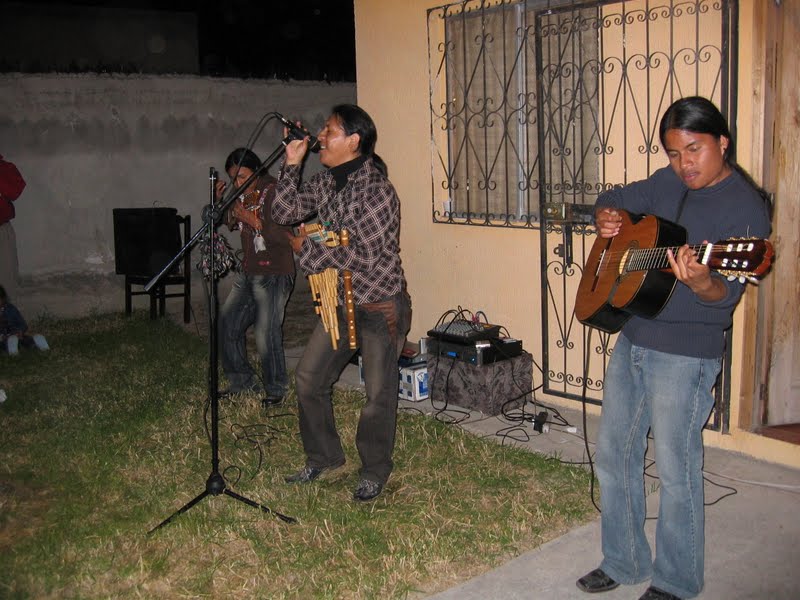
Maria's husband, Tino (in checked shirt)-- amazing musician. In their front yard.
What changes still need to be made in Ecuadorian society?
MV: There should be better educational opportunities and a wider, more open-minded perspective. I'm able to get a different perspective during my travels in Colorado. Sometimes, when I meet people who learn that I'm indigenous, they say something like, "Me too, I'm indigenous! My great-great grandmother was Native American!" I see that they greatly value being indigenous. Through education and travel, we open our minds and learn to value other people, especially indigenous people.
 Maria Virginia and her Colorado friends
What messages do you hope people will take from your story?
MV: The idea that you have your life or situation because you decided to be there-- you can decide: Today is a new day, yesterday has passed. Today I'll begin anew. God gave us the power to choose, good or bad, and to overcome obstacles.
What happened after the story ends?
MV: I became involved in social and academic activities, and community development work in my village. I won more competitions similar to the Queen competition in the book, and I was voted class president. I also competed in running events, and did public speaking on topics like education. I dabbled in TV and radio programs, too. Then I got married to my husband Tino, who is also indigenous-- he's an Andean musician. I began college, then had a baby and devoted time to my family and craft shows. Now, after the long break, I'm completing my degree in psychology.
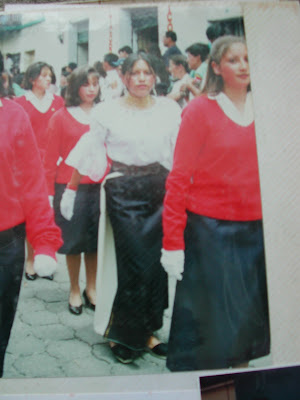 Maria Virginia at her high school graduation
Tell us about your life now, 20 years after the book ends.
MV: I feel very happy! I have a wonderful life. Although I don't have many material possessions, I have the love of my husband, my child, and God. We have a good relationship, which is a treasure to me. I love traveling and learning. I'm grateful that I've had many successes in my life. I live in Otavalo now, where I study and work, and I try to come to Colorado every fall. (NOTE: YOU CAN MEET MARIA THIS SEPTEMBER 2011 IN FT COLLINS AND LOVELAND. SEE HERE FOR DETAILS!)
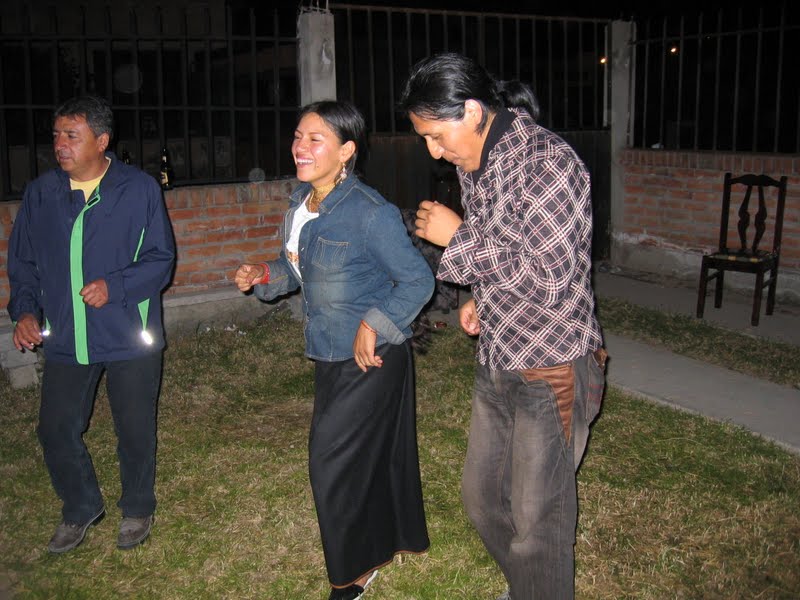 Maria and her husband Tino (checked shirt) dancing at a party in their yard in Otavalo
 Tell us about your experiences being a mother. How did your childhood experiences affect your relationship with your son and husband?
MV: Being a mother and wife is wonderful. I feel I can say thank you after all the difficult things I've experienced that make me appreciate my life now. I was unhappy during the hard times, but that was how I learned to appreciate what I have now.
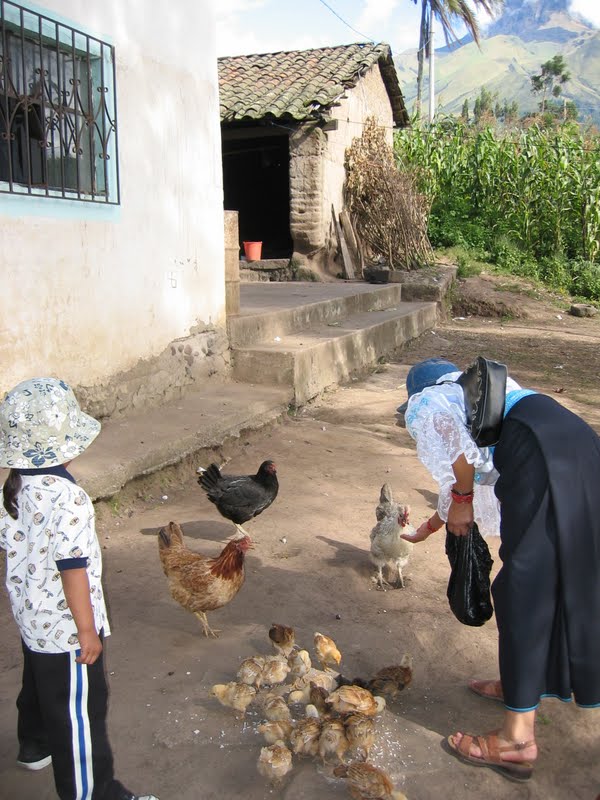
feeding chickens with her son at his paternal grandparents' house
You can read the rest of the interview here!
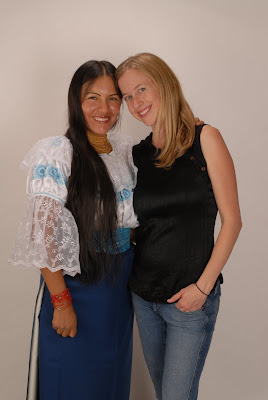
Thanks for reading! I hope that you northern Colorado folks can come meet Maria in person this fall!!
xo,
Laura

July 29, 2011
Announcing... The Jade Notebook cover!!!
Here it is...

Note the sea turtles! I learned a lot about sea turtles while researching this book... they're amazing! I'll probably do a post on that some time later...
This is the third and final book in the Notebooks series (Indigo and Ruby were the first two). Here's a little summary:
Down-to-earth Zeeta and her flighty mom, Layla, have spent years traveling the globe and soaking up everything each new culture has to offer. Now they've settled in the beachside town of Mazunte, Mexico, where Zeeta's true love, Wendell, has an internship photographing rare sea turtles. At first glance, Zeeta feels sure that Mazunte is paradise—she envisions dips in jade waters, sunsets over sea cliffs, moonlit walks in the surf. And she is determined to make Mazunte her home . . . for good. But as she and Wendell dig deeper to unearth her elusive father's past, Zeeta finds that paradise has its dark side.
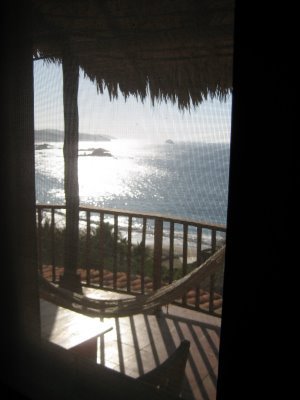
I just sent the revised manuscript into my editor-- the next step is copy-editing, then page-proofing, then the review copy... and then, on *Valentine's Day* 2012, it will be out in the world! I'm starting to think about the release party... For Indigo, there was Ecuadorian dance, for Ruby, an accordionist.... any ideas for Jade? (And no, I can't fly everyone to a tropical paradise to swim with sea turtles... darn!)
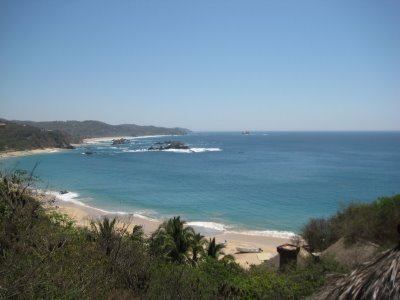
If you want to see pics of the setting of Jade, check out the blog post I did about my research trip there...
Thanks for reading!
xo,
Laura

Note the sea turtles! I learned a lot about sea turtles while researching this book... they're amazing! I'll probably do a post on that some time later...
This is the third and final book in the Notebooks series (Indigo and Ruby were the first two). Here's a little summary:
Down-to-earth Zeeta and her flighty mom, Layla, have spent years traveling the globe and soaking up everything each new culture has to offer. Now they've settled in the beachside town of Mazunte, Mexico, where Zeeta's true love, Wendell, has an internship photographing rare sea turtles. At first glance, Zeeta feels sure that Mazunte is paradise—she envisions dips in jade waters, sunsets over sea cliffs, moonlit walks in the surf. And she is determined to make Mazunte her home . . . for good. But as she and Wendell dig deeper to unearth her elusive father's past, Zeeta finds that paradise has its dark side.

I just sent the revised manuscript into my editor-- the next step is copy-editing, then page-proofing, then the review copy... and then, on *Valentine's Day* 2012, it will be out in the world! I'm starting to think about the release party... For Indigo, there was Ecuadorian dance, for Ruby, an accordionist.... any ideas for Jade? (And no, I can't fly everyone to a tropical paradise to swim with sea turtles... darn!)

If you want to see pics of the setting of Jade, check out the blog post I did about my research trip there...
Thanks for reading!
xo,
Laura
July 25, 2011
Mountains
Hello everyone,
I want to post something to say hi and let you know what I've been up to. Usually I post things when I'm in high spirits, but I'm feeling sad at the moment. A friend and her family are going through a heart-breaking time right now, and I'm in a state of shock and sorrow over it. Tragedy reminds me how important it is to tell people you love that you love them, and why, and how special they are, while they're still with you.

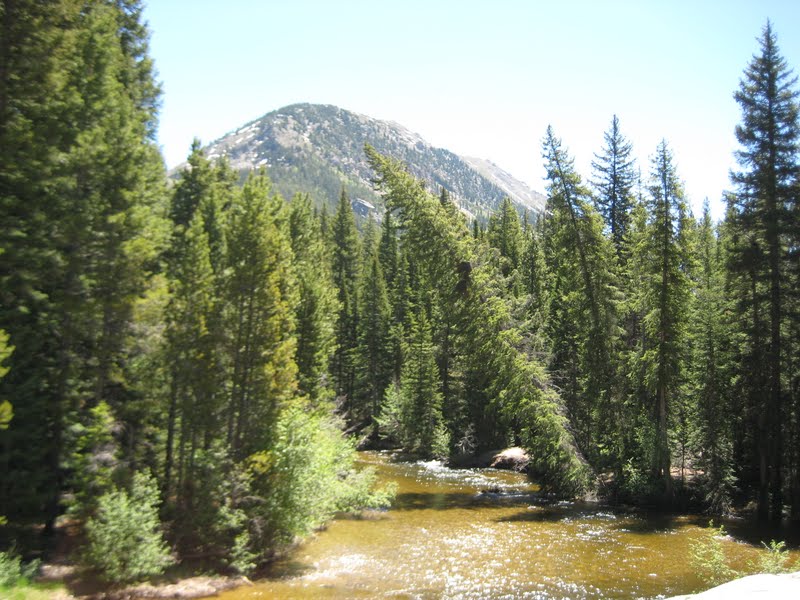
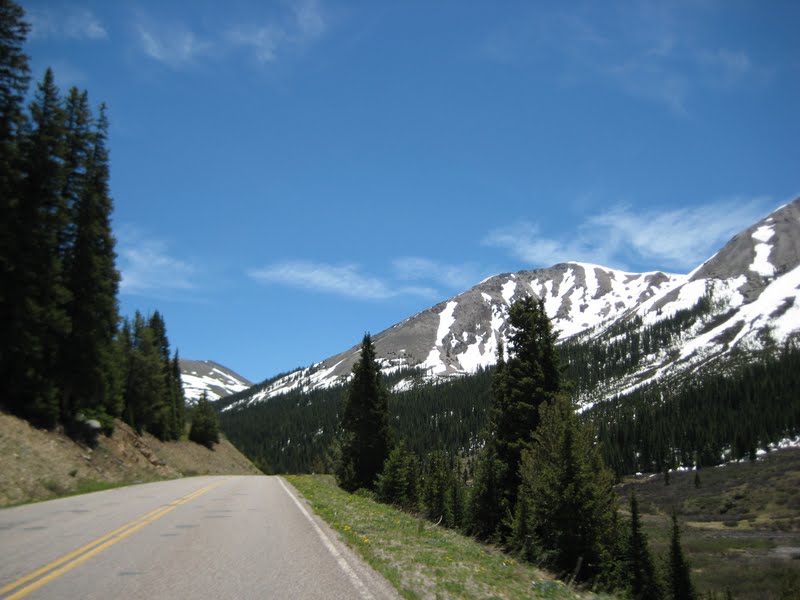
I've been spending time on the road in the mountains quite a bit this summer... to Aspen for the Colorado Book Awards, then Grand Junction for author visits, then in Steamboat Springs with Lil Dude and Ian this past weekend.
Being in the mountains makes me feel grateful to live in Colorado-- so much hugeness and expansiveness helps put life in perspective. The sea and the mountains remind me of how tiny and giant our lives are, that we need to love in the moment, that every moment matters, that what we have is here and now.
Grand Junction, I discovered, is a beautiful town with lots of fountains and sculptures and really wonderful librarians, writers, and readers of all ages, who I was happy to spend time with (doing writing workshops and presentations at libraries). One of these amazing librarians was Diana Tixier Herald, who runs the Genrefluent blog and is the author of many books about young adult literature. I spent an afternoon at her earthship outside of Grand Junction... as Lil Dude would say, "Wowsers!" So cool to get a tour of the house.
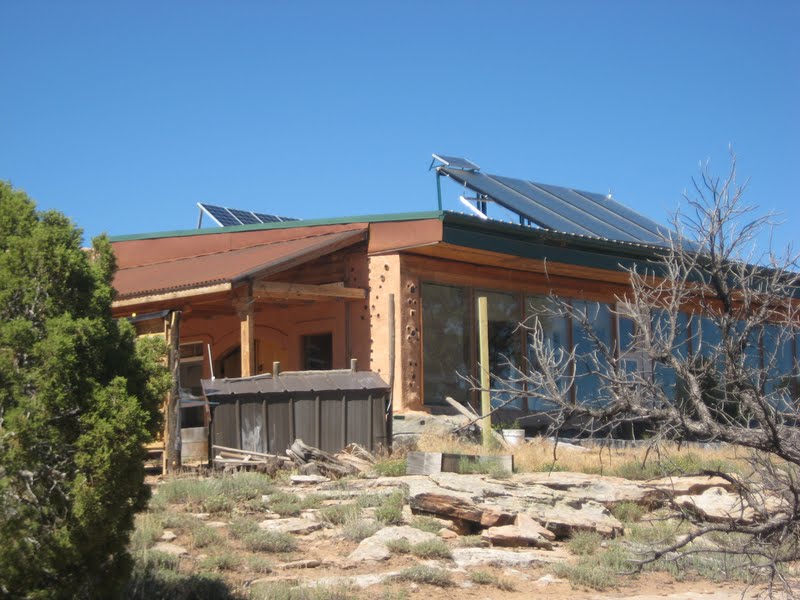
And the view out her front window is stunning...

The canyon is dizzyingly deep-- talk about putting life into perspective! Having this view, I imagine, would help keep your mind expansive and uncluttered...
Here we are, in her yard... can you imagine walking outside to this every morning!?

Here are some pics from Aspen about a month ago... I love aspen trees, how they quiver and dance with light. Aspen groves are my favorite places to camp...
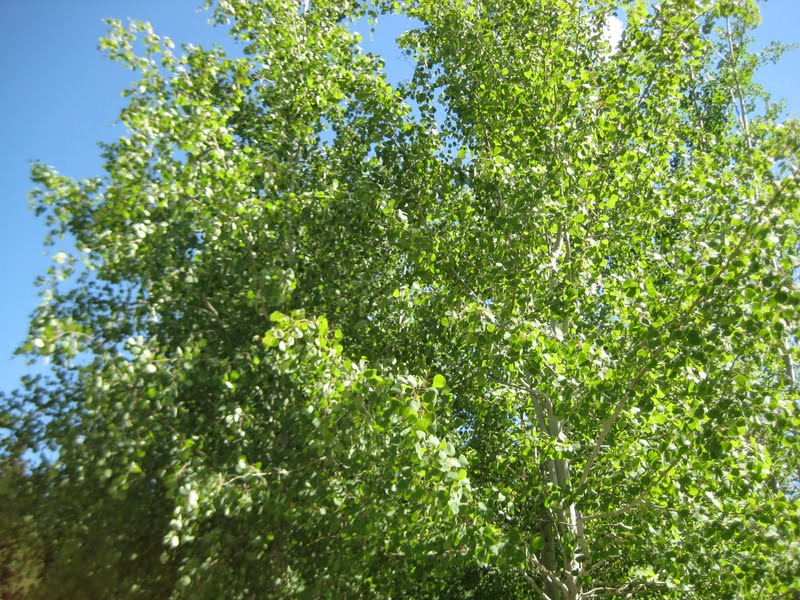
Sage is another thing I love about Colorado mountains... the smell of it always pierces me right to the core (in a good, waking-up way).

Lil Dude, who is now four, has discovered the thrill of photography... he took this pic of me and Ian after the Colorado Book Awards...

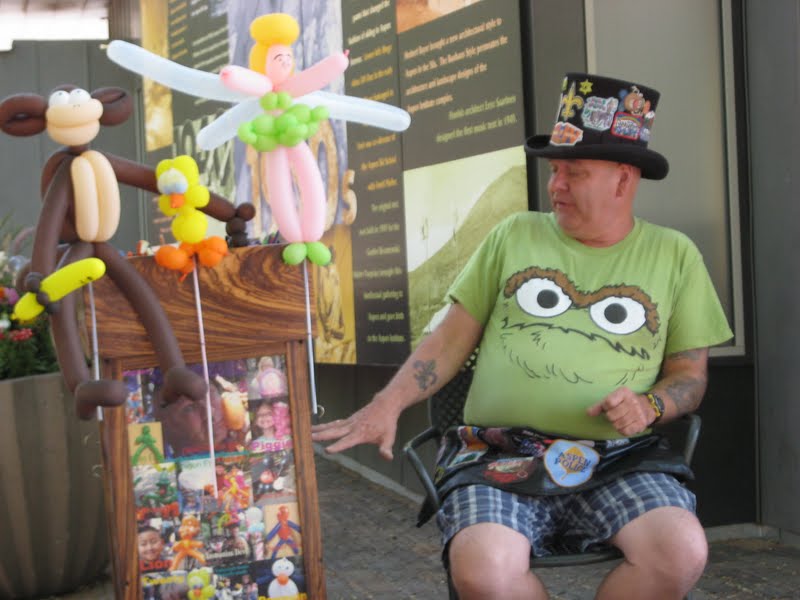
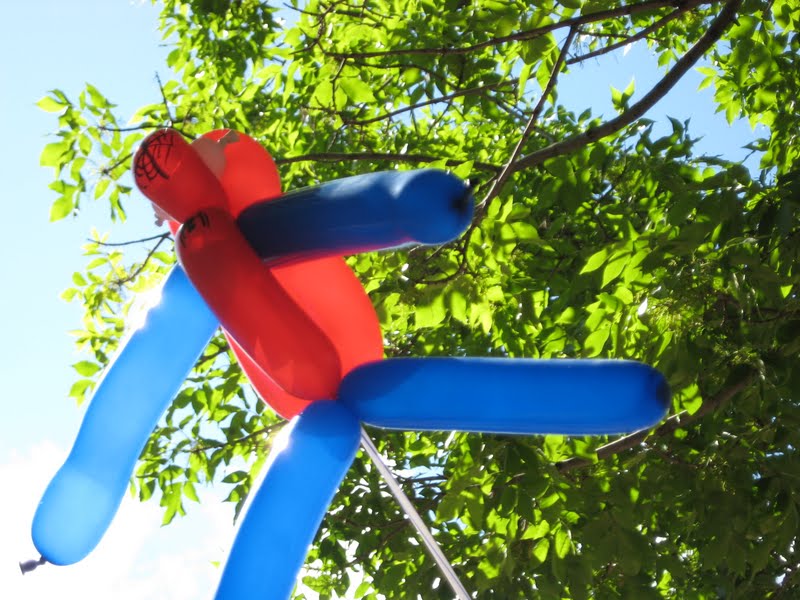
Here's Checkers, the balloon man who we encountered last summer in Aspen and were very excited to see again. (Last year Lil Dude requested the Little Mermaid. This year it was Spiderman.)
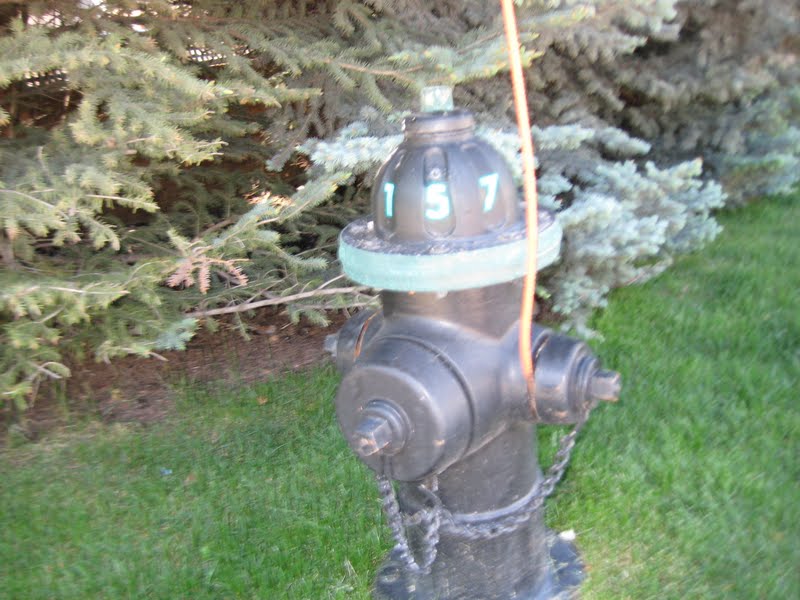
Some highlights of Aspen through the lens of Lil Dude... he was curious about why the fire hydrants here were black instead of yellow...
The hotel pool was a hit... he can swim now-- so cute.

Thanks for reading... I'll post some of our Steamboat pics soon... we stayed in a caboose in Strawberry Park-- it was a GIANT hit with Lil Dude (and me and Ian, too-- you know how I love little abodes-- trailers, caravans, and the like...)
And to those of you who were affected by the tragedy I mentioned, I wish you moments of light and lightness luminous memories...
Love,
Laura

July 3, 2011
Story in Cricket Mag!
Hey everyone!
I've been eagerly waiting for July 2011 for a while (years actually!) because... drumroll... my story "San Martin in the Mist" will be appearing in Cricket Magazine this month! It was accepted years ago-- I think in 2006, just after What the Moon Saw was published. And now, *tah dah*-- five years later, here it is in its illustrated glory.
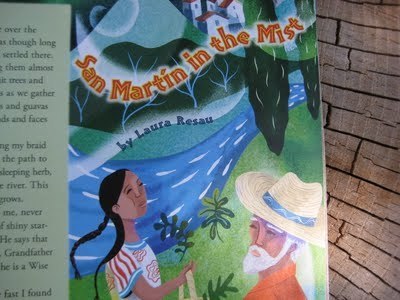 art by Heidi Younger
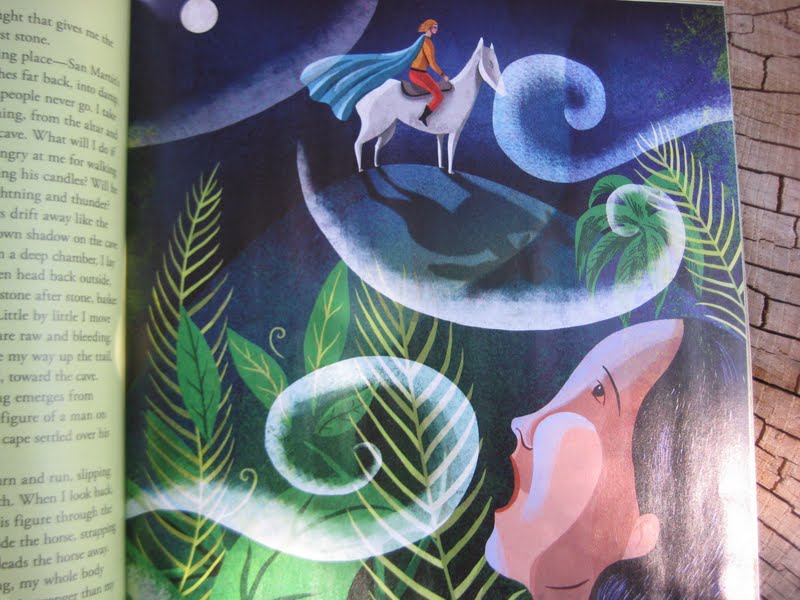
So, so fun to see artists' interpretations of my stories. This one is beautifully illustrated by Heidi Younger... I love how she represents the swirling mist... I'm sure that was a challenging element of the story-- the mist that wraps around everything in the village.
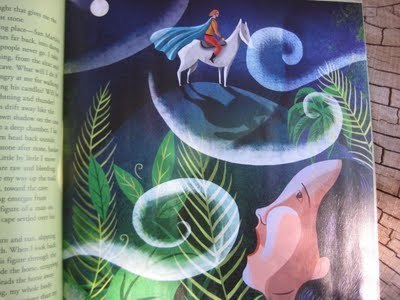 art by Heidi Younger
The story was inspired by a true story recounted by my friend Epifania Garcia Diaz, a friend of mine from Oaxaca, Mexico, who is a Mazatec Wise One-- a healer or shaman.
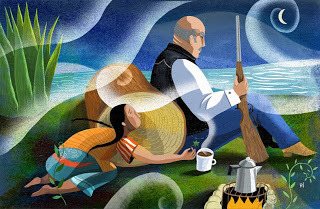 art by Heidi Younger
Dona Epifania told me that a dam was planned to be build decades ago in her mountain village-- a dam that would've flooded the entire valley, forcing many villages to relocate. But at the beginning of the construction, the dam materials began to go missing. This happened night after night, and held up construction. Locals said that it was a local spirit/deity, San Martin, who was stealing and hiding the materials in his underground palace-cave. They said he was offended that people dared to disrespect his land by damming the river and flooding his valley. Eventually, the construction workers gave up, and the dam was not built! Victory!
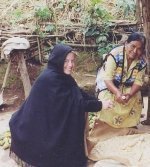 Me and Dona Epifania in her village
I remember Cricket Magazine from when I was a kid-- it's been around for a while. There's something so satisfying about seeing one of my stories in this element from my childhood. Look, here's the little signature cricket giving his (her?) definition:
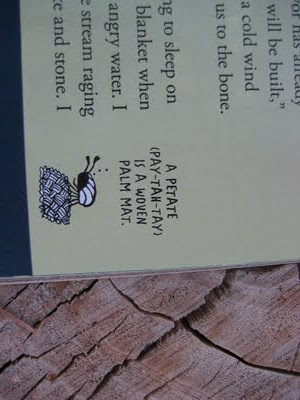 (er, turn your head to the right... camera/photo/computer glitch)
I also have a fondness for Cricket because they were the first mag with a big distribution to publish my work... and actually pay me for it! It gave me a huge boost of confidence when I was still struggling with revising and submitting What the Moon Saw (and getting rejections.)
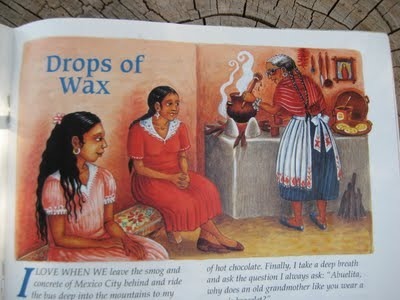 art by Emma Shaw Smith
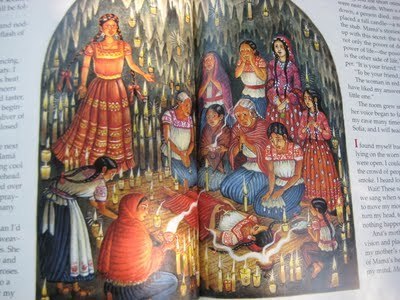
My first Cricket story, "Drops of Wax," was published in the August 2004 issue. Here are pics of that one-- the artwork by Emma Shaw Smith is so lush and detailed-- I especially love the textures and colors of the clothing.
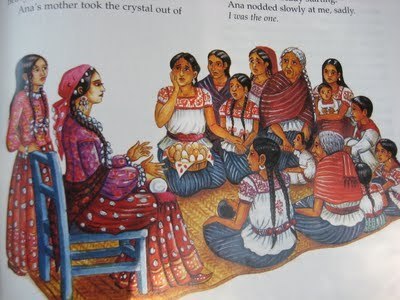 art by Emma Shaw Smith
I really love this illustration-- it's based on a southern Mexican folklore/mythology. If you've read What the Moon Saw, you'll see a reference to it-- the cave of candles and the woman who is in charge of life and death. I also wove this folklore into this short story.
 art by Emma Shaw Smith
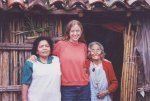
This story was actually inspired by a true story told to me by another curandera-- healer, named Dona Maria Chiquita (she's the one on my right.) It involves a friendship with gitanas (gypsies/roma) and resurrection and fortune-telling...
Thank you, wise story-telling women in my life (with whom I split my payment), wonderful illustrators, and Cricket and their devoted fans, old and young!!
xo,Laura

I've been eagerly waiting for July 2011 for a while (years actually!) because... drumroll... my story "San Martin in the Mist" will be appearing in Cricket Magazine this month! It was accepted years ago-- I think in 2006, just after What the Moon Saw was published. And now, *tah dah*-- five years later, here it is in its illustrated glory.
 art by Heidi Younger
So, so fun to see artists' interpretations of my stories. This one is beautifully illustrated by Heidi Younger... I love how she represents the swirling mist... I'm sure that was a challenging element of the story-- the mist that wraps around everything in the village.
 art by Heidi Younger
 The story was inspired by a true story recounted by my friend Epifania Garcia Diaz, a friend of mine from Oaxaca, Mexico, who is a Mazatec Wise One-- a healer or shaman.
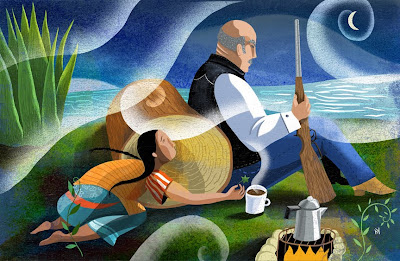 art by Heidi Younger
Dona Epifania told me that a dam was planned to be build decades ago in her mountain village-- a dam that would've flooded the entire valley, forcing many villages to relocate. But at the beginning of the construction, the dam materials began to go missing. This happened night after night, and held up construction. Locals said that it was a local spirit/deity, San Martin, who was stealing and hiding the materials in his underground palace-cave. They said he was offended that people dared to disrespect his land by damming the river and flooding his valley. Eventually, the construction workers gave up, and the dam was not built! Victory!
 Me and Dona Epifania in her village
I remember Cricket Magazine from when I was a kid-- it's been around for a while. There's something so satisfying about seeing one of my stories in this element from my childhood. Look, here's the little signature cricket giving his (her?) definition:
 (er, turn your head to the right... camera/photo/computer glitch)
I also have a fondness for Cricket because they were the first mag with a big distribution to publish my work... and actually pay me for it! It gave me a huge boost of confidence when I was still struggling with revising and submitting What the Moon Saw (and getting rejections.)
 art by Emma Shaw Smith
 My first Cricket story, "Drops of Wax," was published in the August 2004 issue. Here are pics of that one-- the artwork by Emma Shaw Smith is so lush and detailed-- I especially love the textures and colors of the clothing.
 art by Emma Shaw Smith
 I really love this illustration-- it's based on a southern Mexican folklore/mythology. If you've read What the Moon Saw, you'll see a reference to it-- the cave of candles and the woman who is in charge of life and death. I also wove this folklore into this short story.
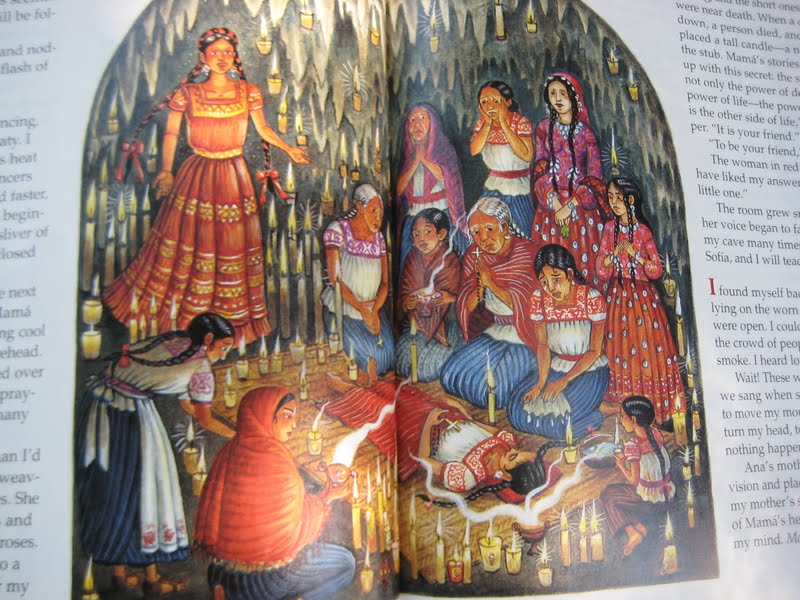 art by Emma Shaw Smith
 This story was actually inspired by a true story told to me by another curandera-- healer, named Dona Maria Chiquita (she's the one on my right.) It involves a friendship with gitanas (gypsies/roma) and resurrection and fortune-telling...

Thank you, wise story-telling women in my life (with whom I split my payment), wonderful illustrators, and Cricket and their devoted fans, old and young!!
xo,Laura
June 26, 2011
Barnes and Noble Event Recap
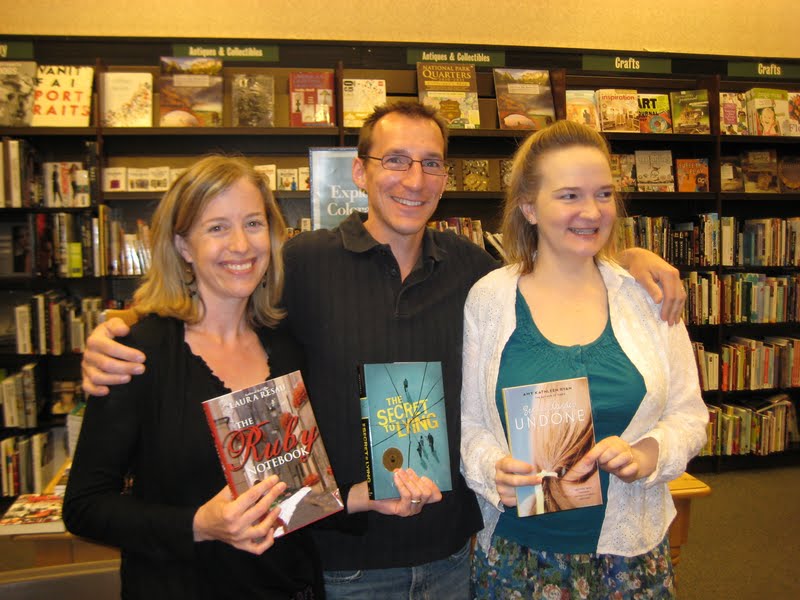 Me, Todd Mitchell, and Amy Ryan
 Hey guys,
Just got back from Aspen... but before I write about that, I want to post these pics of the Barnes and Noble event from last week with my friends and co-finalists in the Colorado Book Award, Todd Mitchell (who is the winner in the YA category for The Secret to Lying-- yay, Todd-- well-deserved! (I LOVE that book!) and Amy Kathleen Ryan (another super-talented writer-- I just devoured the review copy of her upcoming sci-fi book Glow (Sept 2011 release). I'll do a longer post about Aspen and the awards ceremony and everything, but since I just have a few minutes now, I thought I'd let you take a peek at these pics.
Amy, Todd, and I did a panel on writing YA novels-- there was a really nice turn-out-- writers of all ages. Great questions, interesting conversation. The fun thing about being on panels is hearing about other writers' processes and philosophies and journeys... and since Amy and Todd are some of the smartest and funniest writers I know, it was a blast being on a panel with them.
All three of us finalists in the YA category are from Fort Collins-- there's an incredibly supportive writing community here. Here I am with Marianne Mitchell, fabulous children's and YA author (who used to live in Ft Collins and is here visiting). Her book Joe Cinders-- a Wild West version of Cinderella-- is one of Lil Dude's all-time favorite books!

And here I am with Sheralyn, who is always a friendly face at local writers' events.

Here I am with Jordan, who was one of the writers in the young writers camp Todd taught at last week. He had great questions, and we spoke a bit after the event. His questions (about how I keep track of my story ideas) made me remember the time in my life where I felt compelled to write down all my thoughts and musings on life and existence, but I couldn't write them down fast enough and I felt like I was going crazy. (This was in my late teens/early twenties). At some point, I began to feel less crazy, but I think that was a useful stage for me to go through on my writing journey...

Here we are with Teresa Funke, who organizes the local SCBWI "schmooze group" in town. She and I were also involved in the Imaginantes workshops the week before last... she had interesting things to say about her Mexican ancestry and the relatives who inspired her book, V for Victory.

Thanks for reading! And if you're in the Grand Junction area, I hope to see you at one of my Mesa County Library events coming up in July!
xo,
Laura

June 21, 2011
Jade Revision Time!
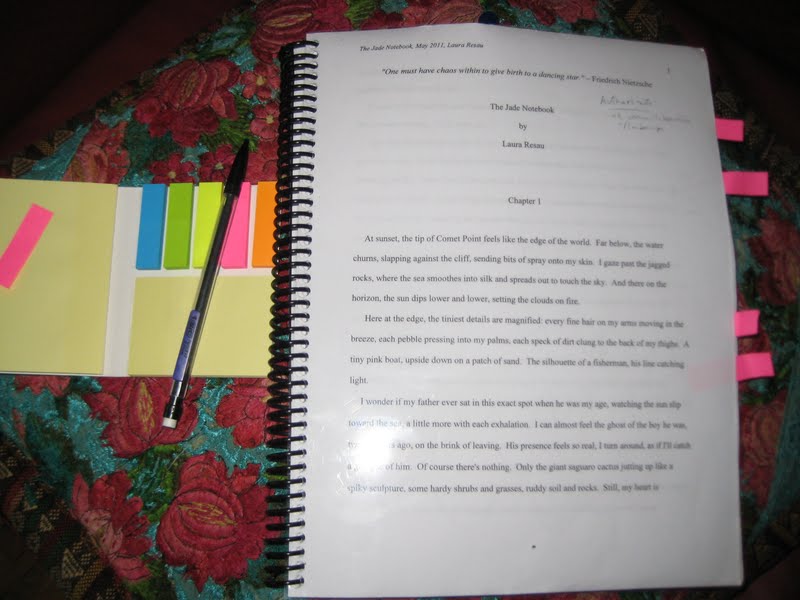
Hello everyone!
Yesterday I got the long-awaited call from my new editor (Francoise Bui) about revisions for The Jade Notebook! I'd been kinda nervous anticipating this... it was her first time reading the whole series, and I worried whether she's like it. I especially worried whether she'd like The Jade Notebook-- a part of me feared she might say something along the lines of "throw the whole thing out and start over!"
But none of my fears came to pass. She says she's enjoyed the whole series and that Jade might just be her favorite... Whew! She had some small, totally do-able revision comments (with the help of Krista Vitola, who was an assistant to Stephanie, my former editor, and has been promoted to assistant editor (a well-deserved promotion-- she's fantastic!)
Soon I'll post the final cover for Jade-- it will make you want to drop whatever you're doing and go on a tropical vacation and swim with sea turtles-- at least, that's how it makes me feel!
Must go pick up Lil Dude from preschool now. I'll write more next week!
Oh, and if you're in the Ft Collins area, please come to my event at Barnes and Noble tonight:
Tues, June 21, 6 pm, B&N on 4045 S College Ave. Join me and my two friends and fellow finalists in the Colorado Book Awards young adult category-- Amy Kathleen Ryan and Todd Mitchell. We're doing a panel on writing novels for teens-- come one, come all-- teens and adults-- and bring questions!
xo,
Laura

June 9, 2011
Queen Cover Art... behind the scenes!

Hello dear readers!
I thought it might be interesting to do a post on the cover art for The Queen of Water. Many readers have been excited to discover that this is a photo of Maria Virginia herself on the cover. Here's the scoop on how that came to be...
During the 6-year process of writing the book, we had plenty of time to imagine what the cover might look like. I thought it would be good to incorporate a photo of Maria Virginia as a teen, to remind readers that this is a true story, that Virginia is a real person. We did have a few wonderful photos that were taken over 15 years ago by photographers of a French magazine for a feature article on a Queen competition in Otavalo (Maria Virginia doesn't remember which mag and doesn't have a copy of the mag-- only the photos.) Here's one of the photos, which was used in an Otavalo newspaper article from years ago:
 Maria Virginia envisioned a book cover that somehow incorporated the gorgeous Andean landscape-- she saw the cover as vibrant and colorful. (Earlier on, she'd come up with the title A Dream in the Andes-- Un Sueno en los Andes-- which we decided to change at a later stage).
After getting the contract and turning in our final revision, we were really eager to see what Delacorte came up with... (Typically, with my book cover process, the design dept comes up with something and then sends it to my editor, who sends it to me, for my feedback. They also show the cover idea to the sales team and other editors in-house to get their opinions. Different publishing houses seem to have varying degrees of author input in the cover design.)
Anyway, flashback to before we even got the contract: A few years ago, Maria Virginia was in town, and about to return to Ecuador in a couple days. As a last-minute favor, our friend Ken Burgess (photographer by hobby at the time) set up a few lights and a white drape in his living room and took a bunch of shots that we intended to use as future author photos (for promotional purposes-- back flap of the book kind of pics)... *if* we ever got a contract for the book, of course (little did we know we had many more revisions ahead of us!)
Here's one I really like:
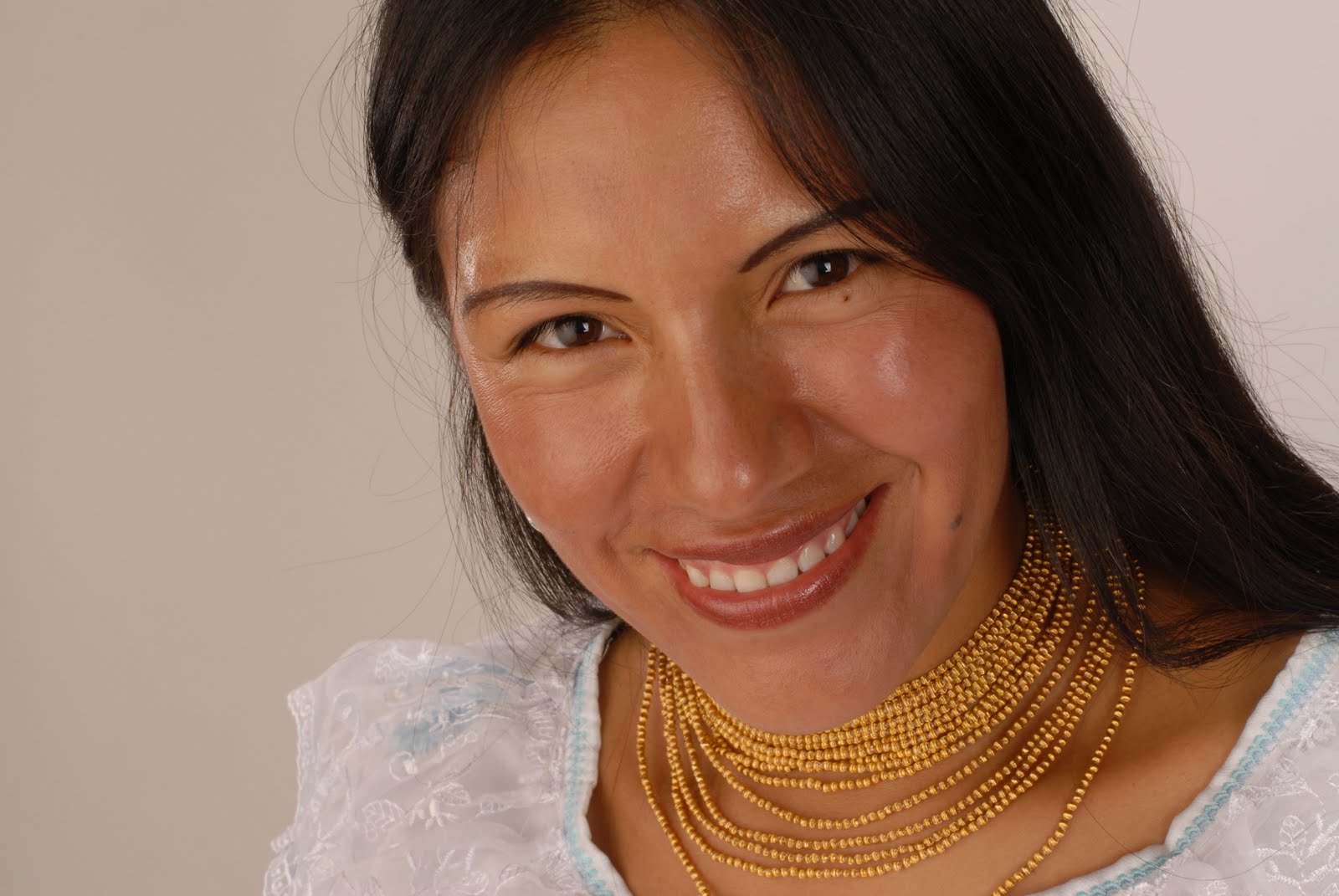
Isn't she radiant?! Her secret to youthful skin is taking only cold showers, which I'm way too wimpy to do (thus the lines that fan out from the corners of my eyes... too many steaming hot showers)!
So here's the photo that I almost didn't send our editor because it didn't look very author-photo-ey... I decided to add it at the last minute because I loved how introspective Maria Virginia looked.
It was a complete surprise to us when our editor emailed us this cover soon after:

They touched up her face just a bit-- "powdered" her skin and plumped up her cheek to make her look more like a teen than a 30-something woman. She felt a little shy at first at the idea of having her photo on the cover-- she hesitantly asked if I was sure people would want to buy the book with her face on it. I assured her, yes!
Later, my editor mentioned that the design dept had originally planned on having an original painting (which they'd commissioned) on the cover. When the talented artist, Fabian Negrin, completed it, they felt that although it was very beautiful, it was unfortunately too young-looking for The Queen of Water, which is geared toward older young adults and adults.

Here's the mock-up they did (and yes, they Frenchified my last name and got the word order wrong and forgot to include Maria Virginia's name... which is *no biggie*, as Lil Dude would say, since it was just a draft.)

I also appreciated the beauty of the cover, but agreed that it looked younger than the intended audience. Also, the girl's outfit doesn't reflect Maria Virginia's indigenous Quichua clothing, which is important in the story, since it relates to her identity issues. We would've wanted to be sure that the girl's clothing on the cover accurately represented the culturally-specific clothing that Maria Virginia and other Otavalena Quichua women wear-- solid white blouse with wide lace ruffle around the neck and forearms of the blouse, a ring of flowered embroidery below the lace of the neck, gold bead necklaces and coral-colored bead bracelets. If you go to Otavalo, you'll see that although there are slight variations on the smaller details, that women stick very closely to the basic clothing that you see Maria Virginia wearing here:


See how the colors of the embroidered flowers, the faja (waist wrap) color, and the lace texture/pattern vary, but the other elements are basically the same? (Oh, and the anaco (wrap-around skirt) color can vary-- either dark blue or black). Women often add a fachalina-- a cream or black wool wrap-- knotted over their shoulder and/or folded on their head.
Me, Maria Virginia, and Alex (*before* the anaco unraveled!)
As a sidenote, Maria Virginia dressed me up in an outfit like this for a night on the town in Otavalo (an outing which ended with my anaco accidentally unraveled, pooled at my feet, as I stood in my underwear in a restaurant... not my best moment!) Extreme embarrassment aside, it was actually a really interesting "research" experience-- it helped me feel more "inside" Maria Virginia's body as we wrote the scenes involving anacos. You can read about it here!
xoLaura * P.S. I also want to add that the reason for featuring my name first was a purely practical one-- a decision that Maria Virginia and I made together after thorough discussions. We felt that since there were already many English-speaking readers who were familiar with my name, that it would be simplest to put my name first. That way, in bookstores and libraries, the book would be alphabetized near my other books, and my reader base would be alerted to the book release. Maria Virginia's goal (which I share) has always been to have our book reach as many readers as possible, and we agreed that having my name first would facilitate this. We're hoping that this book will be translated to Spanish and available in Latin America (where there's little, if any, name recognition of me and my books at this point). If the translation happens, we'll push to have Maria Virginia's name first on the cover of a Latin American edition. I just wanted to clear that up, since I honestly feel weird about having my name first when it's a story that she actually lived through. Okay, thanks for reading!
G'night again!
xo,Laura

June 2, 2011
My Agent's Retreat ( 6 weeks after the fact...)
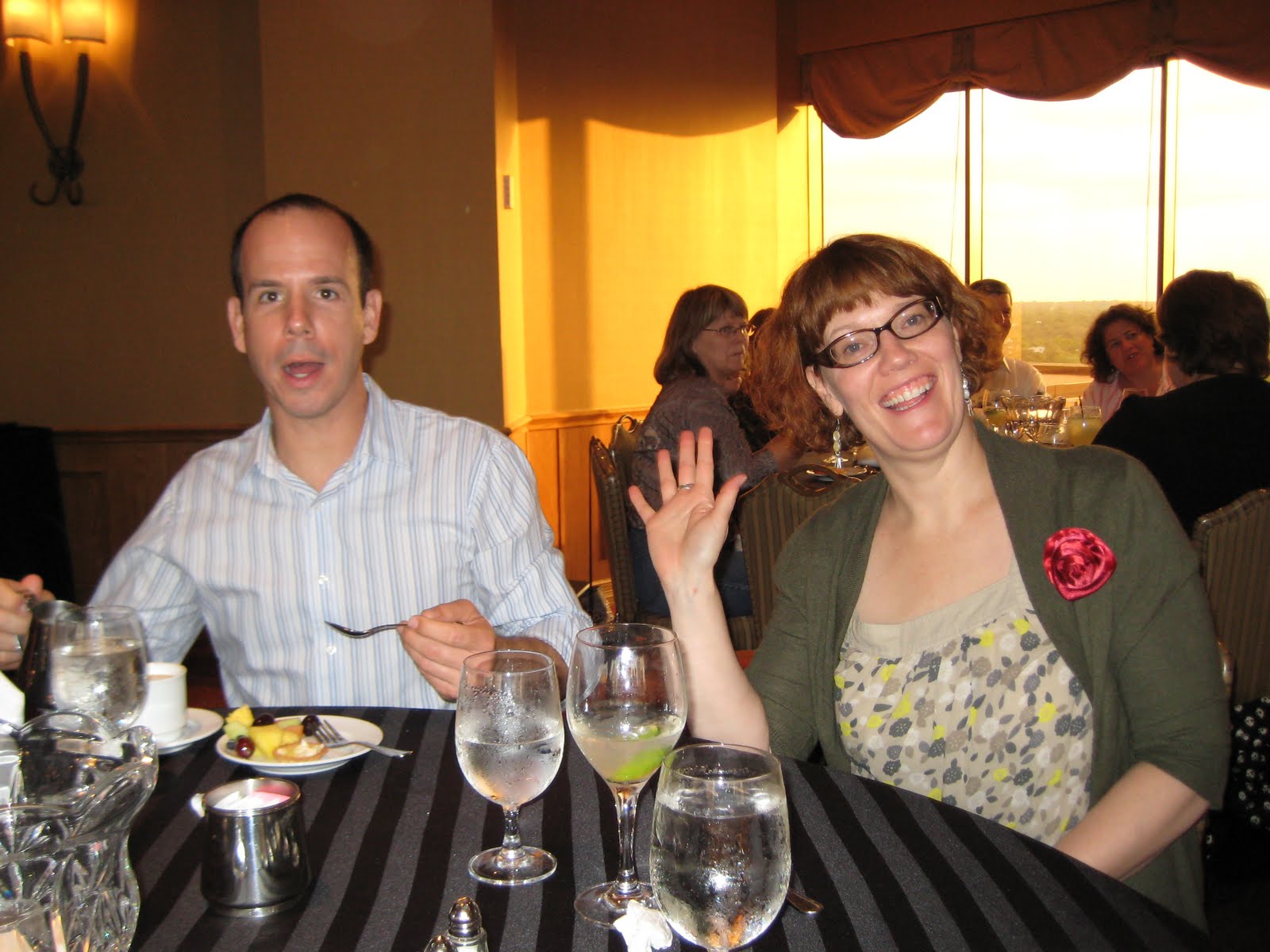
Chris Barton and Erin Murphy (love the expressions!)
Hey all,
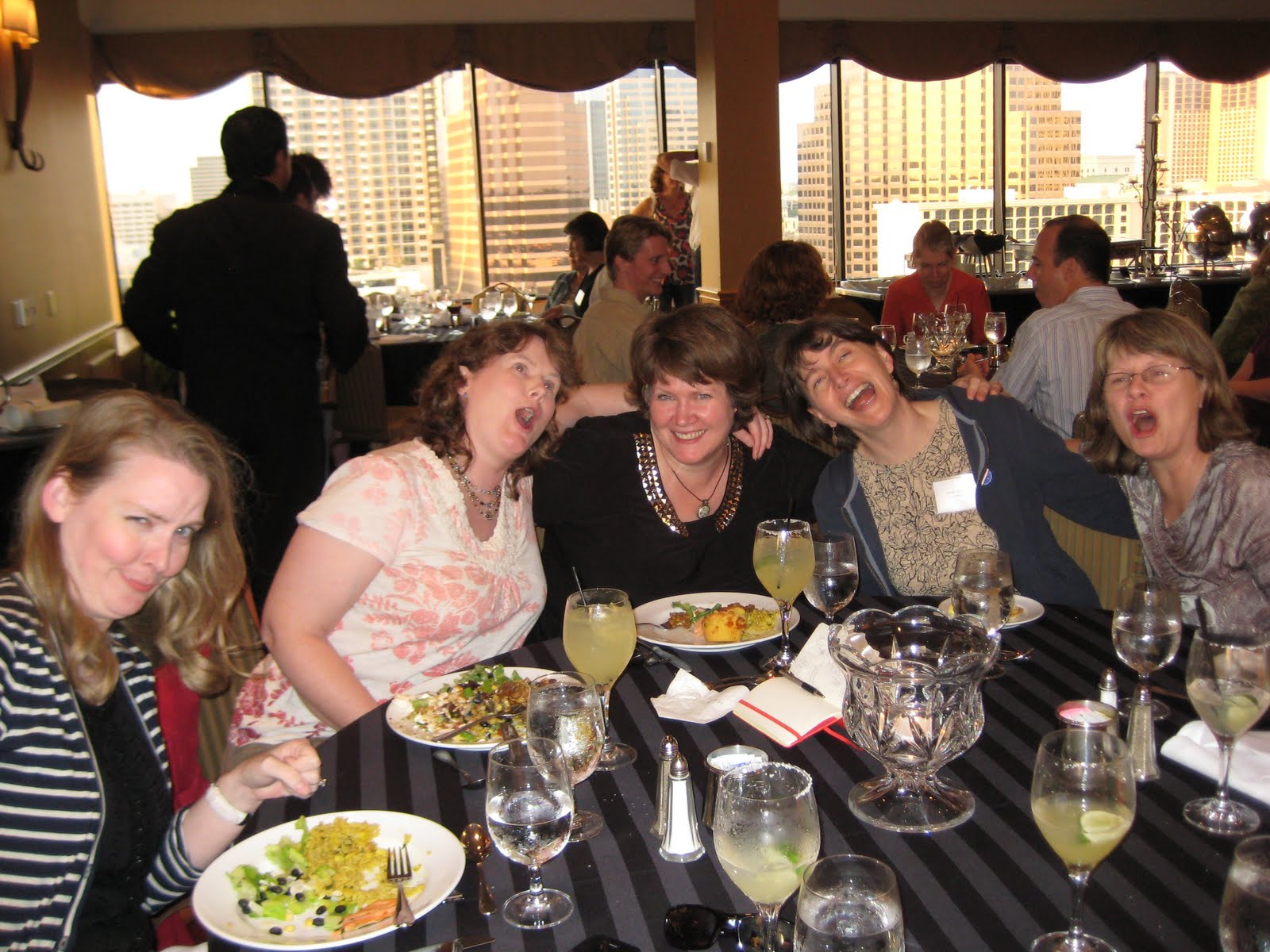
Finally getting around to posting pics of my agent's (Erin Murphy) annual retreat! I went to the first one in Santa Fe a few years ago-- there were about twelve of us there. I think I missed the one after that (in Vermont) because that's the year Lil Dude came from Guatemala. The next year was Portland, and the next Chicago, and this year, in Austin (which was our biggest yet-- over 40 amazing authors!) I really love these people-- it's a rare and wonderful bonding experience. We spend time talking about writing and publishing, gleaning and sharing wisdom. We also eat and laugh a lot (and even cry a little...) I'm too pressed for time at the moment to link to everyone's individual websites, but if you go to Erin's website, you'll find links to everyone else's.
A glimpse of the goofiness that occurred (we went a bit wild that night... I think we scared the wait staff-- at times the shrieks of laughter were louder than those on Lil Dude's preschool playground)...
Ruth Barshaw, Audrey Vernick, and Penny Blubaugh at a signing event we did at Book People (fantastic indie bookstore in Austin!)

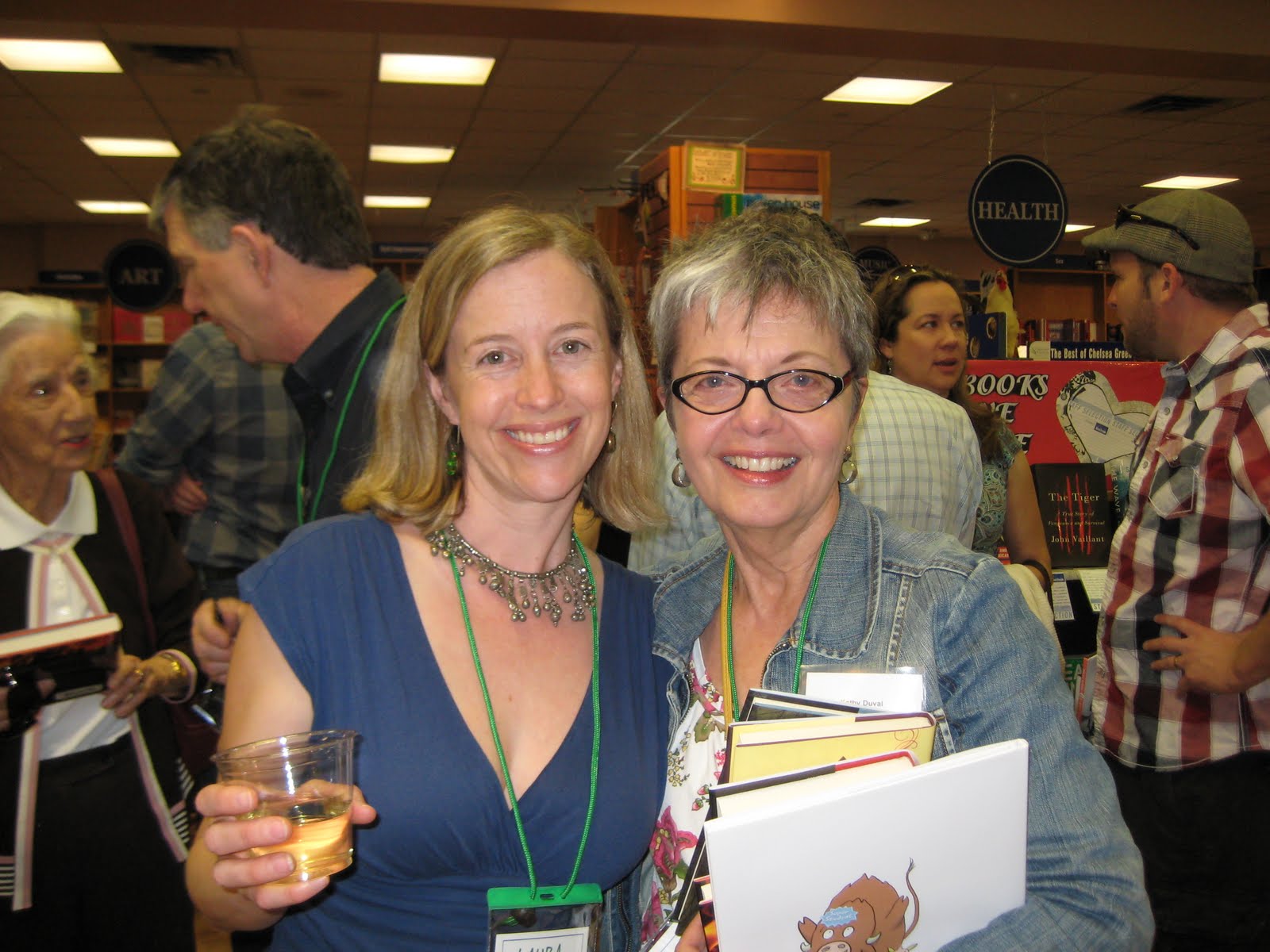
Me and Kathy Duval...
Lynda Mullaly Hunt and Penny...

Liz Garton Scanlon and Deborah Underwood...

Ruth taking a photo of a white peacock in a tree outside a lovely restaurant where we dined. (Usually she's sketching everything in her little sketchbook...)
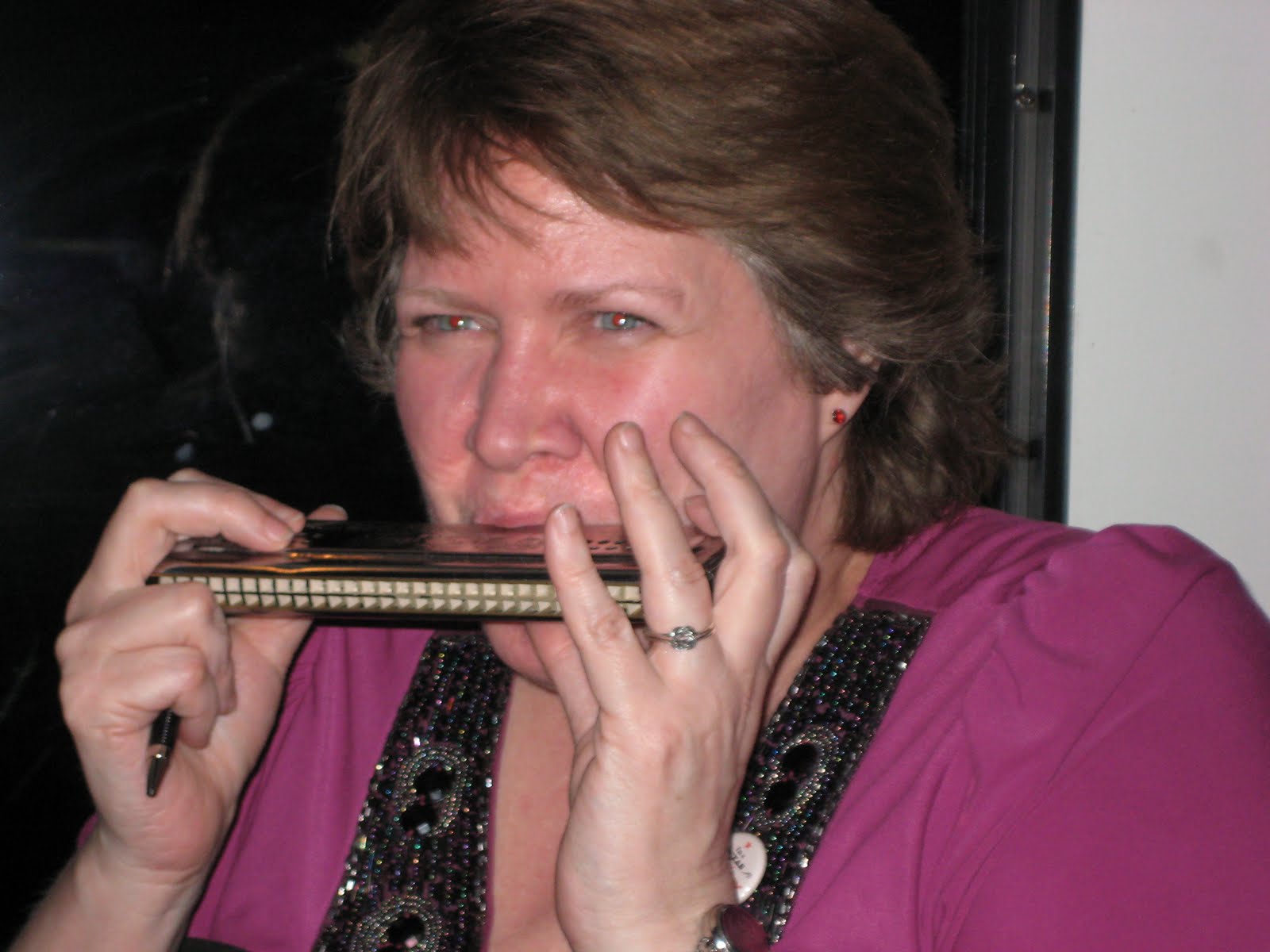
Or playing harmonica... (something she and Lil Dude have in common)
 Carrie Gordon Watson, Deborah, Conrad Wesselhoeft and Elizabeth Bluemle...
Anna Staniszewski and Lisa Schulman...

Ammi-Joan Paquette (author and agent), C.J. Omololu, Natalie Lorenzi
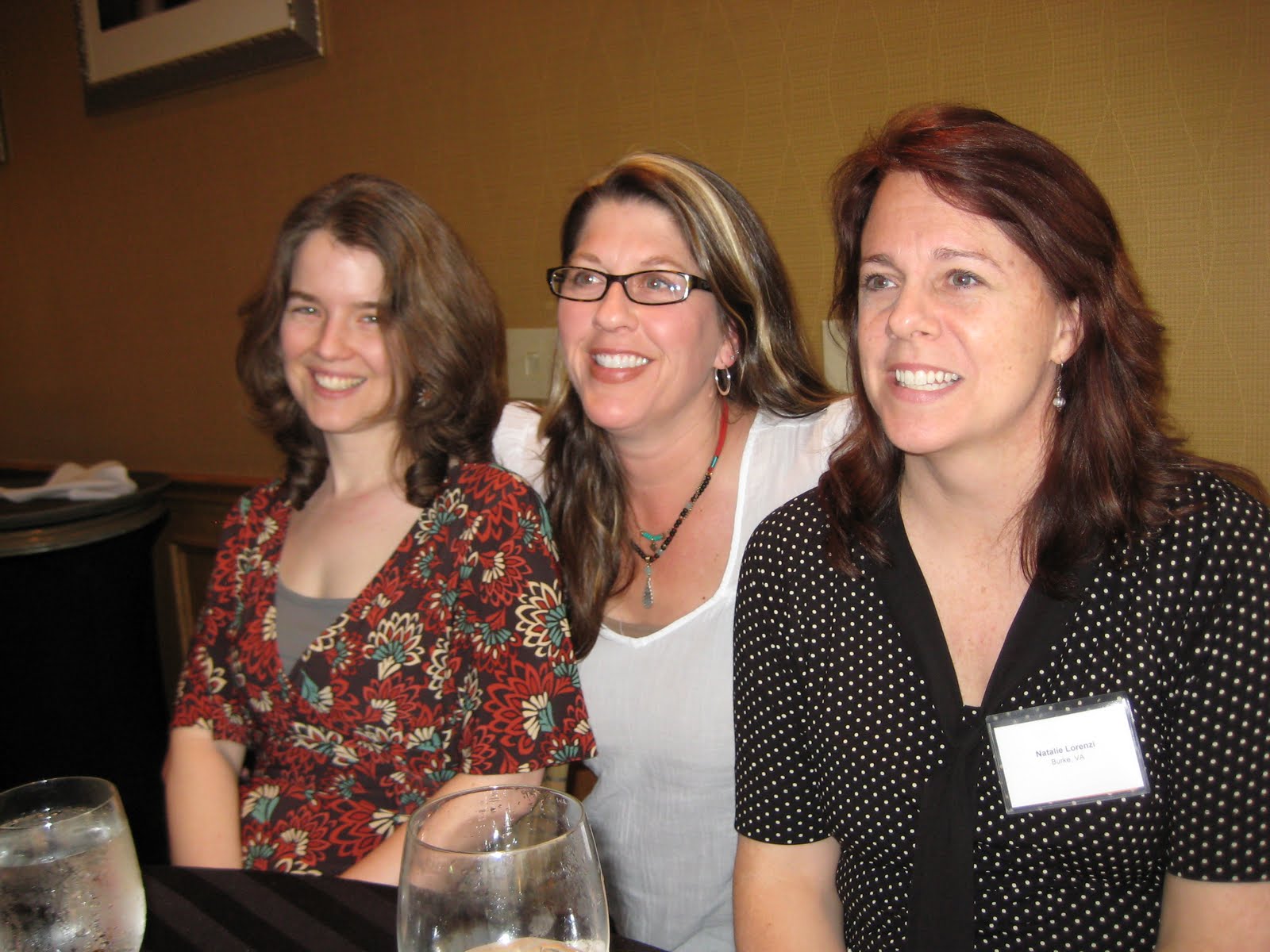
Lots of gushiness and giddiness...

And this is just a sampling!! I'm so fortunate to be part of this group of supportive writers-- it's a giant and unexpected perk of being an author... getting to spend time with these brilliant, sensitive, kind souls.
Time for an evening walk around the neighborhood... have a great week!
xo,
Laura


