
Mike Michalowicz's Blog, page 81
October 21, 2015
A New Question
The next time you meet with a fellow entrepreneur and discuss your businesses, ask him/her this question: How profitable is your business?
For some reason that question never gets asked, yet it is the only one that matters.
I don’t care how much revenue your company generates. I don’t care how many employees you have.
What impresses me is how profitable your company is. I am intrigued by the efficiencies and innovations of highly profitable companies. I suspect you are too.
.So, stop asking how big your friend’s business is. Ask how profitable it is. Ask how healthy it is. That is what you you should care about. That is all entrepreneurs should talk about.


October 19, 2015
Episode 50: Video Content and Profitability with Seth David




Show Summary
School of Bookkeeping’s very own Seth David joins us for Episode 50 of the Profit First Podcast! Seth gives us great information about sharing content with your clients.
Our Guest

Seth David is the Dean of Beans at schoolofbookkeeping.com and President of Nerd Enterprises, Inc. which provides consulting and training services in Accounting and productivity based software. Consulting services range from basic bookkeeping to CFO level services such as financial modeling. Nerd Enterprises, Inc. and now schoolofbookkeeping.com is one of the leaders in the small business accounting world in online training resources offering courses on a wide range of software products. Seth David has been a top 10 speaker at The Sleeter Group’s Accounting Solutions Conference for the past few years. Seth makes extensive use of social networking tools, and web videos to maximize the impact of his training. His unique style and personal touch has helped him develop a large worldwide audience consisting of accountants, bookkeepers, and small business owners, as well as general consultants and technology enthusiasts. Seth graduated from Pace University in 1996 with a bachelor’s degree in Accounting. Prior to starting his own firm in 2003, Seth worked at Biggs & Co., CPA’s. An accounting firm based in Santa Monica, CA, specializing in bankruptcy, from 2001 to 2003. Seth’s role there was to perform audits; prepare tax returns for Corporations, S-Corps, LLC’s, Partnerships; and bankruptcy compilation work for SEC reporting and litigation. Previously, from 1999 to 2001, Seth was a Senior Revenue Accountant for the Veterinary Centers Of America. While there he managed the revenues for over 80 animal hospitals ensuring that the monthly closing entries were prepared so that the monthly and quarterly financial statements could be produced in accordance with SEC regulations. Seth also worked as an Auditor for United Government Services, a division of Blue Cross and Blue Shield of Wisconsin auditing Medicare cost reports under contract with HCFA (Health Care Financing Administration) from 1996 to 1998. Seth David attended Pace University and received a Bachelor of Business Administration in Accounting with an emphasis on Public Accounting.
Show Quotes
Video tips are great to drive traffic to your website.
You want to increase your profits? You need to increase your client base. You want to increase your client base? You need to produce content for the web. There is no more getting around this. Content is King.
Accounting can be fun! When you can show your clients how to use the information you want to share, including how to make more money and build net worth – that’s exciting!
Find your voice, and stay true to your personality. Packaging is everything.
If you’re in a professional services type industry… you’re in jail. Why? You constantly have to trade your time for money.
Take the knowledge that you have in your mind about your industry and create educational content for public consumption.
Feedback from your clients and the media is crucial. Take that insight and use it to better your approach.
Show Links
Corporate Partners
Nextiva – VOIP phone providers for small businesses.
Fundera – Single source online funding for entrepreneurs. Also offers an adviser program for CPAs, bookkeepers and business coaches.
TSheets – The #1 customer rated time tracking solution!
Fundbox – the simplest and fastest way to fix your cash flow by advancing payments for your outstanding invoices.
October 16, 2015
The Key To Persuading Others
It’s about passion. It is having a love for what you do. It is about giving a shit.
I met a woman who is a dolphin trainer. She couldn’t stop gushing about how amazing her work is. Communicating with dolphins. Learning their personalities. Connecting. The stories she shared were nothing short of remarkable. And by the time we were done talking, I wanted to experience, even just for a moment, what she does. She has an absolute love for her work, and the energy conveyed to me.
Conversely, there is probably someone in the dolphin training industry, that really doesn’t care for their work. They do it because they have to. The cold water. The squeaky squeak dolphin talk. And the constant, awful smell of buckets full of rotting dead fish. They would struggle to “sell me” on the values of being a dolphin trainer.
Forget all the closing techniques and persuasion tricks. Nothing will ever match the persuasive power of loving what you do.
October 15, 2015
How to Have a Great Place to Work
Do you have a great place for people to work? If you hesitate about answering that question, it may be time to give it some thought. Having a high turnover rate means that there are problems with the company culture, or the things that make up the overall attitude and end up influencing how enjoyable it is to show up every day. The last thing you want to do is spend your time recruiting, hiring and training, only to see those people walk right out the door.
The Final Whistle
So why is it, exactly, that an employee leaves a company? The top reasons that employees report for leaving a company are:
1. They don’t have any friends at their office. This is a big one, because nobody wants to spend 40+ hours per week at a place where they are surrounded by people they don’t think like them or that they don’t like. Talk about having anxiety on the way to work!
2. They don’t like the boss they work for. Sorry, I know that may bruise some egos, but it is the truth. (Have you ever thought about what kind of boss you are, and how easy you are to work for?)
3. And if you want to know what the distant third reason is, it is because the pay just isn’t good enough. This is an issue that may or may not be something you can address, but it can impact the company culture if people feel woefully underpaid or find out the pay of those around them (and feel it is unfair).
Creating Comfort
It goes without saying that if you want to have a great place to work, you need to build a common culture in your company. What this means is that people need to share similar values, energy and attitude. By doing so, this will automatically engender friendships. Plus, you need to be a great boss – someone who is loyal, trusting and fair to all employees.
But there is more that you can do to create a comfortable company culture that makes people want to stay, rather than clock out for good. Find what works best for your company, but consider the following things you can do to help:
-Help people feel proud and valued, and that their opinions and suggestions matter.
-Create a sense of unity so that everyone knows what the goals are.
-Provide proper training, as needed, which will help people avoid frustration.
-Welcome those things that are different about people, and embrace diversity.
-Reward the team when things go right, rather than just one person.
-Respect everyone, regardless of their position.
-Skip the corny team-building sessions and ask them what they would like to do together, on occasion.
-Try to promote from within, whenever possible. This will give them hope that someday it could be them that moves up.
-Give your employees credit for the company success. After all, you really can’t be successful without them.
-Pitch in and help whenever possibly, showing that nothing is beneath you.
Positive Place
Creating a positive work environment is an effective way to retain your employees. Oh, and if you are thinking that an old fooze ball table will change the work environment, it won’t. In fact, if it is not genuine, it will be seen as a gimmick. The key is to allow the culture develop naturally, materializing on its own. And if it is a fooze ball table that comes about, well, then it will be an even bigger hit!
October 14, 2015
Get Your Slow Employees Working Faster
Productivity, as any entrepreneur can attest to, is one of the, if not the most, important issues that a company has to deal with. Productivity gets things done, and when things get done, the company makes more money. But what happens if you have some employees that are just, well, slow? Don’t worry; it’s a common problem, and one that has a solution!
Addressing the Issue
Here’s the dealio – we may all have to deal with having a slow employee or three at times, but there is something you can do about it (and no, I’m not suggesting replacing the person with someone faster). I’m talking about taking that person that you thought highly enough to hire and motivating them to work faster and produce more.
Here are the secrets to getting slow employees working faster:
1. Limit their options. When you give an employee less choices on how to proceed, the easier it is for that person to proceed. If you only give one option, you have more of a dictatorship. This can actually cause an employee to intentionally slow down to retaliate. A good rule of thumb is to stick with three options. This will give them enough freedom of choice to motivate them, but it will also limit their options to something manageable, which will help them make a quick decision.
2. Give interim deadlines. If the project is due in the final state in a month, for example, break it up into four smaller deadlines. When you do this, asking for a quarter of the project each week, it will bring the employee a greater sense of immediacy, and that gets people moving.
3. Use inertia. A small set in the right direction (physically or even a mental commitment or otherwise) increases the likelihood of successful completion dramatically. So, for instance, take that same one month project and schedule and require completion of a simple task due almost immediately. For example, require that on the same day that you assign the one month project, the employee comes back to you with a completed calendar. The calendar will demonstrate that they have already scheduled all the necessary calls with clients for the entire one month project.
4. Set clear expectations. We all aspire to the expectations (both good and bad) that are set for us. When assigning this to the employee, explain your expectation with absolute clarity and that you have confidence in them. When they fully understand what is expected of them, and that you believe in their abilities, they will strive to please you.
Slow Going
There is another issue that is worth bringing up here. If you have an employee that once seemed like a good candidate (come on, you hired them, after all), and now they are slow and unmotivated, try to determine why that is. Sometimes people may act like this if they don’t have all the tools they need to complete a task, are not getting clear instructions, or may even have personal problems that are draining their brain (and ultimately your time). But if you can get to the bottom of it and understand where the problem is coming from, you may be able to be more effective at addressing it.
Business runs off productivity. You know that, but at times your employees may need a gentle reminder of this. Before it gets too out of hand, and they fall into a pattern of producing the minimal amount it takes to hang on to their job, address the problem. By speeding things up, you will be motivating them, teaching them more about business, and you will likely be meeting your customer demand more efficiently.
October 13, 2015
The Secret To Packing A Room For A Speaking Event
The only thing worse than a fear of public speaking is a fear of no one showing up to hear you speak! So when I was asked if I could speak at an event for EO New Jersey I was a little bit worried, right? I mean EO is an amazing group of entrepreneurs who meetup to share strategies, methods and tips in growing each other’s business. But they’re entrepreneurs. And we all know the nature of entrepreneurism means last minute interruptions, or opportunities and that means empty chairs.
Even a live event with a popular speaker rarely gets many people to sign up for the event in advance. Or, when people do sign up, they do it the last day right before the event. Was I worried? No.
Why? Because my event was sold out within a few hours after it was announced. Unbelievable! Events with big names (a million times bigger than mine) don’t sell out, let alone like mine did on the day it was announced.
What’s my secret? Well, there are four of them actually. And here they are, four secrets to packing a room:
1. Scarcity sells. Remember the Lesson From Musical Chairs? When there are fewer seats than there are people who are applying to sit in them, people will scramble to get the seats as fast as they can.
I limited the event to 20 spots, when most events are normally open to the entire membership. When the typical “intimate” event that I was doing is open to all 80 people attending, only about 10 people ever actually showed up. When I said we would cut it off at 20 and take no one else, people scrambled.
2. Keep It Secret – People LOVE secrets. So I said the only way to get into my event, even if you had a ticket, was by signing a non-disclosure agreement (NDA). People think they are going to learn something secret (which they will) and they want it more because it’s secret.
3. Individual Invites – EO normally emails the entire group in giant email blast. There is nothing special or intimate about being in a group blast. Who really wants to be part of the herd? So I sent out an individual email right before the group blast went out. I reached out to invite people specifically, before they received the generic call.
4. Set the stage for expectations high, then over deliver. Limited seating, signing an NDA, keeping things secret, individual invites and special treatment? I set the stage for some pretty high expectations!
After jumping through all those hoops, feeling lucky they were one of the 20 to score a seat, and then having to keep a secret on top of all that; people are going to arrive expecting more a dozen powerpoint slides and a free pad and pen with my name on it. Their expectations are running high before they even walk through that door! I’ve got to deliver, or over deliver on my promise and give them the kind of stellar content that matches or exceeds the build-up. If I don’t, they won’t believe the hype the next time. Every success builds on the past success.
The lessons – we want things more when they are harder to get, even if that difficulty is a perception, not a reality. We hunger and thirst for secrets because secrets make us feel special and sexy and smart. We all LOVE individual attention, especially if it’s in short supply. And finally, we all love the unexpected, bigger than we anticipated, over delivery of the promise.
The room is going to be packed.
October 12, 2015
Episode 49: Confidence to Steal the Show with Michael Port
Show Summary
Bestselling Author Michael Port joins us again for Episode 49 of the Profit First Podcast! Michael talks about his new book and gives us great pointers on how to gain the confidence you need to Steal the Show.
Our Guests
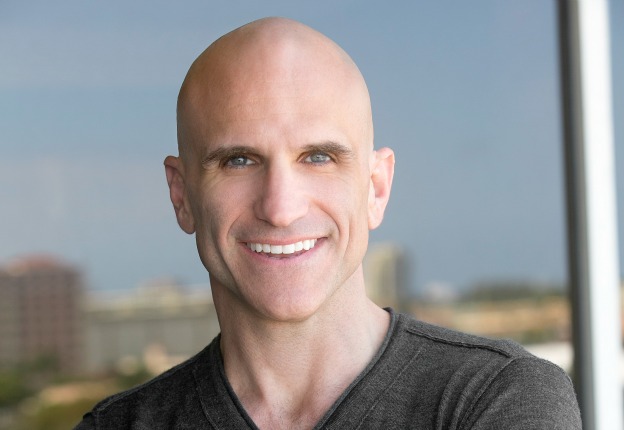
Called “an uncommonly honest author” by the Boston Globe, a “marketing guru” by The Wall Street Journal, and a “sales guru” by the Financial Times, Michael Port is a NY Times bestselling author of six books including Book Yourself Solid, The Think Big Manifesto and his hot new release, Steal the Show.
Interestingly, he is probably the only NY Times bestselling business book author to have also been a successful professional actor, guest starring on shows like Sex & The City, Law & Order, Third Watch, All My Children and in films like The Pelican Brief and Down to Earth.
These days, Michael can be seen regularly on MSNBC, CNBC, and PBS as an on air expert in communication and business development.
Show Quotes
If we fall flat when the spotlight is on us, nothing happens; but if we can shine in those moments, we do big things!
We get so anxious because we’re not prepared. You cannot rise to the occasion if you “wing it”.
We obsess and focus on ourselves, our own needs, and our need for approval. One reason why we’re not confident is because we are trying to get approval from other people rather than focusing on getting results. We’re afraid of rejection so we play it safe and don’t take risks.
When people hear “performance” they think fake or phony – this is not always the case. Be authentic: amplify or downplay different parts of your personality and your voice when appropriate. Be a chameleon but don’t let go of your values.
Practice is something you do to develop skills; rehearsal is something you do to become more familiar with a given situation. When you are well prepared AND in the moment, THEN you can be spontaneous. Winging it will take you out of the moment because you are thinking frantically about the next step.
The stakes are high no matter what the situation – so raise them anyway! It’s okay to make mistakes.
Sometimes we think selling is about us, therefore we are scared of rejection. “Am I worth this money?” “Can I live up to this commitment?” Our reputation is based on our ability to make commitments and fulfill them. Remember that people express their values through what they buy.
You have to be in the game to win. Overcome the “i’m not worth it!” in your mind – you will become more confident when you actually do the thing you’re thinking about doing. It can be more difficult to believe that you can do something if you haven’t actually done it.
There are 2 types of criticism: the people in the cheap seats that push you down to make themselves get up, and your internal critic. Your internal voice is the one you have to fight. If you let this voice in your head get the better of you, you will hear all the external criticism as well. When you fight for what you want, these voices reduce their volume.
Have a question you’d like us to answer on the air? Email Kristina or Mike!
Kristina@MikeMichalowicz.com
Mike@MikeMichalowicz.com
Show Links
Michael’s Books: Steal the Show , Book Yourself Solid , Beyond Booked Solid
Corporate Partners
Nextiva – VOIP phone providers for small businesses.
Fundera – Single source online funding for entrepreneurs. Also offers an adviser program for CPAs, bookkeepers and business coaches.
TSheets – The #1 customer rated time tracking solution!
Fundbox – The simplest and fastest way to fix your cash flow by offering advanced payments for your outstanding invoices.
October 9, 2015
5 Easy Ways To “Go Green” In Your Business
You have probably heard it before, even if you have tried to turn a deaf ear. We are sucking up resources faster than the world can keep pace. Everything from the amount of energy we use to what we throw away at the end of the day. It may be out of site, out of mind, but really it’s sitting in a landfill somewhere clogging up the land.
So whether you consider yourself a tree hugger or not, now is the time to take steps to get your business to be greener. And hey, if helping the planet isn’t enough, as a bonus you may earn some brownie points with your customers. Not to mention, you will probably feel pretty good that you are doing your part.
Here are 5 easy ways to get your business to go green:
1. Toilet Talk.
We take it for granted and use it several times per day, but the toilet can be a major source of waste. No, really! As in a waste of water, that is. Not only is too much water flushed down the toilet with each flush, but there are also leaks that we usually don’t even notice. The green fix? Consider the new SinkPositive toilet system, which adds a small hand washing basin on to the top of your toilet tank. Clean water comes out to wash your hands, yet it drains down into the toilet, providing the water for the next use. This will save a gallon of water per day.
2. Think Bamboo.
If you haven’t checked out all the products today made of bamboo, now is the time! It is a green material that grows quickly, is very resilient, and can be used to make many different products. Plus, it looks great! The next time you need office furniture, check out the new bamboo desks; you may not be able to pass up on one.
3. Get Corny.
If you think about your break room or lunch time, you can probably see where a lot of waste happens from paper and plastic plates to plastic utensils. Problem is, all that plastic doesn’t biodegrade; it just sits in a landfill. Instead, opt for corn products. Today there are cool biodegradable utensils that are made of all cornstarch, making them completely compostable. So once they hit the landfill, they will be completely gone in just 3-5 months.
4. Trash Matters.
If you are like most people, you probably never give any thought to trash bags. You buy, you line, you fill, you move on. But did you know that it is estimated that those trash bags take about 1,000 years to biodegrade? That’s what they say. So, there are biodegradable trash bags for which you can opt. They are just as durable, but they break down in just months!
5. Go Natural.
Every business seems to have large energy use bills. But you can help to reduce them in a number of ways, including taking advantage of natural light. Just open up the blinds, let the light in, and see if you can go without the lights on for part of the day. Not only will it save money, but it also creates a less stressful environment.
If you look around your office with a keen eye, you will find a lot of ways that you can go green. Whether it is using recycled copy paper and toilet paper or recycling all your used copy paper, there is something that everyone can do. Keep in mind that you don’t have to get crazy on everyone and become the eco police, but even small changes can add up big. So why not make a few?
October 8, 2015
The Magic Metric For Entrepreneurs: Operating Cash Ratio
Metrics are a powerful tool for measuring progress, evaluating decisions, and when done right, are an early warning system for problems. There is one problem though. . . too many metrics cause indecision. You know; analysis paralysis.
What if there was one metric that could do it all? Well, I have good news and bad news. While there isn’t a single metric that can answer all your business questions, there is one that indicates your company’s core health. By measuring cash flow, you are measuring the blood flow of your business. And by tracking it through a metric called the Operating Cash Ratio (OCR), you will have your thumb on the company’s pulse.
This is how it works. First add up all the cash you currently have on hand. Add up the money sitting in the bank at this very moment (even if you wrote checks against it), the cash in your drawer, and the money sitting in your PayPal account. The only thing you don’t add in is the money in your PFA (Profit First Account). You do have a PFA right?
Let’s say you have a total of $7,576 in your bank accounts (checking, savings, payroll, etc.). And at your desk, you have petty cash of $37. And finally in your PayPal account you have $188. Add it up, and All Cash Currently On Hand is a total of $7,801.
Next add up all the money that is currently due (including any outstanding payments that haven’t cleared yet), in the next 60 days. This includes bills, rent, payroll and money you are taking for yourself.
Let’s say you have $950 in rent due this month (that is $1900 in 60 days), $737 in bills, $547 in part-timer payroll (next two months), and you are taking $7,000 in salary the next two months. That would result in All Money Due Within The 60 Days of $10,184.
Now divide Cash On Hand by Money Due to get the OCR. In this example you would divide $7,801 by $10,184. The resulting ratio is 0.77 (rounded).
And with that ratio you now have a guide to your company’s financial health. Here’s what the OCR means:
An OCR of 0 to 0.25 means your business is cash starved and financially unhealthy. Immediate action needs to take place to cut costs and increase cash on hand (more sales, better collections, etc.).
An OCR of 0.25 to 0.75 means your business is financially stable. No drastic measures are needed, but you should actively seek ways to increase cash flow (better sales, collections, etc.).
An OCR above .75 means your business is financially strong. Ironically this means you should take measures to protect yourself from attacks. For example lawyers love to “go after deep pockets”. So use this as an opportunity to put your money into capital investments or secure accounts. At the same time, you may be able to use cash reserves for equipment improvements.
By no means is the OCR the only metric you track, but it is the most important. Track it daily and you will not only know your pulse, but you will also be able to track trends. That’s a whole lot of power in one simple number.
October 6, 2015
One Day, One Punch
It is easy to go really hard at something for a period of time, but the energy wanes. It reminds me of boxing. When those fighters start the first round, they come out hard! They throw hard punch after hard punch. They only win if they land a knockout fast. More often than not, the bout is determined after quite a few rounds, and goes to the guy who landed the most punches over the most time.
The fighter that has greater stamina (can stick around for the entire twelve rounds, plus some), coupled with well-timed devastating punches wins. Muhammad Ali knew this and used his famous “rope a dope” strategy in his famed bout with George Foreman. Foreman, by most measures, was the superior fighter. Bigger, stronger and faster. Foreman was predicted to win, and in the beginning of the fight looked like the clear winner. In fact, some thought Ali would die that night as he took punch after devastating punch from Foreman.
But that was Ali’s strategy. Ali had trained for that fight by having his sparring partners pummel him. During this practice Ali discovered that, if he positioned his body against the ropes, the majority of energy from each punch would go into the ropes, not his body. The more Foreman punched, the more Foreman grew tired. Then Ali went into action.
With a tired Foreman, Ali systematically delivered punch after punch on Foreman. Foreman was too tired to defend himself, he had “punched himself out.” Ali, with a reserve of energy, kept punching and punching, systematically. Thus, he went on to win the bout.
Your business success is not so much about coming out swinging. It rarely is a successful strategy, since you are unlikely to deliver a knockout blow to your industry, and then will have exhausted all your resources to say in the long fight. Instead, be a systematic, relentless fighter. Each day deliver one more punch. Don’t let yourself tire, it is going to be a long fight. And the victor almost always is the one with the most stamina. Not the hardest punch. Just the most punches over the longest period of time.


