
Lina Hansen's Blog, page 5
July 3, 2020
In My Attic is published – interview with the author – Part 1
Can you describe what your book is about in one sentence? After the suspicious death of her aunt, Myrtle Coldron searches for a murderer and finds a magical misfit—herself.
What is the theme of In My Attic? Finding a place, a purpose in life, even if it is not what one expected.
How do you develop your plots and characters? First, I come up with a story idea—there’s a lot of inner Netflixing going on all the time. I always start with the characters, who they are, what they might want, and how the motivations of the different characters clash with each other. Next, I throw some setting and premises at my characters and watch them run away with the plot. Fret not—so far, I’ve caught up in time. Well, mostly.
What was your favorite part of writing In My Attic? Petty, the magical primula who wasn’t a part of the original cast. I had to watch her, she’s one of those sidekicks prone to taking over!
Give us some insight into your main character. What does he/she do that is special? What are his/her character flaws? At the beginning of the story, Myrtle is a bit of a lost soul. Yes, she’s found a vocation as a grammar school teacher like her father, but something’s missing. She’s had a tough time, her parents died violently when she was in her teens, and she got adopted by Aunt Eve, who’s not exactly the cozy homemaker. Myrtle craves stability and logic and, as a result, rejects a supremely irrational part of herself—the magic. Until she accepts that, she can never be whole. Unfortunately, her magic is flawed as well, so the struggle continues. But least it is her struggle now. It doesn’t help that she’s so critical of herself, doesn’t trust her instincts, because her teenage trauma has left her scarred. She’s wary of herself, of people around her. At the same time, she is inherently strong, has a good sense of humour, and that will definitely help her cope with what is at stake.
MORE TO FOLLOW NEXT WEEK


March 21, 2020
Review of Nicole Sallak Anderson’s “Song of a King’s Heart”
Nicole Sallak Anderson’s Song of the
King’s Heart, Book One in her “Origin” series.
is a highly original novel.
Not only does she expertly paint a
picture of a long-gone era, she also brings back a period in Egypt’s history
that is a lot less well known to readers. The author then layers on another unique
experience, ultimately creating a novel abuzz with mysticism fed by sexual
energy, a concept I haven’t come across anywhere else.
The plot is rife with intrigue, warfare
and complex relationships, all set against a backdrop of an intriguing world.
Prince Ankhmakis, the last in a line of
native Egyptian kings, fights for his father who wants to wrestle back control
from the Greek, the foreign rulers of the country. He’s in love with Natasa, a
young priestess torn between her duties to the goddess and the love for her
soulmate.
The Ptolemaic Pharaoh is a suitably disgusting
villain, whose lecherous acts create a dangerous opponent, Chanax, priest of Seth,
the God of Chaos.
I never had problems with the names,
but the author has included a character dictionary at the beginning of the book,
a helpful addition. Plus, each chapter provides some historical background,
which makes for some fascinating reading.
The whole tale is complex, rich and truly
unique—and there are more books to come! I didn’t give five stars because I
only do that for a very select group of books, i.e. those that are perfect for
me. Never forget that reading is a subjective experience. Sallak Anderson’s
amazing tale didn’t quite hit that mark for the simple reason I missed a bit of
humour and I could not always connect with the characters. This might well be
owed to this being historical fiction, which calls for a certain writing style.
February 8, 2020
Review of E.A Comiskey’s “Some Monsters Never Die”
I love reading intelligent humour. I love unique voices and, even more so, a pretty damn cool premise.
Anybody surprised that I loved reading this novel?
Richard
has been parked in a nursing home, abandoned like a crusty old tomcat.
Nobody expects him to do anything but grumble through his day—and die.
Nobody
– apart from another inmate, the super-dapper, mega-chipper Stanley
Kapcheck. Oh, and he’s British, which makes things even worse.
Of
course, he’s the one who will shake Richard out of his misery, get him
to oil up his walker and hit the road. In a vintage corvette.
Why?
Well, there are some rather nasty critters running around in the nursing
home, who have nothing better to do than suck the seniors dry.
Literally, not financially. Think some sort of Romanian vampire.
But
saving Richard’s remaining years from being sucked away wasn’t the
critical point on Stan’s agenda. He’s a monster hunter, and he wants
Richard to help him-hunt monsters. Duh.
Decades ago, Richard’s beloved wife Barbara got attacked by a skinwalker. That creature is now after a famous author. Soon, he’ll be suffering from something worse than writer’s block. Muahahha. Sorry. Slap my wrists, got carried away here.
As if that delightfully whacky setup wasn’t enough, there’s Richard’s granddaughter Burke. Her mother dared to marry an African American (Richard doesn’t use appropriate terminology and still feels sore about things).
When The Devil (She’s hotter than hell, believe me) steals the vintage care, Burke gets roped in, and Richard has to learn (a bit late in life) that the worst monsters are the ones hiding inside.
No more, you need to read for yourself.
“Some Monsters Never Die” is a fabulous adventure, a fantastic road trip and a tremendously amusing and engaging read.
I bought the story on Amazon, and I’m glad I did.
September 27, 2019
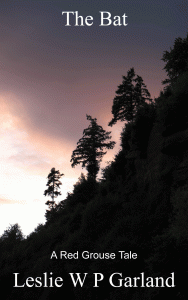
Review of Leslie Garland’s “The Bat”
THE BAT is part of a string of stories told by the patrons of The Red Grouse Inn. I can see them there, sitting by the fire, a pint in their hands, spinning their yarns. I liked THE BAT, a coming-of-age story since it demonstrates that adult fiction does not have to pivot on adult protagonists. Instead, the friends enjoy Thomas’s tale, and the reader gets to listen in.
Actually, while this set-up frames the narrative, it also creates a bit of a distance. We know we are being told a tale; there is nothing of the immediacy popular with contemporary readers. It did make for a bit of a slow beginning, and while I enjoyed the idea, the frame went on for too long, which made me skip to get to the story itself.
Filled with everything a reader of bygone adventures might want to see—a stuffed bat, luscious schoolmistresses, rumours, fires and death—the tale has a deeper meaning.
THE BAT tells a tale about friendship, about growing up, but it also explores concepts like beliefs, religious fervour and asks questions about the truth. Which seems strangely appropriate for a world brimming with fake news and sensationalism. In doing so, THE BAT raises essential questions and demonstrates it’s not a tale about a golden childhood at all.
Garland uses some lovely prose, “Marianne Cole, lover of all things ghoulish” was one of my favourites. He paints a picture of a past that the more grizzled readers among us might well remember. A gentler past? Filled with its own questions and horrors, it did not feel that way at the time.
Anyway, this grizzled reader enjoyed being transported back. I would have liked this tale even more had it not been for the overload of telling and some odd formatting (e.g. the ellipses) I kept stumbling over.
September 1, 2019
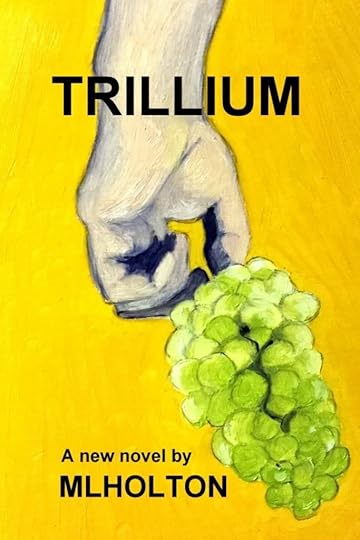
Review of “Trillium” By Margaret L. Holton
Original
and unique, both the story premise and the setting of Margaret Holton’s
TRILLIUM triggered my interest. TRILLIUM tells the story of Canada’s Niagara
Peninsula from the advent of the first European settlers in 1750 up to the
beginning of this millennium, a story that becomes an epic journey not only
through time but also a very specific location. A story? No: an epic saga of
three families spanning generations. Three young settlers, Tom, Franco, and
Paddy sow the seeds of the novel, that grows as organically as the peach trees
in Tom’s orchard.
That
enterprise alone merits praise, as it not only requires sound historical
knowledge but also the skill to portray a lifestyle very different from ours.
Historical novels are actual time machines, perhaps the only ones we will ever
see. I certainly enjoyed being transported back into a world where the
horseshoe falls were not besieged by tourism but were still a thundering
miracle in a wondrous wilderness. I enjoyed reading about the struggles of the
first Europeans and their interactions with the original dwellers of this land.
I would
have loved to read more about these interactions, would have enjoyed seeing the
story of a First Nation family woven into the strand. Alas, this is an author’s
choice.
In a world where fast-paced, action-packed reads have become the norm, Holton goes the other way, giving us a narrative that is as unrushed and serene as a slow-flowing river. Steeped in what strikes me as a keen love for nature and lovingly viewed with the eye of an artist, Holton paints settings with words and shows us a place long lost in time.
“Franco
watched the changing sky with wonder. Birds, beautiful colourful birds, big
ones, little ones, fast ones, slow ones, divers, shore birds, hawks and dainty
yellow-tailed finches, bold white gulls and swift black-tipped terns. So many
birds. All circled the skies above feeding on the marshland below. Such
abundance. Such glory.”
Indeed. Holton is at her best when she zooms in from the omniscient and shows us tantalising glimpses of a time when humanity was not so abundant as it is now. Nature is not there to be protected, it is a formidable opponent instead.
But
just as nature isn’t always benign, Holton’s tale is not all peaches and roses,
there’s plenty of conflict as well. One of the families, the O’Sullivans, acts
as the proverbial snake in paradise. And they get to keep all the apples.
“Sean
realised that fairness was not a virtue that his father or his grandfather ever
subscribed to. Neither of those men were one iota like Tom Hartford. Sean knew
O’Sullivans were grasping and greedy. They destroyed all in their way and wake.
“
I
trusted the author to bring it all to a satisfactory conclusion, and she did
not disappoint. Now, is this amazing journey, filled to bursting capacity with
a large cast of characters, without flaw?
Few
novels ever are. I believe the biggest challenge was contained in the premise –
to follow the footprints of three families over 250 years is an awe-inspiring
endeavour. It comes at the cost of story dramatisation. I would have loved to
see more of the characters, to follow them through the individual conflicts
they fight – and by no means always win.
We are
being given glimpses of this, but to a large degree, necessitated by the
difficult task Holton set for herself, large parts of the story are told. Told
exceedingly well, but still told. For me, that dulled the experience somewhat.
I thoroughly enjoyed those moments where I was with the characters, hearing
their voices, experiencing their strife. As I said, there is plenty of conflict
in the story, but given the scope, not all of it is shown first hand.
Otherwise, this could well have been the Canadian version of “Outlander” – minus the magic, of course. Actually, magic isn’t needed here, or rather: It’s there, in the words.
TRILLIUM is available on Amazon.
August 13, 2019
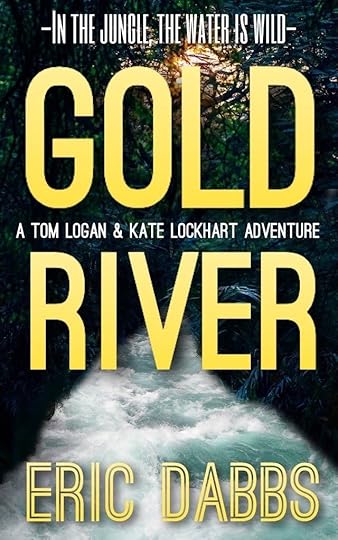
Review of “Gold River” by Eric Dabbs
Pissed-off rattlesnakes? Check.
Hungry Caimans? Check.
Murderous thugs and heinous villains pulling strings from afar? Check and check.
Add the forgotten tomb of an Incan Emperor into the mix, a Texan treasure hunter and a British librarian, ah—sorry Kate, make that a historian—plenty of untouched jungle and, yes, a raging underground stream and you get GOLD RIVER.
Think Die
Hard, only in the Peruvian Andes.
The
whole story is pure action from the moment Tom tests his latest Amazon
purchase—a metal detector—in the Texan desert. That’s where the rattlesnake
comes into play, just in case you wondered. Not everybody is in it for the
money, Kate isn’t she wants to protect her four-year-old daughter, held hostage
by the thugs. Once Tom learns she’s also his daughter, he too has other worries
than riches on his mind.
The
story is at full speed from the word go and never lets up until all the thugs
are either knifed or beheaded or otherwise inconvenienced. Not that Tom is to
blame for the beheading, that one comes courtesy of the old Incans who serve a
souped-up version of the Curse of the Pharaos. Or perhaps, they sought advise
from the Knights Templar, reminiscent of the Raiders of the Lost Ark?
Nobody
knows, but it sure is fun to read.
If I
have any gripe, I would say the cracking pace comes at the cost of
characterisation. Yes, this is action, we don’t want massive character arcs,
but both the format of a novella and the pacing left their mark, the
protagonists either are trope (the thugs) or they are predictable (the on-site
baddie). As far as the two protagonists are concerned, Dabbs gives them a good
backstory and some likeable traits but they are too busy chasing the rainbow to
show me much of who they really are.
I would imagine, true fans of the action genre won’t mind. They want a cracking read and that’s what they will get with GOLD RIVER. I understand, the author has more novels with these two up his sleeve and I have hopes the sequels will fulfil on the promise of this introductory glimpse.
July 27, 2019
Review of “The Stolen Papyrus” by Cate Turner
“ It’s every archaeologist’s dream to explore the hidden tombs of Egypt. Unfortunately for me, my dream turns into a nightmare when Xander Harrison, a childhood friend who betrayed me, joins my team.
I came to Egypt to study the ancient past, not to be confronted with my own.”
I love Egypt, I’ve travelled there many times. Not so much in the recent past, sadly. Which is why I’m forever looking for stories that can transport me across to the Nile (and the Red Sea).
“The Stolen Papyrus” is the latest story I read on the theme. It is written by an author friend of mine. We started together on Wattpad, and she shot out of the trad publishing gate faster than I did. Or will do (manuscript is now back from Chief Editor, which is good news).
But this is not about me, it’s about a pretty unique Romantic Adventure. The author labels the story as a clean romance – which it is as well – and good job too. I’m not into the really high heat levels, even if I can take a bit more. So, clean it is, but sweet it is not. I had a good giggle over the two protagonists who are deeply buried in the excavation trenches the author has dug for them.
They hate each other, and I found that an interesting premise. How would those two ever get together? Cue – they were attracted before when they were younger. So there is some basis to build on which the author puts to good usage.
The other element, of course, is the archaeological element which our two protagonists have in common.
The meet-cute is a hoot – Leila flies in with a helicopter, and it blows sand on Xander’s precious dig. Well, she isn’t piloting the heli, nor is she its only passenger, but of course chappie takes it personally.
Their relationship goes downhill from there, but they are forced to work together to find the lost tomb of a Queen. No, not Nefertiti or Cleopatra. The author did me a real favour and avoided the well-known tropes. Instead, she went for the Middle Kingdom. The research is solid as far as I can see (I’m no expert on the matter, but I have read enough Amelia Peabody to have at least an inkling of what might work).
Throw plenty of mystery into the mix – how did Leila’s father really die, what is it with the vanishing Bibles and who the heck is the dark guy in the picture with Leila’s father? and you get a solid mystery adventure set in my favourite place.
I enjoyed reading it, and I also enjoyed that somebody went to some bother with the copy edits. I’ve got too many books recently where this was not the case, and no, it’s not just the indie authors who are to blame. Indie authors have my respect, and I’m willing to forgive more bloopers than I would with a trad-pubbed novel.
Readers looking for the typical romance novel might not agree with me – it is NOT typical, the focus is on the adventure, rather than the romance. The share is not even 50/50, I would say. For me, that worked just fine.
I would like to see more books breaking the mold. Do we really all have to write formula to win? Are there no readers out there willing to try something slightly different? Pretty please with sugar on top?
If you are interested in getting your book reviewed (on Goodreads and in my blog, with Twitter promotions), please leave a response in the blog or contact me on twitter under the handle @lhansenauthor. I will be honest but kind. If I really should not like your book, I will not post a review – and tell you why.
The Editing Files will continue – I just had some health issues recently. However, I plan to set up a review service, perhaps even participate in blog tours. We shall see. There are only 24 hours in a day…
May 21, 2019
The Fiction Editing Files – On Writing Lean and Mean
The old adage „Every word counts“ still applies. Agents won’t plough throw waffle, nor will the reader. Easier said than done, though. If you’re an over-writer, which I am, a crucial part of editing is cutting through the creepers, making sure your plot and characters can dazzle and shine.
How?
Search your manuscript for those instants where you combined a speech tag “she said” with an action beat. “You’re a real jerk,” she said and tossed her hair. Either let her say it or let her toss her hair if she really has to. Never both, it makes for an incredible amount of unnecessary words. Use clear verb forms. In the first draft, my first point read “By doing a search for…” instead of search. Nope. Waffle. Cut it out. Be as active as possible. Not only does it focus your writing, but it also cuts down your word count. Adverbs. They exist for a reason, but all too often they block prime real estate when they should not. If I read things like this “I’ll kill you,” he said menacingly, I feel a growl coming on. “We need to go,” he said, slowly, as if he didn’t believe himself – this is better as it adds an extra meaning, not contained in the statement. There might still be a shorter way of expressing this, but I hope you get my drift. Fillers – a bit, some, sort of – if they appear in dialogue, they might add voice. Outside of dialogue they usually do not, unless you’re writing in deep penetration and such mannerisms are part of your voice (I’ll come to voice in another blog post).Over-descriptiveness. I’m sure you’re familiar with the term “telling detail”? No? Basically, it means you give the reader a few pointers as a springboard for their imagination. They can build the rest of the scene themselves. If you also appeal to more senses than the eye, the image will stick even better.
Here’s an example from “Down the Hatch”, the sequel to “In My Attic.”
“Accompanied by the clanking of cowbells, I entered the gift shop. Cool, fresh air fanned my cheeks. The draft was saturated with the scents of lavender potpourri, blended with the faintest of mouldy whiffs.”
A little bit further down our protagonist gets surprised by a dark figure (must have shadowy figures in mysteries!)
“With a yelp, I backed into the nearest shelf. I sensed something woolly at my back. That was reassuring, it meant I had not hit the china mugs.”
With those few pointers, the reader should have a reasonably clear idea of what sort of place the protagonist finds herself in. I give a few more details in the novel, but that’s for a reason – I’m writing a mystery, and there’s a clue hidden here. But the principle should be clear – try to work out what best carries across the image you’re seeing, appeal to all senses if you can and be as focused as you can.
Not only does it save on words, but it also gives your readers more freedom to built their own worlds.
Enjoy!
April 14, 2019
The Fiction Editing Files #3
Welcome back! This blog continues the editing subject I started last week. This time, I’ll give you an example from my own novel (well, I would, wouldn’t I :-)). My offer still stands – I’ll give you a feedback on the first ten pages of your novel. They’re crucial. If you would like to take me up on the offer, subscribe to the blog and I will respond to your mail with an email address on where to send the PDF to. Or where you can send a Google doc link. Whatever works better for you. The Editing Files will continue, with a focus on descriptiveness. Stay tuned!
Tip # 4: Cut and drip-feed exposition. “Backstory” is essential, but we don’t need to have it all at once. Drip-feed what you need. When writing a series, develop a short and punchy text that sums up what goes before. You’d be surprised with how little backstory you can still fly. We need to understand who the character is, and why she is who she is. But we don’t need to know every little detail. Very often NOT giving all this information all at once creates suspense. Suspense is good. It keeps the reader reading.
Example: In my novel “In My Attic” I use that technique when the main character, Myrtle, refuses to visit the standing stones. She says she kept her eyes shut when her colleague drove into the village on the Swindon road, she leaves the village via the backroad, she tells her aunt just being in the same place with the stones feels like the kick of a mule. Why? We know her parents died in an accident. We don’t know what happened, when and why. Bit by bit, scene by scene, the reasons for her fears become clearer. But it is not until almost mid-point that we learn what really happened. And when we do, we are immediately confronted with another mystery.
Tip # 5: Also, make sure your descriptions are to the point. Readers need to visualise settings, need to feel them, smell them, hear them, touch them. Even taste bits if they can. But there comes the point when it becomes too much. Try to identify “telling details” that convey the essence of a setting. My protagonist is standing under the awning of a New Age shop, “orangey streamers snapping in the gale, wind chimes jangling.” That’s it. When she checks out the shop window, she focusses on an amethyst geode, a few knick-knacks – and a set of Tarot cards. That’s it. We don’t need much more. I’m not describing the teddy bear on the cash desk, or bother with incense (shop is closed anyway). A few well-chosen tidbits and the reader can convey their own image. Everything else can go.
Tip # 6: Telling versus showing: Once in a while you need to tell, to move the story on. Telling covers a lot of ground. By changing that to showing, i.e. presenting the plot in action, in dialogue and introspection you don’t cut, you expand. Still, wordcounts cannot be extended ad infinitum. So, you need to make sure you have cut enough of the fluff, to allow for the meaty stuff. When I edited “In My Attic”, I started off with roughly 87,7 K words. At least 30% of that was telling. I axed it and still ended up with 87,3 K words in the end.
It can be done – and you can do it.
April 8, 2019
The Fiction Editing Files #2 – How to best kill your darlings
First drafts are a bit like sandcastles on the beach: creative, lots of fun to build – but fragile. When the tides come in, they get washed away.
Well, the good news is – not all of your writing will get washed away by editing. Plot elements, characters, phrases will hang around. The more you rebuild, the more will cling on, a bit like friendly barnacles. However, in a way, the editing process never ends. Not even when it is finished. Hey, even a hugely successful author like J.K Rowling keeps introducing new facets to her characters and admits openly she regrets killing some of her reader’s darlings.
While authors like Rowling can bring their darlings back to life through prequels and films, can openly discuss their choices and even apologise for shooting down some characters or for pairing others, most of us will not enjoy that privilege. At some point, we need to lift the axe. Not only on characters, but also on pieces of texts, elements of the plot that felt just right during the first draft but suddenly no longer fit.
Tip #1 – If you have to cut something you’re proud of, keep a copy. I have a “dead dodo” file, where I keep my darlings that did not make the cut. I also butcher those firsts novels that won’t ever see the light of publishing. There ARE good things in there. Things that might work in a different context. Phrases, descriptions, walk-ons that are too good not to be used. Store them, and you will be surprised how much you can re-use.
Having said that, how does one know that something doesn’t fit? Sadly, the list of potential candidates to walk the plank is rather long.
Tip #2 – To cut or not to cut – There’s a hitlist for editorial killers.
First of all – lose the waffle. And no, I don’t mean the things you can buy at fun fairs. Wordiness, echoes, repetitions – of words, actions, even characters – need to be cut. Every word counts. Your readers don’t pay for fluff. They don’t pay for clunky or loose sentences à la
“She considered starting to think, tackle the issue, but realised that perhaps she ought to maybe go the other way and just let her mind drift. Float in the blue. Not use her brain for a while.”
Those are a lot of words to say somebody doesn’t want to face reality. Plus, I would give the “issue” a name and describe it.
Tip #3: Cut scenes without purpose. Every scene serves a function (action, transition, character or information) and every single one of them must drive the plot. If they don’t, they have to go. For example, scene 1 in chapter one might introduce the characters while the second scene gives (some!!!) backstory. Scene 3 then has the characters transition to another location where they, in scene 4, get whacked by the inciting incident.
OFFER – I’ll help you. The first person to contact me will receive a review of the first ten pages with summary feedback.


