
Helen Hiebert's Blog, page 36
February 23, 2019
Handmade Paper for Sale!
The Sunday Paper #248
February 24, 2019
Paper of the Week: Online Paper Sale!
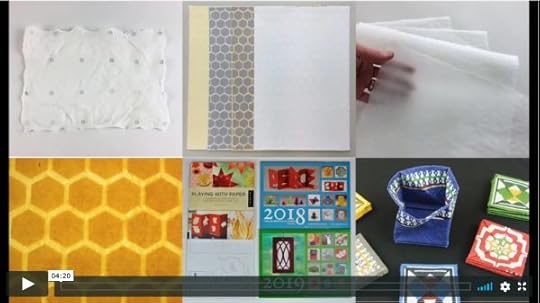
Twice a year, I clear out my flat files and you get a paper sale. Treat yourself to unique handmade papers that you won’t find anywhere else in the world! Everything is discounted – yippee! The sale ends next Sunday, but there are limited quantities for each package, so order now to get what you want!
Here’s a link to the sale page, and click on the image below to watch the video about the various papers.
———————————————————————————————–––––––
In the Studio:
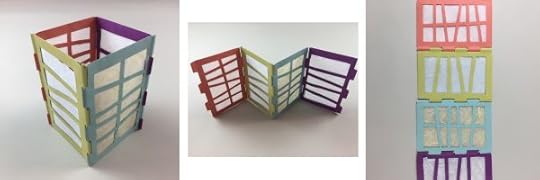
I’ll be launching my next online class in about a week and I’m busy creating all of the prototypes for the six book structures we’ll be creating from April 10th – May 15th. Here’s an example of a flexible book structure that can be displayed as a lantern, folding screen, wall or window hanging.
———————————————————————————————–––––––
I discovered the work of Finnish artist Raija Jokinen thanks to a reader of The Sunday Paper. Her work is quite unique and I encourage you to tour her website. Jokinen developed her own technique based on painting, drawing, papermaking, embroidery and textiles, and she reflects on the spiritual and physical nature of man. Thanks to everyone who sends me ideas (and donations)! I truly adore sharing these goodies with you each and every week.
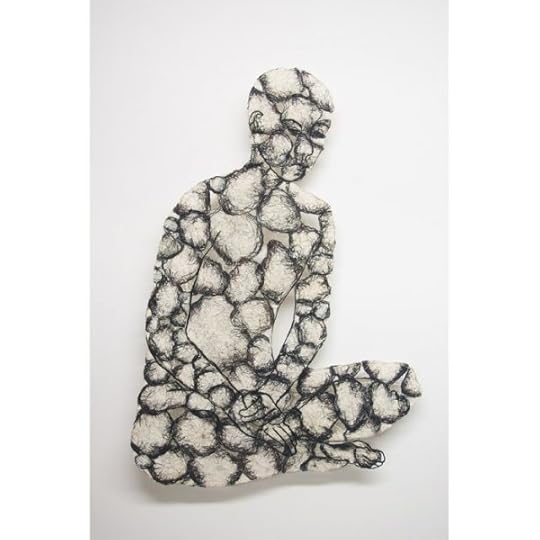
© Raija Jokinen, Kivettyminen / Peppled, (2015, 50 x 74 cm), pellavakuitu / flax
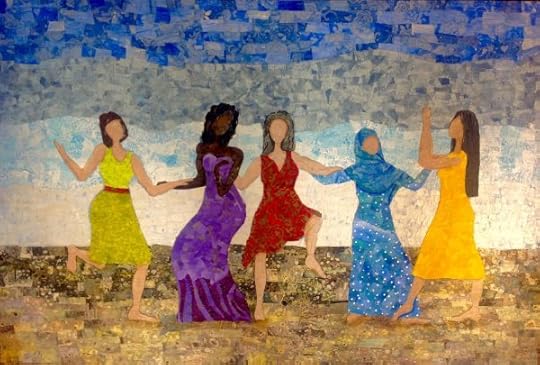
Another reader sent me this article featuring the collage work of Linda Klippenstein. The inspiration for this series, called Women Walking Strong, came from the women she works with who live difficult lives and are socially isolated. She’s planning a large community project, taking canvases to a variety of locations to include women who otherwise wouldn’t participate – women who are incarcerated, elderly women who are isolated, and students, which will be exhibited on International Women’s Day.
These molded 3D paper sculptures by Tiffany Miller Russell are really unique! Click through to watch a timelapse video of her creating one.
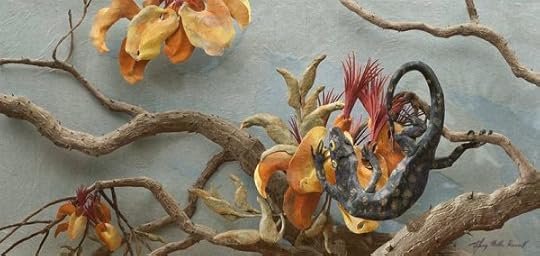
© Tiffany Miller Russell
Treewhispers is an ongoing project that began almost 20 years ago when Pamela Paulsrud shared her vision with friend and papermaker Marilyn Sward. It is about trees, the earth, people, and paper—the stories and their connections. Read this touching story about the beginnings of the project. Treewhispers is ongoing – follow along and contribute a tree round if you feel moved to do so!
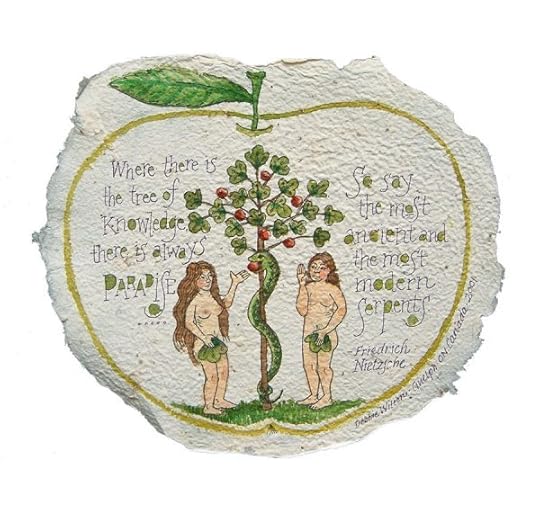
Artwork by Debbie Wilson
This is a sad article about the fate of a newspaper. I enjoyed how one of the press men thinks of himself as an artist. The Tennessean pressroom has printed newspapers for 82 years and in March, the presses are stopping for good.
———————————————————————————————–––––––
 If you read this blog regularly, would you consider making a donation to support the research, writing, design and delivery of The Sunday Paper? Click on the paper button at the left to learn how. Or, perhaps you’re interested in promoting your business in The Sunday Paper.
Thanks to everyone who has already pledged your support!

SHARE THIS blog post with your paper-loving friends:


February 16, 2019
Honeycomb Paper
The Sunday Paper #247
February 17, 2019
Paper of the Week: Envelope Light Catcher
If you have a copy of the Twelve Months of Paper Calendar, have you created the February project, the envelope light catcher?
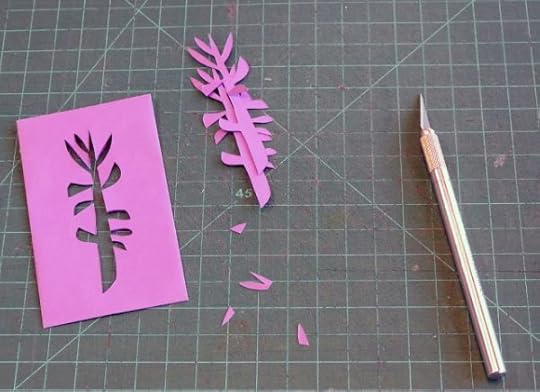
If you don’t have a copy of the calendar, I wrote a guest blog post on how to make these a couple of months ago for Stencil Girl Talk. And in my upcoming (brand new) online class, Flexible Book Structures, we’ll be making be using multiple envelopes to create a structure that can be transformed into a book, lantern, folding screen or wall hanging (registration for this class will open in early March).
Have you used envelopes in a project? They come is such wonderful colors and sizes! Here’s a pinterest board I made featuring all sorts of envelope projects, and in my recent Weave Through Winter online class, several participants used the patterned paper found in security envelopes in their paper weavings.
———————————————————————————————–––––––
In the Studio:
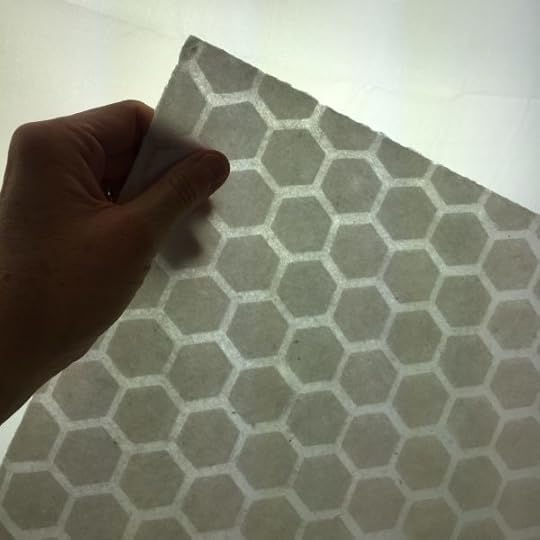
I know I showed you this honeycomb watermarked paper last week, but I can’t get enough of it. I’m making five colorways for my upcoming paper sale (it begins next Sunday, so make sure you read the blog if you need some paper). In case you’re interested, here’s what went into making this paper, which you’re viewing wet and freshly couched. I created a stencil/watermark pattern in Adobe Illustrator (with the help of a designer) that I had cut in a thin rubber material with an adhesive backing. I placed the resulting stencil on a 12″ x 18″ mould. I prepared two batches of pulp: one coarsely beaten cotton linter that I mixed a bit of beaten abaca into for strength and pigmented yellow; and another batch of finely beaten cotton linter that I pigmented with a silver metallic pigment (it had a bit of metallic sheen when wet, and I’m curious to see how it looks when it dries). I pulled a sheet of the plain yellow paper on my other 12″ x 18″ mould, couched it, and then pulled a very thin sheet of the silver paper with the watermark – the pulp slipped off of the stencil and into the hexagons. I then couched the silver sheet on top of the yellow sheet.
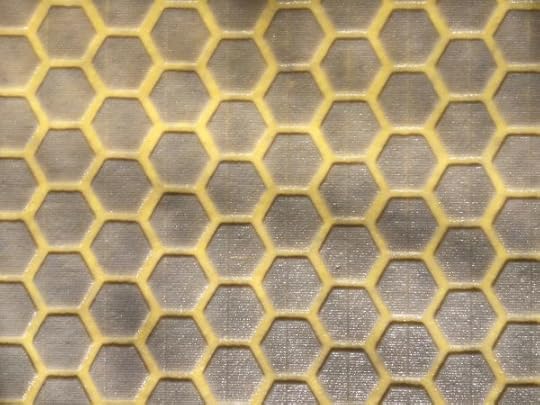
Probably more than you wanted to know, but I hope it helps you appreciate the process (and the price I charge for my papers)!
———————————————————————————————–––––––
On Paper Talk: I interviewed Craig Anczelowitz, an artist and designer affiliated with the 8th generation of papermakers at Awagami Papermill in Japan. I first met Craig over 25 years ago in New York City, when he was a paper buyer for Kate’s Paperie, and I was the program director at Dieu Donné Papermill. Have a listen, spread the word, subscribe to upcoming episodes, and leave a review on Itunes!
Artist Megan Singleton has an exhibition at the Reese Gallery in St. Louis through March 23rd. Her new body of work reflects upon the loss her late brother Jeremy, A.K.A Cristo. Her text panels and sculptures, made of handmade paper, mimic the gesture of her brothers writing. Neutral color pallets are paired with deep calming shades of indigo. Singleton creates a space filled with reflection, remembrance, and transition. Here’s a link to Megan’s website, where you can see more of her work.
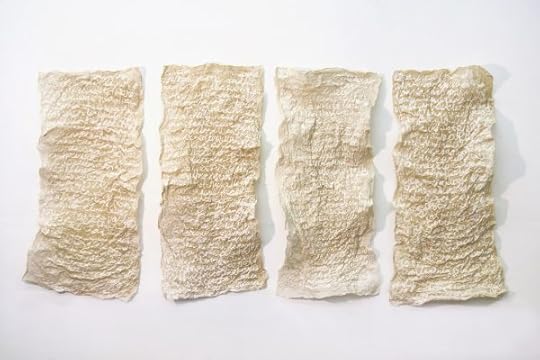
© Megan Singleton, “Dear Jeremy”, letters from Megan to her late brother, in which she talked about childhood memories and other things that she never got to say to him.
On the Twin Art Gallery walls at Indira Gandhi National Centre for the Arts (IGNCA) nearly 61 works of calligraphy on handmade paper hang to celebrate 150 years of Mahatma Gandhi’s birth (Gandhi was instrumental in revitalizing papermaking in India). I love this sentiment by Jaya Jaitly about calligraphy: “It conveys meaning by illuminating a word or an idea. It’s like how a dancer internalizes the movement and expresses herself in a swoop. Similarly, you can’t hesitate in calligraphy. One has to plan the imagery and internalize the idea that has to be communicated.”
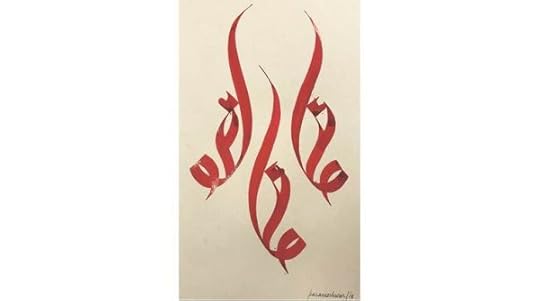
Parameshwar Raju’s Gandhi’s Three Monkeys
Here’s a clever gift idea for the first wedding anniversary – the paper anniversary – from Paper Rose Co. out of Richmond, VA: Paperversary Bouquets!
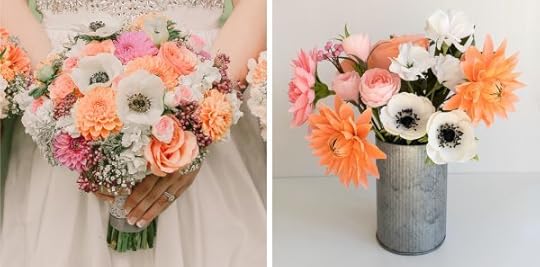
Michael & Charlotte, Paperversary bouquet by Paper Rose Co.
Scott Reinhard creates these unique maps by combining geologic maps with digitally-rendered 3-dimensional elevation.
———————————————————————————————–––––––
If you read this blog regularly, would you consider making a donation to support the research, writing, design and delivery of The Sunday Paper? Click on the paper button at the left to learn how. Or, perhaps you’re interested in promoting your business in The Sunday Paper.
Thanks to everyone who has already pledged your support!
SHARE THIS blog post with your paper-loving friends:
February 9, 2019
Folding as Tech
The Sunday Paper #246
February 10, 2019
Paper of the Week: Risographed Prints by Kelli Anderson
Kelli Anderson, author This Book is a Planetarium, shares some of her genius with us again in a sheet of printed and scored paper. She’s created a folder of pre-scored auxetic folding patterns (yup, I had to look that up too: structures or materials that when stretched, become thicker perpendicular to the applied force).
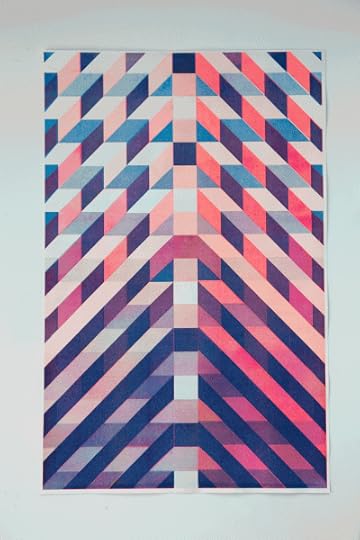
The prints are tucked into a custom folder made by Talas book binding supply, and the folds are adapted from the miura-ori fold, which is used in surgical devices, foldable furniture and satellites. I’ve ordered a set of the posters ($19 + shipping) and will let you know IF and when I succeed in folding them. IMHO, these folds are tricky, but Kelli has some instructional videos to guide us!
And if you’re geeking out over this as I did, follow these links down the rabbit hole… Here’s Kelli’s blog post about Folding as Craft Tech filled with fascinating links about paper folding + technology, and her current course called Code Paper Scissors at the School For Poetic Computation.
———————————————————————————————–––––––
In the Studio:
I have a new watermark on the mould, and I’m making this honeycomb paper in a variety of colors for my upcoming online paper sale – stay tuned.
———————————————————————————————–––––––
This looks like an amazing show at the National Museum of Women in the Arts. Pakistani-American artist Ambreen Butt reimagines traditional Indian and Persian miniature painting to feature contemporary female protagonists and political subject matter. While the intricate details of her works on paper invite close looking and discovery, her content tackles larger global issues of oppression, violence, and the role of art as social commentary.
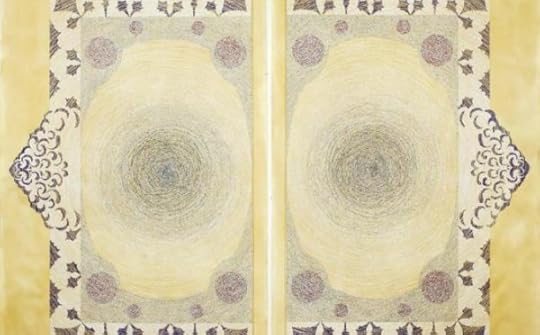
© Ambreen Butt, Pages of Deception, 2012; Diptych drawing with torn and collaged text, 70 1/2″ x 45″
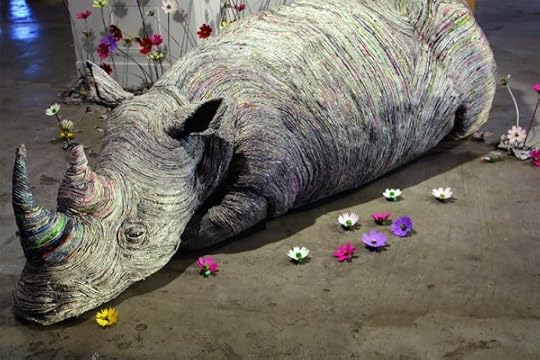
Doesn’t this look real? Look again! Chie Hitotsuyama skillfully binds rolled and twisted pieces of wet newspaper to each other. By varying the thickness and contours of the paper, she is able to precisely produce any figure she desires—from an animated little monkey to a resting rhinoceros. Be sure to click through to see more of her sculpture.
Check out this amazing work by Troy Dugas who creates his canvases from shredded vintage ledger paper, forms, and receipts (as well as other types of paper).
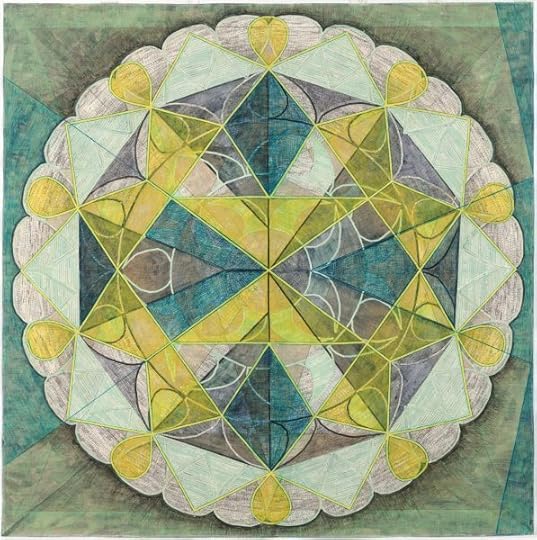
Balancing Act Radial Form #3, acrylic, colored pencil, graphite, vintage ledger paper, forms, receipts on paper, 72″ x 72″
I’ve never heard of the endangered art called dragon scale bookbinding, but Chinese artist Zhang Xiaodong (who decided to research and revive it) layers hundreds of sheets of thin paper on top of one another until they form a complete and impeccable image. When the chapters of his elaborate books are unfolded, the pages move like the bellows of an accordion. It seems a bit like European foredge painting.
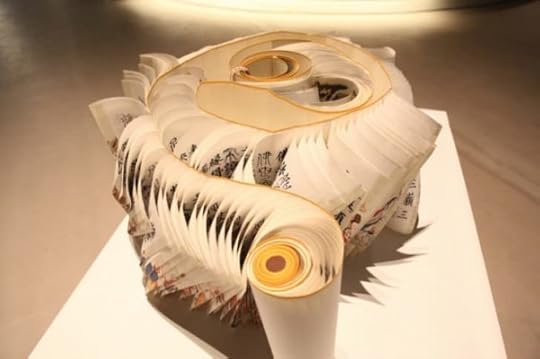
“Diamond Sutra” (2017) by Zhang Xiaodong. Credit: Courtesy of Sin Sin Fine Art
I’m wishing you all a wonderful Valentine’s Day this week! I stumbled across some heart-shaped Junior Mints for my hubby at Paper Source last weekend. And here are some woven valentines from my Weave Through Winter online class. This is just the tip of the iceberg in terms of their paper weaving feats! I’ll be sharing more soon.
———————————————————————————————–––––––
If you read this blog regularly, would you consider making a donation to support the research, writing, design and delivery of The Sunday Paper? Click on the paper button at the left to learn how. Or, perhaps you’re interested in promoting your business in The Sunday Paper.
Thanks to everyone who has already pledged your support!
SHARE THIS blog post with your paper-loving friends:
February 2, 2019
Reversible Paper
February 3, 2019
Paper of the Week: Reversible Unryu
I love momigami (crumpled paper, traditionally used to make clothing and other items in Japan). This is an affordable commercial variety that is double-sided and cloth-like. It comes in black/red, which you see here, and is also available in four other colorways (sienna/cherry, brown/chiri, white/cream and blue/lime).
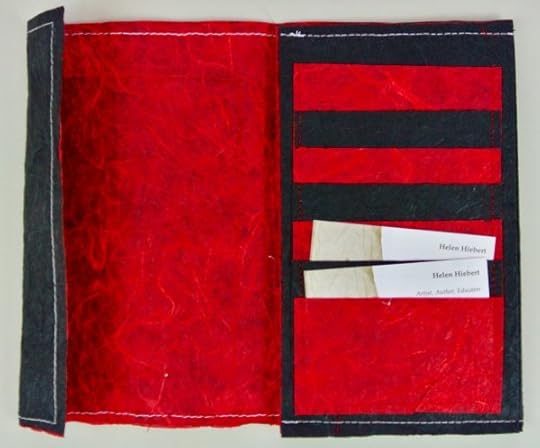
I folded a strip of the reversible unryu multiple times and stitched it to create this book object that unwraps to reveal pockets, envelopes, a pamphlet of pages for writing and a velcro closure.
———————————————————————————————–––––––
In the Studio
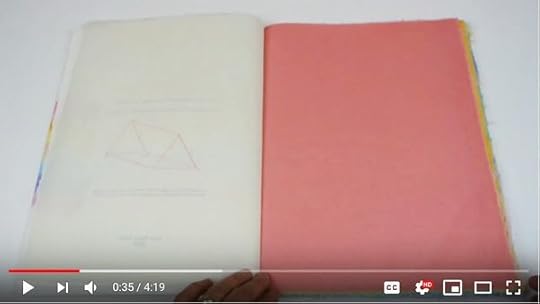
I’m delighted to share this video of my new artist’s book Prism, which is making a debut at the Codex Book Fair in Richmond, CA starting today. The book features 48 translucent colored sheets of abaca paper that gradually change from red to orange, yellow to green, blue to indigo and finally violet and then back again. There’s a watermark and hand stitching, both elements I often use in my books. Vamp & Tramp Booksellers have it at their table (I am not attending this year).
———————————————————————————————–––––––
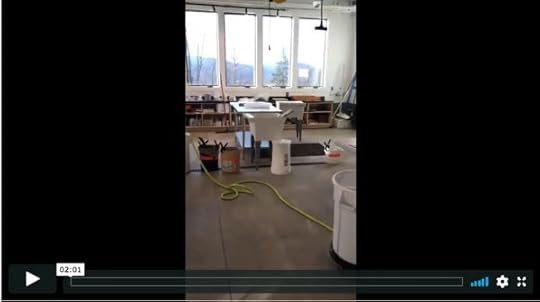
My friend and colleague Jillian Bruschera was at the Penland School of Craft recently, working in the new papermaking studio. I asked her to take a video for us, and here it is! I can’t wait to see it for myself. Thanks Jillian!
The 45th Art on Paper exhibition opens this weekend at the Weatherspoon Art Museum in Greensboro, North Carolina. This article details how the exhibition began with a $10,000 from Stark Dillard which enabled the museum to acquire works to start the Dillard Collection of Art on Paper there. The exhibition gives the Weatherspoon the opportunity to buy more for its collection, and it also enables the community to buy contemporary works from up-and-coming artists. Win win!
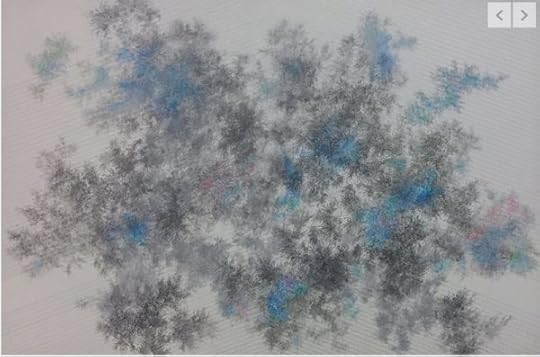
Sun Won Yun’s Invisible Traces, 2018, graphite and colored pencil on layered transparent paper. Courtesy of Garvey Simon Art, New York, NY. Photo courtesy of Weatherspoon Art Museum.
Thomas Demand fabricates paper scenes, which he photographs and then destroys – what an interesting relationship between the physical object he creates, the sculpture, and the photograph.
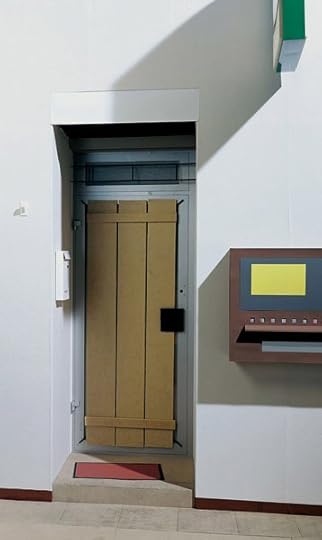
‘klause 1’ (2006) © thomas demand
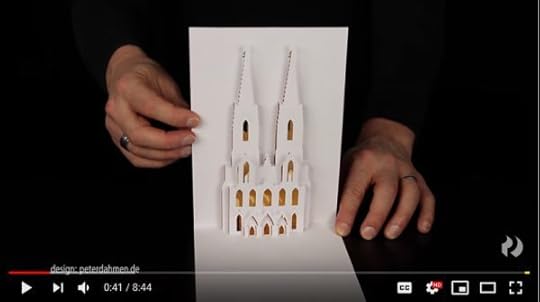
I had the pleasure of meeting Peter Dahmen last fall. He recently released this video, which addresses his customers’ wish for pop-up cards that show off specific buildings. This is a great promotional piece that shows off seven paper engineering concepts for real estate advertising.
Check this out: In 1978, during the relatively early days of the personal computer, a man named Frederick Lancaster predicted ”. We still aren’t paperless, are we? Since that prediction, worldwide consumption of paper has actually risen by 400% according to Green America. This is an interesting article about the rise in the use of security paper, which is used for everything from checks, stock certificates and sensitive government-issued documents to coupons, event tickets, and more.
———————————————————————————————–––––––
If you read this blog regularly, would you consider making a donation to support the research, writing, design and delivery of The Sunday Paper? Click on the paper button at the left to learn how. Or, perhaps you’re interested in promoting your business in The Sunday Paper.
Thanks to everyone who has already pledged your support!
SHARE THIS blog post with your paper-loving friends:
January 26, 2019
Aimee Lee on Paper Talk
January 27, 2019
Paper of the Week: Cavellini & Co. Wrap & Posters
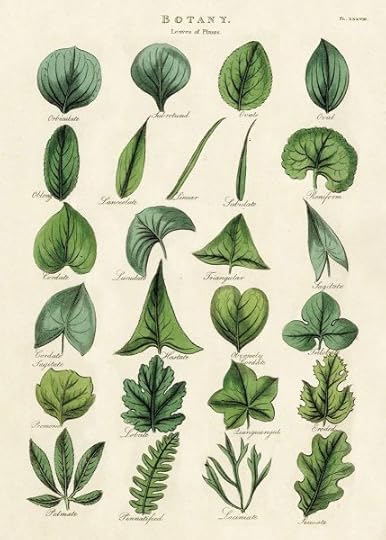
I see paper everywhere. My local bookstore has a rack of papers that are meant to be gift wrap. This is high quality gift wrap printed on archival paper in Italy. I’m not sure I could use this to wrap a gift! Cavallini & Co. has hundreds of designs which they sell as gift wrap and posters, as well as hundreds of other stationery products that are available in retail stores around the country.
Do you sell handmade paper? I’d love to feature it as the Paper of the Week. Please reach out and tell me about it!
———————————————————————————————–––––––
In the Studio
Aimee Lee, my guest on Paper Talk, is an artist, papermaker, writer, and the leading hanji researcher and practitioner in North America. Her Fulbright research on Korean paper led to her award-winning book, Hanji Unfurled, and the first US hanji studio in Cleveland. Among other things, we talk about how a prompt to answer “What is your life’s dream?” got her a Fulbright to study papermaking in depth in Korea. Enjoy our conversation!
———————————————————————————————–––––––
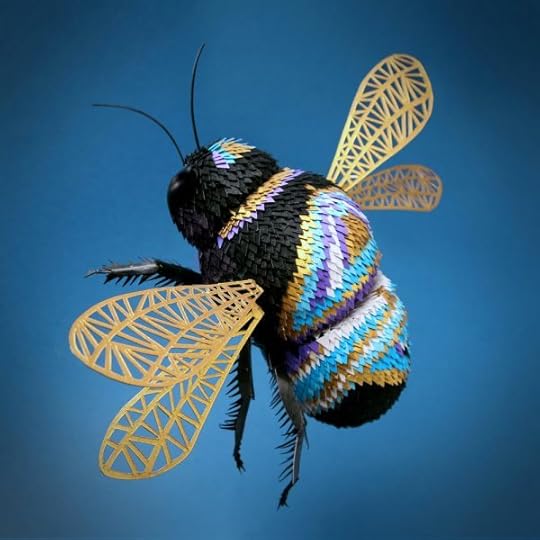
Have you seen this? UK-based paper artist Lisa Lloyd builds dazzling birds, floral arrangements, and feasts from multi-colored layers of precisely cut paper.
Week two of the Weave Through Winter online class has yielded many amazing paper weaving studies and works of art! Here are two that were shared over in my free facebook group Club Paper.
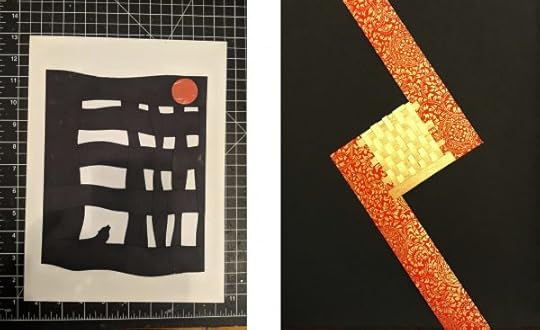
Marguerite Katchen Jacqueline Harris
I’ve used contact paper to line shelves and to create watermarks in the papermaking process. Here are 10 ways to use this adhesive-backed paper to transform your space.
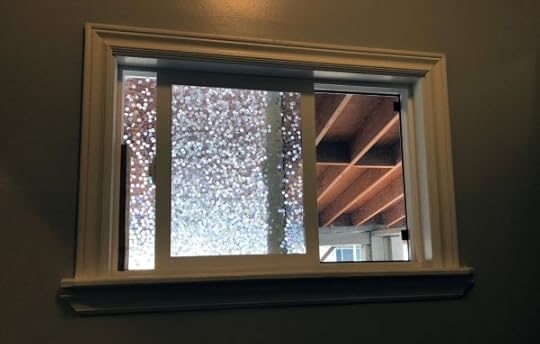
Photo: Anna Weaver, from Simplemost
Here’s a great article about Green Banana Paper‘s Matthew Simpson (listen to my podcast interview with Matt). Not only does he run a cool business making paper from local banana fiber in Micronesia, but he’s creating jobs for locals and much more!
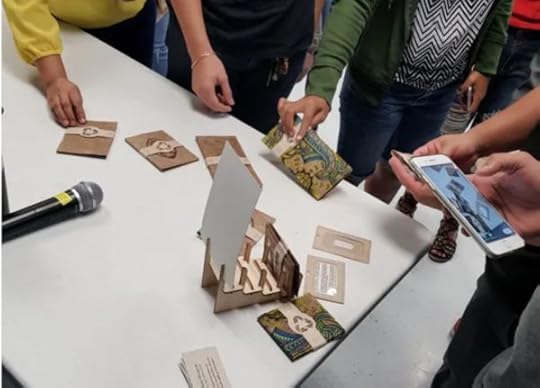
GCC students and other community members check out Matthew Simpson’s display of wallets from Green Banana Paper. (Photo: Tamar Celis)
I enjoyed this article about the de Grummond Children’s Literature Collection which is housed on the University of Southern Mississippi campus in Hattiesburg. Looks like it might be worth a trip!
———————————————————————————————–––––––
If you read this blog regularly, would you consider making a donation to support the research, writing, design and delivery of The Sunday Paper? Click on the paper button at the left to learn how. Or, perhaps you’re interested in promoting your business in The Sunday Paper.
Thanks to everyone who has already pledged your support!
SHARE THIS blog post with your paper-loving friends:
January 19, 2019
Dutch Ornamental Sheets
January 20, 2019
Paper of the Week:
I read about on the Book Arts Listserv this week, a company run by Madeleine and Vernon Wiering, a daughter and father design team. They call themselves design archaeologists: they dig through the past to find designs and decorated papers and resurrect them by reproducing and reimagining these often hidden examples of beauty and make them available as decorative paper and derivative products.
This Dutch Ornamental Sheet design is reminiscent of ornate iron work. It is inspired by a decorated sheet found in a book published in the Netherlands in 1891. This design was also found in German books of the period. The paper is sourced from French Paper Company, a family run company in Niles, Michigan – a pioneer in recycled paper production – and their mill is powered by fully renewable hydroelectric generators installed in 1922 (saving over one million barrels of fossil fuel to date). The sheets are offset printed in the USA.
———————————————————————————————–––––––
In the Studio
My online class Weave Through Winter kicked off this week. We’re creating a weaving a day, and week one involves weaving strips of paper. Here a few examples:
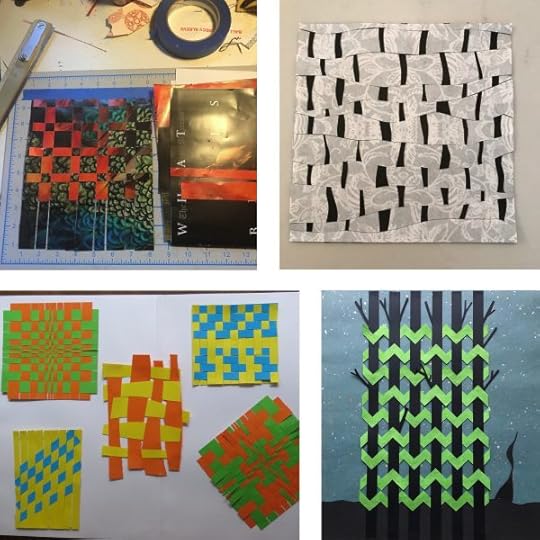
Clockwise from TL: Sarah Morgan, Monique Dufour, Dinah Beeston, Andrea Martin
———————————————————————————————–––––––
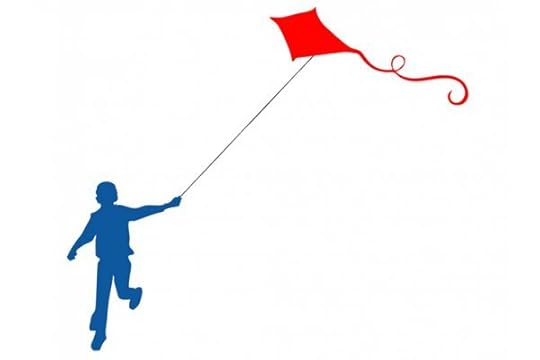
This is a fun and simple origami kite tutorial, which would be great for kids, as seen in Surfer Today.
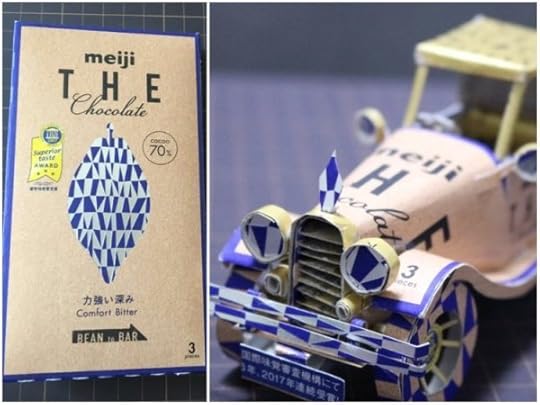
A box of chocolates turned into a miniature car. Look what Haruki is doing with packaging instead of tossing it into the garbage. So clever! Be sure to click through to see all of the images!
Isamu Noguchi’s Akari lights are iconic (he was invited to rejuvenate the look of traditional Japanese lanterns). Here’s a nod to Noguchi and a showing of some newer lights fabricated from paper.
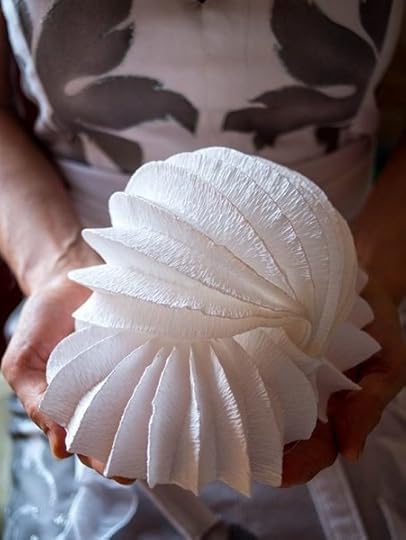
Photo: Courtesy of Etsy, White Snail Origami Table Lamp by Alessandra Fabre
Houston is a hot seat for art. The new Menil Drawing Institute has a Jasper Johns show up for another week, and this article touches on the various paper(like) substrates he has drawn on, including drafting paper, tracing paper, and even paper towel, as well as on mylar and other plastic surfaces.
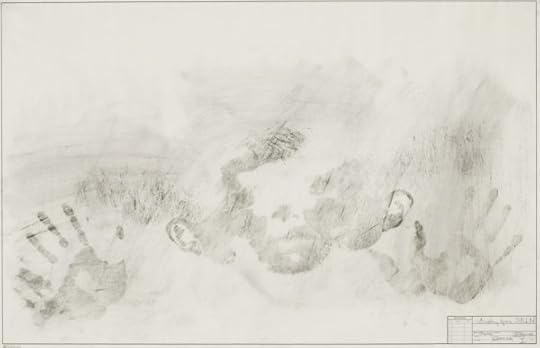
Jasper Johns, Study for Skin I, 1962, charcoal and oil on drafting paper, 22 x 34 inches. ©2018 JASPER JOHNS, LICENSED BY VAGA AT ARTISTS RIGHTS SOCIETY (ARS), NEW YORK/COLLECTION OF THE ARTIST
Lignin is something we try to remove from plant fibers for papermaking, but now scientists at Oak Ridge National Laboratory are taking the waste and turning it into a material that has some interesting qualities and potential!
———————————————————————————————–––––––
If you read this blog regularly, would you consider making a donation to support the research, writing, design and delivery of The Sunday Paper? Click on the paper button at the left to learn how. Or, perhaps you’re interested in promoting your business in The Sunday Paper.
Thanks to everyone who has already pledged your support!
SHARE THIS blog post with your paper-loving friends:
January 12, 2019
Kaleidoscope Leaves
January 13, 2019
Paper of the Week: Kaleidoscope Leaves
I was in Denver last week and stopped by Mulberry Paper & More’s warehouse. This is a unique online retail store that sells full sheets of paper, but if you don’t want (or need) a full sheet, you can get them in smaller sizes: 6″ x 6″, 8-1/2″ x 11″ and 12″ x 12″. So cool! This particular paper caught my eye. What would you make with it?
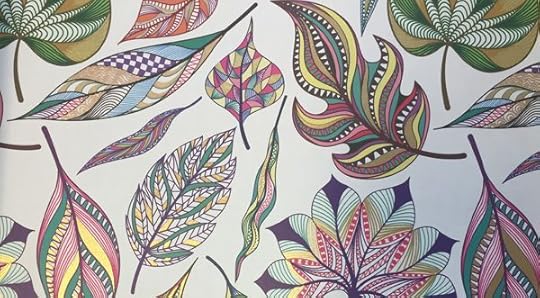
Traditional Italian Florentine papers inspired by the Renaissance period feature stunning colors, intricate designs and gold accents. The Kaleidoscope Leaves design displays a multicolored leaf design against a cream background.
• 80 GSM • Machine Made • Acid Free • Made in Italy • Fiber Content: Cellulose and Sulphite
———————————————————————————————–––––––
In the Studio
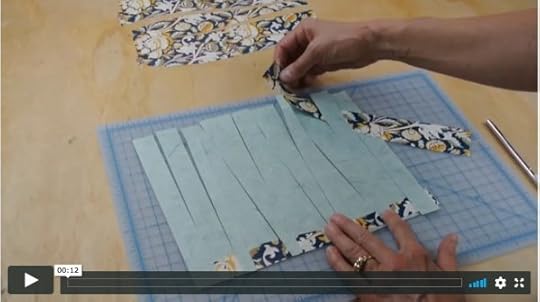
I’m putting the finishing touches on the Weave Through Winter Online Class (this is your last chance to sign up). Click on the image below to watch a time lapse of one of the first weaving structures I’ll be showing, and it gets more complex from there!
———————————————————————————————–––––––
I received a note from a reader, who introduced me to her lovely collage work. Maureen Maki creates paintings by collaging a variety of handmade papers from the extensive collection she’s complied over the years. I love how she collages around the edges of her canvases – click through to see this.
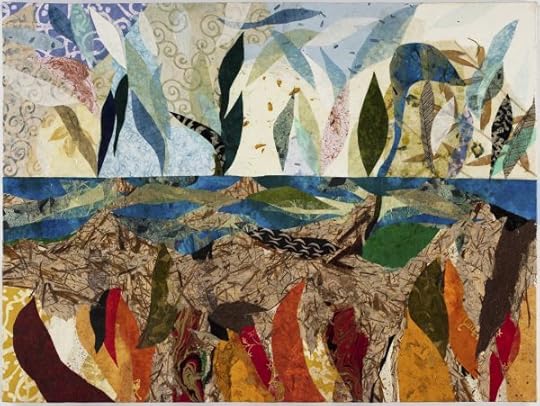
© Maureen Maki, Montecito Rebuild, 36″x48″
Want to work in paper (in Portland, OR)? The c3: Papermaking Residency was established in 2014 to engage artists with little or no experience in hand papermaking, and offer them an opportunity to learn the craft and stretch the limitations of what the medium can do. Provided with instruction and guidance via technical assistance from a professional papermaker/artist at Pulp & Deckle studio and exclusive 24/7 access to the studio, residents create and exhibit new work. Deadline is January 21st. I interviewed Jenn Woodward, proprietress of Pulp & Deckle on Paper Talk in 2017.
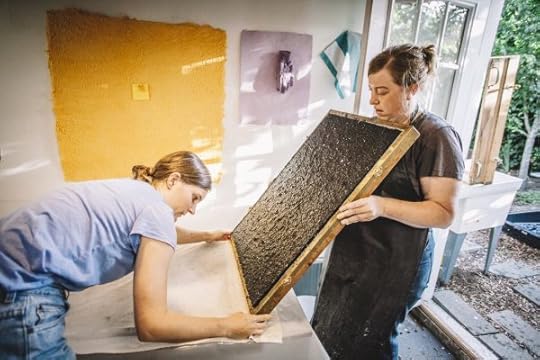
Jenn Woodward of Pulp & Deckle assists a resident artist
It is such a treat to gain insight into what an artist is thinking about while they work (I find that often it is hard to put into words). I really enjoyed reading this article about Branford Smith’s work with circles and students. “… the tendency is to … allow inspiration to cloud observation which can confuse the process,” he said. “When I retraced my steps I would find a point where I made a decision to make a circle do what I wanted it to do rather than observe what it was doing. I think about the world today and how that is our problem.”
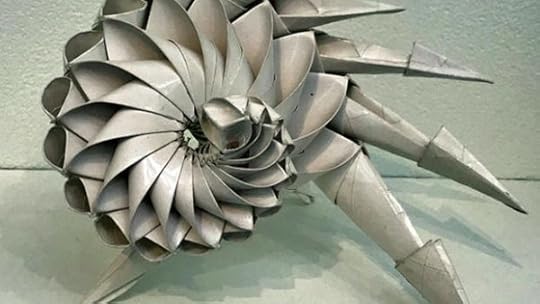
A paper sculpture made from folded circles bound together by Bradford Hansen-Smith.
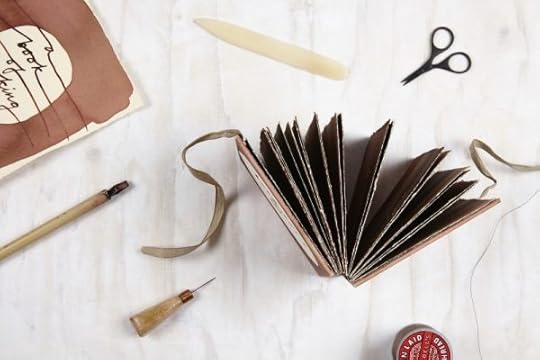
Rachel Hazell’s e-course BookLove starts tomorrow, and it isn’t too late to grab your spot. Grow your repertoire of techniques as BookLove unfolds over two full weeks and continue to make bookart throughout the year. Rachel Hazell’s twenty years of teaching experience and enthusiasm provides a wealth of exercises and instruction so you can dive in to fresh ideas and new ways of working.
Book before the 14th of January using the code NEWIDEAS and receive a 10% discount on the course price.
Here’s an interesting article about artwork on a cruise ship, and Peter Gentenaar‘s amazing paper sculptures are mentioned, plus they’re on the ship. Take a cruise with them!
———————————————————————————————–––––––
If you read this blog regularly, would you consider making a donation to support the research, writing, design and delivery of The Sunday Paper? Click on the paper button at the left to learn how. Or, perhaps you’re interested in promoting your business in The Sunday Paper.
Thanks to everyone who has already pledged your support!
SHARE THIS blog post with your paper-loving friends:
January 5, 2019
Mabel Grummer on Paper Talk
January 6, 2019
Paper of the Week: Arnold Grummers
I had the opportunity to meet with and interview Mabel Grummer & Kim Schiedermayer, wife and daughter of Arnold Grummer, in October for Paper Talk. We talked about Grummer’s career, which eventually led to the family business that Kim still runs today, providing papermaking kits and supplies to educators and artists.
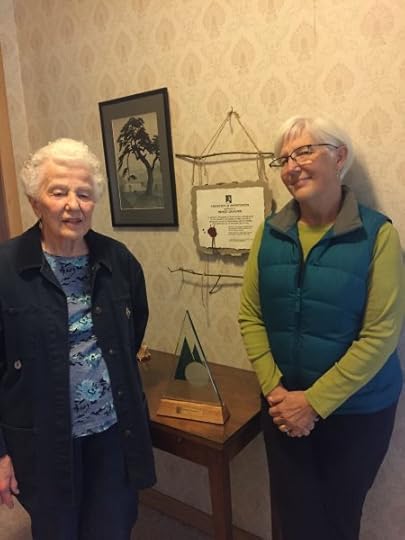
Arnold Grummer gained understanding of paper’s structure and technology working with PhD scientists while on faculty at the Institute of Paper Chemistry. He later added the duties of Curator of the Dard Hunter Paper Museum where he assisted visitors and correspondents from all over the world with scholarly research. Blending knowledge of the historic and scientific worlds of paper, Arnold Grummer’s respect and passion for paper along with a keenly developed ability to communicate led to five books and diverse presentations with his Great American Paper Machine’.
———————————————————————————————–––––––
In the Studio
The January project in the Twelve Months of Paper How-To Book & Calendar is this floral lantern, crafted from a single sheet of paper. The paper is called Narcissus, and is from Reminiscence Papers, designed and printed in the US! The proprietress, Debra Glanz, is currently moving so her shop is on hiatus.
If you make the Floral Lantern, will you share a photo with us over in Club Paper?
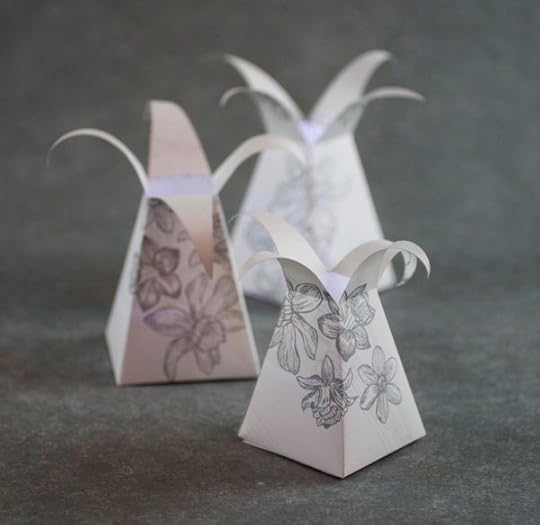
Copies of the Twelve Months of Paper How-To Book & Calendar are still available!
———————————————————————————————–––––––
I visited the Kirkland Museum of Fine & Decorative Art in Denver the other day. The museum is dedicated to promoting Colorado’s distinguished art history and had such an interesting and eclectic collection! I was pleased to see two works by Ray Tomasso, who is still working in Denver today. (Note that this is a snapshot I took in the museum; you’ll find much better images of Ray’s work on his website).
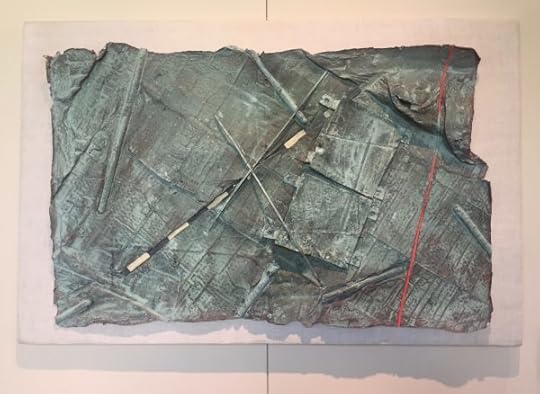
© Raymond Tomasso, Landscape in a Bronzed Dream, 1987
Has anyone seen the origami holiday tree at the American Museum of Natural History this year? I’d love to see a photo! It features 1000+ sea creatures. The origami tree is a tradition that dates back to 1972. You can still see this one through January 13th.
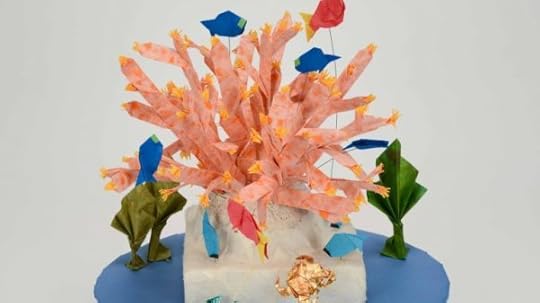
AMNH’s holiday tree is decorated with thousands of origami worls, including this one depicting coral and a school of fish. Photo Credit: Craig Chesek
I’m looking forward to the Weave Through Winter online class, which begins in just 10 days! The response to the class has been great, and you can still join us! Read all about it and watch my short video (and/or the replay from the webinar I did last week) at the link.
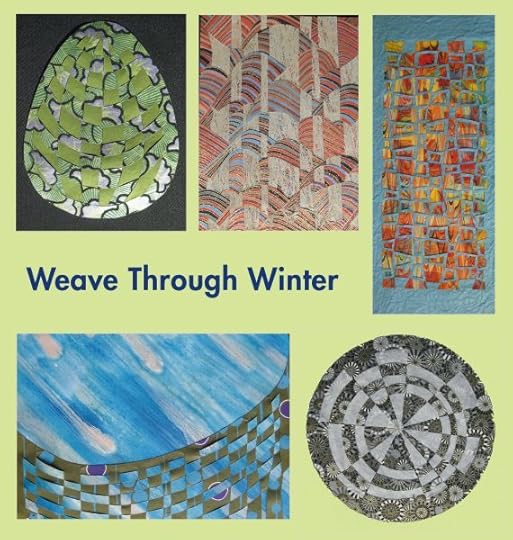
Wowza! Check out these Elizabeth Sagan is paying homage to her love of literature by arranging her huge collection into imaginative book art displays (as seen on My Modern Met).

I am making a commitment to feature an artist working in handmade paper every week on the blog this year. Feel free to send me your contributions. I’ll need an image, a short description and a link to an exhibition, event or website. Thanks!
———————————————————————————————–––––––
If you read this blog regularly, would you consider making a donation to support the research, writing, design and delivery of The Sunday Paper? Click on the paper button at the left to learn how. Or, perhaps you’re interested in promoting your business in The Sunday Paper.
Thanks to everyone who has already pledged your support!
SHARE THIS blog post with your paper-loving friends:
December 29, 2018
2018 Reflections + Looking Forward to 2019
December 30, 2018
Papers of the Week: Crystal Metal & Electric Zigzag Lokta
I’m reviewing my 100 x 100 Days of Paper Weaving Project from 2013 (some of you followed my blog back then where I kept a pseudo diary about the project). I started The Sunday Paper shortly after that project. Those 100 weavings are the inspiration behind my upcoming class Weave Through Winter (although we’ll be creating 30 weavings over 30 days).
A few years ago, I had the pleasure of visiting Wet Paint, an art supply store in St. Paul, Minnesota, with a fabulous paper selection. This weaving is a blend of two papers that I purchased there: crystal metal and electric zigzag lokta Paper.
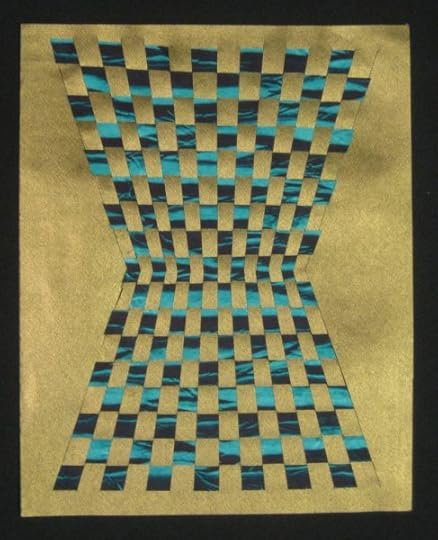
Here’s the blog post I wrote when I started that project, in which I describe the first paper weavings I did to kick off the 100 days + some stories about where I found the papers.
Does this sound intriguing to you? I’d love to have you join us in the Weave Through Winter Classroom (early bird pricing ends Jan 5)!
I’m hosting a free webinar where you can learn more about the class and ask questions this Thursday, January 3rd. Find out more and register for the webinar.
———————————————————————————————–––––––
In the Studio
I spent some time this past week reflecting on what transpired in my business in 2018 and thinking about what is coming up in 2019. Read my 2018: It’s a Wrap newsletter here.
———————————————————————————————–––––––
I share the sad news of the passing of Elaine Koretsky (1932–2018). Over the years, I enjoyed hearing and reading about her travels and watching the wonderful videos she created with her husband Sidney about their papermaking research/adventures in Asia.
I once wrote to Elaine, asking about abaca, and as far as I know, she and her daughter Donna are responsible for bringing it the hand papermaking community in America. Here’s an informative excerpt from an e-mail Elaine wrote to me in 2008:
“In the 70’s, I learned that abaca was being used by some specialty mills in Massachusetts and Connecticut for the making of filter papers and teabags. I visited the research and development departments of those mills, and was told that originally they had tried using paper mulberry fiber from Asia, which worked, but it was very expensive, and they sought an alternative, which was abaca. I obtained samples of the abaca pulp in sheet form, and it was wonderful for my work. At that time, in 1976, I was on my way to Asia on my first papermaking expedition, and my friends at the paper mill furnished me with the information about the pulp mill where they obtained the abaca. I visited there, and came back with loads of sheets of abaca. Meanwhile, I also found another mill in western Mass. that had bought many bales of abaca to try out for a specific project, but they decided not to use it, and sold me quite a bit of it. This enabled me to not only use it myself, but also to use it in teaching. My students loved it – it was a fantastic alternative to cotton linters, as it could be easily pulped and could be used to make very thin, yet strong paper. That’s why it was used for teabags – the abaca has tremendous wet strength as well as dry strength. Throughout the 70’s and 80’s Donna and I did a lot of teaching all over the U.S., mainly using abaca, since it made great paper without the need for a Hollander beater. Our students wanted to buy the abaca from us, and that’s how our Carriage House studio began selling papermaking supplies.”
Thank you for your contributions to the field of hand papermaking, Elaine!

This is a fascinating article in The Economist about the the conversations at a recent international meeting on origami in science, mathematics and education. It also provides a nice history of origami in the artistic, scientific and mathematical realms and explains how the Miura-ori fold provides a crucial link between origami and science.
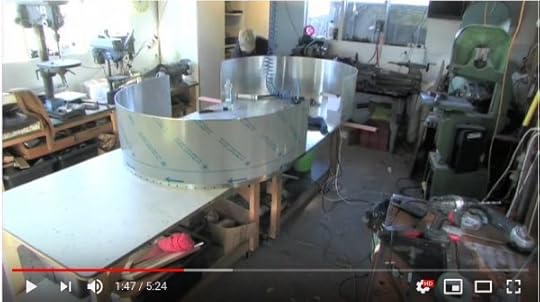
Many of you know of Mark Lander’s critter beaters. Here’s a time-lapse video of Mark building a huge Hollander beater for Green Banana Paper in Micronesia. You can listen to my interview with the CEO of Green Banana Paper here (and I’ll have to interview Mark soon too). Search for Papermaking with Mark Lander Part II to see him processing New Zealand flax.
Sam Pierpoint is living a paper dream life: making paper sculptures for advertising or awareness campaigns in the events, public relations, environmental and travel and tourism sectors. Be sure to watch the video at the link about the piece Pierpoint created for the City of Strasbourg’s #CapataledeNoel campaign in collaboration with French design agency @citeasen.
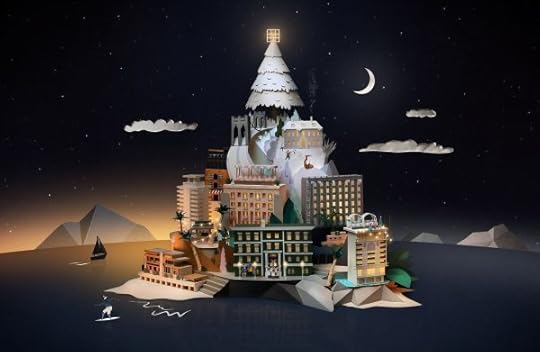
Soho House, December Magazine Cover. Credit: Client @sohohouse, Art Direction @niklasjuil, Photography: Mike Foyle
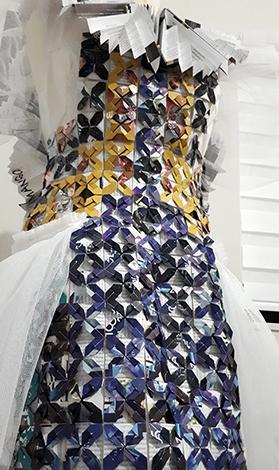
James Dimech made this dress from the pages of Pink. Wowza!
I thoroughly enjoyed this video by The Origami Lady on how to create a paper volcano. What a great project to make and to watch in action!
———————————————————————————————–––––––
If you read this blog regularly, would you consider making a donation to support the research, writing, design and delivery of The Sunday Paper? Click on the paper button at the left to learn how. Or, perhaps you’re interested in promoting your business in The Sunday Paper.
Thanks to everyone who has already pledged your support!
SHARE THIS blog post with your paper-loving friends:
December 22, 2018
Happiest + Merriest + a Ho Ho to You!
December 23, 2018
Happy Holidays Everyone!
Paper of the Week: French Paper
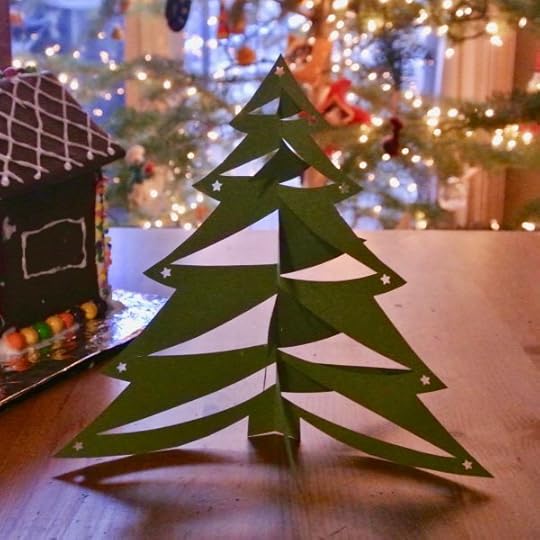
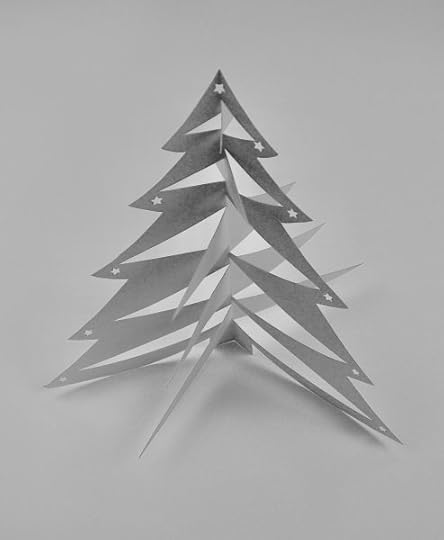
I have long been fascinated with the multitude of ways that one sheet of paper can be transformed. Here’s a tree I’ve been engineering over the past couple of weeks. It is made from one sheet of 8-1/2″ x 11″ French Paper. When I interviewed Hedi Kyle & Ulla Warchol on Paper Talk, they told me about this company that still manufactures paper right here in the US. I bought their Sample Pack Multi-Pack, which contained 337 sheets of 8-1/2″ x 11 papers in a variety of colors and textures. It was totally worth the $30!
———————————————————————————————–––––––
In the Studio
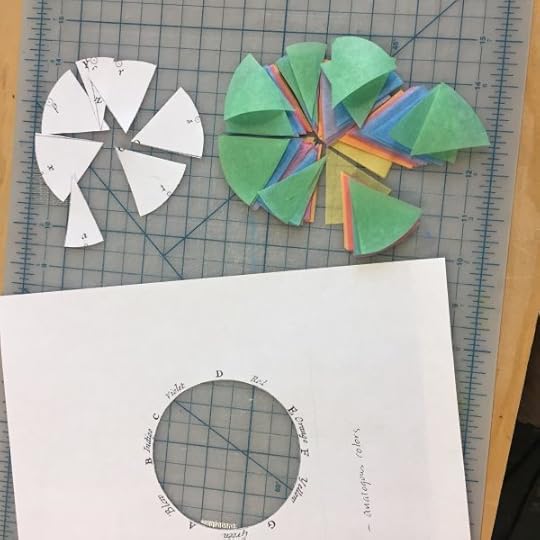
I am nearing completion of my next artist’s book, Prism. It’s been fun doing research about color and light (not to mention making over 600 sheets of handmade paper. Okay. Not so fun). Did you know that Isaac Newton discovered the color spectrum by watching light filter through a prism? And he came up with seven colors in the rainbow because he thought they related to the octave in music. I’ve created a few more colors in between the seven hues, for a total of 24. This image shows Newton’s color wheel (disassembled) in my quest for the perfect cover for my book. Stay tuned!
———————————————————————————————–––––––
I’m loving Sarah Louise Matthews’ instagram. She’s been creating a paper advent alphabet! Here are some trees for “T”, but click through to view all of the other letters!
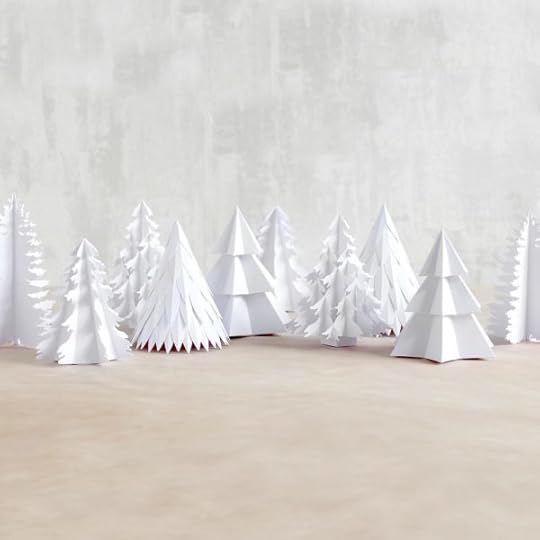
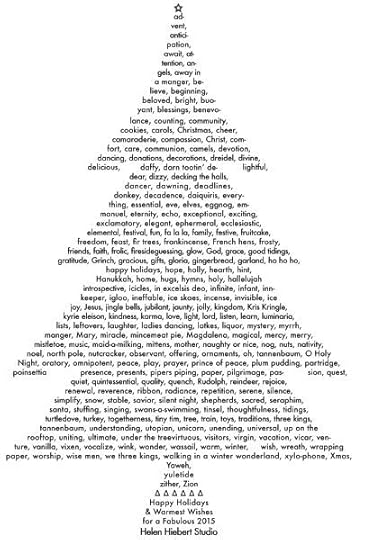
Which reminds me that I love paper trees! Here are a few that I’ve created in the past, plus a new one! Okay, this first one isn’t paper, but it relates to the alphabet.
I’ve been working on this one-sheet paper tree this year (this is the same tree pictured at the top of this post). You might find this project in the next version of the Twelve Months of Paper Calendar (2019 copies are still available). Here it is in black and white…
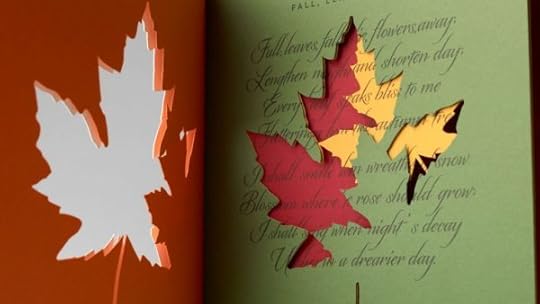
Here are the leaves of a tree featured on the Paper Specs website. I love the explanatory videos this company creates, featuring design projects, papers and production techniques from the commercial world of paper.
Frozen ink! An appropo story for winter… Poetic Imagination in Japanese Art, A selection of paintings, poetry and calligraphy spans a millennium of tradition and creativity in East Asian art, is currently on view at the Portland Art Museum in Portland. What caught my eye was this calligraphic painting made with frozen ink! This actually spells a Japanese word… can you read it? If not, the translation is at the link.
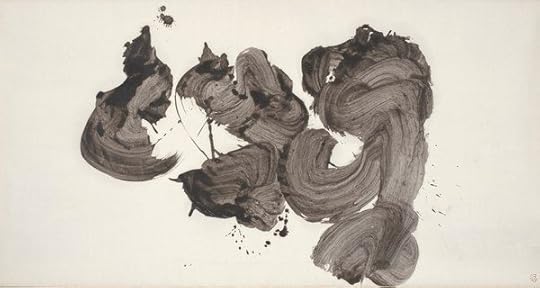
Inoue Yūichi (Japanese, 1916–1985), Shout, 1961, hanging scroll; frozen ink on paper, 37 x 69 5/16 in., Collection of Mary and Cheney Cowles.
I shared this Peace Card template a couple of weeks ago (notice the tree) and was delighted that several people tried it out and posted pictures! Enjoy the variations below and try it yourself!
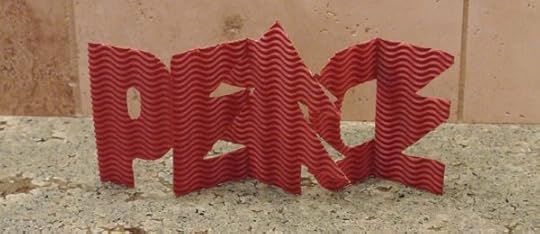
This is my original design, cut out of a red corrugated paper.
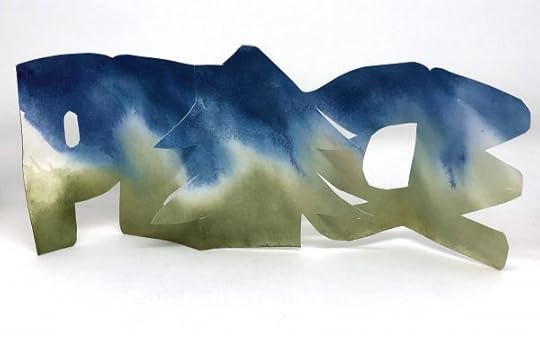
Ann Nunziata did this watercolor design and then cut out the card.
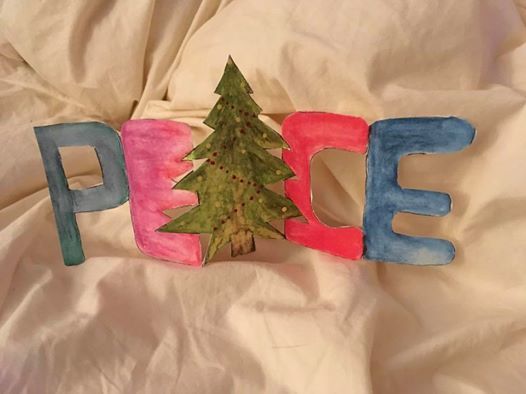
A more organic hand painted form by Ruth Dailey.
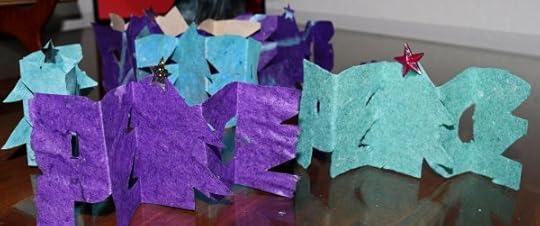
Cris Ballinger cut these out of her own handmade papers.
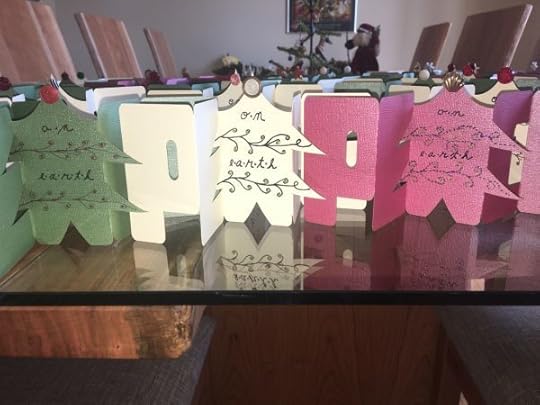
Mary Rodas used the tools at her local maker space to go into production!
And finally, here’s a lovely paper cut animation for the shortest day of the year by Angie Pickman. Happy Solstice!
———————————————————————————————–––––––
If you read this blog regularly, would you consider making a donation to support the research, writing, design and delivery of The Sunday Paper? Click on the paper button at the left to learn how. Or, perhaps you’re interested in promoting your business in The Sunday Paper.
Thanks to everyone who has already pledged your support!
SHARE THIS blog post with your paper-loving friends:


