Saz Vora's Blog, page 2
October 1, 2021
Personal appearances and the new norm
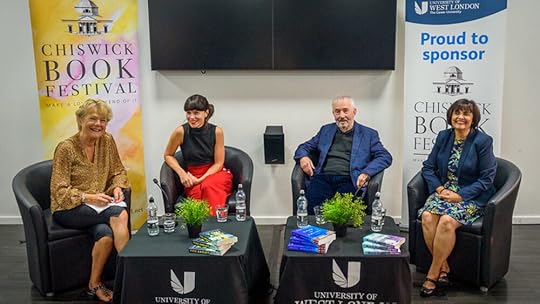
Ealing Fiction Panel - Host Lisa Evans, Nicola Rayner, Robin Duval, Saz Vora. Photograph credit Chiswick Book Festival
Chiswick Book Festival
‘What you want to ignite in others must first burn inside yourself’
Aurelius Augustinus
When the organisers of Chiswick Book Festival contacted me, I felt honoured to join Nicola Rayner and Robin Duval, fellow Ealing authors on the Ealing Fiction Panel. The discussion was great and Lisa Evans did a fantastic job of asking the right questions. It wasn’t a huge turnout but enough to create an atmosphere. If you want to listen to us, it is on the University of West London click on the name to take you their YouTube Channel
Of all the events I went to during the festival, every writer had a passion, a desire to tell the narrative. Dear Reader, that is what has got into me. To keep writing stories that come to me in my sleep and in my waking hours and even if you do not turn up to hear me or buy my books, my stories are what they are. The first burn that has ignited and when you read them, perhaps they will ignite you to do something out of the ordinary, out of your comfort zone. Go on unless you take the leap you will never know.
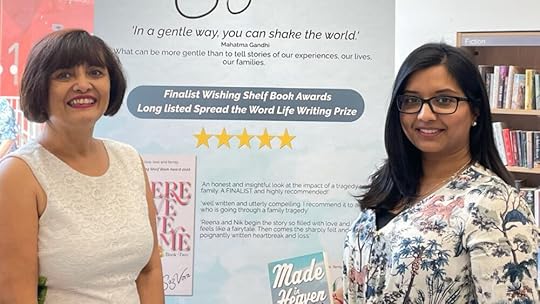
Ealing Central Library Meet the Author - Saz Vora with Arti Manani.
Meet the Author - Ealing LibraryWhen I published my books in March 2020, my local library contacted and booked me up to a meet the author event for May 2020, but the lockdown stopped the in-person event. So it was great to go back to the Central library, set up a table and wait for people to arrive. The people who asked questions were fantastic. I love that the best of all, the audience asking questions and although I have been doing many on screen Q&A, there’s something about body language and people near people that makes it very exciting. The other thing is the fact that my books are available in the Library as paperbacks and as ebooks. Not everyone can afford to buy books and, for many people, the library is the only place. It was great to meet with old friends and make new ones too.
Incredible how quickly my life had gone back to normal. There’s been a couple of family gatherings, Sunday brunch, and a visit to the Theatre. The British weather hasn’t been kind to us this year. One minute a heat wave, the next cold snap of blustering wind and rain. I’ve met with friends for lunch and coffee and although there are moments of anxiety, most of it has been enjoyable. We even booked a holiday, confident that we would be safe.
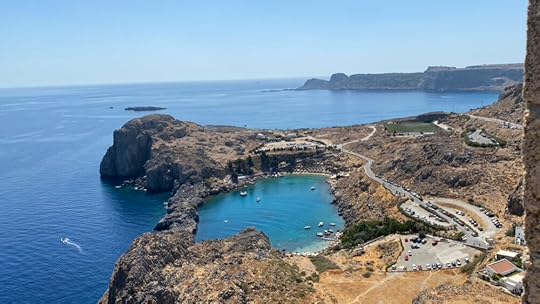
St Paul’s Beach, Lindos, Rhodes
Summer Holiday to Greece
We're all goin' on a summer holiday
No more workin' for a week or two
We're goin' where the sun shines brightly
We're goin' where the sea is blue
Cliff Richard and The Shadows B. Bennett / B. Welsh
My holiday brought back memories of a visit to Greece in the summer that our son died, a girl’s holiday with two of my girlfriends. It certainly was eventful. One minute I was fine and the next I was crying, missing my other half, missing my baby. I’m sure they couldn’t wait to get back on the hovercraft and then the plane back to England. This time, the anxiety of travelling on a plane with nearly 200 people kicked in the night before, so I woke up several times during the night. By the time I was on the plane, it had eased, reassured by the mask wearing passengers. I took physical books with me and just sat by the pool or the beach and read them, switching from one or the other. Three books on the go. We only ventured out once to Lindos Old Town for a climb to the Acropolis, but most of the time, it was a full recharge, swimming, massage, sleep and eat. Nothing taxing, nothing like the usual holidays we go on, where I plan and schedule everything. I think him indoors was a bit surprised at my chilling vibes and kept asking if I wanted to go anywhere or do anything.
There’s an amazing sky of the most exquisitely blue of lapis lazuli, a striking sea that resembles turquoise that is only in the waters and sky around Greece.
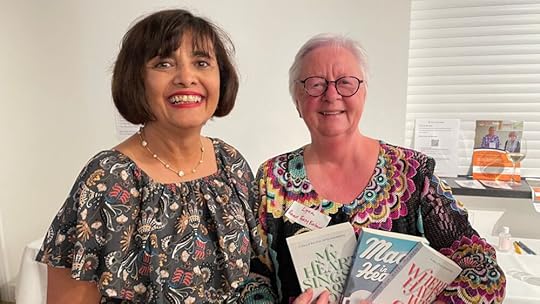
Read Easy Ealing Launch - Saz Vora with prize winner
Most of us take reading for granted, and I’ve discovered that many people no longer read as much as they used to. The many distractions of social media, on demand platforms, mean there are many ways to occupy our spare time. When I was younger, we watched TV when there were children’s programmes on and then played or read a book. Not a lot of choice, but it kept us busy. I found out about a charity that has been running for 11 years, Read Easy, started by Ginny Williams-Ellis, that supports adults with reading. I can understand how easy it is to slip into not reading, especially if you miss the basics. I was at the launch of Read Easy Ealing and met lots of people who are volunteering to make a change in West London, a shocking number of adults can’t read. In the area covered by Read Easy Ealing there are 13,000, click link to find out more about their work
Here’s an extract from Broad Street Library, Long listed Spread the World Life Writing Prize 2020. It was my experience of learning to spell that led me to write this story. I hope you like it. Please leave a comment on your early reading or writing experience below.
Writing Life
Broad Street Library, Extract
I tried to use phrases I’ve heard in a conversation. Surely, sounded just like how Shirley spelt her name. But I was wrong, Miss Weller had asked me to write it again.
“Find the root word Deepa and then add the el wy.” When I searched the class dictionary, I’d spent too much time on it and Clive pushed me aside.
“You're hogging it, Deeper,” he lifted his palm to his nose and scrunched his face up and rubbed his hand vigorously on his shorts.
Billy Bradley suppressed a snigger with his grubby fat fingers.
“Clive, what are you doing?”
“Nothing Miss,” and he elbowed me out of the way as he ran back to his desk.
The spellings made little sense. Shore.
“No, no, no, that’s a seashore.”
I wrote the word again, sour. Doesn’t that sound the same but spelt differently?
“No, that sounds different, you're thinking of pour.” Miss Weller said, I tried again, sore.
“That’s when you’ve run too long, and your legs are sore.”
“Is that the same as more?”
“Yes, as in greater, but not when boats are at the docks, that is em oh oh ar.”
I looked up at her smiling face and she wrote in my exercise book, her writing dancing gracefully in the margin.
“Learn these,” she’d said, tapping at the words she’d written.
“You're doing really well, Deepa” and she pressed my shoulder and moved to the next desk.
I’m a regularly columnist on Society Today, a rare inclusive publication devoted to social, political, economic, cultural and environmental issues. Read my August column on Mental Health and British South Asian Community
Watch this space, wheels are turning for a printed version.


August 23, 2021
Gently shaking the world with storytelling
‘In a gentle way, you can shake the world’
Mahatma Gandhi
I came across this quote when I was preparing to present for the UK Asian Film Festival Wembley Park's screening for Independence Day. Check my social media and YouTube channel for more.
It reflects what I feel about my work. When I first wrote about my experience, I was sure that a memoir wouldn’t be appropriate. After all, I’m not a famous broadcaster, presenter, blogger, or artist. Sure, I’ve won awards, I’ve had nominations, but when you work in television production, you have an entire group of people who work with you to create your work. It isn’t all about me, me, me it’s more us, us, us.
Then I looked into writing a self-help book, but that didn’t appeal either. I didn't want to give advice on a topic that is uniquely personal to everyone. My debut books are about grief and loss. How people cope with it differently, how the South Asian Community deals with it, or not, as is the case in many families.
I write stories; and what can be more gentle than to tell stories of our experience, of our lives, of our culture and of our families.
Nearly five years after the end of my working life has brought me to a new passion. I don’t have a master's in creative writing. I'm an ordinary wife and mother, someone who went to art college, who somehow got a job that I loved in TV production at the BBC, stumbled into teaching, retrained and became a secondary school teacher.
I tried the traditional route to publishing; I was ready to tout Where Have We Come again to agents. It was only on the advice of a friend that took me down the self publishing route. I read books, watched seminars, and joined associations. And here I am with three self-published books. It has been tough but fulfilling.
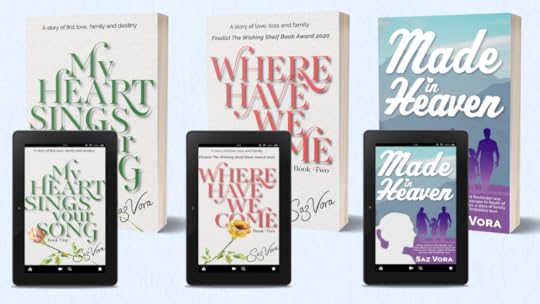
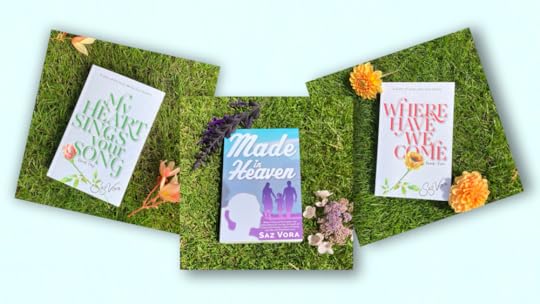
A year after publishing my debut duets, My Heart Sings Your Song and Where Have We Come, I’ve published Made in Heaven, out on 15th August 2021 and date that holds some significance, the date of India Independence from the British. If the Ratcliffe line hadn’t forced my father’s family out of Karachi into India. If they hadn’t joined my grandfather in East Africa. If my father hadn’t kept his British citizenship after Tanganyika’s Independence. If after relocating in India, he hadn’t felt out of place and come to England. I wouldn’t be here.
I write about growing up straddling multiple cultures, my heritage, my upbringing, my Britishness. There is something strengthening about people like my grandparents and parents. They had left their homeland to go to a foreign land, a pioneering class that moved around the world in the early part of the 20th century, and they packed up again and came to the United Kingdom. They embraced this country the way they had Tanzania, Kenya, Uganda and Zambia.
I’m really keen on telling their stories and stories of their children and grandchildren, people who don’t fit in with the forced marriages, migrant struggles, disheartened youths. I took part in a fantastic discussion - Twice Migrants with South Asian Heritage Month, the stories of East African Asians who came and settled here. More stories about us. If you know of anyone who wants to tell me their story, I’m creating an audio archive to make into a bigger project. Please contact me via my website.
 Writing Life
It’s been awhile since I wrote about writing life and I thought I’d try to explain the difference between self-publishing and traditional publishing.
There is a misconception that self-published book; isn’t real, is a vanity project, is for people who can’t write well for traditional publishers, is too expensive, will never make you money, will ruin your chance of traditionally publishing, authors don’t write but market, lack finesse and are badly written.
Isn’t RealOnce Amazon introduced ebooks, the reality of publishing became accessible to everyone, rich or poor, niche or wide. 50% of paperback sales are through Amazon. The traditional bookstore is struggling like everything else on the high street. It’s this accessibility that makes it real for many authors.
Vanity ProjectWhen authors couldn’t secure a contract with traditional publishing houses, some resorted to vanity press. They would have books printed in the hundreds and the authors were the sellers of their own books. Because of the rise of online bookstores and ebook formats, all indie authors have access to distribution of ebooks to Apple, Google play, Barnes and Noble, and Kobo. With new technology came Print on Demand, no need to hold stocks. No need for a vanity press. They still exist, so beware.
Can’t writeJust because an agent or publishing house hasn’t taken a liking to your book doesn’t mean it isn't good enough. That is far from the truth, traditional publishers are there to make money. Editors are in search of books that fit the niche they worked hard to create and market. They’ve built a reputation, so if your niche story doesn’t fit. They will not give you an advance and risk no income. Did you know The Martian by Andy Weir started life as a 99 cent ebook on Kindle? Fifty Shades of Grey also started as an ebook, and it was Erika’s social media followers and fan base that made her novels a success.
And as a self-published author, you can find your own market and get all the profit, not overheads or sharing of the royalties.
Too expensiveYou no longer have to pay thousands of pounds to publish a print. Print on Demand means that printing is no longer costly. Creating ebooks is virtually free, as long as you have access to writing software and a computer. The major cost to you is formatting and cover design. Many tech savvy authors use software like Calibre, Vellum, Scrivener and Kindle Create for their books. Professional cover designers offer pre-designed covers that can be changed for a small amount of money. Editing is the biggest cost to new writers, but if you join a critiquing group, have writing partners and beta readers, it becomes cheaper. Marketing is my biggest bugbear, but not everyone's. Social media has really changed how publishing works, even traditionally published authors have to have a presence in social media.
Never makes you moneyThere are many self-published authors that make a decent living, and not all traditional authors make a vast amount of money. We saw the racial disparity in publishing houses' advances and income for minority authors in 2020. Authors from minority groups make even less in traditional publishing., here’s a link an article in The Guardian, when LL McKinney #PublisherPaidMe to highlight racial disparity
Self-publishing offers a higher rate of royalty sales 70% vs 10%.
Self-publishing provides a monthly income as opposed to twice a year.
Self-publishing allows a greater freedom in pricing and market for sales, not just the 12 week launch period.
Self-published authors can publish as fast and as often, getting a greater body of work out in a shorter time.
Ruin your chance of traditional publishingIf your book is selling like hotcakes, an agent will want to represent you and publishers will want to publish your next book. You have a fan base, and anything new from you will make them money. Many genre authors write faster than traditional publishers can publish, so use self-publishing too, a hybrid business model.
Don’t write, they marketYes, successful self-published authors market a lot. They devote a large proportion of their time to marketing, appear in discussion panels, social media, book conferences, but traditionally published authors have to self promote too. New and mid-list authors need a social media presence, TV appearances and book tours are no longer provided by traditional publishers.
Lack finesseDone right, no-one can tell if you're self-published or traditionally published. Gone are the days when self-published books had flimsy covers, no actual knowledge of typographic book design, and grammatical errors. Finding book editors, manuscript evaluations, book coaches is so much easier, with Reedsy, Fiverr, Alli, WFWA.
As to the credential of a book you can buy ISBN that you own, KDP, Ingram Spark, allow you to choose book sizes according to your genre, print on cream paper instead of white, choose hard covers, paperbacks and even have coloured inside covers. Ebook production allows you to publish with KDP, Apple books, Google Play, Barnes and Noble, Kobo. So much has progressed since the beginning of self-publishing. Self-published books look the same as traditional published books.
Deciding to self-publish or traditional publishing has many pros and cons, it's your choice. I won’t say it's easy, but it's worth it when you hold your paperback in your hand or you get a lovely review.
July 23, 2021
Creativity and the challenge of uncertainty
Set-up for online event
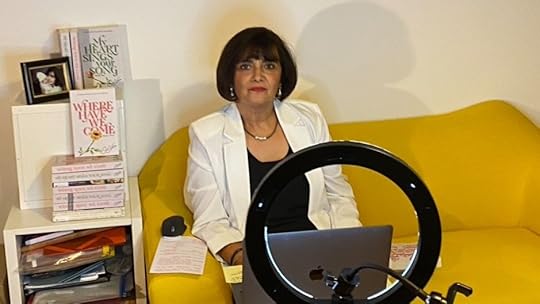
Almost a year ago, I was proofreading the paperback, checking the cover art of my first set of books, My Heart Sings Your Song and Where Have We Come. They had lifted the lockdown in England and we could go away. We booked a mid week break to Brighton, and I waited for the paperbacks to arrive. To say it excited me when they did is an understatement, you’ll get an idea if you read my blog from last year. The books arrived in cardboard boxes ready for the book launch planned at the Ealing Library. The launch never came; everyone, everywhere cancelled all in person events. My first literary festival was online with DESIblitz. But, although excited by it, it also deflated me. I would have loved to go to one and shake hands with the great and good from the literary world.
The first lockdown wasn’t bad. My beautiful sons came back to stay with us, our relationship very different. Yes, they still asked for the usual, What’s for lunch? Where’s my t-shirt? We made dim sum from scratch, pizza from scratch, once we could get hold of some flour and yeast. Watched a lot of food porn videos, dreamt of going to restaurants when things opened up. We grew as a family. Our relationship with our sons has never been the usual South Asian parent child set-up and this long stay together definitely brought us closer.
And I wrote an entire book. I already had a handful of outlines I was mulling over when I wrote my debut novels. I enjoyed escaping to another world through my writing, and what better place to escape than to the South of France with a retelling of Jane Eyre, Made In Heaven. It’s not the obvious choice. There are a lot of retellings of Pride and Prejudice by writers. Many South Asian women relate to Austin’s books. Why do you think Gurinder Chadha directed and co-wrote Bride and Prejudice? There's something Bollywoody about the dashing hero and a feisty heroine that appeals to many who want to escape. Many South Asian women model themselves on Lizzie, Elinor, Anne, Emma. I have several outlines already worked up, with characters and subplots, using East African Asians. I would like to set one book in East Africa in the past. That would be really great to write, but until I visit the land of my birth, I’ll hold back on that one. Books representing the South Asian Diaspora, people of Indian origin, living in Britain or abroad, standalone quick reads.
Many people used the time to create, to write memoirs, to create films, to write music and songs. If you are someone who thrives on creativity, the isolation helped people create the project that sat on the back burner. For me, the fact I didn’t have any social engagements to go to helped enormously. No sleepless nights, no anxiety, no stomach ache. What’s not to like about an online event?
But as the summer edged into autumn, my hopes to upload my standalone book as an ebook waned. The weather became harsher, and the second lockdown arrived. My sons moved back to their flat, and I started having doubts about the book, my writing, myself. I got lost in the middle of the plot, reworked it, rewrote it. I also thought I needed to find an agent, to get a publisher to like my work. So I put it aside, wrote anything to help me escape, many stories of lived experiences. I submitted my stories to magazines, writing competitions, and websites. I started the next set of books for the University Series, Sonali and Deepak, the scenes, the dialogues, the outlines, like my debut novels, it's a story that questions the establishment. Christmas came, and we continued to be still in limbo, families not allowed to meet. News of more deaths and illness. The world continued to open and close.
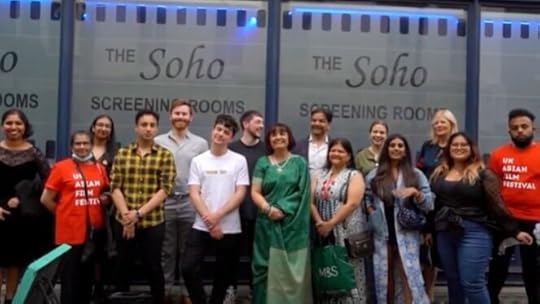
Premiere of UK Asian Film Festival Digital Commission Winners 2021, credit Rehmat Rayatt.
Throughout this time, I had the greatest opportunity to connect and mentor with an impressive group of filmmakers, the UK Asian Film Festival Digital Commission Finalist. When we’d thought of the competition, we’d planned to have a Film Festival to commemorate the 100th birthday of Satyajit Ray - Ray of Hope. Apt for what we were going through, an opportunity to find a positive view of what was happening. Little did we know that we would see people clamouring for oxygen in India, funeral pyres in the streets, people who’d gone to visit relatives trapped in the country. In the UK the Government wouldn’t put India on the red list, the new strain was more virulent, cases increased. The borders eventually closed, but it trapped filmmakers who were collaborating, stuck in another country, stuck in level four, stuck due to loved one’s being in the at-risk group. And yet, the films that have come out of the filmmakers celebrate the ingenuity of creativity. Their resilience, their ability to be innovative, their tenacity to finish despite challenges. We are looking for an opportunity to showcase their work, in the meantime go to the UK Asian Film Festival YouTube channel for an interview with those that could attend Premiere at Soho Screening Room on their experience and collaboration.
Challenge of UncertaintyThe trouble with the ending of the first lock down is that we all had hope, a light to aim for, a temporary glitch in the world. We thought that was the end to the isolation, we’d been good, stayed away from the vulnerable, watched a screen to wish our goodbyes, to support our friends and family who’d lost their nearest and dearest. Weddings and celebrations cancelled. We South Asian love our gatherings, hence so many feature in my writing. Ample music, lavish singing, liberal dancing, copious food, plentiful mithia. Some families who drink have infinite alcohol, too. That's what I missed most. For someone who’s anxious about meeting lots of people, there is something about the music and colourful atmosphere that calms me.
I hope we will meet up soon despite the high numbers of cases. I hope that the people who work for the NHS get a respite. I hope we don’t have another lockdown, because I’m not sure this one will be possible.
June 23, 2021
My heritage and identity, my way.
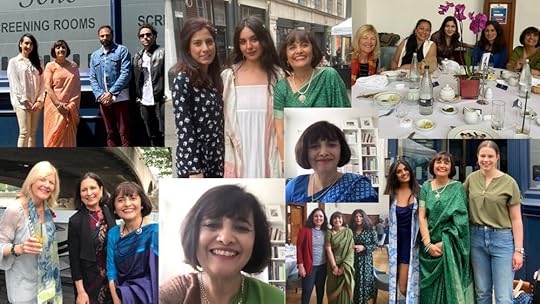
Photo at the UK Asian Film Festival 2021
‘What's the matter?’
‘I’ve just had my weekly meeting with Frank in LE. You know the usual, busy show this week. We want a little teaser for this, trailer for that, graphics for a game show segment we want to do with a celebrity guest.’
‘Sooo nothing difficult. He hasn’t asked for a ten foot statue of a gorilla this week?’
‘Yeh, but it was weird.’
‘How weird.’
‘You know,’ I pointed to my clothes.
His eyebrows vanished behind his floppy fringe, ‘cause this is such an old story that all men had hair resting on their shoulders and a great big fringe that fell over one side of the face. That old you say. Well, old enough for me to tell you about it and laugh.
‘He didn’t say anything untowards, I hope?’
‘No, no, nothing like that.’
‘Riiiight. I can tell you’re struggling to tell me what happened, let’s go and get a cup of coffee.’
He walked toward me. All six feet two inches tall, wound up like a spring. His shoulders hunched up to his ears, his ultramarine eyes simmering.
We walked side by side along the narrow corridor towards the canteen.
The place was busy, but not too frantic. I glanced at the clock, half an hour before lunch break when the studios stop and every one descends on the canteen for a well deserved rest from the morning's work.
He pointed to a table. I didn’t look odd here. Women in Victorian costumes, a tall, obese man dressed in green leggings and matching leotard, his companion in a silver jumpsuit with plastic tubes attached to his head. A group of young girls made up to look like elfs filed in with a stern woman in a royal blue trouser suit.
He placed the milky coffee in front of me and nudged the sugar bowl towards me.
I stirred the sugar slowly. How am I going to explain this?
When Alex had told Frank I was his new assistant, the first question he’d asked was.
‘Do you know the English alphabet?’
My jaw had tightened, and I’d clenched my hands into a fist. How many times did I hear that, or something similar. Do you know of place names in Europe? Are you allowed to work late? Does your husband mind? Like he had a say in what I do or when I get home.
Alex cleared his throat.
‘Yeh, the meeting, so we had our usual conversation, and then it was my turn for Frank to tell me what he wanted, and he started to explain everything to me in sloooow moootion. I mean reeeally slowly. Gesticulating with his arms and he asked me to repeat what he’d said. I was writing up my notes, and it didn’t even register. The whole room went quiet, and he repeated it louder, and that’s when I thought, shit it’s my saree. He thinks I don’t understand English because of this.’ I pointed at myself again. ‘God, I hate it. I really do. Why is it so difficult to see me as a British Indian? I mean I don’t even have an accent.’
I thought I’d write about an incident that actually happened to me, an anecdotal retelling. I’ve taken liberties obviously, changed names. But it was real, and it made me feel like an alien, like I’d suddenly grown another head, or my mask had slipped and revealed my true likeness. What annoys me is that it’s still happening. Come on people, just because someone wears clothes they identify with, whether it's a saree, salwar kameez, dhoti, sarong, lungi, kitenge, dashiki, kimono, kilt, doesn’t mean they can’t speak English or understand you. Would you ask a Scotsman, ‘Do you speak English?’
It's just a piece of clothing to identify with my heritage, and my skin is a layer that protects my vital organs. The combination of both doesn’t make me any different from you.
My identity is both British and Indian because I think of myself as British. I belong to that group who were happy in East Africa, living a peaceful, prosperous life until East Africa decided it too wanted independence from the British. And then we were looked upon as Britishers. We worked in the civil service; we managed the business; we spoke the Queen’s English; many of us came to study in England and went back to help the country of our birth. So we thought let's go to the motherland, the land of Queen Elizabeth and job security. Post-war Britain was asking for doctors, nurses, teachers, engineers and all the other jobs needed in manufacturing.
Indian because I follow the culture, the family values, the religion from that part of the world. Because members of my family were born in India, some before India’s partition.
So some days you see me and I’m dressed just like everyone else and at other times, I dress in a saree, one of my favourite outfits to wear when I go to the temple, or on a hot summer’s day, or a dinner. Or just for the heck of it. And that day was just for the heck of it. Or I was going out straight from work.
So take a look at the photos of me and my dual identity. The first is a collection of photos from the UK Asian Film Festival, which ran as a hybrid festival from the 26th of May until the 6th of June this year. I dressed in a saree for every event. I like wearing them so much; it makes me feel elegant and we haven’t been out and about for ages to actually wear one. My love of sarees stems from the fancy dress competition at the summer fetes in Coventry, where I grew up. I usually dressed up as Indian Princess, in a saree that my mum would wrap around me, laden with Indian jewellery. And often I would get a prize or an honourable mention. I loved the feeling of being seen as someone special, someone different.
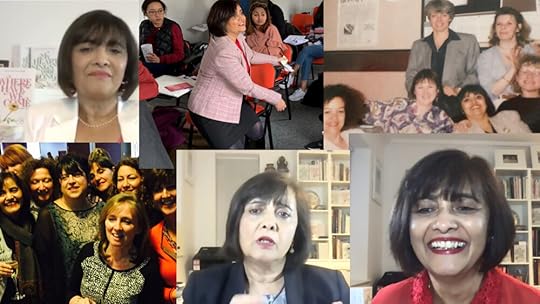
The second set of photos is of me with friends, running workshops or taking part in panel discussions when I'm usually dressed in my work wear. If you pop over to my YouTube channel, I’m mostly in western clothes, but there is a reading dressed in my chaniya choli with abla work, a nod to my Gujarati heritage.
I was speaking with Natasha from South Asian Writers, who went into a secondary school this week to talk about India’s partition and South Asian contribution. None of the children knew of this important part of British history, which is a shame. When I was younger, we still had maps on the wall of the empire to tell me and other pupils why the classroom had black, brown children in it. I’m really excited about The Partition Education Group and South Asian Heritage Month raising this important piece of our history.
It’s important to emphasize that people of colour are in Britain because many of us consider the UK as our motherland, many countries around the world belonged to the British Empire and if Frank, who'd grown up knowing of the empire, can behave like that. So can all the generations after him.
We should teach British Empire in the National Curriculum, so every brown kid feels they belong. I am sensing a change, a worldwide change. BLM has helped, but there’s still a long way to go. Watch out for information on the South Asian Heritage Month events calendar running from July 17 - Aug 17, where there will be opportunities to tell your stories for a project I am working on, not just about empire and partition but about the twice migrants, who held Citizenship of United Kingdom and Colonies, these were the people who were Commonwealth Citizens as mentioned in the British Nationality Act 1948. But the ‘60s and ‘70s brought on changes and policy makers restricted non-white New Commonwealth Citizens, therefore so many East African Asian arrived in the early ‘70s. Changes to the law meant that they didn’t have an automatic right to come back and forth from East Africa, to study, to shop or just to holiday, and they had to make a choice.
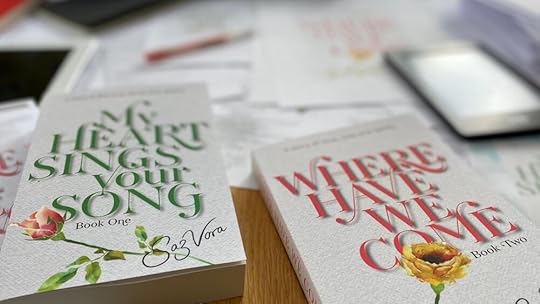 Self publishing
I’m waiting for my standalone inspired by Jane Eyre to come back from my lovely editor Shaylin Gandhi
I’ve already come up with book cover designs, which should be easy. I started my career as a Graphic Designer, but it’s hard. Do I style my covers like everyone else's, a wash of the same images and similar typefaces or do I do something different. The trouble is I want to always go for something different. Something that stands out and then I get feedback.
Your covers don’t tell me what is inside the book.
Not sure I like the illustrations, the typeface.
Why don’t you find an illustrator?
Why haven’t you used a couple?
Can you add a brighter colour?
So watch out for my new covers for My Heart Sings Your Song and Where Have We Come, out soon. As for the standalone, I was going to use a lovely cover designed by Mita Gohel, but I’m working on something that will be different, but fits with new book cover trends.
And then it’s onto the formatting process, book interior design, conversion for ebook platforms and print ready file.
I’m publishing exclusively through KDP as an ebook and wider with D2D three months later, and this time I’ll publish both the ebook and paperback at the same time. Not sure about the marketing, still learning the ropes on that one. Sometimes I wish that I could just concentrate on my writing and nothing else. But it is a learning process and the fact that I own the complete process is very satisfying.
Sign up to my newsletter for when it will be published and also an exclusive scene from Where Have We Come that I will send to you as a pdf.
May 20, 2021
Who Am I - Life's most defining question
Photo by Felicia Buitenwerf on Unsplash
I’ve been thinking about Identity for a while, wondering why I class myself as a Gujarati, East African, Indian, British.There’s one group I enjoy connecting with called East African Asian on Facebook and Instagram. I don’t have many memories of my childhood in Tanzania, but those I do are vivid, the sight and sound of the market with my masi and the feeling I had when my dadima pulled at my cheeks, a safari trip when a European offered me a boiled egg, a breakdown of a bus and a giraffe with his dark tongue at the window. My first day at nursery school, trips to the beach. Mostly it's the smells and sounds that take me there, to the land of my birth. But I was told recently that I wasn't East African, that I was Indian and I was back in India and told that I wasn’t Indian but British and I remember being asked where I came from by someone I worked with and when I explained Coventry, they said no, no I mean WHERE do you come from? And I reluctantly said India, although in my mind I wanted to say but I was born in East Africa and my father left India when it fractured into a country he didn’t recognise. I thought I'd share some photographs of how I class myself.
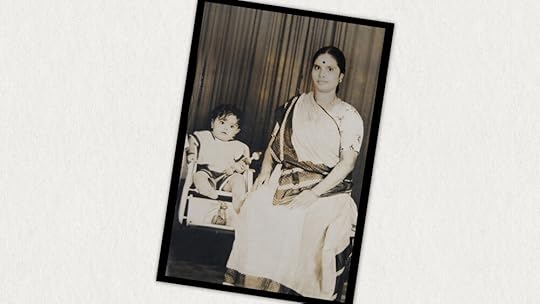 Daughter.
 That’s me at six months old with my mother who’d arrived two years earlier after staying in India while my father and his family came to East Africa. I often wondered what my mother thought when she travelled to a foreign land to her husband, a man she had been apart for ten years. She was left in India with her parents, a daughter returned with a young child, my sister. But she never spoke about it. When I asked her, she would change the subject. In this photograph her identity had changed from Daughter, Mother, Sister, Cousin, to Wife, Mother, Daughter in Law, Sister in Law.
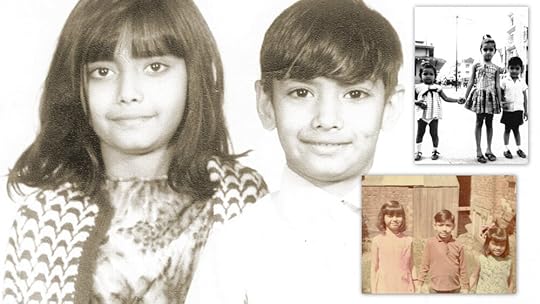 Big Sister, Student, Obedient Daughter
This set of photographs are of me with my brother and sister, one taken just before we left Tanzania. I know I’d already started nursery school and my earliest memories are of telling my mother to get rid of my brother before I came back. Yes, I was that child. The next black, white photograph is our school photo, when my brother started school in England.
On the first day of school, my brother was told to meet me in the playground at lunchtime. I waited and waited for him and after a while I checked if he was in the dining hall. I found him crying in front of a plate of food, meat and two vegetables, covered in gravy. The dinner ladies had ushered him in and unlike me, who had learnt English in my nursery in East Africa, his mother tongue was Gujarati, so he couldn’t tell them he was going home for dinner. Then a year later my younger sister joined, so I took on the responsibilities of walking home and school with two younger siblings who didn’t listen.
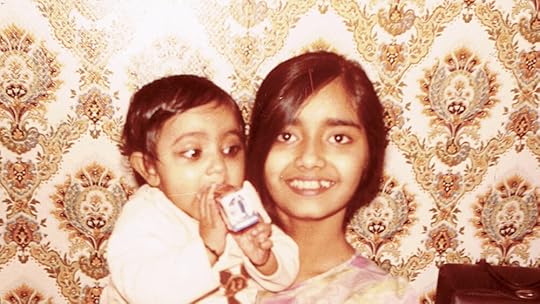 Obedient Daughter, Sister, Aunt.
 The photo of me carrying a baby changed my identity further. I was now the oldest daughter, as my sister had married, and this is a picture of my niece and I became an aunt. She came to stay with us, while my sister worked and my responsibility increased.
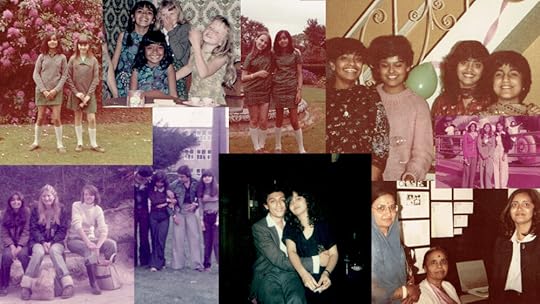 Student, Friend, Niece, Daughter, Girlfriend
These photos are with my friends, when I went to Coundon Court School there weren’t many Indians, my friends were predominantly English girls until the school merged with Barker’s Butts, and became co-ed and full of Indians too. That was the turning point for me, the time when I straddled both cultures, my Britishness and my Indian heritage. Not only did I go to Saturday morning disco at the Locarno, I also went to watch Bollywood films at the Ritz and Palladium regularly.
Going away from home for my degree opened my eyes to exploring my identity further. I joined the Indian Society and met with others who were also of Indian origin. When I say Indian origin, I use a broader identity. Those whose ancestors were originally from the Indian subcontinent but were Singaporean, Malaysian, Indian, East African, Gujarati, Punjabi, Pakistani. It was where I forged my identity as a Gujarati, but also as someone who questioned cultural norms, observed differences and similarities.
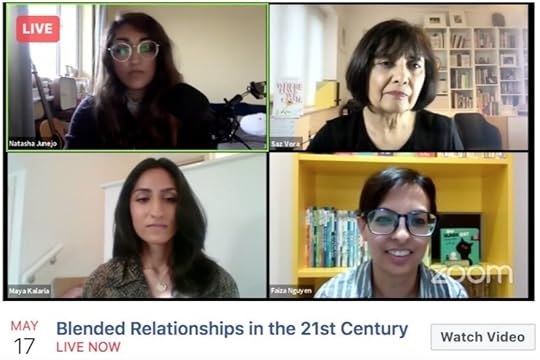
Earlier this week I took part in a discussion on Blended Relationship, a conversation on why it’s important to keep our identities, embrace them, talk about them and question them. We don’t need to be put into a box. I’m who I am because of where my ancestors came from. Here’s the blog, the year of the horrible death of George Floyd. A moment that created a movement, but also a time when people questioned colonialism and empire. Watch the interview on South Asian Writers Facebook Page
Identity
A noun - the fact of being who or what a person or thing is, or a close similarity or feeling of understanding.
I call myself Gujarati, East African, Indian, British because that is as near as I sometimes fit, but at other times I don’t fit into any of those nouns, I would much rather be a human, someone who is the same as you, even if my skin colour is different to yours, my name is different to yours and I speak a different language to yours. But our leaders, governments, religions find differences not similarities to help them put you into a predefined box. I don’t have to take that identity on, I’ve created my own.
Want to know more about why I write my books about people like me, who embrace their Identity and struggle with it too, sign up to my newsletter for exclusive short stories and sample chapters for my latest novel.
Her’s a piece of writing for Headstone Manor Museum about the Safari Cinema, Harrow for My Home Away From Home: Untold Immigration Stories and Mental Health, an online exhibition, scroll down to Stories from the community to read it.
April 23, 2021
Selflessness and acts of kindness
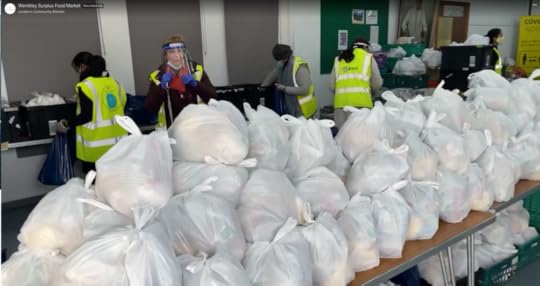
Image of helper at food market, Wembley
The best way to find yourself is to lose yourself in the service of others.
Mahatma Gandhi
Seva is a Sanskrit word meaning selfless service and is considered the most important part of any spiritual practice. It lies at the heart of the path of karma yoga—selfless action—and asks us to serve others with no expectation of outcome.
Selflessness, I’ve heard this word used often recently in stories I’m reading and its mentioned a lot on social media. It means a giving of yourself with out wanting recognition. Not sure if the use of the word in the stories is appropriate to create a likeable hero/heroine, but I understand why. Someone who cares for their friends, family and colleagues. Someone who is always available as a shoulder to cry on and gives back to the community. That image of selflessness
We all know of someone like that who has been of help to us and the death of Prince Phillip saw the outpouring of grief by a nation in every form of media. Many complained that the news channels were devoting too much time to the death of Prince Phillip, the Duke of Edinburgh. However, I want to point out that most people who lived in the United Kingdom and the Commonwealth countries have known of him all of their lives. He lived to an incredible age, almost a century and I suspect it was the same illness that sent him into hospital that took him.
Prince Phillip supported over 900 charities throughout his lifetime. He was the first president of the World Wildlife Fund, WWF, its ethos conservation and reducing human impact. He started the Duke of Edinburgh Award scheme for young people to get essential skills, experience, confidence and resilience no matter what their background. A true sevak who gave himself to the service of others. No matter what you think of the British royal family and the privilege that comes from their birthright. We have to admire the senior members of the family for the work they do in supporting worthy causes. I hope the tributes from ordinary people who met him, who gave anecdotal evidence of his sense of humour and his ability to listen, lessen the loss for the Queen.
According to Hinduism, seva can be given in three ways Tan, Mann and Dhan. Tan is physical service through work and strength. Mann through mind, counselling and listening. Dhan through sharing money, resources and material. Prince Phillip covered it all in his lifetime. You and I may not do all three. But a few changes would make a great deal of difference to others. Although what I write is coming from a Hindu perspective, we know all religions and none emphasize the giving up of your time and money for less fortunate than yourself. I mentioned seva - selflessness for all humankind and the resources we use. So it is fitting that his death was in the same month as Earth Day.
I watched BBC’s Ade on the Frontline slack jawed, a documentary about Bangladesh and Bhutan, how the water levels have risen beyond prediction. How the cyclones are more frequent and stronger. How land that was used by small farmers to sustain themselves and provide a living are now brackish. This land will never grow crops again. We need to listen to environmentalists and understand the reports, did you know that two-thirds of Bangladesh is less than five metres above sea level and according to the Environmental Justice Foundation, eleven percent of the countries people will be displaced because of rising water by 2050. Watch the documentary, go to the Earth Day website, even small change will make a difference
This week I visited a community centre run by London’s Community Kitchen, and met with a friend who is an associate at One Kind Act. The LCK are running food markets and distributing food parcels in London boroughs of Barnet, Harrow, Newham, Ealing & Brent. You probably saw the viral Facebook Live of people queuing on Ealing Road, Alperton. The team at LCK and OKA are true sevaks, not only do they provide food parcels, they run distribution hubs for the homeless, a programme of supplying food, clothing and essentials, but they also collect food that would have ended up in landfill sites from supermarkets. Support them by donating much needed funds at LCK Go Fund page or support OKA.
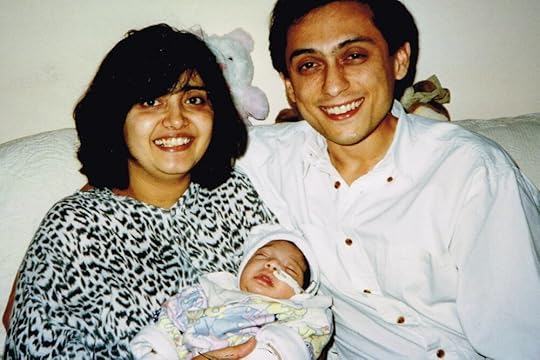
I was told when our son passed away that I was collecting punya for my soul. Punya in Hinduism means virtuous act, good deeds to help ease the pain of this life and take to my next. I was told that I was a good sevak to our son. I gave my physical strength to him as he grew inside me. I listened and looked for his every need, and used every resource at my disposal to keep him comfortable and safe. Those kind words made my loss bearable and I still remember them when I’m feeling down, that as a mother I was giving seva.

Image from Unsplash
Writing LifeI pitched my stand alone book to agents who might be interested in representing me. Little OLD me. And the time allocated for queries came and went. Some agents were great, a reply straight away, not the right fit, good luck in your endeavours, some completely ignored me. I understand they are busy people with tons and tons of queries landing in their inbox. I sigh. Is it from relief or is it a sigh of disappointment? I think I’m too impatient to ride it out and wait for the publishing industry to get back to me. I follow many author groups and hear of books and authors being rejected repeatedly by traditional publishing houses. But… there’s that word again, too niche which keeps buzzing like a mosquito in my ear. No one wants to read stories about people like me. So I’m going to embrace my self-publishing journey, no more submissions until I get a body of work finished. I’m done for now.
Self-publishing LifeThere’s a process you need to follow to self-publish; it's often tedious, time-consuming and disheartening. The writing I’m okay with, the self editing can take a while and then there’s the formatting and marketing! I have a group of amazing friends who read my polished draft. I've found editors who hone my manuscript. I’m currently writing the second duet of my university series, featuring a British Asian like me in the 80s, finding love, identity and friendships. I’d set myself a target to finish my 4th draft of my first book in the series by now, but that hasn’t happened. It’s taken longer to read through the first draft, listen to it as my computer reads it out loud, finding all the mistakes in the writing, repeated words, long sentences that don’t make sense, descriptions that are too short or long, hearing the dialogue. So many things, and I’m still muddled about the middle. It will happen, but not as soon as I planned. Heh ho, writing life, I’m not going to stress the small stuff anymore.
March 19, 2021
Inspiration, Resilience & Amplification
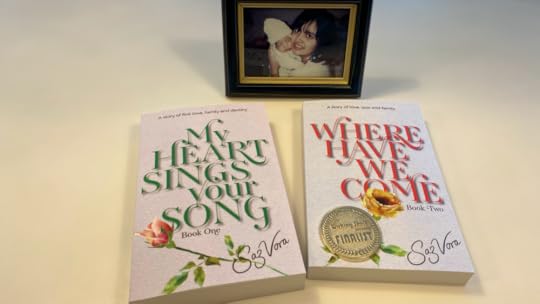
Wishing Shelf Book Awards Finalist Medal, Nikesh & Reena Debut novels and a photograph of my inspiration
Inspiration
Oh no, not I, I will survive
Oh, as long as I know how to love, I know I'll stay alive
I've got all my life to live
And I've got all my love to give and I'll survive
I will survive, hey, hey
Gloria Gaynor
Song Writer Dino Fekaris / Frederick J. Perren
I started this month in trepidation. It is the first year anniversary of the publication of Where Have Come, what should have been a celebration has turned into a time reflecting on what type of society I want to live in.
The date we lost our son is also the date for International Women's Day. He is the inspiration for who I am and what I do now. I believe he has shaped who we are, as a couple, as a family, as parents and most importantly as human beings. I believe we are better people because he came into our life. The Gloria Gaynor song signifies that, the ability for all of us to pick ourselves up and carry on.
ResilienceFor IWD, I raised my voice by pledging to amplify voices. It’s about the women who have inspired me, the grandmothers and mothers. Women who show strength and resilience throughout their life. The DNA that runs through me. I have grown through adversity, just like my grandmother and mother did as they moved from one continent to another and moved again to the UK.
IWD pledge below:The people who inspire me are the women from the Indian subcontinent who left their homeland for a life in East Africa, like my mother and mother-in-law and the many twice migrant women, and on behalf of women and girls across the world I am pledging to amplify their voices.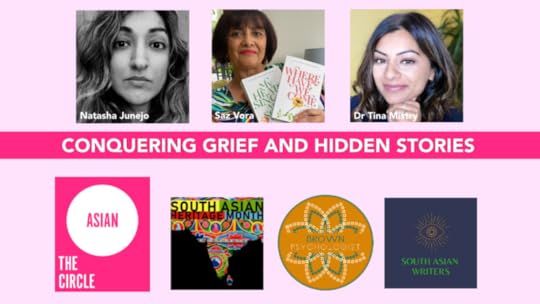
Panel Discussion with Natasha Junejo, Dr Tina Mistry and Saz Vora for IWD
AmplificationTo continue on with my pledge, I took part in Conquering Grief and Hidden Histories (link). You can watch a recording on the South Asian Heritage Month Facebook Page The aim was to start a discussion not only on grief but other mental health issues the South Asian community avoid. Historically, many from the South Asian diaspora have had to cope with tragedy and trauma. This experience has resulted in coping mechanisms, dismissing the loss, inability to discuss feelings, and a lack of empathy for those that do. Thanks to people like Dr Tina Mistry and many others, people from the SA community are seeking help, choosing to challenge, raising their voice. Tina is also looking for your story of motherhood: if you have one or know of someone who does, please contact them through An other Mother Story (link)
Celebration for MothersLast weekend we celebrated Mother’s Day, or Mothering Sunday, a time to visit families and lavish gifts and attention on our mothers. The year I became a mother, Mothering Sunday fell at the end of March. I was a mother, but we’d lost our son. And I was unmothered, back to being a wife, a daughter, a sister, an aunt.
This year instead of waking up to how people were celebrating in lockdown, with virtual lunches and zoom calls, I woke up to news of arrests at a vigil, a gathering of women and men who came to pay tribute to Sarah Everard. A woman who went missing as she walked home, she wore bright clothing; she phoned to tell people where she was. She took all the right precautions, except she was a lone woman out at night. There was an uproar, loud voices on how 50% of the population feel threatened, feel they do not have a voice, feel they have no protection from the law. When will men understand the choices women have to make in their daily lives to keep themselves safe?
Weeks before Sarah went missing, I read a post on social media. A concerned parent posted a photo of two men who had pestered and harassed two young girls on a train, wanting addresses, names, following them as they got off the train. A totally uncomfortable experience for the girls.
The photograph appeared to warn women and to shame the men, and as always someone commented. ‘They can’t have been that scared because they took a picture.’ All parents tell their daughters of stranger danger. Keep your head down, don’t smile, cover up, if he is persistent, pretend you're taking a selfie and take a picture. Just in case he follows you. Just in case you need evidence. Why is it that no-one on the train carriage stopped them? Why is it that the men felt it was all right to pester teenage girls, when they were much older? If we don’t challenge harassment in public places, nothing will change. So use this year’s International Women’s Day hashtag
#choosetochallenge.Challenge inappropriate behaviour.Challenge inequality.Challenge gender bias.Challenge injustices.Visit my YouTube and subscribe for readings, who and what inspires me.
Character Development - Finding your MuseMuse, I don’t mean the rock band from Devon, but the greek word Muse the inspirational goddess of literature, science and arts, collectively known as the Muses.
For characters to be relatable and likeable, they need to come from a place that you can own. The old adage write from a place you know is very applicable here. Why create someone you know nothing about? An enormous source for character development for me is watching film and television. I collect imagery of actors, singers, models, settings, houses, clothes, anything that will make character sketching easier. I create Pinterest boards to get my creativity flowing. So here is a look at my muses for my My Heart Sings Your Song and Where Have We Come.
Reena Solanki
Reena was easy. She looks like Audrey Hepburn in Breakfast at Tiffany’s; she dresses like her; she has long hair and when she wears it up it’s like hers. She’s quirky, who wears clothes from the sixties in the eighties? When she wears her Indian clothes, there are flashes of Mumtaz.
Pushpa Raja
Then I found Pushpa, Nikesh’s mother. At the time I wasn’t sure if she’d feature heavily in my book, but again a muse to explore. That muse is Sharmila Tagore. If you’ve watched Amar Prem, you’ll know what I mean. I am enamoured with the way Rajesh Khanna called her name, and so she became Nikesh’s mother.
Nikesh Raja
Nikesh came later, a memory of Nigel Havers in his younger days, the same face, the same way his hair lifted up and fell from a deep parting on his left.
The visuals become a full page description of the characters, a page on what they wear, how they walk, what music they listen to, some of their mannerisms. I read some authors spend little time on description, leaving the reader to use their imaginations, but my description is part of my world building.
There’s lots of advice on dos and don’t on description, but it’s your story, find what makes you comfortable.
Besides, this character building and description writing can also be another way to ease the dreaded writer’s block.
February 19, 2021
Potato Potaho
You like potato and I like potahto,
You like tomato and I like tomahto,
Potato, potahto, tomato, tomahto!
Let's call the whole thing off!
Songwriters: Ira Gershwin / George Gershwin
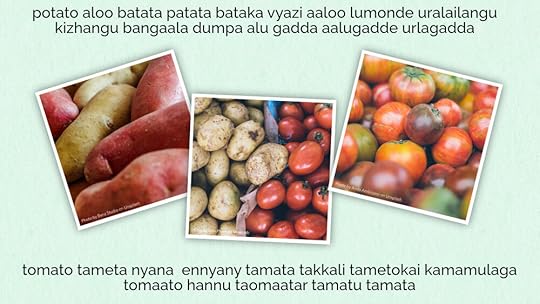
There are far too many words for the humble potato and tomato and who doesn’t like a good bateta nu shaak or is it bateka? Even in Gujarati the language many things are pronounced differently too. I came across one of Parle Patel’s skits on Instagram about hando, ondhwo, andhwo, and it started me on a quick research. What do you call potato and tomato in your language? I got a huge response on social media, for our staple go to starch and the fruit that’s disguised as a vegetable.
Why am I raising this, well I know I’m a Gujarati Indian, and I’m also East African born. There are 23 languages spoken in India alone and when you add the people who like me are living in the diaspora - UK, USA, Canada, Australia, New Zealand, UAE, France, Portugal, Netherland, Malaysia, Thailand, Singapore, Trinidad and Tobago, Sri Lanka, Mauritius, Fiji, Japan, Surinam, Guyana, Tanzania, Uganda, Kenya, South Africa, the name for potato and tomato are too many to count.
Why have I spent so much time on this? Culturally the people from the Indian subcontinent have many similarities, but we also have many differences. When I was searching for stories from someone like me I read R. K. Narayan, Khushwant Singh, Mulk Raj Anand, V. S. Naipaul, Salman Rushdie, Hanif Kureishi. Not quite like mine. Stories of displacement, the yearning to go back, remaining neither in one country nor the other, the ‘peripheral man’ as V. S. Naipaul called them.
People like me have a different story to tell, we’re not on the periphery, we know nothing of the land of our ancestors.
Would you compare Thomas Hardy to E. M. Forster or Charlotte Bronte to Jeanette Winterson, they write similar stories of heroines. Why, then do publishing houses and the gatekeepers of our stories have a token writer of colour but have stacks and stacks of authors from white, middle class, men. I’m not complaining about male writers, but even the earliest books I read to find a place to belong were from Indian men. When I came across Jeanette Winterson’s Oranges Are Not The Only Fruit. My heart fluttered at last, a story I could relate to about growing up in England. But that feeling subsided, and I was back on the elusive search for stories of people like me. Some diaspora authors wrote stories that gained success, Chitra Banerjee Devakurani, Kiran Desai, Jhumpa Lahiri, and a recent discovery, Elif Shafak. It also gave me the courage to write my story, not through a publishing house but through self-publishing. So I say to literary agents and publishing houses, there are many stories from many unknown writers. Give them the opportunities to tell them. They might not fit your specification, a blogger, an academic at a university, a journalist, a presenter, an actor. They might be a working class mother of five, who finds time in her busy life to write beautiful prose, but doesn’t know how to seek that agent, submit a short story to a competition, attend the many book writing courses.
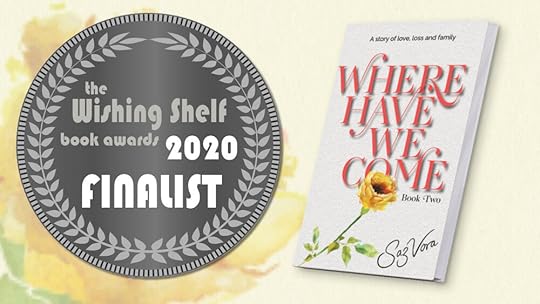
Where Have We Come Finalist in the Wishing Shelf Book Awards
Book award and validationAfter writing this piece I received news that Where Have We Come, Book Two of the Reena & Nikesh Duet is a finalist for The Wishing Shelf Book Awards. Did I feel the same as when the paperback arrived, not the same, but I’m on a high. The finalists are picked by readers, not literary agents, or editors, but people like you and me, who read for pleasure, groups who discuss books, groups who want to escape.
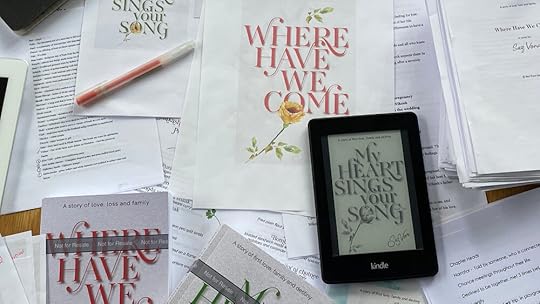
Writing drafts for Where Have We Come and My Heart Sings Your Song
Writing Dialogue - a useful show not tell - writing toolI’m currently writing my second duet in the university series, and this book has a dual point of view. Every time I write a thought or dialogue for one of the protagonists, they keep starting their thoughts and conversations with Christ!, sometimes in exacerbation, sometimes in frustration. Should I embrace their use of the word, I’ve tried taking it out, but their voice doesn’t sound authentic to me. Every reader will have different connotations on using that word, but that's okay, I want a reaction.
Umi, in the Reena and Nikesh Series, said a word often when she was shocked and angry. She watered it down to effing when she was in company. But it suited her character, a rebellious Gujarati girl, from London.
I made some amazing friends when I was at Demontfort University and one friend said this to me, ‘Do you want to come with?’ The first thing that came in my mind was come with what? Wine, food, a friend. No, he was asking if wanted to go to the party with him.
Y’all coming?
Hey Bhagwan!
Fabuuulous
Eee, tha’s a reet gladly brew, tha
Tra ra, a bit
What does this tell you about this character? I don’t have to say they are from Texas, India, Craig Revel Horwood, Yorkshire, Midlands, you can tell by the way they speak. So as a writer I experiment with dialogue, add an extra something, take a word out there, my grammar checker shouts out the mistake.
So continuing with a play on words and their meanings, here’s an extract from my standalone inspired by Jane Eyre, Made in Heaven for Me.
The child’s little fingers tore at the paper. She lifted the small box and enquired, “What is this called in English?”
“A telephone box.”
“And the car?”
“That’s a London taxi,” I answered, smiling, and my heart swelled.
“Ooh, a red bus. Is this from London, too?”
“Oui, that is a bus,” I replied.
She repeated the words, rolling them in her mouth to familiarise herself. “Bus… bus… ooh, that’s like bus bus.” She giggled at the joke; the words meant ‘just enough’ in Gujarati.
I liked her straight away; she was inquisitive and outgoing, switching from French to Gujarati without hesitation.
A little poem that arrived in my inbox from Sarah Ismail, a play on the English language and how words are there to play with our minds. Amazon
When the English tongue we speak.
Why is break not rhymed with freak?
Will you tell me why it’s true
We say sew but likewise few?
And the maker of the verse,
Cannot rhyme his horse with worse?
Beard is not the same as heard
Cord is different from word.
Cow is cow but low is low
Shoe is never rhymed with foe.
Think of hose, dose, and lose
And think of goose and yet with choose
Think of comb, tomb and bomb,
Doll and roll or home and some.
Since pay is rhymed with say
Why not paid with said I pray?
Think of blood, food and good.
Mould is not pronounced like could.
Wherefore done, but gone and lone –
Is there any reason known?
To sum up all, it seems to me
Sound and letters don’t agree
January 15, 2021
Embracing the unknown
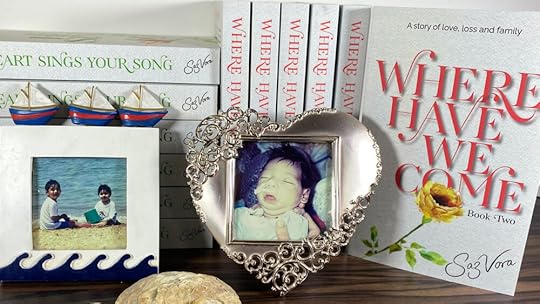
Where Have We Come and a photographs of our sons
A new year and a new beginning. I used to have new year’s resolutions, but as I grow older and wiser I’ve abandoned them. So I welcome 2021 with a blank slate, not much in the calendar. A huge embrace for the unknown and what the year has in store for me and mine. In this time of uncertainty, it is futile to plan holidays, family gatherings, or even a catch up with friends. It will happen, just be patience. New mantra, it will happen.
This time last year I pressed the publish button for My Heart Sings Your Song as an ebook and I didn’t just publish on Amazon, but went worldwide. Everywhere, every ebook platform. Anyone who had an app on their phone, tablet or computer could read my story, everyone who had a library card could download it.
It was an enormous step. I had joined a creative writing course in 2006 and wrote Where Have We Come, that story poured out of me. I remembered every comment, every incident in vivid colour, the feeling of inadequacy, the search for a miracle to prolong his life. It is the story of our first-born son who lived but didn’t survive, after all it was our experience. Simple, right? Not really.
It was also the year my father was diagnosed with bone cancer, and then it hit me the grief. Grief for my father, but also the grief for the baby who was too sick to survive. So when I published in January, it was a conscious decision to add a celebration. I have always felt sad from January to March, and I’ve put it down to living in the northern hemisphere, short days, long nights, and the cloudy skies, the greyness of it all. Two years after his birth, we had a healthy baby boy, and three years later another. January became a time of celebration; all my children are born in January. We fill the weekends with family and friends and a visit to the cemetery to spend time with our son. This year isn’t the same, we don’t have friends and family with us and the memories of that time are still too fresh, still raw and at times I feel they’re ready to burst out again. Leaving me with the stomachache, the thumping headaches, the lack of sleep. Then I think of how I got here, the panic attack and the talk therapy that brought me back to the story I wanted to share. I take comfort from the moment I took the steps to self-publish.
I wrote my books to deal with my panic attacks, but I also write and speak about depression, child loss, anxiety, stigmatised subjects. I want to tell everyone that my experience isn’t unique and that I’ve found a way to deal with my depression and anxiety, it’s still with me, but I embrace it, stay connected with it, and ease it. If I found the courage to seek help, to find my enjoyable task, my voice through my writing, then they can too.

Photo by Thays Orrico on Unsplash
FestivalsAs I write this, there are a couple of festivals celebrated throughout India and all over the world by Sikhs, Hindus and Jains: Lohri, Makar Shankrati and Pongal.
Lohri takes place on the day of the longest night at the end of the winter solstice and is followed by Makar Shankrati, whereas Pongal is a multi-day festival. They are all a celebration for the end of winter.
For Lohri children collect firewood and sweet treats; gurh-jaggery, gachak-peanut brittle, tilcholi, a puffed rice, sesame seed and jaggery brittle, popcorn during the day. As the sunsets the bonfire is lit and the food distributed and offered to the fire, some people walk around the fire and pray to it. Hindus also offer milk and water to Surya for his protection. Everyone sings and dances around the fire. Lohri is mostly celebrated by North Indian families, singing special Lohri songs and dancing the Gida and Banghra, dressed in their best clothes.
The day after Lohri is Makar Shankrati, for me this is the colourful kite festival, offering thanks by praying to Surya. Again sweets are made and distributed in Gujarat and Rajasthan, its talsakri - sesame seed and jaggery brittle, they fly kites during the day and bonfires are lit in the evening. Many places hold fairs, full of stores, fairground rides and entertainment. It’s also the time Hindus go to the Kumbh Mela when pilgrims converge to bathe at Prayaga, Hardwar, a confluence of the River Ganga and River Yumana. A mass gathering that happens every twelve years.
Pongal, is a festival celebrated by the Tamil community, the festival is named after the dish made with milk, rice and jaggery. Are you getting the idea for the festival yet? Winter harvest and jaggery. A way to say thanks to mother nature and its bounty.
Pongal runs over three days and is celebrated by South Indian families. Beginning with Bhogi Pongal, the day to discard old things, clean and decorate houses, exchange new clothes, decorate cow horns and light bonfires. Surya Pongal the next day, friends and family gather to cook the pongal dish in the open, usually in a clay pot. They make Pongal with milk, rice and jaggery and allow it to boil and overflow. The dish is offered to the gods, then to cows, before the family eats it. It is on this day that the entrances of houses have a geometric pattern called kolums, similar to rangoli but with rice flour. Mattu Pongal on the third day, is dedicated to the cow, people adorned them with flowers, some people bathe them in turmeric paste, and feed banana and special meal to them. Mattu Pongal is to give thanks to the cow, bullock, for providing transportation, farming aid, fertilisers and food. Some communities celebrate a fourth day where they visit family to get blessings.
A book filled with Bollywood songs, comforting references to Indian foods. A boy meets a girl coming of age romance featuring the life of East African Gujar...As a celebration of the first year of My Heart Sings Your Song, I’ve created a little trailer and want to thank you, my readers and supporters who’ve left reviews on Goodreads and Amazon. You don’t know how important it is for a writer to have validation. Reviews are also bread and butter of marketing for self-published authors, so please spread the word by leaving yours, if you haven’t done so already. And I now have a Youtube Channel. Please check it out and like.
Writing and embracing the unknownI thought I’d explain the process of why and what type of questions I asked myself before I decided on publishing. Hope it will give you the courage to embrace your story.
When I was on the creative writing course, there were several exercises to get you to write. One of these is an exercise on expanding an anecdotal story, something that happened to you, that you could expand on and create into a short story. The exercise is simple in that it’s from a place you're comfortable, something that has happened to you, something you can embellish. My book started like that, a short retelling of my experience, and then became Where Have We Come. The questions I asked can also help you write a personal story.
Why am I writing this story?To tell my story, to tell other people who have or know of people who have been through similar situations, know that it is okay to grieve. To remember our child and his short life.
What will writing it do to me?Help me process my feelings and recover from the cycle of grief and sadness that overwhelms me.
What will writing it do to the reader?Comfort them, tell them they are not alone. Help family and friends understand parents who’ve lost children so they can better support them. Open up discussion about child bereavement.
What is the bigger conversation this will contribute to?Open up discussion on mental issues for families who have lost children and for the south Asian community to recognise that child loss is just as important as other loss. To talk about mental health and to wipe out the stigma.
What is the cost to my wellbeing in writing it?Helping others and opening discussions will provide me the opportunity to meet other families who are dealing with the same situations. Writing about my emotions will help me deal with them better.
Why am I writing this now?It's time to question old-fashioned attitudes. Subjects like postnatal depression, child loss and mental health need an honest and open forum and I have the opportunity to dedicate time to make a change.
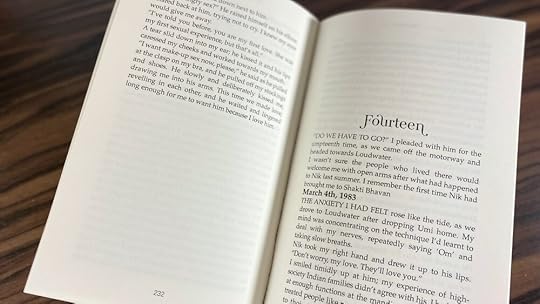
My Heart Sings Your Song
FriendshipAn understanding of the meaning of friends, true friends will stay with you in your time of need. If they drop away when you most need them, then they aren’t in it for you, but only themselves. We have some amazing friends, who have supported us in our time of need and celebrated with us too. The extract is from My Heart Sings Your Song. The first time Reena realises that it doesn’t matter where you come from or who you are, there is a commonality in us all.
“I know this film,” Peter exclaimed. “I love it.” He started to sing. “Ye Dosa Tea Ham Na Hee.”
The Indians in the room gawked like goldfish. Umi and I laughed out loud at his version of the Hindi film classic. We settled down to watch Amitabh and Dharmendra. Dick was the only one who didn’t have the shared experience. Luckily there were English subtitles on this version, and he, too, would understand the Western-inspired, buddy movie, Sholay.
As the song started, Jay got to his feet, pulling at Nik. Peter joined in and began to sing, too, so we all stood up and sang holding each other around the waist.
When the song finished, we laughed at Peter, a Nigerian who grew up watching Bollywood films, and felt how amazingly small the world was and how we had had the good fortune to meet each other.
November 6, 2020
Reflection on first year of publishing
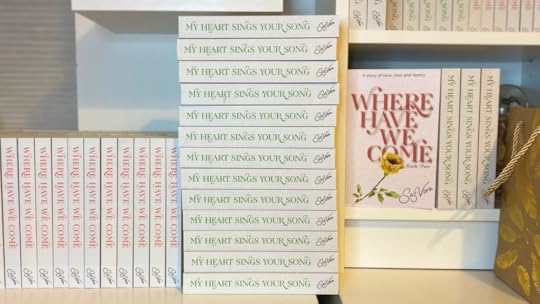
Limited print run of My Heart Sings Your Song and Where Have We Come - University Reena & Nikesh
December for most people is a time for reflection, and this year more than ever has given me a time to think of where I was last year.
If you read my last blog post, I’d already mentioned celebration, and COVID has certainly provided a memento of celebration, albeit differently.
But first let me tell you where I was this time last year;
I published my first blog post
I finished my menus and glossary for my books
I created a file to upload onto Draft 2 Digital, a platform for ebook publishing and distribution
I had artwork back from my book cover designer, the amazing Mita Gohel
It has been quite a year. My journey from wanting to tell my story to finally building the courage to write it down, send it to people who read it, who asked questions, helped hone it. Then sending it into the world for all to read it or not. Self-publishing has been tough. I’ve joined groups where authors have hit the best-seller list on launch day. I even found out that one debut author’s husband sent everyone in his firm, free copies of his wife’s book.
A few of my ardent supporters brought my books and left reviews, one of my nearest and dearest commented, “ all these reviews are from friends, they don’t count.”
That hurt, really hurt, a stab wound in an already fragile heart. Anyone who has spent their waking and sleeping hours creating, whether it’s writing, singing, dancing, painting, dreads the moment when their work is seen by others. Besides, the story I’ve published is too close to me. As a parent who has a child with low life expectancy, you are told to write everything down. So when our son was born, and when we had his prognosis. I wrote notes; we kept a notebook to make sense of the conversations with medical professionals. I had no trouble with writing and reading about the medical conditions, the therapies, the exercises. But the problem came when I had to write about my feelings. So when I wrote the book Where Have We Come, it took a lot of coaxing, courage, self-motivation to get it out. To tell people how I felt.
I had a perfect pregnancy, morning sickness, none, high-blood pressure, none, swelling ankles, none, backache, none. Nothing. I felt fit and strong. Our son was due the first week of January, and I was working until New Year's eve. That's how good I felt.
Then a one in million chance, a swollen vein burst in our son's brain, a freak occurrence. Our life turned upside down. Gone were the happy moments, the joyful bundle, the smile on doting grandparents. We were in shock and we pushed our feelings into a bottomless dark pit to deal with what was happening. A sick baby, umpteen opinions, good meaning friends and family, some helpful, others a hindrance. A life of hospital, barely a few hours sleep, infections that took forever to clear. My husband found his way to deal with it, and I found mine. But we worked as a unit, our views almost identical. That’s when I knew I’d found the one, the one written about in the books. What’s all this got to do with celebrating, you're thinking.
I’m celebrating that I have a partner who through thick and thin and believe me there have been many, has the resilience and the tenacity to keep us together. Our path hasn’t always been smooth. Even publishing this book and the events I’d hoped to attend haven’t happened. But I’m celebrating despite the setback.
Reviewers and Book Tour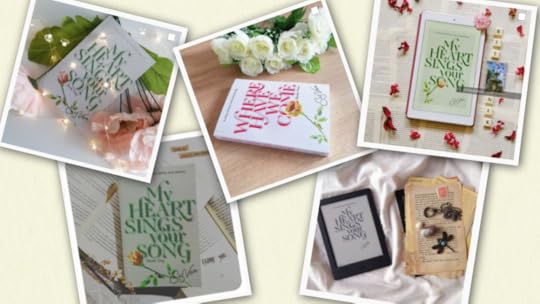
Instagram Blogger of My Heart Sings Your Song and Where Have We Come Book Tour
I want to celebrate and thank all the readers who picked up my book, read it, and left a review. I’m glad you liked them, your words mean a lot to me. I’ve added some comments from my book tour with Instagram, hop over there to read all the reviews. I’ve also added clickable links too.
If you fancy a beautifully written, modern real life love story of Asian origin, I thoroughly recommend a read of this book. @c.isfor.claire_reads
Saz writes in a heartfelt, evocative manner that touches so many layers… I really liked the feeling of getting to know how it feels like for an Indian to grow up in a different country and yet follow our culture. @syllablesofswathi2 Syllables of Swathi
Reena and Nik’s love for their son Amar is deep and strong and I loved the moments of light and tenderness, though bittersweet . @thebrownbronte The Brown Bronte
..story is written beautifully, and truly reflects the collided cultures of the characters. With the inclusion of a glossary of phrases, and recipes...emotional, romantic, yet convincingly heart-breaking ride. @GNTxREADs
I was also featured by author Reet Singh on her blog, where I talk about the organisation I support and why I cover taboo subjects in the south Asian community in my books. Her latest book Satin and Sapphire is available on Amazon
Celebrating the new normI want to celebrate all those amazing people, who ran events, courses through lock down and have helped me learn about publishing and writing. I have enjoyed using the advice and growing as a writer, publisher, marketer, designer. The list is endless.
I’m celebrating how this year has brought many of us closer, through Zoom, Google hangout, Microsoft meets, and social media. We had the best Diwali day, when our extended family joined us from India, USA and UK. This type of meet-up would not have been possible prior to COVID. We’ve all learnt a novel way to connect, let's hope we can continue to keep it going.
But there have been sad times and bad times with the good. I hope you’ve had the time to reflect on your year. I hope the loneliness, anxiety of not meeting your loved ones hasn’t stopped you from finding the good. It’s been sad for many who’ve lost family members and haven’t had the usual goodbyes. It’s been bad that despite the warning from the medical profession, our leaders made light of the health implications of this virus, bad that in Great Britain we have food banks and many people are living in poverty.
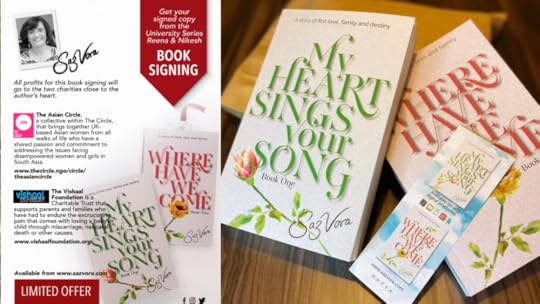
Special Limited Signing for two charities - The Asian Circle and The Vishaal Foundation
To celebrate the end of the year, I’m signing some books (limited numbers - UK only) to raise money for two charities close to my heart. The Asian Circle and The Vishaal Foundation. Click on the image to take you to my temporary shop, on my landing page. It’s a worthy cause and you’ll get signed copies for a few pound more than buying in bookshops
The Asian Circle, a collective within The Circle, that brings together UK-based Asian women from all walks of life who have a shared passion and commitment to addressing the issues facing disempowered women and girls in South Asia.
We have successfully seed funded a pilot project amongst the tribal community in Chhattisgarh, India to end domestic violence and empower women and girls.
The Award winning programme created in partnership with Oxfam India and local NGOs, has been adopted for state wide deployment.
The Vishaal Foundation, a Charitable Trust that supports parents and families who have had to endure the excruciating pain that comes with losing a baby or child through miscarriage, neonatal death or other causes. The Foundation holds annual memorial events that enable families to come together to honour and remember their angels in an environment of love and understanding.
To find out how you can help go to their website, just click on the name.
Poetry From Lockdown LondonAnd to end this my last blog of 2020 I leave you with a poem by Sarah Ismail from Poetry From Lockdown London
To the tune of When Pink Is Just A Colour Again, a country song written for Cancer awareness.
When Clapping's Done In Crowds Again
I'm holding my mother's hand
Pet dog's lead tight in her grip
We notice a few people, dressed in rainbow colours
We think how pretty it is.
But it reminds us, of standing here
Before Coronavirus hit
I think of the plans I made last year
Now they're all on hold for a bit
When rainbows weren't in windows
And clapping was done in crowds
Every walk was just for fun
And the sound of cars was loud
Today is one step closer to being like back then
When clapping's done in crowds again
Now we walk on an empty street
Crowds a distant memory
We rub our eyes and take a long look around
We see rainbows held up high and candles being lit
For mothers and daughters, sisters and wives
That are being missed
But my mother is still with me
And I thank God every day
I hold back my bittersweet tears
As we take our daily walk and wait
For when rainbows aren't in windows
And clapping's done in crowds
Every walk is just for fun
And the sound of cars is loud
Today is one step closer to being like back then
When clapping's done in crowds again
When rainbows aren't in windows
And clapping's done in crowds
Every walk is just for fun
And the sound of cars is loud
Today is one step closer to being like back then
When clapping's done in crowds again
Every step is one step closer, in this race we're gonna win
When clapping's done in crowds again.
Read Sarah’s blog - Same Difference
Have a wonderful Christmas, however you choose to celebrate it and see you all in the New Year.