Derek Porterfield's Blog, page 3
May 7, 2020
I, Am Not Left Handed
If I were to try and name the most formative pieces of entertainment from my youth, that list would invariably contain three titles:
The Prince of Persia
Star Wars
And The Princess Bride
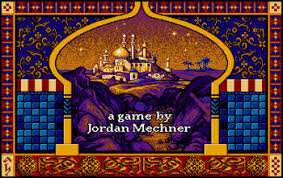
I can still hear this music. The soundtrack was AMAZING.
Prince of Persia was the first real video game I played as a child.
Or toddler, really.
I was three.
Created by the incredibly talented and very humble Jordan Mechner, (who just released his journals from the game’s development as a book, if you are curious) this game defined what I would spend my life chasing in good video games. The way he approached design was as a platform title. In other words, running, jumping, avoiding pits and spikes etc, but no violence. You wouldn’t fight. He remained adamant about this design choice until the final hour when he realized that a sword mechanic added a whole new level of urgency to the gameplay. It elevated what was already a good game, into something more.
And it worked. It worked really well. The combat involved some rudimentary blocking and swinging and each encounter felt tense in the way all great fantasy should. My younger self was fascinated by the blood and the potions and the variety of levels. It also fulfilled a dream that every young boy carries from the womb: I got to use a sword.
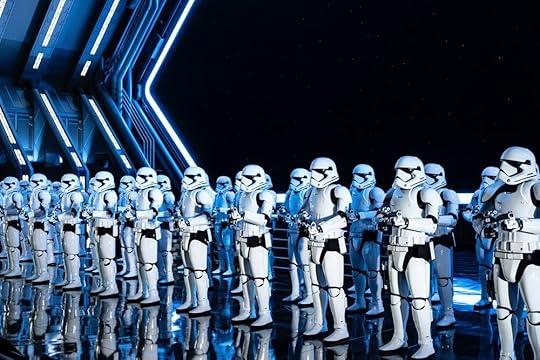
Star Wars was a profoundly impactful trilogy, not just for me but for the whole damn planet, with particular emphasis on my favorite, The Empire Strikes Back. A New Hope has arguably the most disappointing lightsaber battle in history, even including that kid from YouTube that just kind of fought himself in an empty room with a blanket backdrop.
In fact, someone came in and redid that scene between Obi-Wan and Vader (Here) with special effects and it works really really well. But you know what worked even better? Let’s look at Luke v. Vader in Cloud City.
The Empire Strikes Back is not an unpopular film. Most of the angrier nerds you run across sipping craft IPAs in your local bar near an uncomfortable looking woman, are talking about the fifth Star Wars film and how it fits canonically within the Star Wars Universe (true story). They’re not necessarily wrong (they’re just an asshole). It’s a rare film that feels timeless. It did a lot of things right, but discussing them is beyond the scope of my tiny blog. All those aside, it also did one big thing that resonated with everyone.
It fixed the lightsaber battle.
Luke vs. Vader felt huge. The hits were hard, the finesse was there. The movement and the use of the force were all so engaging and tactile.
Yea, yea, Luke finds out that Vader is his dad.
Whatever.
Five year-old Derek couldn’t have cared less.
Vader cut off Luke’s freaking arm.
Sliced it right off.
His lightsaber hand.
THAT. Was. Crushing.
I too, as a kindergartener, would have leapt from a high tower into the abyss if someone had destroyed my blade hand. It stuck with me for a long time.
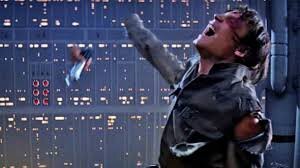
I felt that. We all felt that
And finally, the Princess Bride, the greatest movie of all time and probably the first love story I enjoyed as a kid who still thought girls had cooties.
I joke around alot, but feel the need to clarify: I do not jest about The Princess Bride. The love story between Wesley and Buttercup told against a backdrop political intrigue and fanciful locales full of torture, pirates, fighting and even FREAKING ROUS’s, has EVERYTHING.
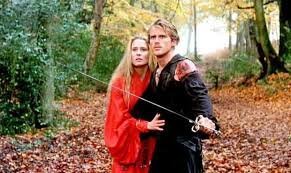
Observe, the reason I believe in love
I remember countless viewings as a child staying home sick from school and watching with wide-eyed fascination as the man in black outsmarted and out-maneuvered everyone. The dialogue is clever and the story gleefully leans into the fairy tale tropes it satirizes. It’s a joy and I feel lucky to have shared it with my daughter in it’s recent re-release to theaters. She loved it. I cried happy tears.
I maintain that “As you wish” is one of the greatest “I love you”’s in cinema.
So, I was considering these seemingly disparate stories and trying to find a link between them that may have intrigued my younger self in ways that Back to the Future and Dr. Who never did. What was different? What was the same?
Sword fighting.
I’m not gonna say that this was the thread onto which my toddler fingers clung, but...maybe it was? Each of these has a very similar approach to combat. In fact, it’s an approach we no longer see in modern movies and games. They featured realistic swordplay with a heavy focus on the art of the duel.
I know, sounds boring, but hear me out.
With the release of the Phantom Menace in 1999, the whole world of Star Wars and on-screen battles was changed. I won’t lie and act as though I hated this movie when it was released. I was 12 and it had Natalie Portman, Kiera Knightly, roughly 12 minutes of podracing action, cool droids, and a DOUBLE SIDED LIGHTSABER. Insofar as I roughly grasped human biology, that movie was puberty.
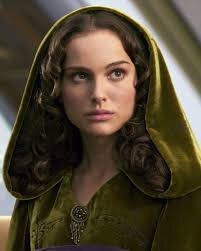
If my first love was Buttercup, Padme was second.
But it hasn’t aged well and though the reasons for that are legion, I want to focus on the part that has arguably aged the best: The lightsaber fight.
Obi-Wan and Qui-Gon face off against one the coolest villains in Star Wars history, Darth Maul. The dude has horns coming out of his head that’s covered in tribal face tattoos while rocking a double bladed lightsaber like a ninja warrior.
I believed, in my 12 year old heart, that I would be a good Jedi if the occassion should arise, but I left the theater seriously considering the Dark Side.
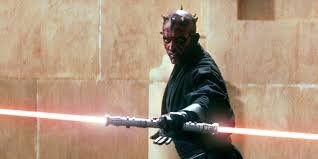
I mean, seriously. Dude is a badass.
The scene is cut up, action interspersed with other battles happening elsewhere, but we watch these three characters flipping and clashing their sabers together in the most spectacular fashion with a fantastic choir adding tension to the whole scene. It was remarkably different and more intricately choreographed than anything else I had seen to that point in my life. And there lay the problem.
See, Empire Strikes Back had a fantastical battle, but when my friends and I finished watching, we could re-enact almost all of it on the playground. Right down to the tragic missing limb. It further blurred the lines between reality and fantasy that already exist in so fleeting a fashion to younger souls.
But here, the flips and the back and forth action of Maul versus the good guys was more like…dance. It showed a bunch of cool skills but separated some of the brutality by feeling so planned out. While the action was incredible...it was unfortunately...not credible. Ha! God I’m clever.
When you wanted to play lightsabers in the yard with sticks or that rusty rebar your parents didn’t realize you had stashed in the alley, you couldn’t flip around. Sure, you tried. You rolled on the grass, you said “Wait!” and spun in artful circles whilst your friends admired your Jedi speed, but in the end, it was impossible to match the spectacle. So there existed a divide. The slightest fissure between the film and the playground, and it grew, at least for me, as I returned to the movies, further distorting reality.
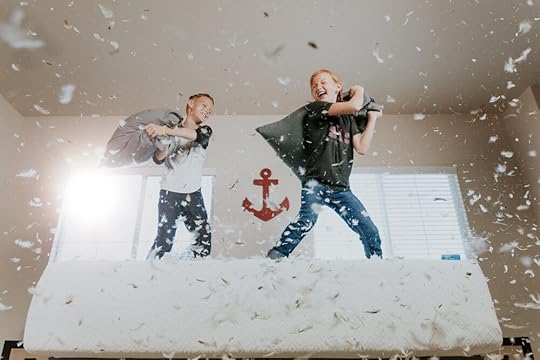
If those were sticks and one of them was crying this would be my youth. I would be the crying one.
What Empire did, that I so very much enjoy to this day, was incorporate a real fighting style into the battle. It’s mixed in with Vader throwing things with the Force but the larger pieces of fight were things that you might actually see happen. You know, when you’re watching two dudes fight with fencing foils in the streets of your suburb.
Bob Anderson was the fight choreographer and even served as the stunt double for Vader in both Empire and Return of the Jedi.
The guy was an Olympic fencer. To say that he understood swordfighting is to say Walter White can do chemistry...it’s a vast understatement. He had a career that spanned 50 years and he is responsible for some incredible work with Highlander, The Mask of Zorro and even… you guessed it, THE PRINCESS BRIDE.
Yes, this man was responsible for the commonality between two of my favorite films. He was the silent hand behind the swinging sword and created combat that was believable and true and beautiful on screen.
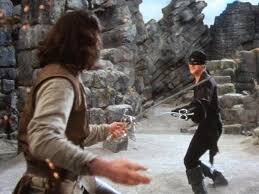
Look at the fight between Inigo Montoya and Wesley at the top of the cliffs of insanity in The Princess Bride. This, in my never humble opinion, is the best fight scene in all of movie history. Yes, all of it. The swordplay intermixes perfectly with the music and the clever quips and cock-sure banter just serve to add to the gleeful tension.
I fought with my left hand for months after I watched this movie just to whisper that line somewhere between the monkey bars and the yellow slide at whoever I was fighting that week, “I know something you don’t know…” then I’d toss the sword(stick) to my right hand with a flourish, “I am not left handed”.
It was exhilarating.
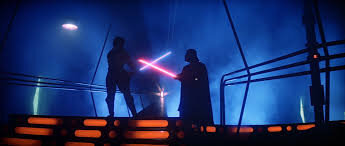
Again, this was replicable in a way that modern combat scenes simply aren’t. I’ll admit that the newer Star Wars films added a brutality to the lightsaber battles that I really dig and it’s definitely a cool step forward in the franchise, but whether for nostalgia or actual conviction, I find myself drawn to the showdowns orchestrated by ol’ Bob Anderson. And that style of fencing combat is exactly what Jordan Mechner incorporated into The Prince of Persia. In fact, he pulled his fight animations from the 1938 movie, The Adventures of Robin Hood. (I checked, Bob didn’t choreograph this one but damn, that would be cool)The blocking, the striking, the parries, it all matched across the fantasy field, and in their similarity, they were able to reinforce their own worlds.
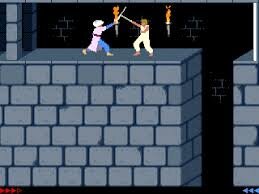
Familiarity of concept reinforces a piece that otherwise might be harder to grasp. When you watch someone swinging a laser sword, your brain registers that it’s fake and that risks pulling you away. But when they use that fake weapon in a fashion you’ve seen somewhere else, set in a different time period or in the case of Prince of Persia, in a different medium, you can begin to connect the disparate threads of the realities and each piece of art becomes stronger from their shared pieces of truth in a field of fiction.
This isn’t a callout of modern fight choreography in the least. I think it’s wonderful and fun to watch and the people doing it are so talented it hurts my brain. Instead, I hope this comes across as I meant it: a deep appreciation for the sword fighting that defined my childhood. Bob Anderson died in January of 2012 but I like to think that as long as we continue to celebrate the incredible contribution he had to these classic films, he lives on, in the heart of any kid with a tree branch sword on a playground in a suburb somewhere, tucking their arm into a sleeve and screaming, “NOOOOOOO, that’s impossible”, before jumping down the slide and into the abyss.
Thanks Bob.
Supplemental stuff for those interested:
Jordan Mechner talking about Prince of Persia
Thanks for reading :)


April 28, 2020
There are teachers, and those with a teaching degree
I hate the way education has been presented and pushed in America. I was an unfortunate victim of the Texas school system myself.
We have failed millions of children in a sad attempt to homogenize them into worker drones and I naively hoped it would be better by the time I had my own child.
It is not.
I can’t honestly say whether it has become worse or if I’m just more impassioned and bothered by it’s many failings now that I’m the parent.
To be clear I don’t blame the teachers for this flaccid attempt at mind molding.
Well, not all of them.
The truth is, that the blind adulation you see tossed around on Facebook for the low salary and sacrificial hours of many teachers is a blanket that covers all, but is only meant for a select few.
I had a handful of formative educators throughout my schooling years and, for them and their hard work, I could never adequately express the depth of my gratitude. Mr. Miller from Junior year stands tall among them as the teacher who most profoundly impacted my vocabulary and reignited a love for reading that I had lost somewhere among the assigned drudgery and book reporting of freshman and sophomore year. I would not have been capable of publishing a book without his deft teachings and compassion.
But, the Millers of the world are in woefully short supply, and as someone that spent several years supporting the IT infrastructure of schools around the Panhandle, I was more consistently saddened by the multitudes of teaching staff that hated kids.
Education is a ridiculously difficult and underpaid job for those with conviction and passion. Unfortunately, passion and conviction in America are like a quality Tinder date. Rare.
For the rest, it’s a cush gig where the larger parts of learning have moved to lesson plans built around TEKS, and summers off. Kinda like matching with a Tinder bot. The analogy works. I think. Just roll with it.
Am I committing the cardinal sin of calling out the “hardest job in Texas”? Nah, I’ve always had distaste for teachers that didn’t want to be there, and you should too.
The sad part is, that the lazy teachers are paid the same as the ones that give a shit. There are wonderful educators out there that are actively fighting to find a way to convey concepts and create engaging lessons remotely during this unprecedented time. I applaud their creativity and tenacity in the face of miserable obstacles.
Hell, half of their students may not have access to computers. All of their students are going through some pretty formative trauma right now.
We all are.
And yet, they create videos, pivot their lessons and try to reach their kids. It’s impressive, and it’s sad to know how little that struggle will be rewarded.
The rest of the teachers are sending out poorly organized packets, badly written math problems and linking to online videos that scratch the barest surface of the concepts they claim to be teaching. In fact, cursory Google searching has led me to multiple video lessons that provide much more comprehensive and more digestible information for my seven year old than she has received in her bi-weekly home-school booklet. We supplement in the hopes that she doesn’t struggle as much next year. A privilege that comes with my presence at home, and access to Internet learning that I have used myself. Not everyone has these same opportunities.
The point is this: We should applaud the teachers that are doing well, the ones that really care and are putting forth effort, and yes, I want to see them rewarded with a lot more money. But, we also need to be more comfortable calling out the vast gaps between those doing well and those that don’t care.
The most important thing we do in this country is educate the next batch of humans. They are the currency with which we participate on the international stage. When we fail them, we fail as a nation and fall behind. We already have.
A friend of mine once asked me if I was “a guitar player, or a guitar owner.” It’s a distinction I like and one I’ve carried with me. A similar distinction could be put in place here.
There are teachers, and those with a teaching degree. The former is absolutely worthy of your attention, money and praise. And if you’re upset by anything I’ve mentioned here, you probably fit squarely in that second category and I hope you find another easy job somewhere else. One that doesn’t negatively impact the formative years of my kid.
Side note, this is not a call out of “new math” you see people upset about. The concepts in new mathematical common core lessons are fantastic and much better at getting kids to grasp how numbers interact with one another than the memorization and times tables we all grew up with. If you don’t dig it, I thought this was a decent video discussing what is being attempted with the change in standards. When taught correctly, it can speed up mental math and help students better understand the flexibility in numbers.
There, hopefully I’ve offended everyone now.
April 23, 2020
Merchandising in the Age of Spotify
By and large, if you make music, you make money through licensing, touring and merch sales. Everyone has heard how small the payouts from Spotify are, and while I began making music when people still bought physical CDs, (those were little discs that stored roughly 9,100% less music than your phone storage) those days have long past. And I think, on the whole, the industry is better for it. I feel as though my reach has expanded exponentially and I think the threshold to releasing music continues to get lower and lower and I ALWAYS feel like we benefit by removing barriers for creative people to push out their art.
That said, with the virus keeping everyone inside, touring to promote a new record and sell T-shirts is kind of impossible. So what do we do to combat the obvious obstacle of a global pandemic and still share our music and art and generally apathetic worldview with as many people as possible?
Here’s the easy junk I’m trying.
ONEIf you haven’t seen my blog on releasing music online, you can read it here: Use CDBABY. But if you have a record you’re sitting on, I still think you should release it. People are trapped at home and honestly more likely to sit with your album than they normally would be. You can also be recording now. I use a Scarlett 2i2 and LOVE it. It interfaces well with garageband on mac and if you don’t want to buy a mac, Garageband works a treat on the iPad (the $299 cheap one) and an iRig2 will do a great job for guitar. You can create some incredible music despite not having access to a full blown studio and, in times of stress, I think creation helps a ton. Releasing your music won’t hurt your ability to perform the songs live later and gives you a head start on the next couple of parts…
TWOPlay live shows on Facebook. It’s dead simple. You don’t need a crazy setup to make it decent, phone mics are okay and it does a couple of cool things for ya.
This is a stock image to make the dry parts of this look exciting. Is it working? Did this work?
Firstly, Facebook alerts people to live events with more frequency and efficacy than almost any other type of post. It pops up as a notification, reminds people and encourages them to hang around. Facebook helps push you out there and that’s huge.
Secondly, it allows you to perform more intimately than we are generally able to. This can vary depending on what venues you’re able to book, but generally speaking, the battle for attention on your songs is a tough one. There’s alcohol, arcade cabinets, pretty girls and football games competing in the bar you’re playing in and the sound mix is awful because the acoustics are trash and the bar manager insisted you use their PA that has consumed more spilled beer than their patrons in the last six months.
On a live stream, the people listening want to hear your music and they are hanging out with you and chatting with you and allowing for a unique opportunity to share the story of your songs and the writing process in a very personal way.
So stream. And post up a CashApp link in the description (NOT THE COMMENTS IT WILL GET BURIED) and don’t push for donations but make people aware they can throw money if they want. You’ll be surprised how generous your fans can be and this helps a TON.
THREEGet some decent merch and a website on which to sell. This requires more investment than the rest and will also feature the slowest return so it’s listed last, but I think it’s important. There are a TON of print to order shirt places online that can reduce your cost but I want to talk about why I chose to go with a local print shop (Free Cheese Prints) for my own shirt designs. (See those here)
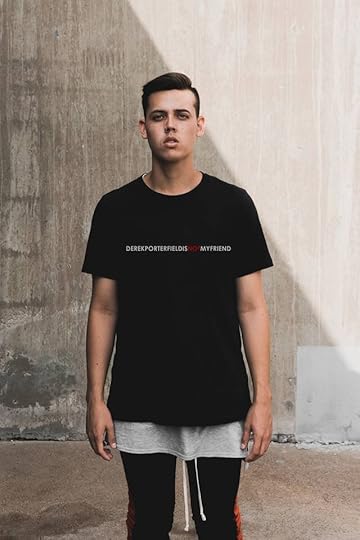
The cost locally is always going to be lower. It’s slower making up a profit because you are warehousing the shirts instead of letting someone else like threadless do it. You also handle shipping, which can be more work. BUT, in exchange for a little more time on your part, you can operate at a MUCH higher level of quality (I suggest Bella + Canvas shirts for how soft and durable they are. Seriously, these are heavenly) and profit. You don’t even need to rush moving anything because the leftover shirts can be sold when you finally start touring again.
And this time when you tour, you’ve established a more personal relationship with fans of your music, they know you better because of live streams, they are invested in what you’ve created and hell, we all kind of form a trauma bond through this crazy crisis we are all trying our best to survive in.
Last thing, if you have a website, throw up a donate button and link your store so people can find out how to support if they want to. Make it easy on them. (Don’t have a website but want one? You can pay me to build one for you. Send me a message and we can talk. I use Squarespace and think you should too, regardless if you hire me or do it yourself.) And throw a CashApp link on your Spotify (here) so people can donate directly when listening. If you hurry, Cash App MAY throw an extra hundred bucks your way after your first donation, but the funds could run out soon so don’t rely on that bit. More details in that link.
Thanks for reading, I hope this helps. If you have any other cool ideas for reaching fans and spreading the musical love, drop a comment and let me know what you’re doing and what project you’re working on. Share your tunes and let’s all support each other as much as we can. I probably love you.
(Free Cheese Prints found ways for me to reduce my printing cost, raise my quality and feel super excited about the shirts I have and I cannot recommend them highly enough. Our exchanges over email were fast and they delivered to me super quickly. Fans have told me how much they dig the feel of the new shirts and I absolutely will be using them again in the future. Find them here.)
April 20, 2020
My Inner Potato
My friend, Jordan, suggested that I take the “Big Five Personality Test” on our podcast the other day. It ranks you within five different traits based on responses to questions about your self perception. These are the traits:
Openness
Conscientiousness
Extroversion
Agreeableness
Neuroticism
There are plenty of other blogs that break down these concepts with more educated language than I could muster so feel free to seek those out. I won’t pretend to be a psychology expert but the quiz was interesting to me and I wanted to talk through my own results. Here’s my score:
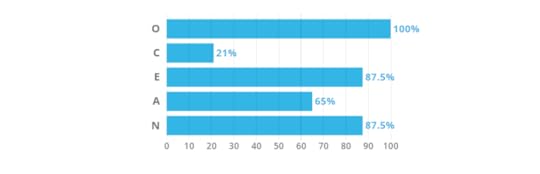
I write and perform music, so scoring high on Openness and Extroversion weren’t all that surprising, but look at my neuroticism.
87.5%.
That’s kinda high.
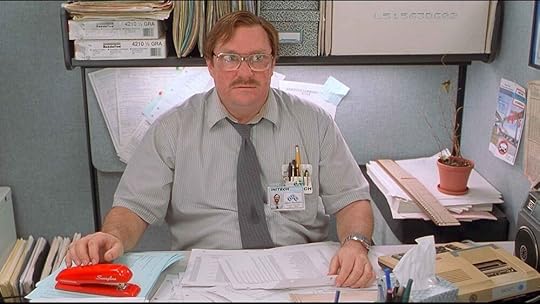
I’ve always associated the term “neurotic” with the step-mom characters in Disney shows or the accountant types like Milton from Office Space. Is that me?
The site mentions that those scoring high in neuroticism tend to respond to things with high levels of emotion. Anger, depression, fear etc. I mean, I play emo music so…fair.
I’m curious now as to how other creative people might score. If you want to take the same test I did here’s: The Test. Feel free to post your results in the comments.
While this is perhaps more important than discovering what your inner potato is: A Real Buzzfeed Quiz (I’m a Home Fry), it’s definitely worth mentioning that these sorts of self-reflective metrics are just that: self-reflective. They represent only what you tell them, and if you happen to have a low opinion of yourself, they will reflect that. It’s worth looking into and absolutely has utility for those trying to better understand why they behave in certain ways, but if you don’t dig your results, understand that each and every one of us is in a constant state of flux. The best way to balance yourself within these metrics, according to Jordan Peterson is to take a bit from the opposite side of the spectrum you are strongest in.
For example: I’m super open so I could benefit from borrowing a bit from those scoring low in that area that are more routine and rules oriented. Those traits can help balance that neuroticism by better preparing me to handle the world as it comes, rather than as the flighty and easily distracted artist who doesn’t understand why taxes are important.
Your inner potato could possibly provide some similar insight. I don’t know, I’m not a doctor.
I hope that anyone taking these quizzes while locked inside their home for the fourth or fifth week on end is taking into account the mental toll that such isolation and interruption to routine can have on their own self-image. You’re doing great, and I dig all of you. And just remember, when you feel sad or stressed out, that maybe you just need to get in touch with your inner potato.