
Ed Smith's Blog, page 2
November 4, 2020
How to shop during Covid-19 Lockdown 2.0
Hello. Here is an update of the delivery directory I originally published back in March 2020. It’s been trimmed and refined for Lockdown 2.0; I suspect you’ve got your systems in place now, and there seems less of a panic this time round. But still, perhaps there’ll be something here that helps. It’s actually a great time for consumers, and worth considering changing shopping habits in the medium-long term …
Should be fairly self-explanatory, alongside the notes that:
sorry, it’s not exhaustive — it just can’t be and still be useful. But by all means add your suggestions in the comments if they’re truly recommendations of which you have first hand knowledge; and also
sorry, it perhaps a little London / South-East centric. Largely because that’s my reference-point; you’ll know where’s good near you, and should definitely start there! However, nationwide delivery options are starred, and in fact there’s quite a few of them, particularly butchers and fishmongers.
Related to both points, really I’d just emphasise that in the first instance support your local and already favoured butchers, fishmongers, green grocers and delis, and keep an eye on the restaurants you like as they may well be promoting their suppliers, or working on a grocery option.
I will also shortly re-publish a separate post covering restaurants now offering delivery / assemble at home kits. Head over to that if you’d like a night off cooking from scratch, a bit of a treat and / or to support independent restaurants at this difficult time.
If you need more, Niamh at Eat Like a Girl’s list of independent shops and producers is extensive and excellent.
Fruit and Veg
A mix of (normally) wholesale costermongers now delivering to homes, and an increasing number of veg box schemes:
Natoora* — specialist (really superb) fruit and veg, particularly strong on seasonal Spanish, Italian and British produce. You can shop completely a la carte via their app (rather than veg box format). Now delivering nationwide. With deli items available too.
Pale Green Dot— farm fresh produce delivered from Sussex to your door (Sussex, London, edge of M25). Also have meat and dairy boxes, as well as pure fruit and vegetable options.
Odd Box — the excellent wonky veg box delivers across London and South East England postcodes (new orders paused for the moment but I’m sure they’ll reopen).
The All Greens family — Clifton Greens, Parkway Greens, Clocktower Greens, Newington Greens and Panzers Deli — open for socially distance shopping and now home delivery too. Fruit and Veg boxes, with deli, bread, dairy and meat items available for addition too.
The Tomato Stall (Isle of Wight tomatoes) bit out of season now, but let’s be honest we all eat tomatoes through the year. So may as well get them delivered to your door by the 3kg box load. Check out the per kilo price at the supermarket/your grocer (for everything other than the tomatoes that taste of nothing and are pointless). This is good value…
A number of New Covent Garden wholesalers have announced veg box / delivery schemes to anywhere with a London postcode within the M25 [there are LOADS on the NCG list now, so do browse this].
First Choice Produce — have an online shop with veg boxes, also eggs (eggs!), milk (milk!) and more. London and Henley-ish.
Chegworth Valley — sending vegetable boxes nationwide (free delivery London and Kent, a charge elsewhere), although not their brilliant mixed leaf salad bags which is a shame (the sorrel leaves are great, though).
Ashdown Organics — specialise in veg boxes but also meat, bread, dairy and deli. Organic and regenerative farm produce. London and South.
Farmers markets are open this time round, and of course if you feel able then visit / liaise with your local greengrocer (please).
Butchers
Think of all the farmers and butchers who usually send vans to demanding chefs across London (and the country)… I’ve used quite a few of these now. All good. Some require fairly advance purchasing. For delivery fees and to ensure you’re always well-stocked, best to make a sizeable order (so sort your fridge and freezer out).
Swaledale Foods* — whole carcass butcher with a network of farms in the Yorkshire Dales. Their native breed meats are a named highlight of many of London’s top restaurants. Now courier that same meat to homes nationwide.
Philip Warren* — legendary Cornish butcher to many of London’s best restaurants. Now delivering.
Warrens on the pass* — same butcher, with specific cuts that had been reared and aged for specific restaurants (who can no longer take it). Spectacular.
Gothelney Farmer* — very special Tamworth pigs who lived their absolute best life. Now available direct from the farmer in monthly pork boxes.
The Ethical Butcher* — online curator and distributer of meat farmed in a responsible way.
Cabrito* — boxes of goat meat, delivered — with a free copy of the award winning ‘Goat’ book! Can also get this from Combe Farm Organic (see below).
Fosse Meadows* — buy top tier chickens straight from the source.
Combe Farm Organic — organic meat meat, frozen and couriered nationwide (so either wait to defrost or move straight into the freezer).
Turner and George* — Islington butchers with established home delivery capabilities (national).
The Butchery Ltd — Brilliant (my favourite) London butcher with shops in Spitalfields and Forest Hill, and Spa Terminus for retail, with home delivery near those sites too.
HG Walter — delivery in London and M25 radius. Some excellent burger/hot dog collaborations too.
Hill House Farm* — Surrey farm delivering rare breeds locally and sending nationwide.
Pipers Farm* — established meat boxes featuring grass fed, free range animals.
Cobble Lane Cured* and Tempus Foods* for deliveries of cured and dried meats.
Field & Flower* (see reference in ‘fishmongers’).
Again, walk to your local butcher — or call, they’re probably delivering. In London, as well as those mentioned that’s The Ginger Pig, Northfield Farm, Wild Beef, The Parsons Nose, Flock and Herd, Hill and Szrok, Moen and Sons, Godfreys, James Elliot … and many. Use them.
Or Google ‘Meat Box’ (not that one).
Fishmongers
Use your local fishmonger! Most now seem to be operating with good social distancing practices (certainly much easier to stay distanced here than at a supermarket … and the fish and shellfish will be much, much fresher).
However, there are also a number of wholesale fishmongers and day boats whose restaurant accounts have diminished or disappeared:
Henderson Seafood* — Brixham (Devon) day boats straight to you
Wright Brothers* — very good (and consumer friendly online shop) fresh fish and shell fish to your door.
Pesky Fish* — buy direct from the fishermen. A daily market place.
Fresh Cornish Fish* – landed in Newlyn (Cornwall), then to your door, nationwide
Field & Flower* — free range meat, sustainably sourced fish, quality deli items already in existence prior to this and doing it well.
Sole Share — regular fish box subscription with pick up points across London
Bens Fish Mersea — popular supplier of East Coast landed fish to restaurants, now delivering to homes in Essex and London.
Bethnal Green Fish — another well-regarded restaurant supplier, now delivering to homes London (order via instagram / orders@bgfishsupplies.co.uk)
Secret Smokehouse* — East London Smokehouse, selling excellent quality smoked fish and fish pie mixes from its smokery, and by next day courier delivery nationwide.
Go to fishmongersfederation.co.uk to find one near you – many of whom will deliver locally. Or for delivery:
One stop shop
Coombeshead Farm* — wonderful farm to fork provisions (meat, cured meats, honey, dairy and preserves) from one of the absolute best restaurants and country breaks around. Limited availability — you’ve lucked out if you get it.
Spring to Go — veg boxes from biodynamic farm Fern Verrow, dairy, cooked goods, bread, larder provisions and bottle shop from Skye Gyngell’s Spring restaurant. Delivery within 12km radius of central London.
Borough Market — is open, quiet and open air. So if you are within walking or cycle distance, maybe one of the best places to shop at a social distance? They also have Good Sixty, an online shopping and mobile delivery hub (7 mile radius). Good Sixty also have hubs in Bath and Bristol serving local artisans.
Joy at Portobello — similar to Spring, really nicely curated (and cooked) grocer, bakery and deli from Stevie Parle’s West London pop up. Sweet pies and sunday lunch boxes look especially good. 10 mile radius of the restaurant.
Knock Knock by Smith and Brock — restaurant suppliers turned home delivery of veg boxes with add ons. London. From afar they looked like they were a great offering through Lockdown 1.0.
Farm Drop — impressive collator of quality groceries from independent farmers and producers. Includes recipe kits and frozen meals too. London only.
Food Chain — London chef platform for artisan producers and suppliers. Gathered together by an app, contact them for home delivery.
Taylor’s of Maltby Street — Bermondsey Greengrocer that became a delivery hub for many of its neighbours in the Spring. Not sure they’re currently home delivering, but keep an eye on instagram as many of you got in touch to say how good they were.
Riverford* — you probably know of Riverford already? Great network. Long established.
Abel & Cole* — you probably know of Abel & Cole already? Great network. Long established
Dairy and delis
As with butchers, fishmongers and fruit and veg, there are some amazing cheesemongers who’ve suddenly lost their restaurant trade. They’ll have loads of cheese at the moment. We should eat it (see Jenny Linford’s piece on this). Normally I’d note that cheese is for life, not just for Christmas. But this time round maybe we go with the “Christmas begins in 2020” line?
Shop locally if you have a cheesemonger or good deli nearby; but if not, or if not comfortable doing that in lockdown, then many of the following deliver nationwide.
Neals Yard Dairy* — Their online delivery service was already one of the great underused services of the last decade, and now it’s doing its best to keep the British farmhouse cheese industry alive (having already done so much to build and curate it).
The Courtyard Dairy* — well regarded distributer of British cheeses with established online presence.
Mons* — Superb French cheeses. Click and collect from Borough Market, Spa Terminus and East Dulwich, but also now deliver nationwide.
Paxton & Whitfield* — Quality, long-established cheesemonger now sending cheese nationwide.
La Fromagerie — Many people’s favourite. Shops in Marylebone, Highbury and Bloomsbury. Multiple London delivery options (see website).
The Estate Dairy — The milk that your favourite coffee shop used, now available delivered within 6 mile radius of Knightsbridge (via slerp.com). AND ALSO amazing eggs, butter, cheese. Comparable / better to supermarket prices. Incomparable product.
Kupros dairy* — Cypriot-style cheese made in North London. It’s really good… so also good that can get buy it in bulk, for nationwide delivery. They’ve also added an ‘essentials’ option for veg, eggs etc.
Dry goods
Try:
Sous Chef* — really super online supplier of pastas, flours, rice, vinegars and other specialist condiments.
Belazu* — grains, beans, flours, rice, oil, vinegars, deli treats, pastes, spices etc (includes fresh pasta from La Tua)
Hodmedods* — British grown pulses and grains, deliver nationally.
Gilchesters* — Unbleached flour from heritage grains. Low stock but keep on checking as it’s excellent.
Shipton Mill* — Wide range of flours.
Wessex Mill* — More flours. As with Gilchesters, low stock but they will keep milling, so keep on checking as it’s excellent
Rooted Spices* — for your spice cupboards.
Spice Mountain* — for your spice cupboards. Some dried beans and pulses too. Online but also Borough Market.
SeeWoo — Chinatown’s Oriental and Asian supermarket, now delivering central London
WaiYeeHong* — online Oriental and Asian supermarket — Bristol-based, nationwide delivery
Restaurant suppliers that you’ve not previously heard of have superb deli-style stock and are trying to start home deliveries, like HQF London. Best way to find these (other than those I have listed here) is to check the Social pages of your favourite chef – many are mentioning.
Coffee
DO NOT run out of caffeine. The roasters I order online from (and so vouch for) are:
Roundhill Roastery* — Great roast, great UX, and great value.
Monmouth Coffee* — Here before the whole artisan coffee thing kicked off. Covid-19 allowing, they’ll be here for many years more too. Have the relationships and buying power to ensure that your beans are fairly purchased and top quality.
Square Mile* — For a long time the way you could tell a new cafe was going to serve you a decent coffee, was that you could spy kilo bags of Square Mile beans on the shelves. Not so ubiquitous now, but still a/the leader. So great to have them at home, no?
Colonna* — Bath-based, very slick and thoughtful interface for ordering. Also do better than average coffee pods for nespresso machines.
James Gourmet Coffee* — VERY good value, expertly roast coffee beans, from Herefordshire roasters who have trained many of the people who now run the other places mentioned here.
Origin Coffee* — Cornwall-based roasters, but if you’re a Londoner you may have seen their cafes and concessions. Kind of interesting because even for filter beans they do blends (most others focus on single origin). Also, everything on their site is 20% off through April (gadgets as well as beans).
Caravan* — single bags, subscription and / or tea are all available for delivery atm.
Kiss the Hippo* — fairly new but highly regarded roasters. I like.
Workshop Coffee* — really like their espresso-based coffees from the cafes. Filter beans good too. Shop is easy to use and also a good source of hardware.
For tea drinkers, the best loose leaf comes from Postcard Teas; their central London shop is closed for the moment, but they’re still dispatching Monday-Saturday.
Booze
Same situation: many wine importers are now missing a restaurant customer base. Most have vans or have now worked out a courier system. In no particular order:
Uncharted Wines* — nationwide delivery of future classics; and Rupert will even install a wine tap system in your home if you want it…
Fine Cider* — we were, I think, about to have a restaurant-led ‘British cider and perry’ trend/movement/moment. Now there are some incredible drinks available nationwide via these guys.
Berry Brothers & Rudd* — treat yourself. Generally caters to old world wine fans, though I really enjoyed a newer-style dry riesling selection recently.
Newcomer Wines* — skin contact, reds with attitude, lots for fans of dry riesling, weissburgunder &etc. Nicely curated selections too.
DropWineApp — same day (sometimes hour) delivery in London. Referral code fKsv047q gets you a tenner off your first order. I get something too if you use it — which I’ll redeem, but later spend the same amount in their Covent Garden restaurants The 10 Cases and Parsons.
Gipsy Hill Brewing Company* — one of the best and most consistent (and not yet massive beverage company owned) and my favourite craft beer brewer. Here’s a 20% discount code for you (with no kick back to me): sam-famfriend-2020.
Salon Wine Store Brixton for South London natural wine fans — email info@salonwinestore.co.uk
Renegade Wine* — premium wines made in London (but good! always very drinkable).
Shop Cuvee — masters of pivoting and marketing, mostly natty modern wine bar turns both local and national delivery option.
Bright (P Franco, Noble Fine Liquor, Peg etc) for East London natural wine fans (3 mile radius London Fields).
See this comprehensive list of Independents who are delivering, courtesy of Wine Car Boot’s Ruth Spivey.
And Abbie Moulton’s piece in the Evening Standard — from back in March.
Was this helpful? I hope so. Now your ingredients are sorted, you’ll need a side dish focused cookbook to keep your meals varied through Lockdown…


August 3, 2020
Lamb and Clams
In Partnership with PGI Welsh Lamb
Normally at Easter time we’re inundated with recipes for lamb. The connection must be something to do with spring having recently sprung, and the new born lambs springing around the fields at the same time. But that messaging ignores a key point: those cute little lambs need to grow for 6 months or so before they’ll be in their prime for eating.
I say “normally”, because the spring lamb connection felt quieter this time round — we were in full lockdown at that point so there wasn’t much recipe inundation nor walking around farms full of lambs.
Yet that thing about lambs wanting 6 months to eat grass, roam free and bulk up remains valid. And if you do the maths, you’ll realise we’re now moving into Actual Lamb Season.
Look out at your local butchers and supermarket, then, for totally in-season lamb from the British Isles, with all the cost and flavour benefits that follow.
One mark to look out for is PGI Welsh Lamb — a sure sign that the lamb you’re buying, cooking and eating is of dependably high quality, and from a region that’s ideal for rearing lamb: steeped in tradition and expertise; with plentiful, lush grass on rolling hills (and sometimes steeper), where lamb is free to graze naturally. You can taste all that, I think.
I also think it’s worth looking out for cuts that you’re perhaps not used to picking up. I suspect most of us are well-versed in slow-roasting shoulder joints for 6 or 7 hours, and for roasting lamb legs at a faster pace on a Sunday, not to mention barbecuing a boned-out version of that same thing on any day of the week. Other parts of the animal exist, though. Chops, obviously(?). Lamb breast, too. And rump makes an excellent alternative to leg, both roasted or barbecued, particularly if you’re only a few people. Scrag end is mighty when it comes to autumn and you’re in the market for warming soups and stews.
Right now, however, I seem to have fallen into a lamb neck fillet routine. It’s quick to cook — I treat it in a similar way to bavette steak, frying it in a heavy-bottomed pan to a medium (which takes around 6-7 minutes in pan, plus 4 minutes or so of resting), then slicing it thinly. As with bavette it’s a very flexible, inexpensive and forgiving cut of meat; one to whip out for a wide variety of informal meals. This last month alone I’ve enjoyed it as a filler for tacos, as the centrepiece of a roast (as with rump it suits a small family), on top of a broth-y, pulse-y number (butter beans, kale and a punchy olive-based sauce), and with the lamb and clams recipe below.
For more about PGI Welsh Lamb, visit EatWelshLambandWelshBeef.com
—-
Lamb and clams with a chickpea and pepper broth
This recipe is a good example something that’d do very nicely indeed as a week night meal, but wouldn’t be out of place if you had friends or family over on the weekend. It doesn’t take too much to put together from scratch, and though the handful of clams will involve a trip to the fishmonger, the rest of it is easily and inexpensively gathered. Crucially, the flavour and succulence of the Welsh lamb neck fillet shines through.
For 4
2 red bell peppers
1 yellow bell pepper
1 large banana shallot, finely sliced
4 fat garlic cloves, finely sliced
1 heaped table spoon of tomato paste
350ml fino sherry
300ml water
2 teaspoons paprika
1 teaspoon chilli flakes
1 400g tin chickpeas, drained (240g drained weight)
200g palourde clams, purged
Leaves picked from 15g parsley, very finely chopped
2 lamb neck fillets, around 250g-300g each
4 tablespoons neutral cooking oil
40g salted butter
2 teaspoons sherry vineger
Flaky sea salt and black pepper
Completely blacken the peppers, either over a flame or under the grill. Place in a bowl, cover that and leave for 5-10 minutes to steam. Push the charred skin away, halve, remove the seeds and cut into 1cm thick strips.
While the peppers are blackening, measure and prepare the rest of the ingredients, including the lamb, which you should cut into 2 at the point the fillet begins to thin (typically 2/3 along). Then season very generously with salt and pepper.
Once that’s done, place a heavy-bottomed sauté pan for which you have a lid over a medium heat. Add 2 tablespoons of neutral cooking oil, the chopped shallots and a pinch of salt. Soften without colouring for 5 minutes.
Add the garlic to the shallots. Cook for 20 seconds before adding the tomato paste, stir this in and cook for around a minute more before increasing the heat to high. Wait 15 seconds then pour in the sherry. Let this bubble furiously for a minute, then add 300ml of water and drop in the pepper strips, chickpeas, chilli flakes and half the paprika. Let that simmer away at a confident but not overly ferocious pace while you cook the lamb neck fillets.
Find a heavy-bottomed frying pan into which the 4 pieces of lamb fits with just a little space around each. Place this over a high heat, add 1 and a bit tablespoons of cooking oil then, after 90 seconds, the neck fillets. Cook each on one side for a minute without touching. Flip over and cook for a minute more on the opposite side. Then for a minute on each of the thinner sides. After a total of 4 minutes add the butter to the pan, followed 30 seconds later by the remaining paprika. Baste the meat with the foaming, browning butter, removing the thin piece from the pan after a little over 1 minute, then the thicker piece 1-2 minutes beyond that — cooking the meat medium so it’s neither super firm nor slack to the touch, rather there’s a bit of bounce if you prod it (if you’ve a probe remove when the core is around 54C). Rest for 5 minutes before slicing very thinly and seasoning.
While the lamb is resting increase the heat in the pot containing the chickpeas and peppers. Once at a boil scatter the clams in and put the lid on top. Leave to boil for 3 minutes, shaking the pan towards the end. Remove from the heat and take the lid off — the clams should be well on their way to opening. If so, keep the lid off, if not leave it on for 1 minute more. Add the sherry vinegar, parsley and any resting juices and browned butter, plus as much salt as you think is needed, and stir through the clams and peppers.
Transfer the pepper, chickpea and clam mix into shallow bowls along with a ladle or so of liquid per person — it’s not a soup but the chickpeas should be sitting loosely in a puddle of broth. Lay the lamb neck on top and tuck in.
March 21, 2020
Eating out, in, in the time of COVID-19 — takeaway and delivery
This is Part 2. Part 1 covers ingredient shopping.
The first part of this guide/directory for Eating In during these strange times lists a variety of options that might help you to (a) eat well at home during the social distancing / isolation period; and (b) support the suppliers, independent food sellers and restaurateurs that have helped create such a vibrant food scene over the last (let’s say) two decades.
I planned a similarly long, themed list to cover takeaway and delivery. However, others are already on top of it and will be better placed to keep them updated. I wonder also how the plans last week of many to ‘pivot’ will change in light of the salary grant scheme.
There are a few things that’ve caught my eye, and they’re listed below (mostly local to East London — sorry). I also thought it worth duplicating here the list from Part 1, of restaurants now offering ready meals, deli items and operating as farm shops.
But for comprehensive and up-to-date information, I suggest you look to:
Clerkenwell Boy’s daily-updated spreadsheet of London restaurants offering takeaway and delivery. If you prefer a list with a few sub-headings, then try Hot Dinners.For restaurant-industry news, maps and features, Eater London.The @remedy_london hospitality industry hub on instagram.The CODE Hospitality newsletter.Perhaps the most useful way to search for inspiration is location specific. I stumbled across this natty map thing via Andy Haylor.Deliveroo, UberEats, Slerp.
—
Eye-catching restaurant takeaway / delivery
Rice and Bao — Rice Error — team behind champion Taiwanese steamed bun and rice restaurants pivot to delivery offer.Pizzas — Pizza Pilgrims, Theo’s Pizza, Santa Maria (all for collection or Deliveroo) … and probably your local pizza place too if not these. Keep them in dough.Burgers — Bleecker, Honest, Patty & Bun, Hache Burgers (all Deliveroo and across London). Natty wine and gently brilliant food — Peg, Bright and P Franco Eastern Mediterranean — Oren — superb Israeli comfort food (check out the video on instagram)Regional Chinese-inspired food — Lucky & Joy — by ex-Moro crew. God tier flatbreads and other flavourful things — Black Axe Mangal — delivery and collection from Highbury and Islington (fingers crossed)Noodle soup — Supa-Ya Ramen — delivery and collection from Hackney Rd (fingers crossed)
Restaurants selling produce / key ingredients by delivery and takeaway
Monty’s Deli — Mensch lumps of salt beef, pastrami, bagels. Love these guys.Eat Lagom — (incredible) smoked whole chicken, meats and more, delivered within 3 miles of Hackney — watch Elliot’s stories for updates.Coombeshead Farm — The brilliant farm-fork restaurant and rooms in Cornwall is about to launch a provisions (amazing home grown bread, honey, charcuterie) delivery service.Brat is opening a farm shop and grill to sell wine and produce from key suppliers. Check their instagram for full details, but begins Sunday 22 March, 11am. Beneath them, Smoking Goat may follow with producer ingredients, cooking pastes and sauces(?).A (growing) handful of East London and Cambridge restaurants will act as pick-up spots for veg boxes from horse-driven farm Flourish Produce — Hill & Szrok, Peg, Esters, Jolene and Pavilion in Hackney, Vanderlyle, Thirsty Cambridge and The Linton Kitchen in Cambridge. follow Flourish for details. Loyal Tavern, Bermondsey — essentially operating as a deli for the time-being, selling the food of their producers (mostly small British producers)More to come.
Restaurants now prepping meal kits / food to reheat at home
Pophams — fresh pasta and sauces (and croissants?) for pick up and delivery, 1 mile radius London Fields.Sorella — fresh pasta, anti pasti and sides, for pick-up ClaphamOmbra — fresh pasta, sauces, produce, tiramisu. Pick-up and delivery (set times) Hackney.And for not quite as fresh but still fresh pasta kits delivered nationwide, Pasta Evangelists. Honey & Spice — the deli from the lovely team already did hampers and catering, now pushing out more of their Middle Eastern deliciousness. Quality Chop House — family-sized pies, vac packed stews and braises, deli items, for collection (Clerkenwell) and delivery Clipstone — anti pasti, delicious things to warm up, and desserts. Collection (Fitzrovia) and deliveryThe Laughing Heart — from next week, ‘comfort’ (but going to be classy) ready meals and natty winesOttolenghi — Notting Hill, Belgravia, Islington and Spitalfields open as delis. Delivery to follow.Top
March 19, 2020
Eating in, in the time of COVID-19 — ingredient shopping
This is Part 1 — cooking ingredients and ready meals; Part 2 — restaurant takeaway / delivery to follow
Strange and unsettling times.
Below I list a variety of options that might help you to (a) eat well at home during the social distancing / isolation period; and (b) support the suppliers, independent food sellers and restaurateurs that have helped create such a vibrant food scene over the last (let’s say) two decades.
This isn’t comprehensive and will grow — as much as anything it’s a repository of things I have or will mention on instagram, which people have asked me to put in one place.
Other caveats:
Things are changing rapidly. So please consider this a working document. By all means add suggestions in the comments and I’ll update when I can. And ultimately go to the source for fully up-to-date info as to whether and how they’re still operating (I link where possible).This isn’t comprehensive, it’s not a ‘best of’ list, and no doubt there are glaring holes. Let me know if you want to be added; we’re in this for the long haul. But it is long. Which is why it’s split into things to cook; and cooked to order delivery / takeaway pages.Many of these are delivery. Others are ‘local’. Sorry, it’s London-centric. But really the point is to nudge everyone to support locals and independents. Find a source of information for your area: there are hyper-local social media accounts and individuals to suit every zone, town and taste.On which note, the most useful way to organise this list would have been by postcode. But I’m not well-placed to do that. If there’s nothing near you, perhaps the suggestions will still remind you of somewhere similar.For other sources, look at: this brilliant spreadsheet by @ClerkenwellBoyEC1; Eater London; Hot Dinners; ; @remedy_london, a restaurant industry hub started for these times; sign up to CODE Hospitality‘s newsletter; and browse the feeds of people like @rosiefoodie, @hollow_legs, @EllyPear, @georgiepuddingnpie; @chefcalum, who, like so many are sharing loads.
Shopping
With restaurants pretty much closed, there are some fantastic suppliers trying to get their produce to retail customers. Plenty of long-standing independent retailers still there for us as well.
General delivery and food boxes
Some national, some London. They’ve all had high demand over the last few days, but assuming this is around for weeks and months to come, keep checking back rather than assuming supermarkets are the only way.
Farm Drop — collator of quality independent farmers and producers. Nationwide(?)Food Chain — collator of restaurant suppliers, now serving London retail Borough Market — is open. And open air. So maybe one of the best places to shop? They also have Good Sixty, an online shopping and mobile delivery hub (3 mile radius?). Good Sixty also have hubs in Bath and Bristol serving local artisans.Riverford — full of customers right now, but keep an eye on it.Abel & Cole — also busy, but also keep on eye on how things develop over the next few weeks.I bet there are a load of other farm boxes out there (and local). Google.
Fruit and Veg
At the moment there are a number of wholesale costermongers seeing how delivering to homes will go.
Natoora — specialist fruit and veg, particularly strong on seasonal Spanish, Italian and British produce. On Ocado but opening their wholesale app to retail and delivering in their vans. Stores in Spa Terminus and West London too.Oui Chef Veg — £30 fruit and veg boxes to all London postcodesEntremettier — restaurant wholesaler now shifting veg boxes on the Northcote RoadPale Green Dot — wonderful farm fresh produce delivered from Sussex to your door (Sussex and London) Solstice Food — restaurant suppliers, now delivering.Primeur.co — £25, £35, £45 and so on boxes, around London. Text 07768231931Puntarelle — Bermondsey. Now opening Thursday, Friday, Saturday for the foreseeable.The All Greens family — Clifton Greens, Parkway Greens, Clocktower Greens, Newington Greens — open as ever. For delivery, check a New Covent Garden grocer directory or google restaurant ‘fresh produce’ and ‘wholesale vegetables’ and see what you can find — their customers have been wiped out. Or, my Mum says her local farm shop guy, Clive, is arranging a no contact click and collect service in the car park … basically, visit your local greengrocer.
Butchers
Think of all the farmers and butchers who usually send vans to demanding chefs across London (and the country)… there’s more to come on this front, I suspect.
Philip Warren — legendary Cornish butcher to many of London’s best restaurants. Now delivering.Cabrito — boxes of goat meat, delivered — with a free copy of the award winning ‘Goat’ book!Fosse Meadows — top tier chickens from sourceTurner and George — Islington butchers with established home delivery capabilities (national).The Butchery Ltd — brilliant butcher in Spitalfields and Forest Hill, now opening their arch in Spa Terminus for retail, and starting out on home delivery too. HG Walter — next day delivery across London, Monday to Saturday.Pipers Farm — established free range meat box sender (national).Cobble Lane Cured and Tempus Foods for deliveries of cured and dried meats.Basically, again, walk to your local butcher — or call, they’re probably delivering. The Ginger Pig, Flock and Herd, Hill and Szrok, James Elliot, … there’s many. Use them. Or Google ‘Meat Box’ (not that one).
Fishmongers
Here’s one I want to expand. I saw pictures of empty shelves at the supermarket today … and then walked past my local, Steve Hatt, at 6:30pm, and they still had great stuff (it would go by close, at 7pm). They deliver to locals. Bet others do too.
Moreover, there must be so many other wholesale fishmongers and day boats whose restaurant accounts have gone down and need custom. Please get in touch links to any now delivering to homes or a retail drop-off —whether London or elsewhere.
Henderson Seafood — Brixham day boats Pesky Fish — buy direct from the fishermen. Starting next week. Super.Secret Smokehouse — East London Smokehouse, selling from its smokery and by next day delivery.Fresh Cornish Fish – landed in Newlyn, then to your door, nationwideGo to your fishmonger (sooner rather than later, so they deworth staying open). Moxons, Steve Hatt, Fin + Flounder, plenty more … they’re out there.Google ‘fish delivery + [your area]’.
Bakers
Open and baking their elbows, wrists and fingers off:
The Snapery, BermondseyE5 Bakehouse, London FieldsPavilion, Broadway Market, Victoria Park, Columbia RoadBread Ahead, Borough MarketThe Dusty Knuckle, DalstonBread by Bike, CamdenMargot Bakery, East Finchley (pre-order – 72 hour notice)Jolene, Newington GreenLittle Bread Pedlar, Spa Terminus (every day for foreseeable, not just Saturdays)
Dry goods
Shipton Mill — flour. Online orders down for now as so busy, but they mill on.Wessex Mill — also flour. Also busy. Online shop will be back open next week.Sous Chef — pastas, flours, rice, vinegars etcBelazu — pastas, flours, rice, oil, vinegars, deli treats, spices etcRooted Spices — for your spice cupboardsSpice Mountain — for your spice cupboards. Some dried beans and pulses too. Online but also Borough Market.WaiYeeHong — online Oriental and Asian supermarketYour local Asian store.Your local corner shop.
Dairy and delis
As with butchers, fishmongers and fruit and veg, there are some amazing cheesemongers who’ve suddenly lost their restaurant trade. They’ll be caring for loads of cheese at the moment. We should eat it.
Neals Yard Dairy — Spa Terminus HQ now has extended hours, shops in Borough Market and Covent Garden currently open. And their online delivery service is one of the great underused services of the last decade. A 2kg quarter of Stilton a truckle of cheddar to my door? Where do I sign?Mons — Spa Terminus and East Dulwich, online / delivery comingPaxton & Whitfield — check their website and instagram for uptodate store and online detail. La Fromagerie — Marylebone, Highbury and Bloomsbury. Are they open? Must be.Your local bouji deli (Giddy Grocer Bermondsey, Provisions Holloway, General Store Peckham, De Beauvoir Deli, WeinoBiB, Panzers Deli etc etc). Need support. And taste great.Also your local Italian Deli with pannetore in the window that you always mean to step into but don’t (it’s probably great)And also NB Farm Drop and Food Chain and Go Sixty collation and delivery services mentioned at the top, plus Natoora’s app (for charcuterie and Italian dry goods etc)
Booze
I’ll expand this / do another page later on (once properly explored). Same situation, though: many wine importers now missing a restaurant customer base, all with vans; and a few who are already well set at home delivery.
DropWineApp — same day (sometimes hour) delivery in LondonUncharted Wines — nationwide delivery; and Rupert will even install a wine tap system in your home if you want it…See Abbie Moulton’s piece in the Evening Standard
Restaurants selling produce / key ingredients by delivery and takeaway
Monty’s Deli — Mensch lumps of salt beef, pastrami, bagels. Love these guys.Eat Lagom — (incredible) smoked whole chicken, meats and more, delivered within 3 miles of Hackney — watch Elliot’s stories for updates Brat and Smoking Goat — don’t think they’re set quite yet, but I believe will be opening to sell wine, produce, cooking pastes and saucesLoyal Tavern, Bermondsey — essentially operating as a deli for the time-being, selling the food of their producers (mostly small British producers)More to come.
Restaurants now prepping meal kits / food to reheat at home
Pophams — fresh pasta and sauces (and croissants?) for pick up and delivery, 1 mile radius London Fields.Sorella — fresh pasta, anti pasti and sides, for pick-up ClaphamOmbra — fresh pasta, sauces, produce, tiramisu. Pick-up and delivery (set times) Hackney.Quality Chop House — family-sized pies, vac packed stews and braises, deli items, for collection (Clerkenwell) and delivery Clipstone — anti pasti, delicious things to warm up, and desserts. Collection (Fitzrovia) and deliveryThe Laughing Heart — from next week, ‘comfort’ (but going to be classy) ready meals and natty winesOttolenghi — Notting Hill, Belgravia, Islington and Spitalfields open as delis. Delivery to follow.Top
March 10, 2020
Venison faggot, red wine lentils and tarragon PSB
Here’s my latest solo shopper post and recipe, originally published on BoroughMarket.org.uk.
Picture the scene: a group of friends gather in an enviably appointed kitchen and together prepare a meal — a couple peel and chop vegetables for the roasting tin; another two make fresh pasta (you know, just like that); someone else opens some dips, plates Cantabrian anchovies, and cuts up a few crudités, laughing while they casually pass those things around as the others cook; and a sixth person brings the party together, opening and pouring bottles of wine, maybe a G&T or two.
Lovely. Great. But also a bit glossy, a bit ‘made for TV’, a bit unlikely to happen so smoothly at my house, pal.
I wonder whether this vision — played out in adverts, TV shows, cookbooks — makes us feel as though we’ve got to have beautiful friends-over for cooking to be a leisure activity worthy of our downtime; and by extension, that we can’t have the same kind of fun on our own.
It’s the opposite for me. I prefer cooking solo (and for myself) to cooking communally. Let’s quietly pass over the fact I’m not very good at releasing control and sharing jobs, and concentrate more on the fact that I (and maybe you?) enjoy whiling away an hour or so, pottering over a chopping board and stove with podcast or playlist on, and a large glass of wine nearby. Sure, it’s good when things are quick and easy. But it’s generally better — both for the end result, but also for switching off — when there are a few different stages and some of them take a bit of time.
When solo eating I like a base I can chop things for, and then watch it put-putter away on the stove while I absent-mindedly stir. I like a centrepiece that needs (just) a little care, perhaps one that I can share some of my wine with (not too much), and then can sit without further faff when everything gets pulled together. And I like a side that, because it’s just me without other distractions, I can devote a little time to at the end, so that it’s cooked and dressed to perfection.
Indeed I had those three elements in mind on my most recent wander round the Market. I sorted the side dish first. Partly because the sides are often my starting point, but also because as I walked into the Market via Stoney Street I couldn’t fail to see a box at Ted’s Veg rammed with purple sprouting broccoli (at its finest right now). I took what I needed for one portion (as I’ve mentioned before, one of the benefits of shopping at a produce market free of pre-weighed packages), plus a bunch of tarragon at the same time.
I was then caught by how Shellseekers’ venison and fish counters seems to have swapped from right to left, and that the venison one was particularly tempting; not least the house-made faggots wrapped in caul fat. They were plump and cheap and I needed only one. Though regret not buying a few more for the freezer.
Finally, the put-puttering base element. I’d hoped Le Marche du Quartier would have puy lentils, and though they weren’t on the shelves this time (in stock again soon), I was set on this pulse and fortunately found green ones at Spice Mountain. So all was well.
I say finally, but the actual final thing was the ingredient that would bring everything together — as liquid for braising the faggot, splashed into the lentils, and for the glass that’d be in my hand (or near it) while cooking. So to Borough Wines, where we spoke about wanting something full and spicy enough to stand up to braised venison and a heady tarragon dressing, but mostly something very drinkable, just for me.
Venison faggot braised in red wine,
with lentils, purple sprouting broccoli and tarragon vinaigrette
The recipe doubles easily — though note that the lentils are enough for two already, and you’ll only need a splash more wine to braise a second faggot. You could successfully substitute the centrepiece with beef faggots or venison sausages.
Serves 1 (with leftover lentils)
1 venison faggot (about 130g) 1/2 small onion or echalion shallot, finely diced 100ml red wine 2 tablespoons light olive oil or vegetable oil
For the lentils
1/2 small onion or echalion shallot, finely diced 1 carrot c.60-80g, peeled and finely diced 1 small turnip, c. 60-80g, peeled and finely diced 150g green or puy lentils 1 clove garlic, minced 50ml red wine 1 tablespoon light olive oil or vegetable oil Sea salt and black pepper
For the purple sprouting
100g purple sprouting Leaves stripped from 20g Tarragon, finely chopped The tip of a teaspoon’s worth of minced garlic (from lentils) 3 tablespoons extra virgin olive oil 1 tablespoon red wine vinegar 1 teaspoon sugar Salt and pepper
You will need a small (14cm diameter or similar), oven proof-skillet or gratin dish for the faggot.
Peel, slice, dice and mince the various vegetables first. Measure out the wine, then pour a glass with about the same quantity in for you to drink while you cook…
Heat the oven to 140C fan / gas mark 2.5.
Put a small, oven-proof skillet on a medium heat and add a tablespoon of cooking oil. Plump up the faggot if it looks a bit flat, then fry to brown it all over (about 5 minutes). Remove the faggot and leave it to rest on a plate for a few moments. Reduce the heat to a low-medium, then add another tablespoon of oil to the skillet, half a diced onion and a good pinch of salt. Cook gently for 7 or 8 minutes, stirring occasionally, so the onions soften and take on a little colour. Return the faggot to the pan, add 100ml of red wine (which if the pan is not too big should reach a touch over half way up the faggot. Top with water if necessary). Increase the temperature and bring to an energetic simmer, before transferring the pan to the oven and braising for 40 minutes (If you don’t have a skillet, do this first part in a frying pan, then transfer the faggot, onions and wine to a small gratin dish.)
To cook the lentils, put 1 tablespoon of cooking oil in a saucepan over a medium heat, then sauté the onion and carrot for 4 or 5 minutes until the onions are soft but not coloured. Add the turnip, the lentils and almost all of the minced garlic. Cook for 1 minute more before pouring in 50ml of red wine, and 500ml of water. Bring to the boil, then reduce to a simmer for 20-25 minutes, by when the lentils should be tender. Remove from the heat until needed.
Make a vinaigrette for the purple sprouting in a mixing bowl, stirring together the remainder of the minced garlic, 3 tablespoons of extra virgin olive oil, 1 tablespoon of red wine vinegar, a pinch of salt and pepper. Then, when the faggot has nearly had its time, bring a saucepan of salted water to the boil, cook the purple sprouting for 3 minutes, drain well and transfer to the bowl with the dressing in. Mix well.
Decant the onions and braising liquor from the faggots to the lentils. Stir and then add 2 or 3 ladles to a pasta bowl or wide plate with a rim — they should be loose and saucy. Top with the faggot and the dressed purple sprouting, pouring any vinaigrette remaining in the bowl over the top, and maybe adding a final glug of extra virgin olive oil for good measure.
The leftovers
Cooked Lentils — There are two-three portions of lentils in this recipe ‘for one’, as it makes little sense to cook less. Stretch them out over two more meals, as a side to white fish or beef, or served cold as a salad / lunch box filler, mixed with roast squash and / or feta cheese.
Dried lentils — if you bought a pack of green or puy lentils for this recipe, remaining dried lentils will last for an age (but don’t forget them).
Tarragon — buy more purple sprouting and add tarragon; put a sprig or three in a small bottle of olive oil so as to flavour that oil; chop and mix through mayonnaise; allow any remaining sprigs to prompt a chicken and tarragon dish.
Red wine — If you’ve any left after 2 or 3 days, pour into a ziplock bag or an ice cube tray, and freeze so you’ve always got cooking wine to hand.
February 22, 2020
Market eggs, kimchi butter (and other stories)
Towards the end of last year I spent a couple of days showing the crew from Kitchen Stories around Borough Market.
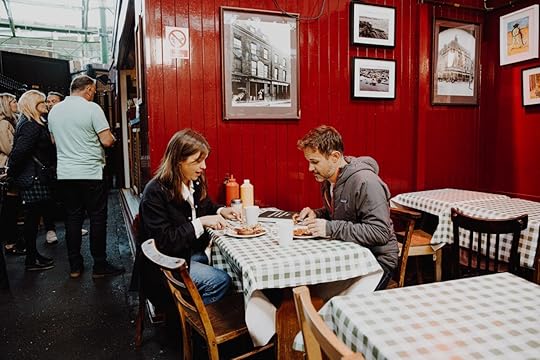
We began, as you regularly should, with eggs, black pudding, beans and bubble and squeak at Maria’s Market Café. Then took in the many and varied sights, smells and sounds of the Market, while stopping to make doughnuts at Bread Ahead, talk about heritage breed beef at Northfields Farm, taste olives at their oils Oliveology, nduja at De Calabria, ferments at Eaten Alive, and finally a sit down with a glass of wine and some Calabrian anchovies and British lardo on toast at Flor.
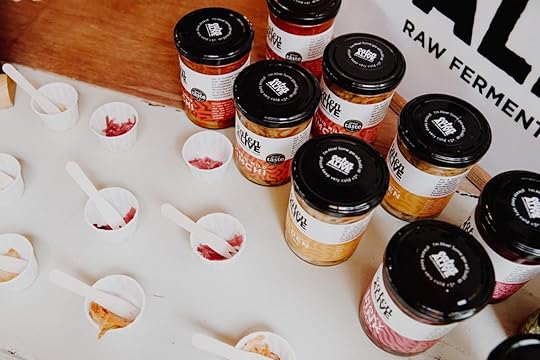
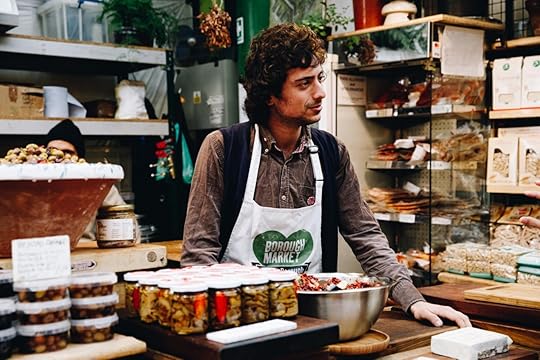
As most of you will know, I’m a pretty frequent visitor to the Market. But there’s always something new to see, and it’s also a pleasure to introduce others to it for the first time.
Borough means different things to everyone, but for me it’s a place to shop — for seasonal ingredients, for speciality ingredients, for quality items that make creating delicious food at home easy. I think Ruby and the team were converted, but you can tell for yourself by having a read of their articles about the trip, which include a 15 minute film of us taking in all the stops referenced above (and more). Even with the cringe factor of watching myself on screen, I think it’s a nice watch. Take a look.
Kimchi butter
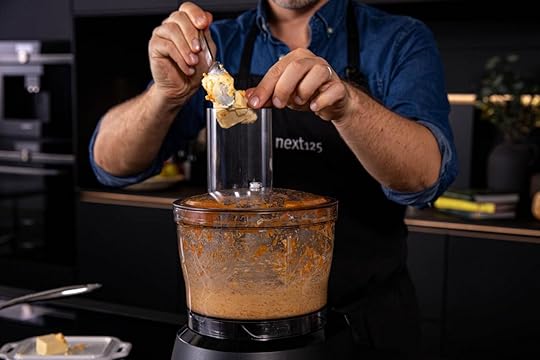
As mentioned, to my mind the best way to experience Borough Market (or indeed any produce market), it was actually buy things to cook with, not just wander and sample. So we did that too.
Having taken Ruby and co to the production facility of Eaten Alive — traders at the Market who specialise in ferments and hot sauces — we picked up a couple of jars of kimchi from their stall, as well as some onglet from Northfields Farm, and celeriac and parsley via Chegworth Valley.
I then showed them how to make kimchi butter, and used that to cook and flavour the steak, plus a cheeky kimchi butter celeriac rosti. If you fancy having a go yourself, take a look at the recipe (and video) over here.
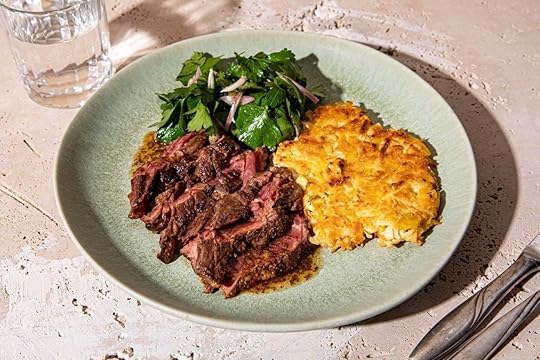
All in all, a fun couple of days, and good to see how recipe platforms like Kitchen Stories put things together; I think their app is particularly slick.
This Borough trip and film is part of a series supported by Germany-based kitchen maker Next125, focussing on produce markets around Europe. So if you like what you see, check out the others over on Kitchen Stories’ site and app too.
January 28, 2020
Chicken liver and sage ragu
My most recent ‘Single Minded’ recipe for Borough Market features a super quick ragu made from a very economical ingredient: chicken livers. Also some fancy wild mushrooms, but only a very small amount.
I used the frilly ribbon pasta known as mafalde, but this would be great with tagliatelle, taglierini or rigatoni. TBH orecchiette, penne, whatever.
Also this assumes fresh pasta (as that was one of the themes of my piece). Of course you can use dried pasta. But if so, get that cooking at the point you begin the ragu, not half-way through as suggested below.
Chicken liver, sage and trompette de la mort mafalde
Serves 1
150g fresh chicken livers 30g butter 1 clove garlic, crushed 3 sprigs of sage 35g trompette de la mort Sea salt and black pepper 70g full fat creme fraiche 30g freshly grated Parmesan 120g fresh mafalde pasta
Put a saucepan-full of salted water on to boil.
Trim off any bits of fat from the livers and rinse in cold water, pat dry, cut each into 4 pieces and set to one side. Pick the leaves (probably 4-6) from one of the sage sprigs.
Place a medium-sized heavy-bottomed frying pan over a medium heat (about 6 or 7 on your hob) and add the butter, the shallots and a pinch of salt and sweat them in the melting butter for 1 minute.
Create a little space in the pan and add the sage leaves, allowing them to cook and crisp alongside the onions for another 2 minutes.
Remove the sage leaves and set to one side, add the mushrooms and cook with the onions for 1 minute more, stirring once or twice. Turn the heat up (to about an 8), add the chicken livers and cook for 2 more minutes, stirring frequently to ensure the livers are browning but nothing burns.
Meanwhile, add the pasta to your boiling water — assuming you’ve bought fresh pasta it will only take a couple of minutes.
Once the livers have been in for 2 minutes, add the creme fraiche, the garlic, the remaining 2 sprigs of sage and then a ladle-full of pasta cooking water. Let this bubble away for 2 minutes more. Drain the pasta, reserving the cooking water, then add the pasta into the frying pan, 2/3 of the Parmesan and lots of black pepper. Toss and mix well, then transfer everything to a plate or pasta bowl, finishing the dish with more Parmesan and the crisp sage leaves.
The leftovers
Fresh pasta — assuming you’ve fed only yourself from a 240g pack, you will have another portion left over. It’ll still be ‘fresh’ for a good few days. Enjoy it as you see fit! (though nb the creme fraiche note below)
Sage — the rest of the bunch is possibly the hardest of this recipes shopping list to get through. But if you crisp them with butter and eat with eggs and / or mushrooms at the weekend, or throw into a roasting tin for the last 5-10 minutes of roasting squash or potatoes, or drop the rest into a batch of dried beans while you cook them … I’m confident you can get through without waste.
Creme fraiche — if you bought a small tub you will have about half remaining (or more, if bigger). This will still last a number of days in the fridge, and can prompt a second pasta sauce for the week (leeks and lardons?), or be spooned next to a cheeky mid-week dessert of stewed rhubarb or apples or similar.
Parmesan — plenty of potential for (and time to use) this.
January 21, 2020
Gurnard peperonata stew
I recently stumbled across a piece about Gurnard that I wrote back in 2016 for Borough Market. Thought it worth adding to the repository here. There’s a recipe too ...
Gurnard is not the absolute weirdest looking creature of the sea, but neither is it the prettiest. Research this fish and you’ll see it described as “pre-historic looking”, “distinctive” and downright “ugly”; and if you simply take a look at them at the large headed, wide mouthed, big-eyed, jagged finned, pink skinned examples at one of the Market’s fishmongers, it’s hard to disagree. Which doesn’t exactly make gurnard attractive to buy, cook and eat.
In his seminal book English Seafood Cookery, however, Rick Stein pointed out that gurnard “is an undervalued fish, mostly going as bait for lobster pots in the South West” and that it is excellent in stews like a Bouillabaisse, and also when filleted and cooked simply. “Any recipe for filleted sole, turbot, brill or John Dory would suit gurnard”. Did we actually heed Rick, though, or were we just reading and watching because his dog Chalky was cute?
I worry it was the latter, because it’s now nearly 30 years since that book was published, and I still don’t think gurnard is cooked enough. Indeed back in October 2015, Stephen Harris, the chef proprietor at the much acclaimed Sportsman restaurant near Whitstable, wrote about gurnard for the Saturday Telegraph, not just bemoaning the fish’s bad reputation in general, but also noting his own reluctance to cook it (“I was never quite convinced”). The fact no one bought the gurnard dishes they cooked was nearly the final nail in the coffin for Harris (“even my brother couldn’t sell it”), and the scenario meant it was even more wasteful to buy gurnard for the restaurant, than it would be to let the fisherman send it to the lobster pots.
There is, thankfully, a happy ending. Harris found that by cooking gurnard on the bone it didn’t dry as it can do when filleted. He now salt-bakes gurnard, serving it broken into large flakes on top of a bouillabaisse style sauce, and customers can’t get enough. Having eaten that dish at the Sportsman, I can vouch for its quality and, more pertinently, his assessment that the fish tastes “briny and sweet” and that “and the texture was enhanced by a slight stickiness that came from the gelatin in the fish bones”. Accordingly, I highly recommend gurnard as an easy to cook and great tasting, if odd looking, fish. Baking it in a salt crust (as Harris does) is absolutely an option. But simply poaching it gently in the last few moments of a stew is a pretty good and hassle free alternative.
You will often see gurnard paired with peperonata, that sticky, intense, long reduced tangle of bell peppers, onions and tomato. A few weeks ago I cooked masses of peppers and onions with cumin and oregano, adding extra water and saffron once it was cooked so that it began to resemble a stew. I then added handfuls of sweet cherry tomatoes, and let four whole gurnard nestle in amongst it all as if they were having a bath. Over ten minutes or so of gentle simmering, the fish swapped much of their flavour into the cooking liquor and, just as it became clear they had poached perfectly, I lifted them out, turning the heat up for the broth to reduce a little whilst carefully removing the fish fillets from their frames. As Harris said, the resulting flesh was firm, sticky and sweet tasting, and worked brilliantly laid over the peperonata stew with a good hunk of warm bread, a glug of peppery olive oil and a scattering of parsley. Not such an ugly critter after all.
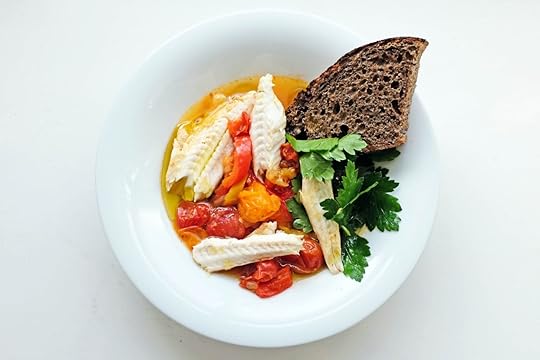
Gurnard peperonata stew
Serves 4
1 medium brown onion, finely diced (100g) 4 tablespoons light olive oil 2 large red bell peppers (500-600g) 2 large yellow bell peppers (500-600g) 2 cloves garlic, minced 1 teaspoon cumin seeds, lightly crushed 1 heaped teaspoon dried coriander 600g cherry tomatoes (yellow and red if possible) 4 gurnard, scaled and gutted 40ml white vermouth 10 strand saffron Sea salt, ground white pepper
To serve
Fresh lemon Handful of flat leaf parsley, roughly chopped Extra virgin olive oil Good bread
Cut the peppers in half and remove their core and woody green ends. Slice into 5-8mm thick long strips. Put to one side and prepare the onions and garlic.
Find a heavy bottomed saucepan that will just squeeze the gurnard in on one layer. Put this (without the fish) on a medium-hot hob. Add 2 tablespoons of light olive oil, the onions and a pinch of salt. Soften for 3-4 minutes, before adding the cumin, oregano, and minced garlic. Cook for 1 minute more, then add the remaining 2 tablespoons of light olive oil and the strips of pepper. Stir so the pepper is well glossed, cooking for 5 minutes more before turning the heat down to low, and placing a lid on the saucepan. Cook the peppers and onion gently for 40 minutes until soft and intensely sweet. Stir occasionally and leave the lid ajar for the last 10 minutes.
Once the peperonata is ready, turn the heat up and after 30 seconds pour in the vermouth. Let this cook away for 10 seconds or so, then add two thirds of the cherry tomatoes and enough water to cover the vegetables by 3-4cm. Bring to a gentle simmer, then place the gurnard among the tomatoes and broth. Cook with the lid on for 8-12 minutes, until the flesh of the fish starts to pull away from the bone (it won’t take long, so try not to overcook it).
Carefully remove the fish from the pot. Turn the heat up so that it begins to boil and reduce, add add the remaining tomatoes and cook vigorously for 5 minutes more. Meanwhile, use your hands to push the fillets of fish off the bone, taking care when removing the sharp fins.
Season the broth with salt, white pepper and a squeeze of lemon. Serve by ladling the pepperonata and broth into bowls, breaking the gurnard into flakes over the top, drizzling with loads of good olive oil and parsley, and with fresh crusty bread alongside.
December 9, 2019
Roast plaice and curried clams
Here’s a recipe for roast plaice with curried clams. It’s from my ‘Single Minded’ series, run over on Borough Market’s website. Click over to the original recipe, and / or the article it attaches to, if you fancy. (As ever, their site is worth a browse as they’ve a huge archive of great articles and recipes.)
A few quick thoughts before we get on with the business end of things:
the recipe’s for one, as that was the brief. But you could quite easily grab a bigger fish and double the spring onions, clams and sauce, to feed a pal; andwhat to have as a side dish? Oven chips, m8.
Roast plaice and curried clams
Serves 1
For the roast fish
1 small whole plaice, cleaned (c.450-600g)
(ask the fishmonger to remove the head and trim fins, if you’d rather not do that yourself)
3-4 medium-sized spring onions
Cooking oil and flaky sea salt
For the sauce
A handful of palourde clams or cockles (7 or 8)
20g Indonesian pure creamed coconut, finely grated (or 150ml coconut milk from a tin)
20g butter, fridge-cold and diced
Thumb-sized piece of fresh ginger, peeled and cut into matchsticks
2 small cloves garlic, peeled
1 heaped teaspoon of Keralan curry powder (from Spice Mountain)
Serve with oven chips (French fries, ideally).
Heat your oven to 200C fan.
If not already done by the fishmonger, cut the fish head from the body and use scissors to trim the fins close to the shape of the fish. Don’t discard the head — you can use this with the leftover bones to make a fish stock for another meal.
Put the clams in a small bowl of cold water so that any grit and dirt is purged from them. This will take 5-10 minutes. Grate the coconut into another bowl and pour 120ml of just boiled water over the top and stir to dissolve (or just open a tin…).
Prepare the ginger and garlic and trim the spring onions, cutting a slice or two from each white end to fry with the ginger, garlic and curry spices. Now you’re ready to cook.
Set the bulk of the onions on the base of a small baking tray, drizzle with oil and put the plaice on top. Rub the fish with a little cooking oil and season with sea salt. Slide the tray into the top-middle of the oven and leave to cook for 10-12 minutes, depending on the size of the fish. After 10 minutes, push the tip of a metal skewer into the spine of the fish at the thickest point so it just touches the bone. Remove and press that against your lip — if it’s noticeably hotter than your lips, you’re there. If not, return to the oven for 1-2 minutes more. (If you have a temperature probe, check for c.50-54C). Leave the fish to rest for 2 minutes.
Meanwhile, shortly after you first put the plaice in the oven, melt 1/3 of the butter in a small, heavy-bottomed sauce pan over a low-medium heat. Add the ginger, garlic and spring onion trimmings and soften and sweat for 2 minutes before adding the curry powder (be sure to include a couple of curry leaves from the spice mix). Stir and cook out for 1 minute more, increase the heat then add the clams and 50ml of water. Shake, place a lid on top and cook for 1 minute. The clams will have opened in that time. Pick them out and put to one side, then pour the coconut water in. Bring to a rapid boil and reduce by half, before whisking in the remainder of the cold butter, one cube at a time. This will ensure you’ve a silky, glossy sauce. Return the clams to the sauce and take the pan off the heat.
Plate up, spooning the buttery curry sauce and clams over the top of the fish, and with oven-cooked French fries on the side.
December 4, 2019
Tasting Notes — November 2019
Notable eats during November included:
Legare
If Disney built a London-themed attraction at one of their parks, it’d probably look like Shad Thames — a maze of cobbled streets winding their way through strangely pristine Dickensian warehouses, with the river and ‘London Bridge’ in spitting distance (so long as the wind is in your favour). Oh, and also a bunch of mostly soulless, cartoony, but just about okay mini-chain restaurants and cafes.
Something of a surprise, then, to find a cute AND GOOD indy appear. But there Legare is: a considered little spot focussing on Italian food and wine.
Their small room with open kitchen is sparse and functional but also chic, appetising, spot on, and boasts a menu to match: this is simple, seasonal but quality anti pasti and small plate starters; 3 or 4 fresh pasta dishes; and a handful of quick and pleasing sweets. The whole vibe is something that ought to suit locals very well indeed — whether they’re the legal, accounting or mayoral bods from nearby offices looking for lunch or an early dinner, or the warehouse-dwellers of Bermondsey.
So far I’ve ‘only’ tried a palate and mood-lifting early season citrus and pistachio salad, springy pappardelle with sausage and fennel ragu (incidentally the best I’ve ever had, and I reckon my own is pretty damn good), a very fine linguine vongole, and a neat cream-cheesy cannoli. But I will be back for more.
In summary — keeping this write-up suitably brief — Legare is good. To my mind it’s exactly what it surely set out to be: uncomplicated, honest, and somewhere to return to, whether that’s for one bowl of pasta or a longer, drawn out meal. A Tiny Tim among Micky Mouses.
Legare —31 Shad Thames, SE1 2YR
Orasay
Londoners would be forgiven for thinking that newsworthy restaurants only open east of Hyde Park Corner … as a rule of thumb, this is currently true. Also, that all the truly ‘hot’ and ’on trend’ restaurants only open east of Soho … that’s not so true, though there’s no smoke without fire.
I think, though, that Orasay presents a strong case for the west. Or at least for itself. Which is in the west. (W11 — at the Ladbroke Grove end of Notting Hill.)
Jackson Boxer’s status as feted darling of food and fashion media means he ticked the ‘newsworthy’, ‘hot’ and ‘trend’ boxes when the restaurant opened in spring of this year. But seven or eight months in, the setting and food provides substance too (it might’ve done back then as well, I’ve only just been).
The serene room is smooth, calming and elegant rather than edgy and hip; but that suits the area and, whisper it, is quite a nice thing, actually. And Boxer’s menu reads extraordinarily well, winding as it does through a refrain of familiar and lux ingredients and dishes, each given a knowing flick and twist.
There’s a beef tartare, of course, though that beef is hand-minced (the best way), burnished with fish roe and Hebridean prawns that pop, and dotted with a horseradish cream that somehow burns, soothes, binds and punctuates all at the same time. A chilli oil too? Quite probably. There’s a bream crudo — exquisite in part because of the freshness of the fish, but also the segments of the mouth-puckering sharp, Godly mandarin that is miyagawa. Purslane and pine nuts (it is Notting Hill) temper matters and while a glug of peppery extra virgin olive oil could have been enough, the dish becomes great because of a final umami flourish of a house-fermented crayfish and prosciutto XO. Other dishes that stood out included a snack plate of outstanding, fat and salty-sweet anchovies which had been draped, Rees-Mogg style, over puffed, pillowy (goose down) fried bread, and later on in the meal a thick tranche of brill cloaked in a velvety, rich, smoked lardon sauce and partnered with a sharply dressed green leaf salad.
He’s playing to the crowd with some of the ingredients and the aesthetics (both to the potential locals but also Instagram). As he well should — here we are, it’s nearly 2020 and it has never been truer to say that we eat with our eyes, that social media has pull, and that you need to appeal and respond to a customer base. In any event, during my lunch those looks were backed up in the eating, which across the menu is equal parts interesting, invigorating, familiar and comforting. It’s well pitched.
This restaurant would sit well in across London. However Boxer and Orasay appear at home over here.
Orasay — 31 Kensington Park Road, W11 2EU
The Borough Market Kitchen
There’s a new hot food area at Borough Market now the old wholesale carpark ‘Jubilee Place’ has been set up as ‘The Borough Market Kitchen’; effectively a food hall, complete with an eclectic set of permanent stands and a selection of rolling stalls. Some of the stands have their own counter seats and there are plenty of communal tables in the middle too. Like the rest of the Market it’s technically outdoors but is covered … assuming the rain is not sideways umbrellas can be lowered, though you’ll need to keep your layers on.
I like that, in building it, the Market have created a relatively clear physical delineation between (most) of the convenience food on offer, and the main body of the place, which should indeed be a place to shop for fresh and speciality produce.
In both design and content the area strikes the right balance between professional and characterful — overall I think the emergence of food halls in London is a good thing, but some of them are very shiny and corporate, aren’t they?… This feels more suited to the spirit of ‘street food’.
There’s a decent mix of new names, established names, and names that probably won’t be known at all (which is fine). One of the ‘new’ is Mei Mei, Elisabeth Haigh‘s Singaporean hawker food; quite literally The Cuisine designed for this style of eating. There’s beautifully poached chicken rice; a fried chicken version of the same classic dish; kaya toast and milo for breakfast; and a chicken curry I’m keen to try too. I suspect they’ll do well.
Kubba by Juma Kitchen offers visitors an opportunity to sample Iraqi food. Principally the iconic kubba: little filled patties surrounded by rice flour, which provides a very satisfying crunch once deep fried to order. Again, it feels particularly appropriate for market grazing, though mix and match a few of them and you’ll get yourself a decent fill.
Then there’s Elpiniki — the food trader formerly known as Gourmet Goat. Think pitas, bulgar pilaf or seasonal salad topped with goat kofte, slow roast veal or halloumi, each with appropriate condiments.There are few ‘to go’ vendors in London serving food that’s as wholesome, filling and flavourful. And while they’ve sustainability credentials to back the food up, they’ve been a go to Borough lunch for a while on a taste basis alone. Even with greater variety on offer now, I’m sure Elpiniki will remain one of my mainstays.
Is Basque pintxos right for the London lunch crowd? Particularly through the winter months? TBC. Still, Mimo’s Batera is very accomplished indeed, and if you don’t eat anything else from The Borough Food Kitchen, you should try a portion of their Basque cheesecake. It’s extraordinary.
Plenty more there beyond those mentioned — like I say, I need to do the rounds.
Borough Market — SE1
Ed Smith's Blog

- Ed Smith's profile
- 2 followers

