Sarah Weise's Blog, page 3
June 18, 2020
"Ok, boomer" has never sounded sweeter
Perhaps after the pandemic we will appreciate better the profound connection between brilliant, fragile young learners and wise, vulnerable old teachers, and bring grandchildren and grandparents back together again.
— Alison Gopnik
I read an article last week in The Wall Street Journal by Alison Gopnik titled “Why Elders are Indispensable for Us All.” Although quite succinct, it was one of those articles that clung to me, and I have been turning it over in my head ever since.
Throughout evolution, humans—whether they are hunters, gatherers, or businesspeople—tend to reach their peak skillset only once they're well into their 30s. Practice does make perfect.
But, as any parent during this pandemic can tell you, it's so hard to practice a skill when you've got kids hanging all over you and you're trying to teach them at the same time.
Gopnik makes a truly interesting point that this may explain why humans have evolved to live such long lives (especially when our chimpanzee counterparts barely make it to 50): so that the old can teach the young, so that they can transfer their wisdom onto their grandchildren as the parents work to hone their skills and contribute the strongest years of their lives to society.
"When will the virus be over," my 5-year-old asks me about 47 times a day.
I honestly don't know the answer to that question, but one thing I am certain of is that when we can once again stop worrying about vulnerable grandparents and re-establish a connection between our children and their wise old teachers, it'll be a hellova lot easier for us parents to get ANY work done!


June 17, 2020
Aunt Jemima's Name Change

Today, after more than 130 years, Aunt Jemima will no longer be on your box of pancake mix or on your bottle of syrup.
I don’t think I can start even talking about marketing without acknowledging the intolerable events that are happening in the world today due to the systematic racism and injustice that continue to be present in our country. Let me emphasize, right off the bat, that I share in the heartbreak and sadness and outrage that has been ever-present in our country these past few weeks, and stand in solidarity with people of color on the issue of racial equality. What’s happening today has given me the motivation to use my platform to spread awareness and understanding.
When I think of my children, it’s disheartening to think that we’re creating a world of division for them. I’m relived that they don’t see color the way older generations do and I hope that we can turn this around by the time they’re old enough to realize the kind of racial inequality that is present today.
That being said, we can get to the marketing piece…
I think it’s certainly progress on behalf of the Quaker Oats company that they’ve made the decision to change their logo. It’s long overdue for them.
Did you know that the Aunt Jemima logo is based on a real person? Her name was Nancy Green, and the company website will tell you that she was “a storyteller, cook and missionary worker.” However, they fail to mention that Nancy Green was born into slavery in 1834 in Kentucky, and wasn’t hired to become one of advertising’s first brand ambassador’s until she was in her 50s.
The Aunt Jemima logo was first used in 1890. But it doesn’t make sense anymore. The image of a black woman in America has drastically changed in the past 130 years. In fact, the image of women in America has drastically changed in this time.
In my opinion as a marketing strategist, it’s a good move by the Quaker Oats company to show support for this movement toward racial equality. In fact, it’s overdue.
I believe brands have a responsibility to take a stand here. It’s going to take many people and companies coming together to move the needle here. Quaker Oats is doing the right thing by showing corporate support for this movement.
As we look back at most influential ads over the years, you can see how they track the culture of society: a visual legacy that succinctly captures a social feeling and message in a single visual. A snapshot in time.
In many instances, ads actually change culture too. I mean, who has never repeated a phrase from a commercial before… “Just do it” or “Because you’re worth it” or “The quicker picker-upper” or “Can you hear me now?”
And throughout history, there have been so many ads that have done much more than just persuade us to buy a product. The very best campaigns have affected the way we communicate and interact with one another.
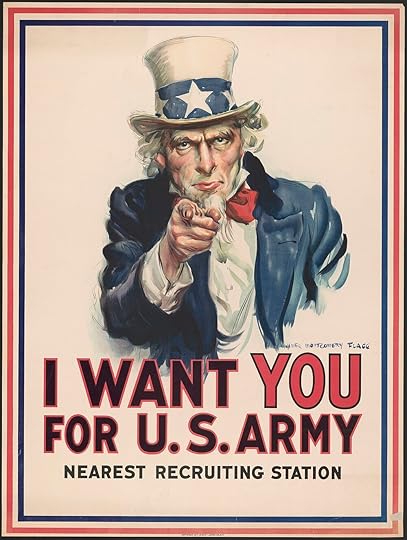
In 1916, Uncle Sam motivated young men to fight in World War I just by pointing and saying “I want you”
Then in 1942, Rosie the Riveter called the ladies with “We Can Do It”

Coca-Cola may have invented what we all think Santa Claus looks like today because of how they portrayed him–with a big-bearded, jolly, pink-cheeked Santa holding a little glass of Coca-Cola.

1959 “Think small” with a Volkswagen beetle

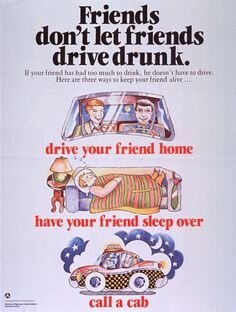
1983 “Friends don’t let friends drive drunk”
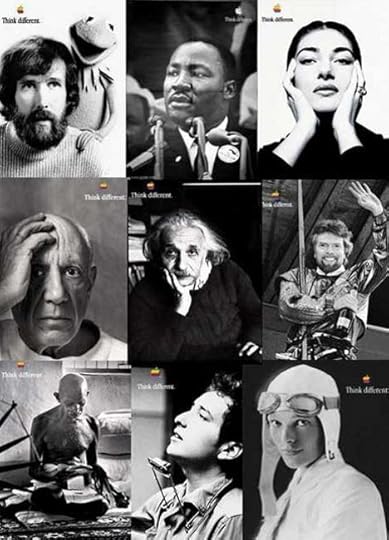
1997 Apple’s “Think Different”
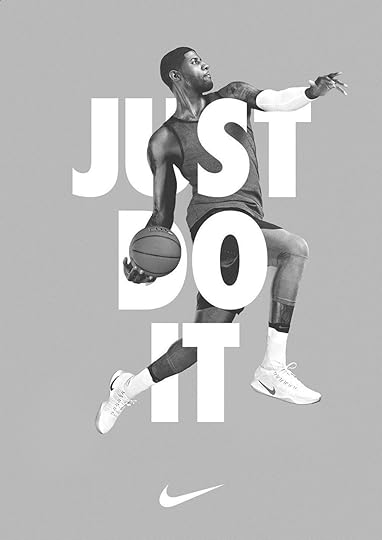
1988 Nike’s “Just Do It”
The list goes on…
The choices that companies make in their ads can change societal preferences, behavior, and even thought patterns. If we want to change culture in America, we need stand united in the power of diversity and in the innate belief that all people are created equal.
A move like shifting a logo on a pancake syrup bottle may not seem like a big deal, but it is a stand in the right direction. Over time, these little things add up and it’s the culmination of a lot of these small changes by huge corporations that are going to make a big difference in our society.
For my business Bixa Research, a lot of the market research we do informs big companies about how people perceive their products and brands, and gives them the data they need to be confident in making bold choices like this.
I know for me, I’m sure going to be buying Aunt Jemima’s this week when I go to the grocery store. I think a lot more people will, to support the cause.
April 22, 2020
How to Pivot FAST with Customer Research
Note: This video was recorded for Content Marketing Conference 2020, which moved to a digital format in the midst of the coronavirus (COVID-19) pandemic. This talk is on rapid customer research and is for businesses looking to pivot their business models and marketing strategies during this pandemic.
Consumer behavior has drastically shifted over the course of a few weeks. In uncertain times, if we can't pivot and find new opportunities, we may find ourselves out of business.
But how do we know if we're pivoting in the right direction?
Join Sarah Weise, CEO of award-winning market research firm Bixa and bestselling author of InstaBrain, to learn to:
Get rapid customer research, in as little as 3 days!
Build empathy based on social listening and video diary studies
Leverage new partnership opportunities for future growth
Create the offerings and content that support your customers right now
If you are shifting your business model, your products, your content... this is the talk for you!
LINKS IN VIDEO:
For the exact questions to ask your customers: Get the Template
Get your free chapter of InstaBrain!
August 14, 2019
Bixa Named a Leading Advertising and Marketing Agency by Clutch.co
Capture attention, influence your audience, and transform your business. At Bixa, this is what we strive to help our clients do daily. We know the importance of understanding our clients’ respective markets to help them create an innovative edge to their brand. As a result, Clutch.co recently ranked us as a top Virginia advertising and marketing agency!
Clutch, a B2B market research firm, is committed to connecting businesses with the best-fit agency or service provider to tackle their precise needs. They analyze and rank agencies and providers based on a research methodology that incorporates client feedback, work portfolio, and market presence.
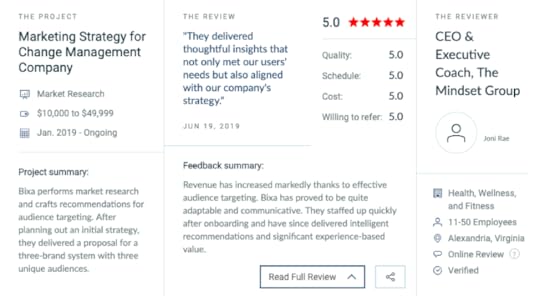
As part of this method, analysts spoke directly with our clients and learned more about the process of working with us. Following is one of several generous reviews they have gathered, providing potential clients with a quick look at our clients’ experiences with us.
Beyond being featured on Clutch, our work is also featured on The Manifest and Visual Objects. The Manifest is Clutch’s sister site that publishes brief descriptions of leading B2B firms, how-to guides, and industry reports to help businesses make practical decisions. Similarly, Visual Objects is also a sister-site of Clutch and lists top rated companies along with a visual portfolio of past projects.
This prestigious award from Clutch reflects our meticulous research that we have applied to helping our clients succeed. We are appreciative of the time that our clients took to share their experiences on Clutch, and we are looking forward to hearing more feedback in the years to come. If you’re interested in learning more about our services, please reach out!
Do you trust anonymous reviews more than a friend?
This week I received an email asking an interesting question. It was from Simon Beckett, a publisher out of London for Henry Stewart Publications. Hearing from Simon was not surprising. After being published a number of times in his industry journals over the years, we have formed a friendship, and every once in a while he reaches out with an inquiry.
His question today was about marketing for his beautiful bed and breakfast a few hours outside of London (https://hooppellstorr.com/ in case you’re interested!)
When guests come to stay at Simon’s bed and breakfast, naturally he asks where they’ve heard of his sanctuary.
Finding out where customers came across your brand or heard of your product can be extremely helpful as you hone your marketing strategy and decide where to focus your marketing efforts.
Based on Simon’s inquiry, he was surprised to learn that a growing number of customers checked out his bed and breakfast on multiple different sources before making their decision to book. He told me, “I’d not thought about it, but when I’m buying things like kitchen and camera equipment, I’ll use expert reviews and then cross reference to Amazon to see what consumer experience have been.”
He was writing to ask if this growing cross-checking of multiple different sources is worth covering in an article in one of his marketing journals.
It is really important to understand your customer’s journey, including the different touchpoints before the purchase, but I think that most marketers understand that people are checking numerous sources before buying, especially when we're talking about big-ticket items and vacations/experiences.
This started me thinking about what would make an interesting article, and what I started thinking about is the fact that 9 of 10 people trust online reviews as much (if not more) than personal recommendations from people they know. This is a big shift, and one we should be talking about.
The other interesting point is that even though marketers innately know that their customers are checking numerous resources before buying, they still tend to rely on their web analytics to show them where their customers came from. This will only give you the direct path from what site your customers came from, but this is likely not representative of all the places they checked you out before their purchase.
Interviewing customers as Simon is doing, to form a realistic picture of their customer journey, is the way to go whether you’re marketing your Bed & Breakfast, or selling any sort of B2C or B2B products or services.
August 1, 2019
iHeart Radio Interview with Sarah Weise: A Rundown of Gen Z Consumer Behavior
This iHeartRadio radio interview with me, Sarah Weise, hosted by Jeff St. Pierre will air this Sunday on 93.1 WPOC, 104.3 WZFT and 102.7 Jack FM in Baltimore.
Because you are my favorite readers, you get a sneak peek!
Transcript
Jeff St. Pierre:
I feel pretty good about this week's edition of Maryland Today. Good morning. My name is Jeff St. Pierre. Today I've got the pleasure of speaking with Sarah Weiss. She's the author of the new book, InstaBrain: The New Rules for Marketing to Generation Z. If you've listened to this show before, then you know that we usually have to 15-ish minute segments each Sunday morning. My interview was Sarah started out that way. But as the conversation kept going, I kept rolling the tape, what we ended up with was about 30 minutes of really important information for anyone trying to reach people classified as Generation Z. This book was initially written for marketers and companies, but there's a lot of benefits for teachers and parents as well in here. I think it's a really fantastic piece of work. So let's go ahead and dive right into my conversation with Sarah Weise. I Joining me today is Sarah Weise, the author of InstaBrain: The New rules for Marketing to Generation Z. Sarah, first of all, thank you so much for sharing some of your day and talking about your book with me.
Sarah Weise:
Thanks for having me.
Jeff St. Pierre:
So why don't you start by telling us a little bit about who you are? What do you do?
Sarah Weise:
I run a marketing research company called Bixa. And over the past couple years, much of my research has been on this new generation, Generation Z, who is about 13 to 25 today. So they're younger than Millennials. I've partnered with a number of big name companies to find out what makes this generation tick. And over the past couple years, I've been involved in a number of studies ranging from quantitative studies like large scale, big number driven studies to qualitative studies, where we've conducted hundreds of interviews gone into homes and schools and hangout spots. Basically, I've been hanging out with teams for the past couple years. And out of that, I've been able to author a book called InstaBrain: The New Rules for Marketing to Generation Z. It's a number one bestseller right now. And I've been also been asked to keynote at a number of large conferences and corporate events to teach companies how to engage and connect with this new generation.
Jeff St. Pierre:
So Sarah, why is this generation, why is this group so important for people right now? Because you said, What, 13-25 years old, that seems kind of on the low end of where most companies will be thinking about advertising and marketing.
Sarah Weise:
A lot of companies ask me, "Hey, we've been doing a ton of millennial research over the past five years, this younger Gen Z consumer, they're digital natives, too? Aren't they pretty much the same consumer?" And the answer is no, they're not the same at all. And if you want to engage and connect with this new type of consumer, you have to understand them because they're researching and shopping and learning so much differently than kids even a few years older. And on top of that, to answer your question, they make up a huge portion of today's consumers, even though they're young. So this is the largest living generation right now. And this group of teens and young 20, somethings represent $44 billion in direct buying power. I mean, just wait until they get jobs, right?! That number doesn't even include what parents and caregivers spend on them. So if you add that in, we're up to $255 billion. And on top of that, 93% of parents say that their children influenced their household spending. So when you add in all the purchases that are influenced by Gen Z as well, we're talking $655 billion. To put that in perspective, out of every five consumers in the US, two are Gen Z.
Jeff St. Pierre:
Wow. That is kind of awakening.
Sarah Weise:
Yes! And what's really amazing is that marketers today have focused so much on Millennial marketing, that they're missing out on a gigantic potential to engage with an increasing number of consumers.
Jeff St. Pierre:
So, I think for a lot of people, and I want to skip ahead just for a second here because you were talking about the comparison between Gen Z and Millennial, I think there's a lot of people that look at anybody from 30 and younger as just being Millennial. They don't necessarily realize there's more multiple generations in play here. So, can you kind of distinguish a little bit of the difference between Gen Z and Millennial for us? I know it's a big thing but if you could just do a little bit then that'd be great.
Sarah:
Yeah, absolutely. So, Gen Z and Millennials, they act differently because they were raised so differently. There's a few generational differences that are in play here. One of the main ones is that there was a really big shift in parenting that happened. Millennials, when you think about the parenting styles, they're kind of we think of helicopter parents, right, where helicopter parents kept Millennial kind of tethered to them. But for Gen Z, parents weren’t like that. I mean, we call this new parenting style tech parenting. These parents taught their kids how to find information. They didn't do it for them, they taught them how to find it using digital tools. But at the same time, they warned them about the risks, and I say that lightly. They terrified them about the risks of online predators, identity theft. So, as a result, this is the generation who's a lot more risk averse as well. If millennials are sort of the oversharing generation, this generation is one of painstaking curation. On top of that, they're self-starters and they're hungry for work, this Generation Z. So unlike Millennials, who were raised in a boom, Gen Z was born after 9/11. They have been raised in times of war and recession. They have witnessed their parents lose jobs and take pay cuts, and that impacted them. Gen Z is hungry for work. 61% want to start their own businesses. They highly respect anyone who is in business for themselves, anyone who is a paid and sponsored influencer on social media. They are really interested in making money. On top of that, we've got unprecedented diversity. They won't remember a time before a black president, female presidential candidates, gay marriage in most states. There's also this growing surge in interracial marriages. There was one researcher who documented all the different family structures. We've got parents with two parents with one kid, we've got maybe same sex parents with two kids, we've got a divorced couple, who then has two different family splits, all these different structures. There were 10,000 different family structures in this generation. It is unbelievable. All the diversity in terms of race, gender, sexual orientation, family structure, it's a huge diversity. 1 in 3 of the Generation Z individuals, they know someone who uses a gender neutral pronouns, which is very different than past generations. So, we've got this shift in parenting, we've got the way they were raised in a recession in times of war, the hunger for work, the self-starter mentality, and then we've got this unprecedented diversity. On top of that, they have been bombarded with visual input all their lives. And as a result, they have a shorter attention span, but they have this uncanny ability to multitask. And I say multitasking lightly because that's not really a thing, we just flex our attention between different screens. Millennials could juggle three screens at once, they could focus on three different things happening at once, and they had about a 12-second attention span. Gen Z can juggle five screens at once. That means they can be playing a video game, reading a Reddit thread about the video game, FaceTiming one group of friends, talking to another group of friends on their headset, and also texting at the same time, and they can keep it all straight. They can keep everything straight in their short-term memory.
Jeff:
It's insane how much they can accomplish. I do think it's kind of interesting hearing the way you describe Millennials and Generation Z. And I've kind of had this thought over the years that there's a lot of similarities, as much as they would hate me to say this, there's a lot of similarities I feel between Baby Boomers and Millennials. And the way you talk about Gen Z, I almost feel like there's a lot of similarities between Gen Z and Gen X. And it's kind of interesting how they're kind of separated by each other sort of.
Sarah:
Yes. There are. And you know what? This generation is also living in helpful multigenerational households more often and they tend to associate more with their grandparents than with their parents necessarily. So, that's also an influence. They hang out with their grandparents a lot more because they're living in the same home.
Jeff:
Yeah, that's really interesting. So Sarah, before we dive into the book a little bit more here, how did you do this research? How did you come to get all the answers that you got in this book, InstaBrain?
Sarah:
It's really based on just hanging out with teenagers. We did quantitative studies as well, where we studied teenagers. We studied young teenagers, we studied kind of the older teenagers, we studied young 20 somethings, we also had some groups that were older in age. We had a Millennial group and then we had a Gen X group, so we could use them as comparisons. And we did diary studies, we did a lot of diary studies, we had something like 30,000 bits of data that we ended up going through, and really analyzing the differences between the different generations. We also did a lot of ethnography and in-person interviews, we did virtual interviews as well, but we did hundreds of interviews in homes, where we really got to see the environment. We saw all the screens, we saw where they're playing video games, and talking to people and how they're communicating, and where they're hanging out, we went into schools, and we've done work with some state boards of education, and we've been going into schools and actually looking at how they're interacting and how they're communicating, and how they're learning differently, too.
Jeff:
So, reading through your book, I found myself so many times just cringing because I could see and hear so many things that I know that my company does and I'm just like, "Oh my gosh. This is just pushing away the younger audience with every second of the day." Do you find that people who have read the book so far and really take it the advice? What are you seeing as a reaction from this book so far?
Sarah:
I'm seeing a lot of schools and educational organizations reading this book and taking another look at how they're teaching, how they're educating. That was really interesting. It's been like summer reading at schools for teachers, that was fascinating, because when I wrote the book, I didn't intend it to be for schools and teachers. I guess it makes sense now in retrospect, but I wasn't thinking in terms of disrupting education. [laughter] But that's one of the unexpected results out of publishing this book.
Jeff:
So, one thing that you talked about in the book is branding. And if there's one thing that I've heard within my company and other radio stations that I've spoken with is that they feel like that, let's say the 35 to 55 age range, which is so coveted by people in my business, they feel like they've got them on lockdown. There's tons of brand loyalty, they're not going anywhere. They know the radio station, they know the personalities, they know exactly what we want them to know. But it's the younger than that range, Millennials and into Gen Z, that they feel like they find no brand loyalty with them. They feel like there's nothing there. But in your book, you talked about how that group Gen Z has a lot of loyalty they want to give to a brand, but they're just a little bit more selective about how they do it.
Sarah:
Yeah. They really crave off the authenticity. And brand loyalty is harder than ever to capture for this generation. But if you are doing the right things as a business, in terms of marketing with people over brands or telling stories in this snackable bite-size visual format, if you stand for something, Gen Z is going to relate to you a lot more.
Jeff:
And you say in the book, too, it's a simple statement but it seems so profound, "Your current actions create your future." And that's one thing that we keep looking at. Like I said, the 35 to 54 year old range, we've got them, we're set, they still listen to the radio driving into the morning, they still interact with us on Facebook. But you know, those people are going to get older and we've got a younger group coming in. So, how do we get our future on track here? How do we keep them wanting to come back to us? And that's been a big discussion that we've been trying to figure out and I feel like there's so many answers here in your book as to what we should really be focusing on right now.
Yeah. If you want to talk about a few kind of overarching themes that we've discovered about this generation, we can dive into that. The first one I would say is that this generation more so than any generation in the past are natural learners, they love to learn and it's a feel-good past time. So, we find that when they are learning something, let's say they're watching hours and hours of YouTube tutorials on autoplay at night, which is pretty accurate, it's an average of three hours of YouTube a day, but when they're doing that, they feel good afterwards. They're like, "Yeah! I learned something new." I mean, it's not necessarily something academic, it could be, you know, you figured out how to do James Charles' eyebrow or rainbow eyes, or do your eyebrows, or how to bake brownies, or how to get past a certain level in a video game. But whatever it is, Gen Z is constantly learning and they're feeling good about doing that. And we see that if they watch say three hours of Netflix, after that, they'll feel guilty. So it's not the same feeling after that happens. So, learning is this feel-good past time, whereas doing something that's just sort of edging out if not.
Yeah, you dived into that a bit with one of the teenagers that you spoke with. I believe he was a teenager, Cabe, where you were you start talking about music and he immediately like picked up his guitar, went on to YouTube, went on to Spotify, went to everything and learned everything about a specific artist that he found through, I want to say was like an Amazon Echo or something, that he discovered this artist. And it's fascinating to me to think that that's how fast it turned. I think we've all been around a dinner table and someone's like, "What movie was that guy in? What is that movie? I can't picture." and we immediately pull out our phones, we look up IMDb, and we find out that movie. But this kid, Cabe, was like really looking to learn everything.
Sarah:
Yeah, they're not stopping there. What happens is that they make these snap judgments about what they're interested in and once they decide that they've been inspired by something and they want to learn about something, they have this superpower that enables them to hyper focus on whatever it is they're learning about for hours on end. We talked about these lower attention spans. The fact that attention spans have shrunk from 12 seconds to eight seconds between Gen Y and Gen Z between Millennials and Gen Z. But at the moment, once a Gen Z decides that they're interested in a story or a person or a topic, they really block out all distractions and dive deeply into it, searching for every shred of information they can find. But you have to spark that initial inspiration, you have to spark attention to be noticed.
Jeff:
So, I'm going to ask you a loaded question. By the way, we're speaking with Sarah Weise, the author of InstaBrain: The New Rules for Marketing to Generation Z. Sarah, I'm going to ask you a loaded question here and you're not going to have a full answer for it or you're going to have way more than we have time for. And I also want people to check out your book, so you don't have to give away all of your secrets. But how do we grab that attention? How do we get into the vision of a Gen Z person? And how do we get them to want to learn everything about us?
Sarah:
Yeah. Unlike Millennials who are loyal to brands, Gen Z is loyal to people. They follow people, they want to know every shred of information about their lives, they want to know about what they ate for breakfast, they want to know that their favorite influencer doesn't like ranch dressing, they want to know all the nitty gritty details about these people. And by connecting with real authentic stories, videos, pictures, slice of lifestyle things, they can really do that. They can really form an attachment. So, they're not forming an attachment to your brand, they're forming an attachment to your brand ambassador or the influencer you're working with. So, it's a little shift in your marketing strategy.
Jeff:
Now that you mentioned influencers, I'm sure you've been following along with this as this news came out after you published your book, but the talk about Instagram getting rid of likes, that is having an impact on what ambassadors and influencers are going to have to deal with. Did you see any major impact on this happening?
Sarah:
I think it's interesting. I think we have to wait and see what happens there. But what's interesting is that these content creators are making this amazing content all the time, but it's being pushed down their feed because the fees are all chronological and a lot of times its lost forever. So, I think what Instagram is trying to do in this odd way is resurface some of the older evergreen content. So, I think because some of the content is not in chronological order, I believe that's part of it, the likes are going away and some of the stuff is not chronologically presented, then I think some of the evergreen content is going to start resurfacing, which might actually be better for the content creators. I mean, I understand that people are freaking out right now, but I think we just have to wait and see. Social media is always evolving and if they don't make these big steps and try things and potentially fail, we're not going to know if they work. This could be the next evolution to social media and increase engagement for us. Who knows.
Jeff:
So, as a company or as a marketer, you're looking about how you're going to get that Gen Z person to come in here. You obviously are realizing now that it's a major population, a major group of the population here that's going to influence spending in so many different ways. So, where do we take it from here? Like, let's look at me for an example. Let's see what your thought is. I work for a radio station, we generally appeal more to that 35 to 54 age range, and we have people in all audiences because we're a music station, so people tuned in to hear their favorite style of music. But if you had a piece of advice for us, what would you say would be a good idea for us to try to reach that younger generation?
Sarah:
One thing you can think about is that for this generation, stories sell. They love hearing stories and they want them in bite-size ways. They want kind of snackable content. And on radio, what you could do potentially is have these little mini stories or little authentic true stories, of course, because authenticity is very big for this brand. Slice of life stories are big, something like that, you've got a platform as a radio station.
Jeff:
I also love when we have meetings in our office and my boss is always like, "Hey. We got to push all this stuff out in a Facebook." and I'm like, "Really? Is that where we want to go?"
Sarah:
[laughter] Actually, when we asked this generation about how they feel or what they associate with the different social media group, Gen Z is very able to articulate the distinction between when to use each social app and where to post, and look for different types of content. So, I can run through them really quick. Instagram is for sort of the slice of life and content that they like, the snackable content, and for random inspiration. Pinterest is for specific inspiration. So, if I want to know cake decorating and I want inspiration about that specific topic, you'd have to go to Pinterest versus Instagram. Twitter is for professional announcements. Google is for homework and looking up very specific queries. YouTube is for learning something, tutorial videos. Snapchat is for behind the scenes kind of things. Oh, and as a radio station, you can totally use Snapchat to propel your brands there, sort of doing the behind the scenes type of videos and photos. Snapchat is also for communicating with their friends about random things, like random funny things. Text messaging is for communicating about more time sensitive or urgent thing. And Facebook, it's really sweet, it's for parents or it's for communicating with siblings, older siblings. I'll hear Gen Z say, "Oh, yeah. I have a Facebook account just because I want to share a video with my older sister, that's where I share it."
Jeff:
Yeah. It makes perfect sense and it was really interesting in your book reading about all that. I'm glad you went down that list because one of the things you talk about in the book is about the different groups that make it really easy for you to make a post that will send across all your platforms at the same time but that's not what Gen Z is looking for. Because each social media platform they go to, they're expecting something different. So, if we just have like one post of Carrie Underwood shares baby news, we're not going to want to put that out on every single thing, we want to put that maybe on Twitter or maybe on Facebook because that's probably more of our parents thing anyway. But Twitter is where you'd find that news or that update on. We don't want that on our Instagram, we don't need that on Snapchat.
Sarah:
And you'd want to share photos on Instagram with lots of emojis and hearts, and baby icons. Yeah, you'd want to do different things. They're looking in different places for different types of content and you have to make the scavenger hunt real because if they are dedicating hours to finding new information about different artists or different people that they want to follow, they are going to look in a lot of different places. And once they find that little tidbit, that little sliver of something special that they haven't seen elsewhere, it brings about this moment of such delight that you are building a better relationship with them just by having these little slivers of content in different places.
Jeff:
Well, Sarah. I do want to ask you another question here but I will tell you the most surprising thing that I found while reading your book, and I will admit I'm not fully done with it yet, but I did get a huge chunk out of the way, one of the most surprising things to me is how email is still very valid for Gen Z. I would have thought that email was on the way out but you say in your research, you found that it was very valid to use for them and it have to alter it to make sure you're doing the right thing to attract their attention. But for you, what was one of the most surprising things you discovered while doing your research?
Sarah:
I think the ability for them to quickly make money in new ways was really surprising for me. I can tell you a story. There was this girl who wanted a pet hedgehog and she went to her mother, and she said, "Hey. I want a pet hedgehog." and she had seen something on Instagram about it. So, it was something that had sparked her attention. She saw a picture of a pet hedgehog and she's like, "I really want a pet hedgehog." and she got in her head that she wanted a pet hedgehog. So, she went to her mother and she said, "I want a pet hedgehog." and her mother said, "No way. You can't get a pet hedgehog." like they're wild animals. They're nocturnal, they're not going to be a good pet. You can't get a pet hedgehog. Well, it didn't die there. She went back and for days, she spent hours and hours and hours researching hedgehogs as pets, what's required all the counter arguments to anything her mother presents, and she went back to her mother and she said, "I want a pet hedgehog." And of course her mother said no for all these reasons. and she had an answer to every one of them because she had done all the research. And finally, her mother said, "Well, fine. You can have a pet hedgehog if you can pay for it yourself." And she needed to raise about $500 I think for the hedgehog and then the cage, and all the associated stuff that goes along with owning a pet hedgehog. So, she started researching how to make slime. She started making her own slime and it was specialty slime, like it was peppermint scented and in beautiful boxes, and things like that. And she went to her local convenience store, that the kids in her neighborhood went to go through for snacks and things like that, and she asked if they would stock her slime, and they agreed. And within a week, she had made enough money to buy the hedgehog. Well, she then realized how much money she was making on this slime and she started an Instagram business page for her slime and started selling it online as well. She also turned that hedgehog into an Instagram page and the hedgehog is now paid and sponsored, and she's making money on the hedgehog, too. So, it's just the connections they're making. The fact that they're making money in new ways and that seems so entrepreneurial, what also surprised me is how this is a generation of doers. Millennials tend to talk about what they're going to do, this generation takes action now. They're like, "Okay, I'm going to do this and this is my next step to get going." And they're like, "This is what I'm doing right now at this moment. I'm not going to put it off till tomorrow, I'm not going to put it off till tonight. I'm doing this right now and I'm going to sit here and focus for hours, and I'm going push everything else to the side and I'm going to do it." They're a generation of doers. It gives me really a lot of hope for the next generation for change in our society.
Jeff:
Well, Sarah Weise, author of InstaBrain: The New Rules for Marketing to Generation Z, I was hoping to have you for about 12 to 15 minutes and it looks like we've gone almost 30 now. So clearly, a lot of amazing information in your book and a lot of things that people should be talking about. Companies, marketers, there's really important stuff in here about how to reach this generation that I think confuses a lot of people that maybe are in the Gen X or the Baby Boomer range as we try to figure out how to move our companies and different aspirations into the future. Sarah, if we want to find out more information about you, they want to keep this conversation going, where can they go to do that?
Sarah:
They can go to sarahweise.com. They can also check out my business website if they're in a company who needs help with their marketing research. It's bixaresearch.com.
Jeff:
Do you have social media at all? Just throwing it out there.
Sarah:
Oh, absolutely. I've got all sorts of social media. [laughter] Yes, I'm on Instagram, sarahvweise. I'm also on Twitter, wifesarah. You can find me on LinkedIn and everywhere in between.
Jeff:
Well, Sarah Weise, it has been an absolute pleasure talking to you. Thank you so much for sharing much more of your time than I think we had initially bargained for. I do appreciate you telling us more about the book. Really a great piece of work here.
Sarah:
Well, thank you so much for having me.
July 31, 2019
Recruiting & Managing Your Gen Z Talent
Generation Z has taken over as the largest living generation. This group, ages 13-24 today, is starting to enter the workforce, and as they do they will be shifting the dynamics forever.
Over 60 Million people in this generation are going to be actively looking for jobs within the next year alone. That means if you’re at a company that’s recruiting and managing young talent, you may need to shift your approach.
So today’s blog is going to talk through the big shifts that have happened in this generation, and what YOU as a company need to do to make sure your recruiting and management strategies evolves with this changing workforce.
What’s their attitude like?First, let’s talk about the attitude of a new Gen Z employee.
Unlike Millennials who were raised in a boom, Gen Z was raised in a time of war and recession. They have seen their parents lose jobs and take pay cuts and they are hungry for work. In addition, they’ve witnessed old siblings emerge from colleges buried in debt and don’t want this to be them.
Financial stability is key driver for Gen Z, and they are risk averse when it comes to money. While they see the value in traditional education through colleges and universities, they are skipping the Shakespeare classes and focusing on STEM courses that are going to land them high-paying positions.
They do expect to get paid a lot, but they’re willing to work for it. They are entrepreneurial, go-getters, and once they’ve decided they’re interested in something, they can hyper-focus and block out all distractions. Before they’re invested, they are quick to drop off though. When recruiting, make sure you have a seamless application experience that doesn’t require them to enter the same info again and again. Anything tech blip from an outdated recruiting system can make them drop off your site.
How will they interact with others?
Ok, here’s the tough one. Let’s talk social skills.
A lot of people wonder what this generation is going to be like when they have to interact with older co-workers and managers. These kids have had their noses in a phone their entire lives. And while this generation may be more “connected” than ever before, but they’re disconnected when it comes to other people.
People need human connection—it’s the way we’re wired. This generation has been praised in many ways during their brief time on this earth, but they also share a less laudable distinction: they are the first generation to have a shorter life expectancy than their parents. And much of this may be due to the fact that they are not able to form strong bonds with others.
It’s summer right now, and since they’re not in school, most teens spend more time alone with their phones than they do with actual people. Between 2000 and 2015, the number of teens who get together with friends on a daily basis dropped by 40%. High school seniors in 2015 went out less than 8th graders in 2009.
If you’re like me, you likely remember being so excited to get your license at 16 because it meant you could be independent of your parents and drive your friends around! Driving, once a symbol of adolescent freedom, is no longer a big deal. More than 1 in 4 teens today still lack their driver’s license by the time they finish high school.
Dating has dropped significantly too. Even the vocabulary around dating has shifted. You’re no longer “dating”, you’re just “talking.” They find out if someone likes them based on engagement rates on Instagram.
This generation is nearly twice as likely to report their mental health as “fair” or “poor”. They often feel detached, alone, and misunderstood. There have been a number of studies on loneliness. One found that loneliness has the same impact on mortality as smoking 15 cigarettes a day, making it even more dangerous than obesity.
Many companies are struggling to integrate this new generation into the rest of the workforce because of social skills alone. In fact, many are investing in basic training on how to play nice with others, and what’s expected in terms of behavior in a corporate environment.
While this approach can’t hurt, it’s certainly not the most effective way to integrate these new employees. No PowerPoint is going to teach them how to understand facial expressions and read between the lines.
Instead, spend your budget on in-person socials. Gen Z is seeking deeper connections all around, and one of the biggest draws of your brand is going to be your people. One-third of new hires can be found looking a new position within 6 months—mostly because they don’t feel like they fit in. So during recruitment, make sure they are meeting their team and getting to know them. Once hired, make sure they are spending authentic, quality time with the people they work with, both on the job and socially outside of work. A weekly happy hour goes a long way to making this happen.
Above all, let’s stop making fun of them. We’ve tired out the old refrain about how Millennials are so entitled and in need of positive affirmation, and how Gen Z can’t make friends with anyone but a phone. So let’s stop all that and start creating an inclusive culture. This is what’s going to appeal to Gen Z, and this is where your company needs to be if you want to attract and retain the best young talent out there.
Wait, you mean there’s a magic formula?Let’s start with this…
Be authentic. Highlight your people. Meet in person.
Yes, you can focus on a seamless recruiting software, or a fancy onboarding and social skills training. But no matter what else you do, this simple yet incredibly effective formula will help you engage, connect, attract, and retain the youth audience in your organization.
July 22, 2019
Gen Z + Food: What the Food Industry Needs to Know about Marketing to a New Generation
Today’s Generation Z (about 13-25 years old today) is changing the game for marketers across pretty much every industry out there. Today we’re going to talk about the way young consumers eat. If you’d prefer to see this as a video, feel free to watch my vlog:
1. They eat out more than any other generationToday’s youth eat out more than any other generation. In fact, 78% of their discretionary spending goes to food, and much of that is from quick-service restaurants and eateries. In 2018, that meant 14.6 billion visits, about a tenth of all food traffic.
The way young consumers shop and eat is fairly polarized. They either trend toward the experiential and tactical or the fast and frictionless.
Let’s start by talking about food EXPERIENCES that intrigue this youth segment. Today’s youth pride themselves on individuality, and they demand personalized products, and experiences that they want to co-create. That’s why we’re seeing so many inspirational cooking videos like Tasty pop up on feeds across the country—because many of these youth want to try it out themselves, but don’t have the time or attention span to watch a full-length cooking show. Food products that allow for personalization are also on the rise. We’re seeing bespoke beverages like create-your-own flavor Gatorade, and options at every twist and turn to customize your meals.
This same group is open to diet experimentation. They are increasingly trying out new diets (keto, paleo, vegetarian, vegan). They are not afraid of new food types, and are asking for more plant-based meats wherever they go. They link dieting to social groups; they want to feel a part of some sort of movement or community. However, unlike millennials, this group is less concerned about health and wellness. Instead, they are more interested in flavor. They’re young, and while they know the “rules” of health and wellness, they don’t feel a strong need to follow them just yet. They prioritize flavor and fun over health every time.
At the same time, we’re seeing an overwhelming push for speed and convenience. Today’s youth rely on mobile ordering more than ever before. 70% of mobile orders are done though a restaurant’s own site, app, or in-store kiosk; 30% through 3rd party apps like Uber Eats, GrubHub, and Door Dash. That means, as a restaurant, you need to really invest in your digital ordering. Frictionless function is the name of the game here. Keep it simple. Keep it standard. Keep it speedy.
Gen Z also wants bite-sized everything, from content to food. They snack constantly and often make meals out of snacks. More than half of young people in the US are interested in meal replacement products, especially if they tap into unique diets (like a keto meal replacement).
Today’s busy household schedules mean that teens are responsible for making much of their own food. Most often, Gen Z can be found eating alone for every meal except dinner (and oftentimes at dinner, too).
By making their own food choices, they focus on flavor, and fried comfort foods top the list. When you couple these eating habits with an increasingly sedentary lifestyle, this may be a factor in the rise of childhood obesity and why this young generation has THE shortest life expectancy of any other living generation.
To be at the top of your game, you need to know your customers. This new, young generation makes up 40% of all consumers, and they are buying and eating food in new and different ways.
How will you use this for your customers? Email me and let me know! sarah@bixaresearch.com
June 19, 2019
A Peloton-inspried training & coaching for marketers and UXers
Last week my Peloton arrived, and I have been not only obsessed with my new toy, but also enthralled by the business model that Peloton has used to build a super-engaged community around a fairly standard spinning bike.
When I’m taking classes, I love all the metrics I’m seeing. And they do shout-outs for people who have taken 150, 250, even 500 rides on their Peloton.
The instructors are so motivating, and the fact that they have hundreds of different types of classes that you can take everyday is changing the game. I’ve found myself a couple times just scrolling through the classes with the instructors that I like, bookmarking the ones I want to take later.
In the last live class I took, there were over 1,500 people in the class at that moment. People from all over the country being moved (literally) by their Peloton.
All this is to say that the business model for Peloton is disrupting the way we have traditionally exercised. Technology has enabled us to work out from home. To be social in a private setting. To give high-fives to those working really hard and to fit courses into our hectic lives when we normally wouldn’t have.
So I’ve been thinking a lot about how I can use this model for my business. And I’d like to run something by you.
I’m thinking about offering a new service: a subscription-based self-paced coaching & training program for marketers and UX-ers. The goal is to help practitioners boost their skills in a self-directed way. Kind a Peloton of UX research.
So I envision this being for people who have experience in marketing or UX. A world-class marketing and UX training and coaching system where you get masterful coaching and daily application of the finest methods and tools available today.
Training that’s fresh and current each week, with thematic content and challenges for you to apply new skills at work.
So if this is you, please write back to me and tell me if you would be interested in a subscription like this.
YOU are a warrior. A real practitioner. You need fresh training to keep you current with your skills. Bootcamps are for beginners. You need a different approach: an on-the-go training that fits in with your busy life. A Peloton-inspired business for marketing and UX coaching.
So what do YOU think? I’d love to hear from you.
June 4, 2019
What moves a research team from good to great?
This month my focus shifted back to my UX roots as I was conducting usability testing for an IBM project. Since I spent the first decade of my career planning and facilitating usability tests, this practice will always hold a special place in my heart.
Over the years, I've had the opportunity to observe research teams at all levels of maturity. I've conducted research with many different teams in varying industries and I've seen firsthand how getting your team into a cadence of testing frequently with the right audiences leads to better products. Yet even though everyone wants websites and products that are customer-focused and built on a culture of seamless improvement, they don't always take the steps to get there. This makes for frustrated UX teams and marketers with eyes glazed over with the knowledge that their messaging just isn't quite hitting the mark.
Lately, as I've been working with a highly effective research team, I've been thinking about what consistently sets apart mediocre research teams from truly stellar ones.
Here are 5 things that seem to matter, both for UX research and marketing research:
Leadership support: Stakeholder buy-in (both in attaboys and budget!) is essential to the consistent practice of user research. Without leadership who understands the value of research and is dedicated to real customer feedback, your products (and marketing) will suffer. There's no way around it.
Systematic recruiting pipeline: The teams that have recruiting down to a science are the ones that wind up scheduling and conducting testing on a regular cycle. When my company Bixa is hired to conduct bi-weekly or monthly UX research for our clients, we book testing sessions at least 4-6 weeks in advance. Having testing participants ready to go means you'll never have to postpone research because you're waiting on somebody to get back to you. This preparation step goes a long way to ensuring consistency of recurring rounds of studies.
Seamless handoff with lightweight reporting: Sometimes major findings are lost in the handoff between Research and Design and Development. If your organization is set up with distinct groups, there are a number of ways to get everyone involved. This might include having teams watch the testing from a viewing room, or making sure the report has video clips that highlight major issues. Ensuring that everyone has seen the problems makes for increased empathy. It's not a game of telephone this way either. Recently I've seen very successful teams skip the formal reports totally, opting instead for InVision comments and a few key video clips.
How the team talks about user research: Ask one of your team members why they do research. Go ahead, I'll wait. Teams who are less effective tend to spend a lot of time talking about the return on investment of UX and will bring up time and money savings for your company first ("If we design it right the first time, we'll save money on the maintenance later. We estimate this is a 10x ROI"). The most effective teams, however, have a different outlook on the research. They will explain that they do research because it makes a better product for the end user. Their explanation will be for the benefit of the customer; not for the benefit of the organization. Shifting the "why" behind the research will shift the focus of findings as well, making the team more value-driven vs. cost-driven.
How the team talks about each other: When I first start a project, I often can get a sense right off the bat of how effective the team is going to be based on how much gossip is going on behind people's backs. The more catty, the less effective the team will be. This is a totally unscientific and I did no research on this - it's just a personal observation based on my experience as plug-and-play on many different teams, at many different maturity levels, across many different industries. When everyone on the team respects each other and has each other's backs, things seem to go smoother. There is an art to creating a culture like this, and in the past, I have at times been brought onto teams for the sole purpose of serving as a coach and mediator. Fixing work culture will immediately improve the quality of your work.
Skillful moderators: Not surprisingly, skilled moderators pull more from an interview than beginners. They know what strings to tug, and how to lead the conversation back to stay on track with time and purpose. Even if it's just a 5-minute debrief right after each session, have observers provide feedback to moderators immediately following (do not wait until the retrospective because you will forget the details). When providing feedback for a moderator, focus on these criteria: (a) how quickly the moderator built rapport, without sharing personal opinions; (b) time management during the session; (c) level of comfort going off-script to follow the conversation and probe deeper into areas the participant brings up; (d) non-biased question phrasing, open-ended follow-ups. Strengthening skills in these key areas will build the skills of moderators on your team.
Ok, I said five but I got carried away and wrote up six.
What else do you think sets apart a good research team from a great one? Send me a message (I do read every reply)!