Ashwin Naik's Blog, page 2
September 26, 2017
The Healthcare Gamechangers – How innovators around the world are changing the rules of the game
Hospitals are going to disappear.
Atleast in the way we know them today, they will disapear. They are great for sick-care.
But, no way are they central to healthcare.
If indeed the goal of the healthcare system is to keep people healthy, what is the need of a hospital?
If the goal is to treat sick people, hospitals with their complex systems, surgical tools and diagnostic machines make sense.
But the Hospital is a terrible system to keep people healthy.
They are one piece of the ecosystem responsible for handling things when its already late. Increasingly technology is advancing so rapidly that most diagnostics and diagnosis will be done at home. That relegates the hospitals to only doing the most complex surgeries and handling trauma related cases.
If hospitals are not going to help us be healthy, who will?
What are the new models emerging and the entrepreneurs behind them?
Who are these emerging players who will take over the responsibility of helping us be healthy. And what is their game plan?
The answer is fairly obvious but not simple.
In this series we are profiling 12 such companies and entrepreneurs who are building new types of healthcare organisations – The Healthcare Gamechangers. Based on analysis of the models developed by The Healthcare Gamechangers, four key principles seem to be emerging. These Healthcare gamechangers are building their organisations around these four principles as key for success. And most importantly, all four principles are interlinked to each other.
The key principles that we identified are
Everyone Plays: Healthcare has traditionally been driven by experts – doctors and specialists in the field. The new game calls for everyone – nurses, technicians, support staff, patients themselves and their families to step up and play a substantial if not equal role.
The Healthcare Gamechanger empowers actors who are not traditionally experts, most cases leveraging technology, eg putting Nurses at the centre of care, empowering community members to care for each other, trained health worker to diagnose early.
Expands the Playground: The more care is concentrated in the hospitals, it will continue to be driven by old rules and notion of illness focused care. When care goes out of the hospitals, into the communities, it helps to expand the boundaries of what can be included as part of care. More importantly it makes the individual more and more accountable for their own wellbeing and not be dependent on others.
The Healthcare Gamechanger takes a significant part of the care outside of the hospital domain eg, at home, at workplace, at schools and even at religious places.
Invites new Players: The future of health depends on new players entering this industry and challenging deep rooted assumptions and bring new thinking. Any organization focused on wellbeing has to necessarily leverage this opportunity and create an open platform for new players to contribute or participate. Playing by the old rules with the same players will not change the game.
The Healthcare Gamechanger creates connectedness between different and many times, new players in the health ecosystem, eg working with organisations in agriculture, education, energy and even entertainment sectors.
Changes the rules of the game: Healthcare Gamechanger organizations understand that at the core of ownership of one’s wellbeing is the mindset shift in individuals. And enabling this mindset shift is the fundamental focus of their organisations.
Healthcare Gamechanger goes beyond illness care or preventive care of individual diseases, and focuses on overall wellbeing.
In this series, we attempt to highlight the innovations around the world and the people behind them who are already playing by this new playbook. This has important lessons for the medical community, future of the healthcare industry, the way we structure health Insurance and how we handle health in our own communities.
Stay Tuned!
——-
If you liked this post, you might be interested in my other posts: Hospitals, a historical perspective and relevance for the future, You are not the Unicorn, You are Awesome, Shoot me if I ever say these things to a startup team, The Doctor is NOT in, the Doctor will see you NOW, and Davos Learnings for my Daugther.
About Ashwin Naik
Ashwin Naik is an entrepreneur with interest in affordable healthcare, social enterprise and healthcare technology. You can also visit his
blog
to read more.
Ashwin has been recognized as a Economic Times Leaders under 40, Young Global Leader By World Economic Forum, Young Leader by Asia Society, Senior Ashoka Fellow & as a Ted Fellow.
He is currently a Resident Fellow at Ashoka Innovators for the Public.


March 2, 2017
Paying the doctors as long as they keep you healthy
Does this ancient Chinese system hold the secret to the future of managed care?
Modern medicine is going through somewhat of a crisis of identity in the modern world. As the population ages, the need for medicine changes and the budgets and margins for the profession look tighter all the time. So much of modern medicine, however is still reactive. In most areas of life the phrase ‘prevention is better than the cure’ is accepted wisdom.Why doesn’t it happen more often in medicine, where the phrase originated? A new way of thinking may be needed to take medicine into the future.
If we look back to Chinese History of Medicine, then this concept was actually embedded into medical practice, rather than being used as a doctrine for patients to carry around with them. The fact that the Chinese people over the millennia have written down what they did rather than rely on an oral tradition gives us a great insight into many facets of their life. And in terms of medicine, the Chinese doctors traveled extensively across Asia and spread their practices as they went. Doctors had a strong understanding of the body and dealt with a wide range of illnesses.
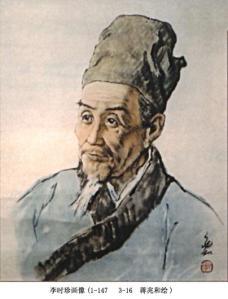 One such doctor was Li Shizhen. He was a proponent of Neo-Confucianism that helped people to live a healthy and happy life through Study, Self-awareness, Morality, Personal behavior, Meditation and Introspection
And as such, looking after your body, mind and soul were at the front and center of his way of thinking. So looking after your self was something that he thought about deeply and practiced during his time in the Imperial Medical Academy as a subordinate medical officer, in the Ming Dynasty. This was a high rank at the time and Shizhen looked at the role of the doctor in the overall health of the patient as something more important than a person to visit when things went wrong. His view was that the doctor should play a more integral role in the life of the people he or she was supposed to look after.
His belief was “To cure disease is like waiting until one is thirsty before digging a well”
In China during the 16th Century, medicine was something that was carried out in return for payment. The doctor used to help the patient in return for money. But things changed around the time of Shizhen and he, along with other deep thinkers saw a reversal in the way that a doctor functioned would lead to better results.
The doctor would be paid as long as the patient was healthy.
If they went about their normal daily life free of pain and protected from disease then the doctor would receive their money. Think of it along the lines of a monthly retainer for a modern professional to look after your finances, for example. But if the patient became ill then the payment would stop. The doctor would still be under a contract to look after the patient, but they would not be paid again until the patient was healthy. This changed the view of medicine at the time as something that kept people well rather than cured any problems. So using the modern example from above, if your financial investments were not performing then your adviser wouldn’t be paid again until they resumed a positive growth.
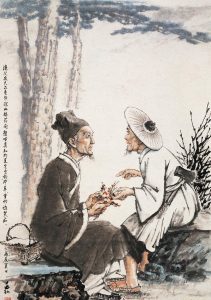 You can see how this might play out with managed care, as the medical professional would have to become more of an integral part of the life of their patients rather than have them drop in when they had an issue that needed to be resolved. It would change the focus from cure to prevention to general wellbeing.
Chinese medicine is given this kind of mythical status in the Western world as some strange alchemy that can cure everything but at the same time be something that they don’t trust 100%. But it is about far more than buying herbs, fungi and tea or the use of acupuncture. As you can see from the way that medicine developed in the time of Li Shizhen, the thought behind healthcare was as important as the practice. In many ways this is what we are lacking today. We develop new technologies and systems to help people in more diverse ways. The focus is often on the latest detection techniques or the most advanced treatment but all the time we are moving away from the core question – what is the mission of the doctor or a hospital or the field of medicine?
Chinese medicine was formed by a diverse range of influences that took it in the direction of caring about the whole being rather than the individual components of the body and the problems that they were facing at that point in time. It took lessons from Shamanism, Taoism and Buddhism. And as such looks to the practices that include the health of the patient in the body, the happiness of the patient in the mind and includes a religious aspect with the soul.
Modern Chinese medicine has taken some lessons from the way that techniques have developed in the rest of the world but have never let go of their founding tenets of acupuncture, herbal medicine, meditation, the diet and massage. The rest of the world has a lot to learn from this way of treating someone. Perhaps a return to doctors that are only paid when the patient is healthy is a way to realign the focus and produce a healthier, happier society.