Michael Duda's Blog, page 4
September 11, 2019
Time Travel: Montana Big Sky
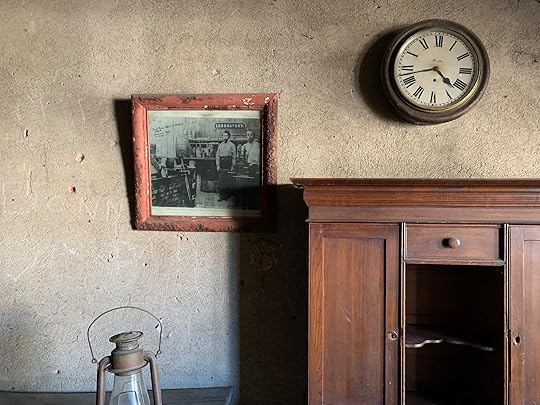 Imagine a time machine. Yellow and red lights blink. The air crackles from a rift being torn through the fourth dimension. A hiss and the door opens, waiting for you to enter. Do you dare, time traveler?
A strange path takes you somewhere. Ahead is wide open blue sky. Around you is fragile earth that threatens to erupt into a boiling spring or sulfurous gas. Was time traveling a mistake? You press on, a daring trek into this frontier.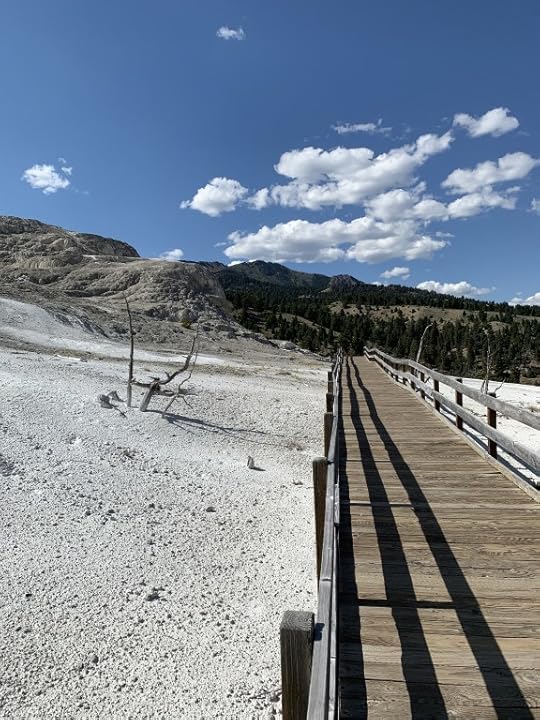

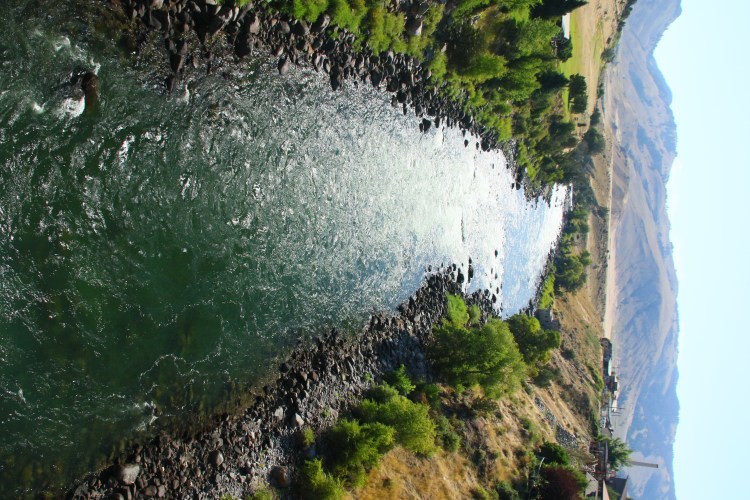 Ahead is a river, its white waters churning. It catches you and carries you along. There’s no stopping yourself. Cold river splashes your face. A hollowed rock ahead slows down the frothing water. It’s your only hope.
When you finally catch your breath and look around. Nothing is the same. A wood and stone opera house sells seats for a nickel. A horse-pulled carriage trots by. And a man wearing a a black rancher’s hat gives you a strange look. Time traveler, you’re not from around here.

 There’s more to see. Bison graze the valley and plains. Brown elk are on the move. And you are always on the alert for bear and wolves who might be startled by your sudden appearance. Keep alert, time traveler, because the wild lands can be dangerous for the unwary.
Then you climb higher. 6,000 feet, 8,000, almost 10,000 feet altitude. Time traveler, your breathing is labored by changes in air pressure. The height is dizzying. The vastness of sheer rock and deep caverns inspires awe.
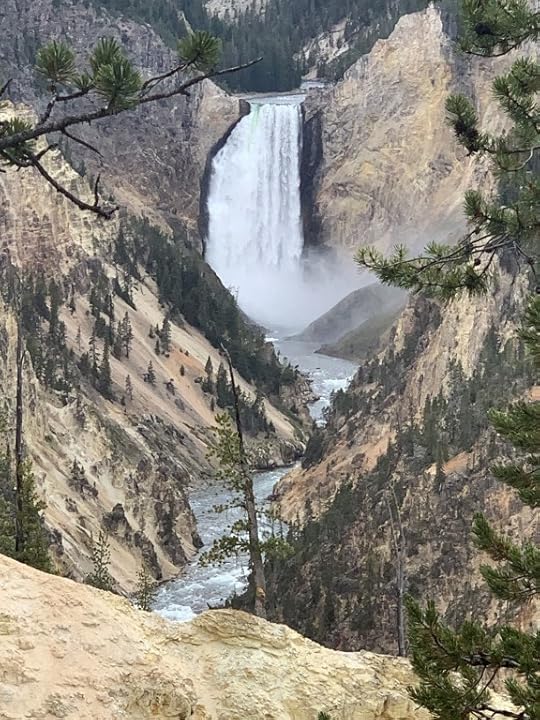
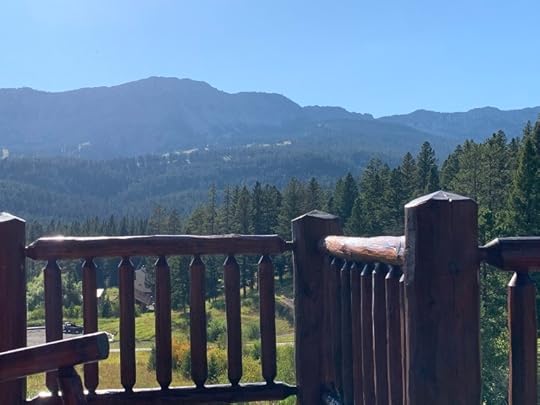 But you feel the time rift closing. You make many switchbacks, but it’s a slow descent. Quickly, time traveler! Return to where you came from. As you step out into the present, the time machine breaks down. It cannot be repaired.
You prop your feet up and relax. Rye whiskey warms you. You think back on your visit in time. How vast, so big and so wild. Montana has been an adventure. Will you once again see its looming mountains and sprawling valleys? Even without a time machine, the old west still waits for your return.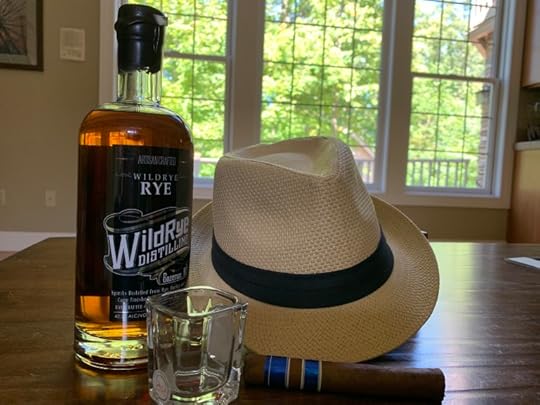


May 23, 2019
The West Highland Way
Two weeks ago I completed a 96 mile hike. Starting in Milngavie, Scotland, I continued north. It was rough (ancient) military roads, mountain ascents and unpredictable weather all the way. My legs dragged the rest of me to the finish at Fort William eight days later.
Rugged? Yes. But it was the adventure that mattered. And without some trials, it would be a boring story to tell.
Footing was always a concern. The early southern part of the trail sometimes diverted. From Rowardennan to Inveraran, nearly twenty miles of rock climbing and a narrow trail impeded my progress. (The guide book promised only 14 miles.) And in the northern highlands, scree and slick rock could trip up the unwary.
Adventure Doesn't Come Easy
The trail always delivered new surprises. In just one day, I could walk in warm sunshine, freezing rain and pelting hail. On the route to Kingshouse, I had overlooked the need for gloves in May. I arrived at the hotel with swollen hands and chattering teeth.
But would I have given up at any time? Not a chance. Because to have done so would give up the opportunity for amazing views and a sense of accomplishment.
Hidden Surprises
To look down and over the shoreline of Loch Lomond was breathtaking. Rob Roy's hideout teased me nearby. Further on, I passed the small lochan where Robert the Bruce's sword supposedly lies submerged in its dark waters. And I dared the walk up the Devil's Staircase. You could never experience this if you had driven a car to Glen Coe.
The adventure grounded me in a way that daily routines cannot. As a result, I forgot about computers and gadgets that are so far removed from reality. Technology can disconnect us as humans. But on the trail, new friends were made, a camaraderie formed by similar trials of endurance. And a warm meal never tasted better than after a long hike in cold rain.
All That is Gold
So how does a fantasy story play into my hike? When I was a teenager, J.R.R. Tolkien's Lord of the Rings trilogy was one of my favorite reads. As I walked the West Highland Way, I imagined meeting elves in the dark forests on the moors. Dwarves guarded their precious mines on top of Ben Lomond. And Shelob's Lair waited somewhere north of Balmaha.
Hiking the trail was an adventure with hardships and many rewards--personal satisfaction, new friendships made and introspection. Only a quarter of those who begin actually finish. When I completed the West Highland Way, I treated myself to some Scotch. It's a drink that has to be appreciated like the trail itself. At first, it can be daunting. But remember, "All that is gold does not glitter... ."
April 12, 2019
What is a Science Fiction Book?
What is a Science Fiction Book?
A science fiction book is defined by its setting.
A science fiction book is heavily weighted by a trope(s) or sci-fi element(s) in the book.
All setting and story elements in a science fiction book are relayed through a character.
Unlike many other genres, a science fiction book may or may not have a happy ending.
The Multiverse and Unexplored Planets
When you think of a science fiction book, what setting does the story take place in?
You may think of a rocket ship landing on a volcanic planet swirling in ash and hot gasses. Or a futuristic Earth civilization brought to its knees by an artificial technology that has decided that humans are inefficient. Or an orbiting space station where humans and aliens trade Xeno credits for Doskorian wine.
In other words, each setting exists due to a technology. So it’s a matter of extrapolating something in the here-and-now into the future to create that setting. Or time travel into the past for a comparison.
Not that this technology necessarily exists now. Or if it does exist, the real-world technology is not used in a fictional way. Maybe the technology could never exist. That’s not really the point.
In other words, the technology provides an illusion of what could be possible to create a new world. Its wish fulfillment (or a warning) grounded in scientific extrapolation.
Little Brother by Cory Doctorow satisfies readers of dystopian science fiction books. It’s a near-future setting that exists creepily too close to our own reality.
What makes this police state possible is surveillance technology. Every citizen is treated like a potential terrorist. Certainly a warning. However, it’s a science fiction book that also scratches the itch to take down an overbearing system.
Dark Matter and Time Travel
Near Earth. Star spanning. Galaxy spanning. Faster than light. Aliens. Alien planets. Time travel. What do they all have in common?
They are tropes, literary devices that reappear again and again.
Tropes are powerful. Any time one of the listed ones (above) appears, that book is almost always labeled as science fiction. It’s difficult for us to disconnect the story from the genre. The reader automatically applies the science fiction label to the book.
However, this isn’t always the case. Tropes don’t always turn the book into sci-fi. For instance, say that you are reading a time travel romance. What genre would you label this book?
If you said romance, you’d be right.
Despite the time travel element, the book would contain such a strong romantic plot that science fiction readers may search out other bookshelves for different story. But falling in love with an eighteenth century duke or duchess sure makes for a fun read.
The Sirens of Titan by Kurt Vonnegut demonstrates classical tropes used in a science fiction book. A journey to Mars, aliens and interplanetary wars. Without a doubt, this story oozes sci-fi genre.
Fact: Kurt Vonnegut used his prisoner of war experience to write a bestselling book.
Arthur Dent Hitches a Ride
Aliens act in ridiculous ways. And Arthur Dent sees every flaw.
Paper-pushing Vogons won’t act on emergencies without a signature. A two-headed Galactic President’s steals a prototype ship because he might be bored. Or something. And hyper-intelligent beings try to dissect Arthur’s brain.
Hitchhiker’s Guide to the Galaxy by Douglas Adams serves as a great example of setting through character.
Through Arthur, we see everything with his fresh eyes. This allows him to relay information to the reader with his selected details. Details that interest Arthur. And he will be sure to give you an opinion.
Why even write an electronic guide titled, The Hitchhiker’s Guide to the Galaxy? Better ask Ford Prefect. The answers seems silly to one of the last surviving humans. And geez, Ford. Did you really think that Earth’s dominant life form was an automobile?
What if the story was told from the viewpoint of the paper-pushing Vogons? Chapter One would have us sitting in their spaceship waiting on Earth’s final countdown. Jeltz remains unsympathetic to humans, disorganized creatures who were notified about an intergalactic bypass years ago. Didn’t they read the paperwork?
The altered version of the book would conclude at chapter one. A higher level Vogon didn’t authorize a second chapter.
New Wave Science Fiction Paves a Way
The hero always wins in the end. Or does he? Does she always win?
By the 1960s, writers began to change that. Harlan Ellison comes to mind. Have you read, I Have No Mouth and I Must Scream? It’s a classic example of New Wave sci-fi. The main character remains alive at the end, but…
Fact: Harlan Ellison voice acted animated characters in Scooby-Doo! Mystery Incorporated.
In other words, New Wave science fiction writers moved away from a prescribed happily-ever-after. And for a while, it resonated with readers. But eventually science fiction book sales declined. And readers moved away from the fad.
The horror genre offers great examples of twists on happily-ever-after. Good conquers evil…for now. The lesser evil remains. A shred of hope for the future. This is kinda, sorta where darker New Wave sci-fi goes. The movie series with Warrant Officer Ripley plays into this.
Odd John by Olaf Stapledon is an older example of pre-New Wave science fiction.
John is a superhuman. He’s also not exactly likable. But he’s interesting for sure. He recognizes his superior abilities and sets himself apart from other humans.
The book works up to a somewhat unhappy ending for the observed character. I won’t give it away. But a reader might expect that this is the type of concluding dilemma from New Wave.
Michael Duda is the author of several collections of short stories and weird science fiction. His works can be found on Amazon, Barnes and Noble, Kobo and more.
His latest short story will be included in an anthology along with many other amazing fantasy and sci-fi writers.
Besides Stars in the Winter Sky, you can find a list of his other books here.