Tushar Khosla Nishith Sharan's Blog, page 2
June 1, 2022
Living Finite Lifespan WELL is about Prioritisation and not Productivity……
It is quite a revelation to relook life span in weeks and the realization that weeks are moving fast, while we continue to prepare for life when all will be done, be in control and at peace, allowing us to live our Life.
Let us look at Oliver Burkeman take on living the alternate way, through set of insights:
The more efficient one becomes, the longer to-do list becomes- same is true for emails as wellDistractions are welcome as relief from something we need to do but not like to spend time doing! Don’t blame the social media which is designed to get your attention to provoke distraction. Forced busyness to get everything done avoids the pain in deliberately choosing where to spend our finite time as humans, and confront loss of choosing what not to do (FOMO syndrome)Self-deception lies in the belief that future version of ours will be more certain, problem-free and in control of time, and one will live well then!Realizing cosmic insignificance of single life liberates one from over attachment to adding meaning to every moment of living and makes it easy to be accept modest contribution and be less hard on self
Some suggestions, worth experimenting with
Put hard upper limit on the tasks one will work on at one time and any addition to the list requires completion or removal of item in ongoing tasks list.Consciously choose where less than excellence is acceptable ie strategic underachievement is okConsolidate areas wherein one will contribute ie take one cause that you would align with, instead of shuttling between various genuine causes, all being worthy of supportDo not postpone generosity, be it praising a colleague, offering help to someone in need, on the pretext that one would do better or more effectively later on- later may never come! Use the principle of taking out saving first from income and using rest to support whatever expenditure possible, to time as well ie staring with spending time for most essential first and then second essential onwards till the fixed time gets all used up.The book rallies around the need to revisit our relationship with time and to let go the quest for being in control and being top of everything. The essence of time management lies in better, ruthless and guilt-free priority management and accepting that some stuff will never get done.
While the central message of the book is not new nor radical, it is the cogency of the arguments and references to research work, thinkers and relatable analogies to daily experience that make it an interesting read and hopefully influence readers’ mindset as well.


April 24, 2022
MAP to achieve organizational greatness: Management Insights that never lose their appeal
BEYOND ENTREPRENEURSHIP 1.0, published in 1992 was an early attempt by ALISON DENNIS, SARAH MANSEL, AND GEMMA YOUNG to provide entrepreneurs with building blocks to help their companies achieve high performance, become industry leaders, and remain great for generations. Who better than Jim Collins to come up with Beyond Entrepreneurship 2.0, given his work in the related field of helping organizations achieve and endure greatness?
His contributions in the form of frameworks and guiding principles are well encapsulated in books like Built to last, Good to Great, Why mighty fall, etc. Concepts like Level-5 leader, Stockdale paradox, Hedgehog, Turning the flywheel, and BHAG have greatly influenced corporates thinking and decision making.
So what is new in BE 2.0. One it clearly points out the continued relevance of content shared in BE 1.0, and secondly presents a comprehensive map for new organizations to follow, to achieve and endure greatness while delivering superior outcomes and great impact.

Here is a checklist of questions, that are worth considering by every firm that aspires to achieve and sustain greatness:
1. What percent of your key positions are filled with right people for those positions? And do you have a well-defined decision-making framework to address the “develop or replace talent’ conundrum?
2. How prepared is your organization to capitalize on “Luck: the unexpected event, that can have significant consequence ”? What is your likely Return on Luck? And do leaders have the appreciation of the power of “Who Luck – the potential upside coming from stumbling into great talent”?
3. Are you motivating talent by making them align with BHAG and compelling purpose (cause) or relying only on financial incentives to motivate? BTW, are leaders thinking of converting wrong people into right people with money?
4. Is there clarity between leadership function and leadership style? And is charisma not overrated style, used to align the team then clearly articulated vision and purpose?
5. Are leaders fully sensitive to the extent to which their actions influence their team- professionally and personally? Do they appreciate the fine-line difference between providing guidance and micro-management or between empowerment and abandonment?
6. How much disciplined-thinking pervades the decision making- How strong is the commitment to embrace the genius of AND, openness to acknowledge brutal facts and stick to the core – defined in the form or hedgehog three circles? On similar lines, is the execution equally disciplined, marked with consistency, concentration and perseverance? Are leaders continually validating where are they spending time?
7. Are leaders aware of the reasons why great companies fall- and the five stages that they go through? Are they aware of the big bets strategy is relying on? And the need to reconfirm, realign and reinvent at an appropriate time to stay ahead?
8. If innovation is vital to stay competitive, how institutionalized is sourcing and channeling creative ideas, into experiments and scaling the successful ones? Is organization only relying on customer pull for ideas or also looking at technology promise to create products and services customers haven’t asked yet? Is there defined framework and structure and committed resources to truly make innovation a continual conscious and all-pervasive capability?
9. How good is the organization at tactical excellence- the essential middleware between defining potential and its realization? Is there agreed way of measuring tactical excellence and its progress over time? How thoughtfully are deadlines created and who contributes in defining them? How rigorously are lessons learnt from one project transferred to others? How well do leaders understand their accountability in achieving tactical excellence?
10. Finally, to what extent has the organization embraced the secret essence: Respect- respect their customer, respect themselves, respect relationships and respect all people?
There is enough in the book to skip, especially the prescriptive parts, where wider literature around best practices is available with more contemporary case studies.
The strength lies in reflecting on core messages, which continue to be incisive and worthy of refection
September 2, 2021
Treating MIND as your first Coachee!
Mind has been traditionally identified as a key element that has a disproportionate influence on the quality of life one experiences! It is a “bad master” and a “good servant” kind of descriptions are attributed to it in our literature and religious books. Mind is often characterized as restless “nat-khat”, with free-will and a tendency to wander around.
What if you were to treat Mind as a Coacheee, who you have to work with?
While going beyond the master-servant choices, treating Mind as coachee to work along to uplift it to the next stage of evolution could be an interesting alternative. If in the process Mind gets aware of its playful nature and becomes mindful of its habit of creating confusion and distractions, many new possibilities may emerge as well.
Like any coaching process, let us cover three crucial WHATS with the Mind ie What is, So What and What next!
Let us start with asking the Mind to share: WHAT IS going on these days.? Depending upon the mood and tendency, Mind may start with counting the deficits upfront, or may come to them respecting the standard formats of “and-but” or “if only”. Here comes the chance to push MInd to consider all spheres of life, including health, wealth, family, etc, (using the Wheel of life kinds of tool) to force Mind to take a holistic view of life, than being deficit-focused only.
Next comes the turn to examine So-What? This exercise needs conscious effort on the part of the Coach ie You, to separate the impact assessment of the gaps and goodies with emotional attachment to them. Some real work may be required to separate the real and the imagined impact, the latter coming out of assumptions, historical experiences, and willful selective comparisons. More clinical and factual the impact assessment more is the balanced outcome and realistic sizing of the issue leading to disabuse of disproportionate feelings associated with the situation. Mind may have to acknowledge that situation is not that challenging or constraining and that some of the helplessness is rather an imagined one.
Finally, Mind needs to decide What Next? This is where Mind needs most coaching, given its nature. With patience, it needs to realize the inherent trade-offs that are hidden behind the choices it makes. Mind cannot ask for a lazy lifestyle and fit body, for example. There is a need to engage mindfully in imagining the possible outcomes in the future, explaining each scenario by involving visual, auditory and kinetics.
For each alternative, Mind may also need to focus on things which may not change or may go missing, as part of the trade-off. It may be worthwhile to give Mind some time to make up its Mind. Let it gather additional information, seek validation from those it values, and play with risk assessments tools as a run-up to its decision. As coach, while you allow time for Mind-making, it has to be a time-bound indulgence. The coach may do well for MInd to be mindful of the hurdles and derailment factors that may come in the chosen path.
Once the decision is made, it is important to wear a typical project manager hat and ask Mind to define milestones and check-points. Review schedules need to be agreed to and complied with. Only during reviews, there is scope to fine-tune or revise the choices made and always in light of some assumptions going wrong. Else, Mind would not walk the path, but would seek exceptions at the very first hurdle on the chosen path. Only when the Mind tastes success, its faith in the process would grow - as it learns to move on a goal-directed disciplined path, which is not its inherent nature.
A bigger pay-off will indeed come to you, for having first-hand managed a tough client in the form of your Mind. All Minds are the same, and some are more same than others.
Having managed your Mind as a Coachee, you would be better equipped and confident in handling others’ (Minds) as Coachees.
Do share your experience if you have tried coaching your mind!
June 17, 2021
Every Transformation Exercise is essentially a Battle of Narratives
If there are no opponents to the proposed plan, you are not taking up truly a transformation exercise. In every transformation exercise, you would have three sets of communities, those who care for it (YES), those who oppose (NO), and the third community – the fence-sitters (FS). And it is the third community that would eventually decide the extent to which the transformation exercise would deliver results or the exercise is abandoned halfway through the journey. And quite understandably, it is a continuous battle between the YES and NO communities till the majority of FS community declares its vote.
Experience tells us that the community that dominates the Narrative around the transformation finally wins over the FS community. There are several cases of failed transformation exercises, where NO narrative gained strength over time, while YES team was busy executing the change and gaining pieces of evidence for showing the outcomes, ignoring the weakening of their voice in the minds of FS.
By the time YES tries to rebound and regain control of the narrative, the FS has made up its mind and enormous effort is required to bring back the positivity around the transformation exercise, through clarifications, explanations and reiterations, but with limited success.
There are few frequently observed communications tactics that NO community employs, taking advantage of the narrative gaps left exposed by the YES community.
NO community would:
1. Raise unrealistic expectations from transformation exercise with misleading potential benchmarks and timelines- YES needs to early on define the expected outcomes from the transformation exercise and calibrate measures of success. Everyone upfront needs to know what a good and excellent success would look like? Otherwise, there is no achievement good enough, as NO community would continually shift the goal post reinterpreting the promises made to suit its narrative.
2. Rake historical association with past failed attempts and draw out parallels with the proposed transformation exercise- YES may reiterate change in context, acknowledge lessons learnt, and how is the present implementation approach going to be different. But equally important is for YES to make conscious but loose association with successful transformation exercises taken-up in the past. In any case, making any strong association with the past transformation exercise, positive or negative, would deviate the conversation and needs to be guarded against.
3. Question the priority and sustained commitment towards transformation midcourse- In a changed scenario, is this really important to carry on with the transformation exercise or put it on hold in light of other priorities competing for time, resources and attention, asserts NO community from time to time. It is expected that the operating context and organization may undergo changes while the transformation exercise is still in progress. YES have to not only validate and adjust the program but also reiterate to the FS community the need and relevance of continuing with transformation exercise in the changed scenario, with or without modifications. Just because the change in the context doesn’t impact the transformation program is not enough reason to stay quiet- acknowledge the change and share your impact assessment on the transformation program.
4. Use oblique references like heard in the corridor, jokes and stories going around, to convey growing negative perception and disillusionment about the transformation exercise: YES needs to carefully select and expand its set of communicators across segments, that are credible and ready to be identified with the program. Further, it has to use appropriate interaction platforms to refer to stories doing round and bring out the fallacy in the same while acknowledging that any feedback is good feedback. There is no need to explain and debug every veiled reference made to the program, but doing selectively for a few, at the right platform, by a right spokesperson, would do the trick.
5. Raise the importance of existing culture and the relevance of prevailing practices as differentiators and worthy of preservation: YES community has to preempt this strategy by articulating how the transformation program is in sync with Values and is essential to the core purpose of the organization. The best way to dent established practices is by leadership conduct and not through verbal convincing! YES communication strategy needs to keep reinforcing what is not changing, as much as the changes the exercise seeks to achieve.
6. Reach out to the most- underserved to fill the vacuum and seed skepticism: NO community will quickly sympathize with any stakeholder segment that has not been regularly and adequately communicated with during the whole exercise. They would urge these segments to be vigilant of the precedence setting consequences or unintended collateral impact that may come out of this exercise. YES communication strategy must ensure sufficient and frequent reassuring and intent messages for all stakeholders while creating targeted communications for those directly impacted.
The above tactics are not the only ones NO would deploy and nor are the suggested tactics by YES the most appropriate one for all contexts. The key is for YES community to be conscious of the importance of winning the battle of narratives and make sure that they control the narrative game by being proactive and preemptive in their communication strategies while being honest and fair to the cause of transformation all along.
May 25, 2021
Employees in WFH work harder, but suffer productivity drop! How sustainable?
Hence when it comes to the overall outcome, there is not much difference between WFH and WFO staff.
This research finding, based on a detailed study of efforts and outcome variables in a large India based IT firm, shared by Becker Friedmn Institute, UCHICAGO, has several ramifications in the way we embed and prioritize WFH as part of our delivery model.
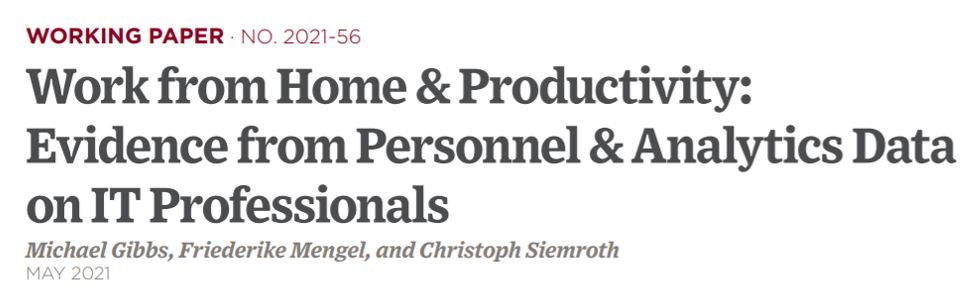
Study subject includes IT professionals engaged in the cognitive work of solution and application development that involve a fair deal of collaboration and coordination with the team for optimum output. Further, the measurements are more dependable as efforts are tracked by system app, instead of being self-reported, which may suffer from amplification bias.
Let us first take note of the summary findings:
On an average IT professional increased his working hours between 1.5 to 2 hrs per day, when in WFH mode in contrast to WFO mode. These additional hours come from extending the work to non-office hoursAt the same time, the average productivity of every active hour fell to the extent that overall outcome would have been between 88-94% for the same number of work-hours (say 40 hrs week) Extend of variance between WFH and WFO pattern depends, to a varying degree, upon employee variables like: gender, total work experience, tenure with the company, and presence of children at home. Employees with children work additional time to compensate for the drop in productivity due to distraction. Average commute time to the office seems to have not much correlation with the additional hours spent in WFH mode. Another study suggests that employees allocate at-least one-third of time saved from commuting to office work. Male members with greater tenure with the firm and high overall work experience seems to have the least dip in productivity. Reasons for productivity decline are linked to the increased time spent in communication, coordination, and collaboration activities. This manifests itself in the form of increased time spent in meetings (MS Teams) and overall Email flows. Interestingly the number of meetings employee participates along with Manager has seen an increase, while one-2-one meetings and caching conversations seems to have come down. Output levels are seen as more closely related to uninterrupted time (focus time) than overall hours spent at work. And clearly, WFH has lower uninterrupted time than WFO. On reflection, what does it mean for those who are considering WFH as a permanent feature?Can we rely on enhanced working hours as a sustainable solution to compensate for the dip in productivity? Some part of the enhanced working hours is also on account of lock-down restrictions that reduce the appeal and usage options of leisure time. The tenured experienced staff which is secure and requires little over-the-shoulder assistance and watch are better suitable for WFH mode. How do we make other segments ready, as they may be more in number? How do we accommodate their personal and professional needs in their work routine?If we have adverse selection during identification of employees for WFH mode, can we really use paired comparison for drawing performance conclusions? What is behind increased time spent on coordination and communication? Is it psychological and professional insecurity that is behind WFH employees populating their calendar with avoidable meetings or shooting emails every twenty minutes?Have we made Mangers capable of making their expectations known over the distance and have they developed competencies to deliver feedback online in an unambiguous, secure and productive manner?How are we going to reinforce the importance of uninterrupted focus time among those in WFH mode? How do we let them know that delay in an email response or not answering call at a particular time is acceptable and not considered being irresponsible. Are the rules of decision making and opportunity allocations clear and transparent for all to feel secure and engaged and trusted?How realistic and effectively are we using the collaboration tool and technologies to promote innovative thinking, transactional efficiency, and inclusive feeling among all engaged in the process?
While we will continue to get informed by research work and experiential sharing by fellow professionals, each of us has to define our own strategy to leverage WFH in the most effective manner, given our context, culture, and compulsions!
March 21, 2021
IF you are Work in Progress, Adam’s advice is a good companion!
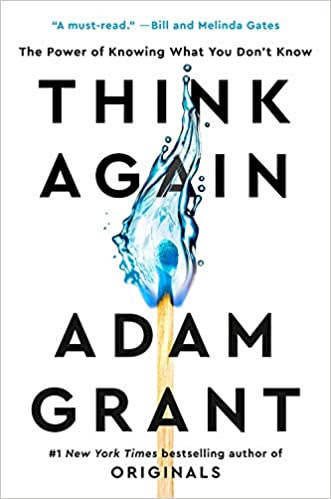
Think again, is a book that obviously reinforces the importance of rethinking, and highlights perils of not revisiting one’s ideas and with offers advice on methods, tools, and networks that would facilitate rethinking. It also REMINDS me of certain biases, habits, and fallacies that ones fall for, if not being made conscious from time to time.
And that refresher course, provided with a new set of experiments, instances, and evidence, gives the necessary freshness to the read. Most interesting are cases of prevalent first-instinct choices and counter-intuitive outcomes that may entail.
Consider the following:
1. Do you want your opinions and knowledge be made right, or wish (hence claim) that they are right?
2. Do you wear an advocate and politician or scientist hat when looking at a situation?
3. Being competent and being confidentare dependent or independent variables? If there is a causal relation, then what is the direction?
4. Asking HOW helps reveal to the overconfident, his depth/shallowness of knowledge and need to know more?
5. Only the secure identity harness the benefit of doubt, Can you?
6. Is your opinion being proven wrong a question about hurt self-identity or joyous occasion of less wrong in the future?
7. Is the team encountering a relationship conflicts or tasks conflict?
8. Are you able to keep with the challengers because they care, and weed out insecure criticizers?
9. Are your disagreements leading to debate or dispute?
10. The more important the matter, do you rely on presenting more arguments in favor of your side, or fewimportant ones, but explained at length?
11. To solicit feedback, do u use the rating scale to peg response and seek ways to improve the score?
12. Do u assume or ask what kind of evidence will allow others to open their position for a rethink?
13. Stereotypes are rarely questioned by giving counter-evidence but often by asking how do you know? And what would it take to verify?
14. Do u motivate someone to change or nudge someone to think their own reason to change?
15. Do u base your motivational speech on assumptions, or actually listen through motivational interviewing?
DO you prefer telling what works for you or ask what worked for them in the past?16. Attending lectures is an enjoyable experience, but does that translate into effective learning? Would active learning help you get better grades?
17. How often do u present material that is open to iteration, refinement, and multiple feedbacks to come to better shape? Do u teach the patience to invite suggestions or embrace criticism?
18. How do u marry psychological safety with accountability for results?
19. Psychological safe teams make more errors or reveal more errors?
20. How can u differentiate perseverance vs stubbornness in your stand?
You may be sure of the response to some of them, but in the spirit of think again, do validate with your critiques or take the easy route of checking with Adam!
December 12, 2020
What would I do differently next time, if asked to lead transformation again?

A very powerful question indeed, leading to constructive reflection on things gone wrong and whether these were preventable and how!
Having lead several transformation programs, some of which got delivered at compromised levels, here are my set of doing it differently next time list:
Make desired-outcome count – in tangible and individual terms: While everyone has goals linked to their role in the team, assuming everyone playing his/her part will lead to achievement of overall outcome is a big assumption. There would always be unsaid expectations, dependencies and assumptions that will reveal themselves later when things fall short. I wish I had kept big enough reward and penalty upfront tied to overall achievement that would act as glue for all members to stick together through the course and keep them motivated to stretch to address unrealized gaps and unplanned disruptions.
Make the entry to the team more rigorous: Neither the gap in commitment and nor in competence is going to be easy to live with. Formal fitment process, if compromised in the name of expediency or no-alternative scenario, will come to hurt. I wish I had been less accommodating in on-boarding partial fits (for whatever reasons) and more direct and quick in offloading misfits (or outfits) during the course of journey without much delay.
Never allow the Program Governance meeting postpone: Program governance exists to provide direction and decisions, monitor outcomes and evaluate performances with clear consequences in a transparent and fair manner. There are several ways to make governance effective, say by using standard frameworks, consistent formats, open & structured discussions focused on issues and risks at hand, recognition of interdependencies, data analytics etc, etc, etc, but all these levers loose their might, the moment governance meeting gets rescheduled, for whatever seemingly genuine reason.
YES, the above lessons are not intellectually incisive or sophisticated, but look simple and obvious- yet these are the one that, I realize if adhered to, would have improved the outcomes by some notches for sure.
October 25, 2020
Deliberative approach to creating MARKETS of TOMORROW
World Economic forum has recently released insight report: Markets of Tomorrow, Pathways to a New Economy, that presents powerful approach towards developing new markets, which can have transformational benefits to societies.
 Consider the following:
 1. Some of the new technological, social and institutional inventions have capacity to create great economic value, while being inclusive, sustainable, and supporting broader social and environmental objectives.
2. Report offers twenty such markets, as reference, classified into three categories:
a. Safeguarding planetary boundaries: Electric vehicles, Plastic recycling, water rights and quality credits, hydrogen, reforestation
b. Empowering and protecting people:Broad based antivirals, care, data, digital transformation services, Precision medicine, Unemployment insurance, skills capital, Hyperloop based transport services
c. Advancing knowledge: AI, Genes and DNA sequences, Satellite services, Space fights etc.
3. Each of these markets hold transformation promise and are at different level of maturity and impact, that also varies from country to country. Some of the general-purpose technology offerings like AI may have vast applications and hence their impact is further multiplied by use-cases that involved actors may creatively employ.
4. Report points out at SEVEN TARGET CONDITIONSthat needs to be evaluated and worked upon, if markets of tomorrow have to take root and create desired impact. Market actors, be it government, public and private institutions, or businesses, have to collectively or exclusively work on the gaps to take market to next stage of maturity.
5. Market creation starts with Invention, that is product or asset or service that can be produced at scale. Next comes set of willing Producersthat are ready to reliably produce to serve the market- and these may include current players in adjacent markets, start-ups, or public institutions. Some products need complimentary infrastructure to be in place, for iots consumption. Take the case of digital financial services that require physical and institutional infrastructure as prerequisite. Another market condition is the size of demand that is likely to be in short and sustainable basis? Next set of three conditions are not only pivotal to market evolution, but often pose significant challenges in getting met.
6. Setting up clear market Standards for the new products, wherein different players are innovating around different product characteristics and are competing using these as differentiators form important market condition. Emergence of standards early may discourage IP creation and inventions in alternate but associated technological solutions. However, at the market level, absence of standards may suppress demand as customers find it difficult to commit and may wait for standards to emerge. Defining standards, in terms of cope and specificity has to be balancing act between consumer confidence and producers’ IP-led competitiveness.
7. Putting Value to the new product or asset, needs sufficient convergence and judgment among different actors. In case of absence of reference points, the Value attribution may vary from very high to free of any monetary number. Further, Value at aggregate may be immensely more that Value of each similar item- think data-base. In some cases the VALUE may not be as such in core as in Use-case application- in which case the incentive to build on the core withers away. Drawing consensus on the VALUE of new product and stability and transparency around this VALUE would reflect growing market maturity.
8. Codification of new product or asset defines the legal framework and define property rights around which transactions can become legally viable and commercial contracts can be drawn. Complexity in defining scope of legal rights that are equally well understood among all actors in the markets is going up, especially with innovations that are building on earlier IPs and involve digital technologies to bring out significant value. “What kind of codification is possible around genes and DNA sequences? Will the intangible information behind them or the tangible sequence of nucleotides be codified?”, asks Report as an example.
In nutshell, report presents framework, defined in-terms of key questions, that market creators can leverage to identify, plan and prioritize their efforts- be at national or cross-industry levels -to fully exploit the transformational potential of new markets.
The framework that is easy to comprehend, has the power to reveal the challenges and impedimentsthat can act as inhibitors to emergence of new markets, while taking care of the landscape in which the analysis has to be made. The agenda for the market actors become evident as well.
The report contributes immensely to the literature around institutional approach to new Market Creation.
August 22, 2020
Government Banks: Instrument for managing macroeconomic challenges– at what cost?
Urjit Patel book, beautifully explained the multidimensional ramifications of the phenomenon, he calls, banking sector fiscalization, wherein Government Banks (GBs) and other financial agencies that it owns, are used for managing day-to-day macroeconomic challenges, than allowing these institutions to be efficient intermediary between savers and borrowers.
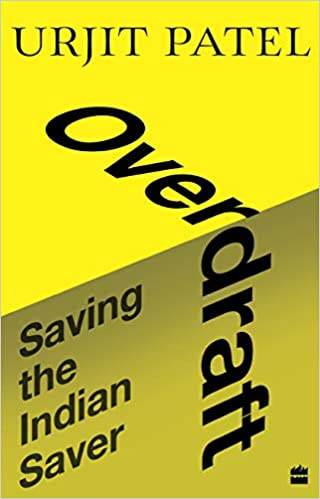 We see ample evidence of this phenomenon in Banks being used for liberal credits to boost consumption, Farm loan waivers, support unviable MSME, underwriting of Government disinvestment targets, and sustain employment in Public Enterprises. It dilutes Banks incentive to be market efficient, nor exercise greater risk management discipline, and enhance dependence on Government to bailout, and meet capital adequacy norms, for example. None of this is disputable or is mostly understood as well.…and this books authoritatively adds more substance (in terms of chronology, instrumentalities and figures) to the appreciation of the collateral damage that banking sector fiscalization has on economy in terms of high instances of NPAs, increased cost of capital, enhanced risk for depositors and overall weakening of economy to manage downturns and shocks.It would have been interesting to know, how effective has Government been in meeting its objectives and overcoming short term socio-political-economic challenges leveraging GBs, and some would say to some extent, but at high long-term cost. And were there any viable alternatives that were consciously ignored and would have been equally effective and palatable to Government. Question is that using GBs to deliver its objectives comes as easy and convenient first option or the only the most prudent and viable option for the Government, driven by political needs and for-ever on- election seasons. While the generic trend may looks to support the first case, it would have been interesting to get insight into options that were available (suggested by RBI) and still not exercised by Government of the day. Clear highlight of the book, and the most readable one. is the middle section titled as
clean the augean stables,
wherein Urjit takes us through the financial sector reforms trajectory woven around recognizing, resolving and ring-fencing the NPA mess. with the help of 9R framework. The establishment of Central Repository of Information on Large Credits (CRILC) in 2014 rightfully marks the start of the journey, for it provided the critical information around the view on borrower-wise and bank-wise exposure, an essential baseline to conduct Asset Quality Review and report realistic assessment of distressed assets. Early attempts to revitalize distressed assets included schemes like SDR, 5:25, S4A (collectively called alphabet soup!) but with limited success. May 2016, marked the passing of Insolvency and Bankruptcy Code(IBC), which not only promised time-bound route for resolution of distressed assets but also instill the real fear among promotors of losing their firm/assets to outside bidders and that liquidation is a real possibility at the end of road. Despite this process being available, there was hesitancy among the lenders (mainly GBs) to push for initiating IBC process for understandable reasons, which meant that RBI has to be empowered, under BR Amendment Act 2017 to issue direction to banking companies to initiate IBC process for default companies on resolution of stressed assets. We all recall with amazement and sceptism, the declaration by RBI in September 2017, of 41 accounts, with aggregate exposure of Rs 5 trillion (45% of total NPA) to be taken up under IBC process. To avoid been perpetually involved in identification of accounts, on case-2-case basis and hence invite criticism, it was prudent on part of RBI (in February 2018)to issues prudential norms regarding account classification as special mention accounts on default of payment and eventual reference to NCLT in six months. RBI believed that the provision that NCLT can be avoided by undertaking viable restructuring accredited by rating agencies, within six months, would be shot in the arm of bankers to push for improving recognition of asset quality and also work with promotors to revive assets. However, future events did not endorse the RBIs beliefs.Book recounts set of events and role played by Government, Lenders, Borrowers and their lawyers that led to serious dilution of the IBC effectiveness,most notably by removing timelines and by making the reference to IBC non-compulsory. Urjit presents, quite convincingly and sometimes regretfully, his understanding of the possible motivations, compulsions and perspectives different stakeholders behind installing the pathway that was so meticulously created by RBI. Nevertheless there is still credit to be given for resolution of 45% assets identified under first 41 accounts, and in general there is more vigilance and pressure on promotors to take care of quality of assets. Book asks a very interesting question- if courts had allowed RBI to issue directions for specific accounts, may be RBI could have come with another supplementary list in 2018-19 and continued with the cleaning process case-by-case! What makes this books narration of the events different, is its complete obliviousness of the actors involved, within the RBI, Government, Banks and third parties. On the aside, book covers the emergence and subsequent dilution of PCA framework, debate around bad-bank, strengthening of RBI enforcement capabilities to detect operational frauds, recapitalization of Banks, Sector and MSME specific interventions and its impact on health of GBs and overall financial sector stability.Book looks into reasons of high instance of frauds in GMS against that in PBs. Market induced discipline is very high in PBs as any loss of reputation can lead to run on the bank by the depositors, besides curtailing their ability to raise fund in the market. In cases where the market mechanism is weak, one would expect regulatory oversight to be stronger, which is actually not the case. Infact, regulatory disciple imposed by RBI is quite effective in case of PBs, in comparison to GBs. Banking regulatory powers are not ownership neutral ie to say that RBI does not have / unlikely to have same level of control over GB as in case of PB, especially in the areas of corporate governance. RBI cannot trigger liquidation, revoke license, force merger, nor remove directors and management at GBs. Vigilance as source of discipline is effective only in the form of preventive vigilance, while punitive vigilance seems to be quite weak, in case of GBs. Interestingly there seems to be correlation between instances of fraud and rise in stressed assets problem. Urjit doesn’t lay much hope of GBs improving in its efficiency and competitiveness and sees PBs increasing their share in banking sector, which he believes is not necessarily a bad thing!
We see ample evidence of this phenomenon in Banks being used for liberal credits to boost consumption, Farm loan waivers, support unviable MSME, underwriting of Government disinvestment targets, and sustain employment in Public Enterprises. It dilutes Banks incentive to be market efficient, nor exercise greater risk management discipline, and enhance dependence on Government to bailout, and meet capital adequacy norms, for example. None of this is disputable or is mostly understood as well.…and this books authoritatively adds more substance (in terms of chronology, instrumentalities and figures) to the appreciation of the collateral damage that banking sector fiscalization has on economy in terms of high instances of NPAs, increased cost of capital, enhanced risk for depositors and overall weakening of economy to manage downturns and shocks.It would have been interesting to know, how effective has Government been in meeting its objectives and overcoming short term socio-political-economic challenges leveraging GBs, and some would say to some extent, but at high long-term cost. And were there any viable alternatives that were consciously ignored and would have been equally effective and palatable to Government. Question is that using GBs to deliver its objectives comes as easy and convenient first option or the only the most prudent and viable option for the Government, driven by political needs and for-ever on- election seasons. While the generic trend may looks to support the first case, it would have been interesting to get insight into options that were available (suggested by RBI) and still not exercised by Government of the day. Clear highlight of the book, and the most readable one. is the middle section titled as
clean the augean stables,
wherein Urjit takes us through the financial sector reforms trajectory woven around recognizing, resolving and ring-fencing the NPA mess. with the help of 9R framework. The establishment of Central Repository of Information on Large Credits (CRILC) in 2014 rightfully marks the start of the journey, for it provided the critical information around the view on borrower-wise and bank-wise exposure, an essential baseline to conduct Asset Quality Review and report realistic assessment of distressed assets. Early attempts to revitalize distressed assets included schemes like SDR, 5:25, S4A (collectively called alphabet soup!) but with limited success. May 2016, marked the passing of Insolvency and Bankruptcy Code(IBC), which not only promised time-bound route for resolution of distressed assets but also instill the real fear among promotors of losing their firm/assets to outside bidders and that liquidation is a real possibility at the end of road. Despite this process being available, there was hesitancy among the lenders (mainly GBs) to push for initiating IBC process for understandable reasons, which meant that RBI has to be empowered, under BR Amendment Act 2017 to issue direction to banking companies to initiate IBC process for default companies on resolution of stressed assets. We all recall with amazement and sceptism, the declaration by RBI in September 2017, of 41 accounts, with aggregate exposure of Rs 5 trillion (45% of total NPA) to be taken up under IBC process. To avoid been perpetually involved in identification of accounts, on case-2-case basis and hence invite criticism, it was prudent on part of RBI (in February 2018)to issues prudential norms regarding account classification as special mention accounts on default of payment and eventual reference to NCLT in six months. RBI believed that the provision that NCLT can be avoided by undertaking viable restructuring accredited by rating agencies, within six months, would be shot in the arm of bankers to push for improving recognition of asset quality and also work with promotors to revive assets. However, future events did not endorse the RBIs beliefs.Book recounts set of events and role played by Government, Lenders, Borrowers and their lawyers that led to serious dilution of the IBC effectiveness,most notably by removing timelines and by making the reference to IBC non-compulsory. Urjit presents, quite convincingly and sometimes regretfully, his understanding of the possible motivations, compulsions and perspectives different stakeholders behind installing the pathway that was so meticulously created by RBI. Nevertheless there is still credit to be given for resolution of 45% assets identified under first 41 accounts, and in general there is more vigilance and pressure on promotors to take care of quality of assets. Book asks a very interesting question- if courts had allowed RBI to issue directions for specific accounts, may be RBI could have come with another supplementary list in 2018-19 and continued with the cleaning process case-by-case! What makes this books narration of the events different, is its complete obliviousness of the actors involved, within the RBI, Government, Banks and third parties. On the aside, book covers the emergence and subsequent dilution of PCA framework, debate around bad-bank, strengthening of RBI enforcement capabilities to detect operational frauds, recapitalization of Banks, Sector and MSME specific interventions and its impact on health of GBs and overall financial sector stability.Book looks into reasons of high instance of frauds in GMS against that in PBs. Market induced discipline is very high in PBs as any loss of reputation can lead to run on the bank by the depositors, besides curtailing their ability to raise fund in the market. In cases where the market mechanism is weak, one would expect regulatory oversight to be stronger, which is actually not the case. Infact, regulatory disciple imposed by RBI is quite effective in case of PBs, in comparison to GBs. Banking regulatory powers are not ownership neutral ie to say that RBI does not have / unlikely to have same level of control over GB as in case of PB, especially in the areas of corporate governance. RBI cannot trigger liquidation, revoke license, force merger, nor remove directors and management at GBs. Vigilance as source of discipline is effective only in the form of preventive vigilance, while punitive vigilance seems to be quite weak, in case of GBs. Interestingly there seems to be correlation between instances of fraud and rise in stressed assets problem. Urjit doesn’t lay much hope of GBs improving in its efficiency and competitiveness and sees PBs increasing their share in banking sector, which he believes is not necessarily a bad thing! August 2, 2020
Transparency, Teaming, Technology: Recalibrate 3Ts to amplify impact!
So much has changed and so much is still uncertain, making people-leaders’ jobs most exciting and impactful. Demands for quick results on multiple fronts, are keeping Management deeply engrossed in making and executing people decisions. In such frenzied times, it helps define priority themes, that tie all decision making and help amplify the impact of various interventions and produce better outcomes.
Never underestimating the power of context, uncertainty and volatility, I see three themes that would have the amplifying effect, and thus needs to be on HR Leaders’ agenda. They are – Transparency, Teaming, and Technology. The 3Ts need to be recalibrated to new demands, assimilated and integrated into every aspect of their work. Listed below are some of the questions that would facilitate examining the readiness of 3Ts and help define the transformation agenda:
Enhanced Need for Transparency
Transparency depends upon the visibility that Management has, and openness to share what they know. Both these elements need to be relooked into and strengthened:
1. The importance of having deep talent-transparency is never more recognized, then at these times, when organizational needs are getting redefined. To what extent is the data in the HRM system sufficient to give the kind of visibility required? What level of confidence is there on completeness and validation of personal data in terms of health and wellness, or professional data in terms of expertise, competencies, skill profiles, or organizational data in terms of roles, reporting relationships, KRAs, career history? What about details of part-time employees, gig workers, FTEs, consultants, retainers etc? Are there data elements which we never bothered to capture or kept under voluntary section, which have now become mandatory, if we have to take timely and informed decisions? How quickly can we fill the gaps?
2. Workforce productivity is under scanner, especially as the workforce composition gets diverse, to include remote workers, gig workers, contractor workforce, consultants etc. and there are decisions to be made to deliver work in the most cost efficient and reliable manner. To what extent is there real-time visibility on the workforce productivity defined at individual level (in different contexts), available through combination of reliable system data and discussions with managers, that can be leveraged in making talent deployment and development decisions. Do we have data to decide which jobs and which employees are more productive delivering at office or at home?
3. Cost management is desirable at normal times, and most critical these days. Driven by steep cost saving targets, conventional cost elements that were never under scanner, are now being questioned. Suitability of the people related interventions would get evaluated based on the cost savings potential and impact on staff morale or overall productivity. To what extent is there visibility of costs at right level of granularity and attribution to understand the cost impact of various people decisions?
4. As consequence of operating context and delivery model changes, future skills requirements will get redefined, including the skills that needs embedded within in-house staff, and those that would be served through outsourcing partners or gig-workforce. To what extent have the future skill (say Digital skills) needs in exiting jobs, new jobs made transparent to the employees so that they re-calibrate their self-learning journey, in the absence of which employees would either invest in learnings that are not relevant (lured by too many offers and options on-line) or stay frozen not knowing how and what to upgrade themselves on?
5. Strategic units across organizations are deeply engaged in environment scanning, scenario envisioning, risk assessments and option creations to account for uncertainty around the pandemic trajectory and recovery paths, and propose actions. To what extent are the management assumptions and viewpoints about business shared with the workforce, so that employees are able to make-sense of management decisions and map implications on themselves, thus better prepared to manage transitions? To what extent is their democratization of new and emerging opportunities and talent matching that is perceived as fair? How to ensured that people decisions taken are not seen as in conflict with Organization stated Values? 6. Even in the best of times, manager-employee dialogue plays significant role in determining employees’ effectiveness, but in these transition times, this is pivotal to organizations’ resilience and agility. Many of the workers are new to the concept of remote working, and may not be comfortable with Managers not available to walk-up-to anytime they like! Managers need as much help in adopting to new forms of engagement with dispersed and diversified workforce as employees do. It calls for far greater role clarity, expectation management and frequent work-related feedbacks. To what extent, are Mangers empowered and enabled to engage with employees to address concerns coming out of new operating conditions and be an effective channel in conveying right messages to the employees and also to gain honest and timely feedback? Some managers may need greater support in managing difficult conversations. On-line, then ever before. Have the managers learned the art of transmitting empathy on the net, while delivering honest feedback and tough decisions?
Enhanced Scope and Nature of TeamingTeam work, while gaining in importance, may actually get compromised in the uncertain times, as new work-norms get established and team membership becomes more porous, transitionary and diverse.
7. If teams are indeed the basic unit of delivery , then to what extent have you configured the decision-making frameworks that consider team level competency, productivity, costs, risks and motivational requirements? How are the different types of teams, varying in terms of skill composition, geographical dispersion, employment status performing and where are the interventions required?
8. Virtual and dispersed team effectiveness needs greater emphasis on role clarity, work distribution, credit sharing mechanisms, information sharing and communication protocols than co-located teams. To what extent, have you enabled employees to become effective part of teams and deliver to desired levels? The cross-boundary teams, Technology, Security, Admin, IT, HR. that worked so well, ensuring work moved from office to home seamlessly, has revealed some lessons on effective collaboration that works in your context. To what extent, there is deliberate effort to capitalize on that experience and improve cross-boundary collaboration as a general norm?
Enhanced Technology Leverage
Enhanced expectations from Technology to support new ways of secure working, greater employee empowerment (DIY norms) and data based decision making would mean that HR-technology Heads need to revisit the portfolio of capabilities already deployed and planned for deployment.
9. In the resource constrained situation, it is time to relook at the current level of usage of the technologies already invested in. To what extent are the rolled-out functionalities leveraged and what would it take to improve the usage score- is it retraining of users, or establishing clear data ownership or stopping the workarounds or making the applications accessible on mobile? To what extent focus is to ensure that data that goes into MIS creation is robust and dependable, to justify the excitement about the visualization that specialized Apps and analytical tools are capable of delivering?
10.There is obvious emphasis on need for increased usage of RPA for process efficiency, usage of chatbots for improving employee engagement and use of collaboration tools for better coordination between dispersed teams. Understandably there would also be pressure to complete the digitization initiatives. Further, trade-offs may be required between investments for capacity addition to existing infrastructure to allow for remote working and introduction of new applications within HRMS suite. Is there clear mechanism to ensure that technology projects prioritization (from digital technology suites, eg.) is completely aligned to business usage and commitment to extract value with short payback period? Is there mechanism to ensure that technology choices are made based on realistic understanding of the delivered functionalities of the proposed solution and not on the promises that are reflecting in the development road map? How has the Technology Investment criteria being strengthened for greater accountability and realistic value-adds?
While the above may not be the complete list, but may help leaders (and that should include Business, Services function leaders as much as HR) to engage in quick diagnosis and reassure themselves that there are no blind gaps that are undermining effectiveness of other interventions.
Some Corporations are better prepared, and to that extent would require few adjustments, while others would have complete transformation agenda coming out of self-diagnosis on these themes.
Whatever be the starting point, the need to move swiftly and surely is the need of the hour for all,
Do you agree?