
Reginald Spittle's Blog: See my book blog, page 28
July 30, 2020
Couple Sails Around the World Like Superheroes
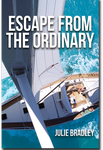
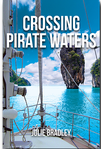
If Marvel were to create characters who performed superhero feats across the world’s waters, Glen and Julie Bradley could be models.
For seven years, the early retirees defy death more times than cats, always landing, sometimes barely, on their feet. Piloting a French-made Amel Super Maramu, one of the world’s greatest sailing vessels, they visit 63 countries, including Bequia in Saint Vincent, Niue, and the far-from-ordinary Colombia.
In a pair of enthralling books, author Julie Bradley takes readers on a journey that rarely includes the usual paths of world travelers. They experience adventures that bring pleasure and terror, sometimes on the same day. Between the two extremes, they overcome unpredictable hardships that must make them proud today.
You need no sailing experience to follow the adventures in Escape from the Ordinary and Crossing Pirate Waters. But you will marvel at the exploits of these two American mortals.


July 16, 2020
Come Trippin’ With Me on the Trails of Europe
Our fall 2019 trek on England’s South West Coast Path left us wanting more. While we (and our backpacks) await our chance to find our next adventure, Sue walks the hills around our home in Ashland, Oregon, and I bicycle on nearby quiet roads and bike paths.
Then I work on my second book, to be published (I hope) by the end of 2020. Here is a sneak preview (working title is Trippin’ Through My Sixties):
A guy (that’s me) retiring at age 60 revives the rebellious rumblings of his teen years in the 1960s. He and his wife set out to make their post-working years an adventure by moving out of state, making new friends, and walking the long-distance trails of Europe. There are four parts: Scotland’s West Highland Way, the Alps’ Tour du Mont Blanc, Italy’s Way of St. Francis, and England’s South West Coast Path. Each trek challenged us with more adventure than we thought possible.
My first book, Camino Sunrise, an adventure memoir about our first trek, continues to find new readers in several countries. I am so grateful for its success and for the many readers who send emails or write reviews.
Send along a note (See Contact in the Menu) if you want to be among the first to know when the new book is out. Meanwhile, my best wishes for your good health.
June 14, 2020
The Pacific Crest Trail Provides Too
Just as long-distance trekking grew on David Smart, his book, The Trail Provides: A Boy’s Memoir of Thru-Hiking the Pacific Crest Trail, grew on me, page by page.
At 24, David was dissatisfied with his digital marketing job. He had plenty of money, parties, and women, but he felt that his life lacked purpose. His 26-year-old college buddy Bradley had an answer: Walk the Pacific Crest Trail with me.
Bradley, who brings intensity to life and to the trail, influences his younger friend right from their start on the USA-Mexico border. He walks barefoot, and David follows, despite great pain and suffering. But David, who eventually gets an apt trail name, Stayin’ Alive, develops confidence and his own trail identity.
David Smart lets readers into his experience with honesty and entertaining, easy-to-read narrative. He begins as an ordinary 20-something and grows immeasurably. As someone who has walked five long-distance trails in Europe, I admire people like David who trek 2,600 miles over six months, all the way to Canada.
Pilgrims who walk the Camino de Santiago in Spain like to say, “The Camino will provide” when the going gets tough. For David Smart, the Pacific Crest Trail will provide for the rest of his life.
May 17, 2020
Hermann Hesse’s Journey of the Heart
Narcissus, a young adult, lives a sheltered life in a monastery with other monks who value quiet contemplation. His faith and lifestyle travel a path relatively free of pain and suffering. And passion. He is tied to a sense of duty.
Narcissus welcomes Goldmund, a teen-ager, to the cloister and guides him to peer deep inside himself. Goldmund discovers his own artistic talents as well as his restless soul. He leaves Narcissus to live the life of a homeless, faithless man who endures great pain and suffering. Passion is his driving force.
Whose life was superior? Happier? More worthy?
After many years, Goldmund returns to Narcissus and from the messiness of Goldmund’s life, the monk finds his own clarity and realizes the depth of his love for his former student. His revelations will give readers pause.
Narcissus and Goldmund. German philosopher/author Hermann Hesse at his best.
April 21, 2020
What? Are Cats Goners?
A doctor tells a young postman that he has brain cancer and just days to live. As the postman considers what to do with the rest of his life, the devil appears, wearing an Hawaiian shirt and offering a deal: Give me permission to take something from the world and you get an extra day to live.
If Cats Disappeared from the World, a hand-sized book of 168 pages, takes the unnamed protagonist on a journey of discovery as he adds days to his life, but learns that some things are more important than life itself. Japanese author Genki Kawamura’s first novel sold more than a million copies in Japan and was adapted for film in 2016. Eric Selland wrote the English translation of the book.
The light, humorous story takes readers deep into the postman’s life while he contemplates relationships, mortality, and his cat, named Cabbage. Suspense builds as he sees the results of his deals with the devil.
No spoilers here; I won’t name the things the devil chooses to take from the world. I will say this: If Cats Disappeared from the World is the best book I have read in 2020.
March 29, 2020
Henry David Thoreau: A Life
Who was Henry David Thoreau?
He has been labeled a naturalist, farmer, author, lecturer, recluse, tax protestor, philosopher. Moody, introverted. Passionately antislavery. Longtime friend of Ralph Waldo Emerson.
In Henry David Thoreau: A Life, Laura Dassow Walls goes beyond the labels and reveals a sometimes insecure man who struggled to find out who he was. Walls takes readers on a journey through Thoreau’s journals and other writings. His walks, inner debates, friendships, and two years at Walden Pond come to life in a way that will enthrall and surprise even the most learned Thoreau scholar.
The 500 pages passed quickly and left me yearning to reread Thoreau’s most famous book, Walden. My new copy of the classic just arrived and as I began reading, I felt a fresh appreciation for one of the world’s great thinkers. I will let you know how it goes, but I am in no rush. I want to savor the moments that his words bring.
December 20, 2019
It is a Fact: We are Wrong About the World
Which of these statements best represents your view of the world today?
A. For most people, the quality of life is declining.
B. The quality of life is not changing much for most people.
C. The quality of life has vastly improved in modern times.
Swedish author Hans Rosling begins Factfulness: Ten Reasons Why We’re Wrong About the World–and Why Things Are Better Than You Think with a story from a circus, then tests readers’ views of the world with 13 multiple-choice questions. After you find out your (probably failing) score, he explains that chimpanzees probably would do better on his test than most humans by randomly choosing answers.
Every doomsayer should read this book. Every optimist should read this book. Maybe everyone should read this book; it will change your view of the world–past, present and future.
Rosling uses compelling statistical evidence in his battle against simple views of the world that are based on generalizations that we cling to because they fit our world vision. The facts are presented in vivid charts and graphs that are illustrated by compelling human stories from around the world.
He explains how our instincts affect our impressions about poverty, child mortality rates, life expectancy, deaths from natural disasters, climate change, child vaccination, and more.
If you are a TED talk fan, chances are that you are familiar with the international health professor. Sadly, pancreatic cancer claimed his life in 2017, the year before Factfulness was published. His son, Ola Rosling, and daughter-in-law Anna Rosling Rönnlund, who both worked with the author for years, completed the project.
December 17, 2019
Blimey! Look What Arrived in the Post
I haven’t been so excited about a delivery since the births of my three sons. My heart raced as the DHL driver climbed the steps to my home and rang the doorbell.
I peeled open the envelope and pulled out the wallet-sized booklet with a firm cover and back.
“I am a Brit!” I refrained–barely–from yelling my excitement to the neighborhood.
Earlier this year, I discovered that I was (and always have been) a British citizen due to my father’s birth in Birmingham, England. But I wanted to be able to prove it.
So, I sent my dad’s birth certificate, my parents’ marriage certificate, my birth certificate and my American passport to Her Majesty’s passport office. Oh, and I also sent a passport photograph of a stern-looking old man (me, that is).
If only my parents had lived to see me join them as British citizens.
Brexit may devalue my British passport as a vehicle for travel and living in the European Union, but nothing can diminish my new passport’s place in my heart.
December 16, 2019
Seneca: It’s Time to Manage Your Life
Seneca’s life lessons never grow old. Click on the link for a synopsis of his wisdom, thanks to Ladders.
I wrote an earlier post about his book, On the Shortness of Life. Click on More Books in the menu and scroll down a bit.
December 14, 2019
Dalai Lama: How to Practice
How to Practice: The Way to a Meaningful Life is a brief guidebook to Buddhist thought and practice.
Are you interested in a quick look at His Holiness the Dalai Lama’s philosophy? Or are you hoping to pick up some meditation tips? Or are you devoted to attaining enlightenment? This book has value for all three quests.
For 10 years, I have been puzzled about possible conflicting values from Buddhist teachings and reality. The exiled leader of Tibet promotes liberation from wants, not just for monastics, but lay people too. That means no expensive clothing and other high-cost material goods. But, during a 2009 visit to a Buddhist monastery in China, I saw monks with top-of-the-line cell phones and even one who drove a BMW.
“I thought Buddhist monks were to live a simple life and avoid attachment to material belongings,” I said to a woman guiding a group as one monk talked on his cell phone.
She quickly answered. “This is modern Buddhism. Some monks even drive expensive cars.”
What do you think?
I wonder what the Dalai Lama would say. He flies mostly on chartered planes and, on the rare occasion that he joins a commercial flight, I hear he is upgraded (free) to business or first class. Is this consistent with his philosophy?
Nonetheless, the Dalai Lama has devoted his life to his teachings around the world, urging followers to do no harm and to help others. He writes specifics about these two virtuous actions in this book.
Not a Buddhist? Or are you non-religious? I don’t think it matters because in this book you will discover wisdom for any life that looks for morality, calm, and selflessness.


