
Randy Clark's Blog, page 54
December 12, 2019
The Year I Knew Santa Wasn’t Coming
The year was 1961. I was ten years old, and I knew Santa wasn’t coming. It was a Saturday in mid-December, and I was working with my dad at the Lark Foods convenient store he managed. I made 25 cents an hour, taking out trash, sweeping floors, and stocking shelves. The store was unusual in that it was inside of an independent meat market – Capital Meats.
I don’t know how long the meat market had been in business, but in 1961 the owner Max was an old man in my eyes. He was also the first Jewish person I’d ever met. However, Max celebrated the Holidays in his own way. He honored his religious traditions as well as Christmas. He said it was good for business, and he had married a Catholic more than 40 years before. I helped Max put up Christmas decorations in the store.
Man to Man
Near the end of the day, my father took me aside, bought me a coke, and sat me down. He told me that what he was about to share was strictly between him and me, man to man. My father had recently left a job that was better paying and took the Lark Foods position in hopes of securing a franchise, a family store we would own. But there was a problem. Money was tight. It wasn’t going to be much of a Christmas for me or my little brother and sister.
Dad needed my help and understanding. As the eldest child, he asked me to help make the best of Christmas morning, not only for myself but for my mom and my two siblings. My sister Vicki was eight, and my brother Malcolm six. Malcolm was certain of Santa Claus, and although Vicki suspected that Santa was a fraud, she wanted to believe. I understood and promised my father that I would be on my best behavior.
The Toy Rack
Lark Foods had a small section of cheap toys. They were in plastic bags and hung from hooks on a rack. Paper dolls, plastic yo-yo’s, and balsam model airplanes filled the rack. My father asked me to choose two or three each for my brother, sister, and myself, so we’d all have something to unwrap on Christmas morning. I did.
My dad’s dad stayed with us Christmas weekend. He lived in Van Buren, Indiana, where I was born, and much of my father’s family still lived. We had gone to Aunt Betty’s and Uncle Paul’s farm off state road 5 for Thanksgiving that year. Next year it would be held at Aunt Sissy’s in Fairmont. It was a rare occasion that Papaw stayed with us, and especially over Christmas.
Christmas Morning
Christmas morning arrived, my mom put on a pot of coffee for the adults while my younger brother and sister anxiously pleaded to open presents. We went to the living room, and mom and dad handed out presents. Dad looked at me and gave me a nod and a wink. I knew my role. When my brother opened a bag of marbles, I excitedly told him how much fun we’d have playing together, and when my sister opened a bag of hair ribbons, I picked one, put it in her hair, and told her how pretty it was. I feigned the same level of excitement when I opened my gifts.
We Wish You a Merry Christmas!
Dad and Papaw left the room. Suddenly, I heard a racket in the garage and then Papaw singing “We wish you a Merry Christmas!”, as he and dad rolled three brand spanking new bicycles into the living room. It took my breath away. I didn’t know what to say, but my little brother did. He shouted, “I knew Santa Claus didn’t forget us!” And then asked if he could ride his bike. All three of us kids scrambled to put on coats and boots over our pajamas. We rode our bikes on this cold and happy Christmas morning.
I learned later that Papaw had come down to stay with us to help assemble the bikes. Dad and my grandfather had stayed up late into the night building the bikes.
Two years later, in 1963, Papaw passed at the age of 63 from an accident, mom and dad had bought a store, and none of us kids believed in Santa Claus. But we believed in our mom and dad, we knew that if you were patient, things would be okay, and we celebrated a Christmas that 57 years later is still fresh in our minds.
Photo by Alicia Slough on Unsplash
The post The Year I Knew Santa Wasn’t Coming appeared first on Randy Clark Leadership Training.


December 9, 2019
To-Do List, Or Not To-do List?
Have you tried a to-do list and it hasn’t worked? Do you occasionally forget a task? Do you spend too much time on low-priority tasks, versus important tasks? Have you been surprised by an approaching deadline? If you answered “yes” to any of these questions, you may need to create, use, or improve a daily to-do list. Whether you use a legal pad, Outlook, or an app, it’s not important; what is important is to use a to-do list daily. Because a to-do list can be a powerful tool that reduces stress and uses time more efficiently.
How To Create A Daily To-do List
• List your daily activities.
• Grade activities by importance from “A—can’t wait,” to “F—not sure if it requires my attention.” Demote A’s and re-prioritize if there are too many.
• Plan more than you think you can accomplish. Parkinson’s Law states, “Work expands so as to fill the time available for its completion.” Uncompleted low-priority tasks may be moved to the next day.
• Divide large tasks into more manageable components.
• Use the gumption factor—schedule the least attractive and most important task first.
• Consider chronos time (the amount of time needed to complete the activity) and kairos time (the best time to schedule the activity).
• Plan start and stop times for each activity.
• Delegate appropriate activities.
Tips For Better Prioritization
Recurring activities may be scheduled at consistent daily and/or weekly times. Because, a consistent routine will reduce the time and energy spent scheduling.
Therefore, if you are part of a team, consistently scheduling routine activities informs everyone.
Make a plan every day. Some people enjoy arriving at work 10–15 minutes early to organize their work area, and to create a daily plan. Others prefer the end of the day. It does not matter. What matters is taking a few minutes to plan the day.
When Listing Daily Activities, Consider The Following
• Pre-scheduled routine activities
• Ongoing projects
• New projects
• Assignments
• Follow-ups
• Planning time
The objective is not to plan every activity; it is to schedule activities.
I’ve Tried All This Stuff and It Didn’t Work!
• K-I-S-S—Keep It Simple, stupid!
• List a few priorities, and don’t increase the list until you begin accomplishing those daily.
• Start a, “I’m keeping track of this” list for continuing projects.
• Remove items (or move to a tracking list) that do not progress.
• Make a weekly list and a separate daily into a list.
• Create a to-don’t list. Eliminate unimportant tasks, and delegate tasks better suited to others.
• Say no. Do not commit to unimportant tasks.
So, what if your supervisors keep giving you more than you can accomplish? Show them your workload, your to-do list, and politely ask, “Which tasks should take priority and which should I put off?”
In Conclusion
I’m interested in your experiences with to-do lists. So, do you currently use a to-do list, and why or why not? Do you use an app? What has worked for you? What hasn’t worked for you? Do you think I’m full of crap? Let me know.
How Can I Help You?
I like to help people and organizations, but I have three criteria I consider before taking an assignment – I believe in what the organization stands for, I know I can help, and it looks like fun. If you have any questions, Contact Me.
Does your business have a management training plan? Many organizations, large and small, use my book, The New Manager’s Workbook a crash course in effective management, as the basis for their leadership development program. Check it out.
Photo by Glenn Carstens-Peters on Unsplash
The post To-Do List, Or Not To-do List? appeared first on Randy Clark Leadership Training.
December 5, 2019
They Leave Things for Him
I recently had a colonoscopy. It wasn’t my first. However, there were a couple of firsts during this procedure. One of my revelations caused me to stop and say, wait! what? Before I understood what was happening, I had to ask for clarification. It was made perfectly clear, and it was hilarious. I’ll get to that in a minute (if you can’t wait, skip ahead).
Why is a Colonoscopy Important?
“About 1 in 20 individuals in the U.S. will be diagnosed with colorectal cancer in their life,” says Dr. Wallace. “We have the technology right now to prevent colorectal cancer. And we just need to make sure that everybody is coming in to get screened for it.” — Mayo Clinic Minute: The importance of a colonoscopy
What is the Procedure?
“A tiny video camera at the tip of the tube allows the doctor to detect changes or abnormalities inside the entire colon. A colonoscopy takes about 30 to 60 minutes and screening is generally repeated every 10 years if no abnormalities are found and you don’t have an increased risk of colon cancer.” — Colon cancer screening: Weighing the options
What’s the Biggest Challenge?
For me, it was the preparation. My bowels needed to be evacuated, which means you spend the night before the procedure on the bathroom floor. Two days before the colonoscopy, I stopped eating solid foods and (drinking adult beverages). The day before, I began taking a high dose of a powerful laxative; it worked. I slept on the toilet. Kind of. Two hours before the procedure, I stopped all liquids as well. There was no morning coffee for me.
The First Surprise
The anesthetic I was given is propofol, “It is a short-acting anesthetic that has the advantage of wearing off relatively quickly,” Dr. Rock explains. Propofol works quickly; most patients are unconscious within five minutes. when the procedure is over, and we stop the intravenous drip, it generally takes only 10 to 15 minutes before he or she is fairly wide awake again.” — Yale Medicine — Anesthesia for Colonoscopy
So, here’s the thing. It can, and usually does with me, cause mild temporary amnesia. I don’t remember a damn thing, which is probably good. However, this time was different. I woke up during the procedure, laying on my side, not feeling a thing, while facing a screen where I saw the insides of my colon. I said hello to the staff and then asked the doctor what the little yellow things were. He told me no worries just particles of fat. I had never awakened during a procedure. It was … different.
The Big Surprise
The big surprise came just before the procedure began; I was wheeled into the room by two nurses. As we waited for the doctor, I began a conversation. I learned that this team, by their estimation, had done more than 15,000 colonoscopies. It inspired confidence.
And then I asked, “Okay, what’s the funniest thing that happens here?”
They both stopped and stared at each other and then looked at me. Finally, one said, “Patients leave things for the doctor.”
I said, “That’s nice; what kind of things, presents, cards, flowers?”
The other nurse said, “No, they leave things for the doctor … down there.”
I stared at her in disbelief. And then I started laughing. I asked what kind of things, and they told me: notes written with sharpies saying exit only, sticky notes, and even tattoos with the same, as well as paper notes rolled up and inserted. I couldn’t make this up. And … they left things. Sometimes patients left objects in their anus such as plastic toys, game pieces, and plugs. Wow.
So, here’s the thing. My next colonoscopy will be in five years, which means I have five years to decide what to leave for the doctor. Maybe I’ll leave a tiny race car hoping for a speedy recovery.
If you enjoyed this you might also like, The Rules of the Middle Urinal
Photo by Online Marketing on Unsplash
The post They Leave Things for Him appeared first on Randy Clark Leadership Training.
December 2, 2019
Are you Working On or IN Your Business?
Whether you have the entrepreneurial spirit and founded your company, manage a business, or direct a not-for-profit, you’re faced with the challenge of growing the organization. How do you grow and manage a business at the same time? Are you working on or in your business?
At some point, you probably had to do it yourself, or it didn’t get done, but if you want to grow, you can’t continue doing it all yourself. Sound familiar? You may be the best, quickest, and most efficient widget maker in your organization, but if you’re busy building widgets – who’s growing the company?
What’s Best for You?
It’s easy to convince yourself you’re doing what’s best for the organization when you’re working long, hard, productive hours, and completing tasks — but is what you’re doing truly in the best interest of the organization? It depends.
Do you want to grow?
Are you ready to grow?
Are you in a financial position to grow?
Who in your organization can do what you do? (I didn’t say as good)
What is holding you back?
If you have no one in your organization who can do what you do, your growth will always be limited to what you can do. If you want to grow, train someone to do what you do, or hire someone who can.
Who’s Next?
During a seminar at Indiana University’s Kelly School Of Business, the lecturer asked a room full of entrepreneurs and executives the following question:
“When it’s time to add an employee to help grow your business, do you hire someone who has knowledge or skills you share, or someone who has knowledge you don’t?”
His answer surprised many — “Hire someone to replace you.” With this practice, you can learn other competencies and grow the business. Besides — if you don’t understand what someone is doing, how would you know what they’re doing? Learn how to do it — grow your company.
I’m not naive enough to believe you can train yourself to be an attorney or a rocket scientist. If you need specialized professional advice, you will need to depend on others, but look around your organization; who can replace you? Who can do what you do?
So, Are You Working ON or IN Your Business?
Working IN your business is:
Doing tasks others can do
Not training others what you know
Not hiring to replace yourself
Busy putting out fires rather than assigning firemen
Letting results manage you
Working ON the business is:
Delegating and following up
Training, training again, training more
Mentoring
Overseeing — not over doing
Developing systems, procedures
Planning and sharing visions
If you want to grow your organization, you must be the director, not the actor. What do you want to be?
How Can I Help You?
I like to help people and organizations, but I have three criteria I consider before taking an assignment – I believe in what the organization stands for, I know I can help, and it looks like fun. If you have any questions, Contact Me.
Does your business have a management training plan? Many organizations, large and small, use my book, The New Manager’s Workbook a crash course in effective management, as the basis for their leadership development program. Check it out.
Photo by jesse orrico on Unsplash
The post Are you Working On or IN Your Business? appeared first on Randy Clark Leadership Training.
November 25, 2019
How To Delegate Even When You Don’t Want To
Do you hold back trust from your team? Do you grudgingly share authority, information, and responsibility? Have you ever thought, “I have to do it myself if I want it done right?” Do you think you have to do it all, and then complain there are not enough hours in the day? You may need to consider improving your delegation skills. The more team members you trust to complete projects to your satisfaction, the more successful, committed, and satisfied your team will be. Oh, and when you successfully delegate the more time you have to complete projects.
“Have you ever wanted a clone of yourself? You know, so you can finish all the dull work tasks on your to do list, and get on with living your life? Unfortunately, it’s impossible to do everything yourself and you can’t make another copy of yourself.” — The Art of Delegation: Developing This Essential Managerial Skill.
As a boss, there is a solution: you can delegate important tasks to your employees, freeing up time for you to work on more pressing matters.
Okay, so, you tried delegating. You even trained someone to take over some of your responsibilities and they were doing pretty good, until they quit. Yes, it happens, but you can’t let that stop you from delegating to others in the future. The lesson here should be to train more than one person, not that you should give up delegating.
The First Thing You Must Do Is LET GO!
Start by training your staff to follow your criteria.
What organizational policies and procedures do they need to know?
What activities do they need to learn?
Teach them how!
“There’s more to delegating than just asking someone to do something. If you want to delegate effectively, you have to include mutual consultation and agreement between yourself and the members of your team. Solicit team members’ reactions and ideas, thereby bringing trust, support, and open communication to the process.” — 7 Tips to Help You Delegate More Effectively
But you did delegate and it turned out poorly. You couldn’t believe how they did it, or how long it took, or it wasn’t how you would’ve done it. But maybe instead of placing the blame on your direct reports you should focus on how you prepared your team for the responsibility.
“Non-delegation can be a symptom of micro-managing. If you can’t let go, or if you take over delegated projects before they’re complete, you have a problem, and it’s adversely affecting your team.
How to stop – Let go and guide. For example, instead of taking over a project, give direction and offer advice, but let the project leader lead. Allow them to make their own decisions.” — Are You Sure You Don’t Micro-manage?
Next, Provide Your Team With Direction
What results are expected?
When are the results expected?
What activities will achieve the results?
What authority does the team have to engage these activities?
I get it. You tried to delegate. You delegated tasks that were achievable. Expectations were set. The team had the tools and authority they needed to accomplish the task, and yet they still failed and you had to end up fixing it. It would’ve been so much easier just to have done it yourself from the beginning.
Don’t Give Up When They Mess Up
Are you perfect? Stop playing the blame game. When the outcome of a delegation is not what you’d hoped for, you should consider improving your delegation skills.
Delegate gradually, beginning with smaller short-term objectives.
Set a reporting schedule. Don’t wait until the project is completed to check it. Check the project throughout the project’s timeline.
Let team members make decisions. If they are at an impasse, offer pros, cons, and alternatives — but let them decide.
Enable failure by congratulating the team’s understanding of the failure. Give them confidence by allowing them to implement procedures to prevent the failure in future.
Delegate to team members tasks that you’re good at, so you may offer valuable advice.
So, you tried that delegating nonsense and it was a total washout. Did you ever stop to consider what you delegated and whether it was appropriate for delegation?
Don’t Cause Failure By Delegating The Following:
Reprimands or demotions.
Projects with a high risk of failure.
Employee/Team Member Reviews.
Someone May Be Better Suited Than You
In “The art of delegation,” Gerard M. Blair uses an example of a janitor responsible for emptying the trash bins. If you tell the janitor to empty the bins on Tuesday and Friday, the bins will be emptied on Tuesday and Friday. If the bins overflow on Wednesday, they will be emptied on Friday. But if instead, you said, “empty the bins as needed,” the janitor would decide how often and adapt to special circumstances. You might suggest a regular schedule, but leave the decision up to him/her. By leaving the decision up to the janitor, you apply his/her local knowledge to the problem. Consider this — do you wish to be an expert on emptying trash bins, and can you devise instruction that covers all contingencies? If not, delegate this to someone who more direct information and practical knowledge.
“Leaders are human. They make mistakes, but by being aware of the most common pitfalls, problems can be reduced. I’d like to say I’ve compiled this list of my top ten leadership mistakes from observation, but it’s lessons I’ve learned from my own leadership missteps. You can either eventually figure it out through trial and error, or you could learn from my mistakes. Here’s my top ten:
Poor delegation. This includes not delegating (no one can do it as good as you), delegating without follow up, delegating impossible tasks, and delegating to those who are unprepared for the task.” — My Top Ten Leadership Mistakes.
“No manager can do it all alone, and the manager who tries severely limits the team’s ability to produce. And delegation is central to leadership development.” — What Are the Top Ten Management Responsibilities?
Are you efficient at delegation? If so, what has worked for you, and what challenges have you overcome?
Suggested Reading:
Learn PM Hut’s 12 Rules of Delegation
7 Steps to the Art of Setting Effective Expectations
How Can I Help You?
I like to help people and organizations, but I have three criteria I consider before taking an assignment – I believe in what the organization stands for, I know I can help, and it looks like fun. If you have any questions, Contact Me.
Does your business have a management training plan? Many organizations, large and small, use my book, The New Manager’s Workbook a crash course in effective management, as the basis for their leadership development program. Check it out.
The post How To Delegate Even When You Don’t Want To appeared first on Randy Clark Leadership Training.
November 21, 2019
Worry about Yourself not Others
Do you work with someone who spends too much time and effort worrying about others? They share negative opinions like, “So and so came in late and no one wrote them up.” “I can’t believe SHE got a raise.” “How did they ever make HIM a manager?” They’re seldom happy for others, which makes them … unhappy people. This post is for them – share it with them. And if this describes you, you’ll be much happier when you learn to worry about yourself not others.
Life is Too Short to Create Drama
Life will offer enough challenges outside of your control. Adding unnecessary problems, concerns, and worries NEVER makes life better. What’s important to you? Is being happy on your list? What if you could immediately make yourself a happier life? Here’s your answer: Stop worrying about others. I don’t mean your children, friends, and family; of course, you’ll always have hopes and concerns for them. I’m talking about when you think someone got more than you, got something they didn’t deserve, or got away with something. There’s a word for this. It’s jealousy. Someone got something and you didn’t and you think it’s just not fair.
That’s one way to look at it, but that way will only make you unhappy. Living your life in anger undermines your happiness. Be honest — have you ever felt good about worrying that someone got more than you? If your neighbor got a new car, your co-worker got a day off, or your friend’s husband bought her a new ring, how does that adversely affect you? It doesn’t. If you enjoy misery, then by all means, immerse yourself in this petty jealousy. If you decide being hateful isn’t all it’s cracked up to be, you might decide to be happy. Worry about yourself, not everyone else.
Overcoming Jealousy
Be happy for others
The minute jealousy raises its ugly head, say this to yourself: “I’m happy for them because________.” Try the following thought exercise. If it was you receiving good news, would it make you happy? How? There’s your answer. Find a reason to be happy for others.
Ask yourself what this has to do with you?
If it doesn’t directly affect you, if it has nothing to do with you then it’s not your concern. If someone at work, church, or your club receives added benefits, but it doesn’t change a thing you do — leave it alone. Tell yourself, “It doesn’t affect me and it’s none of my business.”
Do you want to be happy or mad?
It’s up to you. No one but you controls your happiness. Seriously, stop blaming others for your mood. Nobody causes you to feel or think in any particular way — only you can decide that. Ask yourself, “How do I feel, and how do I want to feel?” When you decide how you want to feel — own it.
Life is too Short and Imperfect to waste it with Worry
You will have challenges outside your control, and there will be disappointments and tragedies. You can add to this by creating drama, or you can eliminate the negatives in your life within your control. It’s up to you. Ask yourself, Do you want to be happy?
Do you know someone who allows petty jealousies to interfere with happiness? Do they disrupt others by creating drama? I had someone in mind when I wrote this post. I’m going to share it with them. I hope they’ll listen. I hope it helps. Do you know someone who needs to read this?
I couldn’t resist adding this — have you seen the toddler attempting to fasten her car seat telling her dad to worry about himself? If you haven’t, you should. Make today the best day possible.
Another way to embrace happiness is through gratitude. Here’s A Daily Workplace Gratitude Checklist
The post Worry about Yourself not Others appeared first on Randy Clark Leadership Training.
November 18, 2019
Is Content Really King?
Content is king. Hail the king! Long live the king! Except … is content really king?
Yes, content curation is an effective strategy to bring prospects to the top of the lead generation funnel. Without content, sites end up languishing on page three of a Google search. Therefore, content is a critical need, right?
Not all Content is Good
Bad content not only doesn’t help, it hurts your marketing efforts. When consumers open your content to disappointment they don’t follow through browsing your website. Their journey is over. Content that disappoints the consumer is bad content. Bad content includes:
Poorly written content
Content creation isn’t texting; grammar and sentence structure matter. It’s not okay to publish poorly written copy. Don’t get me wrong, writers make mistakes. You will publish posts that contain errors. Earlier today I read an article online from a local newspaper that contained “an vicinity.” I didn’t think less of the journalist because they put out thousands of words a day and they try there (see what I did?) best. I have a problem when the writer doesn’t try. When I see a post with improper grammar, misspelled words, and unclear thoughts throughout the post I leave and I think less of the organization. If you want to improve your writing, if you care what you publish there are many sources, my book How to Stay Ahead of Your Business Blog Forever covers the basics.
Unappealing typography
We all know that Comic Sans in’t funny, but any font that’s difficult to read or detracts from the content is a problem. Posts with cumbersome layouts, articles that don’t use subheads or bullet points, and blogs that don’t share images are not inviting to readers. When you click a link to a post and find a page of uninterrupted words what do you do? Do you read it? I don’t. I move on. Online content shouldn’t look like a page in a book. It should be pleasing to the eye, invite the reader in, and then hold them with great content.
Improper formatting
This includes content that doesn’t fit all devices from mobile to full screens. Responsive design is key to your content looking good regardless of the size or type of screen. “Put simply, responsive is fluid and adapts to the size of the screen no matter what the target device. Responsive uses CSS media queries to change styles based on the target device such as display type, width, height etc., and only one of these is necessary for the site to adapt to different screens.” — UXpin
False Promises
Click bait (when the title doesn’t match the content) may get you visitors but they will not stay, and they certainly will not interact with you. When an organization sinks to click bait tactics, whether online or through the US Postal System, they often do their brand more harm than good. It’s not the number of visitors you bring to your site that matters it’s the number of visitors your site connects with and converts.
So, Is Content Really King?
Is content really king? Yes, and no. Good content, content that is useful, that benefits an audience is king and will be into the foreseeable future. However, content for content’s sake isn’t even a prince.
If you enjoyed this post you might like, How to Defeat Writer’s Block.
Photo by Pro Church Media on Unsplash
The post Is Content Really King? appeared first on Randy Clark Leadership Training.
November 14, 2019
Improving Your Team: 5 Leadership Workshops
As an Amazon best-selling author (management and business skills), who is passionate about management training, I love working with businesses to create and facilitate leadership development. My favorite part is watching teams grow. I gear training to the needs of the client, offering training for future and current managers as well as leadership teams. My training philosophy is based on service leadership. Over the past 30 years, every company I’ve worked with on an ongoing basis has grown. Here’s what Tom Taulman II, president of TKO Graphix had to say, “Randy began leadership training with TKO Graphix in 2008. He has molded and developed our management team with his service leadership philosophy. The best thing I can share is that our business has grown by more than 400 percent in volume during Randy’s time here.” In this post, I describe 5 leadership workshops created to lead your team to improvement.
5 Leadership Workshops
The 5 leadership workshops listed here are in no particular order and are only a sampling of the workshops, presentations, and training sessions I have to offer.

Taking the Conflict out of Conflict Resolution
In any group of people, there will be disagreements and misunderstandings, which can lead to conflict. Unresolved conflict reduces production, lowers performance, and fosters resentment. In the past you may have stayed above the fray, avoided conflict, or you may have been part of it, but now it’s your responsibility to manage it. Here are some of the points that will be covered.
The Pinch Theory of Conflict Management
The pinch theory is based on the idea that conflict can be predicted and reduced. When expectations between people are not met, a pinch, or a breakdown in the existing relationship, is created. Pinches are inevitable but can be reduced and managed.
How to Take Corrective Action
Corrective action should never be avoided for fear of confrontation. By using a plan of action, procedures, expectations, and consequences to improve performance, corrective action becomes a tool to help, not to confront.
The Sandwich Method of Critique
The sandwich is a method of one-on-one critique. The purpose of using the sandwich is to give constructive criticism without causing the employee to become defensive, angry or close-minded. When I was introduced to this method years ago, I considered it some sort of trick to be used against employees but it’s not, if it’s used correctly—and done with honesty.
We will also cover, dealing with difficult employees, facing the tough stuff, what to do when working with someone is killing you, and more.
The goal of this presentation is for everyone one to take an actionable item away. Inexperienced managers may find something they hadn’t been exposed to, others may note an action they want to take from good to great, and still others may be reminded of activities they’ve gotten away from.
The presentation includes a copy of The New Manager’s Workbook: A Crash Course in Effective Management

Communicating about Communication
Poor communication is a problem in every organization. From a two-person operation to multinational businesses, poor communication causes delays, overruns, and mistakes. It may be the largest cause of inefficiency in the workplace. There’s a solution. It’s not complicated, and it’s less time consuming than the mistakes caused by poor communication. Some of the points we will cover include:
How to Improve Your Listening Skills in 5 Minutes a Day
In management, listening is more important than talking. Often, it’s not what you say; it’s what you hear that defines communication. Many managers spend time honing presentation skills, but little on improving listening. When direct reports are encouraged to talk, because their manager attentively listens to them, they’ll share their needs, wants, and desires—if we listen.
Improving interdepartmental communication
Communication between divisions and departments is a problem in nearly every type of organization. As important as it is, as many problems as it causes, and as much as everyone wants it improved—little is done in the way of a solution. Improvement comes by understanding the causes and implementing a plan of activities for improvement.
Limiting Distractions
Can you be an active listener when your attention is divided? No, no you cannot. And as much as you want to tell yourself that you can multitask, check your phone, answer a text, and listen to someone all at the same time, that’s not how the brain works.
Improving Communication Through Follow up
Regardless of the form—email, texting, social media or verbal—to improve communication, you must confirm those you’ve communicated with understand what was said. We’ll discuss how to accomplish this.
The goal of this seminar is for everyone to choose one action to “take to the bank”. What I mean by that is each attendee commits to taking an action back to their workplace to improve communication. This session includes a copy of The Manager’s Guide to Becoming a Leader

Motivation, Team Building, and Coaching
Inspiring team members to put forth more effort and determination then they would without your influence not only increases performance and production, but improves job satisfaction, which increases retention. To do this, you must determine what motivates each person on your team. Everyone is different, and many will combine various types of motivation.
Everyone Isn’t You
The first key to motivating anyone is to understand what motivates him or her. Too often, well intentioned leaders attempt motivating their team with what works for the manager, which isn’t necessarily what works for others. We’ll discuss how to determine individual motivators. Because, everyone doesn’t think like you. Learn what motivates the team, not what motivates you, or what you think motivates them.
What Is A Team?
A team is an organized group of people who hold themselves accountable for achieving clear, definable, objective goals. A successful team, working together, will achieve more than what could’ve been achieved individually. I’ll share 13 steps to building a great team.
11 Steps to Team Success
How can an existing team improve? If you’re part of a team, what can you do to help it become a better team? I’ll share 11 ideas to achieve this. Not every idea will work for everyone. However, everyone will find ideas that will work for them.
Having Fun at Work
What is fun at work? One, often overlooked, aspect of workplace fun is getting the job done. The pride of successfully completing tasks and the attached feeling of accomplishment is F.U.N. we’ll discuss 7 Ways to Make Work fun.
We’ll also discuss why fear and money aren’t always the best motivators, the importance of specific recognition, how people want to be managed, and more.
The presentation will include a book.
The goal is to make each participant a better team builder and motivator by committing to actionable takeaways.

Taking Time to Improve Your Time Management
As a manager, it’s critical, to use your time wisely by applying good time management techniques. Regardless of how competent you are in your position, using your time unwisely can be a formula for failure. If I were discussing the wise use of corporate funds, you would agree with me that unwise use of organizational monies could lead to failure. It’s the same with time. Just like money we spend time. We’ll talk about ways to spend it wisely.
4 Time Management Hacks that Are Like Putting Time in a Bank or How to Add 30% More Time to Your Workday
Here’s why we all need these 4-time management hacks. You and I live in an interconnected, hyper-paced world. There are not enough hours in the day, are there? I want you to think about something, is time as valuable as money? I think it might be more important. Here’s the thing, most of us have some control over our money; we deposit our checks and pay our bills online. We have an idea of how much money we have, and if we’re fortunate, we might even save some of our hard-earned cash. But what about time? Do we keep track of it, save, or bank it? My educated guess is most people don’t spend much time trying to save time.
How to Limit Procrastination
Are you putting off more and accomplishing less? Have you tried time management tools, like daily planners, but feel like you’re getting nowhere? (Does this sound like a commercial?) Do you want to understand why you procrastinate? This talk is designed to help you understand procrastination and offer a few strategies.
The Failures of Micro-Managing
When people aren’t allowed to make decisions or mistakes, they don’t grow. Don’t waste the most valuable resource you have – people. Logic dictates your organization will struggle to improve if it ALL depends upon you. The de-motivation, resentment, and fear created by micro-managing will weaken your organization. Although micro-managing may work occasionally, in the long run it will hinder growth, reduce performance, and waste time.
Learning to Say No
Don’t commit to meaningless tasks. A job may seem inconsequential or may be off in the future, however, if it doesn’t help your team reach their goals, develop team spirit, or help the organization, it may be a waste of time. It’s OK to say no. When you agree to too many projects, stop and think about the projects you won’t be able to complete. Make sure you are following you and your team’s priorities, not the priorities of others.
Delegation
Do you think you have to do it all, and then complain there aren’t enough hours in the day? You may need to consider improving your delegation skills. The more team members you trust to complete projects to your satisfaction, the more successful, committed, and satisfied your team will be. Oh, and BTW, you’ll have more time to concentrate on important tasks.
Controlling the Ping
Email and social media can be a tremendous distraction and time killer. We are becoming a society of ADHD squirrel chasers. We allow pings to pull us away from what we’re doing, interrupt our activities, and slow us down. It’s difficult not to; that ping delivers an adrenaline rush. It validates our importance and our connectedness. To control correspondence, email, social media, and text you need to determine the minimum time required daily to respond.
The Urgent vs. Important Dilemma
Are your priorities confused? Is there no one who can do it as well as you? Do you have to do it? Why is that? It could be how you’re prioritizing tasks.
The goal: I’ll cover time wasters and time savers, and then everyone will take a time management inventory choosing one of each to concentrate on improving.
The presentation includes a book for each participant.
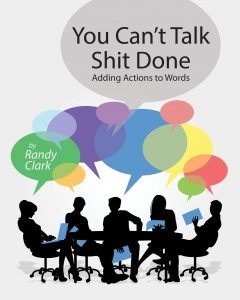
You Can’t Talk Shit Done – Adding Action to Words
In America today the most recognized waste of time in the workplace are meetings. Studies, reports, and surveys share that the majority of workers in the USA would rather do almost anything than attend meetings. Inc.com 17% of employees would rather watch paint dry than sit through a meeting.
Why is that? Is it because meetings lack agendas, include unneeded personnel, and too often become rambling lectures? Yes, and more, but it’s not only meetings, it’s training sessions, conferences, symposiums, and demonstrations.
What if every meeting, instruction, and forum concluded with a plan of action? And what if that plan of action was implemented, followed up, and revised as needed? What if the participants of these sessions knew that a plan of activities was the goal of the gathering? If that were the case would you rather watch paint dry or participate in the action plan?
Taking Action
The trouble is very few business sessions end with an action plan. Most get stuck at talk. This presentation is how to get unstuck, how to elevate the meetings, training sessions, and conferences that you conduct or attend past talk into action. You can’t talk shit done. It’s been tried. It’s not working, is it?
Throughout history it has been those who have taken action that have changed the world. It’s the same with your industry, and your business. Are you ready to add action to words or do you want to talk about it some more?
The goal of this presentation is for every attendee, regardless of their position, to complete provided action plans.
Studies have shown that most people retain only a small percent of what they’re introduced to in seminars. With that in mind, the seminar includes a copy of You Can’t Talk Shit Done: Adding Actions to Words for each participant to be used for effective follow up.
Did any of the 5 Leadership Workshops Hit Home?
Are you ready to lead your team to improvement? If any of these 5 leadership workshops fit your needs please let me know. And if you have specific needs I can create and facilitate a workshop designed for your team.
I like to help people and organizations, but I have three criteria I consider before taking an assignment – I believe in what the organization stands for, I know I can help,, and it looks like fun. If you have any questions or would like to discuss any of these 5 leadership workshops, Contact Me.
Does your business have a management training plan? Many organizations, large and small, use my book, The New Manager’s Workbook a crash course in effective management, as the basis for their leadership development program. I’m also available to conduct the training outlined in the book as well as the 5 leadership workshops. Have a great day!
The post Improving Your Team: 5 Leadership Workshops appeared first on Randy Clark Leadership Training.
November 11, 2019
A Sign from Above
First of all you have to understand, I’m not what you would call handy. I don’t have the know-how or patience for repair work or construction. My wife does the repairs around the home. I’m not talented at making things. My brother got that gene. He makes furniture. However, I do consider myself creative, and the project I have in mind is more about creativity than construction. I wanted to make a handcrafted sign.
Number Two
The second thing you should know is—I like snow. I like all kinds of snow and lots of it. I don’t like snow when it endangers folks, but other than that — I like snow. As you may guess by the end of last year’s snow season, my pro-snow stance was less than appreciated.
Every winter I place a vintage metal “Let It Snow!” snowman sign at the front of my yard. I guess last year one of my neighbors had had enough. I got up one morning to a missing snowman sign. Whoever took it was industrious because it was staked into frozen ground and surrounded by nearly a foot of snow.
Number Three

The next thing you should know is that I lost three sections of wooden fence during a summer storm. The fence had a nice weathered gray patina. It seemed such a waste to throw it away. So I didn’t. I stacked it behind the back fence, broken pieces and all. I do not have a problem with hoarding. You never know when one may need old weathered gray wooden fence.

It was my Destiny
Putting two and two together — no snow sign, broken fence, and you can see where this is going. I’m going to make a “Let it Snow” sign out of broken fence, and you can too! I have the fence but you can pick up fence at any home store or save your money and use pallets.
Fence/Pallet Sign Checklist
Wash fence or pallet boards with soapy water
Thoroughly rinse
Allow it to dry
Lightly sand
Saw the pieces to desired size. For example my sign is three 8” boards cut three feet in length
Screw two cross beams attached to the back of the sign. I used left over pieces of fence, but most wood works
Wash the wood with a mixture of paint and water to add color and consistency
Let dry
Go online and print your copy to use as a stencil (I hand drew the letters and snowflake)
Cut out your copy and trace on the wood in pencil
Fill in the stenciled letters with paint
If the sign is to hang, attach a metal clothes hanger to the back
You may consider protecting the paint with a clear coat

There you Have it
There’s no need to be a skilled carpenter or craftsperson to create this sign. All you need are a few pieces of wood, some paint, and an idea. You don’t have to be handy! Have fun. Let it snow!
The post A Sign from Above appeared first on Randy Clark Leadership Training.
November 7, 2019
Creating a Small Business In-house Marketing Team
After reading a post about creating a marketing team, aimed at ad agencies and large firms, I asked friends how they would build a small business in-house marketing team — what positions they would fill? The article from INC. Tips and Tools for Building a Marketing Team is a good start. The piece discusses the need for a VP of Marketing, Marketing Director, Marketing Manager, Marketing Analyst, and Business Development Manager. A hierarchy designed for planning and execution rather than creation, but what if your team needs to plan, execute, and create? And what if you’re a small business getting started? Is creating a small business in-house marketing team or would outsourcing your marketing needs be best for you?
What Do You Need?
To build a marketing team, you first must determine what marketing media you will want to create. For example, if your business is food service, you may want a staff photographer. If, however, new products are far and few between then outsourcing photography may be your best bet.
Create your marketing team around your product and service. Consider how you will go to market, where you will present your wares, and who your target audience is — then build a team to fit your needs. You may also want to consider the cost-effectiveness of in-house verse outsourced.
Who Do You Need?
Marketing Manager
Whether the title is VP, director, or manager, someone needs to oversee and direct the team. Management and communication skills, along with an understanding of the organizations’ culture and mission, as well as direct marketing knowledge, are critical to successfully managing an in-house marketing team.
Copywriter
How much content will you need to create? If your marketing initiative includes a blog, web copy, email campaigns, newsletters, and collateral materials, an in-house copywriter may be cost-effective with the added benefit of being more in tune with your mission and culture than an outsourced copywriter.
Graphic Designer
How much design work will be a part of your plan? If all you need is a logo and an occasional banner ad — outsource it. But if your needs include E-book typography, trade show displays, web pages, and brochures, an in-house designer might be a good investment.
Photographer
How many photos do you need? How often do you share new work? For example, are there enough photo opportunities to make it cost effective to have a photographer on staff.
Web Developer
Businesses are beginning to understand that websites aren’t static — they’re fluid. Effective websites change, grow, and improve. They find ways to better serve their audience and incorporate new technology. If your site is more than a simple landing page, it may be wise to add a developer to the team.
Videographer
Visual content is one of the best ways to reach a targeted audience for B2B or B2C corporations. Customer testimonials, how to videos, and behind the scene productions, all market products to prospects and customers; you may have more to share than you realize.
And …
Depending on your business and marketing strategy, you might want to consider adding other specialist to your team. For example, copy editor, events team, public relations, E-mail marketer, or a direct mail manager.
How Many Hats Can One Marketer Wear?
In 2010, I became the third member of a small business marketing team. It consisted of a photography/web developer/copywriter, a designer/copywriter/marketer, and me. For a small business, hiring generalists, people who enjoy learning and are willing to take on a challenge, can be a successful strategy.
Will Creating a Small Business In-house Marketing Team Work for You?
It depends on your organizations’ needs and marketing vision. What products and services will you market, who will you market them to, and through what media? Building an in-house team around these needs may be more desirable than outsourcing. The advantages of an in-house team include cultural buy-in and understanding, a unified mission, and the increased creativity of working as a team.
How Can I help You?
I like to help people and organizations, but I have three criteria I consider before taking an assignment – I believe in what the organization stands for, I know I can help, and it looks like fun. If you have any questions, Contact Me.
Does your business have a management training plan? Many organizations, large and small, use my book, The New Manager’s Workbook a crash course in effective management, as the basis for their leadership development program. Check it out.
Photo by Campaign Creators on Unsplash
The post Creating a Small Business In-house Marketing Team appeared first on Randy Clark Leadership Training.


