Neill McKee's Blog, page 3
August 9, 2022
A Return Trip to Cali, Colombia
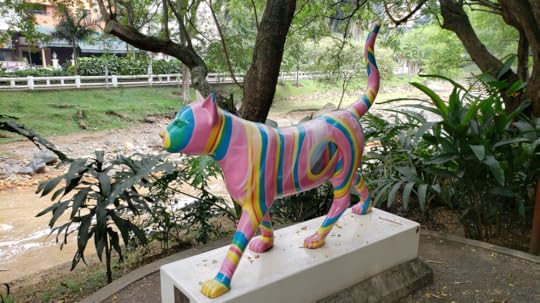
In July 2022, I completed the first draft of a new memoir on my adventures as an international film and media producer, manager, and facilitator for most of 1971 to 2012. Then my wife Beth and I flew to Cali, Colombia. I had visited Cali several times during 1975-1984, and never thought that I’d ever return to see the city or the beautiful Cauca Valley again, which Simón Bolívar, the great liberator from Spanish rule, called “a paradise on Earth.” … click below to download and see full story and photos


January 27, 2022
Tragic Death of a Great Volunteer
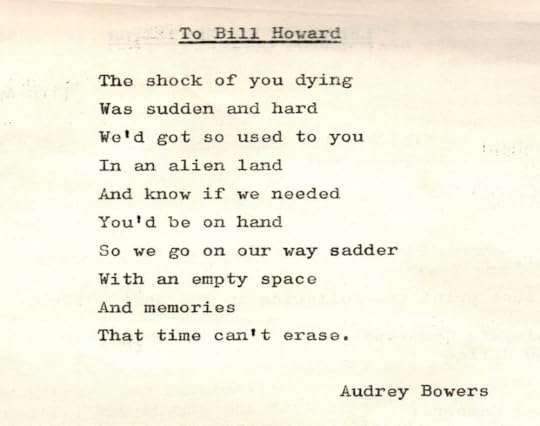
Finding Myself in Borneo , excerpt on visiting with Bill Howard
Memories of those days are like the Chinese dish called “sweet and sour pork.” We visited volunteer William Howard in Alor Setar, West Malaysia, a traditional Muslim town located in the northwest of the Malayan Peninsula. He worked for the government as a drainage and irrigation engineer. After meeting him at his workplace during the day, Beth and I joined him and a friend in the evening. They traveled all around town on their motorcycles to various Chinese restaurants, while we followed in our car. He called it a “pork crawl.” In one kedai, we started with pieces of quick-fried pork and vegetables. We ordered only one dish at a time, moving on to five or six places in all, spiraling gradually downward to pigs’ feet and pigs’ ears, all washed down with beer.
Eventually, William upped the challenge, ordering slices of pig’s snout in which holes for chopsticks had been provided by the animal’s natural anatomy. At our final stop, using his fingers in the shape of a sack, William motioned to the towkay to bring an order of pig’s testicles, a dish that I couldn’t face. I gladly let him win the contest.
That evening was the sweet part of this memory. The sour part came a few weeks after Beth and I had left Malaysia. I received a message that William had been riding his motorcycle without a helmet. Involved in an accident, he had fallen onto the pavement and died of massive brain injury. In spite of the frivolous tone of his revelry with us that evening, he was a young man with great social, diplomatic, and technical potential who never had a chance to continue a promising career. Once again, my own luck in life came to mind on hearing about William, for the motorcycle helmet I wore as a volunteer in Sabah, although embellished with whimsically protective Elvish script, was a very flimsy affair.
January 17, 2022
The best memoirs of childhood and youth
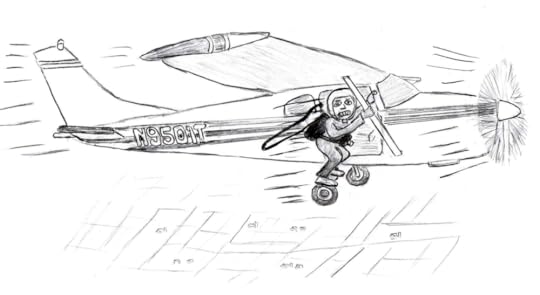
While writing my childhood and youth memoir, Kid on the Go!, I read many other childhood and coming of age memoirs, and I was asked by a new and interesting website on “Best Books,” (Shepherd.com), which ones influenced me most. I came appreciate the wide variety of writers with very different, entertaining, educational stories to tell about that era of their lives. ,Click here or on the illustration below to discover
January 6, 2022
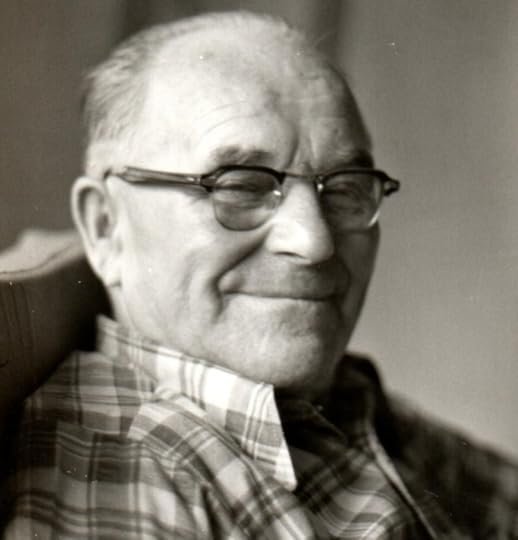
Russell Johnson, the Oldest Malaysia CUSO Volunteer, 1974
Excerpt on Russell Johnson from Chapter 13 of Finding Myself in Borneo
Canadian volunteers usually took two-year assignments. One of the most interesting short-term postings we made was Russell Johnson, a 75-year-old hardwood sawmill expert from Northern Ontario. We sent him into the West Malaysian highlands to help the Orang Asli (aboriginals) set up and operate a sawmill donated by the Canadian government. He had retired and was seeking adventure and relief from boredom. His wife, Maud, wanted to stay put in Sault St. Marie. He already had been to East Africa on a similar mission. Surprisingly, I don’t think Africa was quite as tough as the highlands of West Malaysia, where he spent over a month.
The Orang Asli are Proto-Malays—Austronesians who arrived thousands of years before the Malays. It’s not really known, but they probably came to the Malayan Peninsula around the same time as the Kadazans, Muruts, Ibans, and Dayaks reached Borneo. When the Malays arrived, they killed or captured many OrangAsli as slaves and drove others deep into the highland jungles. Like the story of aboriginals all over the world, they remain near the bottom of the economic ladder in Malaysia. Enter Russell Johnston and the sawmill.
I arrived at Russell’s highland station one cold and drizzly evening. After talking with him for some time, I learned he was making slow progress. All sorts of bureaucratic impediments had been placed in his way. He also looked a bit gaunt, so I enquired what was ailing him.
Russell answered, “Well, you see, Neill, I haven’t eaten much in days. I feel kind of weak, actually.”
“What’s the problem?”
“Well, the food ain’t so good. In fact, it’s pretty godawful.”
“What are they feeding you?”
“Same old thing, day after day. Some rice and a few fried vegetables and some meat that’s hard to chew. I think I’m losing weight.”
I grew concerned. “No variation at all?”
“No, in fact the lady, or maybe it’s a man, not sure, who brings me the food never changes the rice.”
“What do you mean?”
“Well, it comes to me cold and the first time it came I wasn’t hungry enough to eat much. I just took a few spoonfuls off the top. Then it came back the next day with the same spoon marks. I knew the dents I made. I thought that it was queer but then, by golly, if it didn’t come back three days in a row. Same bowl of rice!”
“That’s awful,” I sympathized. Just then, the cook came in with drinks. Right away, I figured she was an Orang Asli transgender person. I asked her a few questions and quickly established the problem. She spoke little English, so Russell couldn’t complain directly and he didn’t want to offend—a good Canadian. I decided to take Russell back with me to KL to restore his health and negotiate with the Orang Asli administration for better food and support for his mission.
We had a great week with Russell as a guest. He gained weight and we gained many stories on his work in the Northern Ontario bushland and in Africa. He went back to the highlands to complete his mission successfully, taking along a carton of food in case he had to face more bowls of stale and dented rice.
January 2, 2022
Albuquerque's River of Lights in 2021's longest night

Winter solstice in the botanic gardens,
meandering through a river of lights,
children squeal with long-restrained joy
while parents search for glimmers of hope,
as omicron dances around and about
the masked and unmasked,
the vaccinated and the unvaccinated,
like a monster searching for prey.
 [image error][image error][image error][image error][image error][image error]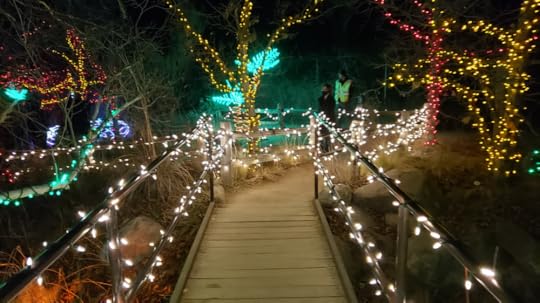
In this darkness, will we find our way?
January 1, 2022
December 30, 2021
Interviews and Guest Posts on Kid on the Go!
Interview by Nicola Pyles, Wow! Women in writing blog tourWOW: First, congratulations on your newest memoir! What inspired you to write a memoir about your childhood and youth?
Neill: So many best-selling childhood memoirs are by people who struggled against physical or mental abuse, poverty, racial or cultural discrimination, or dogmatic parents and guardians, but somehow overcame such oppression to get a good education and succeed in life. I experienced none of those conditions, so what could I write about that would tell an entertaining, captivating story? I have clear memories of the adventures I enjoyed in my formative years in my small hometown, Elmira, Ontario, Canada, and always wanted to find time to write about them. I had loving parents and they gave me and my siblings a great deal of freedom. Like many in the 1940s and 1950s, they rose from relative poverty to financial security through their determination and hard work. Nevertheless, I felt that I could translate my memories into a set of universally-appealing stories that would bring back similar memories in the minds of many readers.
However, I had to have something to struggle against to add conflict and drama to the narrative, and in my case, it was the industrial and environmental pollution I experienced in my hometown. The stinks from chemical and fertilizer factories, the slaughter house, and unpleasant manure smells radiating from Old Order Mennonite farmers’ fields provide the setting for the overall theme of “escape.” But I tried to carry this main theme humorously or poignantly by exploring subthemes such as learning how to reduce the impact of the odors, going on vacations, going fishing and hunting, coping with death in the family, building and renovating “escape” vehicles, learning the value of hard work, dealing with hormonal changes and bullying, fantasizing about girls and sex, fighting the dictates of authorities, joining the rebellious 1960s “rock n’ roll” culture, awakening intellectually and becoming a youth leader, and then when I finally leave to attend university, taking “existential leaps” that eventually lead to me to the verdant Island of Borneo in Southeast Asia, as told in my first memoir Finding Myself in Brneo: Sojourns in Sabah. Kid on the Go! is a standalone prequel to that memoir.
WOW: You definitely have offered us a unique coming of age memoir we don't usually see! So, you did charming artwork for this book. How did you decide which passages to do art for, and what was your process?
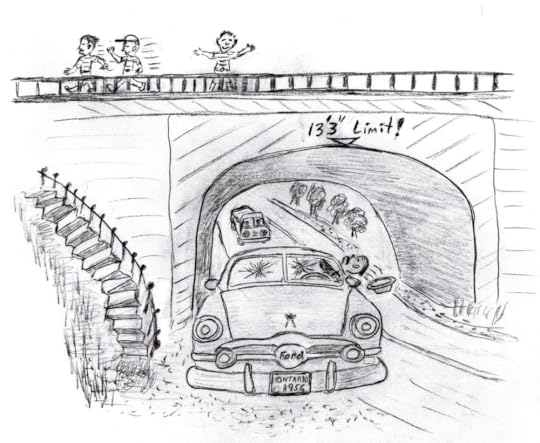
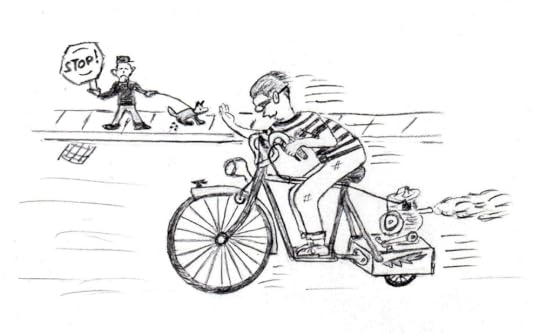
Neill: Thanks for the compliment in calling my efforts “artwork.” I think of it as sketching. I had no experience in drawing since elementary school, but was inspired by the illustrations of Quentin Blake in Roald Dahl’s Boy: Tales of Childhood. That book is actually written for an older audience, just like mine, but claims to be for people ages seven and above. At any rate, I loved the way the comic drawings complemented the descriptions in the book and wanted to try something similar. I never thought I had any artistic talent, but have a sister who is an artist. I asked her to consider doing it but she turned me down, saying it was not the kind of art she was working on. So, I started to doodle and showed my attempts to my wife, Elizabeth, who does calligraphy and artistic books. She told me she liked my efforts, as did my daughter. I tried again by tracing similar scenes and objects I found online, rubbing lines out, and doing them over again. But I still had an inferiority complex concerning artwork and decided I really needed an artist like Quentin Blake. My daughter put me in touch with Dav Yendler, an illustrator in California and I showed him about 20 of my first efforts. He refused to work for me, saying he loved them and if he did get directly involved, they wouldn’t be very authentic. He gave me a few tips and told me to do more—at least two per chapter. That’s what I ended up doing and so far, I’ve only received positive comments.
I chose the passages to illustrate based on my ability to do the drawings and the effect they might have on embellishing the words. Everything was done is pencil and then scanned and sharpened in Photoshop. No magic process. I encourage others to do the same but be prepared—it takes hours to get them right.
WOW: Your art is definitely authentic and I'm glad you did them yourself. How did the pandemic change your writing routine or process (if at all)?
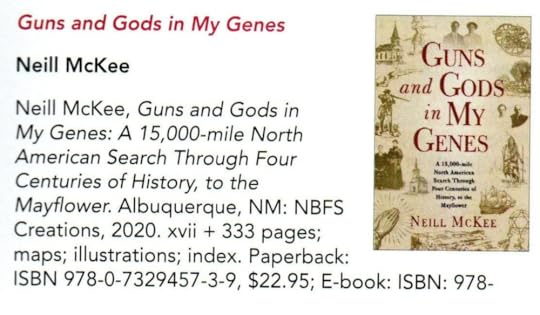
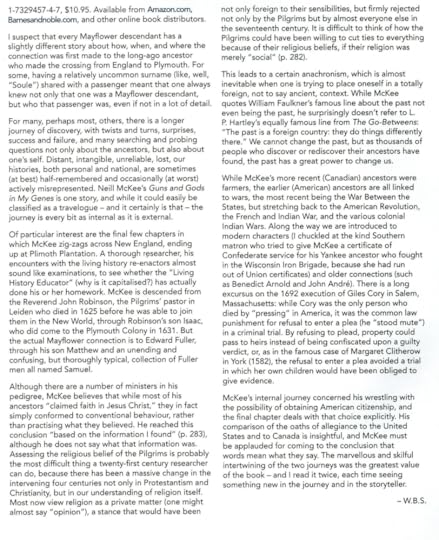
Neill: Quite frankly, Covid-19 has made me focus on research, background reading, writing, and online promotion. It has been one of the most productive periods of my writing career. I started writing three memoirs simultaneously in 2013, after I concluded my international career, and released the one on my life and times in Borneo in early 2019. Fortunately, by the summer of 2019, I had also finished all of my travel for Guns and Gods in My Genes: A 15,000-mile North American Search Through Four Centuries, to the Mayflower. So, all I had to do was online research, reading, writing, and revision. Once that book was released in late 2020, I concentrated on Kid on the Go! I have done a few zoom presentations on my books, but must say I prefer person-to-person contact. It is difficult to connect and gauge audience reaction on zoom. So, I hope we can say goodbye to the pandemic soon.
WOW: I sure hope so too! So, why have you continued to go the route of self-publishing?
Neill: As mentioned above, I had a long career in international filmmaking and media production, including the writing of some technical books and journal articles on the role of communication in changing behavior and social norms in developing countries. When I retired from that at the end of 2012, I started studying creative nonfiction—first at St. John’s College in Annapolis, Maryland, and then at the English Department of the University of New Mexico. I hired an excellent literary editor, who has also worked on my other two memoirs. I submitted my Borneo manuscript to about a dozen publishers and received two offers from small companies. But both of these excluded any guarantee that they would fund any significant publicity.
By then I had learned that there are about 1,000 new titles in all genres released daily into the North American English market. Without significant promotion, I knew there’s no way I’d sell books and these publishers were going to take away most of the royalties that I could use in promotion. So, I set up a publishing company, NBFS Creations LLC, hired good cover and interior designers, and publish through IngramSpark, a company that prints and distributes books and ebooks internationally, through Amazon, Barnes & Noble, other chains such as Chapters-Indigo in Canada, and also reaches independent bookstores and libraries.
In my 70s, I felt I did not have the time or real possibility to become a recognized writer of creative nonfiction by the traditional means. Besides, I did not need that financially. Even through this independent publishing route, Finding Myself in Borneo and Guns and Gods in My Genes have gained many great reviews, and won awards, which can be seen on my website. In these contests I have competed against other self-publishers and large and small publishing companies. So, maybe a big publisher will want one of my manuscripts someday, but I won’t hold my breath! I do love the speed and independence of doing it myself, with competent professional editors and designers.
WOW: So many authors feel the same way! What's next for you?
Neill: I have completed over half of the first draft of my next manuscript on my career as an international filmmaker and multimedia producer, working for two Canadian development agencies, UNICEF, Johns Hopkins University, and an agency called FHI360 in Washington, D.C., where I was director of a communication project with 150 staff and a large budget. During my career, I lived for four years in Malaysia, four years in Bangladesh, seven years in Kenya and Uganda (East Africa), and my last overseas posting was in Moscow, Russia during 2004-2007. Besides that, I traveled to about 80 countries on short-term assignments. All this has given me significant experience in learning about the issues within so many fields of endeavor to improve human life in the developing world: volunteering during your youth; the role of science and technology in agriculture, forestry, fisheries and aquaculture; finding solutions for delivering health care, clean water, sanitation and hygiene; empowering girls, women, and young people to take charge of their lives, while attempting to change the behaviors and social norms that restrict them from reaching their full potential. I think there’s a good story here. I’ve set up a website on my main projects, including most of the videos, comic books, and other media products that I have been able to retrieve, so far.
My challenge is to write about my career creatively and coherently in a way that will entertain and educate—that is, make readers smile, wonder, and think about the present state of our planet. I am also including thoughts on what was achieved or wasn’t achieved in the projects I documented or created, my advancement in skills, personal development, marriage and family life, and memories of many of the people I met in my travels and those who influenced me and propelled my way forward. I hope to complete this book by the end of 2022. In the meantime, I also want to begin a new writing project, probably involving travel through New Mexico and America’s Southwest. That project is gradually taking shape through reading and thinking about the history, ethnicities, and cultures I have encountered here.
WOW: I can't wait to see what you come out with next! Thank you so much for your time and best of luck on your book!
_____________________________________________________________________________
Interview with C. Lee McKenzie for the Wow! Women in Writing Blog Tour
Interview with Author Anthony Avina for Wow! Women in Writing Blog Tour
Guest post on author Fiona Ingram's Word Magic on writing a memoir in a child's voice but with present-day adult reflections.
Steph Warren's Bookshine and Readbows guest post by Neill McKee on how mentors changed his life.
Jill Sheet's Blog - Interview with Neill McKee on Kid on the Go!
More Reviews of Kid on the Go!
It’s funny when books arrive because most of the time Charlie looks at the cover and says no, not another book to read. Which he doesn’t usually do its myself who reads the book. But this didn’t happen with Kid on the Go!: Memoir of My Childhood and Youth because the cover intrigued not only Charlie but his friend Bradley. Then they sat down to read the back cover and I could hear them discussing things they were reading. That evening after Bradley went home Charlie picked up the book again and carried it into his bedroom. I waited a few minutes and ventured in as I wanted to see what Charlie was doing with the book.
I honestly thought Charlie would take the book into his room and sat it on the Table and never open the book up. But that wasn’t the case Charlie was thumbing through the book looking at the illustrations. Then Charlie let me know the Author mentioned Bullying and Charlie wanted to see what was going to happen. Each night Charlie and I would sit down and he would read a chapter of the book to me. Then I would read a chapter to Charlie. Once we finished reading we would discuss what went on. I even felt closer to my dad who had done some of these things as a child. I was able to share parts of my dads childhood with Charlie. Allowing Charlie to get to know his grandfather just a little bit better.
Once we finished reading Kid on the Go!: Memoir of My Childhood and Youth Charlie shared the book and what happened with both Bradley and Charlie’s dad who know wants us to read the book with them. Which will bring us closer together and allow us to create new memories.
Through the book Charlie has even found new things he would like to try out including Fishing. Which David has been wanting to take Charlie to do. Charlie is know wanting to research the 40s. 50s and 60s to study in School opening up new doors for us.
Kid on the Go! is Neill McKee’s third work of creative nonfiction. It’s a standalone prequel to his award-winning Finding Myself in Borneo. In this new book, McKee takes readers on a journey through his childhood, adolescence, and teenage years from the mid-40s to the mid-60s, in the small, then industrially-polluted town of Elmira, Ontario, Canada-one of the centers of production for Agent Orange during the Vietnam War. McKee’s vivid descriptions, dialog, and self-drawn illustrations are a study of how a young boy learned to play and work, fish and hunt, avoid dangers, cope with death, deal with bullies, and to build or restore “escape” vehicles. You may laugh out loud as the author recalls his exploding hormones, attraction to girls, rebellion against authority, and survival of 1960s’ “rock & roll” culture-emerging on the other side as a youth leader. After leaving Elmira, McKee describes his intensely searching university years, trying to decide which career path to follow. Except for a revealing postscript, the story ends when he accepts a volunteer teaching position on the island of Borneo, in Southeast Asia.
Glenda, Charlie and David Cates, Mommies Reviews
Pre-publication Reviews:
In Kid on the Go!, Neill McKee describes his growing up in Elmira, Ontario, and his life and education in Ontario and Alberta, from the late 1940s up to the time he departed to teach in Borneo, in 1968. He presents a vivid picture of his hometown as he experienced it, often indicating his later understanding, while including drawings from a child’s and youthful viewpoint, and many photographs. He gives us well-told accounts of the pollution in the town, but tells humorous stories about his family, his teachers, his adolescent misadventures, his encounters with the 1960s counterculture, and his developing intellectual interests. The book concludes with a moving postscript, “Closing the Circle,” where he describes Elmira as it is today, and speaks of the deaths of his parents. Kid on the Go! tells us what it was really like to grow up in Canada during that era.
- Bill Exley, retired English teacher, London, Ontario, Canada
In Kid on the Go!, memoirist Neill McKee takes us back to his childhood where he first discovers the strange features of his hometown of Elmira, Ontario, Canada. He shares his own views of the world with the eyes of a child and of the adult that he is now. Enriched with details, including clever artwork by McKee himself, along with family photographs, this memoir will take you on a journey through the author's past. Both funny and insightful, clever and thought-provoking, it's a book you don't want to miss.
- Nicole Pyles, writer, Portland, Oregon, USA worldofmyimagination.com
December 17, 2021
The Haunted Fairwinds Hotel
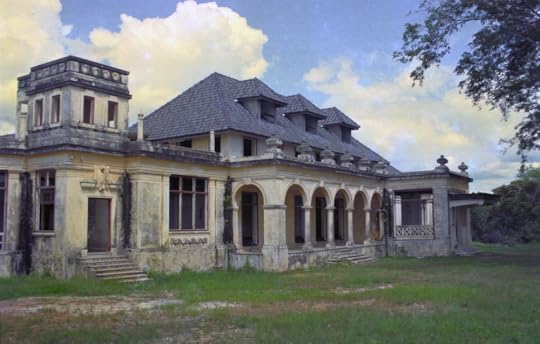
The Fairwinds Hotel, Port Dickson, abandoned to the ghosts by January 1991
Excerpt from Chapter 13 of Finding Myself in Borneo by Neill McKee:
During this second stint in Malaysia, Beth and I spent at least a third of our time in West Malaysia, often staying with the Hoffmans, who were open and friendly to us and to all the Malaysian volunteers. They always had visitors.I helped to recruit, place, and support volunteers. I ran the whole program when Peter and Barbara went on home leave. During my most difficult times in Sabah, these retreats to the West were true escapes from “the Shadow of Mordor,” as I jestingly called it. Another task involved running orientations for newly arrived volunteers, imparting our knowledge and experiences alongside that of Malaysian experts.Some of the orientations took place in Port Dickson, at the Fairwinds Hotel, an old edifice on a hill overlooking the Straits of Malacca—a two-story affair with concrete arches and Roman columns grown over with moss. A Chinese tin mining millionaire had built it as his seaside residence in the early part of the twentieth century.As the story goes, the Japanese military police took over the Fairwinds during World War II for use as an interrogation center. They tortured many people inside the rooms where we slept, and they chopped off numerous heads on the grounds outside. Then, after the Japanese surrendered, the former owner reclaimed his property, only to have his son commit suicide by jumping from the cliff in front of the house and smashing into the rocks next to the water below. Possessed by a hantu? Of course.
Ghost stories are one of Malaysia’s specialties, possibly because of the confluence of so many oral cultural traditions. There are reports of over eighty haunted hotels in the country. Mr. Lim, who ran the Fairwinds, never told newcomers outright about the Japanese history. Bad for business! Stories floated amongst guests, regardless—most definitely part of the attraction—at least for foreigners. New guests might start to hear or imagine things: a door that wouldn’t stay closed, strange knocking on the walls, groaning sounds in the middle of the night. We could easily visualize what had happened in this building 30 years earlier. These stories added a little more spice to our orientation sessions, alongside Mr. Lim’s fish head curries, and none of our trainees ever jumped off the cliff, that I can recall....
November 13, 2021
Venus Dances with the Moon

On the evening of November 8th 2021,
while listening to political discord:
Republicans vs. Democrats, vaccinated vs. anti-vaxxers,
Gun rights backers vs. gun control advocates,
I took my camera outside to witness
the Goddess of Love dancing with the Moon.