Lance Tyson's Blog, page 2
November 14, 2019
Powerful Impact Statements: The Key to a Great Sales Opening

In a previous post, we introduced the concept of the Impact Statement and using that tool to focus the opening of your sales call. Remember, as stated before, no one is sitting by the phone waiting for your unsolicited call, and sometimes, not even your scheduled phone call. People are busy. They have things that they need to get done, especially if they are in any kind of decision making capacity. So once you break their preoccupation and get their attention, you have to build their interest. And for that you need an effective Impact Statement to tell your story.
WHAT IS THE IMPACT STATEMENT?
In its most basic form, the Impact Statement is an elevator pitch. You’re trying to get across very succinctly the primary benefits of doing business with you. Salespeople often fail on this point. Without a solid Impact Statement, your average salesperson will meet a prospect with a laundry list of what their company does without making any connection with the buyer. In short, they spray and pray.
The Impact Statement should be a thirty-to-forty-five-second commercial. And like a commercial, the Impact Statement should speak the buyer’s language, not yours. It needs to tap into the buyer’s mind-set, address their needs, and create opportunities.
WHAT IS THE BASIC FRAMEWORK OF THE STATEMENT?
There are 4 basic components of your Impact Statement that, when melded together, will deliver an impactful message that will generate interest from your client. Here are those components:
Provide the general benefits you bring to the table. This is where you give a general challenge your other customers in your prospect’s industry have faced in the past, and a solution to that challenge.
Give a brief overview of how you work or provide an example. Here is where you provide a brief synopsis of how you work, how your product or service has provided the general benefits for your other customers. This part gives your statement credibility.
Suggest similar benefits are possible for them. This part pulls back and adds a sense of realism to the statement. In an earlier post, I recounted how my team of new salespeople, fresh out of college, were calling their prospect base and promising to deliver 10 to 40% increases in revenue when they knew nothing about the prospect’s business. You can’t make promises like that. But you can imply a correlation with a statement like, “We’ve done this for our clients. We might be able to do the same for you.” That’s not a claim. It’s a potential opportunity for the prospect.
Trial close – Get an appointment or advance the sale. Usually, this last component is the trial close. You’re asking the prospect if they are willing to walk through this discovery process with you. You’re asking them to take the next step.
WHAT DOES A GOOD IMPACT STATEMENT LOOK LIKE?
Remember my encounter with the financial advisor, Doug? He might say something like:
“You know, if you’re like a lot of the folks we work with, you’re probably looking to sustain your lifestyle over a period of time, get your best return, create an income even as you sleep, ensure the success or legacy of your family. We help our clientele do that by getting a clear understanding of where they are and where they’re going. And we also design and build options for them to execute that long-term plan and, ultimately, we measure results. We might be able to do the same for you. Would you mind if I ask you some questions about your financial situation?”
Do you see the four components in this example? Using something like the above Impact Statement, a financial advisor can communicate a succinct message in a predictable way. They aren’t talking about their financial services business. But they are talking about what their financial services business does for people like their clients.
WHAT SITUATIONS ARE BEST FOR THE IMPACT STATEMENT?
The Impact Statement can be used in all sorts of scenarios where a salesperson is trying to get the prospect to be more receptive. It will do two things. First, it will qualify the prospect to see if they’re a good fit for the salesperson’s services. Secondly, it will qualify the salesperson in the prospect’s eyes. Remember, they are also judging how the salesperson builds rapport, trust, and understanding of the prospect.
Here are some examples of where you can use an effective Impact Statement to generate some initial interest:
- Business Development to set appointments.
- Face-to-face meetings.
- Social Selling situations.
- Networking events.
One of the drills that we work on with the salespeople we train is: “Can you tell a prospect or a prospective buyer what you do in less than thirty seconds?”
Here’s another example. If I were selling accounting software like QuickBooks and I get an entrepreneur on the phone, I might say something like the following to get an appointment with them:
“Look, if you’re like a lot of entrepreneurs, you’re probably concerned with money in, money out, accounts out the door, and taking care of all the taxes and things you’re responsible for as a business. We’re able to help businesses like yours because we have an understanding of what they’re trying to do, what kind of business they’re in. We have a couple different versions of software that are less complicated for different kinds of businesses, and then we teach you how to use it so it becomes part of your system. I’m not sure we can do the same thing for you. Do you mind if I ask you a couple of questions, or would you be willing to meet over a cup of coffee?”
A FANTASTIC OPENING IS THE BASIS FOR POWERFUL SALES CALLS
Remember, when opening your sales call, you’ve got to be able to speak with impact and credibility. You put in plenty of work to break your prospect’s preoccupation and win their attention. Don’t waste it with a lukewarm effort to get their interest or use the time in a fishing expedition. Instead, know how you are going to work with this prospect to cultivate interest. Your goal is to reach the point where they want to know more when you arrive at the trial close.
So, I leave you with this action to take. Before talking with your next prospect, create your own Impact Statement by answering this question: what can I say about my business that answers what I do, how I do it, and why it would be important to them?
Once you have your Impact Statement, you have to present it in a compelling way. Be sure to download our digital publication, Basics of Dynamic Sales Presentations, here and give yourself a tactical advantage when opening your sales call.
Want more? Purchase your copy of my best-selling book, Selling is an Away Game, here.


Master to Win: Away-Game Selling Strategies

I’m addicted to my Fitbit. It keeps my diet on track, helps me work out longer and more frequently, and basically keeps me on my game regardless of whether I’m at home or on the road.
But the thing I love the most about my Fitbit is that it’s mine and mine alone. Even though the basic hardware is off the shelf, it feels like it’s been tailored just for me because it uses my unique data.
Devices like Fitbit have inspired a wave of interest in products and solutions that feel tailored. In this era of 24/7 connectivity, the sales process needs to be tailored in a similar fashion.
Buyers are armed with more information than they would have been in the past, which gives them an advantage. When buying a product online, 92 percent of consumers spend time reading online reviews ahead of time – and 40 percent of those consumers form an opinion by reading just 1-3 reviews. They read those reviews, insert their own confirmation biases, and make quick decisions based on how well they believe that product or solution will be customized for their own pre-determined needs before they even speak with a salesperson.
The ready availability of information is fundamentally changing how they buy, across the board. The biggest challenge for salespeople today is having to make constant decisions on the fly as they adapt to the needs of the buyer.
These are just a few of the factors that have turned selling into an “away game.” Just like a sports team must overcome a disadvantage when playing on the opponent’s field, salespeople need to be prepared to play on a dynamically changing field, adapting to what the buyer already knows or wants.
THE FOUR ELEMENTS OF AWAY-GAME SELLING
In away-game selling, successful salespeople need to be more like the Waze App than a printed map. They need to constantly adjust in real time, based on the feedback they receive from the buyer and from other drivers, and continually update with relevant, customized information depending on where the buyer wants to go. That said, it’s essential for the salesperson to have a predictable process with repeatable steps.
There are four interrelated elements to the away-game sales process, shifting dynamically to accommodate one another in real time. Here are tips on how to succeed:
UNDERSTAND THE BUYER’S MINDSET
The buyer’s mindset is like a prism through which to view the decision-making process. To align with what is in the buyer’s mind, you need to mirror every action that person would normally take when buying something: get the attention of prospects, qualify them to see if they fit the business parameters, engage them in some kind of request for their time, ask them a series of questions, and create a scenario in which you can present ideas and start to create an opportunity.
DEVELOP A STRATEGY
To adapt to the buyer’s mindset, you need a sales strategy that is flexible enough to be tailored to individual clients, yet sturdy enough to be scalable and repeatable. Find a way to engage buyers in conversation and convince them you are a person worth listening to.
EMPLOY BATTLE-TESTED TACTICS
Your sales strategy needs to be supported by a set of tried-and-true tactics: “If this, then that.” For example, if you get someone’s voicemail, what will you say? How will you start the sales conversation? If you encounter an objection about price, how will you respond? It’s important to have a deep repertoire of tactics for every step of the sales process, but it’s equally important to stay in the moment and continue looking for opportunities to adapt to the buyer’s mindset.
HONE YOUR SKILLS
You need a skill set that is versatile enough to support your process. The basic toolkit should include a range of skills, including verbal brevity, selling time and awareness, communicating value, resolving objections, facilitating, and selling over the phone vs. selling in person.
To win this game, you’ve got to be like the Waze app – find out where your buyer wants to go and identify and eliminate potential roadblocks or other issues that might get in the way. Learn more about the landscape continuously so you can adjust your strategy accordingly. Then, use your acquired tactics and skills to help buyers reach their destination.
Want more? Purchase a copy of my best-selling book, Selling is an Away Game, here.
To learn more about how away-game selling can give you a competitive edge, contact Tyson Group here.
-----------------------------------------------------
This article was originally posted on March 25, 2019 by Lance Tyson in SellingPower
Gaining the Edge: 3 Steps to Taking the Lead in Sales

I recently made a visit to the orthopedic surgeon to check in on a shoulder issue. I didn’t walk in the door wanting to sign up for surgery.
After spending a bit of time in the waiting room, I was led back to another part of the office, where a nurse practitioner asked me a number of questions about my health, took notes on my weight, temperature, and blood pressure and interviewed me about my health history. They gathered lots of information about me in order to help the doctor accurately evaluate my condition.
And, all the while, I was evaluating them, too – on the thoroughness of their process.
COMPETITIVE EDGE INSIGHTS FROM THE MEDICAL FIELD
When the orthopedic surgeon came into the room, he took the time to connect with me personally. He immediately developed a rapport with me, just the way most good salespeople are able to do with their prospects. But, beyond that, he established his credibility by demonstrating his expertise and showing me that he had done this before. His questions were focused, and he was clearly asking them in order to understand me better rather than simply waiting to respond.
When the doctor segued into a diagnosis, he had my full attention. His bedside manner, the questions he asked, and the level to which he appeared to be interested in listening to my answers all played a key role in how I reacted to his diagnosis and my willingness to accept that it was accurate. By the time he moved from the diagnosis into a prescription, I was already sold. I could have opted to get a second opinion or go down another path, but he had already gained my confidence through his open-ended questions and the way he skillfully guided the conversation.
GETTING TO THE RIGHT SELLING SOLUTION
In today’s complex selling environment, salespeople need to make the buyer a partner in getting to the right solution. But there’s a common misconception that sales is all about building relationships. In reality, though, sales is about developing three essential elements: credibility, rapport, and understanding the prospect’s needs. Relationships are a byproduct.
Everything salespeople say and do, including their appearance, adds or detracts from their credibility. Credibility yields trust and, in turn, improves rapport.
When good rapport is developed, the buyer feels confident sharing more information, which increases understanding. Only when those three elements are established in equal measure can salespeople achieve the right solution and gain a competitive edge.
FOUR THINGS EVERY SALESPERSON MUST DO TO GAIN A COMPETITIVE EDGE
That’s why the diagnosis step is critical when it comes to transforming indifference into interest in the buyer’s mind. The job of the salesperson is to:
- address the buyer’s doubts,
- establish credibility,
- ask the right questions to get an accurate read on the buyer’s situation, and
- adjust the diagnosis based on the buyer’s input and needs.
Once you get to the correct diagnosis, the next step is to prescribe a solution. The right solution to the wrong problem is worse than the wrong solution to the right problem, so it’s crucial to get to the correct diagnosis. In sales we tailor the solution as much as possible to the specific needs of the buyer. At this point, the buyer will have lots of questions: What is it? How does it work? Who says so, besides you? Can you prove it? To overcome doubt in the buyer’s mind, the salesperson needs to give the buyer exactly the right amount of information, and no more, about the solution.
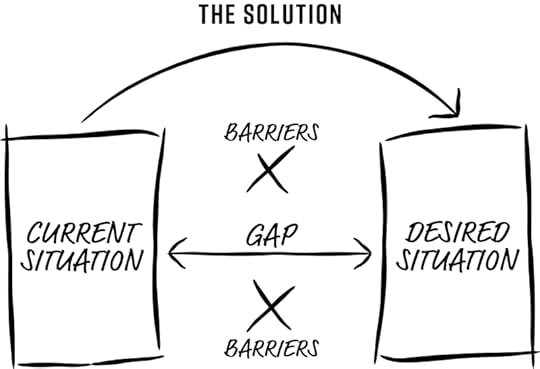
This is a step-by step process and takes place within a fluid world. It might be possible to cover both the diagnosis and prescription in one meeting, or even a conference call. Or, in a more complex sale, it might take three or four meetings to connect, evaluate, and diagnose – leading to a prescriptive presentation. The pace and complexity of a sale are dictated by the marketplace and the product.
Regardless of the time horizon or complexity of the sale, the process and steps remain the same. They can be adapted to suit any situation or customer, but the sequence remains constant.
WANT TO KNOW MORE ABOUT HONING YOUR TEAM’S COMPETITIVE EDGE?
Purchase a copy of my best-selling book, Selling is an Away Game, here
To learn more about how away-game selling can give you a competitive edge, contact Tyson Group here.
Closing in a Complex World: Landing the Deal

For sales professionals, there is perhaps no single word more enshrouded in mystery than “closing.” If you check out the descriptions for sales jobs, you’ll find that companies are always looking to hire closers. There’s a kind of mythology built around closing that implies a rarefied skill possessed by only a few elite salespeople.
But, in reality, closers are like pixies or leprechauns – they don’t exist. That’s because there’s no special skill required to close business.
TO CLOSE MORE SALES, PREPARE TO LOSE SALES
A few weeks ago, I was conducting sales training for a major NBA team. At the break, one of the sales reps approached me and asked for some advice on how to become a better closer. I asked him to clarify what he meant by that, and he said, “I want to close more sales.”
My response back to him was: “Are you also ready to lose more sales?” He gave me a look of pure confusion. So, we walked over to the door of the training room, which was standing wide open. I said, “See this door?” He nodded. I slammed the door shut as hard as I could. “Now it’s closed.”
My point was not to act like a jerk or make the sales rep feel small – I was simply trying to illustrate that the act of closing business means bringing the deal to its final conclusion. As long as that door stands open, the deal is still a possibility.
As human beings, we tend to accept maybes because they allow us to keep the door open indefinitely. But clinging to “maybe” actually prevents us from closing the deal.
THE TOUGHEST QUESTION IN SELLING
If you want to close a deal, you have to be willing to ask the toughest question in sales – “Are you in or out?” And, before you do that, you have to accept the fact that you might not like the answer. Because sometimes this question serves as a catalyst to help us close business. In other cases, it means walking away so we can find another, more suitable prospect.
That’s why I believe there’s no specialized skill to closing. You simply have to decide whether you are ready and willing to shut the door.
Is the timing right to close? To find out, ask yourself these four questions. Have you:
- successfully established a rapport with the buyer?
- done your homework in evaluating and diagnosing the problem?
- offered a carefully considered prescription?
- had a frank dialogue about objections?
If your answers to these questions are “yes,” then the timing is probably right to close.
Successful sales reps need to be confident – or at least act confident. Don’t be willing to live in a world of perpetual maybes. It’s okay to let the cake sit on the table and cool down a bit, but at least be ready and willing to ask buyers if they want a slice.
A FEW STRATEGIES TO CLOSE BUSINESS
I travel about 50 times per year, and I still marvel at the fact that a 60-ton piece of steel tubing can thrust itself through the air at a speed of hundreds of miles per hour and manage to stay up. By contrast, landing makes sense to me. After all, we have gravity in our favor – inevitably, the plane will come down.
Closing business is like landing a plane – at its core, it’s simply the act of bringing the deal to its natural conclusion.
That said, there are a few strategies for closing, and it helps (before you hit the runway) to choose which one you want to work with:
THE DIRECT CLOSE
I always prefer this approach, which can be summed up in the words of Nike: “Just do it.” In this variant, you just ask the question directly, “What are your thoughts on this – do you want to do it?” At the very worst, the answer may mean walking away from the deal. But, if you’ve taken the other previous steps in the sales process, chances are that it will move you more quickly toward a positive resolution and closure.
THE ALTERNATE CHOICE CLOSE
In cases where the direct close seems too presumptuous or risky, you might opt for the Alternate Choice Close, where you offer a couple of options, e.g., “Do you want to go with the three-year contract or the seven-year contract?”
THE MINOR POINT CLOSE
If you encounter a situation where the buyer’s position is opaque and they claim to still be thinking about it, you could try the Minor Point Close. Ask how the buyer feels about a particular section of the contract (or some other minor point) to gauge interest and move the dialogue forward.
THE NEXT STEP CLOSE
When we are setting up a sales training at a hotel, often the sales rep will actually show us a room and ask us, “What are your thoughts on this?” They are literally helping us see beyond the close to the next step, which can be quite effective.
THE OPPORTUNITY CLOSE
Often, organizations will pressure buyers by giving them a limited time frame – telling them that, if they act now, they will get a discount. Infomercials and timeshares are notorious for this type of close. Be careful with this one, however, because it’s the most manipulative kind of close, and it can backfire. But sometimes it works like a charm.
THE BALANCING CLOSE
In this approach, the sales rep helps buyers weigh the pros and cons in order to make an informed decision. There’s something to be said for taking the higher ground and helping someone go back through their consideration process to make sure they will be happy with the outcome. It helps build trust and can produce great results.
Remember: Closing is based on the momentum you have already established during the course of the flight. How quickly and smoothly you bring the deal in for a landing is just a matter of how well you direct it toward the runway.
PUT YOUR TEAM ON THE FAST TRACK OF HOW TO CLOSE BUSINESS IN A COMPLEX WORLD
To learn more about how away-game selling can give you a competitive edge, contact Tyson Group here.
Purchase a copy of Lance's best-selling book, Selling is an Away Game, here.
Tyson Group received honorable mention in SellingPower’s prestigious list of Top 20 Sales Training Companies in 2018 and 2019 for excellence in sales training. Lance Tyson is a regular SellingPower blog contributor.
November 13, 2019
The Best Deal I Ever Won Taught Me a Major Life Lesson

When I look back on my early years in sales, I realize that was the time where I learned the principles that had the most significant impact on my sales career and my training.
Back then, I was like most salespeople when first breaking into B2B sales. When you're new to something, you tend to have a ton of enthusiasm. It isn't product knowledge or industry expertise that gets you through. It's the newness that sparks that excitement. I think enthusiasm pulls a lot of sales reps through the initial phase of their careers. One thing we use in our classes is that the last four letters of enthusiasm are an acrostic for I Am Sold Myself.
Back then, I heard a story in one of the sales training sessions I attended, about a hugely successful insurance salesperson. He was much younger than his peers at the insurance company. But he was writing insurance policies with organizations and wealthy individuals that were exceptionally bigger than any other salesperson in the company.
When the company reviewed their salespeople's performance, what they discovered was that most of the insurance people on the team tended to call on people that they viewed as their peers or below. But this person was calling on people that were far above his level of income and seniority. When asked about his reason for doing this, he said, "I'd rather have somebody, a 'big fish' tell me no over someone at my level or below."
After hearing that story, I decided to target some of the largest companies in the Philadelphia area, the ones with the most employees. At that point, I was selling for Dale Carnegie Training and getting corporate managers to buy into corporate training for their employees. It wasn't too long before I found myself calling one of the biggest employers in the area, the Philadelphia water department, with over 6,000 employees.
I worked my fingers off, trying to make inroads into that organization and reach their training executive. I would show up and ask for an appointment, I dropped off notes, left voicemails, sent emails, sent snail mail letters, and followed up with phone calls. Mind you, this was before social media was hot, and LinkedIn became a sales tool. Finally, after much consistent persistence, I broke through, and Michelle, the training executive, granted me an appointment!
I can remember the day I walked in. I was as nervous as you can imagine. I mean, she was the big wig. I was finally in, and I didn't want to blow the opportunity.
Naturally, when I got there, I had to wait in the lobby for an extended period. Everything was running behind, which meant more time for my nervousness to grow!
When someone from the company finally escorted me back to her office, I noticed a sign on her door that read:
If you don't have an answer to these four questions:
What is the problem?
What are the causes of the problem?
What are the possible solutions?
What's the best possible solution?
Then don't bother coming in!
I guessed it was a sign for her staff.
When I began the meeting, we started with pleasantries, we made some small talk, and I introduced myself. I was still extremely nervous and sweating, as well. But I kept it under control and said, "Hey Michelle, I know you probably don't have all the time in the world. How much time do you have?" She said, "Yeah, I got about 30 minutes." She was open, calm, and friendly.
I said, "I noticed the sign on your door. I'm not sure why you took the meeting."
She said, "I took the meeting because you worked hard to get it."
So, I said, "Well, the sign on your door said, "What's the problem" first. You probably also met with us because you know we're a training company. Can we maybe talk about a problem that got you to take this meeting?"
Because I put the focus of the meeting back on her, I gave that relationship a chance to grow. It ultimately turned into one of the most substantial business relationships I had even to this day. They went on to put hundreds of their employees through our training, a business relationship that pushed a 6-figure income through our organization every year.
As the account grew, my responsibilities changed outside of that region. I went on and transitioned the account over to another account manager who was going to take over the territory. As with any good transition, I shepherded the new account manager into the account and introduced him to Michelle as the manager who would be taking over in my place. She looked at the new account manager and said, "I want to let you know, we're only doing business with your company because of the business attitude and the attention to detail that Lance brought to the table. We are your clients because of him."
And that's when I realized; people buy from people. They don't buy from companies. They don't buy from brands. They buy from people
This one idea was an epiphany for me that changed how I conducted my business and life. I continue to teach that idea to people when I perform training sessions for my team and in our consultation sessions.
People buy from people. To sell is human.
==================================
Your best deal won’t be the biggest deal you ever closed or the toughest battle you ever fought. Your best deal will be the one where you had an epiphany, a profound realization that changes how you conduct your business and yourself.
To learn more about retiring with purpose, order your copy of Selling Is An Away Game, today.