Elizabeth Russell's Blog, page 20
September 28, 2018
Stay Motivated when Writing…Write your WHOLE Novel in ONE NIGHT!


Stay Motivated when Writing…Write your WHOLE Novel!
See Transcript Below:
This is how ALL authors write a great book:
They want to be a writer, always have, but they’ve never gotten their BIG BREAK. Suddenly, something dramatic happens in their lives, and it inspires the great story idea that’s always been just out of reach. In a moment of muse possession, they sit down and spit out the book…
…IN ONE NIGHT.
Forget hard-work, discipline, or road-blocks – all you need is a desire, deep feelings, and a dramatic experience.
….aaand, the pin drops. So that’s not really what happens – EVER.
But even though we all know that, we still feel like it should happen that way. It’d be nice if our life happened in a montage. Wouldn’t it be lovely if meeting the love of your life coincided with creating something fantastic? Everything in life comes together in one fell swoop!
Shawn Coyne, on the storygrid podcast said, and I’m paraphrasing: “When you come up against the ending, you start to get overwhelmed. The closer to the end, the more you psyche yourself out.”
We all get that way. We have our moment when the great “beast,” as Shawn called it, threatens to completely devour our creative genius.
How do we fight this beast and overcome him?
The answer is to just do what you’ve done before… DO WHAT WORKS. You had a direction for this story from the beginning, even if you didn’t write out the outline, so write until the characters naturally reach that conclusion. Tell yourself the story, and write it only for yourself.
Just write. Don’t worry too much about the structure of the story – concentrate on getting the story out. Once it’s out, you can rewrite it. But it’s never going to get anywhere if you don’t just write.
Not to mention that, when we are in darkness, it is the worst time to start rethinking and doubting what we had in mind in the first place. It’s like a weaver who has laid out a pattern, but then the lights go out. He can feel the pattern, he knows how to keep going, and it’ll turn out just fine in the end. But in that moment, he instead decides to blindly rethread the pattern. When the lights come on, it’s going to be a terrible product!
Why are you doing this to yourself? Stop!
Remind yourself that YOU CAN DO THIS and keep on going. Don’t let your doubts have a voice in your head. Shawn says, “Go back to the source material that inspired you to begin in the first place.” Plow through, and stop telling yourself you’re not good enough – BECAUSE YOU ARE.
YOU’VE GOTTEN THIS FAR, and you can see this race through to the end. Slay your beasts. It won’t be overnight, but as Shawn says, “you’ve got a sword, and you’re going to cut your way out of the stomach, and you’re going to cut that beast into little pieces, until you’ve solved your story.”
Go tell yourself the end of the story.
September 26, 2018
8 Questions to Ask of the Best Authors
You know, I get a little too caught up sometimes in dissecting books and trying to figure them out from the inside out, piece by piece. But it’s also important to look at them as a whole. Because even if all the pieces are perfect, that doesn’t mean the whole has turned out great.
It’s important, when studying stories, to look at the greats: the old greats, those whose works have stood the test of the ages and still appeals to readers. Because even if all the pieces of their story weren’t perfect, the whole has lasted hundreds or thousands of years.
[image error]You can go really old, if you want, to the days of Homer and Gilgamesh.
[image error]
Or more recent, like Beowulf or Chaucer.
I’m just kidding. (Except not really, cause those books are great) John Steinbeck, Virginia [image error]Woolf, and James Barrie are totally fine!
When you read the story, ask yourself these questions:
1. Did the story satisfy me?
2. Was it predictable?
3. Did the beginning catch hold of me, or did it take time for me to get into it?
4. Was the middle boring? If so, why did I stick with it?
5. Was this a perfect story? (The answer is always no! No story is perfect) So then ask yourself, what could it have done better?
6. What was the basic premise?
7. What were the fundamental events?
8. Was the conclusion a natural one that was set up well?
These questions will help you to forget about sentence structure, the use of specific words, or even proper comma use. Forget about those things for a little while, and ask yourself – why is this a great story?
Now draft your own story based on the answers to your questions.
Here are my answers to all 8 questions, using Pride and Prejudice (the ever hackneyed, ever re-gurgitated example! Oh literature gods, praise be for Pride and Prejudice!) as an example.
[image error]
[image error]
[image error]
[image error]
[image error]
[image error]
[image error]
[image error]
You could write your own story based on these answers, without ever giving away to your audience that you copied Pride and Prejudice. So I challenge you to take the time today or this week to think of a story you love – a classic that has weathered the test of time – write out the basic events, and invent a story off of it for yourself!
Share your dissection of your favorite classic in the comments – I’d love to see it! 
September 23, 2018
A Cinderella with a Sense of Humor: The Little Glass Slipper
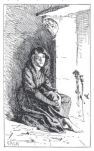
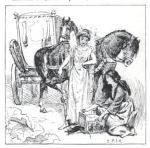
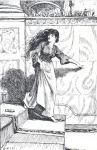
This is Charles Perrault’s brilliant “Cinderella,” as translated by Andrew Lang in his famous Blue Fairy Book, matched mostly with the original, gorgeously delicate illustrations of Henry Justice Ford.
I LOVE Cinderella! As probably my favorite fairy tale of all time, it’s fitting that this is the first I completed in this slideshow series. What other fairy tales would you like to see, and what versions of those tales? Do you know of any obscure fairy tales or illustrators? Let me know in the comments!
Click to view slideshow.
Henry J Ford’s Illustrations for “The Little Glass Slipper:”
Original Text for “The Little Glass Slipper”
Once there was a gentleman who married, for his second wife, the proudest and most haughty woman that was ever seen. She had, by a former husband, two daughters of her own humor, who were, indeed, exactly like her in all things. He had likewise, by another wife, a young daughter, but of unparalleled goodness and sweetness of temper, which she took from her mother, who was the best creature in the world.
No sooner were the ceremonies of the wedding over but the mother-in-law began to show herself in her true colors. She could not bear the good qualities of this pretty girl, and the less because they made her own daughters appear the more odious. She employed her in the meanest work of the house: she scoured the dishes, tables, etc., and scrubbed madam’s chamber, and those of misses, her daughters; she lay up in a sorry garret, upon a wretched straw bed, while her sisters lay in fine rooms, with floors all inlaid, upon beds of the very newest fashion, and where they had looking-glasses so large that they might see themselves at their full length from head to foot.
The poor girl bore all patiently, and dared not tell her father, who would have rattled her off; for his wife governed him entirely. When she had done her work, she used to go into the chimney-corner, and sit down among cinders and ashes, which made her commonly be called Cinderwench; but the youngest, who was not so rude and uncivil as the eldest, called her Cinderella. However, Cinderella, notwithstanding her mean apparel, was a hundred times handsomer than her sisters, though they were always dressed very richly.
It happened that the King’s son gave a ball, and invited all persons of fashion to it. Our young misses were also invited, for they cut a very grand figure among the quality. They were mightily delighted at this invitation, and wonderfully busy in choosing out such gowns, petticoats, and head-clothes as might become them. This was a new trouble to Cinderella; for it was she who ironed her sisters’ linen, and plaited their ruffles; they talked all day long of nothing but how they should be dressed.
“For my part,” said the eldest, “I will wear my red velvet suit with French trimming.”
“And I,” said the youngest, “shall have my usual petticoat; but then, to make amends for that, I will put on my gold-flowered manteau, and my diamond stomacher, which is far from being the most ordinary one in the world.”
They sent for the best tire-woman they could get to make up their head-dresses and adjust their double pinners, and they had their red brushes and patches from Mademoiselle de la Poche.
Cinderella was likewise called up to them to be consulted in all these matters, for she had excellent notions, and advised them always for the best, nay, and offered her services to dress their heads, which they were very willing she should do. As she was doing this, they said to her:
“Cinderella, would you not be glad to go to the ball?”
“Alas!” said she, “you only jeer me; it is not for such as I am to go thither.”
“Thou art in the right of it,” replied they; “it would make the people laugh to see a Cinderwench at a ball.”
Anyone but Cinderella would have dressed their heads awry, but she was very good, and dressed them perfectly well They were almost two days without eating, so much were they transported with joy. They broke above a dozen laces in trying to be laced up close, that they might have a fine slender shape, and they were continually at their looking-glass. At last the happy day came; they went to Court, and Cinderella followed them with her eyes as long as she could, and when she had lost sight of them, she fell a-crying.
Her godmother, who saw her all in tears, asked her what was the matter.
“I wish I could—I wish I could—“; she was not able to speak the rest, being interrupted by her tears and sobbing.
This godmother of hers, who was a fairy, said to her, “Thou wishest thou couldst go to the ball; is it not so?”
“Y—es,” cried Cinderella, with a great sigh.
“Well,” said her godmother, “be but a good girl, and I will contrive that thou shalt go.” Then she took her into her chamber, and said to her, “Run into the garden, and bring me a pumpkin.”
Cinderella went immediately to gather the finest she could get, and brought it to her godmother, not being able to imagine how this pumpkin could make her go to the ball. Her godmother scooped out all the inside of it, having left nothing but the rind; which done, she struck it with her wand, and the pumpkin was instantly turned into a fine coach, gilded all over with gold.
She then went to look into her mouse-trap, where she found six mice, all alive, and ordered Cinderella to lift up a little the trapdoor, when, giving each mouse, as it went out, a little tap with her wand, the mouse was that moment turned into a fine horse, which altogether made a very fine set of six horses of a beautiful mouse-colored dapple-gray. Being at a loss for a coachman,
“I will go and see,” says Cinderella, “if there is never a rat in the rat-trap—we may make a coachman of him.”
“Thou art in the right,” replied her godmother; “go and look.”
Cinderella brought the trap to her, and in it there were three huge rats. The fairy made choice of one of the three which had the largest beard, and, having touched him with her wand, he was turned into a fat, jolly coachman, who had the smartest whiskers eyes ever beheld. After that, she said to her:
“Go again into the garden, and you will find six lizards behind the watering-pot, bring them to me.”
She had no sooner done so but her godmother turned them into six footmen, who skipped up immediately behind the coach, with their liveries all bedaubed with gold and silver, and clung as close behind each other as if they had done nothing else their whole lives. The Fairy then said to Cinderella:
“Well, you see here an equipage fit to go to the ball with; are you not pleased with it?”
“Oh! yes,” cried she; “but must I go thither as I am, in these nasty rags?”
Her godmother only just touched her with her wand, and, at the same instant, her clothes were turned into cloth of gold and silver, all beset with jewels. This done, she gave her a pair of glass slippers, the prettiest in the whole world. Being thus decked out, she got up into her coach; but her godmother, above all things, commanded her not to stay till after midnight, telling her, at the same time, that if she stayed one moment longer, the coach would be a pumpkin again, her horses mice, her coachman a rat, her footmen lizards, and her clothes become just as they were before.
She promised her godmother she would not fail of leaving the ball before midnight; and then away she drives, scarce able to contain herself for joy. The King’s son who was told that a great princess, whom nobody knew, was come, ran out to receive her; he gave her his hand as she alighted out of the coach, and led her into the ball, among all the company. There was immediately a profound silence, they left off dancing, and the violins ceased to play, so attentive was everyone to contemplate the singular beauties of the unknown new-comer. Nothing was then heard but a confused noise of:
“Ha! how handsome she is! Ha! how handsome she is!”
The King himself, old as he was, could not help watching her, and telling the Queen softly that it was a long time since he had seen so beautiful and lovely a creature.
All the ladies were busied in considering her clothes and headdress, that they might have some made next day after the same pattern, provided they could meet with such fine material and as able hands to make them.
The King’s son conducted her to the most honorable seat, and afterward took her out to dance with him; she danced so very gracefully that they all more and more admired her. A fine collation was served up, whereof the young prince ate not a morsel, so intently was he busied in gazing on her.
She went and sat down by her sisters, showing them a thousand civilities, giving them part of the oranges and citrons which the Prince had presented her with, which very much surprised them, for they did not know her. While Cinderella was thus amusing her sisters, she heard the clock strike eleven and three-quarters, whereupon she immediately made a courtesy to the company and hasted away as fast as she could.
When she got home she ran to seek out her godmother, and, after having thanked her, she said she could not but heartily wish she might go next day to the ball, because the King’s son had desired her.
As she was eagerly telling her godmother whatever had passed at the ball, her two sisters knocked at the door, which Cinderella ran and opened.
“How long you have stayed!” cried she, gaping, rubbing her eyes and stretching herself as if she had been just waked out of her sleep; she had not, however, any manner of inclination to sleep since they went from home.
“If thou hadst been at the ball,” said one of her sisters, “thou wouldst not have been tired with it. There came thither the finest princess, the most beautiful ever was seen with mortal eyes; she showed us a thousand civilities, and gave us oranges and citrons.”
Cinderella seemed very indifferent in the matter; indeed, she asked them the name of that princess; but they told her they did not know it, and that the King’s son was very uneasy on her account and would give all the world to know who she was. At this Cinderella, smiling, replied:
“She must, then, be very beautiful indeed; how happy you have been! Could not I see her? Ah! dear Miss Charlotte, do lend me your yellow suit of clothes which you wear every day.”
“Ay, to be sure!” cried Miss Charlotte; “lend my clothes to such a dirty Cinderwench as thou art! I should be a fool.”
Cinderella, indeed, expected well such answer, and was very glad of the refusal; for she would have been sadly put to it if her sister had lent her what she asked for jestingly.
The next day the two sisters were at the ball, and so was Cinderella, but dressed more magnificently than before. The King’s son was always by her, and never ceased his compliments and kind speeches to her; to whom all this was so far from being tiresome that she quite forgot what her godmother had recommended to her; so that she, at last, counted the clock striking twelve when she took it to be no more than eleven; she then rose up and fled, as nimble as a deer. The Prince followed, but could not overtake her. She left behind one of her glass slippers, which the Prince took up most carefully. She got home but quite out of breath, and in her nasty old clothes, having nothing left her of all her finery but one of the little slippers, fellow to that she dropped. The guards at the palace gate were asked:
If they had not seen a princess go out.
Who said: They had seen nobody go out but a young girl, very meanly dressed, and who had more the air of a poor country wench than a gentlewoman.
When the two sisters returned from the ball Cinderella asked them: If they had been well diverted, and if the fine lady had been there.
They told her: Yes, but that she hurried away immediately when it struck twelve, and with so much haste that she dropped one of her little glass slippers, the prettiest in the world, which the King’s son had taken up; that he had done nothing but look at her all the time at the ball, and that most certainly he was very much in love with the beautiful person who owned the glass slipper.
What they said was very true; for a few days after the King’s son caused it to be proclaimed, by sound of trumpet, that he would marry her whose foot the slipper would just fit. They whom he employed began to try it upon the princesses, then the duchesses and all the Court, but in vain; it was brought to the two sisters, who did all they possibly could to thrust their foot into the slipper, but they could not effect it. Cinderella, who saw all this, and knew her slipper, said to them, laughing:
“Let me see if it will not fit me.”
Her sisters burst out a-laughing, and began to banter her. The gentleman who was sent to try the slipper looked earnestly at Cinderella, and, finding her very handsome, said:
It was but just that she should try, and that he had orders to let everyone make trial.
He obliged Cinderella to sit down, and, putting the slipper to her foot, he found it went on very easily, and fitted her as if it had been made of wax. The astonishment her two sisters were in was excessively great, but still abundantly greater when Cinderella pulled out of her pocket the other slipper, and put it on her foot. Thereupon, in came her godmother, who, having touched with her wand Cinderella’s clothes, made them richer and more magnificent than any of those she had before.
And now her two sisters found her to be that fine, beautiful lady whom they had seen at the ball. They threw themselves at her feet to beg pardon for all the ill-treatment they had made her undergo. Cinderella took them up, and, as she embraced them, cried:
That she forgave them with all her heart, and desired them always to love her.
She was conducted to the young prince, dressed as she was; he thought her more charming than ever, and, a few days after, married her. Cinderella, who was no less good than beautiful, gave her two sisters lodgings in the palace, and that very same day matched them with two great lords of the Court.(1)
(1) Charles Perrault
September 18, 2018
Delay on Video of the Week
I apologize everyone – my video this week is going to be late. I’ve been sick since last Thursday, and I don’t think it’s gonna come out until Thursday or Friday. See you then!

September 12, 2018
It’s Not ORIGINAL – How to Write an Organic Story
My new series on Writing! So excited for this debut video – I’ve been wanting to do this for awhile.
I’ll still be publishing the Disney series. One writing video a week, and one Disney Video every other week.
If you want to see when I publish new videos, you can subscribe to my channel, CinderellaReads. Please feel free to share if you enjoy the info, and to let me know if you have any critiques! I’m totally open to suggestions on how to improve!
Covered in this Video:
A reaction to Amazon Writers Review Groups
What does it mean to be original?
The basic elements of storytelling
July 31, 2018
Disney’s 59 Classic Films List – RATED!
Story[image error]
Does the story flow well or is it disjointed? Does it have a compelling hook, a solid middle build, and a rewarding pay-off?
9/10
Characters[image error]
Are they likable and relatable? Do they all fit well into the story? Are they well-developed, with good characters arcs?
9/10
Animation[image error]
Did the film push boundaries with technology? Did it take careful time to craft? Is it detailed, harmonious and beautiful?
10/10
Music[image error]
Are the songs memorable? Do they fit well into the story? Do they all have the same harmonious theme and feel?
8/10
Personal Preference[image error]
Do I, personally, love this film? Yes!!!
10/10
Total – 46/50
Let me know, in the comments below, how you would rate this film! Is it your favorite, just OK, or really awful?
July 24, 2018
2 Annoying Aspects of Modern Romance
After watching Pride and Prejudice and Zombies, my brain started turning over modern romance movies and novels, and there are two fundamental problems that I see…
July 20, 2018
Morte de Jack – the Fourth Part of the Jack Saga
Chapter 1
Once upon a time, Jack ruled well and wisely, and made many enemies. All the citizens of his kingdom loved him like their own father, and took a personal interest in all his family affairs. They had rejoiced when his daughter Rose married her wonderful husband Prince Joseph, and they mourned when his snippety, crotetchety, well-meaning mother passed away. She had lived a full, rich life ever since Jack had come down from the beanstalk, [image error]and though she often complained, unable to shake off those earlier years of constant misfortune and accustom herself to the splendors of her comfortable existence, she had always been inordinately proud of her son.
Yet, there were those who salivated to see his head on a platter. Jack had spent his life eradicating the evil around and in his lands, and there were many witches, goblins, dragons, werewolves, and other fearsome beasts who boiled hot in their revengeful hate against him. [image error]Including a whole family of giants who hated him for killing their evil uncle. (Except they really hated him for stealing the golden harp – they didn’t care about their uncle.)
They held a gathering in the dark forest, which was called so because daylight never penetrated through the deep foliage overhead, to decide what to do about this aggravating king.
“We should curse him!”
“Kidnap his daughter!”
“Eat him for dinner!”
Now, evil creatures do not have good imaginations. As they clamored loud for all these ill fates to befall the king, they did not stop to consider that everyone had already been tried, and failed. But the witches were cleverer than the rest, and putting their three heads together (witches always come in threes, just ask Macbeth), they hatched a plan. It was not completely original, but it had more potential to it than any of the other suggestions.
They gathered their forces together, and marched off against the kingdom of Jack.
[image error]As they marched they burned every farm and town they came across, so that they people fled to Jack’s castle ahead of the marching horde. They begged Jack to save them, and Jack rose from his throne, called his knights together, and rode out to meet the enemy. Every able-bodied man took up a sword to march behind their beloved king, while Queen Miranda and her daughter Rose stayed behind to care for the women, children, and elderly. (I think they had the harder job, but they liked it better).
The clash of blade against teeth, the meeting of two great armies, the cries of living and dying, were too epic to convey on a mere piece of paper. King Jack slew every giant that bent to kill him and Prince Joseph pierced the heart of every wicked witch. While knights Rojo and Verde killed the werewolves that jumped at their throats, Sirs Richard and George faced the fairies that buzzed against them like angry wasps. Terence and Corncob led the charge against the two dragons, and Serence devotedly defended the life of his king with every thrust and parry of his blade.
What the heroes did not know is that, while they fought with every ounce of their strength to protect the innocents back at the palace, the enemy had cunningly sent a small team to circumvent the battle and infiltrate the kingdom. While Jack killed giants on the battlefield, a witch, with a retinue of fairies, entered the palace, killed the guards, and stole away the queen and princess.
Successful, as Jack always is over evil, on the battlefield, Sir Serence told the King he should return home and leave the clean-up to the knights. “Reassure your people and the queen. We can handle this mess.”
Jack was grateful, and he and Joseph headed back to the palace accompanied by the wounded who could travel. Imagine the elation he felt, returning after a grueling day, after performing unsavory chores, to see his wife and daughter, and the weak of his kingdom, whom he loved with his whole being, to tell them they are safe – perhaps forever. The enemy is slain or fled, weakened and demoralized. Imagine how he anticipated embracing his beautiful, loving wife, who has taken such excellent care of his subjects in his absence. Imagine how he yearned to hold some little children in his arms, for every young citizen knew he cared for them like a proud grandfather. With these expectations, then, buoying his spirits, imagine his utter devastation when he returned to the palace to find the little ones cowering beneath tables, his knights all slain, and his wife and daughter gone.
[image error]“What has become of you?” he asked the young boy who threw himself against the king’s leather vest and clung while he cried.
“Someone came and took them away. An ugly hag and vicious pucks!” he wept.
As Prince Joseph herded the young ones into the room where the rest of the citizens had fled, fearing the worst for their little children, Jack realized the devious nature of the battlefield. He had been lured away from the palace so his family could be stolen from under his nose.
“What next, King-Father?” asked Joseph, his face white with loss, but his stance at attention. Wherever his wife was, he would find her again. With Jack beside him, he would not fear.
“Your majesty,” said John, a young soldier who had been wounded in the arm in the battle, “we can care for your people. Go. Find your wife.” All the lightly wounded soldiers nodded, rallying together for the king as he had always rallied for them.
Jack lifted his sword. “Let’s go.”
Chapter 2 Coming Soon…