Lizzie Carr's Blog, page 2
December 5, 2019
Eco-friendly ideas for Christmas Cards
CHRISTMAS CARDS - THE FACTS:
An estimated 1.5 billion Christmas cards are chucked away each year.
If we placed all Christmas cards we sent alongside each other, they’d cover the world’s circumference 500 times.
The paper wasted over the Christmas period (not just cards, but wrapping and packaging) is estimated to the equivalent of 5-12 million litres of biofuel – enough to power a bus to go to the moon 20 times.
IDEAS FOR SUSTAINABLE CHRISTMAS CARDS
GO DIGITAL: Customise your own e-card for Christmas. Add music, animation and personalise it too on Green Envelope.
GET CERTIFIED: If you love writing and sending cards or there’s family and friends who aren’t digitally savvy then there’s still ethical ways of doing it. Look out for Forest Stewardship Council (FSC®) certification. It will say on the box and on the reverse of the cards if they are certified. This accreditation is important because it ensures the paper used has been sustainably and ethically produced and you won’t find any glitter either - as this makes most card non recyclable.
SUPPORT LOCAL COMMUNITIES INITIATIVES: Local Bangladeshi women from the Sreepur Village Outreach Project https://www.sreepurvillage.org make hand-crafted charity cards from locally sourced, natural materials. They have Fair Trade recognition and all the women are able to work from home to help with childcare management. 100% of all profits from sales are reinvested back into the Sreepur Village, a safe home for destitute women and children in rural Bangladesh. A cause worth supporting just by sending a Christmas cards.


Ideas for eco-friendly gift wrapping
CHRISTMAS WRAPPING PAPER - THE FACTS:
We use 125,000 tonnes of plastic packaging for gifts in the UK at Christmas.
Most gift wrap can’t be recycled - think about bows, glitter, ribbon, string, sellotape and gift tags. These all break down into micro plastics or make them non recyclable.
For every 1kg of wrapping paper, 3.5kg of CO2 is emitted for its production.
On average 277,000 miles of wrapping paper gets thrown away annually.
IDEAS FOR SUSTAINABLE GIFT WRAPPING
HOLD THE FRONT PAGE: save up the free newspapers, brochures and magazines dropped through your letterbox and use them as wrapping paper. Or get some standard brown recycled paper (that can also go straight into the recycling bin). There’s 1.5 billion Christmas presents given in the UK on Christmas Day so think of all the excess paper (and trees) you will save.
BUTTON UP: There’s reusable fabric wrapping paper (with buttons so no tape needed) which cuts out the use of paper altogether. Wrag Wrap has a wide selection including stretchy and reversible wrapping options.
STAMP IT OUT: Wooden stamps are the perfect way to add a name tag without adding the string, sellotape and tag itself. Etsy has a wide range of options and if you want to customise your brown paper wrapping try a festive 3D roller stamp to add some colour.
STICK IT: On average 6 million rolls of sellotape will be purchased in the lead up to Christmas. The Plastic Free Shop has and eco paper packing tape that works in exactly the same way, but is more environmentally friendly as its acid free, vegan and made in the UK.
December 1, 2019
IDEAS FOR ECO FRIENDLY CHRISTMAS DINNERS
CHRISTMAS DINNER - THE FACTS:
In the UK we consume 80% more food over Christmas than during the rest of the year.
Our excessive eating habits generate the same carbon footprint as a single car travelling 6,000 times around the globe.
We consumer an average of 10 million turkeys, 370 million mince pies and 205 million glasses of champagne in the festive period.
In total, we chuck away 230,000 tonnes of uneaten Christmas delights (the equivalent to 74 million mince pies or 2 million turkeys!)
IDEAS FOR A SUSTAINABLE CHRISTMAS DINNER
KEEP IT SEASONAL: In December brassicas are in prime. Brussel sprouts are in season as well as cabbage, cauliflower and the almost indestructible kale. Fresh root vegetables like parsnips, celeriac, swedes, leeks and turnips are also in good supply this time of year. There’s plenty of choice. Avoid foods from abroad that come with a high carbon footprint and keep it local, or at least UK based. Abel and Cole does a seasonal Christmas veg delivery box - which means skipping the supermarket queues and eliminating excess packaging.
GO ORGANIC: if you can manage Christmas without meat then this is by far the most sustainable option, but if that’s unthinkable then poultry - like traditional turkey - is far less carbon intensive that red meat. Support local farmers and, where possible, buy organic, free-range and supporting local farmers. Riverford Organics does a Christmas delivery box that should cover everything you need. For a lot of us, this can be unaffordable so try buying less food that is better quality.
WASTE NOT: transforming Christmas Day leftovers cuts waste, saves money, helps the planet AND there’s some delicious recipes that can be cooked up using surplus meat or veg. Jamie Oliver has a whole website dedicated to festive leftover ideas so you can get creative. If you can’t use peelings for decoration, or to add a bit of flavour to mulled wine make sure its composted.
IT’S FREEZING: Start making space in your freezer for any excess food on Christmas Day. If you’re hosting, think about how to package up leftovers to give guests (your old Tupperware would be fine!).
GIVEAWAYS: Donate leftovers to an elderly neighbour, or find your local soup kitchen who might be interested in using it. Compost any other waste or download the Olio app and offer your unused food to people in your area who will come and collect it.
November 30, 2019
IDEAS FOR ECO FRIENDLY CHRISTMAS TREES
CHRISTMAS TREES - THE FACTS
7 million Christmas trees are discarded in the UK every year.
That’s the equivalent of 250 tonnes of Christmas trees thrown away unnecessarily, often ending up in landfill.
IDEAS FOR ECO FRIENDLY CHRISTMAS TREES

ROOT CAUSE: Aside from not having a Christmas tree at all, the most environmentally-friendly option is to buy one with roots still in tact. This means you can store it in a pot and plant it in the garden afterwards ready for next year. Pine and Needles has a selection of pot grown fir trees and they deliver nationwide.
FELLED AWAY: If you get a felled tree, choose a local grower with FSC® accreditation. This logo is a symbol that the trees have been grown sustainably and ethically. Forestry England also sources trees from sustainable forests with short transportation line. Most Christmas trees from local garden centres or garage forecourts are farmed intensively on an industrial scale, (sometimes outside of the UK). These Christmas trees are usually sprayed with fertilisers and herbicides and are wholly unsustainable. To avoid this, consider one of the option above or shop for an organic tree. The Soil Association has lots more information on this.
PICK UP LINES: After Christmas you can recycle your felled tree into compost via local authority Christmas tree recycling schemes. Not all councils operate this service, but if yours does they will offer a collection service or drop off point in early January. It is usually shredded into chippings. The alternative is to put it in garden waste or dispose of it at your nearest recycling plant. Check out Recycle Now to see if you’re eligible.
RENTAL CLAUS: Christmas tree rental schemes are an actual thing these days - and growing in popularly too - which I absolutely love! Renting a tree is as simple as ordering your preferred type online, selecting a delivery slot and when it arrives you you decorate it, love it and enjoy it before arranging collection after Christmas to be repotted and nurtured for the following year. What’s not to love? There’s lots of local services including Rental Clause and London Christmas Tree Rental
TREELESS: We’ve all heard about the destruction of our rainforests from wildfires, palm oil extraction and agricultural grazing so rather than getting a tree this Christmas - at a time when they are most precious than ever - donate to preserve them in locations all over the world. Rainforest Concern works in Ecuador, Colombia, Costa Rica and Sri Lanka to protect rainforest ecosystems and the indigenous people that rely on them. World Land Trust a UK non-profit with global reach also offers a similar opportunity and you can donate as much or as little as you can afford.
FAKER: Artificial trees are less environmentally-friendly as most are made from non-recyclable plastic. The carbon emissions generated to produce artificial trees means it requires around 10 Christmases before its carbon neutral and remotely environmentally friendly. Keep it for a long time and you’re net positive in carbon, but the non-recyclable plastic will likely end up on landfill. If you have one then avoid simply replacing it to be more sustainable - it’s not. If it still has mileage then keep it going until it reaches the end of its synthetic life (and hopefully by that time we’ll have a waste management infrastructure that can recycle it!)
November 26, 2019
a guide to eco friendly Christmas Decorations
Christmas is the season of unrestrained consumerism. We’re hell bent on upholding the traditions of gift-giving, decorations and roast dinners with all the trimmings (whilst simultaneously stressing ourselves to make it all perfect), it’s easy to forget that behind every Christmas card, twinkling light and pig in blanket, there is a significant environmental cost.
Take presents - the ultimate symbol of love - but its sentiment has been exploited by retailers who lure us with persistent and aggressive offers and discounts. We are conditioned to view the excess of Christmas as luxury, not overindulgence. We measure our self-worth by the quantity and quality of our presents and how they are wrapped. It’s a competitive game, driven by big business, that we’re unwittingly participating in at the expense of the planet.
Our festivities equate to an astonishing 5.5% of the total annual carbon footprint in the UK and we create an extra 30 per cent of rubbish which adds up to around three million tonnes of waste. As population increases, so does that percentage. We don’t need to give up on long-held family traditions, or morph into Scrooge and stop giving presents altogether to be more sustainable at Christmas, but there are ways we can reduce our destructive impact and move towards more environmentally friendly ways of celebrating and still retain the festive cheer.
Over the next week - in response the week long Black Friday and Cyber Monday offers and discounts - I’ll be sharing the ultimate guide to a sustainable Christmas that offers tips, ideas and alternatives that covers every aspect of the festive season. Whether it’s renting your Christmas tree, finding eco-friendly sellotape cards, or making the most of leftover festive food - I’ve got you covered.
Part one - a guide to all things Christmas decorations.
PRE-PURCHASE CHECKLIST FOR ECO FRIENDLY CHRISTMAS
Before you buy anything festive this year here’s the sustainability checklist to run through:
Is there a more environmental friendly alternative?
Is it ethical, and were the workers who made it fairly paid?
Is the supply chain transparent or traceable?
Can I buy it from a local or independent retailer?
Can I find this second hand?
Will anyone miss it if I don’t buy it?

CHRISTMAS DECORATIONS - THE FACTS:
Paper waste over Christmas is equivalent to 5-12 million litres (that’s a pretty wide estimate!) of biofuel. That’s enough to power a bus to the moon 20 times.
If every UK household switched a single string of incandescent lights for its LED equivalent, more than £11 million and 29,000 tonnes of CO2 could be saved just over the 12 days of Christmas.
Studies by NASA has revealed that parts of earth are up to 50% brighter during holiday seasons. Not only does this wash out any potential of seeing stars (which are surely better than any artificial light), it wastes energy and disrupts the ecosystems of nocturnal wildlife.
IDEAS FOR ECO FRIENDLY CHRISTMAS DECORATIONS
GO NATURAL: If you have family heirlooms handed down over the years these will always make the best decorations. If not, or you’d like to add to the collection, then swap glitter and tinsel for natural foliage like pine cones, holly leaves, mistletoe and ivy. It can be as simple as filling a glass jar with cranberries, branches and bracken for an elegant centre piece or reclaimed wood and tree stumps dressed with foliage.. Pine cone wreaths, cinnamon sticks tied together as place cards, evergreen tinsel intertwined with tea lights on the mantel piece - these are all easy ways of bringing nature inside instead of using synthetic decorations. They will fill your home with wonderfully festive scents, plus it means getting wrapped up and heading outside with friends and family to forage and gather your decoration. It’s gorgeous way to spend quality time together and Forestry England has walking routes nationwide.
BAUBLES ALL THE WAY: There’s a variety of baubles made from wood, brass, paper and in the case of Nkuku recycled glass, to decorate trees. Or John Lewis has paper based balls if you want to avoid plastic. The best kind of baubles, however, are the edible ones so cook up some ginger bread and get hanging.
LIGHT IT UP: If you are lighting up the house, or the tree then opt for LED fairy lights instead of incandescents to bring some sparkle. They last up to 20 times longer than regular bulbs. Solar powered fairy lights are on the rise too. It brings pros and cons (no fiddly cables, extension leads or sockets required, but the short daylight hours in winter means they may not stay bright for as long as you’d like). Set all your light displays to timers and if you have a smart metre set a limit. It’s one less thing to think about and means you can controls the amount of time lights are on, anything slightly less than you’d normally do is going to help reduce your bills and your emissions. Win win.
IT’S CRACKERS: earlier this year a petition did the rounds to to ban Christmas crackers. The response was overwhelmingly (and surprisingly) positive. The amount of single use plastic that pops out of crackers on Christmas Day is eye watering for any eco-conscious person. If you’re happy to boycott crackers altogether then this is the most eco-friendly approach (and my favourite option), but if they are an important part of family tradition here are a few sustainable alternatives.
Not On The High Street stocks crackers made using seed paper so once you you’ve pulled them and popped your crown on, the outer layer can be replanted to grow beautiful wild flowers as a memory. Not On The High Street also stocks reusable Christmas crackers that are beautifully emroided that you can fill with your own choice of gift and store the fabric ready for the following year. The RSPB has a selection of fair trade crackers but made from recycled materials (and are glitter-free). Inside each cracker there is coloured paper to make nature inspired origami at the table - something to keep everything entertained waiting for pudding.
TINSEL AND WREATHS: Etsy is full of plastic free tinsel and garland ideas designed for you to assemble them yourself - nothing like Christmas songs, mulled wine and putting up eco friendly decorations. Protect the Planet also has lots of Christmas decoration options from sustainable tinsel to handmade, plastic free baubles. Got a herb garden? Weave together lavender, rosemary, bay leave branches and any other herbs you like, then mix with garlic bulbs and chillies for some colour and hang it in your kitchen. It’s practical for festive cooking and all natural.
CANDIDLY CANDLES: Clemantine, clove, myrtle, red berries, cinnamon, spice - all the smells that conjure up a sense of Christmas. Most candles are made from paraffin but eco-friendly options are replaced with soy or beeswax. The Botanical Candle has a wide Christmas selection whilst Hampton and Astley’s candles are made from 100 per cent organic non-toxic ingredients lasting over 50 hours of burn time.
Tomorrow’s post will be all about eco-friendly Christmas tree options.
We can still show love without buying extravagant, unnecessary gifts. Who decided presents is the benchmark for how much you care? Considering there’s around 60 million unwanted Christmas presents in the UK every year, and around 30 million aren’t returned and are destined for landfill, I think we can all agree that something needs to change. Us.
November 21, 2019
72 hours in... Lancashire
We don’t need to travel to far flung corners of the earth to find adventure, we just need to use our imagination. So, with this sentiment in mind, a couple of weeks ago I hopped on a train out of London and three hours later I arrived in Lancashire… the home of Accrington Stanley Football Club, made famous but that milk advert from the 1980’s.
It might not be top of the bucket list but it’s holds a special place for me. In 2016, when I paddle boarded 400 miles through England’s waterways, I finished the journey on the Lancaster Canal - just short of Stainton. I was taken aback by the beauty of that stretch of waterway (so much so that I included it in my guidebook ‘Paddling Britain’ amongst 50 of my favourite places to paddle board in England). I admit that back then my expectations of Lancaster Canal (and Lancashire more generally) were fairly low. The two things I did know were Morecambe Bay and Blackpool Pleasure Beach (as well as the advert) so there wasn't much to go on, and it completely blew my mind. Paddling through the centre of Lancaster and its historic buildings was as charming as it was friendly, and the more remote parts of that canal were some of the most beautiful I’d seen in the country. I knew that one day I would return and explore the surrounding area more and so (a cool three years later) I finally did.
Over 72 hours in Lancashire - as part of a whistle stop micro gap adventure with Visit England where I experienced the best of a gap year in a few days - I crammed in all things Lancashire had to offe. From wild swimming in lakes, paddleboarding along rivers, star gazing, beach cleaning, bird watching, foraging, climbing hills, bodging a kitchen utensil and camping in woods, it was an overload of my senses. And I wanted to give something back too, so I volunteered at a wildlife reserve and joined Lancaster locals on a beach clean.
It’s too easy to overlook what’s on our doorstep when we plan trips - I’m guilty of it too - so I hope by summarising this little adventure it sparks some inspiration for you to spend 72 hours (that’s basically a weekend - easy!) having a wild time close to home. There’s always adventure closer that you think, you just need to go and find it.
72 HOURS IN LANCASHIRE
My favourite way to explore is by paddleboard. It gives a deep sense of place that wandering the streets just can’t match - especially in waterways that meander through the background of bustling towns and cities, like Lancaster. You can people watch as your float quietly past and see a place from an entirely different perspective to everyone on foot.
I arrived late in Lancashire in the late afternoon. Although not time to visit the city centre, there was plenty of light left after I finished unpacking in the luxurious yurt on the shore of Wyresdale Park’s magnificent lake that I was calling home for a couple of nights. I quickly pumped my board up and glid into the stillness and silence of the lake, glad to have some time in nature to unwind from the craziness of London just a few hours earlier.
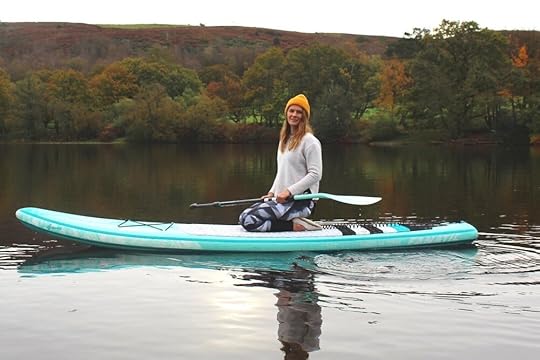
Early the next morning, just as dawn was breaking, I was back at the lake on Wyresdale Park - but this time I was going in for a swim. The temperature? A balmy eight degrees. Cold enough to lose your breath and feel that overwhelming numbness evade your body as the wetsuit fills with water before it heats against your skin, but warm enough not to feel like body parts are going to drop off. I crossed the lake in front crawl - taking it slowly and absorbing the autumnal surroundings. The sound of the ducks quacking, the seasonal leaves and the odd heron gliding past in the distance. It energised me - which was lucky because the itinerary ahead was jam packed.

The obvious way to warm up after a dip is with a hearty brunch and caffeine, so I headed to the nearby Applestore Cafe (by nearby I literally mean a 3 minute walk), for poached eggs on toast and a coconut latte (all very hipster, I know). As well as delicious grub, this glasshouse cafe has real grapevines growing in, through and around it and roaring log burners keeping it toasty inside - a gorgeous spot whilst waiting for the feeling in my fingers and toes to be restored.
Next stop was Pilling Pottery, a family business spanning three generations, to learn the art of pottery making. I’ve always found the idea of sitting behind a potters wheel appealing - there’s something hypnotising about it - so now was my chance to try it for real. My first love will always be paddle boarding but this has taken second place. Moulding clay is like mindfulness on steroids. You need to be incredibly focused - a combination of deep concentration and physical work - engrossing you in the rhythm of the wheel and the movement of the clay. Two hours with my tutor, Dylan, flew by and I ended the session with a small bowl and tall vase ready to kiln and take home.

I left Pilling Pottery and headed straight to the nearby beach (Pillings Beach, aptly) to met the local community for their monthly beach clean. They’ve been doing this for a couple of years and for a crisp autumn day I was pleasantly surprised to see nearly 20 people there. The tide was miles out and I was surrounded by mudflats (trashed my trainers) but thanks to the clear blue skies the horizon was vivid. A glimpse of the Lake District to the north and the Yorkshire Dales to the East. I took in a deep breathe and let it out slowly, soaking in the fresh, autumn air and glorious views. That day I collected seven pieces of rubbish, not much for an hour on the beach (thankfully) and logged it all in the Plastic Patrol app and then back to the yurt for an evening in front of the campfire and a hot tub warmed by wood burning. Bliss.
The final day was an early start to meet Paul Williams at his woodwork cabin nestled in the Wyresdale Park Estate. I was guided by the smoking chimney in the woodland and as the cabin appeared fully, I smiled to myself. It was magical.
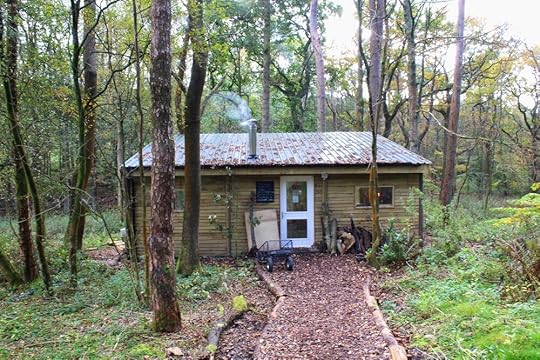
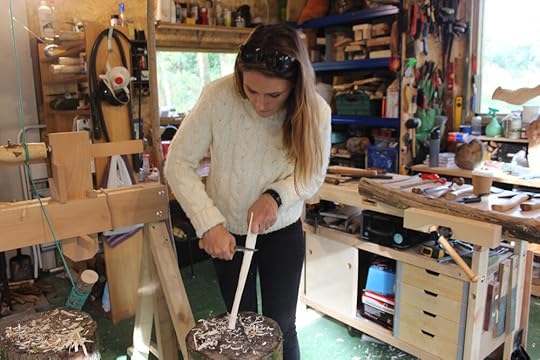
Paul, a master craftsman who has been working with wood for more than 30 years, patiently taught me the art of bodging - a traditional woodturning craft to make items like chair legs. That was a little advanced for me so we settled on making a spatula. His knowledge, passion and enthusiasm was infectious. He understood wood in a way that I couldn’t even imagine and I learnt a lot about types and grains but also grew huge appreciation for the craft itself.
I mean, did you know that sycamore is naturally anti bacterial?
That’s why it’s used a lot in kitchen utensils - because it’s hygienic. And that’s why we chose that particular wood for my own spatula too. I axed the wood, shaped it, filed it down and carved it. I broke into sweat and it took me over an hour but I was thrilled to see the finished product knowing it was all a product of my hard work. Paul does classes and workshops too, if you’re interested.

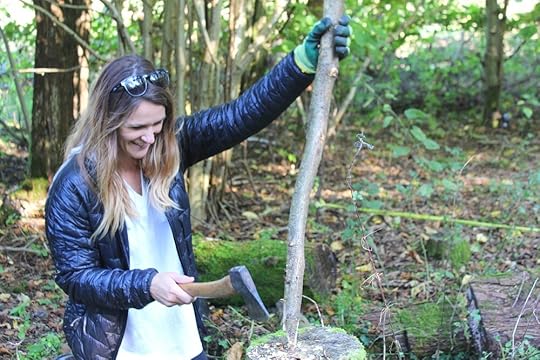
As afternoon kicked in I headed over to Brockholes Nature Reserve to volunteer a couple of hours making dead hedge from fallen trees on the reserve. My newly developed air weilding skills came in useful as I chipped away at branches, making pointed stakes to hammer into the ground as the fence’s framework. We managed to add a few metres to its length and once the fencing is complete it will form an enclosure to a children’s play area in the reserve - and it was so lovely to have contributed something to it.
And that’s where my adventure ended. I jumped on the train that evening and headed back to London feeling refreshed from a few days nestled in nature, giving my time to good causes and learning new skills.
Fancy a micro gap of your own? Here’s some of the finer details.
HOW TO GET THERE:
Virgin Trains from London Euston too Lancaster are around £80 (cheaper if you get them in advance). I got off at Preston and then hired a little Fiat 500 (an ideal runaround and suer cheap - around £45 per day) from the nearby Enterprise to reach where I was staying and get around for a few days.
TOP TIP
There’s a lot going on in Lancashire. Great beaches, a lot of architectural history with the likes of Lancaster Castle in the city that was built in the 11th century but sits on the site of an old Roman fort. The Castle famously served as the setting for the Lancashire Witch trials in 1612, where ten people were found guilty of witchcraft and sentenced to death. There’s also gorgeous viewpoints around Lancashire - Darwen Tower. which sits perched atop of Darwen Hill and dates back to 1898. And, if you climb the tower’s internal stairs you’ll be greeted with a breathtaking view of the surrounding country that includes Yorkshire, the Isle of Man and even Blackpool Tower.
November 20, 2019
You are not a fake
“What’s your greatest achievement?”
Someone asked me that question in an interview a while ago and I stumbled. As the pressure of a roomful of eyeballs built, I wracked my brains for an answer.
Not because there were too many to choose from, but because there’s a part of me that struggles to recognise any of my successes as legitimate or deserved.
Imposter syndrome affects 70% of us - all in the loop of feeling insecure and undeserving of achievements - but few admitting it for fear of being “exposed”. It’s a figure far higher than I expected which is as much a relief as it is saddening.
There are five types of “imposters” amongst us.
The Perfectionist: they must know it all before beginning and set excessively high goals. If they don’t think they can reach the standard, or try and fail, they become despondent.
The Expert: they measure worth on how much they know, what they can do. Excess time is dedicated to learning, mostly for fear of being exposed as unknowledgeable.
The Soloist: they feel that asking for help reveals fraudulence. If they achieve with the support of a team then it doesn’t count as a success.
The Superwoman/man: they are convinced they’re fakes amongst real-deal of colleagues, friends, other parents. They push themselves to work harder to measure up but never quite feel they do.
The Natural Genius: they set the internal bar impossibly high. Judging themselves on getting things right first time, quickly and fluently, failure is hard to accept.
So if you relate, how do you manage these emotions? Start by recognising them as exactly that - emotion - and separate them from the facts by rationalising the full picture rather than the detail you’re hung up on.
That incessant, nagging sense of self-doubt and fear of being exposed as a fraud is not real. It’s a mind-trap. Everything you’ve achieved is a result of the work you’ve put in so don’t allow a sequence of negative thought patterns fog your reality.
No one is holding you to the same excessively high standards that you’re holding for yourself. Just do your best and accept that it is enough.
November 17, 2019
Meeting Government to talk plastic pollution
Last week I went to Westminster for a meeting with DEFRA policy teams working across litter, recycling, marine debris and the Extended Producer Responsibility reform.
I’ve been waiting years for the opportunity to share Plastic Patrol’s mission at Government level - ever since I
started collecting data about plastic pollution four years ago when I paddle boarded the length of England. I photographed every single piece I encountered - and 22 days, 400 miles and 3000 photos later I had my first proper sample for an evidence base.
Back then I couldn’t find an impartial, centralised and scientifically robust tool to share my data, so I built my own. The Plastic Patrol app collects crowdsourced photos from people all over the world who find and record litter in nature - where it doesn’t belong! Right now there’s more than 260,000 examples recorded across 76 countries globally - enough to clearly identify accountable types, brands and other significant patterns - and make Government listen!
Having the chance to get in front of the right people at the top was a “pinch me” moment. It’s everything I’ve been working towards since I started campaigning against plastic pollution, and is literally ALL down to the incredible effort from everyone who has been involved.
If you’ve been on a clean up or downloaded the Plastic Patrol app and recorded litter, I want to say a huge and heartfelt THANK YOU.
Every single piece added has contributed towards reaching this point. And if you’ve ever questioned or doubted the difference collecting and logging one piece of plastic makes then I hope this is a reminder of the power we have collectively (and how tech can actually be used for good!).
I’ll be meeting DEFRA again in January - once policies are in place - to share the full, three year plastic pollution study that we’re working on now. Our findings will help build a case to fight for fundamental changes to legislation around plastic pollution that need addressing - so watch this space!
November 6, 2019
What the frack is going on?
One Saturday in early November, the UK Government announced it would bring fracking to an immediate halt in England. At first glance, the news reports suggest this is something to celebrate - a win for the years of campaigning and protesting for environmentalists. But, on closer inspection, it dawned on me that the recent coverage around the fracking ban has been so incredibly misleading that I’ve been left stunned. I feel compelled to wade in just to balance out the hype with some truth and pull out the facts.
The misinformation around this fracking saga (#frackgate) isn’t just about politics, this is about the integrity of content and the lack of accountability when it comes to sharing facts on online. I’ve seen quite a lot of influential media outlets and respectable organisations using click bait style headlines claiming that we’ve made a major breakthrough on this issue. We haven’t and we shouldn’t pretend we have.
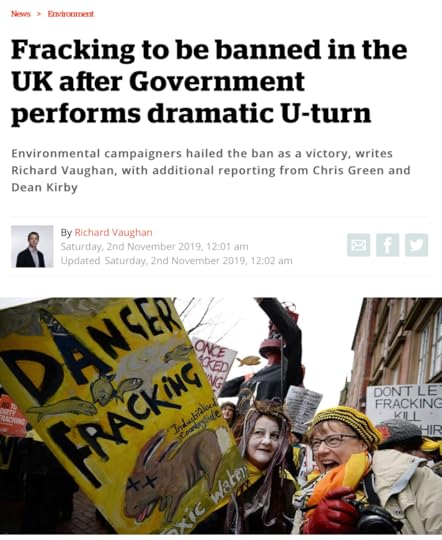
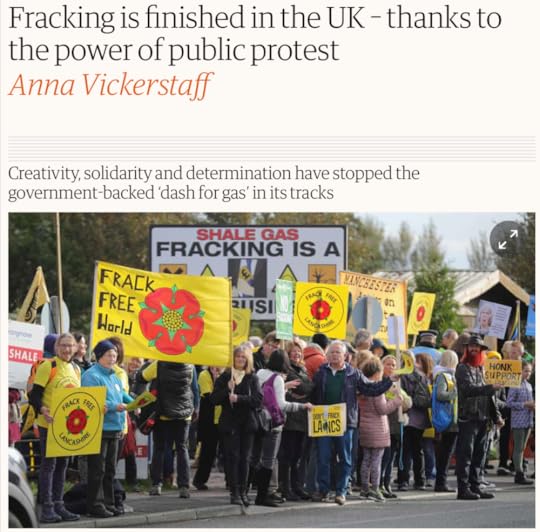
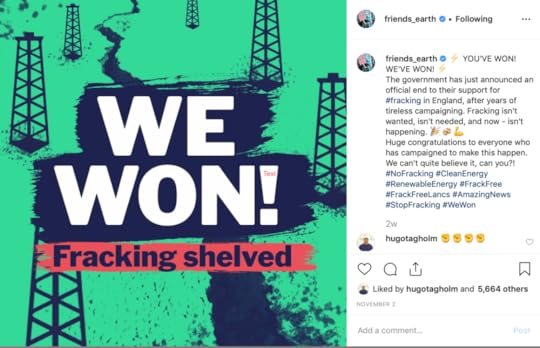
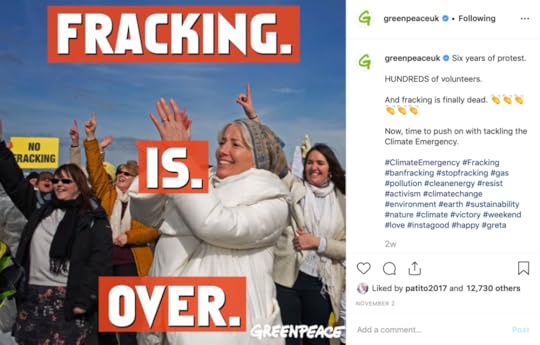
Delve beneath these headlines and you’ll unearth the real fracking facts... which I’ve summarised here for your ease!
Fracking has been HALTED, not banned.
It will resume as soon as the earthquakes it causes (we hit almost 3 on the Richter scale in Lancashire!) can be verified as predictable and controlled by scientists.
This policy is NOT an outright ban, it can be reversed.
The “science” they are exploring is based on minimising potential risk of an earthquake, it doesn’t even consider the climate science.
By halting plans with a view to recommencing work, fracking continues to goes against the ambitions of the Paris agreement and it doesn’t support the Government’s pledge to be net zero by 2050. These inconvenient points have been completely overlooked.
Ultimately we’ll be back to extracting fossil fuel from the ground.
So whilst you see the mainstream media and social outlets celebrating this fracking “ban”as a victory. Please consider, instead, that what you are really seeing is fake news, clickbait headlines, poor journalism, lack of research and greenwash.