
Brian Lavelle's Blog, page 5
January 19, 2023
Untitled poem, 20 January 2023
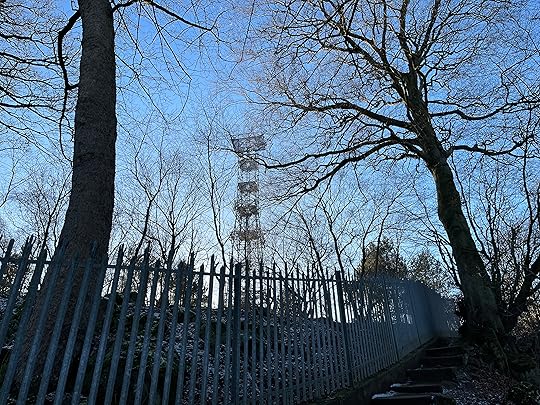
tower between trees
under a growth of stillness
in near-blue
woodpecker���s hit-
or-miss punctuation
of the sentences
playing out in my head
unheard in offices
and factories and
houses beneath this hillside
the metal of the past
twists into a leaf-affirmed
present of trees
the branches soar
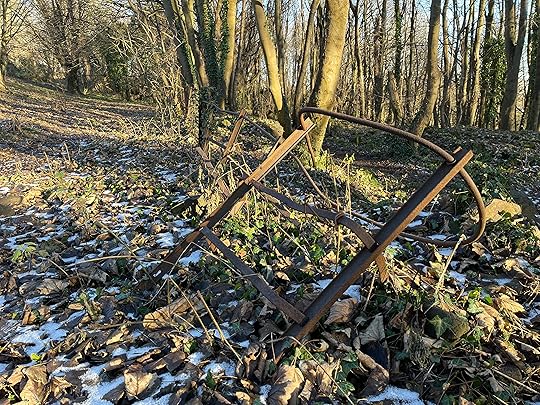
Corstorphine Hill, Edinburgh, 20 January 2023


January 9, 2023
Two Solstice haiku
the longest day’s
cat on my pillow
another reason for sleeplessness
quiet notes of colour
near a winter’s path
distribution of cyclamen
21 June and 21 December 2022
January 8, 2023
Two Solstice haiku
the longest day���s
cat on my pillow
another reason for sleeplessness
quiet notes of colour
near a winter���s path
distribution of cyclamen
21 June 2022
21 December 2022
September 19, 2022
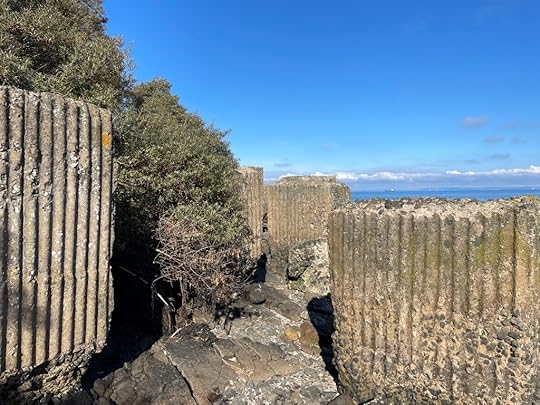
The Teeth of the Sea
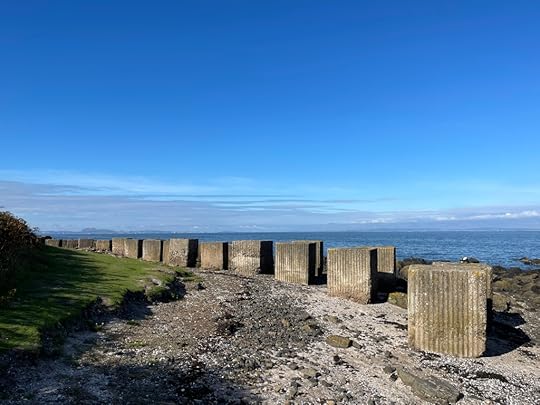
At Longniddry Bents,
the teeth of the sea gnawing
the horizon’s blues.
Seven days on from dad’s death,
I walk this unfamiliar shoreline
unsure how I should feel,
and frayed
at the meniscus of making-do.
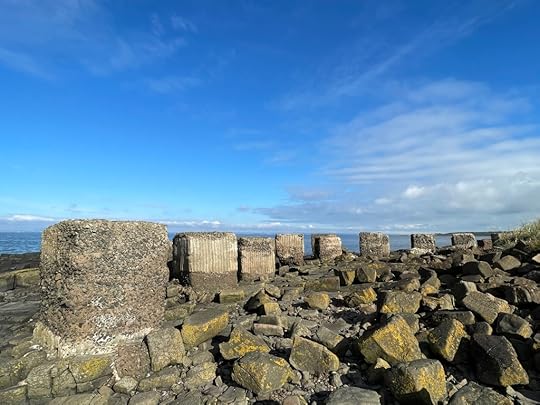
i.m. James Lavelle, 1934-2022
Longniddry, East Lothian, 19 September 2022
September 18, 2022
The Teeth of the Sea
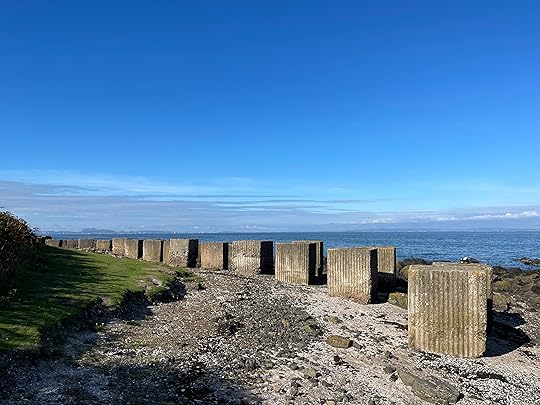
At Longniddry Bents,
the teeth of the sea gnawing
the horizon���s blues.
Seven days on from dad's death,
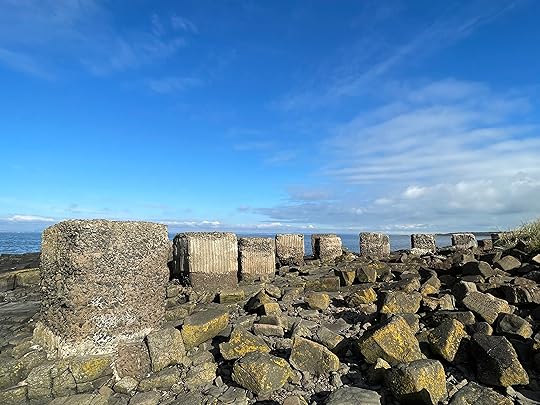
I walk this unfamiliar shoreline
unsure how I should feel,
and frayed
at the meniscus of making-do.
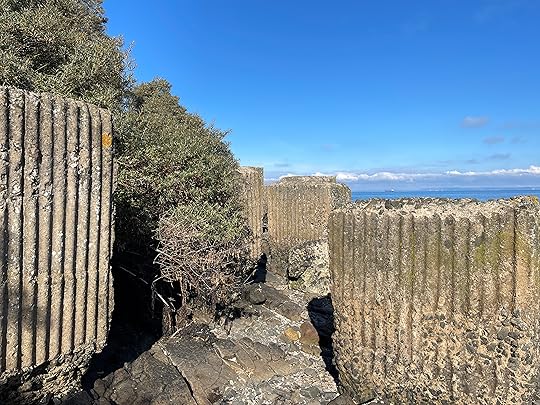
i.m. James Lavelle, 1934-2022
Longniddry, East Lothian, 19 September 2022
August 11, 2022
empty omen

this staggering man’s
moment
empty omen
first
to the last
tick ticking
of more than
one and a half billion
seconds
ell, a name
a convert to numbers
unexaggerated
friable waves sounding
from heart and mouth
to a distant star
empty omen

this staggering man���s
moment
empty omen
first
to the last
tick ticking
of more than
one and a half billion
seconds
ell, a name
a convert to numbers
unexaggerated
friable waves sounding
from heart and mouth
to a distant star
April 7, 2022
Orkney notes, 8 April 2022
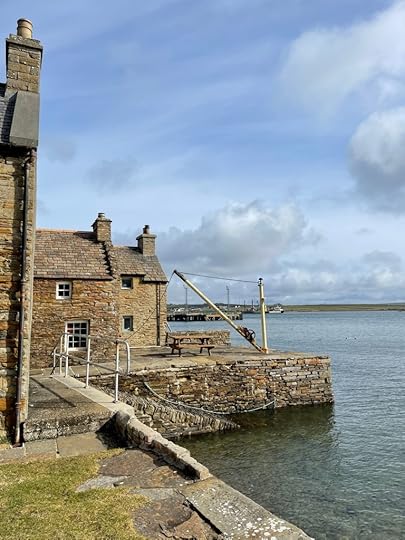
The stone book
Turns heavy pages still, whereon
The story of Hamnavoe is written.
The hills consider
Sagas unwritten yet, austere and beautiful.
George Mackay Brown, Waterfront, Hamnavoe
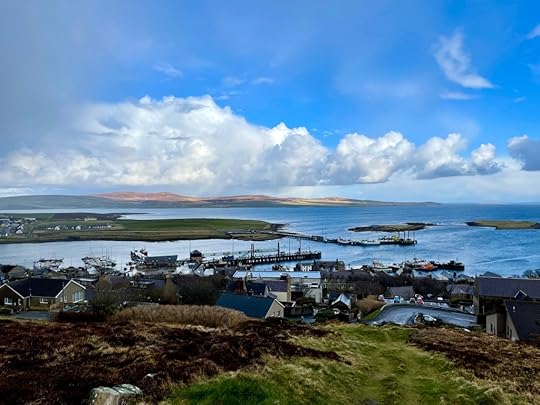
The weather threw rain and hail and blinding sun at us this afternoon as we braved Ness Battery.
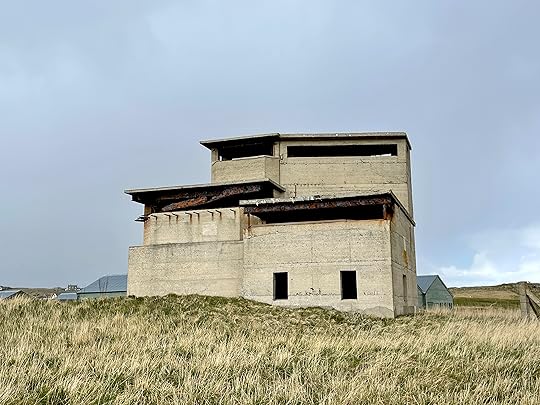
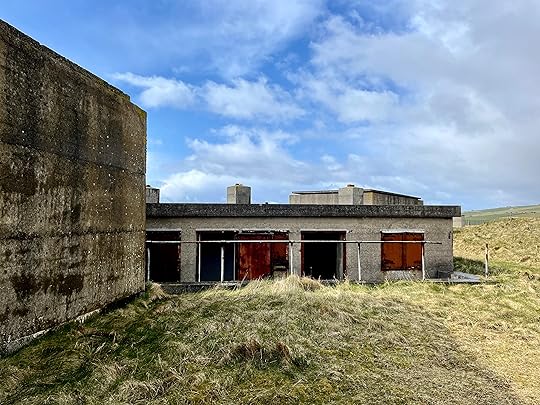
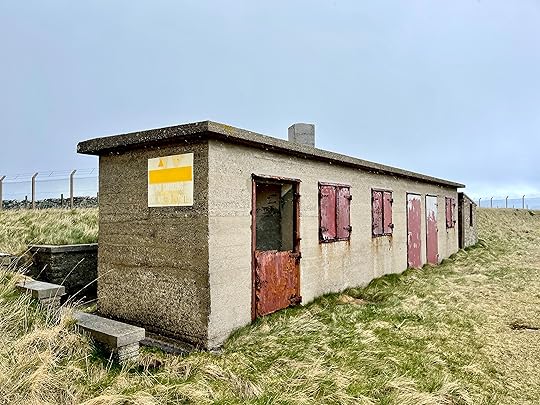
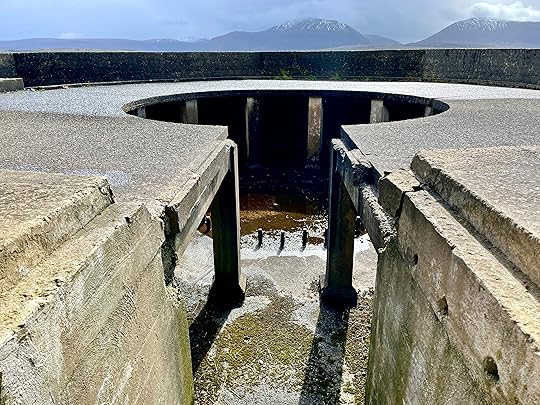
It���s a fascinating and sobering site. Maybe war will always be a constant in this lifetime, our reminders these concrete and steel remnants.
Later, I walk out on my own, up Brinkie���s Brae and then through the town of Stromness itself. It rains and sleets and hails, but I am happy.
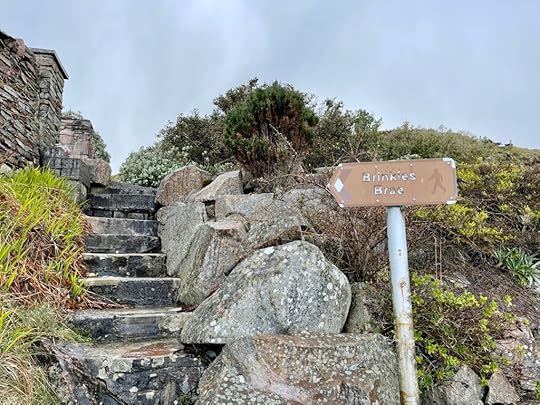
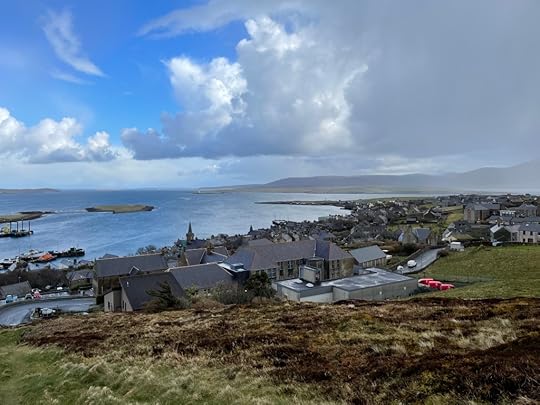
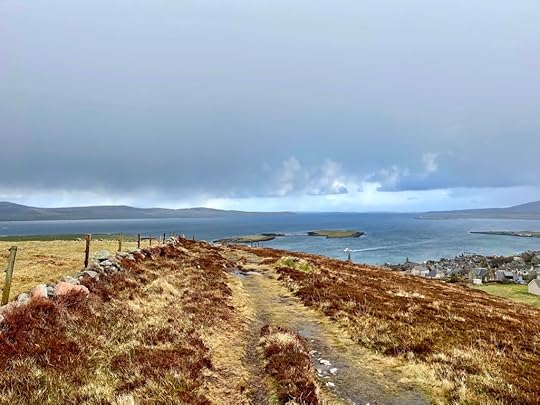
At the top, I say a few silent words to Bessie Millie, the weather witch, for tomorrow���s crossing of the Pentland Firth. I take a small stone from the hill as a keepsake.
This is the last of these self-indulgent diary entries. Thanks to everyone who has read them���and even liked them.
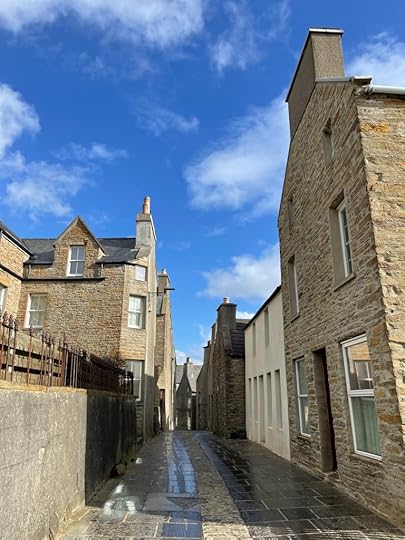
Home tomorrow, from Stromness/Hamnavoe, to colours somehow far less vibrant than these islands��� dicefalls of precious stones.
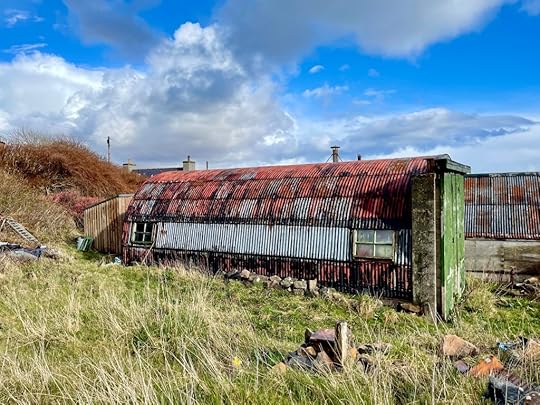
I really hope to return to Orkney soon. It���s like nowhere else I���ve been before.
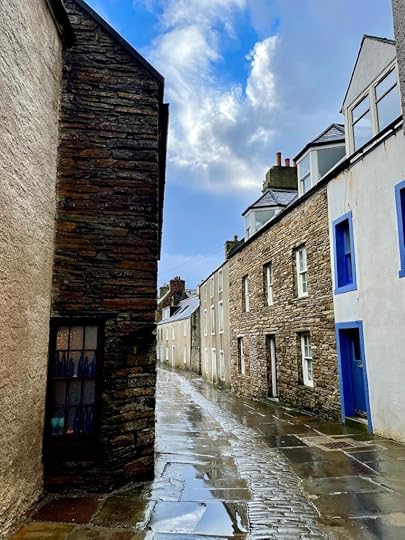
And the chance to spend time in the town where George Mackay Brown lived most of his life has been a joy.
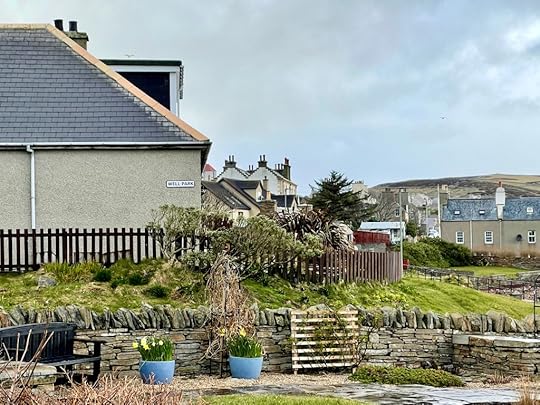
For now, part of me remains here: under the blue skies, under the grey, on the stones of the past or of the near future, under rain and sleet, under sun, but mostly beneath the colours and contours of Brinkie���s Brae.
April 24, 2021
Continuing the drift, only elsewhere
This website and project has, for several years now, encompassed a sort of semi-fictional, semi-dreamlike notion of walking and wondering. And my attempts to put all of that into words as best I can.
[image error]The project will continue but I’ve decided to incorporate everything here, into my own personal website. This website edindrift.me will exist until it doesn’t, but any new work on the project will appear on the brianlavelle.scot website over time.
I know quite a number of people follow this site, so if you get to read this and would like to follow my own site instead, I’d be very grateful. Sorry for the hassle in swapping things over. On the right hand side of each page of my site, there’s a WordPress follow button (if you use the WordPress reader) or you can also follow the site by email.
Thanks so much for all your attention and interest over the last few years!
January 1, 2018
Warriston Cemetery: arise up and call
Old Yew, which graspest at the stones
That name the under-lying dead,
Thy fibres net the dreamless head,
Thy roots are wrapt about the bones.
Alfred Lord Tennyson, In Memoriam (1849)
Sometimes death hides, and sometimes death is hidden from our view by other actors in the drama. In the case of Warriston Cemetery, which sits to the north of Edinburgh, Nature has woven her spell of entanglement on a litany of names etched in marble, reclaiming what was always hers long before the dead arrived to set up home.
[image error]
At first glance, the paths are clear and the graves well tended, but move deeper in and things become less certain, the way more troubled.
[image error]
◊
This was Edinburgh’s first garden cemetery, established in 1843 from a design by David Cousin the previous year, and at approximately 14 acres in size it was a grand gesture for its time. Cousin went on to design Dean Cemetery (1845), Dalry and Rosebank Cemeteries (both 1846) and Newington Cemetery (1848).
[image error]
Compared to the many other, more recently constructed necropoleis in the city, Warriston’s scale is still impressive, but more than half of the cemetery is in need of renovation or, more fundamentally, urgent reclamation, with whole swathes of ground engorged by creeping vines and a groundswell of green.
The vigorous onrush of time has helped to engineer this exquisite memento mori, a dark, mouldering Victoriana that feels almost deliberate.
There is no commemoration here as outlandish as some of the examples in Dean Cemetery, but Warriston’s reach is longer, and decay has twisted its roots around stone and soil alike in a much more transformative way. What remains is an archipelago of half-drowned headstones in a sea of verdant waves, alive in the breeze.
Overgrown in the Undergrowth.
[image error]
Silence and solitude hold sway here. For the full duration of my three hour visit, I’m alone, apart from the ever-present rustle of leaves and the occasional, unnerving snap of branches.
[image error]
At times, I manage to convince myself I’m being followed or that someone is behind me on the pathway—watching—only to turn and spy a fox eyeing me warily from a distance, or glimpse the grey flash of a squirrel scampering from a tree.
[image error]
Warriston Cemetery is more alive than many others places I’ve visited in this city, but it’s a hidden life, secret, protected: an occulted world of birds and insects and small mammals, co-existing in the floodtide of decay and rebirth.
◊
A tumulus rises ahead of me, barely perceptible on what is a sloping site anyway; on it, a pillared memorial or obelisk meshes with the trees, its colours their colours. This location feels different from what I’ve already encountered here. The ambience is different, too, and I pause awhile to reflect on the grandeur of the place, largely forgotten and all the more striking for that.
[image error]
[image error]
[image error]
The cemetery runs on, the darkness increasing as the tendrils of greenery clutch ever more tightly. I come upon the old Victorian railway bridge, sitting quite incongruously in the midst of the proceedings.
[image error]
Shortly after the cemetery opened, the Edinburgh Leith and Newhaven Railway scythed its way through the site dividing the grander northern part of the cemetery from its more modest southern end.
[image error]
It’s impossible to ascend from this spot to the level of the bridge itself, although once I suspect it would have been easy. The stairways and paths are choked and soon, if left unchecked, perhaps even the Gothic mouth of the tunnel itself will be smothered by emerald fingers.
[image error]
[image error]
I can’t resist the odd acoustics of the tunnel itself and I set up the recorder again for a few minutes to capture the sound underneath. It feels unreal, and much more enclosed than the few feet of the arched space would suggest.
Atop the old bridge, an occasional cyclist flashes past, as though flitting into existence from some future timeline and then winking out of the frame forever. Nearby is a set of grand steps that take me up to a level adjacent to the top of the bridge, although, I find, not actually onto it.
[image error]
Up here, the light sits differently somehow and, at first blush, I see that Nature doesn’t appear to dominate as readily as below. I feel like an interloper as people wander over the bridge, now used as a public walkway following the closure of the railway line. None of them sees me, or maybe they think I’m a revenant peering out of the gloom of the undergrowth. I am my own ghost for a few moments. And in this place, it’s curiously fitting.
[image error]
There is still a war being raged even up here; gravestones and tombs battle against a sea of green that appears to be winning. The residents of Hilldrop Crescent can only watch and wait.
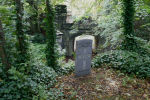
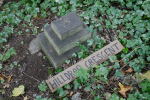
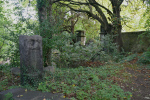
And books haunt me even here.
[image error]
◊
I stop awhile at the long terrace of catacombs that sits silently brooding in the midst of the cemetery. Once, a small chapel sat atop these tombs but it has gone completely.
[image error]
Again, the sound here is strange and my eye is caught by the holes in the walls: surely, only bats and birds use these as portals of ingress and egress.
[image error]
An inky darkness seeps out to enclose the silence and—unless my imagination is getting the better of me—to bolster it. I leave the recorder running and wander away for a few minutes.
[image error]
◊
I pass beneath the railway bridge again, to explore the even more overgrown half of the cemetery.
[image error]
At its southern boundary, the Water of Leith flows past, protected now by recently installed flood defences.
[image error]
As I crouch down to look through the trees to the water, feeling as though I’m gazing out at a new civilisation from the darkness of an ancient forest, I see him: no more than a few metres away, a heron making his stately way along the river, unhurried, stopping for food as he goes.
[image error]
I don’t think I’ve ever witnessed a heron eat anything other than fish before, but he doesn’t seem to be objecting to the fare on offer—as the short film below shows. Choice pickings from the riverbank.
◊
There is almost too much to take in here and the overgrown nature of the tombs and graves means that surprises wait around most corners; that is, if one can even make out what lies beneath the grassy mounds.
[image error]
The sheer number of graves is overwhelming. How many more lie hidden amongst the leaves? A roll call is necessary.
[image error]
[image error]
Near the modern part of the cemetery, closest to the main gate, sat the Robertson mortuary chapel, erected in 1865 for Mary Ann Robertson (1826–58), daughter of Brigadier-General Manson of the Bombay Artillery.
[image error]
This white marble shrine contained a sculpture of a reclining female figure, visible from the outside, the whole being topped with a ruby glass roof with glass sides which led to locals christening this the ‘Tomb of the Red Lady’ because of the rosy light cast on the figure within.
Sadly, the shrine was badly vandalised over the years and had to be demolished in the late 1980s. All that’s left now are the foundations and the recumbent sculpture, fittingly set in a bed of red flowers, but there are some fascinating older images of how the sepulchre looked here. The interior must have been very eerie in its day.
[image error]
I end the walk close to this part of the cemetery; there are still interments being made here in this modern section but even these are suffused with a bitter melancholy.
As the light begins to fade, I make my way out of the gate and back into the land of the living, but all the more energised by this striking landscape of contemplative decay.
[image error]
◊
Further reading: the Friends of Warriston Cemetery have an excellent page that describes their sterling work in trying to bring the cemetery back from the brink.


