Helen Mathey-Horn's Blog, page 29
April 18, 2019
P is for Peony
These are one of those ‘grandma’s flower garden’ flowers. They need a dedicated space for themselves as they get rather ‘large’ and will shade out anything planted with them. My aunt had them in two main spots by her ‘cutting’ garden. She was kind enough to let me take some and bring them to Oklahoma (from Illinois) and they have done remarkably well considering they’ve moved several growing zones. I also got a plant from my mother-in-law’s garden which was at least in the same state if not the same town. I did not get any from my mother’s garden which is an oversight on my part. Her peonies were in a circular bed with a bird bath in the center.
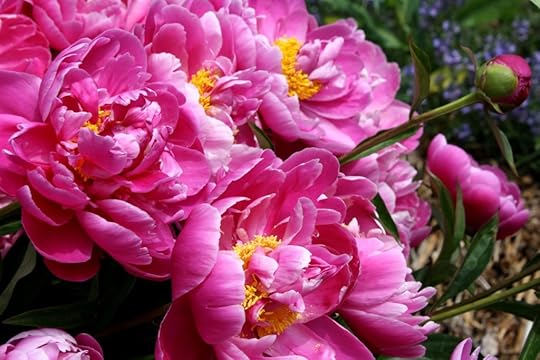
In Illinois it is always a balance between the peonies flowering/budding too early and getting frosted by a late frost or a little too early and ‘over’ by Memorial Day when they could have been used for the graves, or too late and not ready for Memorial Day at all.
Since my mother had a big bed of peonies, cutting them to bring in wasn’t a problem of quantity, but like the lilacs they don’t last long as a cut flower. Mom’s were pink ones and some others were white with a trace of red in them, like this example.
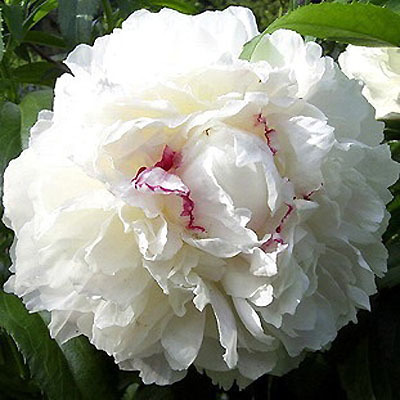
I have pink ones from my aunt and some darker ones that are ‘red’, but really just a very deep pink which I purchased locally, so I’m looking forward to the peonies.
The ‘older’ ones…meaning the heirloom ones from gardeners, who got them from gardeners, who got them…tend to send up flower buds with side buds which means you’re likely to get a flower head that is not as large and has even smaller side flowers. The trick there is to pinch out the side buds early on so the stem puts all the energy into the one main bud. The newer varieties seem to have ‘dealt’ with this problem as I don’t see this issue with the plant I purchased, only with the ‘family’ plants.
Most peonies are the ‘doubles’ with very ruffly, full flower heads. Others are ‘singles’ with only a single layer of petals that allow you to see more of the center of the flower. Both kinds are pretty.
Oh, and I forgot the Japanese peonies. The typical peony’s growth is herbacious meaning it dies back to the ground during winter and sends up new growth each year. The Japanese peonies have ‘woody’ stems and send their growth and flowers from that ‘older/woody’ stem. If they freeze off they may come back, but you won’t have flowers that year…bummer. I’m hoping for flowers this year. I had two on my Japanese style peony last year.
So that’s my take on peonies. I just love their blousy, full beauty.


April 16, 2019
O is for Orchids
I have a few indoor plants and orchids are one that I fall for hard. Seeing them available in the grocery stores just makes it worse. Don’t they know how to market things! Put it up front where you can’t miss it.
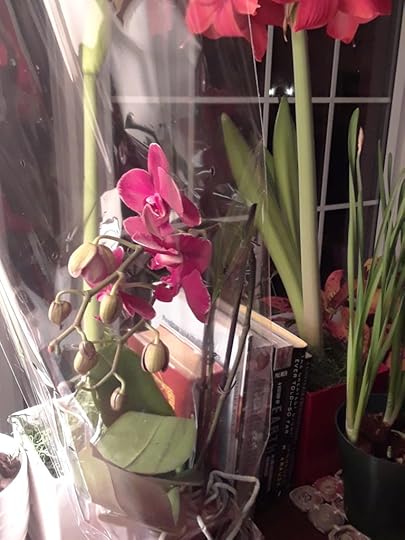
Any rate once they finish blooming it’s a challenge (for me) to get them to rebloom the following year. I’ve even gone the distance to by orchid ‘food’ and try to remember to feed them on schedule.
One year at a plant show at the local garden club I saw a man selling orchid ‘pots’ he had made. They were basically wood strips of 1 cm by 1 cm thickness stacked to make an airy planter. On the top he had screwed in eye hooks so you could suspend the planter if you wished. Boy, I wish I had bought more than three that day. He wasn’t selling them the next time. And they are the best thing. Water drains through easily but the wood chips and wood structure keep enough moisture between plantings and their is plenty of air flow.
For summer I hang them from the metal arch I have my climbing rose trained over. They get early morning sun, rain if there is any, plenty of air and shade during the middle of the day. The house shades them from the afternoon on.
Other orchids are in more traditional ceramic pots with pierced openings. I fit as many as I can on a stand that normally sits on the front porch, but can be brought in for winter use in the bay window. The stand gets morning sun and plenty of air so another good fit for the orchids. Also getting it wet does no damage so I water liberally.
So I’m rather pleased with myself to be able to get some reblooming from the store bought orchids as my mother’s general comment about potted flowers from the grocery store was, ‘Just figure they are going to die and pretend they are cut flowers.’ I’ve definitely got my money’s worth.
N is for Nicotiana
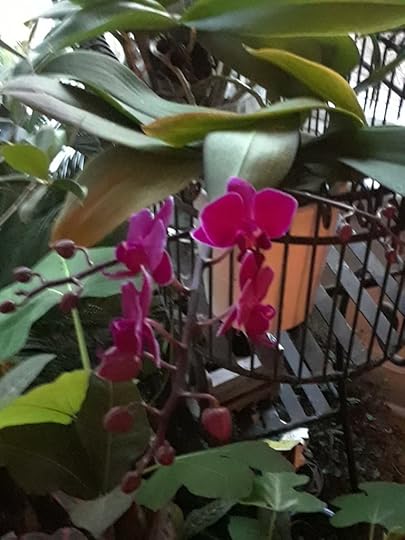
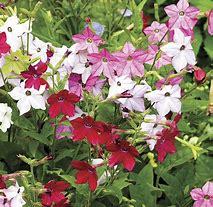
If the word Nicotiana looks suspiciously like nicotine, you are correct. This is a variant in the tobacco family. Again this is not a plant I have in my garden, but I’ve grown it and it is a wonderful annual to plant. I mentioned in the “M” post that one possible theme garden you might have is a scent garden. If you were to plant a scent garden Nicotiana would be a wonderful plant to include. It releases it aroma in the evening and it is nothing like the odor of tobacco, burning or otherwise. It also attracts night pollinating creatures like moths and because it also comes with white flowers, besides variations of maroon and pinks, they show up in a moonlit night garden easily. So if you were looking for a slightly unusual, white, scented plant for a night garden find yourself some nicotiana.
April 15, 2019
M is for Milkweed, Monarchs and Monarda
Finding a flower or topic for “K” has proven difficult but I have ample ideas for “M” and I decided to use three that fit together.
A garden is most often constructed with vision in mind. You plan to ‘see’ the results. Sometimes it is planted with ‘eating’ as a primary function (I’m not that great on this score). And then there are the ‘scent’ gardens where the plants are selected for the aromas they release either from leaf or flowers and I have many plants that accomplish this. But planting for insects is a newer idea in gardening, springing from the fact that our butterflies and bees seem to be having a more difficult time. Whether it is pesticides used in agriculture or just plowing under natural sources of food, the butterflies, bees and their larva are struggling. Enter the butterfly garden.
Now I don’t claim that I plant strictly for all butterflies but I do try and feed monarch larva with milkweed plants. These are not the butterfly bush asclepia but the tall, rather unkempt looking common milkweed. Which if you look rather closer has an interesting looking flower with a nice scent.
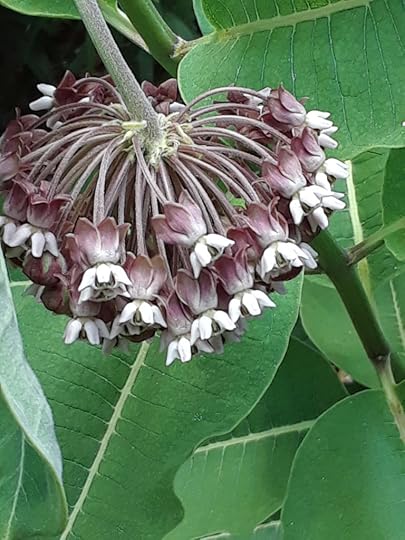
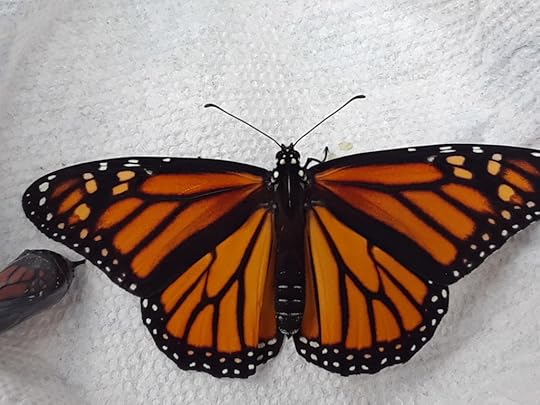
This is the milkweed that monarchs lay their eggs on, then the larva eat the milkweed tissue and use the poisons in the ‘sap’ to make themselves and their adult forms unpalatable/poisonous to anything that might eat them. Even if eaten, they will be ‘spit’ out and that bird won’t make the same mistake twice.
So I have a stand in the back of the garden. It flowers and I do find monarch larvae on it. I haven’t had the milkweed set seeds. Probably because my stand of plants was formed by runners from one plant that took and milkweed needs two different plants to form viable seeds. (My stand is basically one plant – clones.)
Growing up we would look for monarch larvae in late July/August. Here in Tulsa it is later, as in early September. The butterfly adults that come out would be the generation of monarchs headed back to their wintering grounds in Mexico and will be seen again here in the spring on their way back north. In the last year the numbers wintering in Mexico have increased some and scientists are cautiously hopeful that this trend will continue.
If you are interested in reporting when you see monarchs or just want to follow their journey go to this website, Journey North. They also keep track of other animals including Ruby-throated Hummingbirds.
And I better finish up with the Monarda or Bee Balm. It is planted for the bees as its nickname would suggest. It is part of the mint family so where ever you decide to plant it keep in mind it will try to ‘travel’. I had some in the very back of the garden and it seems to have disappeared from that place which is not its usual trick. But I have had spread it to some other places and it really seems to like my front sidewalk garden which is okay with me.
I’ll have to show a picture of that later as my animals are demanding to be fed.
April 13, 2019
L is for Lilac
Lilacs – spring in sight and smell.
Back to the old farmhouse my parents bought in the mid-1960’s. The yard behind the house was divided into two sections by some of the most magnificent lilacs I’ve ever seen. They were easily fifteen to twenty feet tall. They were primarily purple, but there was one white shrub in there. Between that far back yard and the space behind the ‘old’ garage was another row of them and next to the ‘old’ garage by the driveway side was a paler purple that was double flowered. It was attacked by some kind of scale insect and was never very healthy. On the east side of the house were more lilacs and right between the back porch and the covered steps to the basement was one more huge purple bush.
With an abundance of lilacs there was no problem cutting them and bringing them in. And we did. To make them last a little longer we would cut the stem again under water and ‘hammer’ the end to fray and expose more of the inner core. Even so the lilacs would not last very long, but going out to get more wasn’t a problem.
The scent was wonderful. Perfumes do not do it justice and perhaps the only real way to enjoy it is to have the real thing.
When I was thinking about plants I wanted around our house, keep in mind there were several nice things already, lilac was one I was hoping I could grow in Tulsa. I found a very nice dark purple and that is what I have. I previously mentioned (March 19th) what I did to my mother’s lilac on Walnut Drive, and I am constantly reminded of that each spring as this lilac prepares to flower. The picture with Apache is from last spring. Right now the buds are still tightly packed, but with rain and sunshine it won’t be long before I can open a living room window and enjoy that wonderful scent.
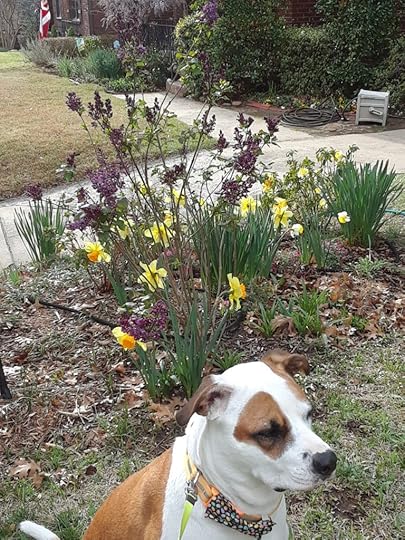
And lovely looking dog.
April 12, 2019
K is Kangaroo Paws
This plant I do not have in my garden, but it can be grown here and it is the only ‘K’ plant I like. Again, my blog, my rules.
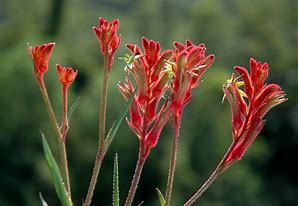
From the picture you can get an idea of why it is called Kangaroo Paws. They come in reds, oranges and yellows. You are more likely to find this at a florist’s shop as it is often added as an interesting accent to arrangements. The outer part of the flower is as ‘fuzzy’ as it looks in the pictures.
April 11, 2019
J is for Johnny Jumpups
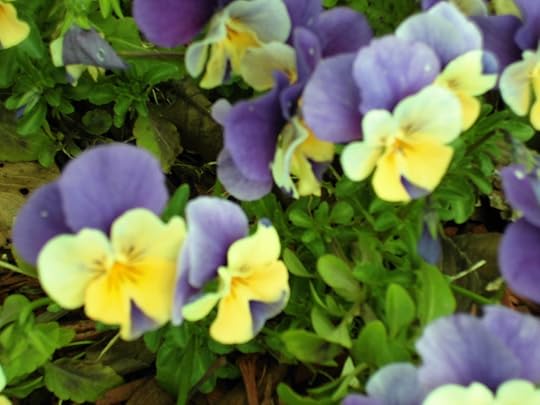
I suppose I could have used this also for “V” violas, but I like the Johnny Jumpup name. As with many flowers I have associations in my mind with various family members. Johnny Jumpups are associated with my paternal grandmother. She lived on a farm when I was VERY young and I only remember a couple of things from that time. But when she moved to town I remember her house and yard with more clarity.
She had a very large lot and a very small house. She and her neighbor, Mrs. Boltz gardened the back section but close to her backdoor (to the left as you looked at it) she grew morning glories and a thick bed of Johnny Jumpups. I think if you have the right combination of climate and spot these will naturalize and they did so in that spot. (Hence the name perhaps?)
The last place I lived in Germany they also ‘took off’, self-seeded and came back each year. Even spreading into the gravel of the parking spot for the car.
Here I’ve planted them in the front yard and with some hope/luck they maybe will help themselves to the spot for years to come.
April 10, 2019
I is for Iris
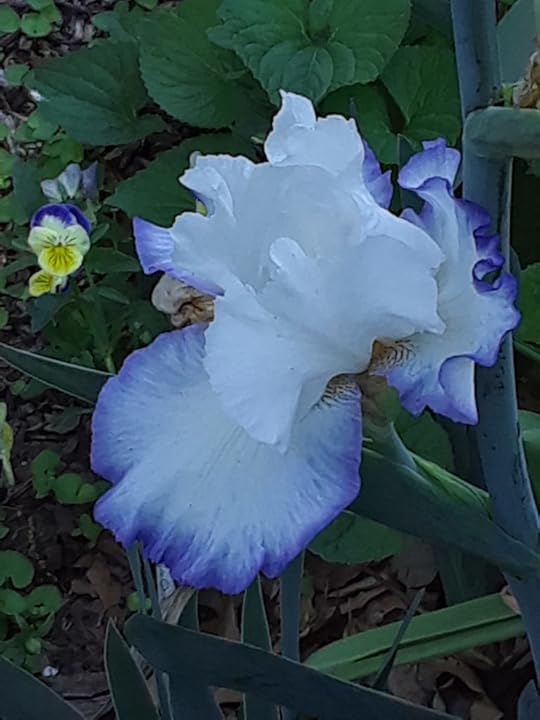
Well, again the computer defeats me! I’ve ‘turned’ pictures before, but today I can’t seem to find the right combination of ‘clicks’ so rather than start throwing things, I’m just going to leave them as they are and let you enjoy their beauty, though it is ‘sideways’.
I think the iris ‘season’ is way too short. I guess if they lasted longer we might not appreciate them as much, but still…TOO SHORT.
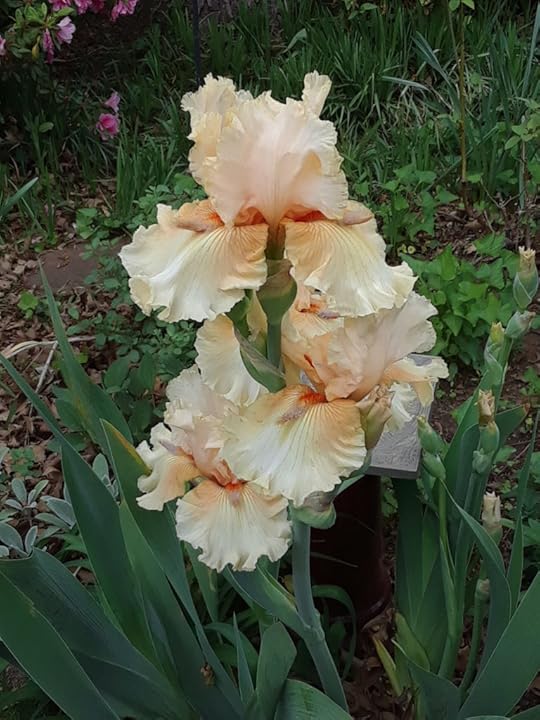
In the town of Randersacker, Germany there was a yard with irises we would pass on the way to dinner at a favorite restaurant. I loved it in spring and was tempted to see if I could ask for some rhizomes from the owner, but as they would be in gardens I would only temporarily have, I never bothered.
I’ve a weakness for the beauty/shimmer of iris. The colors are just stunning, so when the local iris club/association has their sales (at least twice a year) I am hard pressed not to buy a few more rhizomes on faith alone.
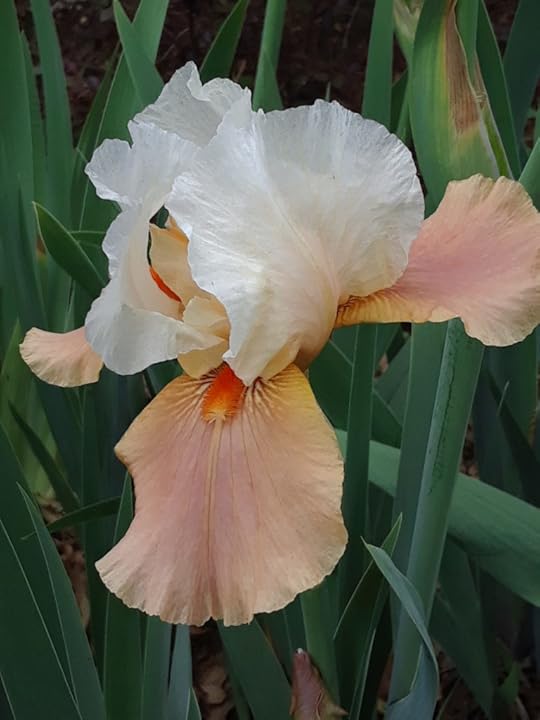
The best iris like hybrid roses and racehorses have long pedigrees. I write down the name but then once it is in the ground the name is usually lost. If you are really into iris you are probably cringing at such cavalier treatment, but such is life. The name isn’t as important to me as the flowers.
My best friend in high school isn’t as enamored of iris as I am, but that is rooted in her family history. Her father collected iris every chance he got and their small city backyard was turned over to rows of irises, which sounds fine until you think about weeding out the grass. And that was the job that fell to my friend and her brother. I can see how iris would lose their appeal if your main dealing with them involved work.
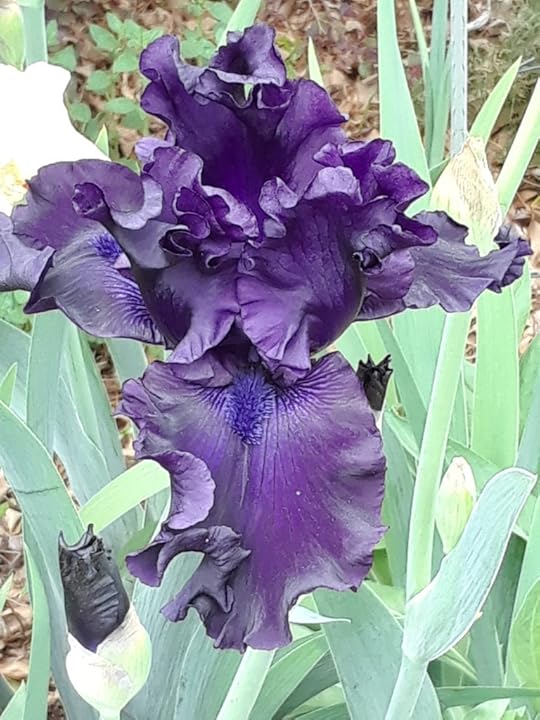
Iris was the Greek goddess of the rainbow and a messenger for the gods. You can see the shimmer in the iris flowers that made the Greeks think of rainbows and iris flowers come in every color of the rainbow including reds, rusty browns and limey greens which makes them a little unusual in the plant world.
Most common would be the blues and purples. ‘Old’ stands of iris sometimes revert to that blue type. But even that is lovely to me and I have a few of those, which being ‘common’, makes it easy to cut to bring in. Another part that makes them precious is not only is the ‘season’ of flowering short, the flowers themselves only last about one day, two at most. Since there may be three or four buds on a stem and they don’t all open at once the blooming is extended over several days, but again way too short.
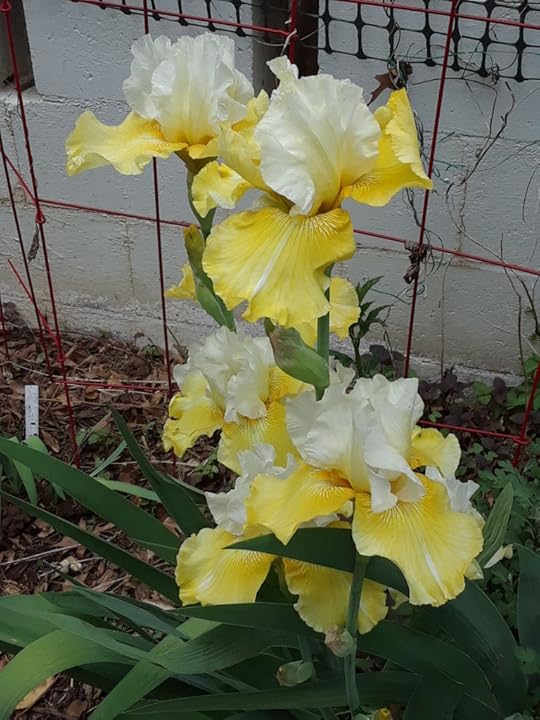
I give you the Rainbow Goddess of the Garden, Iris.
April 9, 2019
H is for Hyacinths and Hellebore
Yesterday was Grape Hyacinths, so we’ll just move on to the big brother/sister? They don’t look much alike but they do come back reliably once they are planted and will spread given time. Most of the hyacinths I have in my yard where purchased as ‘pots’ from the grocery store in the winter when you NEED some inside color and sign of spring. Once they finish flowering, just cut off the flower stem and keep watering them in a sunny spot and when the weather warms enough plant them in the garden. They will reward you with flowers next year and the year after that and so on.
I love buying plants like this for indoors that can be transitioned outdoors for the rest of time. So this is the flower of the day.
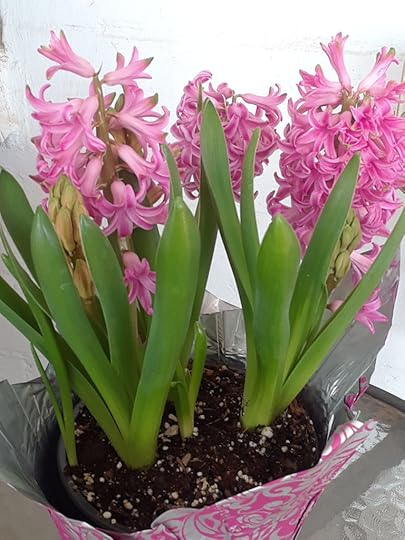
It could just as easily have been Hellebore another early flowering plant. It now comes in a wide range of colors. And I’ve seen some yards that have hellebore planted in great swaths in beds. Truly decadent in my mind as that’s a lot of plants and I’m not sure my budget could go there. At the rate I am going I may reach that density.
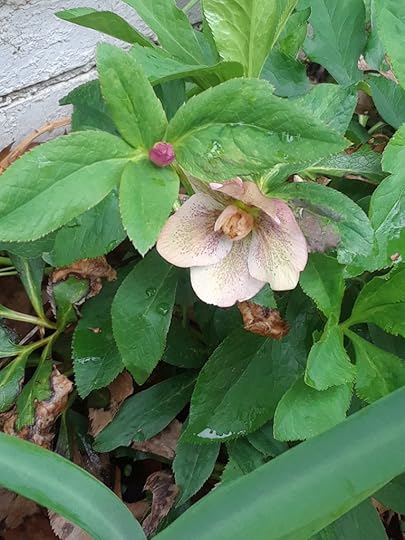
And I’m including Hellebore as they make me think of my aunt. Hers was probably the first garden I was aware of having these early flowering plants. Flowering even before the northern Illinois winters were ready to let go.
April 8, 2019
G is for Grape Hyacinths & Chionodoxa?
Trying to decide on “G” was a bit of a head scratcher. But then there are always grape hyacinths.
These are considered ‘minor bulbs’ as opposed to the daffodils and tulips. But if you can get graph hyacinths started they will come back every year (tulips tend to peter out after a few years) and they will spread. So with great characteristics like that why wouldn’t you plant an area with grape hyacinths.
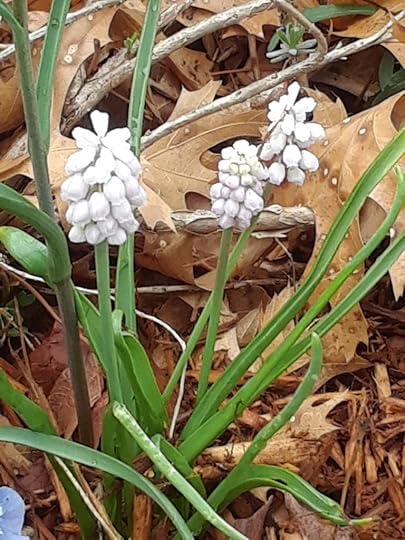
The standard color is a bluish-purple therefore the ‘grape’ part. But it is also possible to get white, pink and deep purple. I put in some of the pinkish ones a few years ago and they still surprise me with their color. They shouldn’t, I planted them, but my memory must be getting weak because when they show up it is…”Oh pink grape hyacinths, cool.”
Their spreading habit reminds me of the ‘glory of the snow’ Chionodoxa forbesii. My parents moved into a 1918 farmhouse and discovered the first spring that under the massive lilacs that separated yards in the back where what we called scillas. It is hard to describe what a wonderful wash of blue flowers they made each spring.
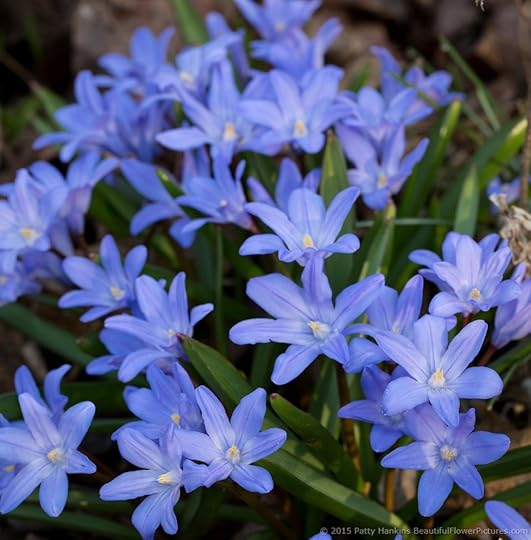
So two “G’s” for today.