
Laurie L.C. Lewis's Blog: Bloggin' It Up Here, page 22
February 10, 2013
WHEN RESEARCH IS SUBLIME
 I'm working like a demon to get a book finished, so I've been neglecting the blog. My apologies, so I've been digging through the archives for some old posts that I really love and that will probably be new to most of you.
This one on research was written in 2010 when I was in the thick of work on Free Men and Dreamers. As I reread this post I felt the old thrill of discovery. Writers, like teachers, are the ones most blessed when preparing to share information with others.
I was researching my favorite park the other day for a scene in my new book. I've been there so m,any times, and blogged about it a few, but that day I discovered that it was once named the second most beautiful park in America. Nice find. Now I'll appreciate it even more.
So here's my little post about some of my greatest American history research discoveries. I hope you enjoy these finds as much as I did.
Laurie
******************************
The Historical fiction requires diligent research. Get sloppy with a fact, and like a date who catches you in a lie, a reader's trust is gone and everything else you say is scrutinized.
In the past five years I've probably spent over 1000 hours conducting research on people, places, clothing, battles, guns, churches, ships. . . you name it. Today I spent an hour researching the history of the C-section for a scene. It was fascinating!
I've stumbled upon some informational gems in the public collections. My favorites are the minutes of the congressional hearings from the Revolution through the War of 1812, old maps, and my very f
 avorite--personal correspondence.
I love to read the writings of great men and women in their own "voice." It makes the hair rise on my arms to see their penmanship, to read the beauty of their rich vocabulary, to see the gentility with which they handle even the most bitter exchanges. There certainly was something lovely and elegant in the way they respected and regarded one another, at least on paper.
Today I wrote a scene regarding Thomas Jefferson's offer to sell his exquisite personal library to the nation to replace the volumes lost when the British burned Washington. (The top photo is a view of the book room in his study.) Among the vast collection of his personal correspondence are several letters he wrote to various individuals as he worked out the details of this transaction. These letters are among my favorite "finds."
The first letter was written by former President Jefferson to his de
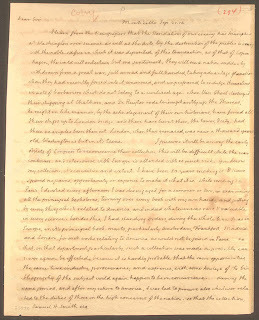 ar friend President James Madison. Even though they were very familiar, with Dolley Madison having served as Jefferson's hostess during his term, he addresses Madison as "Dear Sir," honoring his office. It is my most favorite find.
Dated September 26th, 1814, it was Jefferson's first communication with his friend after the loss at Bladensburg, the burning of Washington and the banking crisis sweeping the country. I love the gentle way he comforts Madison in an hour of extreme national need. Madison knew he had nearly lost the government, and that he was hated by many of his own people, and Jefferson bolsters and encourages him as he advise
 s his friend on how to deal with these events. It is a beautiful glimpse in time.
Dear Sir,
It is a very long time since I troubled you with a letter. . . in the late events at Washington I have felt so much for you that I cannot withhold the expression of my sympathies. . . All you can do is order . . . execution must depend on others. . .I know that when such failures happen they afflict even those who have done everything they could to prevent them. . .
The other two letters were written to Samuel H. Smith, another friend and government official at the time of the destruction of the Capitol. It is to Smith that Jefferson makes his initial proposal. Couched within the letters are tidbits that reveal much about Jefferson's personality and point of view. In referring to his collection of books, he writes:
I do not know that it contains any branch of science which Congress would wish to exclude from their collection; there is, in fact, no subject to which a member of Congress may not have occasion to refer.
Maybe I'm just a history geek, but I thought some of you would enjoy reading these gems. Follow the links and you'll see other wonderful trails to follow another day.Copyright 2009 Laurie LC Lewis, (To obtain permission to copy or reprint any portion of this post, please contact the author at lclewis2007@gmail.com)


February 4, 2013
WRITING TIP: INTENTION VS. PERCEPTION
Stink bugs are a huge problem here in Maryland. They're an Asian bug that hitched a ride to the U.S. in a piece of furniture, and since they're not indigenous, they have no natural predators here in the states so they multiply until swarms literally coat your outside walls and swarm you when you walk. And to my knowledge, we have no sure repellent for them either.
So they are a huge nuisance, entering even the cleanest, tightest homes on your clothes and in your grocery bags. We pick them off the walls and pray one doesn't get squished because the scent they give off is . . . well . . . stinky.
My daughter's two-year-old son, Brady, loves these pests. He will obsess over their whereabouts all day crying, "Bug! Bug! Bug!" until he gets hoarse. They're harmless, so Amanda will allow one or two to crawl in his hand so he can see them close up and feel the tickle. When Brady is finished playing with the bug, his mama instructs him to toss it in the toilet and say, "Bye bye, bug," and then . . . you've got it . . . flush the critter away.
For Christmas, Brady's daddy, Nick, bought him a bug terrarium, and they quickly found a few winter survivors for Brady's bug house. This was, perhaps, Brady's favorite Christmas toy. He 'd carry the terrarium around saying, "Bug! Bug!" while proudly displaying his pets for all to see.
One day, however, Brady was hollering, "Bug! Bug! Bug!" ad nauseum, until his voice became hoarse, (and until his mother and sleepless baby sister were about to go mad), so Amanda told Brady, "That's enough, Brady. Time for buggy to go bye-bye." Her plan was to distract Brady on to another activity, but a few moments passed and she heard noise in the bathroom. Unbeknownst to her, Brady had promptly obeyed his mother's directions.
She heard some bumping in the bathroom, and then the flush. When she went in to check on him, Brady had submerged the entire terrarium into the potty, and was attempting to flush his critters and their plastic chateau down the drain.
At the moment, his mother was of mixed humor. She had a mess to clean up, but the innocent attempt of the child to obey her was not lost in that concern. She had given a direction, and Brady had, to the best of his ability, obeyed her.
It provided an interesting reminder about example and direction. Could another line of instruction saved the day? You bet. "Brady, it's time to take the buggies out of their house and make them go bye bye." (Forgive me if this entire scenario makes you want to call PETA, but honestly, we are over-the-top sick of these bugs.)
Just because we know what we are thinking, it in no way guarantees that the listener does . . . or the reader. We need to listen with our eyes, so-to-speak--to create a visual image of what we're saying, so we can see the instructions as the child would. Or as the reader would.
I once saw a kids' show that illustrated what certain phrases might conjure up in a child's mind. It clearly showed the potential collisions between intention and perception. Consider what a child might imagine from a phrase like, "That really blows my mind!" Frightening...
In order to avoid such miscues in your writing, get additional eyes on your project, have several people read your work to be sure they see and hear what you intended. A miscue can completely alter point of view, perspective, and in some cases, the entire book, leaving our reader, and our work, well . . . in the toidy.Copyright 2009 Laurie LC Lewis, (To obtain permission to copy or reprint any portion of this post, please contact the author at lclewis2007@gmail.com)
So they are a huge nuisance, entering even the cleanest, tightest homes on your clothes and in your grocery bags. We pick them off the walls and pray one doesn't get squished because the scent they give off is . . . well . . . stinky.
My daughter's two-year-old son, Brady, loves these pests. He will obsess over their whereabouts all day crying, "Bug! Bug! Bug!" until he gets hoarse. They're harmless, so Amanda will allow one or two to crawl in his hand so he can see them close up and feel the tickle. When Brady is finished playing with the bug, his mama instructs him to toss it in the toilet and say, "Bye bye, bug," and then . . . you've got it . . . flush the critter away.
For Christmas, Brady's daddy, Nick, bought him a bug terrarium, and they quickly found a few winter survivors for Brady's bug house. This was, perhaps, Brady's favorite Christmas toy. He 'd carry the terrarium around saying, "Bug! Bug!" while proudly displaying his pets for all to see.
One day, however, Brady was hollering, "Bug! Bug! Bug!" ad nauseum, until his voice became hoarse, (and until his mother and sleepless baby sister were about to go mad), so Amanda told Brady, "That's enough, Brady. Time for buggy to go bye-bye." Her plan was to distract Brady on to another activity, but a few moments passed and she heard noise in the bathroom. Unbeknownst to her, Brady had promptly obeyed his mother's directions.
She heard some bumping in the bathroom, and then the flush. When she went in to check on him, Brady had submerged the entire terrarium into the potty, and was attempting to flush his critters and their plastic chateau down the drain.
At the moment, his mother was of mixed humor. She had a mess to clean up, but the innocent attempt of the child to obey her was not lost in that concern. She had given a direction, and Brady had, to the best of his ability, obeyed her.
It provided an interesting reminder about example and direction. Could another line of instruction saved the day? You bet. "Brady, it's time to take the buggies out of their house and make them go bye bye." (Forgive me if this entire scenario makes you want to call PETA, but honestly, we are over-the-top sick of these bugs.)
Just because we know what we are thinking, it in no way guarantees that the listener does . . . or the reader. We need to listen with our eyes, so-to-speak--to create a visual image of what we're saying, so we can see the instructions as the child would. Or as the reader would.
I once saw a kids' show that illustrated what certain phrases might conjure up in a child's mind. It clearly showed the potential collisions between intention and perception. Consider what a child might imagine from a phrase like, "That really blows my mind!" Frightening...
In order to avoid such miscues in your writing, get additional eyes on your project, have several people read your work to be sure they see and hear what you intended. A miscue can completely alter point of view, perspective, and in some cases, the entire book, leaving our reader, and our work, well . . . in the toidy.Copyright 2009 Laurie LC Lewis, (To obtain permission to copy or reprint any portion of this post, please contact the author at lclewis2007@gmail.com)
January 31, 2013
CHASING INTEGRITY ON A BLOG
A simple little contest provided an opportunity to do an integrity-check, and what I found surprised me. Integrity matters, and it seems that it is slipping, in even simple and small things.
I occasionally participate in blog hops where people visit your page, complete some little task, and then are entered to win a prize. Easy stuff, right?
Most bloggers who host a stop on these hops participate in order to get new followers, or in some cases, to introduce people to a new book they are writing, or maybe to a product they are selling. The effort on the part of the participant is a few seconds, the chance to win is fairly small, and the prizes are generally valued at under $25. In my case, it was a $25 restaurant gift certificate.
I recently asked people to pop over to my web site and read a little blurb about a new book I'm writing, then post that they did it. That's it. The book's not even out, and I doubt most of these visitors will remember it when it does debut, but it gives me a little feedback, and provides an opportunity to touch base with my regular followers and meet a few new ones. It's very nice.
Everyone who says they popped over to the site gets an entry. The old honor system. It's turned into an interesting moral experiment.
I've never checked to see who did and didn't follow the directions before, but I noticed a much higher volume of people saying they did compared to the daily stat report I get. Yes, I can see the stats. I know how many people actually stop by, and if I care to check, I can identify who did, what time, from where, and their server's address. I didn't do all that, but here's the rub: the actual number of visitors was less than a third of the number of people who said they stopped by.
So, am I being a nut job for being concerned that adults fibbed in order to be entered to win a prize? It's not the cause of ripples in world peace or anything . . . or is it?
Does it strike anyone else as worrisome?
Are honesty and integrity values we expect in others anymore?
I'd love to hear your thoughts, as a writer, as a woman, as a grandma of kids growing up in this world.
In my generation, parents took their kids back to the store to return a purloined pack of gum, and we knew that lying, stealing, or swearing, (though occasionally risked) was a second cousin to bank robbery, treason, and becoming a complete reprobate. We also knew that parents could cause much greater suffering than any cop, because they could make restitution humiliating enough to obliterate the immediate thrill of bad behavior, and it would last f o r e v e r.
We proudly passed these lessons on to our own children. We were the scary parents, the ones who WOULD find out everything, and who then would make the doer pay dearly to win back lost trust. And you know what, we hardly ever had to initiate any discipline protocol because, as my adult daughter revealed to me, "We were a little bit afraid of you, but mostly, we never wanted to disappoint you."
So are these values still alive in our society? Sing them out. I need to hear a few amens from the chorus. Copyright 2009 Laurie LC Lewis, (To obtain permission to copy or reprint any portion of this post, please contact the author at lclewis2007@gmail.com)
I occasionally participate in blog hops where people visit your page, complete some little task, and then are entered to win a prize. Easy stuff, right?
Most bloggers who host a stop on these hops participate in order to get new followers, or in some cases, to introduce people to a new book they are writing, or maybe to a product they are selling. The effort on the part of the participant is a few seconds, the chance to win is fairly small, and the prizes are generally valued at under $25. In my case, it was a $25 restaurant gift certificate.
I recently asked people to pop over to my web site and read a little blurb about a new book I'm writing, then post that they did it. That's it. The book's not even out, and I doubt most of these visitors will remember it when it does debut, but it gives me a little feedback, and provides an opportunity to touch base with my regular followers and meet a few new ones. It's very nice.
Everyone who says they popped over to the site gets an entry. The old honor system. It's turned into an interesting moral experiment.
I've never checked to see who did and didn't follow the directions before, but I noticed a much higher volume of people saying they did compared to the daily stat report I get. Yes, I can see the stats. I know how many people actually stop by, and if I care to check, I can identify who did, what time, from where, and their server's address. I didn't do all that, but here's the rub: the actual number of visitors was less than a third of the number of people who said they stopped by.
So, am I being a nut job for being concerned that adults fibbed in order to be entered to win a prize? It's not the cause of ripples in world peace or anything . . . or is it?
Does it strike anyone else as worrisome?
Are honesty and integrity values we expect in others anymore?
I'd love to hear your thoughts, as a writer, as a woman, as a grandma of kids growing up in this world.
In my generation, parents took their kids back to the store to return a purloined pack of gum, and we knew that lying, stealing, or swearing, (though occasionally risked) was a second cousin to bank robbery, treason, and becoming a complete reprobate. We also knew that parents could cause much greater suffering than any cop, because they could make restitution humiliating enough to obliterate the immediate thrill of bad behavior, and it would last f o r e v e r.
We proudly passed these lessons on to our own children. We were the scary parents, the ones who WOULD find out everything, and who then would make the doer pay dearly to win back lost trust. And you know what, we hardly ever had to initiate any discipline protocol because, as my adult daughter revealed to me, "We were a little bit afraid of you, but mostly, we never wanted to disappoint you."
So are these values still alive in our society? Sing them out. I need to hear a few amens from the chorus. Copyright 2009 Laurie LC Lewis, (To obtain permission to copy or reprint any portion of this post, please contact the author at lclewis2007@gmail.com)
January 24, 2013
BOOK NOOK REVIEW
 THE RANCHER
By Kelli Ann Morgan
Debuting author Kelli Ann Morgan kicks off
her Redbourne Series, a satisfying new foray into historical western/romance, with a charming offering titled The Rancher. Each book in the series is set to center on one of seven sons of the fictitious, wealthy Redbourne family. The Rancherfeatures middle-born Redbourne son, Cole, as its protagonist, and readers will be pleased with Morgan’s choice.
From the back of the book:
The deal was to share the ranch, not her heart...
ABBY MCCALLISTER can ride and shoot better than any man she’s ever met, but when the threat of losing her ranch forces her to find a husband, she is unprepared for the mysterious stranger who takes her hand and evokes in her a sudden desire to be a lady fit for his arm.
He'd sworn to protect her. He couldn't do that if she married someone else...
COLE REDBOURNE, immersed in guilt over the accident that claimed his best friend, discovers there was nothing accidental about it. When he sets out for Silver Falls, Colorado, to fulfill his friend’s dying wish and to flush out his killer, the last thing he expected was to find hope again disguised as his impromptu bride.
One stinging requirement stands between Cole and a lofty inheritance of prime ranchland. He must marry. There are plenty of eligible young ladies willing to oblige the handsome, rugged heir, but Cole is burdened with guilt following the murder of his best friend, Alaric, and blames himself for not being there to save his friend.
Two duties must be satisfied before Cole can think of moving forward with his own life. He must avenge Alaric, whose final cryptic words lead Cole to the Silverhawk Ranch where Cole believes he will find Alaric’s murderer—and he must find and protect Alaric’s intended—a young lady Cole knows only by name—Abby.
The book opens with a humorous scenario incongruent to the action and tone of the remainder of the book. Abigail McCallister can’t reconcile why her widowed, loving father has consigned her to such an unjust fate. Devoid of suitors, and better equipped to break a horse than woo a man, Abigail must find a willing groom and marry by Friday or agree to be shipped away from her beloved Silverhawk Ranch to an aunt in Denver. She knows she lacks the feminine charms men seek, but judging her holdings in the Silverhawk to be a tempting dowry, she heads to town and offers herself as a prize to a willing suitor.
The reader spends several chapters fretting over the chaos about to ensue, and Morgan paces the action nicely. Her writing style is smooth and easy, and her research into 1880 Colorado ranch life consistently dropped delightful nuggets of information on every page.The tension ramps up quickly as do the number of questions to be answered. Morgan’s plot twists tease with a wide array of possible solutions that leave the reader guessing and head-scratching to the end.
Again, though we enjoy the journey, it is the characters and their struggles against man, against nature, and against their own demons, that really keep the pages turning. By the time the book finishes we are intrigued by all the Redbourne brothers.
Morgan has done an excellent job juicing the salivaries for the next book in the series, The Bounty Hunter, Rafe’s Story, which is being readied for publication.
This satisfying clean-read western is suitable for readers of all ages and either gender. The Rancher can be purchased on Amazon in Kindle and paperback formats.
Copyright 2009 Laurie LC Lewis, (To obtain permission to copy or reprint any portion of this post, please contact the author at lclewis2007@gmail.com)
January 17, 2013
DREAMING OF BOOKS BLOG HOP
 It's been a while since we've participated in a blog hop. The "Dreaming of Books" hop kicks off the New Year. Thanks go to Kathy at "I'M A READER NOT A WRITER," and "REVIEWS BY MARTHA'S BOOKSHELF," for hosting.
I'm pushing on with the completion of my current WIP--"The Rabbits (or "The Dragons) of Alsace Farm," (I'm still conflicted) which I'm slated to present to an agent in May, so we'll keep entering this hop short and sweet.
This blog hop allows us to give away something any book lover or blogger would love, and since we all love to eat, my prize is a $25 restaurant gift card.
Please note that each entry MUST be posted separately to be considered. Thanks! Here we go.
First, you must be or become a follower of this blog.
Second, even if you friended me on my old Facebook page, please now friend me on my new author page at http://www.facebook.com/LaurieLCLewis. Thanks!
Third, please visit my web pages "News" page and read an excerpt from the book. Just come back and say, "I did it!"
Now visit all these other great blogs. Copyright 2009 Laurie LC Lewis, (To obtain permission to copy or reprint any portion of this post, please contact the author at lclewis2007@gmail.com)
January 9, 2013
INTERVIEW WITH FORMER GREEN BERET and AUTHOR ROBERT PATRICK LEWIS
Our youngest son Josh works in L.A. in the medical field, and over the past year or so he's become friends with a former Green Beret and Special Forces Medic who works in the same hospital. Rob shared some stories from his days in the military, and told Josh he was actually in the process of getting his adventures published. Josh connected us and I offered to read Rob's rough manuscript. I'm grateful and changed by the privilege.
Most Americans are blessed to be completely insulated from war. News reports of daily operations affect us less than a video game playing in the next room, and yet that very comfort and complacency is purchased for us by people who stand on invisible lines, far removed from home and family, placing life and limb in extreme peril in the most dangerous places on earth. A few of these soldiers have given the extra measure to become the most highly trained and specialized peace-keepers on the earth. And if you think the term peace-keeper seems improperly applied to a warrior, read on and hear what a Special Forces soldier will tell you about his dream of peace.
Rob's book is titled, "Love Me When I'm Gone." It's not a literary read. While it's smartly-written, it was not composed by a trained writer. It was written by a Special Forces soldier, in soldier speak, about a soldier's life. It is a boots-on-the-ground Special Forces soldier's story, but in truth, it's written to tell every soldier's story, and the story of families torn apart for months and years, and forever sometimes. It's a story every American needs to read.
I gave this book 5-stars in my reviews because it's the most important book I read in 2012. It left me feeling humble and guilty for being so blessed and doing so little to honor those who keep my life so peaceful. It changed me. It will change you too.
Rob agreed to an interview. I tried to pose some questions that would help readers understand the heart of these bigger-then-life warriors. They are fathers, and husbands, sons and brothers. They get lonely and learn to shut their feels off, attuning their loyalty to their brothers on the line. They do all this for you, and for me. I hope you enjoy the interview. My review of "Love Me When I'm Gone," follows in the next post, including links for purchase. Laurie
***Thanks for doing this interview, Rob. As you know, America is fascinated by our Special Forces soldiers. I loved the glimpse you provide readers into their exclusive brotherhood. I have to say, I had already read your book when the attack on Benghazi went down, and I felt such an agonizing connection to those Special Forces guys who waited for backup that never arrived. Love Me When I’m Gone drives home the loyalty SF soldiers have for one another. It’s not a motto. It’s in your spiritual DNA. Can you speak to readers a little about that loyalty? What went through your mind when you heard about Benghazi? That's the best opening question I've ever seen, because you touch on a very important issue that is absolutely integral to understanding the culture of Special Forces and Special Operations. There are quite a few other books about Special Forces and Special Ops guys on the bookshelves right now that are written by embedded journalists or ghost writers, and it seems as if people are seeing right through them; you can have complete access to SF guys, live, eat and sleep with them, but being an outsider you will never capture the mentality, drive, and spirit of the brotherhood. As I say in "Love Me When I'm Gone," Green Berets aren't friends, we are brothers. The men from ODA 022 will always be my brothers, and as long as I have breath in my body, I will take a bullet or do anything in my power to help any of them in need. The Benghazi event hit very close to home, not only because we lost some of our SEAL brothers, but also because my old unit was called as a reaction force, and was the one staged in Sicily but told to stand down.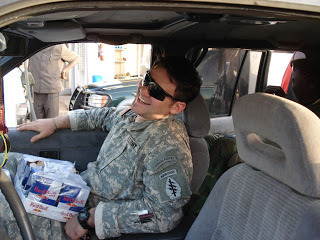 I especially loved reading about your training. You wrote that Special Forces soldiers become the best by doing the basics over and over until it’s muscle memory. I know there’s a lot more that separates Special Forces soldiers from the rest. Describe the selection process, what you went through to be selected. That is one of the very important aspects of Special Forces that require us to stay at the top of our game; people concentrate on Selection, but the truth of the matter is you are being evaluated every day of your SF career. I write about Bee-Sting competitions in "Love Me When I'm Gone," but the real fact of the matter is that every day on a team is like Selection. There is a term in Special Forces of "finding your rucksack in the hall," which is the SF way of kicking someone off of a team for losing their step; you literally walk up to the team room one morning and find all of your stuff in the hallway, meaning you're no longer welcome! To answer your question, Selection is an amazing experience, and it truly does separate the men from the boys. Most soldiers in the Army are taught to follow orders, and most soldiers' careers are spent taking orders from someone else, telling them exactly what to do. Besides being the most physically demanding month of your life, Selection is also geared to separate those who can operate on their own, completely independently, with nothing more than a mission. As discussed in the book, an ODA (team of Green Berets) is usually just given a vague end state, and it's up to us to figure out the what, when, where, why and how's to accomplish the mission, rather than having all of that handed to us from higher. To find the guys who are best at doing that, Selection pushes you to the very limits of your physical and psychological being, and then gives you a very complicated problem to solve in the state that a Green Beret normally operates: tired, hungry, and on your own with little or no support. I don’t think most civilians appreciate the toll the families pay when their loved ones serve in the military. Love Me When I’m Gone alludes to that. What was hardest on Cindy, and how much does worrying about loved ones affect a soldier's preparation for deployment? The hardest thing for Cindy, and any Special Forces family I think, is not knowing. By the very nature of our job most of what we do is classified, and the places we go we're normally far off the beaten path. Because I was in Germany and Cindy was in Los Angeles, "Love Me When I'm Gone" actually started as a collection of journals that I kept for her; most of what we were doing I couldn't really tell her about, both for security and her sanity, so I just kept little notes of the time lines. When we found out that we were going to have our son, I decided to turn them into a better format for my son and the sons of my teammates, and as I started showing them to the guys to make sure all of my events and time lines were correct, they convinced me to turn it into a book. The worrying does get to you, but to be a soldier in the military these days you have to become an expert at coping and isolating yourself from your emotions; whether it be 6, 8, 12 or 18 months, spending that much time away from your loved ones, in a combat zone under constant threat is just too much to handle if you can't learn to isolate those emotions and separate yourself. The biggest problem is that you turn yourself into a stone, trying not to let emotions in or out, and then when you get home, it's very difficult to go back to normal, which is where most of the problems start. I can't even imagine how hard that transition must be for some soldiers and their families. I loved the humanitarian work your medical team provided in Africa. You wrote that helping a man’s family was more effective at winning his loyalty than military might. Can you elaborate on any experiences you had with that?
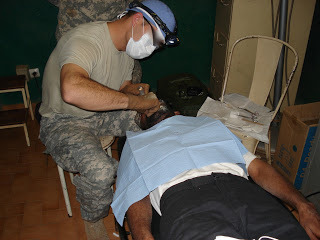 It really is the basis of Special Forces, and why they're so selective with who makes it to a team. As an 18D (Special Forces Medic), we would have days in Iraq or Afghanistan that would start off doing a MEDCAP during the day, seeing patients and helping people from sunup to sundown, and then go on a mission that night hunting bad guys. There is a reason that Green Berets are the experts at COIN (Counter-Insurgency), and that's because we understand that simple fact: if your only focus is killing bad guys, you will lose because they always have the home-field advantage and can recruit more. If you really get the big picture, and focus on taking care of the people and showing them that we're not there as occupiers, we're not evil and truly have human emotions, you win their "hearts and minds" and make the bad guys' recruiting job a whole lot harder. The exact quote from "Love Me When I'm Gone" is: "if you take care of a man, he will fight for you; take care of his family, and he will die for you." It's a very true statement I can tell you from experience, and why I support Veteran's charities like USA Cares (for which I'm a national spokesman) and The Special Operations Warrior Foundation. Does each branch of service have its own Special Forces units? What’s the primary difference within each since it seems you Green Berets did it all from mountain fighting to water operations? This is another point that I really tried to get across in "Love Me When I'm Gone;" we're over a decade in to the Global War on Terror and most people have seen or read Special Ops movies, TV shows or books, but don't understand the basic differences between the different units. In a nutshell, any time you hear the term "Special Forces," it is referring directly to Green Berets (we wear a tab on our uniforms which actually says Special Forces). The other units are Special Operations, and there are a few main ones which are well known (Army Rangers, Air Force PJ's and combat controllers, Navy SEAL's, Marine Special Operations (formerly Recon and Force Recon). There are of course others, which don't like to be talked about, so I'll leave them out here. My favorite term about a Green Beret's job was from an instructor I had in the Q-course (Special Forces Qualification Course), and he used to say that a Green Beret has to be the "jack of all trades, master of none." There are a lot of jobs and missions in Special Forces, but our main purpose is Unconventional Warfare (UW), also known as Guerilla Warfare. It's another point I try to teach in the book (in the Scotland chapter), that life in Special Forces is a whirlwind, especially in my old unit, 1/10 SFG(A). You can be in Germany training one week, Africa hunting rebels the next, Iraq or Afghanistan the next month, and then another African country training rebels to overthrow their dictator the next. We do Direct Action (kicking down doors and combat), Foreign Internal Defense (training soldiers in the Army of other countries how to fight), Special Reconnaissance, Counter-terrorism, Counter proliferation, hostage rescue, Humanitarian Operations (like the MEDCAP's in Africa), and Information/Intelligence operations. Basically, anything, anytime, anyplace. Do you still feel the urge to head off to battle? Does that ever leave? Every day; you know it's funny, people usually think of us as warmongers, but I think a Green Beret who's lost a dozen buddies and has seen enough war for many lifetimes probably wants peace more than anyone else. The difference is that we're realists, and understand that the world is a dangerous place, full of bad people, and we'd rather put ourselves in harms way to protect those that we love instead of watching someone else do it. For me, it's more that I know my brothers are out there in harms way, and it's not the war that I miss, but wanting to be there to watch their back. I have to say how grateful I am that your guys are on our side. We have no idea how many threats you and others like you have thwarted, do we?
In Special Forces we work very closely with the various intelligence agencies, and I can't remember where, but one of the spooks we were dealing with gave me a great quote...."every day that goes by and you don't hear of a terrorist attack on American soil means that we're doing a great job." People either don't know or don't want to believe just how many crazies out there are trying to do us harm, but I can tell you from my experience, there are many more than most would think. My favorite Special Forces quote, taught to all Green Beret's in the Q-course is: "We sleep soundly in our beds because rough men stand ready in the night to visit violence on those who would do us harm."
What do you miss most since leaving the military? My brothers; we still keep in touch daily, and they were the sword bearers and groomsmen in my wedding, but I miss being with those guys every day.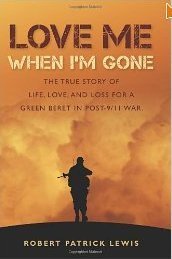 Love Me When I’M Gone is biographical, but you did a terrific job of setting it up as the prequel to an ongoing series. How much, if any, of Love Me When I’M Gone was fiction, and what will Rob be doing in the sequel? "Love Me When I'm Gone" was 100% non-fiction...and thankfully I did it the right way and got approval from the Pentagon beforehand, so I can say that! The original version was twice as long (around 250,000 words), but there were a lot of things that I just couldn't put into a non-fiction book.....and most of them are going into the fiction books. The very last part of this book is true, and I was asked to go to an "organization" after I left the Army. In reality, I talked to Cindy, and she said that she knew it was something I had always wanted to do, but she couldn't be married to a guy that would be gone more than I was in SF, in much more dangerous situations and with even less communication from where I would be going. I'm currently working on 3 different series of books (I have a dozen already outlined, 3 in various stages of completion), but the one that follows "Love Me When I'm Gone" is my life had I made the other choice and gone "over to the dark side." Thanks so very much, Rob, for your dedicated service to the country, and for allowing civilians to get a glimpse into this world. We owe all our soldiers an invaluable debt, and your book reminds us of that. Many thanks to Cindy and all the military spouses who serve America by supporting you at home. Thank you for giving me the opportunity to explain more about it here and share it with your readers and fans! I really enjoyed my time in SF, met some of the greatest men this world will ever see, and had some experiences that I will always be thankful for.
If your readers would like to help, as I said earlier I'm a national spokesman for the USA Cares organization, which raises money for vets and active duty soldiers in need. You can visit my website at www.LoveMeWhenImGone.com to find out more about this amazing organization, what they do to help, and how you can show your support. Thank you!Copyright 2009 Laurie LC Lewis, (To obtain permission to copy or reprint any portion of this post, please contact the author at lclewis2007@gmail.com)
Most Americans are blessed to be completely insulated from war. News reports of daily operations affect us less than a video game playing in the next room, and yet that very comfort and complacency is purchased for us by people who stand on invisible lines, far removed from home and family, placing life and limb in extreme peril in the most dangerous places on earth. A few of these soldiers have given the extra measure to become the most highly trained and specialized peace-keepers on the earth. And if you think the term peace-keeper seems improperly applied to a warrior, read on and hear what a Special Forces soldier will tell you about his dream of peace.
Rob's book is titled, "Love Me When I'm Gone." It's not a literary read. While it's smartly-written, it was not composed by a trained writer. It was written by a Special Forces soldier, in soldier speak, about a soldier's life. It is a boots-on-the-ground Special Forces soldier's story, but in truth, it's written to tell every soldier's story, and the story of families torn apart for months and years, and forever sometimes. It's a story every American needs to read.
I gave this book 5-stars in my reviews because it's the most important book I read in 2012. It left me feeling humble and guilty for being so blessed and doing so little to honor those who keep my life so peaceful. It changed me. It will change you too.
Rob agreed to an interview. I tried to pose some questions that would help readers understand the heart of these bigger-then-life warriors. They are fathers, and husbands, sons and brothers. They get lonely and learn to shut their feels off, attuning their loyalty to their brothers on the line. They do all this for you, and for me. I hope you enjoy the interview. My review of "Love Me When I'm Gone," follows in the next post, including links for purchase. Laurie
***Thanks for doing this interview, Rob. As you know, America is fascinated by our Special Forces soldiers. I loved the glimpse you provide readers into their exclusive brotherhood. I have to say, I had already read your book when the attack on Benghazi went down, and I felt such an agonizing connection to those Special Forces guys who waited for backup that never arrived. Love Me When I’m Gone drives home the loyalty SF soldiers have for one another. It’s not a motto. It’s in your spiritual DNA. Can you speak to readers a little about that loyalty? What went through your mind when you heard about Benghazi? That's the best opening question I've ever seen, because you touch on a very important issue that is absolutely integral to understanding the culture of Special Forces and Special Operations. There are quite a few other books about Special Forces and Special Ops guys on the bookshelves right now that are written by embedded journalists or ghost writers, and it seems as if people are seeing right through them; you can have complete access to SF guys, live, eat and sleep with them, but being an outsider you will never capture the mentality, drive, and spirit of the brotherhood. As I say in "Love Me When I'm Gone," Green Berets aren't friends, we are brothers. The men from ODA 022 will always be my brothers, and as long as I have breath in my body, I will take a bullet or do anything in my power to help any of them in need. The Benghazi event hit very close to home, not only because we lost some of our SEAL brothers, but also because my old unit was called as a reaction force, and was the one staged in Sicily but told to stand down.
 I especially loved reading about your training. You wrote that Special Forces soldiers become the best by doing the basics over and over until it’s muscle memory. I know there’s a lot more that separates Special Forces soldiers from the rest. Describe the selection process, what you went through to be selected. That is one of the very important aspects of Special Forces that require us to stay at the top of our game; people concentrate on Selection, but the truth of the matter is you are being evaluated every day of your SF career. I write about Bee-Sting competitions in "Love Me When I'm Gone," but the real fact of the matter is that every day on a team is like Selection. There is a term in Special Forces of "finding your rucksack in the hall," which is the SF way of kicking someone off of a team for losing their step; you literally walk up to the team room one morning and find all of your stuff in the hallway, meaning you're no longer welcome! To answer your question, Selection is an amazing experience, and it truly does separate the men from the boys. Most soldiers in the Army are taught to follow orders, and most soldiers' careers are spent taking orders from someone else, telling them exactly what to do. Besides being the most physically demanding month of your life, Selection is also geared to separate those who can operate on their own, completely independently, with nothing more than a mission. As discussed in the book, an ODA (team of Green Berets) is usually just given a vague end state, and it's up to us to figure out the what, when, where, why and how's to accomplish the mission, rather than having all of that handed to us from higher. To find the guys who are best at doing that, Selection pushes you to the very limits of your physical and psychological being, and then gives you a very complicated problem to solve in the state that a Green Beret normally operates: tired, hungry, and on your own with little or no support. I don’t think most civilians appreciate the toll the families pay when their loved ones serve in the military. Love Me When I’m Gone alludes to that. What was hardest on Cindy, and how much does worrying about loved ones affect a soldier's preparation for deployment? The hardest thing for Cindy, and any Special Forces family I think, is not knowing. By the very nature of our job most of what we do is classified, and the places we go we're normally far off the beaten path. Because I was in Germany and Cindy was in Los Angeles, "Love Me When I'm Gone" actually started as a collection of journals that I kept for her; most of what we were doing I couldn't really tell her about, both for security and her sanity, so I just kept little notes of the time lines. When we found out that we were going to have our son, I decided to turn them into a better format for my son and the sons of my teammates, and as I started showing them to the guys to make sure all of my events and time lines were correct, they convinced me to turn it into a book. The worrying does get to you, but to be a soldier in the military these days you have to become an expert at coping and isolating yourself from your emotions; whether it be 6, 8, 12 or 18 months, spending that much time away from your loved ones, in a combat zone under constant threat is just too much to handle if you can't learn to isolate those emotions and separate yourself. The biggest problem is that you turn yourself into a stone, trying not to let emotions in or out, and then when you get home, it's very difficult to go back to normal, which is where most of the problems start. I can't even imagine how hard that transition must be for some soldiers and their families. I loved the humanitarian work your medical team provided in Africa. You wrote that helping a man’s family was more effective at winning his loyalty than military might. Can you elaborate on any experiences you had with that?
 It really is the basis of Special Forces, and why they're so selective with who makes it to a team. As an 18D (Special Forces Medic), we would have days in Iraq or Afghanistan that would start off doing a MEDCAP during the day, seeing patients and helping people from sunup to sundown, and then go on a mission that night hunting bad guys. There is a reason that Green Berets are the experts at COIN (Counter-Insurgency), and that's because we understand that simple fact: if your only focus is killing bad guys, you will lose because they always have the home-field advantage and can recruit more. If you really get the big picture, and focus on taking care of the people and showing them that we're not there as occupiers, we're not evil and truly have human emotions, you win their "hearts and minds" and make the bad guys' recruiting job a whole lot harder. The exact quote from "Love Me When I'm Gone" is: "if you take care of a man, he will fight for you; take care of his family, and he will die for you." It's a very true statement I can tell you from experience, and why I support Veteran's charities like USA Cares (for which I'm a national spokesman) and The Special Operations Warrior Foundation. Does each branch of service have its own Special Forces units? What’s the primary difference within each since it seems you Green Berets did it all from mountain fighting to water operations? This is another point that I really tried to get across in "Love Me When I'm Gone;" we're over a decade in to the Global War on Terror and most people have seen or read Special Ops movies, TV shows or books, but don't understand the basic differences between the different units. In a nutshell, any time you hear the term "Special Forces," it is referring directly to Green Berets (we wear a tab on our uniforms which actually says Special Forces). The other units are Special Operations, and there are a few main ones which are well known (Army Rangers, Air Force PJ's and combat controllers, Navy SEAL's, Marine Special Operations (formerly Recon and Force Recon). There are of course others, which don't like to be talked about, so I'll leave them out here. My favorite term about a Green Beret's job was from an instructor I had in the Q-course (Special Forces Qualification Course), and he used to say that a Green Beret has to be the "jack of all trades, master of none." There are a lot of jobs and missions in Special Forces, but our main purpose is Unconventional Warfare (UW), also known as Guerilla Warfare. It's another point I try to teach in the book (in the Scotland chapter), that life in Special Forces is a whirlwind, especially in my old unit, 1/10 SFG(A). You can be in Germany training one week, Africa hunting rebels the next, Iraq or Afghanistan the next month, and then another African country training rebels to overthrow their dictator the next. We do Direct Action (kicking down doors and combat), Foreign Internal Defense (training soldiers in the Army of other countries how to fight), Special Reconnaissance, Counter-terrorism, Counter proliferation, hostage rescue, Humanitarian Operations (like the MEDCAP's in Africa), and Information/Intelligence operations. Basically, anything, anytime, anyplace. Do you still feel the urge to head off to battle? Does that ever leave? Every day; you know it's funny, people usually think of us as warmongers, but I think a Green Beret who's lost a dozen buddies and has seen enough war for many lifetimes probably wants peace more than anyone else. The difference is that we're realists, and understand that the world is a dangerous place, full of bad people, and we'd rather put ourselves in harms way to protect those that we love instead of watching someone else do it. For me, it's more that I know my brothers are out there in harms way, and it's not the war that I miss, but wanting to be there to watch their back. I have to say how grateful I am that your guys are on our side. We have no idea how many threats you and others like you have thwarted, do we?
 In Special Forces we work very closely with the various intelligence agencies, and I can't remember where, but one of the spooks we were dealing with gave me a great quote...."every day that goes by and you don't hear of a terrorist attack on American soil means that we're doing a great job." People either don't know or don't want to believe just how many crazies out there are trying to do us harm, but I can tell you from my experience, there are many more than most would think. My favorite Special Forces quote, taught to all Green Beret's in the Q-course is: "We sleep soundly in our beds because rough men stand ready in the night to visit violence on those who would do us harm."
What do you miss most since leaving the military? My brothers; we still keep in touch daily, and they were the sword bearers and groomsmen in my wedding, but I miss being with those guys every day.
 Love Me When I’M Gone is biographical, but you did a terrific job of setting it up as the prequel to an ongoing series. How much, if any, of Love Me When I’M Gone was fiction, and what will Rob be doing in the sequel? "Love Me When I'm Gone" was 100% non-fiction...and thankfully I did it the right way and got approval from the Pentagon beforehand, so I can say that! The original version was twice as long (around 250,000 words), but there were a lot of things that I just couldn't put into a non-fiction book.....and most of them are going into the fiction books. The very last part of this book is true, and I was asked to go to an "organization" after I left the Army. In reality, I talked to Cindy, and she said that she knew it was something I had always wanted to do, but she couldn't be married to a guy that would be gone more than I was in SF, in much more dangerous situations and with even less communication from where I would be going. I'm currently working on 3 different series of books (I have a dozen already outlined, 3 in various stages of completion), but the one that follows "Love Me When I'm Gone" is my life had I made the other choice and gone "over to the dark side." Thanks so very much, Rob, for your dedicated service to the country, and for allowing civilians to get a glimpse into this world. We owe all our soldiers an invaluable debt, and your book reminds us of that. Many thanks to Cindy and all the military spouses who serve America by supporting you at home. Thank you for giving me the opportunity to explain more about it here and share it with your readers and fans! I really enjoyed my time in SF, met some of the greatest men this world will ever see, and had some experiences that I will always be thankful for.
 If your readers would like to help, as I said earlier I'm a national spokesman for the USA Cares organization, which raises money for vets and active duty soldiers in need. You can visit my website at www.LoveMeWhenImGone.com to find out more about this amazing organization, what they do to help, and how you can show your support. Thank you!Copyright 2009 Laurie LC Lewis, (To obtain permission to copy or reprint any portion of this post, please contact the author at lclewis2007@gmail.com)
January 7, 2013
THE MOST IMPORTANT READ OF 2012
LOVE ME WHEN I'M GONE [image error] byRobert Patrick Lewis (Blogger is acting up today and won't allow me to upload the cover pics or other photos from the book, so please visit the links at the bottom of the review to view these.)
One of my favorite books of 2012 was actually a manuscript of a novel slated for a 2013 release, but this military stunner made it to press before the holiday and studios are already talking about a film.
In Love Me When I’mGone, retired Special Forces officer Staff Sergeant, (SSG) Robert Patrick Lewis offers readers a golden ticket inside the exclusive world of U.S. Special Forces training and operations, and the tightly-knit web of brothers—Renaissance men with unequalled skill sets, operating in the most dangerous places and situations on earth.
This is not a sugar and spice tale. It’s a boots-on-the-ground, blood-sweat-and-tears soldier story, told with a soldier’s tongue in authentic soldiers’ speak delivered with occasional profanity and frequent military acronyms that draw readers into this elite society of brothers. Lewis’s dialogue conveys the urgency, pain, and frustration of war. It is a hard read emotionally, because most readers will have a face slap of recognition that we are too removed from the men and women defending our rights and privileges.
Lewis offers biographical glimpse behind the camouflage, beginning with the circumstances and events that set him on the road to military service. Put up for adoption at birth, he considers himself twice blessed to have had birth parents who allowed him the chance to be raised in a nurturing, adopted family with a deep military tradition. His father left the Navy and tied his hopes to a newly formed airline called Southwest, which Lewis regards as a second family. Despite all this support, Lewis lost his bearings following the cancer death of his mother. To rein his flailing son in, his father enrolled him in a military academy whose structure and rules put Lewis back on course.
Lewis returned to public school his Sophomore year and met a charming Asian coed named Cindy Chiu who secretly won his heart. After graduation, the two went their separate ways with only brief interactions, and then they lost contact for several years. Lewis was headed for a degree in business when 9/11 happened, and he chose to enlist in the Army in the hopes of becoming an Army Ranger. In Lewis’s own words:
At my fathers urging I enlisted in the delayed entry program, which would allow me to finish out my college degree before leaving for Infantry basic training (boot camp). Less than a month after I walked across the stage and took my diploma from Texas State University in 2003, I was on a plane to Ft. Benning, Georgia to learn how to be an Infantryman, then off to Airborne school, then to Ft. Bragg, NC for Special Operations Prep and Conditioning (SOPC, the first of many weed-out courses designed to convince the weak to leave of their own accord), followed by Special Forces Assessment and Selection (SFAS) and the beginning of my two years in the Special Forces Qualification Course (the SFQC or, more commonly, the Q-course), being assessed and tested every single day on whether or not I had what it took to serve my country as a Green Beret.
Lewis is quick to point out the sacrifice families make when a soldier chooses the military as their vocation. After years of no contact, Cindy Chiu found him through social media, and she became his anchor, the person he dreamed of coming home to, the woman with whom he dreamed of building a future. Love Me When I’m Gone highlights the emotional toll separation and secrecy take on these Special Forces’ loved ones.
I still remember the day that I got her first message on MySpace; I returned from SERE school the day before, and was still bruised, battered, emotionally scarred and emaciated from spending a month as a POW in the North Carolina woods. SERE is the Survival, Evasion, Resistance and Escape portion of the Q-course, and it was the very last part of my two-year journey of proving that I had what it took to wear the coveted Green Beret.
Both of my roommates were 18B’s, weapons specialists, Green Berets who can identify, fix, rebuild, and operate any weapon in use anywhere in the world, had been finished with the Q-course for several months. I had been selected as an 18 Delta, Special Forces Medic, which, while it is one of the most coveted positions in all of Special Operations, adds a full year of medical training, testing, and hospital rotations to your duration in the Q-course.
As luck would have it, she had been searching for me all along as well. Her first email to me was about three pages long, and after a week of exchanging messages on MySpace we graduated to all night phone calls. It was just like we were teenagers again, and night after night I would stay on the phone until just hours before I had to get up to go to work, and I was constantly operating on just a few hours of sleep.
It was only a few weeks later that my orders finally came down: I was being assigned to the elite 1st Battalion, 10th Special Forces Group in Germany, with the first unit of Green Berets that had ever existed. It was the most bittersweet news I ever received; I had been hoping and praying throughout my entire time in the Q-course that I would get this assignment to Germany, where my Grandfather had been stationed after WWII and my father had spent his formative childhood years, but now that Cindy and I found each other again it meant that our paths would once again separate. I could hear the disappointment in her voice the day that I told her, and it made my heart sink.
Lewis takes readers right into this specialized world. It’s not all bullets and blood. Readers feel the toll inertia takes on warriors who are far from home, living in a state of readiness, but like race horses in the gate, tense as headlines and orders collide, delaying their release and insertion into battle. They fill the days with more training, repeating skills until actions are so instinctive they are, as Lewis calls them, “muscle memory.”
I was most impressed by the humanitarian work performed by these specialized peacekeepers, particularly by Special Forces medics like Lewis, who set up clinics to treat citizens in remote outposts, laboring to win the hearts and minds of people. Says Lewis in Love Me When I'm Gone, “If you take care of a man, he will fight for you; take care of his family, and he will die for you."
Love Me When I’m Gone runs the full spectrum of emotions. I cheered, felt my stomach knot, cried, and in truth, felt guilty that I was so unaware of the price soldiers and their families were paying for me, and for you. The combat scenes insert readers into the human drama, and the drama is intense. You understand in a new way how an individual can love another so much that he would take a bullet to save a friend. Again, in Lewis’s words:
It is something that cannot be explained or even understood until you’ve lived it; a man can’t know or fully appreciate his life until he’s been close enough to taste the end of it, and the bonds forged in battle are some of the strongest a man could ever have. We are brothers, the men of ODA 022, and though we didn’t have the same blood running through our veins, we had all shed the blood of others together, and knew that none of us would hesitate to step in the way of fate and take a round or jump on a grenade to save one another.
After leaving Special Forces, Lewis began writing down his experiences to help fill in the gaps for Cindy, and to record them for his children. He consulted with his comrades to make sure he was getting the details and places right, and they were so moved by the project they encouraged him to turn it into a book so the misconceptions about Special Forces soldiers would be cleared up, and so people would simply understand what they were doing on that invisible line. It took time to get the manuscript approved by the Pentagon, and now that the book is out, Lewis’s main hope is two-fold: to provide strength to military spouses and families who suffer high divorce rates, and to support Veteran's charities like USA Cares (for which Lewis is a national spokesman) and The Special Operations Warrior Foundation.
Love Me When I’m Gone should be read by every American adult. Lewis cleaned up the language to make it a read parents could share with their teens with some prior editing. Will it jar your sensibilities? You bet. Will it change you? I hope so. We owe an incalculable debt to these heroes and their families, and understanding their sacrifice is a first step to repaying it.
"Love Me When I'm Gone" is available in print format, ebook, and audiobook format. Readers can learn more about Robert Lewis, and the men of ODA 022 by visiting Rob's website at http://www.lovemewhenimgone.com/. http://www.lovemewhenimgone.com/Copyright 2009 Laurie LC Lewis, (To obtain permission to copy or reprint any portion of this post, please contact the author at lclewis2007@gmail.com)
THE MOST IMPORTANT BOOK I READ IN 2012
LOVE ME WHEN I'M GONEbyRobert Patrick Lewis (Blogger is acting up today and won't allow me to upload the cover pics or other photos from the book, so please visit the links at the bottom of the review to view these.)
One of my favorite books of 2012 was actually a manuscript of a novel slated for a 2013 release, but this military stunner made it to press before the holiday and studios are already talking about a film.
In Love Me When I’mGone, retired Special Forces officer Staff Sergeant, (SSG) Robert Patrick Lewis offers readers a golden ticket inside the exclusive world of U.S. Special Forces training and operations, and the tightly-knit web of brothers—Renaissance men with unequalled skill sets, operating in the most dangerous places and situations on earth.
This is not a sugar and spice tale. It’s a boots-on-the-ground, blood-sweat-and-tears soldier story, told with a soldier’s tongue in authentic soldiers’ speak delivered with occasional profanity and frequent military acronyms that draw readers into this elite society of brothers. Lewis’s dialogue conveys the urgency, pain, and frustration of war. It is a hard read emotionally, because most readers will have a face slap of recognition that we are too removed from the men and women defending our rights and privileges.
Lewis offers biographical glimpse behind the camouflage, beginning with the circumstances and events that set him on the road to military service. Put up for adoption at birth, he considers himself twice blessed to have had birth parents who allowed him the chance to be raised in a nurturing, adopted family with a deep military tradition. His father left the Navy and tied his hopes to a newly formed airline called Southwest, which Lewis regards as a second family. Despite all this support, Lewis lost his bearings following the cancer death of his mother. To rein his flailing son in, his father enrolled him in a military academy whose structure and rules put Lewis back on course.
Lewis returned to public school his Sophomore year and met a charming Asian coed named Cindy Chiu who secretly won his heart. After graduation, the two went their separate ways with only brief interactions, and then they lost contact for several years. Lewis was headed for a degree in business when 9/11 happened, and he chose to enlist in the Army in the hopes of becoming an Army Ranger. In Lewis’s own words:
At my fathers urging I enlisted in the delayed entry program, which would allow me to finish out my college degree before leaving for Infantry basic training (boot camp). Less than a month after I walked across the stage and took my diploma from Texas State University in 2003, I was on a plane to Ft. Benning, Georgia to learn how to be an Infantryman, then off to Airborne school, then to Ft. Bragg, NC for Special Operations Prep and Conditioning (SOPC, the first of many weed-out courses designed to convince the weak to leave of their own accord), followed by Special Forces Assessment and Selection (SFAS) and the beginning of my two years in the Special Forces Qualification Course (the SFQC or, more commonly, the Q-course), being assessed and tested every single day on whether or not I had what it took to serve my country as a Green Beret.
Lewis is quick to point out the sacrifice families make when a soldier chooses the military as their vocation. After years of no contact, Cindy Chiu found him through social media, and she became his anchor, the person he dreamed of coming home to, the woman with whom he dreamed of building a future. Love Me When I’m Gone highlights the emotional toll separation and secrecy take on these Special Forces’ loved ones.
I still remember the day that I got her first message on MySpace; I returned from SERE school the day before, and was still bruised, battered, emotionally scarred and emaciated from spending a month as a POW in the North Carolina woods. SERE is the Survival, Evasion, Resistance and Escape portion of the Q-course, and it was the very last part of my two-year journey of proving that I had what it took to wear the coveted Green Beret.
Both of my roommates were 18B’s, weapons specialists, Green Berets who can identify, fix, rebuild, and operate any weapon in use anywhere in the world, had been finished with the Q-course for several months. I had been selected as an 18 Delta, Special Forces Medic, which, while it is one of the most coveted positions in all of Special Operations, adds a full year of medical training, testing, and hospital rotations to your duration in the Q-course.
As luck would have it, she had been searching for me all along as well. Her first email to me was about three pages long, and after a week of exchanging messages on MySpace we graduated to all night phone calls. It was just like we were teenagers again, and night after night I would stay on the phone until just hours before I had to get up to go to work, and I was constantly operating on just a few hours of sleep.
It was only a few weeks later that my orders finally came down: I was being assigned to the elite 1st Battalion, 10th Special Forces Group in Germany, with the first unit of Green Berets that had ever existed. It was the most bittersweet news I ever received; I had been hoping and praying throughout my entire time in the Q-course that I would get this assignment to Germany, where my Grandfather had been stationed after WWII and my father had spent his formative childhood years, but now that Cindy and I found each other again it meant that our paths would once again separate. I could hear the disappointment in her voice the day that I told her, and it made my heart sink.
Lewis takes readers right into this specialized world. It’s not all bullets and blood. Readers feel the toll inertia takes on warriors who are far from home, living in a state of readiness, but like race horses in the gate, tense as headlines and orders collide, delaying their release and insertion into battle. They fill the days with more training, repeating skills until actions are so instinctive they are, as Lewis calls them, “muscle memory.”
I was most impressed by the humanitarian work performed by these specialized peacekeepers, particularly by Special Forces medics like Lewis, who set up clinics to treat citizens in remote outposts, laboring to win the hearts and minds of people. Says Lewis in Love Me When I'm Gone, “If you take care of a man, he will fight for you; take care of his family, and he will die for you."
Love Me When I’m Gone runs the full spectrum of emotions. I cheered, felt my stomach knot, cried, and in truth, felt guilty that I was so unaware of the price soldiers and their families were paying for me, and for you. The combat scenes insert readers into the human drama, and the drama is intense. You understand in a new way how an individual can love another so much that he would take a bullet to save a friend. Again, in Lewis’s words:
It is something that cannot be explained or even understood until you’ve lived it; a man can’t know or fully appreciate his life until he’s been close enough to taste the end of it, and the bonds forged in battle are some of the strongest a man could ever have. We are brothers, the men of ODA 022, and though we didn’t have the same blood running through our veins, we had all shed the blood of others together, and knew that none of us would hesitate to step in the way of fate and take a round or jump on a grenade to save one another.
After leaving Special Forces, Lewis began writing down his experiences to help fill in the gaps for Cindy, and to record them for his children. He consulted with his comrades to make sure he was getting the details and places right, and they were so moved by the project they encouraged him to turn it into a book so the misconceptions about Special Forces soldiers would be cleared up, and so people would simply understand what they were doing on that invisible line. It took time to get the manuscript approved by the Pentagon, and now that the book is out, Lewis’s main hope is two-fold: to provide strength to military spouses and families who suffer high divorce rates, and to support Veteran's charities like USA Cares (for which Lewis is a national spokesman) and The Special Operations Warrior Foundation.
Love Me When I’m Gone should be read by every American adult. Lewis cleaned up the language to make it a read parents could share with their teens with some prior editing. Will it jar your sensibilities? You bet. Will it change you? I hope so. We owe an incalculable debt to these heroes and their families, and understanding their sacrifice is a first step to repaying it.
"Love Me When I'm Gone" is available in print format, ebook, and audiobook format. Readers can learn more about Robert Lewis, and the men of ODA 022 by visiting Rob's website at http://www.lovemewhenimgone.com/. Copyright 2009 Laurie LC Lewis, (To obtain permission to copy or reprint any portion of this post, please contact the author at lclewis2007@gmail.com)
January 6, 2013
Apology Tour
Sorry for not posting in days. I've been sick as a dog. In fact, I feel incredibly sorry for any dog this sick, because this plague circulating around my neck of the woods is nasty.
Anyway, I've got two incredible posts going up in the next few days. One is a review of a bio by a Special Forces soldier named Robert Patrick Lewis, titled "Love Me When I'm Gone." This book is a perspective-changer, folks. You'll be humbled and feel a new debt of gratitude for these warriors. They are amazing. Lewis provides a rare glimpse into this tightly knit brotherhood.
I'll also be posting an interview with Robert Lewis, including his perspective on Benghazi, and the more tender side of Special Forces soldiers and their humanitarian work. Amazing. You'll be grateful they are ours.
Check back tomorrow.Copyright 2009 Laurie LC Lewis, (To obtain permission to copy or reprint any portion of this post, please contact the author at lclewis2007@gmail.com)
Anyway, I've got two incredible posts going up in the next few days. One is a review of a bio by a Special Forces soldier named Robert Patrick Lewis, titled "Love Me When I'm Gone." This book is a perspective-changer, folks. You'll be humbled and feel a new debt of gratitude for these warriors. They are amazing. Lewis provides a rare glimpse into this tightly knit brotherhood.
I'll also be posting an interview with Robert Lewis, including his perspective on Benghazi, and the more tender side of Special Forces soldiers and their humanitarian work. Amazing. You'll be grateful they are ours.
Check back tomorrow.Copyright 2009 Laurie LC Lewis, (To obtain permission to copy or reprint any portion of this post, please contact the author at lclewis2007@gmail.com)
December 24, 2012
THE LITTLE LEATHER BAG

THE LITTLE LEATHER BAG
by Laurie Lewis, 2001
It was a blustery day in mid-December when the last stubborn shafts of autumn warmth retreated, paving the way for winter's arrival, and with winter, Christmas. Marta, the dark-eyed and equally talented daughter of a gifted Tailor, sat in her bed observing the changing of nature's guard through worried eyes. Her previously nimble hands lay weakly folded in her lap, their deftness stolen from her, along with her vitality by the same fevered thief that had taken her good husband, leaving her widowed with five, young children.
Pushing back the layers of fluffy comforters, she wrapped her thick robe around her and shuffled down the hall to examine what was once her workroom, a room locked against the inquisitive and sticky fingers of children. Limbless forms stood guard in the corners, keeping watch over shelves laden with fabric and trim. Bolts of satin and velvet, and piles of brightly colored gingham and silks were heaped on every shelf. Stacks of leather and a few furs lay bound, awaiting their transformation into jackets and purses and hats. Brightly painted tins held buttons and notions while spools of threads and trims sat on tabletops, waiting to adorn her creations.
Since it appeared that her hands would never have the strength or dexterity needed to sew the intricate, lovely designs of her past, she accepted that her career was over and had considered selling off the goods. Still, something in her had resisted. She knew that the bolts and notions were more than mere goods. They were the envisioned, but as yet unsewn and unseen clothes of her children's future years. Within each fold lay hats for winters she may never see, and and dresses for weddings she may never attend. Saddened, she sighed, recognizing that there were so many gifts she longed to give to her children . . . gifts her hands would never create. It would be Christmas with no gifts at all.
A thought crossed her mind. Her oldest daughter, Janie, was fourteen, and Conner, her only son, was barely five. Between these children, three other daughters had been born--Katie, Jenna and Lily--each of whom had learned basic simple stitches from watching their mother mend by the fire. Marta knew that with some practice, they could become her hands! And she quickly set about to prepare a surprise.
After calling to the children, she gathered them into her workroom and opened the door. The wonder-filled eyes spied the brightly colored cloths and their fingers wriggled with the desire to touch and sample everything. Marta smiled at their reaction, wondering now if she had been wrong to deny their rambunctious hands the pleasure of touching and handling the beautiful fabrics.
From the pocket of her robe she withdrew five slips of paper, each bearing the name of one of the children. After each child drew a name, they were told to gather fabric, notions and trim and set about to create a gift to present to their selected recipient. They squealed with delight as they dashed about the room, touching and feeling every bolt and button. One by one they spirited their selections away to their rooms to set about their tasks. Janie, already a fine seamstress for her age, was making Lily a ruffled frock. Katie, not quite as certain of her talents, settled in to sew a furry muff for Jenna. Each child in turn considered their talents and fashioned their best gift to give.
On Christmas morning, each of the children exchanged their gifts. Marta watched through tearful eyes as their precious offerings were given and received. When all the hugs were given and the thank yous said, the girls each scampered off to their rooms, returning with other boxes tied in brightly colored ribbons for Marta. Tears wet her face and pride filled her heart. She drew them close and whispered "I love yous" to each giver until the fatigue swept upon her again and the children left to allow her to rest. Just as sleep fell upon her, a tiny knock sounded at the door.
Connor entered his mother's room, sullen and sad. In his hands was a small leather bag he had made for her. The stitches were uneven and the seams were puckered, but it had been fashioned by his own hands. He had been about to wrap it in bright green paper when he saw the tufted pillow Katie had made. Worried, he compared his gift to the satin robe Janie had sewn, and had found his own offering wanting. When he had determined that every gift was superior to his, he had decided not to give his own.
Marta patted the cover beside her and Connor jumped up and into the bed. After asking to see the little bag, Connor reluctantly handed it to his mother. Turning it over and over, she commented on its workmanship and beauty. Tenderly touching a crimson stain she recognized as a drop of blood when a needle pricked her son's finger. Her eyes began to sting as she asked Conner questions about his design and craftsmanship. In reply, Connor pointed out each error, unfolding the story of his distractions and sewing disasters until they both laughed and cried. Soon, his once burdened heart was filled with pride as he began to see his masterpiece through the eyes of his adoring mother.
"I didn't think it was good enough," he confessed through watery eyes now sparkling with relief. "My hands are like yours. They don't work as well as my sisters'. But the bag looks a lot better since I gave it to you."
As Marta drew him in close and hugged him firmly, her heart stung at the thought that he had almost forsaken his gift because in comparison to others' work, it had appeared less. Her finger tenderly touched the crimson spot again. "It's a magic bag, Connor. It seems to become more beautiful with every passing minute."
"Things don't have to be fancy to be beautiful?"
"No they don't, Connor. Love makes them perfect."
"Maybe love will help you, Mommy."
Marta smiled, envisioning the simple garments her hands could yet fashion. "I believe it already has, Connor."Copyright 2009 Laurie LC Lewis, (To obtain permission to copy or reprint any portion of this post, please contact the author at lclewis2007@gmail.com)
Bloggin' It Up Here

June 14, 2021
Forgive me. I've been terrible about staying in touch. How are you doing? I hope life is sweet and peaceful, and that things are normalizing wherever you are.
As for me, well . . . I've u ...more
Forgive me. I've been terrible about staying in touch. How are you doing? I hope life is sweet and peaceful, and that things are normalizing wherever you are.
As for me, well . . . I've u ...more
- Laurie L.C. Lewis's profile
- 490 followers


![[image error]](http://assets5.pinimg.com/upload/83527768060924966_n7WH9hTC.jpg)