Timothy P. Brown's Blog, page 18
February 25, 2025
Today's Tidbit... Holders And Other Put Downs
Some time back, a reader, Ed Jarvis, asked about a 1940 program cover showing a holder on a kickoff, and wondered why the team used a holder rather than a tee? Ed might have seen one of covers below or a different cover, but his question remains: "What was the deal with holders back then?"
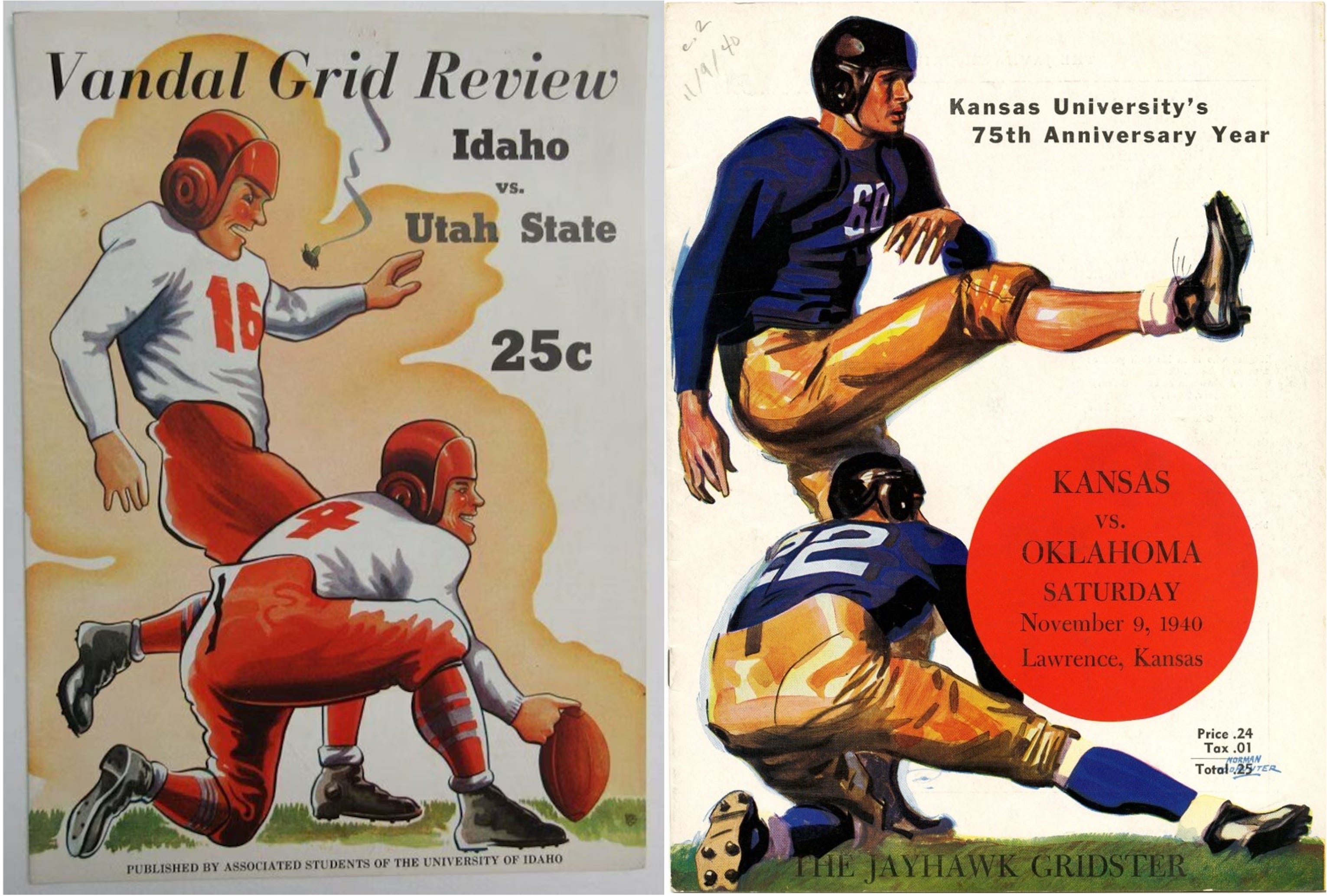 (Idaho and Kansas programs from 1940)
If you want the full story, I covered the question in the July 2022 Tidbit below.
The shorthand answer is that football originally did not allow artificial tees, so kickers h...


Pigskin Dispatch Podcast... Training for Football and Other Travel Methods
Pigskin Dispatch podcaster Darin Hayes, a Notre Dame fan, and I discuss the train trip and game when Bernie Bierman’s Minnesota Gophers traveled to Seattle to play Washington. We cover Bierman’s underappreciation, tell a war story or two, and mention a Heisman Trophy winner.
Watch or listen to the podcast here and/or read the original Tidbit.
If you enjoy Football Archaeology, become of free subscriber, and if you love Football Archaeology, become a paid subscriber for $5/month or $50/year.
February 22, 2025
Today's Tidbit... Paul Newman, Football, and The Sting
This story began with a serendipitous moment. While reviewing one newspaper article, I happened upon one on the same page that concerned members of the 1935 football team at Carbondale Normal, now Southern Illinois University, who were booted from the football team for smoking, presumably tobacco.
That got me thinking about the many reasons players have been permanently platooned in the past, so I set off in search of the same. While I found some good stuff and will publish a future article on th...
February 19, 2025
Today's Tidbit... Football's Interlocking Monograms
Uniforms were less uniform in the past. Teams at lower levels and with less money often did well if everyone wore something bluish, reddish, or whatever the team’s color might be. Uniformity was neither the expectation nor the reality for many teams until the 1920s.
Of course, teams whose pockets overflowed with silver wore the latest matching gear, or nearly so. The big buck teams also wore distinctive logos on their uniforms or award sweaters, with some choosing monograms, even interlocking mon...
February 18, 2025
Today's Tidbit... 1935-1938 Associated Oil Football Schedules
Companies find many ways to entice consumers to buy their goods. Sometimes, they attract customers by providing products or services that are better than their competitors—imagine that—but they often rely on marketing, imagery, and intangible associations to connect with buyers.
The latter was the case in the late 1930s when Associated Oil sold gasoline, oil, and automotive services to consumers in the Western U.S. under the Associated Oil or Flying A brands.
As discussed recently with the 1937 Gr...
Pigskin Dispatch Podcast... Notre Dame and Penn State's First Game in 1913
Pigskin Dispatch podcaster Darin Hayes, a Notre Dame fan, and I discuss the first meeting of the two teams in 1913, when the teams met one week after Notre Dame shocked the football world by throwing a few bombs at West Point. Who got the best of whom that day?
Watch or listen to the podcast here and/or read the original Tidbit.
If you enjoy Football Archaeology, become of free subscriber, and if you love Football Archaeology, become a paid subscriber for $5/month or $50/year.
You can...
February 17, 2025
Today's Tidbit... The Days of Baggy, Bulbous Pants
With the 1906 rules allowing the forward pass and liberalizing the onside kick from scrimmage, football was supposed to shift toward an open game leveraging speed rather than power. Not everyone bought into the idea, but more and more did over the next few years.
The desire for more speed led players and teams to shed as much equipment and pads as they could to reduce the weight they carried in games. The canvas pants padded with felt added pounds to the gear through sweat absorption, and things ...
February 16, 2025
Today's Pop Quiz: Famous Coaches of 1937
Grantland Rice worked with the Cities Service gas station chain to publish advertising premium football guides from 1933 to 1954, though they may have skipped some or all of the war years. Rice passed away in July 1954, so the 1954 guide likely was delivered to the nation's gas station after his death.
The bulk of the guides show the schedules of 200+ colleges, but they also include national and regional previews, bowl game results, illustrations of officials' signals, and assorted other items.
Ma...
February 12, 2025
Today's Tidbit... Halftime Entertainment Reaches Olympian Levels
Apparently, some people did not like the Super Bowl's halftime entertainment. It wasn't my cup of tea either, but my best dancing and musical days are behind me, and the kerfuffle pales compared to other challenges facing this country.
But as long as people are complaining about halftime entertainment, I thought we could look back at examples of odd halftime entertainment from days gone by. A bonus is that each story has a connection to the Olympics.
1920s Oorang IndiansThe oddest franchise in NFL...
February 11, 2025
Today's Tidbit... The First Nile Kinnick Stadium
Big Ten and other college football fans are familiar with Nile Kinnick Stadium on the campus of the University of Iowa. The stadium is named after Nile Kinnick, the 1939 Heisman Trophy winner. The fifth person to receive the Heisman, he was the first to perish when he ditched his Grumman F4F Wildcat during a training flight off the USS Lexington in 1943. The plane sunk shortly afterward, presumably with Kinnick in it.
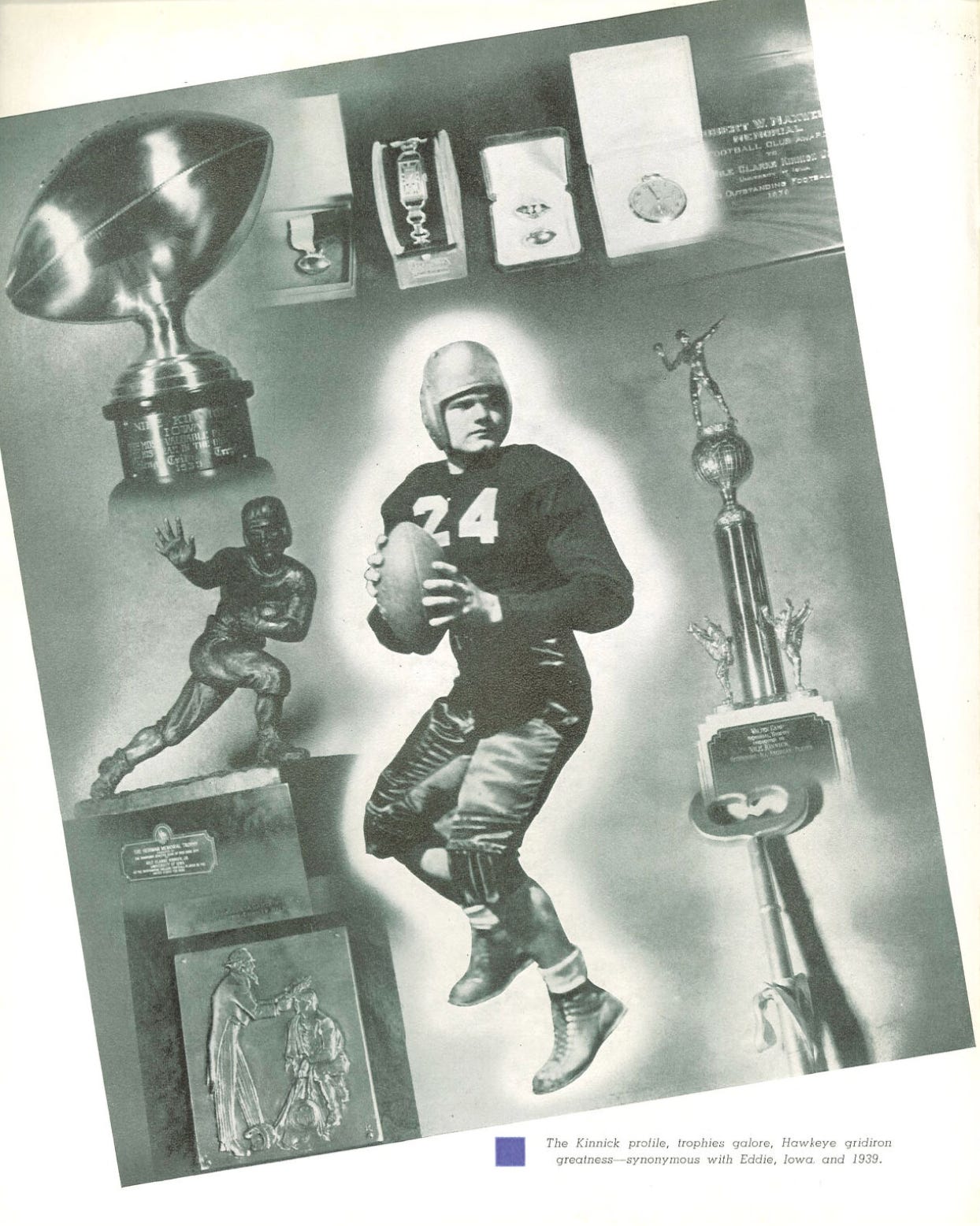
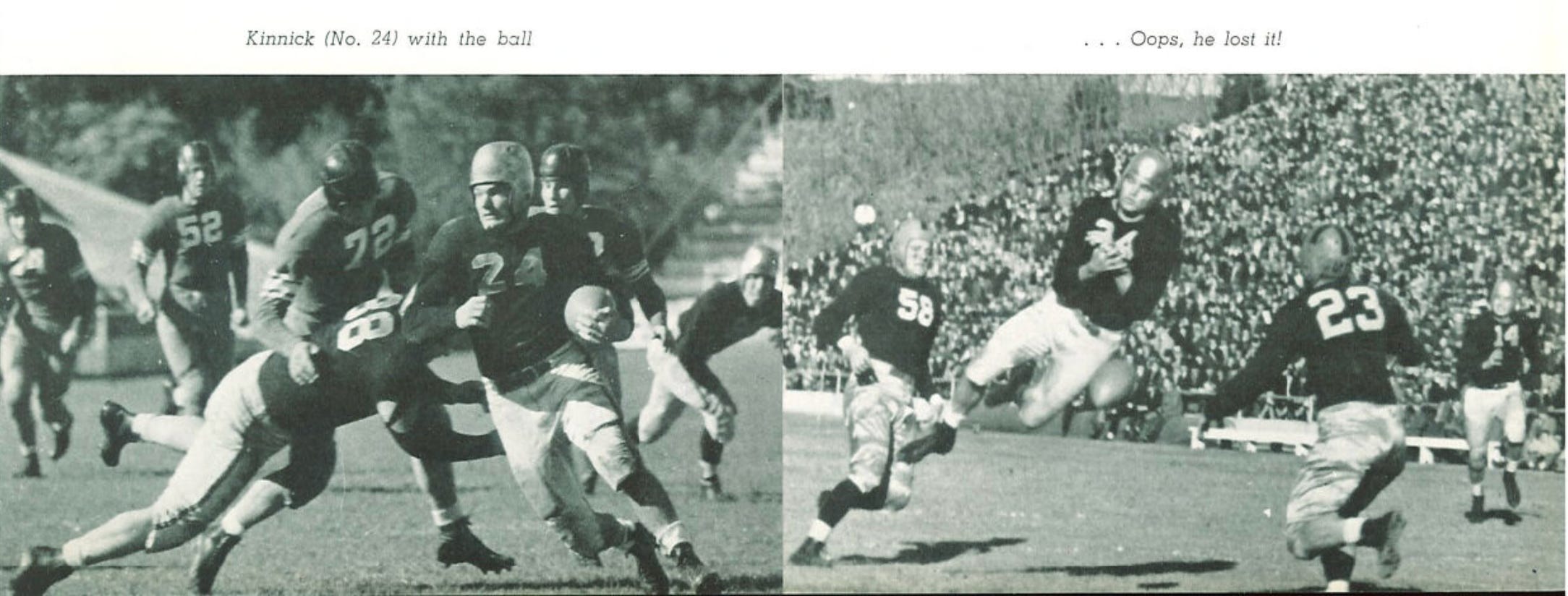 (1941 Iowa yearbook)
The Iowa student body voted to rename their stadium in his ...