Kerri Lukasavitz's Blog, page 5
April 11, 2023
Book Review for Equestrian Author, Susan Friedland
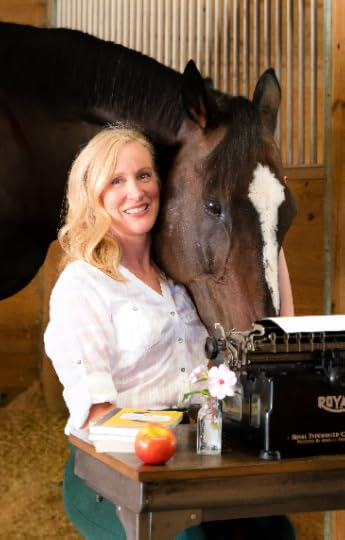
Equestrian Author, Susan Friedland, with her retired racehorse, Tiz A Knight.
I first came across Susan Friedland’s books: Horses Adored and Men Endured: A Memoir of Falling Off and Getting Back Up, Strands of Hope: How to Grieve the Loss of a Horse - Advice and Stories to Help You Heal, and Unbridled Creativity: 101 Writing Exercises for the Horse Lover a few months ago, but didn’t have the time to purchase and read them until now. I have to say I enjoyed reading all of her books.
Horses Adored and Men Endured is the perfect title for her memoir. Wonderfully written and full of humor and the rich details of her horse life - the story of initial horse love through owning her first horse to having her current horse - will captivate her readers, whether they are equestrians or not. Her dating dilemmas and disasters (who hasn’t had them?) are often humorous despite Friedland’s goodhearted nature and strong sense of optimism for finding an enduring love partnership. Readers will find her memoir highly entertaining and a joy to read. One can’t help but champion Friedland into finding the love of her life after everything she endures, but I won’t spoil anything. You’ll be captivated from page one to the end of the book. I read it in almost one sitting. I had to find out how it would end for her - a horse and a husband, or only a horse. You’ll have to pick up a copy and read her memoir for yourself to find out.
I was hesitant to read Strands of Hope: How to Grieve the Loss of a Horse - Advice and Stories to Help You Heal, not because I thought it would be poorly written, but because I was afraid of what it would bring up for me and my life around horses. But Friedland’s writing was caring and deeply sensitive to one of the most challenging aspects of owning or working with horses - their eventual death due to illness, accidents, old age, etc. This loss is deep and never easy to navigate, but Friedland offers hope in her book from the vantage point of having lost her first horse, DC. Some of the chapters are: Cry, Do the Things, Embrace Your Grief, and Ride Again. Filled with stories of other women who lost horses, great advice, and practical resources, Strands of Hope is the perfect gift for a grieving horse owner, or even someone who rides or cares for them daily. I highly recommend this volume for all horse owners and for those whose loved ones have suffered a horse loss, but can’t find the words to comfort their grieving partner, family member, neighbor, etc. A beautifully written book.
I have been a daily journal writer for almost three decades and can’t wait to start Unbridled Creativity: 101 Writing Exercises for the Horse Lover. I enjoy writing prompt journals, but horse related? Sign me up! The book has nine chapters, each with a different writing prompt theme, such as 12 Ways to Be a Better Writer, Lovely Lists, Delightful Descriptions, and Creative and Cool. Each page has a prompt at the top and lined space below to jot down your thoughts. I would probably use a different notebook because one, I write a ton and need more room and two, I want to keep it looking nice. (I own about 40-some journals and refuse to write in some of them because they are unique. This one will be added to that pile.) I was inspired after going through all of the chapters that the answers to some of Friedland’s questions would make great blog post ideas. This is a fun book that will encourage creativity and help with writing practice.
Susan Friedland also has a featured article in this month’s Horse Illustrated magazine - May, 2023. Her article is about her upcoming new book, Marguerite, Misty, and Me, due out this summer. It’s her journey to learning more about Marguerite Henry and her life as a horse author. I am eager to read it when it’s out since I loved the Misty books as a child. You can learn more about her new book at the link below.
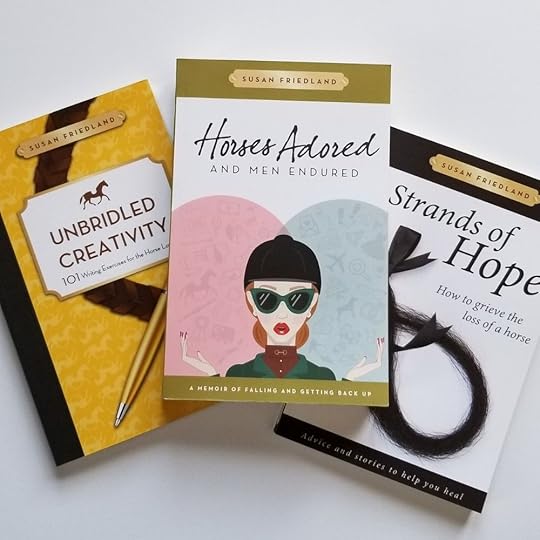
Friedland’s Books
Susan Friedland, author of three books: Horses Adored and Men Endured, a horse lover’s dating memoir; Unbridled Creativity: 101 Writing Exercises for the Horse Lover; and Strands of Hope: How to Grieve the Loss of a Horse, never grew out of that horse phase. She shares her passion for all things equestrian at her blog, Saddle Seeks Horse, and by writing for Horse Illustrated and Young Rider, and co-hosting Barn Banter, the Horse Illustrated podcast. A former middle school teacher, Susan is now writing a book, which will debut this summer, about beloved horse book author Marguerite Henry (Marguerite, Misty and Me now available for pre-order saddleseekshorse.shop). Trot along with Susan and her retired racehorse Tiz A Knight at saddleseekshorse.com.


April 3, 2023
Beetle Bailey - Con Artist
The first hunter/jumper stable I worked at had a nice string of reliable school horses used for regular, daily lessons. Most of them were retired, older show horses who were well-trained and accustomed to an assortment of different rider skills. I would bring them in on Tuesday mornings so they could spend the rest of the week inside the stable, making it easier for me to have access to them for grooming and tacking up for lessons than having to bring them in, turn them out, then bring them back in again from their 14-acre pasture, where they spent their time grazing and just being horses.
On occasion, I would have to go out to the field and catch a few of the other school horses who were only used when absolutely necessary. Sometimes we’d have a lot of lessons scheduled on a busy summer Saturday morning and would need to give the regular school horses some time off in between the all-day classes. This meant getting Beetle Bailey - an ancient, narrow, bay horse around 15.1 hands. His thick, fuzzy, black forelock, mane, and tail were woven throughout with golden hair, something I always wondered about. I assumed he was a Thoroughbred, but maybe he had another breed(s) within his bloodlines.
When I first starting working at the stable, I had no problem walking up to him, clicking on the lead rope, and walking him back to the barn. Once he knew I needed him for a lesson, he made sure to stay just out of my reach. He never ran off, he’d simply turn his head ever so slightly so I couldn’t grab a hold of his halter to snap on the lead rope. I used apples and carrots to try and persuade him, but that only worked about one or two times before he started to avoid me permanently. It got to the point where I would have to ask the other farm hand to bring him in. Beetle Bailey liked him, probably because he never asked anything from Beetle.
Once Beetle was in the stable, I would groom him, tack him up, and hand him off to his rider. I knew it was only a matter of time before I would be summoned into the ring to deal with yet another distraught rider, so I would work on other tasks nearby and wait.
Beetle Bailey was a con artist like no other horse I have ever handled, and I have been around many horses. Without fail, Beetle would start out walking in the lesson with the other horses, only to suddenly come up “lame” on his inside front leg when asked to trot more than twice around the ring. His rider would get nervous when they were asked to keep going. The instructor assured them that Beetle was completely fine (he had been vet-checked regularly). When asked to change directions in the ring, Beetle would miraculously heal on the leg he had been limping on only to suddenly come up lame on the opposite front leg. Hmm . . . Beetle’s riders would sometimes come to tears because they didn’t want to hurt him. More often than not, the rider would pull up Beetle in the center of the ring and dismount.
One rider had been so upset that she insisted on untacking Beetle and turning him back out into the field herself. I agreed to walk with her to make sure the field gates were opened and closed correctly. I told her she was in for a surprise, but didn’t let on to what it was. The three of us headed out to the field, with Beetle still occasionally feigning slight lameness on alternating front legs. She patted his neck and crooned to him as we walked along. Beetle gave her the eye, biding his time.
I opened the gate to the large pasture for her, then asked her to walk in and turn Beetle’s rump away from us. She said that was odd since he was so docile. I assured her I needed her to do as I instructed. She faced Beetle, unclipped the snap, and almost dropped the lead rope in her hand at what happened next.

Beetle Bailey spun around, kicked out at us, and shot across the pasture like a three-year-old race horse, bucking and farting the whole time. I saw him look back at us, like he was laughing again at how he had conned yet another rider. I tried to tell the woman that it was all an act from a very shrewd old horse who had figured out how to get out of doing work, but she and the countless others refused to believe us. They ended up with a horse practically grinning at them, and having a shortened riding lesson. The woman rider said she wouldn’t have believed this if she hadn’t seen it first hand.
Beetle Bailey spent most of his days out in the pasture, enjoying a quiet horse existence, with the exception of only a handful of times when he was needed to help out. We knew it would only lead to unhappiness if he was ever used somewhat regularly, so he was left alone. I never was able to catch him after that day, but thankfully we seldom used him anyway. He was a smart, old horse who had learned how to spend all of his time in the field, conning us all.
March 27, 2023
Best Horse Experience Ever
Many of you know that my inspiration for the middle grade horse book series comes from my life as a former show groom, rider, and riding instructor for two hunter/jumper show stables. Some of my favorite memories are from when I taught lessons. I know many riding teachers prefer the more advanced riders, those with years of experience under their braided leather belts, but I loved teaching the beginners. There was something special, wonderful about helping someone who was courageous (and curious) enough to come to the stable regularly, swing up onto the back of a school horse, and learn how to ride, whether they were 5 or 65. But my favorite memory of being around young riders was when I wasn’t even their instructor.
After I left horses professionally in my mid-twenties (or I thought I did), I lived in St. Louis as a nanny. The wife of the couple I worked for had a sister who lived in the house adjacent to their subdivision property. Her sister and her husband had 7-year-old twin girls and employed Michelle, a young nanny from England. The twin girls had regular riding lessons at their elite country club, and I was invited to go along with Michelle and the twins one Saturday morning to watch.
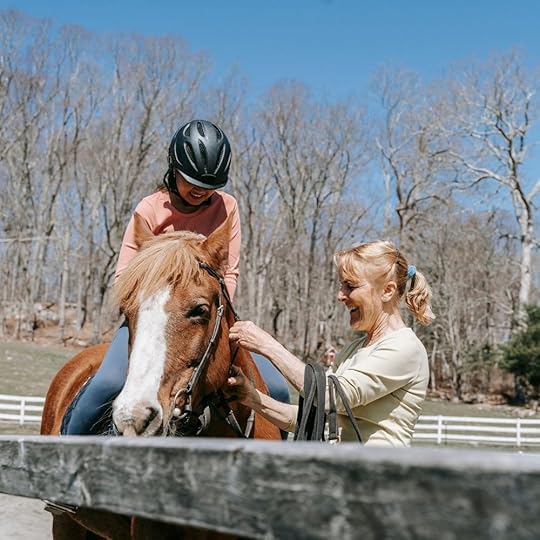
As Michelle and I waited by the white, wooden fence of the indoor arena for the twins to come in, a young boy, maybe 8 or so, led a small Appaloosa mare into the ring. He glanced around the mostly-empty ring, looking confused and uncertain of what he was supposed to do next. The Appaloosa was such a good horse. The bridle couldn’t have been put on more incorrectly (what was actually on the horse’s head) and the saddle was tightened at a very odd angle - one that wasn’t the least bit safe to ride in. The Appaloosa stood patiently, chewing her snaffle bit while she waited for further instructions. The boy held the reins and stood squarely in the middle of the ring, frozen and wide-eyed. I did what any riding teacher would do - without hesitating, I climbed over the fence and went to help him.
I asked him if he had tacked up his horse by himself. He nodded yes. I talked quietly to him and the Appaloosa mare while I adjusted the bridle and standing martingale to their appropriate lengths. I let him know that he had done a great job but that things would be easier for him as he practiced more (and grew taller!). Next, I unbuckled the girth, re-positioned the saddle, and re-tightened the girth. When he was ready, I gave him a leg up and helped him learn how to adjust his stirrup irons correctly and tighten the girth from up the saddle. He picked up his reins, wobbled his feet against the Appaloosa’s sides, and walked off to ride along the rail with the other students who were now starting to enter the ring. I went back by Michelle, climbed over the fence, and was ready to watch the lesson.
An older man in a white cowboy hat, Western shirt, jeans, and cowboy boots approached us from across the ring. He walked up to Michelle and me and stood in front of us from on the other side of the white fence. I thought I’d done something wrong, and he had come over to tell me to mind my own business. I was ready to defend myself by saying I had only reacted because I cared about the young boy’s safety.
The man’s first words to me were something like, “That wasn’t your first time tacking up a horse.” I said I had some experience around them. He then went on to say that not everyone would have climbed the fence and gone to help someone like that. He was sure I had far more experience than what I let on to. I told him about my former background around hunter/jumper show stables. He was so impressed by my behavior toward the young boy that he offered me a job on the spot as a riding instructor. He’d seen all he needed to. I told him I would consider it and get back to him. Sadly, I chose not to work for him. Instead, I ended up returning to Wisconsin to create a new life.
I’m still not sure what it was about that day that made it so memorable. Maybe it was because my actions came from my heart, spirit and not from thinking things through before I decided it was “okay” to go and help him. There was something extraordinary about being able to help him at that exact moment when he looked so frightened and unsure of what to do next. I saw the opportunity to lend a hand and took it to get him safely on his horse so he could enjoy his lesson. I never considered that I had never set foot in that ring before. I was satisfied being in the right place at the right time for someone in need, even if that meant a small boy holding a small horse in an indoor riding ring.
March 20, 2023
The Book That Almost Wasn’t
Gray Horse at Oak Lane Stable (Book 2), the second middle grade horse book in the series, almost wasn’t written. You see, I was going to quit writing. Mystery Horse at Oak Lane Stable (Book 1) wasn’t selling well despite trying to reach a larger audience, and its road to being published had been disappointing to say the least (Read Blog Post: Rejections and More Rejections for the story). Was I ready to go through all of that again? I wrote maybe the first five chapters (about 2,000 words) shortly after Mystery Horse was released, but shoved it into a dark hiding spot because life had other things that needed my immediate attention (which was really just an excuse to avoid a possible heartache all over again).
In March of 2019, I had written a 1,200 word nonfiction piece for The Lakefly Writers Contest (in conjunction with their spring writers conference). Since I wasn’t working on the second novel, I thought I could at least write something. I had my eye on entering the Write On Hal Prize, but had to wait to see if I had placed in the Lakefly writing contest, which I had submitted to in late March. By late April, I learned that I hadn’t won anything, so I rewrote the piece as a double-strand braided essay, added an extra 798 words to the 2,000 word limit, and sent it off to the Hal Prize on April 30th, one day before the May 1st deadline. To be perfectly honest, I actually forgot I had entered the contest.
I attended the Lakefly Writers Conference in May of 2019. I considered practicing pitching Gray Horse to an agent/publisher with only five chapters written (I wouldn’t suggest doing this, although that’s exactly what I did with Mystery Horse), but decided against it. A very good friend of mine, who was also at the writing conference, practically dragged me over to sign up for the pitch practice. As fate would have it, I ended up with an unexpected slot opening that had just occurred. I presented first to a small publisher, who I learned was also a former equestrian. She told me to send her the manuscript when it was finished writing it. I thanked her, we shook hands, and I walked out the door, thinking that was that. She’d told me she wasn’t taking on any new authors, so I let it go.
Writing came to a complete halt after that. At the time, I worked as an assistant to an interior designer, which kept me busy for the summer. I was ready to take down my author website, let my domain name expire, and move on. Mystery Horse still wasn’t doing well despite my best efforts. I wasn’t up for any of this author business anymore.
In early July, I received an email while at work saying congratulations for winning the Hal Prize in Nonfiction. I was shocked. I had won this award out of all of the other entries? I let the news sink in before getting back to work. I had won a significant writing award! Embers suddenly glowed from deep inside. It wasn’t instant, but my passion for writing slowly returned. By November of 2019, I was ready to work on Gray Horse again, pulling it out from under a stack of shelved work. I joined the NaNoWriMo (National Novel Writing Month) and wrote over 38,000. I didn’t complete the novel in the month, but I was well on my way to finishing the second book in the series.
In May of 2020, after I had finished writing and editing Gray Horse, on a whim I submitted - almost to the day - the manuscript to the small publisher I had met at the Lakefly Writers Conference the previous year. I was sure she’d forgotten all about me, but within 12 hours of contacting her I had a contract for the publishing of the novel - she loved the story and then eventually the other two books in the series. Gray Horse was sent out into the world.

It would have been easy to quit writing. I could have folded up like so many writers I have known, but something inside keeps me going. I have an in-born passion for words, stringing them into beautiful sentences, then paragraphs, then pages, then eventually a completed novel. I get grumpy if I haven’t been at my writing spot in a while (which rarely happens anymore). Writing takes precedence in my life. I’m amazed at how far I have come, but there is so much more to write about. I will continue to discover more about this passion for life.
March 15, 2023
PonyTale
When I’m not working on the middle grade horse novels, I enjoy writing flash fiction - the complete opposite of a long-form novel. For me, there’s something about having only 750 words (or less) to write a complete story. I find it challenging and rewarding. Sometimes the work flows quickly, needing very little editing. Sometimes it takes me a while before I find the perfect words to convey exactly what wants to be put down on the page. I’m not a poet, but I assume flash fiction is similar in the tightness of the language used in a piece.
PonyTale is a piece that was chosen as a Finalist for the 2020 WOW! Women On Writing Flash Fiction Contest. I loved writing about the feisty pony. The story is told from his point of view. I hope you enjoy it as well.
* * * * *
“I'm going to disappoint you, but you already know that.” My snowy Welsh body canters forward, collected under your guidance. I feel you squeeze your child fingers on the right laced rein as you head me toward the first of eight colorful jumps set up in a modified figure-eight pattern around the outdoor show ring on this sunny Sunday morning. “Zoe, my determined young rider, how many times in the last year have you ridden me in these hunter pony classes hoping to win first place, or any place for that matter? If only you could trust me.”
To give you some hope that today’s horse show will be different from the other ones we’ve competed in, I sail over the first fence and land with a flip of my traditionally braided tail--the long, loose ends fanning out elegantly. Moving forward with the steady tempo of my three-beat gait, I then take the second and third fences, which are set up in a diagonal line across the middle of the ring, in the best jumping form I've got--the form that always earns me the judge's attention when we’re at shows. I canter out of the ring's corner with my neck neatly braided and nicely arched--a credit to my fine and pricey bloodlines--and head directly toward fences four and five that are in a straight line along the far side of the white, three-board, show ring fence.
“Zoe, I feel you relaxing a bit.” I jump fence four with my front legs tucked up under my cheeks and my topline arched in perfect form. “Is relaxing such a good idea? You know what happens when I feel you soften your seat and leg grip.”
I clear fence five with style and sophistication, landing gracefully on trim hooves as I canter on. Again, I feel you squeeze the right rein and press my right side behind the leather girth with the inside of your lower right leg to turn me toward fence six, which is at the other end of the show ring and where your grandparents stand watching you ride. This time I’ll be obedient in front of them and cut across the ring in a straight diagonal line for you. After all, they did buy me as your present for your 10th birthday last year.
“Look at how nicely I'm heading toward this sixth fence.” I keep a steady canter stride. “Why have you tensed up? Only three fences to go. Nothing to fear.”
I'm four strides away from jumping fence six . . . and then three strides . . . and then two strides . . . and then I leap over the fence in a big way. I flip my tail again and change to my left canter lead when you cue me. You head me down to the last two fences that are set up in a straight line along the other side of the show ring--the place where spectators sit on aluminum bleacher seats under the shade of three giant, gnarled box elder trees and are barely a rock toss away from the four rows of the now-shabby, white-painted stable barns built so many years ago on these rural showgrounds.
“Oh, this is fun!” I canter directly toward fence seven. “I forgot how much I enjoy being in the show ring with everybody watching us and . . . did you just relax your leg grip?” I’m amazed at how fast I can halt. One moment I'm moving forward ready to take off in front of the jump and within a split second, I can look like a carved marble statue.
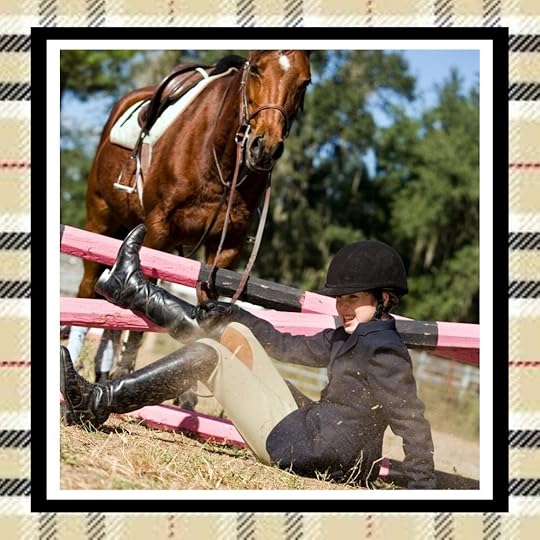
You soar over my head and land in an ungraceful heap on the ground in front of the colorful jump while still holding onto my reins. I gently chew my snaffle bit while I wait for you to--once again--get up, brush yourself off, climb back on, and turn me around to ride back over the last jump. Every time I've pulled this marvelous stunt--and you never really know when I might choose to do it, do you--I always jump the fence I refused to the first time in the most perfect form I can master without any hesitation. Frustrating, isn’t it?
“Oh, Zoe, we were so close.” I stand still while you put the reins back over my head, lift your left paddock boot into the stirrup iron, and climb back up into the child-size, English saddle. “There's always next time.”
May 28, 2019
Rejections, and More Rejections
Mystery Horse at Oak Lane Stable (Book 1) started out as a 20-page assignment for my first Novel Workshop for Young Readers while I was a graduate student at Mount Mary University. I knew how to read novels, but writing them? Not a clue. I struggled putting down twelve pages, let alone the twenty pages needed to meet the assignment’s requirements. After being (harshly) critiqued by the class, the professor pulled me aside and offered some wise words: write what needs to be written, not what you think others want to hear. When I sat down to start over the following week, the story I avoided came pouring out. I easily fulfilled more than twenty pages, plus finished over the forty pages we were to complete by the semester’s end.
I worked on the novel throughout the rest of my schooling, finishing roughly ninety pages by the time the thesis semester rolled around. I was satisfied with the 5 solid chapters, critiqued and fully edited by numerous sets of eyes. I left school ready to start a writing career as a novelist, or so I thought.
About a year after graduating, I attended a 1-day writing conference in late fall with the sole purpose of experiencing first hand what pitching to an agent was like. I was allowed a 5-minute pitch to a Chicago-based Literary Agency, which I had prepared for. Imagine my surprise when she said, “We love horse stories! Send me the first five chapters. Hmm, I’d like to see this as a trilogy.” My knees wobbled when I left. I was stunned to have gotten a positive response, and more books to write. “Wow,” I thought, “this was easy!”
But there was a problem - Mystery Horse had only 5 chapters written. What was I supposed to do if she wanted to see more? I sat down and worked steadily on the novel, completing the rest of the draft in about 10 days. I had others read and edit the work, so I knew it would be ready to go when she asked for more. (I suggest making sure the novel/work is completed BEFORE you pitch or query the work - only send your best work.)
I followed up with the agent after the holidays, emailing her to find out if she wanted to read more. I didn’t receive a response. And, I didn’t receive a response to the next two emails I sent her, about three weeks apart from each other. I attended another writers conference in the spring and learned that the “no response” was the new rejection. I felt disappointed in learning this. I’d had such high hopes, but I started researching other literary agencies and publishers who might be interested in the novel.
After two years of querying, I started to lose hope. On one afternoon, I received five rejections - all within an hour and a half window. Now I was devastated. Was the novel that bad? Had I written something awful? I worked hard on it, so I knew it wasn’t sloppy. I felt badly for the story, so bad that I put the novel away for over a year - refusing to query it anymore. I was heartbroken. I bid my author life adieu, and went back to interior design.
The following spring, I attended the Lakefly Writer Conference, held annually in Oshkosh, Wisconsin. I met a publisher there whose presentation impressed me. Since we were attendees of the conference, we could query any work we had to this publisher within the next month. I left intending to do nothing more with them. On a whim two weeks later, I pulled out Mystery Horse and sent it to them. I cried in my car the following morning while running errands. I checked my emails while I was parked at a store and saw they had responded by saying they loved the story and wanted to publish the book. I could hardly believe it.
Writing can be a tough road to follow. It can have rejection after rejection, but please keep going. Keep writing and sending out that work. It deserves to be seen by others. Not everybody says no.
7 Simple Writing Tips
Here are a few words of advice (and encouragement) that I have learned over the past decade that may help you on your writing journey:
1.) Always be professional in your responses to agents, publishers, your readers - anyone for that matter. You will come across as someone who would be easy to work with and a pleasure to know. There is no room for rudeness or sloppy, poorly written correspondences.
2.) Never, and I mean never, vent to an agent, editor, or publisher who passes on your submission. Your work my not fit in with their current focus, but that doesn’t mean it wouldn’t fit in at a different time or with another publication/agency. Don’t burn possible bridges for your future. You know agents talk to each other, right?
3.) DO NOT give up! The writing world can have many side roads, detours, and hazards along the way, but hang in there. If you continue to do the work, you WILL gain some traction in publishing. Keep going!
4.) Celebrate your victories. Any time you have something published, especially your first short form piece or book, make sure you acknowledge your accomplishments. They will keep you moving forward. Also make sure you note them in your author’s bio.
5.) Submit your work to the proper agent, editor, publisher, etc. Take the time to thoroughly research where your submission fits. If you have a Young Adult graphic novel, please do not send it to an agent who is only looking for cookbooks or interior design coffee table books. You will get a no (or more likely no response). Read through each agent’s bio to see who would best represent your work. The same goes for magazine articles, blogs, or publishers. Make sure your submission is what they are looking for. Rejections will happen, but at least give yourself a fighting chance by delivering something they are currently looking for.
6.) Read, read, read. I cannot say this enough. Reading other people’s work in your genre, and not in your genre, will open your mind to experiencing other writer’s voices, styles, and personalities. The more you read, the more your own work will take on depth and new life - trust me on this.
7.) Practice, practice, practice. Did I mention practice? Like any other skill, writing requires you to sit down and work at it. The more you develop a devotion to your writing, the better your skills will become. If you write novels, why not try flash fiction? If you write poetry, why not create a short story? Push yourself to move beyond only what is comfortable for you. Open yourself up to the beautiful world of the written word.
The Midwest Equestrian’s Review for Tween Horse Book Series
I was delighted to have the Oak Lane Stable Adventures - a horse book series for tweens - featured in a full-page Book Review for their Fall, 2022 issue of The Midwest Equestrian magazine. Publisher, Janice Fischer, wrote this in her review:
“The Oak Lane Stable Adventures is a series of books about the trials and tribulations of horses, youth, and growing up. Cassie, the protagonist, and her two best friends, Ingrid and Allison, are a group of tweens who’ve got the horse bug really bad. They live in Wisconsin and ride on the hunter/jumper circuit in Northern Illinois and Southern Wisconsin. This series takes us through their world as they go from beginners to competitors, and horse owners to teenagers.”
Fischer added:
“Kerri Lukasavitz is an award-winning author and lifelong horsewoman. Lukasavitz’s knowledge of the horse and the show world, mixed with her riveting storytelling, make for an educational and delightful read. Her books teach us the values of lessons in horsemanship, friendship, and sportsmanship. The books are geared toward twelve-year-olds, but I enjoyed reading them as an adult because they reminded me of these values.”
Fischer reviewed each of the books: Mystery Horse at Oak Lane Stable (Book 1), Gray Horse at Oak Lane Stable (Book 2), and Dark Horse at Oak Lane Stable (Book 3) and included a festive fall photo of the novel series within the article. You can see/read the full review by following the link below and searching back to the Fall, 2022 issue.
I am deeply grateful when the book series receives honest feedback, especially feedback that earns them a spot in a regional horse magazine. Thank you, Janice Fischer, for taking the time to read each book and write up/print your book review within the magazine’s pages. Your efforts are well-received.
To learn more about The Midwest Equestrian magazine, please visit: The Midwest Equestrian
First, There Were Three …
Readers are first introduced to the main character, 12-year-old Cassie Piotrowski, and her two best friends, Ingrid Svenson and Allison Greene, in Mystery Horse at Oak Lane Stable (Book 1) - three friends bonded through time by grade school, regular riding lessons at the stable, and a deep love for horses. Feisty Allison is the only one of the three to have her own show horse at the beginning of the series, with Cassie a close second as her journey through Mystery Horse will eventually reveal the perfect horse for her. Shy, quiet Ingrid is sure she’s never going to get a horse because her parents feel she’s too young yet to take on the responsibilities of having a horse - something all adults need to address before moving forward with this important decision - but she proves them wrong and ends up with a show horse of her own.
They remain fast friends throughout Gray Horse (Book 2) until things start to unravel between Cassie and Ingrid in Dark Horse (Book 2) when David (Ingrid’s grade school boyfriend) dumps her for Mia Hernandez (Cassie’s classmate from her freshman English Comp class), and Cassie ends up siding with Mia because she likes her friendship. Ingrid’s cold shoulder toward Cassie continues into Ghost Horse (Book 4), with the first sentence of the book stating, “Ingrid, my best ex-friend, still isn’t talking to me … “
When I wrote the first two books in the series, I was sure these three would remain best friends throughout the rest of the novels, except that hasn’t been the case. I write down what wants to come through. I can’t “control” how the characters will interact with each other - it doesn’t work that way with me. They all have distinct personalities that want to come to life. Keeping everything “perfect” isn’t truthful. Girls don’t always get along, especially when they are at the tail end of middle school and entering high school. Maybe researching and writing about this will help me and others understand what happens to friendships over time, especially with those we were once so close to. Maybe it’s growing pains or a right of passage, or just moving on in life. I never understood why it had to happen at all.