Roger Bray's Blog, page 8
January 27, 2018
Rosemary Noble

Could you tell us about yourself?
I live in Sussex, England, am married with two children and two grandchildren and worked as a librarian in schools, colleges and latterly in a university. I loved helping students and staff to research and it gave me a great grounding in the research I do for my writing. I also love to travel. Having spent part of my childhood in Egypt and Singapore, travelling by ship meant that I visited several very poor places on the way. The poverty in India in the fifties lives with me and that tiny snapshot during one day, stirred a belief in social justice which influences my writing.
How long have you been writing?
Seriously for nearly six years. I wrote in my teens, then life took over, but now I have retired there is the time for research and writing. In many ways, it’s something I should have picked up years ago. Now, I feel I am writing against the clock, especially after a health scare just before retiring.
Tell us about one of, or your most recent book?
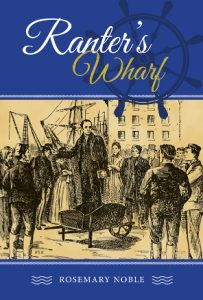 Ranter’s Wharf came out in April 2017. I hail from a town called Grimsby, which in the early 1800s was no more than a poverty struck village, having once been an important port in medieval times. Because of its prior importance it had two members of parliament – so something of a rotten borough. Corruption was rife. My story begins during the Napoleonic Wars and ends when the railway and new docks arrive, which turned Grimsby into the largest fishing port in the world. It’s about three generations, their struggles with the important factors of the time, poverty, lack of education, the right to vote, religion and the industrial revolution. It’s a very intimate book and based on my three times great grandfather. However, I found in writing it, that I became internally conflicted because of the vote for Brexit which has broken my heart. To understand why, you will have to read it.
What do you love about writing?
I love the research and then I love getting to know my characters, what makes them tick, how they react to adversity. Writing is a continual learning process. It keeps your brain fully engaged and to have found a new career in retirement is a bonus.
How do you get inspired/ where do you get your ideas?
Family history – as simple and as complex as that. I got hooked several years ago. My husband, being half Australian has convicts, gold diggers and a millionaire for his ancestors. We didn’t know that until I began to dig. All of his Australian history died when his grandparents died. We did know that there had been wealth and that it had disappeared. When we retired, our first long trip was to Australia and we followed the story which Trove gave back to the family. Trove is a treasure that Australians must feel very proud of. To me it’s pure gold.
I was inspired to begin writing the story after we returned and of course it had to start with Convicts. Working as a volunteer with the Female Convicts Organisation in Tasmania by researching all the convicts who travelled on the same ship as our ancestor, gave me a depth of understanding and empathy, which I hope transferred to the page. I’m now working on the third book in the series. A tale of a fortune made and then lost.
Do you have a specific writing process?
I do not work it all out in advance. I have a vague idea of the story, but it changes. Sometimes I sit down to write and have no idea what is going down on the page and that is how Sarah, a main character in Search for the Light was born. She spoke to me and told her own story.
I also write and research at the same time because that makes it more immediate. Each book takes me 12 months to write and six months to edit, which is far harder than writing.
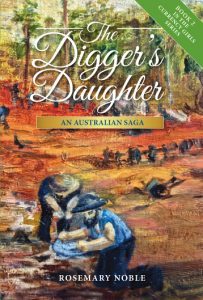 I was very lucky when writing The Digger’s Daughter to be contacted by a local history group in Werribee who had been given a document written in 1902 about the brother of my protagonist. I was writing the last chapter at the time but of course, with that information I had some rewriting to do. Until that point, I had not appreciated just how Victoria, in the early days, resembled the Wild West.
Rediscovered cousins in Australia also contribute snippets. I love hearing from people who are part of the extended family and have come across my books. I just pray that I don’t offend anyone.
Do you have any advice for aspiring authors?
Learn by writing, find a writing group who will give honest criticism. Begin to critique work by others. Try and identify what you like about another’s work and how that could improve your own writing. Observe the world around you. How does the sky look today, how does the wind sound, what does the air smell like? Take a notebook around with you to jot it all down. Know your weak points and learn from them.
What are you currently working on? How long before release?
As I mentioned earlier, it is the third in the trilogy on an Australian family. As yet, I have no title. I’m hoping it will be released in time for Christmas. Also, I am collaborating on a ghost tour book with other local authors for a literary festival to be held in July.
What are you currently reading?
The Dreadnought of the Darling by C E W Bean published in 1912. I ordered it from the British Library but then an Australian friend in Queensland sent me a copy to keep because I was raving about it so much. It is of its time and I needed to immerse myself in the Darling River culture and life on a million acre sheep stations in NSW.
Who are your favourite authors?
Almost anything by Sebastian Barry. On Canaan’s Side is superb – an intimate portrayal of not only why war is to be avoided at all costs but also race relations and sex used as a weapon by powerful men. I read it for the second time with my book group last year and it wowed us all.
Louis De Berniere – Captain Corelli’s Mandolin and Birds Without Wings are breath-taking but then he writes something so different like Notwithstanding which is a joy. I was also amazed to hear he wrote Red Dog. He has such versatility. Some authors write the same book 20 times but with different settings. De Berniere is not guilty of that.
Last year I read some amazing books,
All the Light You Cannot See by Anthony Doerr is a masterpiece. I gave it to a friend for Christmas and he was knocked out by it, thought it should be an English exam text.
Salt Creek by Lucy Treloar resonated particularly, taking place in both South Australia and in Chichester (which is 8 miles up the road from me). It reminded me of another favourite book which I buy up in charity shops to give to friends, Poisonwood Bible by Barbara Kingsolver.
The Light Between Oceans, I loved the book, but the film could never do it justice, such depths of emotion are rare.
Do you have any favourite fictional characters?
I have to go back to the characters that made me fall in love with historical fiction. Writing them down, I notice they are mostly women. Perhaps it is because I am drawn to strong female characters.
Jane Eyre,
Elizabeth Bennet from Pride and Prejudice
Katherine Swynford from Katherine by Anya Seton
Natasha from War and Peace
There is a minor character from Captain Corelli’s Mandolin who continues to intrigue me and that is Bunny Warren, the British Spy. The image of him floating down to earth in Greek National Dress like an angel was inspired. I love how he spoke Latin to the Italians and Ancient Greek to the islanders and they don’t guess he was neither Greek nor Italian. I was taught at primary school that you cannot mix up humour and tragedy in the same play. My teacher obviously did not know Shakespeare. It is the mark of a master storyteller if you can.
Any fun facts about you that you would like to share?
I’ve always had a good sense of direction although sometimes my husband chooses not to believe me. When I was two years old and on a playdate with a family on the other side of town, I chose to leave and found my way home, like a homing pigeon. The trouble was we were living in Egypt, one wrong turn and I would have found myself in the desert, another wrong turn and who knows what I could have ended up as, certainly not as a librarian.
Find out more about Rosemary on her WEBSITE or on  or
or 
The post Rosemary Noble appeared first on Roger Bray.


January 23, 2018
Angela Petch

Could you tell us about yourself?
Angela Petch lives half the year in a remote valley in the Tuscan Apennines and six months by the sea in West Sussex. She has travelled all her life: born in Germany, she spent six years as a child living in Rome, worked in Amsterdam after finishing her degree in Italian, moved to Sicily for her job, then to Tanzania for three years. Her head is full of stories and she always carries a pen and note-book wherever she goes to capture more ideas.
How long have you been writing?
All my life, but I only started in earnest once my three children left home and I had more time to seriously write. I started by following an Open Arts Writing Course by correspondence and that gave me the confidence to test the waters. Then I won a short story competition at the Ip-Art festival. That was the kick start I needed.
Tell us about one of, or your most recent book?
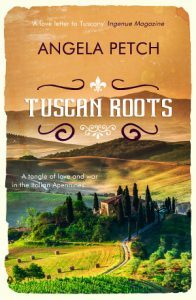 The first, “Tuscan Roots” is a Second World War story of romance, partisan activity, hardships of ordinary people caught up in the cruel tangle of battle and the difficulties of a mixed marriage in grey, post-war Britain – all pieced together from diaries. My own Italian mother-in-law was a war bride and the book is laced with research, memoirs and embroidered with fiction. From our watermill by the river in Tuscany, I can walk up the mule tracks to ruins of the Gothic Line, a defensive barrier constructed by the Germans during the last years of the war. The area resonates with history.
What do you love about writing?
It helps me engage with the world – if that doesn’t sound daft. When I’m writing, it’s as if my senses are on alert and I observe, hear, smell everything around me more. My writing doesn’t always flow, obviously, but when it does and I feel as if I’ve written something worthwhile, then it gives me such a high.
How do you get inspired/ where do you get your ideas?
In Italy, where we live, it is easy to be inspired by the location and rich history. But I am also fascinated by characters, especially older people who have experienced so much in life. I feel it is important to record their accounts before it is too late. My own Italian mother-in-law is ninety-two now and suffering from Alzheimer’s. I’m so pleased I managed to record her amazing life accounts before it was too late.
Do you have a specific writing process?
I wish I was more disciplined and could treat my writing as a day job, but I have other commitments that do not allow this. We have four grandchildren (just learned this will be five) and in Italy we run a holiday business, so I write when I can. This is usually in the afternoon and I try to write 1,000 words a day. They might be rubbish but at least I have something to work on. I always carry a notebook with me wherever I go and I find walking helps me sort out my writing projects.
Do you have any advice for aspiring authors?
First of all – do it! Just write. Don’t put it off. Follow your heart. Join a writing group and get feedback. Read, read and read. Try and work out why a book works for you. Without taking away from the enjoyment of reading, dissect the book to understand the craft. Accept that social media is a part of the business of writing but be disciplined in your engagement.
What are you currently working on? How long before release?
I am working on a completely different type of book from the two I have written so far (which are historical novels set in Italy). “The adventures of Mavis and Dot” is a gently humorous account of the escapades of two retired ladies who retire to the seaside. This was inspired by some short stories I wrote for my best friend when she was gravely ill with ovarian cancer. We used to call each other Mavis and Dot when we went out and about and she laughed at what I wrote. Sadly, she passed away eleven years ago and I’ve now resurrected them to develop into a novella. The profits will go to Cancer Research. I intend to publish mid-November 2018, but there is a lot to do beforehand. I need to finalise the illustrations too.
What are you currently reading?
I read a mixture of genres. At the moment, I am enjoying a light romance set in Italy (surprise, surprise) and it is making me giggle. Laughter is a great medicine. “The Olive Branch” by Jo Thomas is the story of a girl who bids in successfully (in a drunken moment) for a house in southern Italy. All kinds of problems arise.
Who are your favourite authors?
Anthony Doerr, Lisa Jewell, Amanda Hodgkinson, Maggie O’Farrell, Sarah Winman, Erica James, Andrea Camilleri, Donna Leon…and many, many more.
Do you have any favourite fictional characters?
There are none who spring to mind. That seems odd to me, but there you go…
Any fun facts about you that you would like to share?
Don’t know if it is fun – but I ended up in a Tanzanian prison after an amazing month’s drive across Africa… something I do not ever want to repeat (the prison bit, I mean). My husband and I lived in Tanzania when we were married (forty years ago) and three years ago we returned for a trip of a lifetime. Let’s just say rules and regulations about camping have changed in the interim. Whereas we used to pitch a camp in the safari parks wherever we liked, light a fire for cooking etc. tourism has moved on. (I admit for the better). I would just advise against picking up ANYTHING – even a leaf, sea shell, seed pod. You might be arrested and heavily fined for…poaching. A night on a cold floor in a jail is not fun when you are over sixty. Or missing your aeroplane and having to buy a new (expensive) ticket. I shall write it into a book some day.
A fun fact could be my present of a Vespa on my sixtieth. Not so fun is that I keep falling off it! I’m a danger to the mountain roads in Italy…wobbly Granny on a Vespa.
You can catch up with Angela on on her BLOG or buy Tuscan Roots at 
The post Angela Petch appeared first on Roger Bray.
January 22, 2018
Joni Dee

Could you tell us about yourself?
First of all, thanks Roger for interviewing me.
I’ve been living in London UK for the past seven years, with my wife and two children (4 and 2). I work in finance in the City of London, and dream of the day in which I could just be a full time author.
I have a Master’s degree in Business Administration and studied International Relations for my Bachelor’s degree back in my uni days. I have a good knowledge of the espionage world and intelligence community as I have years of experience working for a military intelligence branch of a Western country’s armed forces (Chief Sergeant, Ret).
I have many hobbies, but not much time sadly to accommodate them. I’m a huge Arsenal FC fan, despite the fact they are not delivering any recreational comfort in the last few years (laughs). I have a few entrepreneurial initiatives I’m affiliated with, BookGobbler.com – the platform for free books and book reviews, is one of them. Check it out to discover new authors and get your books, including paperbacks, for free.
How long have you been writing?
Well, “And the Wolf Shall Dwell” is my debut novel, but it took me around five years to finish. I’ve since started working on the sequel which has the working title “Terror Within” , so you can say that I’ve been trying to be an author for the past six or seven years.
Tell us about one of, or your most recent book?
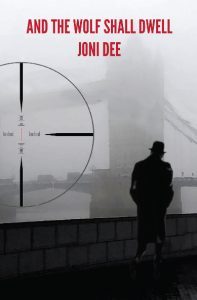 “And the Wolf Shall Dwell” is a political-espionage thriller. It aspires to have some of le Carré’s sophistication, while entertaining a bit of action in the likes of writers such as Ludlum.
I tried writing it as something that most of us can relate to: not super-duper agents and spies, but what if regular people like you and me, got tangled in a murky affair. Call it when “Enemy of State” meets the spy literature world, if you may.
This happens to John Daniel, a regular Joe, a foreigner who lives and works in London, whose day starts when an old man bumps into him, knocking him down, then delivers a cryptic message and soon after gets murdered. This puts John on a head on collision course with MI6, Mossad and the British government, getting help only from Adam Grey – a retired spymaster, who used to be the old man’s handler.
The novel navigates the path of the intelligence community, the governmental corridors of power and Jihadi terrorism.
What do you love about writing?
I love the outcome more than the process. I am harsh with myself when I write, and tend to slash pages and entire chapters, front and back.
However, when I see an outcome that I think is good, fluent, with high language, descriptive paragraphs and an overall solid story – It brings me great joy. When someone agrees that my work is good, whether verbally or by writing a good review – I’m over the moon.
How do you get inspired/ where do you get your ideas?
My main inspiration for “And the Wolf Shall Dwell” was the City of London. It guided me, and provided me scenes and scenery, even when I got stuck. For “Terror Within” I’ve already plotted a plotline which I find interesting, and here I’m letting my descriptive writing break loose with scenes that take place in places such as Paris, Cornwall, Hampshire and of course London.
I take my ideas from current events. Brexit for example, and raging global xenophobia, have both set the scene for my current book. Jihadi Terror in Europe had shaped “And the Wolf Shall Dwell” with a specific hard scene to both read and write, bang in the middle of the book.
Do you have any advice for aspiring authors?
I’m hardly in a position to hand out advise, it’s not like I’ve been snatched by some big publisher and I can sit around at home and concentrate on writing books. But one thing that I’ve discovered is that all it takes is a few supporting friends and a book can come out. So what I’m trying to say is – don’t wait for the big offer, write, bit by bit, work and perfect it, and eventually, even if you become an indie author, or only a crowd of a few friends and family members are your audience – it’s worth it. Believe in yourself and simply write. A chapter at a time. Then get some professional guidance and a good editor. It becomes a book, trust me. I’ve been there.
What are you currently working on? How long before release?
No release date yet, since I’m just half way through the writing process. As I said, ‘working’ titled “Terror Within” gets John and Grey to go head to head with what’s left of the Islamic State’s terrorist cell-activity in Europe, which is – get this –driven by English and French right wing extremists. These are politicians who are trying to use fear for their own agenda of national isolation.
Brexit is on. Grey is in coastal England. John is in a demonstrations and protests stricken Paris. And the heat is on!
If you want the chance to have a character named after you in this novel, check out what you have to do in this link: https://jondbooks.com/2017/10/18/do-you-want-to-be-a-character-in-my-next-novel/
What are you currently reading?
I haven’t actually read anything for the past three weeks, since all the family (myself included) had come down with severe viral conjunctivitis – so I’m giving my eyes a rest. My last book was “An Enlightened Quiche” by Eva Pasco, which I received through BookGobbler.com. It is an amazing “mundane” tale of rivalry and matters of the heart in a small “French-Canadian town” in Rhode Island. Superb writing and brilliant manipulation of the English language, which I can only aspire to someday reach myself as an author.
Who are your favourite authors?
I’ve mentioned John le Carré in any interview I have given so far, but I recently got a third rejection from “his people” to receive a copy of my novel (no feedback or demands requested, I simply wanted David Cornwell to have it) so even though I love him dearly, I’m cooling off our relationship (chuckles).
I love Derek Raymond, his “factory novels”, crime mysteries by a nameless detective, are so bleak and murky, and his London is so apocalyptic, it’s just yelling to be read.
I love Philip Roth, man – can he can tell a story. Read “The Plot Against America” and you’ll actually second guess what you know from American history books.
And finally – Amos Oz, the Israeli fiction author, who must must must get a Novel Prize for Literature, in his lifetime, in my opinion. The guy is so gifted, his writing is fluent and poetic. Read either “My Michael” or his autobiography “A Tale of Love And Darkness” and tell me I’m wrong.
Do you have any favourite fictional characters?
First name comes to head – Dirk Struan, the all mighty head of the Novel House, Scottish smuggler, and infallible businessman in early days Hong Kong. Great character from the all mighty James Clavell, in the epic “Tai-Pan”. He’s the reason I travelled to Hong Kong.
Any fun facts about you that you would like to share?
I enjoy cooking, especially now that my two year old son Daniel is a good partner and actually eats what I make. As opposed to his big sister, Emily, who’s on a carb only self-administer “diet”, he will try anything I’ll put on his plate. I find cooking a meditative-calming activity, and this weekend we both had a lamb curry with Jerusalem artichoke, in turmeric and coriander sauce. Served with wild rice – it was delicious. Email me for the recipe (laughing out loud)
Final words:
“And the Wolf Shall Dwell” will be free for a day early February trying to get attention from readers, get a better downloading rank and to hit the magical Amazon number of 100 reviews. If you read the book – pleas take time to write me a quick review – I really need these!
Thanks and thanks for having me Roger! Much obliged for the attention and spotlight.
Find out more about Jon and his debut novel at his WEBSITE or on
The post Joni Dee appeared first on Roger Bray.
January 21, 2018
John Mayer

Hello and thanks for asking me to do this. I’m John Mayer, Author, Supreme Court Advocate in Edinburgh, Scotland and Greek Island Fisherman. I still advise organisations such as Greenpeace and several Summer Festivals. I’m the proud author of The Parliament House Books where my central character – Brogan McLane QC – fights injustice against Low Life in High Places in the Old Town.
I was born into severe poverty and malnutrition: which very nearly killed me. I mean that at aged only seven months and suffering from raging pneumonia, I was so near death that I wasn’t expected to last the night. I have a very rare blood type and the hospital I was in didn’t have any. I only survived because a visiting doctor did something quite unconventional. He hooked up a line between my mother and myself, then pumped her blood into me and my penicillin soaked blood into a bucket. I was allergic to the stuff they’d been pumping in to me. That was the first of several times that I’ve been close to death. For instance, I’ve been shot, twice; once in New York City and once in Glasgow. Don’t ask what happened to the other guys. Those experiences and being naturally clever and ambitious have led me through a very unusual life. Knowing that teams of doctors can be wrong, led me at an early age to always question authority. Later in life as an Advocate in Parliament House, when questioning expert witnesses, I never ask anything to which I don’t already know the correct answer and can prove it.
I’ve always been an outsider and rather enjoy my Parliament House nickname; which is Maverick. I believe that to be a really good writer of drama, one must not only master the syntactical craft, but also convey real events and not just imagined ones. When I started to write The Parliament House Books, I swore to myself that I would only fictionalise events which had really happened to me, my clients or other Advocates and their clients. I’ve varied that proposition somewhat as the series has developed, but a sense of that rule is at the core of every story I write. The actual Parliament House in Edinburgh houses Scotland’s Supreme Courts and is 500 years old. Hundreds of horrific and dramatic events have happened in that old place and after practising law there for twenty years, I know them all.
I am slightly autistic and believe my depth of perception is greater than people who aren’t. That leads me to observe people and events from the outside as well as the inside. When I was a kid, I was smarter than everybody else around me, which made many other kids jealous and led to so many fights I can’t remember them all. When I was older, I was more ambitious; in fact fiercely so. That too put me on the outside of the pack. I’ll always remember my English teacher, Mr Thomson, telling me that I was a born storyteller but there was more money in being a lawyer: ‘You could be either’ he said. I’m sure he’d be proud if he knew I’d been both.
From reading about other successful authors, I’m fairly sure I don’t write in a conventional way. That’s no surprise to me because throughout my life I’ve never done anything in a conventional way. I don’t plot, I don’t plan, I don’t follow the usual Shakespearian three act play format. You’ll see reflections of these things in the picture, but I’m not by any means a slave to format. Again, that’s because I’m a free man in every respect. If I feel like going out in a heavy sea to catch octopus from my fishing boat, then that’s what I do. I sometimes write when I’m quite drunk because I express the truth more brutally that way. I check what I’ve written when I’ve sobered up, but I rarely change much. My wife has barred me from social media because she thinks I reveal too much truth. I don’t think so, but marriage is compromise, so I only write mundanity on it. It’s actually quite a challenge for me to write mundanity, so it’s good for me in a ridiculous kind of way.
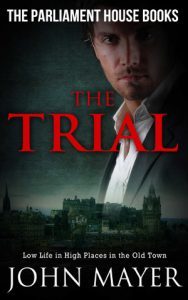 I start each book with a word. One single evocative word, which becomes the title: ie, The Cross, The Trial, The Cycle, The Order, The Bones, The Trust. I’m sure the fact that all of my titles begin with ‘The’ and the operative word has five letters has a lot to do with my autism. Each is a subject which is capable of developing many subordinate stories under an overarching principal event. I start with a feeling that the reader will enjoy a book about a particular subject. I then write a three line peripatetic scheme consisting of a Premise, a Development, and a logical Conclusion. Can you tell that I’m a big fan of Aristotle? If I can twist that scheme to my satisfaction, then I begin. I do enjoy writing ethereal chapters where it’s not clear who is dying, or feels guilty, or is making a decision. I also enjoy the thrill of sometimes unexpectedly, reaching a moral counterpoint between those in their ‘High Places in Parliament House’ and those – perhaps junkie parents – who are telling the truth. I don’t plan those chapters. In my crazy mixed up muddled up intellect, they just demand to be written. Many people in reviews have called that genius. It’s not. It’s just very unusual and quite attractive, I suppose.
It follows, of course, that I don’t have any rituals about writing times or periods. I write when the mood takes me. If, instead of writing, I fancy going out to walk in the rain, then that’s what I do. I once wrote a very successful non-fiction book called Nuclear Peace and went on a ten-week promotional tour of America. My biggest audience was 44 million people; on American School Radio. Sometimes when I want to daydream, I imagine them listening to me reading from that book and taking their phoned-in questions. Well, I see I’m approaching a thousand words, so I’ll stop there.
Q: Where is your first novel set and how did you decide on its setting?
The Trial is set in both of Brogan McLane’s worlds. Parliament House in Edinburgh and the Calton Bar, in Glasgow. He practises law at the Bar of the Scottish Supreme Court, but often finds that his friends in the Calton Bar have more integrity than his opponents in Parliament House. I carried the slogan for this series of books around in my head for many years before writing the first line. That slogan is of course ‘Low Life in High Places in the Old Town’.
Q: Have you ever been tempted to jazz up your own life for readers?
I don’t need to jazz my life story up. My story is every bit as colourful as anyone’s. I was born in a Glasgow gang war zone and by aged only four I had seen my first murder being committed. By aged fourteen, I’d seen a few more. In that regard I’ve err, done a few things I can’t talk about. However, I was always very bright. I walked out of school aged fourteen because they were teaching me nothing. I went straight home and told my mother why I’d walked out. She hugged and kissed me before suggesting that I ride my bike nine miles to and nine miles from Glasgow’s biggest library (The Mitchell) every day. That way I was free to learn what I thought was important – and I did.
Q: If you were trying to describe your writing to someone who hasn’t read anything by you before, what would you say?
I write intelligently, trying to convert feelings into words. I can convey the atmosphere in the spaces – grand and small, lavish and filthy – which my characters occupy because I practised law at the highest level in Parliament House and I’ve been in every jail in Scotland. I know very well the awful consequences when legal judgements are twisted or outright usurped.
Q: Most writers have their own favourite author or book. Do you?
The Catcher in the Rye by J.D. Salinger is my all-time favourite book. The first time I read it I actually screamed out loud into the last page. I was sitting under a tree and people looked over thinking I was hurt. I was hurt. Salinger’s character Holden Caulfield is the most vulnerable I’ve ever read. The book is a testament to Salinger’s genius in capturing the vulnerability and naivety of the United States in the early 1950s.
Q: Can you give us an idea of how you write?
I’m not one of these ‘production line’ authors who writes for a certain number of hours per day. I don’t see how that could possibly produce quality. Such authors forget that to be published is to be judged by history. To me that’s the most serious matter imaginable. I write when I’m ready and not before. I try to paint the hopes and aspirations of my characters onto the page. I lose myself in my writing so it doesn’t matter whether I write down in Greece or at home in Edinburgh, Scotland.
Q: Who gave you your first encouragement as a writer?
That’s an easy one. I went to school in a Glasgow gang war zone. At aged eleven, after taking the 11+ Exam in Scotland, my mother and I went to see my school teacher, Miss Ralph. In Scotland, all women teachers were Miss in my day. In answer to my mother’s question ‘What do you think he should be?’ Miss Ralph’s eyes misted over: the boy is a born storyteller. A lawyer or a writer. He should be both, if he can.’ My mother and I walked home on air that day. We couldn’t have known that at High School another teacher would say the same thing only a few years later.
Q: What was your first recognition or success as an author?
I’ve written all kinds of things; from non-fiction in hardback, journal articles, legal text books and now The Parliament House Books series of novels. In 2002 in New York City I was on a ten-week book tour of the USA promoting a non-fiction book called Nuclear Peace. My publicist down in Austin, Texas called and sent me to what I thought was just another radio gig at a place called APSR in Brooklyn. When I got there, it was a huge empty studio large enough to hold an entire orchestra and choir. Someone sat me at a desk with a single mic where I had to perform the 28 minute monologue I’d been practising over an entire weekend. My reading went well I thought and at the end I got a two-thumbs-up from the Director. As I was putting on my coat, I asked what APSR meant, if anything. ‘Oh didn’t you know? You’ve just done a double session for American Public Schools Radio. You’re going out next week to over 40 million people. On that trip, I broadcasted on TV and radio to millions of people at a time but none gave me more pleasure or generated more sales than that APSR gig. As I was flying home after the ten week tour, my best recollection was that vast empty studio with over 40 million people on the other side of the mic. What a feeling!
Thanks for asking me. Enjoy The Parliament House Books.
Find out more about John’s book on the series WEBSITE or on and find out more about John on or
The post John Mayer appeared first on Roger Bray.
January 6, 2018
Jennifer C. Wilson

Jennifer C. Wilson is a marine biologist by training, who spent much of her childhood stalking Mary, Queen of Scots (initially accidentally, but then with intention). She completed her BSc and MSc at the University of Hull, and has worked as a marine environmental consultant since graduating. Enrolling on an adult education workshop on her return to the north-east reignited Jennifer’s pastime of creative writing, and she has been filling notebooks ever since. In 2014, Jennifer won the Story Tyne short story competition, and also continues to develop her poetic voice, reading at a number of events, and with several pieces available online. She is also part of The Next Page, running workshops and other literary events in North Tyneside.
Welcome Jennifer.
Hi Roger, thank you so much for inviting me onto your blog today!
Could you tell us about yourself?
I’m an environmental consultant, usually working on environmental impact assessments for big projects such as offshore wind farms, power stations and the like, but have always had a love for history as well. Whilst I was studying, my history and reading had to take a back-seat, but now I’m able to spend time on them as well, and it’s great to have them both back in my life.
How long have you been writing?
It sounds a cliché, but I’ve been making up stories and writing bits and pieces down for as long as I can remember. I used to make stories up about the Playmobile sets I had, mixing pirates and grand Victorian ladies in the same tale, to see what happened. As with reading, the writing (and the playing with Playmobile, obviously) stopped when I was studying, but when I came back to the north-east, I joined an adult education creative writing class, mainly as a way to meet people in a new town, and haven’t looked back. I started taking my writing much more seriously as a result, actually dedicating a decent amount of time to it.
Tell us about one of, or your most recent book?
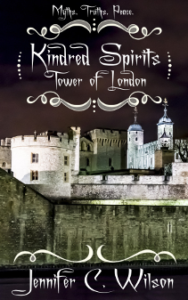 My first novel, Kindred Spirits: Tower of London, is the book I’m most proud of, and I have a lot of affection for it. It started life as a rubbish poem, about how the ghosts of Richard III and Anne Boleyn would have a lot in common (mainly a dislike for Henry Tudor, albeit a generation apart), and how they would get on. As a poem, it was awful, but the concept of historical ghosts in contemporary settings stuck with me, and thanks to NaNoWriMo 2013, I managed to complete the first draft of it as a novel.
Once I had knocked it into shape in the editing process, it followed the ‘lives’ of a range of characters in the Tower of London, headed by Richard and Anne, but also both of their brothers, George, Katherine Howard, Lady Jane Grey, and a host of other courtiers. I had so much fun working out who might get along with who, and more entertainingly, who definitely would not.
What do you love about writing?
I love just being part of the writing world. Since 2015, when Kindred Spirits: Tower of London came out, I’ve met so many wonderful and interesting people, and I was thrilled to bits to find out that on the whole it’s such a supportive environment. Crooked Cat, who publish the Kindred Spirits series, hold fairly regular get-togethers, whether via Skype or sometimes in real life, and really encourage everyone to get involved and help each other. That, along with attending workshops, my regular writing groups, or larger events like Swanwick Writers’ School, make the whole thing a real pleasure, because let’s be honest, there are times when the actual writing can feel like an uphill struggle, however much we love our plot and characters…
How do you get inspired/ where do you get your ideas?
I’m generally inspired by places. Although for the first Kindred Spirits book I was actively looking to try and write about Richard III, it was only when I hit upon the setting of the Tower of London that everything began to fall into place. I like to know where my stories are happening, even if the place I use is an amalgamation of many individual places.
To me, there’s nothing better than wandering around an old building or historical site, and trying to get a sense of who has been there before, what they were doing, why they were there, and what they might have been thinking.
Do you have a specific writing process?
I’m currently in the process of changing my process! In the past, I’ve been a bit chaotic, especially at the start, and written a collection of scenes, character explorations, dialogue and the like, without a huge amount of focus. Then, at around 20-30,000 words, I panic, and have to number all the scenes, put them on index cards, and take over the spare room floor to get them into a sensible order. Once that’s in place, it’s a case of adding the linking scenes, tying up subplots and the like.
Going forward, I am determined to plan more. Thanks to a plea on Facebook, I have plenty of new ideas to try, and I’m sure all of them will result in a more streamlined and stress-free approach for my next projects.
I do try to do something every day though, whether it’s actual writing, working on a plan, or even drafting ideas for my blog, just to keep my brain active, so it doesn’t forget how to be creative when the day-job has taken over too much.
What are you currently working on? How long before release?
Just before Christmas, I submitted the third in the Kindred Spirits series, and have heard since the New Year started that my lovely editor, Sue Barnard, has completed her first read-through, so I should be getting edits back on that soon, which is the stage I really enjoy. I’m not great at self-editing, but I love getting feedback from other people.
Kindred Spirits: Westminster Abbey will be released this summer, completing the current trilogy of the series.
What are you currently reading?
I’m reading Whales and Strange Stars by Kathy Sharp, for my fiction fix at the moment, and for research, Richard III by Michael Heck. I managed not to read any fiction at all until about July last year, so am making a conscious effort to read more this year – I’ve even signed up to the Historical Fiction Writing Challenge to keep me on track.
Who are your favourite authors?
I love a good dose of historical fiction, so adore the work of Philippa Gregory, Elizabeth Chadwick and Anne O’Brien in particular. But thanks to taking part in blog tours a lot since last autumn, I’m getting to read a great range of other genres and authors, so am spreading my wings in a literary sense.
Do you have any favourite fictional characters?
I will say Robin Hood here, because whatever your thoughts as to the true historical nature of the actual person, the version most of us know and love (for me, either Kevin Costner or a fox!), is almost certainly fictional. For a purely fictional character, I’ve always felt an affinity to Roald Dahl’s Matilda. Books are power, after all.
 Any fun facts about you that you would like to share?
Well, as a historical fiction writer, there cannot be many times you can say you’ve attended the funeral of your leading man, but that’s exactly what I managed to do. In late 2014, I entered the ballot to ‘win’ a place at part of Richard III’s reburial in Leicester Cathedral, and was lucky enough to get a place at Compline, the service where his body was first brought to the Cathedral. I was there first thing for the service which was broadcast on Radio 4, I was at the service where they brought his coffin out for the first time, and then there I was, front row in the Cathedral as it was brought through the great doors. Something I’ll always treasure, mainly because it spurred me on to finally get cracking on editing what became Kindred Spirits: Tower of London.
Jennifer’s books are available at and you can catch up with Jennifer on her WEBSITE or on or
The post Jennifer C. Wilson appeared first on Roger Bray.
January 5, 2018
Dale Brendan Hyde

Todays interview is with an author whose debut novel, The Ink Run is getting rave reviews, and I am happy to talk to Dale Brendan Hyde.
Could you tell us about yourself?
My name is Dale Brendan Hyde. I’m 43 years old. Aquarius star sign. I live in West Yorkshire but was born in Salford. The majority of my Dads family still live in Salford. My mum & Dad & sister all live close by to me in Wakefield though.
I’m dating for nearly three years a lovely girl who works in business management.
How long have you been writing?
And I’ve probably being writing seriously now for about three years. I did spend about ten years handwriting my debut novel, but I’d say the last three years I’ve started to take it seriously and build not just the writing aspect but the business end too.
Tell us about one of, or your most recent book?
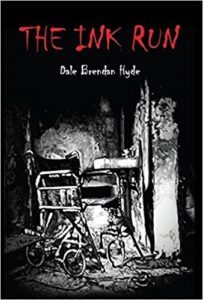 My debut novel titled The Ink Run was published by warcry press April 2017. If you love a good crime fiction novel with a slice of horror cutting through it then this book is for you. It’s sold out of its hardback limited edition and the paperback is due at the end of this January. The Amazon reviews are fantastic and I feel it’s now starting to gain some momentum in the marketplace. Most who have reviewed it say it’s an incredible debut and if they didn’t know it was fiction could easily think its fact.
What do you love about writing?
What I love about writing is the process of learning how to construct a great novel. I’ve always hated celebrities like film or music stars, yet the famous writers seemingly go about their business unchecked. That’s appealing in the sense of being known but yet not being hounded too much. It’s also a chance to make a pot of cash if you can get it right. I’ve a good few novels in me, I’m not a flash in the pan writer hoping to make it straight away. I’m willing to put in the hard silent graft.
How do you get inspired/ where do you get your ideas?
I’m inspired by many things. Other writers are certainly one of my main influences. I also would say that my chequered past as a youth in the prison system inspired me to turn my life around and be nice. I’d say my first novel and the one I’m working on now are totally influenced by my early years of incarceration. I read heavy literature while away and that set me in good stead as a learned gentleman.
Do you have a specific writing process?
I love when working on a novel in the early days to get out into nature with a pad and pen and just get some ideas forming. In a strange way I like sitting in my local church yard and walking amongst the real old graves. Sometimes a character name has certainly being born from viewing a tomb that caught my eye. For writing the ink run middle section where the main protagonist is locked away in an asylum where he is placed on an experimental wing using olden day methods to cure the mad. I used my local asylum museum where the curator allowed me to sit inside the only remaining padded cell from the west riding pauper lunatic asylum, so I could capture the atmosphere for those parts in the novel.
Do you have any advice for aspiring authors?
My advice for any aspiring authors out there or for anyone in the process of their own debut, just keep focused. The end will come!
I’d also stress that it’s important to start putting your name and brand out their even before you complete your book. Start making the right contacts early and have a plan as to where you are trying to go in this literary world.
What are you currently working on? How long before release?
 I’m currently working on my second novel titled STITCHED
In my opinion it is an important current social problem of innocent people languishing for years in prisons. It shows how the little man on the streets suffers after such a blow. It’s OK these famous people hiring the best lawyers and having the media back them. My story is about real people who will go through the horrors of a miscarriage of justice with just the legal aid, duty solicitor etc. to help. The lack of support when eventually released is non existent.
Again like my debut it’s a mixture of the real, the researched & my imagination combing all three to show my style of writing stories.
What are you currently reading?
I’m currently reading nothing, except my own work. When I’m developing a new book I prefer to not influence myself by reading other authors at the same time. When I’m free to read I love my Irish writers the best. Brendan Behan’s Borstal Boy & Confessions of an Irish Rebel are two of my favourites. I love Sean O Casey too and Bernard Shaw.
I love his play, John Bull’s other island.
Do you have any favourite fictional characters?
I don’t have many favourite fictional characters. I thought Lisbeth Salander in Stieg Larsson’s books was phenomenal. I also like the character Patrick Bateman in Bret Easton Ellis book American Psycho.
Any fun facts about you that you would like to share?
I helped start the bare knuckle revolution that’s emerging right now out of the UK. I fought, refereed, and helped promote early events for Bbad. ( check them out on YouTube)
Find out more about Dale at and his debut novel The Ink Run at
The post Dale Brendan Hyde appeared first on Roger Bray.
December 21, 2017
Owen Mullen

I am happy to introduce prolific crime writer Owen Mullen.
Could you tell us about yourself?
I thought school was a laugh, though I doubt it was the same experience for my teachers. Most of my early life was spent in the music industry, mainly in London; bass guitarist, singer/songwriter, bands, session singer, recording. I worked with a lot of amazing people who went on to become very famous, but the Gods were saving me for something special! Met and married the girl who stole my heart as a young man, so it was time to get into a more straight lifestyle that could support a family. Do you know the difference between a pizza and a musician?…A pizza can feed a family of four!
So now it was time to get back into the education I had scorned as a youth. Karma visited me when I was asked to become a lecturer at one of Glasgow’s colleges and those early days of laughter at school came back to haunt me in the form of teenagers who didn’t give a rat’s about anything they were being taught. Fast forward a few years and my wife and I decide we want to live in the sun. So we built a villa on the beautiful island of Crete and split our time between there and Scotland. Living in the sun was a welcome change but it brought it’s challenges: what to do with all that time. Enter writing; I woke up one morning and announced I would write a book…
How long have you been writing?
Eleven years
Tell us about one of, or your most recent book?
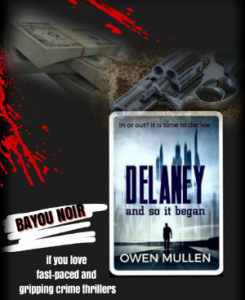 My latest book Delaney: And So It Began is set in New Orleans and features ex-cop turned PI Vincent Delaney. I was delighted when it received a coveted Star Pick from The Sunday Times Crime Club.
Delaney is invited back by his old boss to assist when a serial killer targeting children at pageants throughout Louisiana is outplaying the police and FBI. Meanwhile traders who are being extorted come to him for help and insist he doesn’t inform the police, he’s shocked to discover that the extortionists are the police. At the same time an ex-convict that Delaney put away for murder has escaped and is after revenge for the brother that Vincent shot and killed. Hard times for Delaney; can he make it out of this alive?
What do you love about writing?
I love it when a sentence or phrase appears and takes me by surprise. I really enjoy trying to make the language and story flow effortlessly.
How do you get inspired/ where do you get your ideas?
I’ve always been attracted to faraway places, and find that my mind just opens up to ideas…when I decided I would like to write a detective story, the time I spent in New Orleans just crashed to the surface and demanded to be included. Similarly when the idea for Games People Play was born on a beach in Georgioupoli in Crete, Glasgow made itself heard. The name for Games was inspired by the old Joe South song. So the answer for me is that ideas spring from everywhere and anywhere.
Do you have a specific writing process?
Once I have an idea I want to proceed with, I need the beginning and end. My books are character and plot lead, so plotting is essential along with character development. I usually spend 5-8 hours 5 days a week writing, editing and plotting.
Do you have any advice for aspiring authors?
Show up and be lucky.
What are you currently working on? How long before release?
Currently working on a standalone psychological thriller. As to release date, no idea at present, it depends on too many things.
What are you currently reading?
John Connolly The White Road
Who are your favourite authors?
I truly don’t have a favourite author; so many great writers out there. However my writing has been influenced by the great writers of the past: Raymond Chandler, John Steinbeck and more recently James Lee Burke.
Do you have any favourite fictional characters?
Sherlock Holmes, no question. An incredibly memorable and individual character.
Any fun facts about you that you would like to share?
Don’t tell anyone, it’s my guilty secret, I can yodel.
Connect with Owen on and find his latest novel on
The post Owen Mullen appeared first on Roger Bray.
Madeleine Black

I am happy to welcome Madelaine Black whose story, Unbroken, tells her deeply moving and empowering story, as she discovers that life is about how a person chooses to recover from adversity. We are not defined by what knocks us down – we are defined by how we get back up.
Welcome,
Could you tell us about yourself?
I’m a Londoner living in Glasgow and have been here for 24 years now and could never imagine living in London again!
How long have you been writing?
I always kept a diary as a child and wrote to myself when I couldn’t use my voice to say what I needed to.
Tell us about one of, or your most recent book?
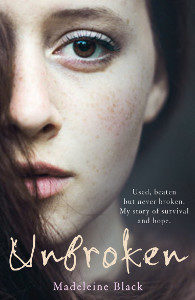
I have only written one book, my memoir called Unbroken, which was published in April 2017. It is my story of being gang raped at thirteen by two American teenagers and follows my journey of survival, healing, forgiveness, transformation and hope
What do you love about writing?
It was liberating to put my story down on paper and by sharing it with the world it has eliminated any shame that I felt. I feel like I no longer have to hide or be worried that people will find out about my past
How do you get inspired/ where do you get your ideas?
 Life! Sadly I know my story is the story of many people and I wanted to write it to help end the shame, stigma and silence that surrounds sexual violence. But I also wanted to offer some hope, to let people know that it is possible to move on and have a good life. I believe that it’s not what happens to us that is important but what we do with it and if we choose to we can get past anything that happens to us
Do you have a specific writing process?
I really feel as if my book wrote itself. When I made the decision to tell my story I would start to see all the words floating around my head at night lying in my bed trying to get to sleep. The next morning I would sit down at my Mac and the words just flowed out of my fingertips and in eight weeks I had finished
Do you have any advice for aspiring authors?
I started out by writing for myself and had no idea it would lead to a book and I wrote every day
What are you currently working on? How long before release?
I share my story by speaking publicly now at conferences, schools, book events etc and have no plans at the moment to write another book, but you never know!
What are you currently reading?
I am re reading I know this much is true by Wally Lamb, which was picked by my book group
Who are your favourite authors?
I read such a mixed selection of books that it’s hard to name a favourite author but I love memoir and biographies. Always fascinated by other people’s stories too
Any fun facts about you that you would like to share?
I love wind surfing, have a black belt in karate and I’m a power lifter.
You can read more about Madelaine’s excellent book at and find out more of her on her WEBSITE.
The post Madeleine Black appeared first on Roger Bray.
December 14, 2017
Lucy Cameron

Lucy’s interest in writing stems from her love of film and theatre and she is a keen script writer who hopes to see her plays onstage following her scriptwriting debut as part of the National Theatre Scotland’s ‘Five Minute Theatre Show’ project in 2014.
Welcome.
Could you tell us about yourself?
My name is Lucy Cameron and I have been living in Scotland since 2013. I have recently bought a house which means I am no longer resident in my dad’s shed where I lived for several years whilst writing my debut novel. I love all things crime (writing) but also have a keen interest in the theatre, both watching shows and helping out backstage.
How long have you been writing?
I have been writing since 2013, at least this is when I decided I would like to see if I could write a full length book, which not only did I do, but I also discovered I rather enjoyed it. Prior to that I had been on a lot of creative writing courses and written short stories and scripts.
Tell us about one of, or your most recent book?
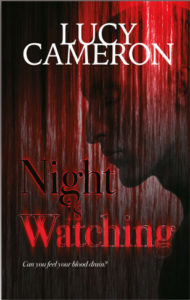 My debut novel Night Is Watching was published in April 2017 which was fantastic. It is a psychological crime/horror story about Detective Sergeant, Rhys Morgan hunting a serial killer whilst coming to believe he is being pursued by something far more sinister. It has an element of the supernatural to it which I really enjoy.
I loved writing it and am so proud and pleased it has been published.
What do you love about writing?
I have thought about this a lot lately and think the answer is the enjoyment telling a story gives to the person that reads or listens to it. I also enjoy hearing different people’s thoughts and interpretations on a story. Telling a story through written word is wonderful because everyone will see and understand it slightly differently through the use of their own imaginations.
How do you get inspired/ where do you get your ideas?
Ideas come from everywhere. Something someone says, an experience. These can be ideas for stories or characters. I have a notebook for jotting such ideas down, although I do need to get better at using it.
Do you have a specific writing process?
I am a planner and like to have an idea outlined before I begin writing.
I have an office space in my house and I try to set aside writing time Monday to Friday where I will go to the office and write. I like having a defined space for writing as when I have finished I can close the door and let my brain wind down.
Do you have any advice for aspiring authors?
It is advice I am sure everyone will have heard before but just get the first draft down on paper. I think the saying goes ‘Don’t get it right, get it written.’ When I was at Art School I had a tutor who used to say you don’t begin a painting properly until the whole canvas is covered, if you work on the detail of a corner while the rest of the canvas is blank, the corner will look completely different when the rest of the canvas is full of colour. For me writing a book is the same.
What are you currently working on? How long before release?
I have just finished something completely different – A light-hearted comedy, so quite a change from my published novel.
I am also working of a second book in the Rhys Morgan Series and in addition have an idea for a crime novel with no supernatural element – Plenty to keep my busy into 2018.
What are you currently reading?
Insidious Internet by Val McDermid. I’ve only just started it and can’t wait to get stuck in.
Who are your favourite authors?
There are so many great authors out there. Steve Mosby, Mark Billingham, Stuart MacBride and James Oswald are my long standing favourites. I have recently read and really enjoyed books by Paul Cleve, Douglas Skelton and Sarah Pinborough.
Do you have any favourite fictional characters?
I really enjoy Tony Hill and Carol Jordan in Val McDermid’s series and look forward to a new release about them. Having read so many books about them they feel like real people to me.
Joe ‘the Tailor’ Klein in Douglas Skelton’s Davie McCall series is one of my recent favourites – if you haven’t met him yet, I urge you to.
Any fun facts about you that you would like to share?
Two years ago I played a pantomime horse in a production of Beauty and the Beast but have now retired from my glittering acting career.
You can catch up with Lucy at Caffeine Nights.
The post Lucy Cameron appeared first on Roger Bray.
December 6, 2017
Ann Brady

Could you tell us about yourself?
My name is Ann Brady. I am 68 years old. Although born in Yorkshire I now live with my Welsh husband in Cardiff, South Wales. During my career I wrote over 200+ factual pieces relating to health, fitness and exercise. These were published in various formats: advertorials, editorials, and for newspapers and magazines. I wrote pieces for an award-winning website and for inclusion in an ‘A’ Level Educational Tutorial Booklet.
How long have you been writing?
I would say most of my life but I’ve been writing seriously for over 30 years.
Tell us about one of, or your most recent book?
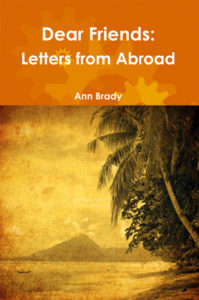
My first fictional novel was a light hearted historical tale. It stemmed from my husband asking me what I was going to do when I retired. I told him I was going to paint and write a book. And for 18 months that is what I did. The story is about the friendship between two women from different social backgrounds. Based in the 19th Century it revolves around the letters they write to each other.
What do you love about writing?
The fact that as a writer you can lose yourself in a fantasy world that suits your own individual mood. I find writing a relaxing way to calm my mind and I really enjoy creating and developing tales of all kinds.
How do you get inspired/ where do you get your ideas?
Usually from everyday events. I write about different things I see or experience in different ways. Since doing the children’s picture story books I have found myself adapting everyday events for children to suit the characters within the stories. Eg Some children are frightened of going to the hairdresser but by telling them about the sheep getting their ‘haircut’ they learn to understand not to be. Or, I can show them in a fun way by having the farm animals play football in the farmyard.
Do you have a specific writing process?
Not really. I tend to write as the urge takes me. And of course, it does depend on the storyline at the time. Sometimes I have to leave what I am writing and go back to it later to complete it. That’s probably why I have about 5 or 6 different projects on the go at once. I want to ensure I get my thoughts and ideas down so I can come back to them later.
Do you have any advice for aspiring authors?
You can only write what appeals to you. I have heard that publishers tend to want to change stories and that this can upset some authors. The question a writer must ask themselves is why are they writing and what do they want to achieve. Can you be true to your own writing? Also, a writer must never forget that there are lots of potential writers in the world. There are some 100,000+ books published each year but very few writers become as successful as J K Rolling!
What are you currently working on? How long before release?
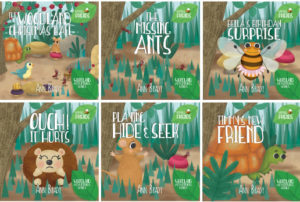
Currently I am completing the reissue of the Little Friends Children’s Picture Story Books Sets. These books are aimed at young children aged from 2+ and are in sets of 6 books per series. Each set is titled: Woodland Adventures, In the Garden and Farmyard Fun. I initially wrote the stories about 5/6 years ago when I first took up fictional writing but have amended the stories and added new images. The first series of 6 books were launched 30th November.
What are you currently reading?
As I mentor young writers and edit and review other writer’s manuscripts I am currently reading a series of poems by a young writer who is aged 18 and a fantasy story by another aged 14 years old. I am hoping to see their work published in the New Year by the charity I work with Kids4Kids.org.uk.
Who are your favourite authors?
My reading genre is quite wide and varied but my favourite set of books, which I have had for many, many years, were written by the late Dorothy Dunnett. There are six books in the set and they follow the adventures of a fictional character called Francis Crawford of Lymond. The most enjoyable element of Dorothy’s writing was her great ability to marry factual events and characters with fictional ones. She always leaves the reader believing all the characters in the stories are genuine; fictional or true.
Do you have any favourite fictional characters?
Francis Crawford of Lymond, Niccolo Van de Pol (another Dunnett hero), Hercule Poirot, Miss Marples, James Bond are just a few.
Any fun facts about you that you would like to share?
My husband is often heard telling me I am ‘weird’ and he is probably right ha ha. I am an Aquarian and we are reputed to be 50 years ahead of our time. I certainly think outside the box so maybe that makes me weird. I do love talking to people so am often found chatting to strangers about anything. It’s led to some interesting conversations.
Recently, I was interviewed by a group of school children for their school magazine and one of the questions asked was ‘What was my most embarrassing moment?’ I did actually chuckle to myself when I read the question but had to think about the answer. On the day I told the kids that I had probably had a lot of embarrassing moments but, considering my age, I had forgotten them; although I hoped I had learnt from them.
However, the only funny thing I could think of was when I was once in the car with my two daughters who are now a lot older and we were singing to Queen’s song ‘I want to Break Free.’ The only problem was I was singing ‘I want to shake free.’ My daughters have never let me live it down and each time the song comes on the radio they start singing my version!
Find out more about Ann’s Little Friends on her WEBSITE
Or meet up with Ann on
The post Ann Brady appeared first on Roger Bray.