Diane Lefer's Blog, page 7
February 27, 2018
Inheriting Genocide
On February 7th, I attended a symposium at the Museum of Tolerance here in Los Angeles.
Much of what I heard from clinicians, researchers, and survivors seemed to apply to a wide range of survivors, including generations affected by historical trauma.
It resonated with me personally as well as what I’ve experienced working with asylum seekers at the Program for Torture Victims and through my artistic work with ImaginAction, an international organization dedicated to promoting social justice and community healing through the arts, especially through theater. I decided to write up some of my responses to the symposium for the ImaginAction website.
This may be of interest to some of you who follow this blog and so here’s a link to the first, introductory installment: Intergenerational Trauma.
In the months that follow, I’ll let you know when new installments are posted.
Part 2: Conspiracy of Silence.
Part 3: Surviving Survival .
Part 4: Theories of Transmission .
Part 5: Childhood Amnesia.


January 20, 2018
Resistance
This post is dedicated to Carol Hand who misses hearing from me. As I explained to her, problems with my eyesight mean I limit computer use, but I can share some images here.
The current regime causes so much outrage and heartache, but we also suffer when violence hits close to home. Last week, a member of our PTV family, Viccky Gutiérrez who came here from Honduras seeking safety, was murdered, her body burned. Last Friday, her friends held a vigil.
Saturday, I joined the Salvadoran community (and Haitians) threatened with termination of their protected status and with deportation. I’m sick of marches that seem to accomplish nothing, but it’s important to let threatened people know they have allies who love them.
For the same reason I participated in the Kingdom Day Parade, held annually to celebrate the life (and meaning of the life) of Dr. King. I walked along with members of STAND, dedicated to fighting against neighborhood oil drilling and for environmental justice. It’s an issue that brings together people of all backgrounds.
There are about 16,000 homeless African Americans in LA, and I can understand why some think that they are being ignored while immigrants get all the attention. Can solidarity and unity defeat Divide and Conquer?
[image error] [image error] [image error] [image error] [image error] [image error] [image error]
Yesterday was a reminder of what another country—Guatemala—suffered for so many years. First, some signs as I walked down Fairfax, and a section of the Berlin Wall on Wilshire.
Then, in the sculpture garden of the LA County Museum of Art, Naufus Ramírez-Figueroa directed local performers in a staging of the piece that led to death threats against the director and the theater being burned to the ground when presented in Guatemala in the mid-70’s. You can see the indigenous prisoner trying to get free, the guerrilla who ran around the periphery, hiding behind trees and, held up to ridicule, the military, the Church, and the upper class.
[image error] [image error] [image error]
Walking home. As Carol would advise: Take comfort in beauty.
August 29, 2017
Beauty and Resistance
“Beyond Words: Beauty and Resistance,” is what they’re calling our reading at Beyond Baroque, Sunday, September 17, 4:30 pm. “We” = me plus Richard Wirick, Zlatina Sandalska, and Andrew Tonkovich. I’ll be reading the opening of a novel I’ve been working on for a few years, now more topical than when I started.
If you’re not a Beyond Baroque member, admission is $10 and everyone gets a free copy of the new issue of the Santa Monica Review.
Beyond Baroque, 681 Venice Blvd., Venice, CA 90291. Free parking lot (turn right to enter just before you get to the building if you’re headed in direction of ocean) and also free street parking on Sunday.
Resist and Write on!


February 11, 2017
I stand with Planned Parenthood
About 50 people showed up at the Planned Parenthood health center in Van Nuys to demand the organization lose all federal funds. I was there too – with my own message.


February 8, 2017
At the Islamic Center of Southern California on February 3rd
Yes, February 3rd I wore a headscarf in solidarity as I went about my business: taking the bus, buying groceries, and visiting the Islamic Center of Southern California where I joined many allies who turned up to show support and solidarity of our Muslim friends and neighbors.
I joined in the prayer service and was so impressed with Dr. Aslam Abdullah’s sermon. How to Deal with the Challenge We Are Facing Today.
I wish I had a transcript, but I am linking above to the audio recording of his words. I think it’s so important to share this because we mostly just hear about the inflammatory and violent rhetoric of the most radical imams. I think Americans are being habituated to thinking Islam is dangerous and violent and so we need to hear the sorts of sermons that are more typical in US mosques and Islamic Centers.
Some high points for me of Friday’s khutba (sermon):
I loved when Dr. Abdullah said, “Those who hate are not our teachers.”
He went over the high % of Muslim American physicians, IT professionals, engineers but said contributing to society isn’t enough. A Muslim must also engage with the community, with issues like housing the homeless, feeding the hungry, keeping peace in our neighborhoods, improving our schools.
The Koran teaches the unity of humanity. It is humans who create division. The Koran teaches all human beings have dignity and rights and a Muslim stands up for all, for Muslims no matter how they worship, Christians, Jews, those who reject Islam, those who reject God, all have dignity. He spoke of compassion and love and asked people to have compassion and understanding for those who have made decisions we don’t like because they too are hurting.
He reminded people of the Muslim Africans who were brought to the US as slaves who suffered more than any Muslim in the US today and stayed strong and persevered.
He referenced the Holocaust and how humanity had pledged Never Again and we had to stand up for that pledge.
He thanked the allies for attending the service and showing support and he thanked God for bringing Muslims to America, the only country with 100% Muslim literacy, with respect for all religions and cultures, a model for the world.
* * *
And here’s a link to the local CBS report on our act of solidarity. It’s a pretty long segment but if you’re curious, I appear toward the very end carrying the sign We Are All America.


January 30, 2017
Love and Solidarity on February 3rd
Women of America, please show support for our Muslim friends and neighbors on February 3rd by simply wearing a headscarf. You can post a selfie in a headscarf to show your acceptance of people of all faiths. Together we are stronger than hatred.
This call came from a group in the Philadelphia area.
I actually began wearing a headscarf in solidarity here in LA once Trump was inaugurated, but people assumed I was Muslim and the community here embraced me. I got so much unearned love under false pretenses that I gave up the headscarf. But if we can do this as a massive show of support, people will recognize it’s a message of solidarity and love. So, please, February 3rd!
PS. I just heard from a Muslim woman that February 1st is World Hijab Day. She encouraged us to go ahead with the show of support on February 3rd but said we are more than welcome to cover our heads on February 1st as well.


The Truth about Steve Bannon
It doesn’t seem to matter that Trump’s close advisor Steve Bannon is a bigoted white supremacist best known for purveying rightwing conspiracy theories he knows to be lies.
So I figured it was time to look into his background and see what secrets might finally discredit him.
Now that Trump has elevated him to a permanent seat on the National Security Council, it’s urgent we find out the truth – even an alternative truth. Bannon’s rise puts us at risk of annihilation. By “us” I don’t mean Democrats or Americans, but people everywhere, and every animal, vegetable and mineral, the air, water, earth of our shared planet.
Here’s what I found on the internet and my internet friend Sakina Murdock has urged me to make this information public.
I have not independently verified these claims but hey! it’s on the internet. Let these alternative facts go viral. Let the administration spend its time refuting. Let Steve Bannon become such a distraction that HE’LL HAVE TO GO!
Steve Bannon refuses to show his birth certificate.
Steve Bannon engages in unnatural acts with gerbils.
I read that Steve Bannon is matching ALL donations made to the ACLU in 2017
Steve Bannon hospitalized after sexual encounter with Icelandic pony.
I read on the internet that Steve Bannon hopes to get Trump impeached in the next 5 days finding his policies too extreme and racist.
Steve Bannon just converted to Islam.
Steve Bannon drinks the blood of Christian babies.
Steve Bannon threw gasoline on my cat and set her on fire. [Fact confirmed! Someone responded “I saw him do it.”]


December 30, 2016
Poetry and Prose on January 14, 2017
Saturday, January 14th, at 4:00 PM
I’m gonna be the prose filling in a poetry sandwich! Thanks to Brendan Constantine (who will serve as emcee and I expect will be LA’s poet laureate one of these days), I’ll be reading for the first time from a new novel-in-progress. Poet Elizabeth Iannaci – who is also an actor and singer and has been known to play the drums – is sure to offer a spirited reading. And my friend and comrade-in-arms, Natasha Sajé, will be in town from Utah with her restless and witty explorations of etymology, the alphabet, and the contested meanings of our lives. Brendan says the date marks the 40th anniversary of the death of Anaïs Nin. Does he have something in mind?
Beyond Baroque, 681 Venice Blvd, Venice, CA 90291
Members admitted free.
Others: $10
Reception to follow the reading.


July 24, 2016
A Black Expatriate Writer and Fear of Hashtags
(published today in LA Progressive)
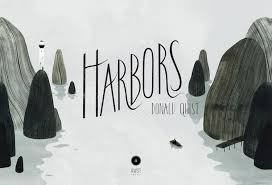
When the review copy of Harbors by African American expatriate Donald Quist came in the mail, I’d been looking forward to it ever since one of the essays in the collection appeared a year ago on the Awst Press website. In it, we find Quist mouthing platitudes on behalf of a South Carolina town during a racially inflammatory police dragnet even as he himself is profiled by cops and only let go when one recognizes “the boy who writes for the mayor.” I kept telling people You’ve got to read this and I certainly wanted more from this man and his hard won perspective.
But when the book arrived, I was engrossed in the TV production of The People v. OJ Simpson and I was struck by something that hadn’t registered in the past: A Black man suspected of a brutal double homicide evades police. They know he’s armed with a (presumably loaded) handgun. The pursuit brings police out in force. No shots are fired. There are phone conversations and negotiations till Simpson ends up in custody. The OJ television series shows me it isn’t merely that celebrities are treated differently. It’s that when the orders are clear–the suspect is not to be shot, injured, or killed–the police are able to do their jobs while showing restraint.
As we know, this is not what usually happens. I hadn’t lived in LA very long when a Black man with whom I was collaborating on a project was shot and killed in what the police almost immediately acknowledged was a tragic mistake. And now? I’ve been struggling with this essay-review as each time I sit down to write another Black man is killed, more officers are ambushed. It’s easier to watch TV–and be reminded that the OJ case also opened the window on racism and police misconduct in the LAPD. When Simpson was acquitted, those who believed in his guilt–mostly white Americans–should have recognized how their interests, too, were harmed by racist policing. There was nothing simple about the case, its context, its outcome. It was complicated. And as I watched the series, I became weary of how our necessary discussions of race, class, and violence rarely acknowledge what’s complicated or take us past familiar easy categories.
Damn it, we know better. The media has (albeit briefly) told us that the son of Dallas Police Chief David Brown was a cop-killer and was himself then shot dead by the police. I support the Black Lives Matter movement and also rode for months as a civilian observer in the backseat of NYPD patrol cars and some (note I say some) of the officers I rode with were truly there to serve the community and are among the finest people I’ve known. We live in a country where many people have life experience that should make it impossible to see issues and events from only one side.
When Donald Trump says he’ll make America safe, safety means something very different to many people I know. My African friend who fled his country and came here to save his life now sits nervously in the back of the mosque, keeping an eye on the door, wondering if each man who enters is the one who will take out a weapon and kill all the Muslims present. My Honduran immigrant friend didn’t feel safe when stopped by police on the false claim that his car registration was expired. Taken from his vehicle, he was pinned face down on the ground with police officers on top of him. He wasn’t resisting, he explains, but yes, he moved his body, trying to push them back and lift his head because he couldn’t breathe. (Until you’ve felt, literally, the full weight of the law, you are not going to understand why people don’t simply “cooperate” and lie still.)
So I find myself longing for complexifiers, not simplifiers, and then catch myself, somewhat shamefaced, because that’s what Daniel Patrick Moynihan said we needed as, from his elite position, he studied the Black family and then saw his work used to stigmatize and harm. Was that what he intended? Maybe not, but perhaps that’s the inevitable consequence when white people with influence address themselves on the subject of people of color to white people with power.
Now along comes Donald Quist.
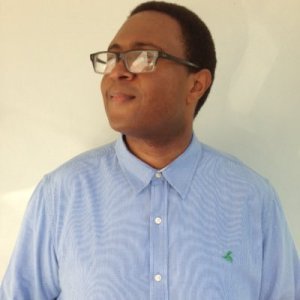
I finally open his slim volume and find the author in all his complex experience and identity. The bullied child who shuttles between his father in low-income housing and the world of his professional, middle class mother–and finally explodes. He’s the eccentric, beret-sporting Francophile communist vampire in middle school intent on becoming a writer who becomes the spokesperson for a smalltown Southern mayor who becomes a restaurateur with a short fuse. He’s the “dirty little secret” of his white girlfriends, then the beloved husband of an immigrant from Thailand with whom he chooses to start a new life in her homeland where he becomes a teacher and graciously answers the sort of questions that would be offensive back here. And he’s got questions: How to make sense of the kindness of people responsible for reprehensible acts, how to recognize virtue and vice. And why is it that in Thailand he at last feels free?–though the country is under the kind of military control that made his father leave Ghana years ago to settle in the US.
But I’m just listing information. This is a literary project: Quist teases out elusive truth by assembling fragments, memories, conversations in which his own words and thoughts shift and run into the words and imagined thoughts of his wife. In one essay I wasn’t always sure who was speaking or what was real as the form of the text itself communicated uncertainty. In Quist’s writing, boundaries get blurred to reveal people in all their complexity and contradictions as well as the shifting lines of privilege and oppression.
Some of these essays have nothing to do with race. The more I read, the more I’m reminded of how little we know of a person when what we see first is the obvious visual: color. And I remember standing before a college class, a sea of white faces, citing works by people of color and speaking up for more inclusion of minority faculty and minority voices and not only is this welcomed by the group, but I slowly learn how many of these white students have a partner, a child, a half-brother or sister, a stepparent of a different race. When you look at people, Black or white, how dare anyone presume to know their life stories or which “side” they are on?
And yet … for all this individual diversity of experience, African Americans–I dare say without exception–share much that puts this nation to shame. Here, Donald Quist speaks for himself, posting on social media during a visit to the US after his book had already gone to press:
1. Every time I return to the States I’m reluctant to drive, because I’m scared of being pulled over by police. 2. Every time I come back to the USA I try to limit the amount of time I spend out in public. When I am outside, I walk fast and try to stay mindful to keep my hands out of my pockets even if I’m cold. I try not to gather outside with friends, unless the majority of the group is white. 3. Every time I come back here, it takes weeks to pack a suitcase. I mull over every shirt and garment to try to ensure my appearance is “nonthreatening.” 4. Every time I return to this nation I’m reminded of the endless concessions I make in order to survive here. I bend and bow and remember to smile even when my blood is boiling, because I’m selfish, because I want to make it to my next flight. 5. Every minute I’m in America I am always afraid–of being made into a hashtag. #AltonSterling #PhilandoCastile,
The hashtag #DonaldQuist should refer us instead to this complex, talented author.
If I learn nothing else from these essays, may I always remember how Quist concludes his visit to Bangkok’s Erawan Shrine: “Press your palms together in respect for what you don’t know.”
* * * *
Donald Quist is co-host of the Poet in Bangkok podcast.
Harbors in paperback can be pre-ordered from Awst Press; free shipping if purchased through 8/9/16. awst-press.com/. It will be on sale through the usual online booksellers and independent bookstores starting 9/22/16. An e-book will follow in December or January and readers placing pre-orders for the paperback by 8/1 will also receive a free copy of the e-book once available.


July 5, 2016
Now I’m a Snowflake
Today I’m happy to share a link to the site Snowflakes in a Blizzard where journalist and author Darrell Laurant surprised me by choosing to feature my 2007 short story collection, California Transit. His site is dedicated to bringing renewed attention to books that came out some years ago and can be lost from view in the blizzard of millions upon millions of published pages.
Darrell is the author of a novel, The Kudzu Kid, and another work I’ve just finished reading: Inspiration Street, a nonfiction work of local (Lynchburg, Virginia) history. We’ve never met but since he contacted me I’ve gotten to know him a bit via email and through Inspiration Street.
Till now, I thought Lynchburg was notable only as the home of Jerry Falwell’s Liberty University. Unlike me, Darrell has (in his capacity as a journalist) actually met Falwell, and he told me that while he disagreed with much of what the man had to say, he also recognized what was good in him. From that and other email exchanges, what comes through to me is that Darrell is the kind of person who believes in mutual support and cooperation rather than competition or antagonism. So I can see why the history of two blocks – the 1300 and 1400 blocks of Pierce Street – appealed to him. The African American residents of those city streets didn’t accept messages that said people like you don’t, people like you can’t. Without much fuss, they just went ahead and they did and they could. Anne Spencer and her son Chauncey, Dr. Walter Johnson, and Clarence W. Seay (to name just four) may not be widely known in the US, but the impact of their lives, work and influence resonated far beyond Lynchburg. The people living on two short blocks in an often overlooked city brought change that affected us all.
Maybe that’s something for writers – for everyone – to remember: fame is not, after all, the measure of our lives.
PS: This is the cover image I wanted to use!