Greg Fields's Blog: Thoughts, page 4
November 29, 2018
Looking Through a Distant Mirror
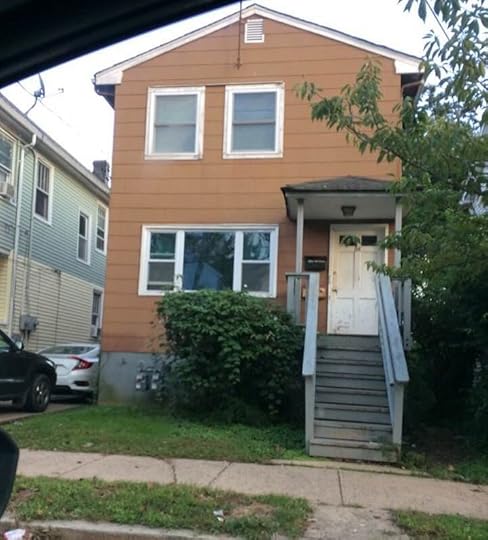
A few weeks ago I headed up to New Jersey to attend a book fair, part of the wondrous new sensation of calling myself a writer. I spent the night in New Brunswick, a few long blocks from where I went to college and where the first whiffs of adulthood penetrated my still dull but overly Romantic senses. I had a chance then to retrace my steps.
On a clear Saturday night, my obligation behind me and a glorious sunset in front of me, I drove by the place I lived my last two years at Rutgers. After two years in a noisy, crowded dormitory, four of us found a decent place to live, although it was far from a palace. Still, it was two blocks from campus and across the street from a beautiful, sprawling, well maintained park that sloped down to the river. The place looks as rundown as when we lived there, but the park is still beautiful and the neighborhood feels the same.
I stood there and looked up at the windows where I would occasionally pause from whatever I was doing and gaze at the park, perhaps regarding the sunset as I was doing that night, perhaps counting raindrops or snowflakes. Perhaps counting the time that I was suddenly conscious of passing.
I lived there with three friends, as close to me as brothers. One has gone on to a successful career in international finance. Another is one of New Jersey’s most prominent and well-regarded dentists. And another won an Olympic silver medal as part of the US eight-man crew in Montreal years ago. But back then we were four guys feeling our way around, four young men with a surfeit of energy and a dearth of experience. We had no idea what we were doing, but we knew we had each other to lean on, through every ambition, every relationship, every joy and setback, every heartbreak and exhilaration.
Each Sunday night we would gather in the living room, ostensibly to watch Monty Python’s Flying Circus but really it was more than that. We would stop whatever we were doing, whatever we were working on, and be together to make sure we each were okay. Most times we were, but sometimes we weren’t, and like the tissue in our bodies that closes over wounds, we would draw together to see if we could heal the punctures that drew spiritual or emotional blood. I loved those guys then. Still do.
And as I looked up at the window through which I had looked so many times from the other side, I recognized again the special nature of that time. During my darkest times, when the wheels of ambition and relationships had come flying off and I saw nothing of value in who I was, I consciously thought that I would eagerly trade five years of my life for a single week again in that apartment, with those great friends, connecting one last time to promise and potential and hope.
In Arc of the Comet, I wrote of the feelings of those days:
"What chapters end, what begin, there on a precipice, a razor’s edge. . . where past existence so clearly meets what lies ahead and swirls it around a single point? A black hole sucked them in there and left behind no sound, no smell, not the faintest trace of any of them. It drew them into darkness and the great mysteries, pulling them through a point no wider than a microbe or the sharpened prick of a needle. But therein lay the fiber of their youth, the heated energy of all hope and promise, compressed by the infinite, relentless power of time. They saw themselves there, victims as well as actors, inescapably linked to whatever seeds had been sown within them, timid in the face of their ultimate fruition.
Solitude impended, as did frustration and loss. They sensed it all without articulation, as a forest deer sniffs the air for a distant fire burning in her direction. They knew it by reputation even as they believed that it could not really touch them after all, this distant fire, that so far had spared them and so by nature in the days ahead they would continue unscathed. It is the arrogance of youth, tempered by a quietly lurking fear that all houses must one day fall, that all men and women, sadly, are mortal, subject to heartbreak, to anonymity, to death in life, to pacing dark and empty hallways in search of what has come to be lost. . . . It is the fear that he will soon be haunted by the brevity of his existence against the grand infinity of his desires."
For a few minutes I felt it all again, as real and as present as if I had stepped into some time machine and thrown myself across the years. This was my launching point, the place where instinct and knowledge and thought began to gel against the expectations of adulthood. I did not always like what it was I was becoming, and corrections are inevitable, but the process became clear at that time, in that place.
We all have those places where the transitions from childhood become acute, notable and quite palpable. We all have those places where we first learned to pay attention to the whispers of our heart and, in so doing, defined who we were and what we might ultimately become. We all have such places, these launching points.
I stood on the sidewalk as long as the light lasted, wondering which of the neighbors might finally emerge to ask me what I was doing there staring up at a clacky old wooden apartment. I would have told them that I was merely looking at myself in a distant mirror.


August 27, 2018
Teach Your Parents Well
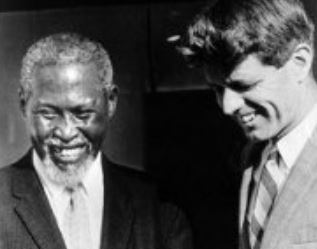
This world demands the qualities of youth; not a time of life but a state of mind, a temper of the will, a quality of the imagination, a predominance of courage over timidity, of the appetite for adventure over the life of ease.
- Robert Kennedy, speaking to anti-apartheid students and faculty in South Africa, 1966
We are speaking up for those who don’t have anyone listening to them, for those who can’t talk about it just yet, and for those who will never speak again.
- Emma Gonzalez
We who are older have grown too comfortable.
We’ve spent our lives building careers and worrying about money, setting about to impress people who do not need impressing. We have followed trends in fashion and politics and music, striving to be on the right side of style. We’ve measured our successes by what we’ve created for ourselves – the jobs, the vacations, the size of our bank accounts, the schools we can get our children into, maybe even the corners we’ve been able to cut while no one was looking.
There is nothing unnatural in this, nor is there any reason to condemn it all. This is how we live, what a complex, rapidly changing, increasingly connected and demanding society requires of anyone who wants to forge a pathway and author a bit of peace. We’re the products of what we’ve sought to create, and what we’ve created so well.
But along the way we could use some perspective, some reminder of why we do these things, of how each of our lives, no matter how vigorously we might try to deny it or convince ourselves that this is not the case, is connected to something broader. We need to be taught once again that ideals are not inconveniences, or quaint fancies, or charming notions that have no bearing on how and why we live. They are not something like a china setting that’s been in the family for generations but upon which we will never dine.
Every great social movement in my lifetime has been stoked by the passions of young people. Young women marched for equality in the streets of New York and pounded the hallways of Washington’s legislative office buildings. They Took Back the Night in 1976 and ran for public offices they had never held before. Young black men offered their skulls to the billy clubs of policemen in the Deep South as they integrated lunch counters, a young John Lewis was battered on the Selma bridge, and men and women of all races risked their lives as Freedom Riders. It was the young that led the Stonewall Riots, who elected Harvey Milk and would not back down from the ill-conceived demonization of their sexuality. Students erupted against the Vietnam War and helped take down our last corrupt president before this one.
We see now another vestige of this youthful courage, this refusal to accept things as they are because that’s the way they’ve always been, this quaint and charming notion that idealism can fire the soul into bold action, not for oneself but for the greater good. Perhaps, having seen their friends and classmates gunned down by a military weapon, they feel as if they have nothing more to lose. Perhaps the flood of mindless and barbaric brutality that has permeated their young years – Parkland and Orlando and Charleston and San Bernardino and the staggering slaughter at Sandy Hook and hundreds of other instances of carnage that were not spectacular enough to warrant much notice or have fallen out of memory – perhaps all this told them that lives lived in fear are half-lives, and that those who would protect commercial interests or personal self-indulgence over the safety of children need to be confronted forcefully at last.
We cannot ignore their voices. We cannot ignore their courage in sacrificing their anonymity and enduring scorn and threats that would exile most of us to the far corners of our little worlds. Instead they stand fiercely, and will not back down, freshets of streaming water wearing down hard rock that has stood without threat for years. They will not go away. They wear passion and commitment like the latest fashions, and, in the wearing of it, teach those of us who are older and have allowed the business of living to obscure the fires of social change. They teach us that to care for something beyond ourselves is the only way that we are truly, and completely, alive.
May we all be forever young.
December 17, 2017
Seasonal Reflections - Raking Leaves In The Beloved Community
Sixteen years ago we made the move from Minneapolis to Virginia. Lynn and I flew out for a few days in early December to find a place to live and, as best we could, learn what we could about living here. I had spent a fair amount of time in Washington, but that was years before, and things had no doubt changed. Neither one of us had much of an idea about what we were doing.
We looked at what must have been two dozen houses over a very tiring weekend. Nothing seemed right, and a bit of despair was settling in when our realtor drove us to a new development in Manassas to look at one last house. All we knew of the town was that there had been two Civil War battles fought there, that Stephen Stills had been so taken with the train station there that he names one of his solo albums after it, and that it sat in the outer ring of Washington’s suburbs. No expectations.
As we drove up to our last chance, about six kids went running from the house next door across the street, and, with the usual shouts of childhood, bustled into the house there. What struck me – what struck both of us – was that this was a dreary December afternoon where most kids wouldn’t really want to be outside. But there they were, together having fun. Something special about that.
We bought this house, the last one we saw, and settled into a new neighborhood. For our son there were ready and constant friends, all about his age. Summers were baseball games in the backyard, and winters were sleepovers and snowball fights on those most magical days when the white flakes fell.
We grew into our neighborhood day by day, inch by inch, and came to know its character. This part of Northern Virginia is, for the most part, is more northern than Virginia. A large proportion of our neighbors are in the military, work for defense contractors or serve in law enforcement, but our street is diverse. We live amidst African American, Salvadoran, Filipino, Mexican and Pakistani families, and everyone seems to get along.
This place nurtured us, and nurtured our son. He grew roots here knowing that he was safe, and secure, and surrounded by community. And while the neighbors came and went in this transient part of the world, that nurturing spirit survived.
My neighbors are an eclectic lot. There’s Mike, a Pakistani gentleman living with his extended family across the street who will join me in raking leaves or painting a mailbox post without being asked. When I’m out front working, Mike is likely to come over with his wide smile, any tool that might help things along, and jump right into whatever I’m about.
Sam, who is Filipino and married to a loquacious Irish girl, never fails to share a story whenever I see him. Tony lives next door, an imposing African American state trooper whose heart shines as brightly as any badge he might wear, and next to him is David, a soft-spoken former Air Force officer who now teaches college.
My best friend in this place from the day we moved in is, in some ways, perhaps the most unlikely. Erik wears his passions without filter, both good and bad, but his integrity never wanes. I don’t think I’ve ever known someone so honest and open. He’s a fairly conservative former Navy man whose politics generally run the opposite direction from my own. We rarely talk about the state of public affairs, but when we do, it’s respectful and well reasoned, based in logic rather than diatribe or sound bites. What I know to the depths of my soul is that if ever I needed help, or a favor, or just a stiff drink, Erik would be there without fail, and that he’d be offended if I did not ask him. Friends like that don’t come along often enough.
Last night I reflected on this special place that we found, and what it means. We have allowed ourselves to be manipulated by the rhetoric of division, and we have separated ourselves into tribes. We look at one another as labels rather than as individuals, yet each of us is striving to live out our lives in purpose and happiness, winning what fulfillment we can. We share a bond of common fate, although too often we do not choose to see it. And in our blindness we suffer the setbacks attendant with greed, self-interest, brutality and repression all at the expense of our shared humanity.
More than 60 years ago Martin Luther King wrote in words that ring truer today than ever before: “But the end is reconciliation . . . . . the creation of the beloved community. It is this type of spirit and this type of love that can transform opposers into friends. The type of love that…..is agape which is understanding goodwill for all men. It is an overflowing love which seeks nothing in return. It is the love of God working in the lives of men. This is the love that may well be the salvation of our civilization.”
In this season of peace we see so clearly the need to commit ourselves to The Beloved Community, not a place of adherence or conformity, but a place where all individuals are valued for their inherent dignity, regardless of who they are or what they might represent to our jaundiced eyes.
All peace begins from within, then emanates outward by degree. I rarely claim that peace for myself, but my neighborhood, with all its quirks – this Beloved Community – demands that it is there, and that I acknowledge it. It teaches me that the greatest movements can only begin with what’s at hand, and that we need only see these blessings, really see them, to be able to share them willingly and selflessly.
Peace to you all, through this season and forevermore.
“Peace is not the product of terror or fear. Peace is not the silence of cemeteries. Peace is not the silent result of violent repression. Peace is the generous, tranquil contribution of all to the good of all. Peace is dynamism. Peace is generosity. It is right and it is duty.”
-Archbishop Oscar Romero
November 11, 2017
The Moral Universe
“The arc of the moral universe is long, but it bends toward justice.”
- Martin Luther King
I live in Northern Virginia, which, for the most part, is more northern than Virginia. A large proportion of my neighbors are in the military, work for defense contractors or serve in law enforcement, but my street is diverse. We live amidst African American, Salvadoran, Filipino, Mexican and Pakistani families, and everyone seems to get along.
Most of the region is unashamedly progressive. The suburbs immediately across the river from Washington – Arlington, Alexandria, Fairfax, Falls Church – don’t elect anyone for anything who doesn’t fit into progressive stereotypes. From their county clerks to their Congressional representatives, everyone leans left.
That’s never really been the case in my corner of Prince William County. Despite our diversity, we’ve been represented at the state level by some of the most conservative figures in Virginia politics. For years my delegate to the Virginia House was Bob Marshall, who had served for 26 years, won every election overwhelmingly, and bragged about being the state’s “chief homophobe.” He was as much a part of the landscape here as the traffic on I-66, and, like the traffic, no one held out any real hope for improvement.
And so this year’s election seemed to shape up as all the others, especially since Marshall’s opponent was a transgendered woman with no previous political experience. She was in so many ways the anti-Marshall. But she was brave, and articulate, and clear about the local issues that hold greater importance than which bathroom someone might use. She parried Marshall’s attacks on her sexual identity by ignoring them. Through all of it, she carried herself with impeccable dignity, intelligence and grace.
On election night, Danica Roem won, and she won handily, beating Marshall by 10 percentage points. I won’t begin to try to understand all the reasons. But I like to think that people in my neighborhood were voting ‘for’ something as much as they were voting against the hateful rhetoric of a closed-minded politician.
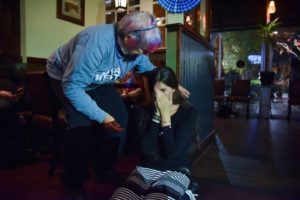
That night, before Danica Roem declared victory,. Joe Biden hunted her down and gave her a congratulatory phone call. Roem had driven to Delaware in 2015 to attend Beau Biden’s funeral out of respect for both Bidens, who have continually championed the rights of the LGBT community. Joe remembered, and so the call. Afterwards, when the realization of what she had just accomplished hit her, with Biden’s words still fresh in her ears, she collapsed in tears. When she collected herself, she went back out to the crowd gathered to celebrate, and, finally, let herself go.
Over a glass of wine that night, I thought about Danica Roem. I thought about the remarkable change that permeated the place where I’ve lived for the past 16 years. And then I thought about the arc of the moral universe, and Martin Luther King.
I thought about John Lewis, bloodied and beaten on the bridge in Selma. I thought about the quiet dignity and immense courage of Cesar Chavez. I saw Harvey Milk leading a march through the Castro. I heard again the words of Betty Friedan and Simone de Beauvoir. Others, too – Bobby Kennedy, who spoke so well and so often of the need for compassion; the sacrifice of Archbishop Oscar Romero in El Salvador; the poetry of Victor Jara in Chile.
If the arc of the moral universe bends toward justice, it does so irregularly. We suffer the setbacks attendant with greed, self-interest, brutality and repression far too often. Outrage can only go so far until it turns to despair. What of this species, and what of the things we do to one another?
But then Danica Roem wins an election, and cries with disbelief and joy, and we see that imperfect arc move infinitesimally back on course. It’s not a redirection; it’s only a slight jog.
But it reminds us of what might be possible. It shows us that, even if we do not see them, there are individuals of courage, commitment and principle who will stand against any odds for our collective dignity, for the integral value that each human being possesses, and that we must cherish the fact that, against all evidence, they’ve not abandoned their belief in what we might one day become.
December 23, 2016
Where Hope Survives
And I shall have some peace there, for peace comes dropping slow,
Dropping from the veils of the morning to where the cricket sings
-The Lake Isle of Innisfree, William Butler Yeats
This season has its rituals. We bridge present and past through our traditions, the touchstones of surety that tell us that, no matter how far afield we’ve roamed, the most important things remain constant. We have our songs, our meals, our customs and the trappings we create to define what this season means to each of us. And while much of this is shared with family, friends and acquaintances, in the end it’s personal, and each of us ascribes meaning to every piece of the season, and we weigh it accordingly. We create the guidelines that govern our holidays.
For me, the days in winter start early. I rise, pull on a sweatshirt, make sure the coffee is prepared, then head outside with the dog. On the best mornings, the sky is so blue that it cuts the eye, and the air so crisp that it seems to penetrate my lungs with a pungency that fills my soul. On these mornings the street is quiet. No one stirs, and the only companions on our walk are the birds – cardinals and mourning doves – that share my sense of time.
In winter, walking with my dog who always gives me the time I need, I meditate on where I am and where I’ve been. It’s one of my rituals, embedded within a season that speaks of peace and demands reflection. I would not change it even if I could. My morning walks center me. My meditations define me. I do some of my best thinking with Lucas, neither of us in a particular hurry even on the coldest mornings.
This year in particular it’s been a challenge to round back to that notion of peace. The world has shown itself once again to be a harsh place, governed by values that translate our humanity into profit-and-loss, or, worse, deny it altogether in those who do not think or look or act like we do. I believe it has always been so, but this year has hinted that these dehumanizing tendencies run deeper and stronger than I had imagined. In the face of this, it becomes a challenge to kindle the optimism and hope that the season traditionally imparts. Even so, it is a challenge I willingly accept. Without hope there is no purpose – no reason for family, for friends, for the pure beauty of summer sunsets, for assuming the struggles of carving out our own place in a complex, too-hostile society. There must be hope.
This year, more than ever before it seems, we have wrapped ourselves in our tribes. We have drawn lines around who we are, defending ourselves against “the other,’ and made fear our common denominator. Too many of us have demonized those on the other side and sought no community beyond our own kind. We define our tribes by race, gender, religion, sexual orientation, political thought, what car we drive, where we live, how much we earn and what we spend. And what this does is force us inward. We burrow defensively into our safe havens, rabbits scurrying underground in fear of some ill-defined but keenly sensed predator.
The best lives are not lived inwardly. We do well when we live expansively, embracing and accepting the differences among us rather than fearing imagined dangers by people and ideas we don’t fully understand. We are best when we seek to know who and what we do not know, when we ask and reason and, most of all, listen to “the other”. When we expand our own narrow tribe.
It would be easy to conclude that we’re destined to sacrifice community for the false security of our tribes, especially after what we’ve seen these past several months. It would be easy to conclude that we’re bounded by fear and suspicion, that we build walls rather than bridges, and that there is now other way now.
But on my morning walk today I remembered what puts the lie to these sad conclusions.
Several years ago I was in Rwanda, a country haunted by genocide, ethnic wars and more heartbreak than a soul can bear. As part of my duties I visited Gihembe refugee camp, and at the start of my tour a small girl, probably no more than five or six, appeared in the throng of boys and girls who had come to look at the white guy. She was tiny, and wore a green smock. While the others clamored around, she reached up and grabbed my hand, and held it tight. As we walked through the camp she did not leave my side nor let go of my hand. Once or twice I knelt to talk to her, asking in my pidgeon French her name, and telling her my name was Greg. She did not respond – no words, not even a smile. We carried on that way for the hour or so it took to reach Gihembe’s other side. When we did, I knelt again and told her I had to leave, but that I would always carry her with me. I withdrew my hand, stood up and headed for the truck. When I turned to look back, the crowd of children following us had dispersed. Except for her. She stood at the gate, staring at me, tears running down her cheeks.
I cannot begin to know this young girl’s story, or why she was in the camp, or how much was left of her family. I cannot know her story. But what I do know is that, despite the incredible pain she had suffered in her young life because of ethnic and tribal warfare, she still craved human touch, and the comfort of a hand that would not reject her. It did not matter who I was. It did not matter what tribe produced me. It did not matter.
I carry this girl in my heart, and she will never leave me. Although she cannot know it, she has taught me lessons I could never have learned anywhere else. She teaches me that despair is temporary, that our tribes do not matter, and that, despite all evidence to the contrary, hope abides.