Michael Levitt's Blog, page 55
October 28, 2021
4 Reasons Why All Businesses Should Use Affiliate Marketing

Image From Pixabay CCO License
Affiliate marketing is a popular way of earning a bit of extra money. People earn money by promoting products on their website and including a link. When somebody clicks the link and makes a purchase, the website owner gets a small cut. It's a simple but effective way to market products, but a lot of businesses are not taking advantage of it.
If you are looking for a new way to promote your products, affiliate marketing could be the way to go. If you visit remoteworkrebels.com, you can find more information about how affiliate marketing works for both businesses and the sites that market their products. If you're still not convinced, here are 4 reasons why it will benefit your business.
Expand Your ReachAffiliate marketing is a great way to expand your reach. If you work with influencers that have a large audience, you can expand your reach to new heights. It's one way of finding new customers that may not have heard about you otherwise. You get instant access to that audience and you don't have to put in the hard work to build that following because somebody else has already done it for you. So, through affiliate marketing, you can drastically increase your reach overnight.
Provide Social ProofSocial proof is very important when developing a marketing strategy. When somebody is considering buying something, they want to see how many other people recommend that product. If lots of people are buying it, then it must be worth their time and money. It's one of the most effective forms of marketing because everybody is influenced by their peers more than they are by companies. People value the opinions of bloggers and social media influencers, so if they are promoting your product and linking to the product page on their site, that carries a lot more weight than your own marketing materials do.
Low Investment And RiskSaving money is also a key concern when finding marketing strategies, which is why affiliate marketing is so perfect. Your money goes much further when you are spending it on affiliate marketing because you're only spending pennies each time someone clicks on the link and makes a purchase. The other great thing is that there is very little risk involved. You don't have to pay people to include the link on your site, you just pay them when somebody actually makes a purchase. That means you can't really lose money on affiliate marketing like you can with other marketing strategies.
It's Easy To Get StartedStarting a new marketing campaign can be a tough process. Usually, it will take a long time to see results and you have to spend money on paid ads or expensive content before you can even start earning money from it. With affiliate marketing, the only cost is the commission that you pay every time somebody makes a purchase through your affiliate link, but there are no upfront costs as long as you choose affiliates wisely. There are some great affiliate marketing platforms that will automatically connect you with the right people, making it easy to get started.
If you aren't already taking advantage of affiliate marketing, you should be!


October 27, 2021
Great Strategies to Scale Your Online Business to a Profitable Company

Photo by Andrea Piacquadio from Pexels
Successful online business owners know that it is not enough to make money. Over time, they find themselves in a position where they can scale their business into something much bigger and more lucrative. If this sounds like you, then the following strategies will be perfect for you!
It is essential always to have a consistent flow of revenue coming in from Facebook ads. This means that you should constantly be testing new types of content and adverts to find out what works best for your business. It also requires constant adjustments to the budget, time frame, and target audience until it proves itself good long-term.
Constant retesting will show which areas are most effective at generating traffic, conversions, and sales with minimal costs attached. Having this information allows you to scale up all other parts of your company accordingly. For example, if an advert has been shown to generate more customers than any others, spend extra money on marketing materials such as flyers or signage promoting product/service wherever possible!
Storage facilities are excellent for people who run online businesses. It provides a temporary storage space that can be used to store products and materials while waiting for the next shipment or sale. For example, if you sell groceries on your website, these items will need extra care as they have short expiration dates - this is where a facility comes into play!
The premise of having a storage space also works well when an order has been made but cannot be shipped right away due to weather conditions (i.e., snowstorms). It makes sense to keep all goods in one secure location in cases to ensure they remain safeguarded. To find the perfect warehouse or build your farm shed to provide this solution for your business. This helps ensure that there are no unnecessary delays from the customer's end, which could result in them going elsewhere.
Fulfillment services are excellent for online businesses that do not have the capacity or time to deliver their products. It can be expensive, but it is definitely worth its weight in gold when you consider how much money and effort would otherwise go into labor costs, etc.
The best way to find fulfillment companies is by simply asking other business owners if they recommend any excellent options that come with low fees. If so, then always set yourself up as an initial client first before committing long term - this gives you a chance to test out all aspects of service, including customer support/communication and speed of delivery, among others! This will help reduce unnecessary expenses from your end while ensuring everything runs smoothly without issue along the way.
These are just some of the ways you can scale your online business to a profitable company. As long as you stay dedicated, committed, and passionate about what you sell, anything is possible with enough hard work!
How To Properly Train New Staff And Onboard Them Well

Training new staff is a discipline that takes some time to get right. Onboarding in your business may work differently than in the last business someone may have worked for, meaning that even experienced hires may need to go over the basics when working for your firm, to begin with.
However, it’s also true that where you fall on the training spectrum will differ from hire to hire. For instance, it may take a lot of work to train a new teenage employee in your store, even though their relatively fresh perspective and open-canvas-like mind will allow them to pick up your particular ways of doing things more quickly than those already set in their habits.
As you can see, there are pros and cons to every approach. In this post then, we’ll discuss a few worthwhile onboarding measures, using a complete approach, the willingness to develop lasting knowledge, and the comforting of your new hire in their environment to be the top markers of success. Without further ado, please consider some of the following advice:
Assessing the skills and weaknesses of your staff is not a means by which to catch them out or a measure of making them feel inferior or superior in certain situations. All it means is that a staff member coming into your company may be more or less familiar with given practices, business standards, and idiosyncrasies your firm requires of new staff. Assessing how they fit within that using mini-evaluations and interview questions can help you assess how to train them more readily.
It’s best not to simply assume that our staff know how to do something, even if they’re educated or experienced in that field. Asking them politely just to double-check, referring them to educational materials your firm has written up, and making sure that they can ask for guidance whenever they need it is key to helping new staff feel comfortable within your firm, while also settling any insecurities or questions they might have. For instance, walking them through your point of sale system now is key, even if they’ve used one before. It’s better to iron out the kinks now than to suffer for them at a later stage, especially because built-up habits can be hard to undo.
Staff have a lot to take in when they onboard with your business. No matter how thorough and rehearsed your onboarding process can be, they won’t have taken in 100% of it. It’s just the nature of the human mind. Getting their bearings is tough enough, and being told a bunch of information in short order, even with good note-taking, doesn’t necessarily translate to familiarity. For that reason, it’s good to make sure they can field questions with you at any time, as well as assigning one person on the team they can turn to if they need to ask a question, no matter how seemingly ‘simple,’ can work wonders.
With this advice, we hope you can continue to properly train new staff and onboard them in the best way.
3 Quick Ways To Ruin Workplace Satisfaction (And How To Avoid This)
It’s easy to look at a business like a well-oiled machine, but doing so would rob you of the human element, so vital to the success of your brand. People aren’t cogs, and they’re certainly not ‘ingredients’ curated to achieve a certain ‘recipe.’ For this reason, we need to make sure that their skills are developed, that they have access to great training, and a chance to pursue and grow their careers with us.
That said, staff are also human beings, and this means that they have a number of needs that must be met, as well as a vision they can believe in, in order for them to stay at our firms and for staff turnover to remain low. But as they say, trust can take a lifetime to build and moments to shatter, so the most pressing advice in this regard is not necessarily how to achieve perfect workplace satisfaction, but how to avoid it from being shattered. In this post, we’ll discuss that and more:
Staff that feels frustrated in being unable to manage their workflows will, in general, feel pretty bad about their jobs. This is why it’s so key to make sure the digital infrastructure your business uses is up to the task, from the mainline software packages they use, all the way down to the backend content management suites they interface with. For instance, Drupal support and development https://doghouse.agency/drupal, is key in providing this latter need and can make all the difference in a systems’ architecture.
Staff doesn’t expect too much aside from a clean and relatively comfortable workplace, but that’s not where you should stop. Investing in comfort such as through ergonomic furniture that helps their back health over the years, making the workplace an aesthetically clean but inviting place to stay, making sure the staff toilets are impeccably clean, and providing an essential kitchen with all the utilities will be key. Some companies never invest in their workplace environment, and that’s a mistake because staff will spend so many hours there that they’ll be bound to notice this problem sooner or later.
There’s nothing staff dislike more than the feeling that they cannot be trusted to do their jobs. It might sound silly to mention this, because why would managers approach their hires like that if they’ve already recruited them to do a job? This is the exact same question that many staff members as to when this staggeringly common issue goes unchecked over time. As a manager, delegating responsibility is key to making sure that staff feels empowered in their roles, that they are trusted, and that they can apply solutions to problems well. Oversight is another thing entirely and is much better than micromanagement.
With this advice, we hope you can avoid ruining workplace satisfaction through management mistakes.
October 26, 2021
5 Things to Promote Work-Life Balance in the Remote Workspace

IMAGE Source: https://images.pexels.com/photos/4226...
A year after the pandemic broke out, many employees are still working from home. However, a survey led by Aetna International showed that 74% of all remote workers said that poor mental health has impacted their productivity. Additionally, 32% and 43% of respondents said that stress and weight gain are among their top health concerns, respectively. Given this, it's clear that developing a healthy work-life balance is crucial for one’s holistic wellness. And companies should prioritize supporting their employees with this. Here are some ways they can do this:
Avoid “Always-On” Culture
As with regular workplace setups before the pandemic, there should be clear boundaries between work and leisure. Employers should avoid implementing the “always-on” culture, as it can greatly affect employee mental health. In fact, Business News Daily talks about after-hours emails and the damage they can contribute to chronic stress and fatigue. Expecting employees to answer work-related concerns regardless of the time of day can hinder them from tending to their personal needs and unwinding after a workday. Thus, remember to consider your employees' working hours and respect their digital boundaries.
Implement Shorter Work Weeks
A full eight hours a day may not exactly equate to eight hours of productive work. Most people have been found to be at their highest productivity levels for only four to six hours a day at most. Given this, shortening the workweek might actually have a positive effect on your employees. A SymptomFind post about a 40-hour workweek suggests that it can improve mental health and productivity as it frees up more time for employees to pursue other hobbies. Giving them more time to spend with their families can also lessen their fatigue and anxieties, making for well-rested employees.
Promote Health Initiatives
Physical health goes hand-in-hand with an employee’s overall capacity to work. Pre-Covid, some companies often held sports events or sponsored company sports teams to encourage physical activity, but it can be quite difficult with the current restrictions. Instead, you can encourage employees to maintain their fitness by offering discount gym memberships or online fitness class subscriptions. By providing your employees with opportunities to further their physical health, you're also encouraging them to unplug from work and tend to themselves.
Provide for their Work Needs
In our "Out Of Office: Preparing Your Team To Work From Home" article, we highlighted the importance of providing the workforce with all the tools they need to make things work in a remote setup. This includes anything from a computer, a work mobile phone, or a steady internet connection. Aside from this, you should also provide software such as cloud tools and work management systems to help ease the transition into the remote workflow. All these will contribute to a conducive work environment, ensuring that employees can get their tasks done in their allotted work hours.
Encourage Connectivity
In remote setups, the lack of face-to-face interactions can make workers feel isolated and alone. A study published in the International Journal of Environmental Research and Public Health revealed that isolation and burnout are very much correlated to each other. And a lot of companies are currently struggling with building company culture, which leads to lower employee retention rates. So, help your team build relationships with their coworkers by leveraging online methods, such as team calls, weekly check-ins, and even game nights. Lastly, foster good communication with your team and ask them about what they need to be able to put in their best effort.
As a responsible employer, make sure you see past your workers’ performance and value them as people. Through these simple actions, you can create a healthier work environment, allowing your employees to attain a healthy work-life balance.
A Guide To Construction Site Risk Assessments
 What is a risk assessment?
A risk assessment is used to identify any hazards or potential dangers. On a construction site, risk assessments must be both thorough and accurate. Risks are defined as anything that would cause a person illness or injury. A typical risk assessment involves a process of three parts. The first step is to identify the hazards, the next is to evaluate the risk, performing an analysis. Step three means putting a plan in place to control the risk.
Besides keeping everyone safe, risk assessments are used to adhere to legal requirements and create hazard control systems. These assessments are useful to build awareness of different risks, and identify which people are at risk, and how.
How to perform a risk assessment?
Once you’ve determined a potential risk you’ll need to establish the circumstances that would lead to such a hazard. You’ll need to identify what could happen if this hazard is not prevented. Next, consider how likely it is that this situation will occur. Identify a solution, think about how you’re going to control this particular risk.
It’s worth noting that there are a few different types of risk assessment, for example, a baseline assessment. This type of risk assessment is used to create a benchmark for the hazards that could occur throughout your construction project.
Another type of risk assessment is an issues assessment, this works to figure out the risks for one task, (as opposed to the entire project).
When you’re performing risk assessments you’ll need to pay attention to detail and take your time. Once you’ve identified the risks you’ll need to put risk control solutions in place promptly. The following pointers are also important on a construction site:
All staff members must communicate with one another effectively. Teamwork and raising concerns is an important part of health and safety and risk avoidance. Collecting staff feedback ongoing can be helpful to improve your processes. There may be some risk that your employees have noticed which have previously escaped your attention.
Effective controls must be put in place for every risk, once these controls are in place they’ll need to be evaluated ongoing. If it’s judged that the risk controls are not as effective as they could be, the solutions should be adjusted accordingly.
Not all health & safety concerns pose a risk, others are more a matter of general health. For example, construction sites require certain facilities depending on the project. Your construction site will need toilet facilities, and may also need showers. To provide an effective onsite water source, ibc totes are a great option.
When you work in the construction industry it’s vitally important that you’re aware of the health and safety and risk assessment procedures. This knowledge is needed to keep everyone safe and to adhere to the correct legal practices.
How To Keep Your Business Clear From Negligence Claims

Owning and running a business can be a very difficult challenge. Of course, that is not breaking news, but it is what it is. There are many contributing factors as to why that is the case, but managing office space, dealing with customers, and fighting your marketplace competitors; managing your own business is arguably one of the hardest things to do!
Another thing that business owners have to deal with, other than all the challenges mentioned above, is the chance of dealing with negligence claims.
What are negligence claims? Glad you asked. According to findlaw.com, negligence is one of the most common types of lawsuits. "Negligence describes a situation in which a person acts in a careless (or "negligent") manner, which results in someone else getting hurt or property being damaged. Negligence can often be a difficult area of law to define because it involves a legal analysis of the elements of negligence as they relate to the facts of a particular case."
So, with that being the case, how do you avoid negligence claims when running your business? Below are a few quick tips:
Communication is important wherever you go. In the business world, ordering food from a restaurant, talking to family and friends, the list goes on and on. But when it comes to negligence claims, by communicating effectively, you lessen the risk of a lawsuit coming your way.
Continuing with the topic of communication, getting and keeping things in writing is essential. If messages and documentation are recorded in writing, whether over email or in other message exchanges, it decreases the likelihood of the 'he said she said' game ever occurring. If you have recorded documentation, you have the evidence to back yourself up if a claim is filed against you.
Know what you can and can not do. Do not promise something that you will not be able to follow through with. You set yourself up to fail if you do that. So, with that being the case, it is important to stay in line and...
Understanding your limits goes hand in hand with staying inside your field of expertise. If you go out of that zone, you again set yourself up for the opportunity to be sued. Why? Just think about it: if a foot doctor were to say, "Yes, I could repair your injured hand," to a client, the expectation is that they do what they said they could. Now, if the foot doctor made their clients' hand even worse, they set themselves up for quite the legal battle.
There is not a lot of room for error when it comes to negligence claims. Seriously, a lawsuit could be coming at any time if you are not careful. So stay in your line, keep records of everything, and make sure you communicate as effectively as possible.
October 22, 2021
Are You Meeting Health And Safety Requirements In Your Workplace?
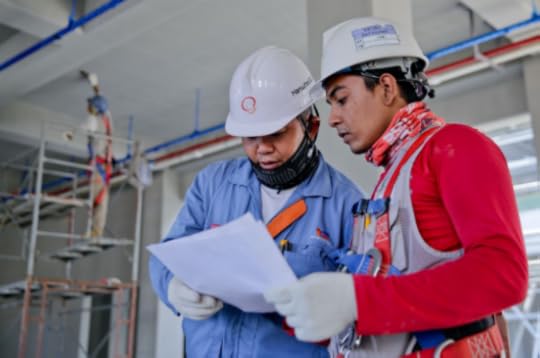
It looks to be a massive bureaucratic nightmare when looking for information on health and safety issues. In reality, it is a rather straightforward concept to grasp. This piece of legislation, as well as a set of standards, was put in place to protect your employees, customers, site visitors, and even you safe while at your place of employment.
In spite of the fact that the rules are quite straightforward for most firms, especially smaller ones, we urge that you get professional guidance from specialist health and safety experts, particularly because there are more comprehensive and specialized rules entrenched in various industries. But in this blog post, we will discuss some of the most important obligations that you as a small business owner have to have in mind.
Conducting an environmental assessment
Environmental reviews give you a thorough picture of the dangers associated with your workplace, and they are easy to do. Take into consideration everything from safe walkways to open sightlines and the lighting options available on your property. It is necessary to stay one step ahead of potential vulnerabilities if you are to reduce risks associated with employee safety. Examine the working environment to see if there is anything that could go wrong and fill in the gaps. Furthermore, you can utilize this knowledge to develop a safety plan for your workplace using whs management systems.
In the case of these types of employees, it is vital to put in place some precautionary measures. Regulations governing lone employees range from country to country and even from province to province, which is why you must ensure that you adhere to all applicable regulations and maintain compliance in your organization.
Check-in and check-out processes, alternative communication methods, and panic buttons should all be included in your company's lone worker policies, in case of an emergency. Nonetheless, the needs of lone employees will vary from organization to organization, necessitating the development of customized solutions.
Although companies have a portion of the duty for ensuring employee safety, it is ultimately the employee's responsibility to maintain a high level of personal safety awareness and awareness of their surroundings. Knowledge of one's surroundings is quite beneficial in helping an individual deal with any challenges that may arise at the workplace. Additionally, working beside a coworker who can educate and train them on the proper practices can be quite beneficial for newer employees.
As an employer, you may provide employee safety training to provide employees with the practices and knowledge that will help them to reduce the risk of injury or illness at work.
Communication devices are being checked
Companies are finding it easier to protect their employees, particularly those who work alone, thanks to technological advancements. Your employees are only a phone call, text message, or swipe away. It is critical, however, to ensure that they function in a consistent manner.
When it comes to employee safety, effective communication is critical to keeping things under control. To keep your staff safe, though, you will need more than simply communication devices on the job. Installing goods such as commercial alarm systems, CCTV installation, door entry systems, and other similar systems will assist you in keeping track of your personnel and ensuring their safety. A door entry system, for example, lets only authorized employees to enter the building, limiting the number of possible intruders who can enter.
Benefits of Good Air Quality in Factories

Dust and fumes are a concern in any environment but even more so in industrial settings like factories or plants. Manufacturers need to control harmful containments to protect their employees’ health and comply with state and federal regulations. Not only does the law require you to protect your employees, but it also benefits your bottom line.
Poor air quality will affect physical and mental health. Manufacturers often see a decrease in staff retention and lower productivity when they don’t prioritize workers’ health.
Learn all the benefits of good air quality in factories and how to protect your staff.
Reduces Sick TimeBreathing in clean air during work hours helps us all immensely, even after we leave work. Better air quality is connected to better sleep, resulting in less stress and a boost to our immune systems. A properly working HVAC system improves air quality by removing contaminants like allergens and other pollutants like dust and fumes. Ventilation systems help people stay healthy and reduce the need for workers to take extensive sick time.
Improves Employee ProductivityDid you know that fresh air can help us concentrate? Lower levels of carbon dioxide and higher oxygen levels help the brain perform better, allowing us to make better decisions and giving us more energy. Because of this, you might also see an increase in employee retention with better ventilation.
Regulates Utility CostsMaintaining consistent airflow can help lower energy costs. Why? Turning air conditioning off and on to save money will make the system work harder and force it to play catch-up. Plus, humidity can accumulate, encouraging the growth of mold and making the air in your facility stagnant.
Creates a Positive Work EnvironmentRetaining your staff relies on creating a positive work environment. That means an engaging company culture, but a healthy atmosphere is also part of the equation. Providing proper airflow improves both moods and brain function.
Understanding the benefits of good air quality in factories could be the beginning of creating and maintaining an overall positive work environment!
October 21, 2021
Off-Site Data Storage Can Prevent Huge Losses

https://www.pexels.com/photo/abstract-art-blur-bright-373543/
Loss of crucial data can be damaging for any business. However, if you have the best data storage solution set in place to begin with, you can minimise the extent of the damage. A lot of companies nowadays opt for off site storage. There are many different types of off site back up. Nevertheless, the general definition is that it relates to any type of back up whereby data is stored away from your physical location(s), i.e. not in your office or any other corporate buildings you own or lease. Typically most people opt for remote back up. This involves storing your files and data on servers located off site. Read on to discover the top five benefits associated with this type of storage:
1. Save Money – One of the main benefits associated with off site storage is the ability to reduce business expenditure. This is especially the case for those who have large amounts of data that needs to be backed up regularly. If you opt for off site storage it is likely that you will have to pay a set amount every month, rather than deal with all of expenses in relation to storage devices, data management solutions, updates and such like.
2. Reliability – Another advantage in relation to off site storage is increased reliability. Why? Firstly, remote back up is automated and you can recover files quickly. Moreover, if one server crashes you don’t have to worry about lack of back up availability, as most remote back up solutions are situated in numerous locations.
3. Security – Security is of paramount importance when dealing with your company’s important data. You will be pleased to know that high security is another perk that is related to this type of storage. With off-site storage, you can also get IT support services too, and so you are likely to benefit from secure locations and advanced encryption tools. FocusSG.com and companies like this provide physical security.
4. Easy to Set Up – One of the greatest benefits associated with off site data storage is the fact that this is a solution that is handled for you. When you acquire this service there will be an IT manager who will work with you to provide a bespoke solution you are happy with. This is extremely beneficial because you don’t need the time, resources and skill set to deal with it yourself.
5. Reduces Workload – As just mentioned, you don’t need the time or resources to deal with data storage yourself. This leads onto the fifth and final benefit perfectly; you will reduce your workload. After all, if you were to store data on site you would need at least one person to manually copy files or back up data. Not only does this take a considerable amount of time, but also it is going to distract one of your employees from doing their normal job.