Eleyne-Mari Sharp's Blog, page 3
September 2, 2021
A Place to Read and Grow
Have you ever heard that "a place to read is a place to grow?"
Before we bought our house and were touring the property, the sitting room contained one piece of furniture: a baby grand piano. It took up most of the space and the only other decor was a pottery urn on the piano lid. It read: Ashes of Dead Spouses. (Pretty strange, right? The previous owner was a marriage counselor who kept a huge piranha tank next to the requisite couch in his dreary office.)
Today the sitting room is a library, a cozy refuge where we can dream and read to our hearts’ content.
It Was the Best of Times, It Was the Worst of TimesOne of the ways I am dealing with stress and the current world situation is to immerse myself into fantasy, the literary kind.
My bibliotherapy began last month when I created the Writelighters Book Club on Goodreads and I’m very excited about that. But I also joined another club for fun. Litwit Lounge is much different than the Writelighters Book Club because you aren’t assigned any particular book or genre to read. I anticipated the joy these clubs would bring to my life and I was feeling quite brilliant.
Yet as I surveyed the five bookcases in our sitting room/library, I heard the rusty gears in my tired brain screech to a sudden stop and I panicked.
How on earth am I going to decide on which book to read first?!
This shouldn’t have been a major problem because we own two stories of thousands of books, of which I have yet to read a quarter of them. Nevertheless, it was obvious I had no "shelf control" because everything was "higgledy-piggledy." And it wasn’t like I could just blow a whistle ala Captain von Trapp in The Sound of Music and watch all my disciplined book "children" fall in line for inspection.
So now I had to tackle a HUGE organizational project before I would allow myself to read one more book. And I was already in the weeds.
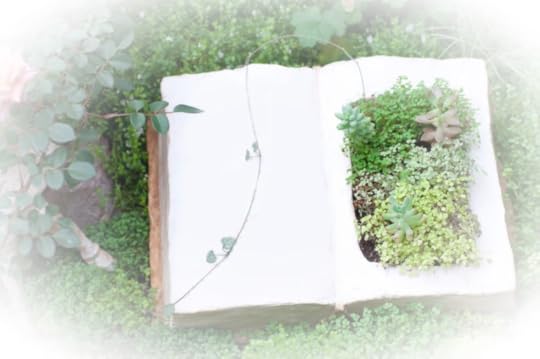 How Overgrown is My Library
In the classic book, The Secret Garden by Frances Hodgson Burnett, the garden symbolizes the growth and healing of its owner, which is exactly what I hoped to cultivate in my own book "garden."
I dedicated three bookcases to Fiction and two to Nonfiction. After reviewing the new "Home Library" board I had created on Pinterest, I decided not to organize our books by color or alphabetically. No, the simplest plan would be to categorize by genre.
Weeding proved to be the most difficult step. Pulling out and discarding the unwanted was agonizing because I understood the hard work each and every one of the authors had endured to write and be published, so I felt guilty each time I tossed a book into a "Donations" box. These titles pleaded to be read, insisting they had value and would change my life forever if only I would open their covers and take a peek.
The first genre to be weeded was the children’s book section. As a publisher, I used to attend book fairs where I’d collect a hefty stack of gorgeous picture books, many signed by the authors. Honestly, this project would have been finished much sooner had I not wandered off to explore the secrets of Wonderland, The Shire, and Oz. In the end, I kept my treasured Nancy Drew and Harry Potter books, along with dozens of other titles, like The Night Before Christmas and Gee Whiz! It’s All About Pee.
I reserved one shelf for "the classics," which I planned to "devour" for Litwits. As with the children's books, I leisurely browsed and reminisced, reading aloud the first lines from every first chapter:
Marley was dead, to begin with.There is no doubt whatever about that.
Last night I dreamt I went to Manderley again.
He was an old man who fished alone in a skiff in the Gulf Stream and he had gone eighty-four days now without taking a fish.
If you really want to hear about it, the first thing you'll probably want to know is where I was born, and what my lousy childhood was like, and how my parents were occupied and all before they had me, and all that David Copperfield kind of crap, but I don't feel like going into it, if you want to know the truth.
Call me Ishmael.
Everything's Coming Up RosesIt took me two weeks to reorganize, but now there is a designated place for all our favorites, including Nick's Dragonlance series and John LeCarre books, and my beloved Jane Austen classics and Rosamunde Pilcher.
I am sitting in one of the two overstuffed chairs next to the window, sipping a cup of organic Tulsi Sweet Rose tea, confident the hard work is done. My bookshelves are bursting with two rows of books, assorted plants, crystals, seashells, family photos, candles, and artwork. For Litwits this month, I am reading Jane Austen's book, Emma, and all is well in my secret book garden.
Someday I intend to reorganize the books in my home office, our master bedroom, and living room. Someday, but not today. I have so much to read!


August 19, 2021
Writing the Waves of Grief
Some years ago, my father, grandmother, and Jag, our beloved cat, died within a few months of each other. I felt like I had been hit by a truck. A very big truck.
For about a six-month period, I honestly didn't know how I managed to get from Point A to Point B. The pain was quite intense at first, and then my body went numb, my feet felt like they were sloshing through the thickest mud, and I was getting absolutely nowhere.
For me, the world had lost its luster, its color, and I didn't feel like doing much of anything. There was a huge pit in my stomach, like someone had taken their fist and punched it, punched it hard and knocked the wind right out of me. Sometimes I wasn't even sure I was breathing. Or eating. Or sleeping.
Or writing.
People react to grief in different ways. In my case, I just wanted to retreat from the world, crawl inside myself and feel sad.
Not long after the loss of my loved ones, I went to my favorite beach in Narragansett and sat alone in the lookout tower, staring at the sea. I was searching for answers, for clarity, for peace. Why them? Why now? All of that.
On this particular day, the ocean was that beautiful seafoam green color that I love so much. I meditated on its cleansing, color ray and felt a bit better. And then I turned to other colors of the sea—aqua, turquoise, cobalt, and lavender.
I saw them all in the water that day and their color energies helped me through the grief. This was how my "Colors of the Sea" workshop and CD were born. This was how I pulled through, how I soldiered on through my personal sea of grief.
Washington Irving said: "There is a sacredness in tears. They are not the mark of weakness, but of power. They speak more eloquently than ten thousand tongues. They are the messengers of overwhelming grief, of deep contrition, and of unspeakable love."
Well, I have surely cried a bucket of tears and there will probably be many more to come during this time of transition and birthing of the New Earth. From what I’ve seen, more and more beings are opting to leave the planet, whether from sickness, violence or natural disasters.
But what about those of us who are left to tend to Gaia? How do we go on? How do we cope?
Write Out the PainWriters hear it all the time, to write what we know. It may seem difficult to do when you're grieving, but each time you put pen to paper and write your most painful experiences, you come that much closer to healing.
Did you know that writing when you're in pain makes your fiction writing more real and authentic?
The first time I killed off a character was when I was writing Inn Lak'ech. The character was beloved in Little Blessing and even though I knew he had gone to a better place, I made myself grieve all over again. It's like what Method actors do; they remember a time and place to tap into what their character is feeling, like wearing a second skin.
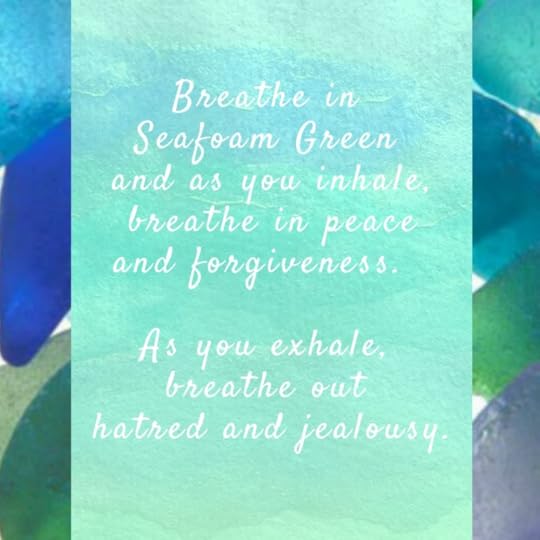
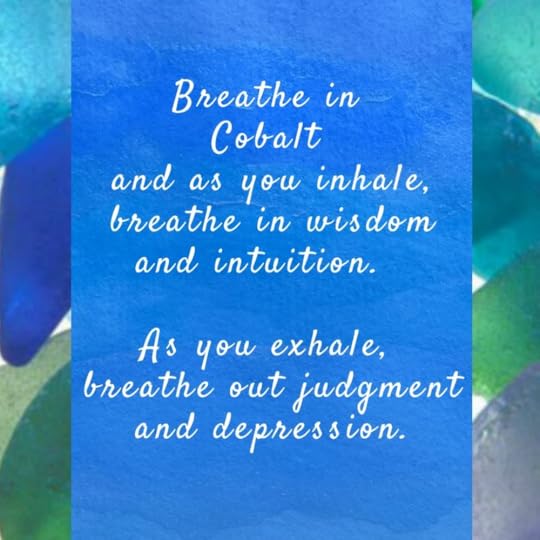
Breathing LessonsAre you angry or grieving right now? Try my color breathing technique with the Colors of the Sea and feel better!



Writing Exercise
Write a heartfelt letter to the person, animal or object you lost.
August 3, 2021
A Little Beach Musing
One of my favorite writing spots is the observation deck at Scarborough Beach in Narragansett, Rhode Island. It's cool, covered, and where I wrote the entire script for my Joywriting with the Dolphins teleseminar.
Once I watched a little girl playing in the waves. She had a long, brunette braid and wore a hot pink and black wetsuit, screaming in delight as the waves teased and tickled her feet.
Each time a foamy white cap approached her, she’d jump, squeal, and bob up and down on her toes until the next wave appeared.
Sometimes she’d stand backwards with her arms outstretched, trying to anticipate when the next wave would come. Of course, it always would and it delighted her, even if it knocked her down.
But the little girl was like a buoy—she’d always bounce right back up into position. I watched as she grew more confident and walked into the ocean until her chest was covered in green, seaweed-filled water.
And then something to the far right of the girl caught my eye. Just past Point Judith Lighthouse was a line of fins. Were they sharks?
The night before I had heard a television news reporter talking about a shark sighting in the same vicinity. I watched as the fins moved closer and closer to the little girl, who was now floating on her back towards the horizon.
Omg!
My heart was thumping and I dropped my pen as the fins quickly surrounded the girl. Did the lifeguards see what was happening? Could they save her?

I held my breath, too frightened to scream. Was I watching a tragedy? Should I leave the two-story observation deck and try to get the attention of somebody—anybody—who could rescue her from these man-eating sharks?
And then I saw the body of one of the fins emerge from the water and jump high into the air. These were no sharks—they were dolphins!
I watched in awe as a pod of twelve bottle-nosed dolphins encircled the child and their powerful, vibrational energy lifted her higher and higher above the water. They tossed the giggling girl from dolphin nose to dolphin nose, as if she was nothing but a plastic beach ball.
Amazing, right? Yes. And that last part—everything with the dolphins? None of it happened. Not one bit!
Sometimes I make up stuffThe truth is I allowed my imagination to run wild. It's what novelists do. So I guess you could say I lied a little. I fibbed. I exaggerated. But isn’t that what fiction is, a bending of the truth to make it more entertaining to the readers?
Storytelling is the way we teach, enlighten, and entertain. Sometimes we will embellish our tales because we don’t think our listeners are equipped to emotionally handle the truth. And sometimes we do it for fun.
Her father is an archangel. A pirate ghost helps her get out of jail. She transforms into a bouncing ball on the moon.
I had a lot of fun making up things for my novels, Inn Lak'ech and Seaglass Christmas, and I'm having even more fun writing the Moonwater Beach sequel. Honestly, if I wasn't having fun, I wouldn't be doing it.
I made up stories when I began designing my wire-wrapped jewelry and was scouring beaches for the perfect seaglass. Before I wrote anything, I needed to answer some questions first. How had the glass become seaglass? Did it begin its journey as a medicine, rum or cosmetic bottle? How did it reach this destination?
To me, seaglass and life stories are synonymous. A red piece from a broken bicycle tail light reminds me of my greatest childhood escapes. An amber shard from an old beer bottle evokes memories of an abusive relationship. A deep cobalt piece from an old VapoRub jar represents my chronic bronchial issues. A pale green piece from an old Coke bottle sparks memories of cold summer showers with my favorite herbal shampoo.
As a metaphor, seaglass reflects the unpredictability of life. It is the broken pieces of our hearts. After a series of rough-and-tumble journeys through crashing waves and storms, it finally is swept onshore, a transformed gem with smoother edges, worthy of being displayed as an ornament of beauty.
Show and TellHave you traveled the world? Did you discover buried treasure? Have you survived cancer or taken care of someone who has? Did you raise the one kid who called for a school-wide strike or made a mess of Aisle 10 in the supermarket? You’ve got the makings of a story there!
Transport yourself to that moment in time. See yourself touching, smelling, seeing, tasting, and hearing in that particular scenario. This is what you want to convey to your readers. And don’t just tell them what happened, show them.
Let’s say you want to write about a summer road trip you took with your family. Be as specific as you can about your adventure. What’s going on outside? Did you drive past lakes and farms and “9 Miles to Stuckey’s” billboards? What’s happening inside? Is your car filled with pillows and suitcases, a traveling bingo game, and a picnic cooler? Is there an assaulting odor of sweat and feet, discarded French Fries, and smelly onion-soaked cheeseburger wrappers?
Think about the sounds of your trip. Write about the music blasting on the radio, your brother making disgusting armpit noises, and your sister singing off-key in the back seat.
Be as imaginative as you want to be, but don’t forget to dig for story gems among your own grand adventures!
Writing Exercise
First, give yourself permission to play, to imagine, and to not feel guilty about anything. Then (whether it is true or not) write and complete this sentence: The most amazing thing I ever saw was ...
July 1, 2021
Free Thinking: The Truth is the Truth
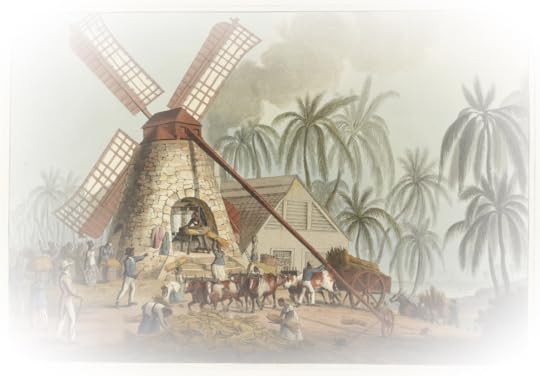
Hold on to your bonnets, Dear Readers, because the word is out that Jane Austen's father was a trustee of a sugar plantation in Antigua. Could this possibly mean Our Jane truly had family ties to slavery? How disappointing!
Amidst the Black Lives Matter movement, there's been some heated discussion online about a controversial addition to the tour displays at the Jane Austen museum in Chawton, England.
The museum’s director announced that the Austen family would have consumed products of the slave trade such as tea, cotton and sugar. "The slave trade and the consequences of Regency-era colonialism touched every family of means during the period," she said. "Jane Austen’s family were no exception.”
As a fan of Austen’s work, I’m not opposed to this information being shared at the museum or anywhere else because there is evidence that Austen detested slavery and her brother was an abolitionist, during a time when most everyone benefited from slavery. Human bondage is abominable, yes, but I think her connection with slavery should be a footnote, not a full chapter. And I don't think her books should be burned or banned because of this "revelation."
 Forgive but never forget
As we approach our annual Independence Day celebration, the United States of America is far from united. There is much resentment towards the ancestors and a rallying cry for change has been issued from all cultures.
The truth is our country was built on the backs of many. Some arrived here as slaves, some were dreamers excited about starting a new life in a new land, and others lived here from the beginning.
But we can’t erase the history.
Yes, we did bring slaves into this country. Yes, we did fight a civil war over it. And now Americans have a new legal holiday, Juneteenth, guaranteeing this travesty will not be forgotten.
Unless we have a time machine, we have no control over the past, so let's forgive our ancestors for their part in slavery and learn from past sins. We must go forward. And part of going forward is to do better. We must respect one another, be kind, and remember that we are all members of the same human race. To embrace the cliché, we need to be the change we wish to see.
Booker T. Washington said: "A lie doesn't become truth, wrong doesn't become right and evil doesn't become good just because it's accepted by a majority."
No matter how many statues we take down or classic books we ban, the truth is the truth is the truth. Just because we’ve shared a dark history doesn’t mean we can’t enjoy a brighter future.
You can read about my own prejudices and the steps I've taken to educate myself in my ,"Owning It" blog post.
Writing Exercise
Write a compassionate letter of forgiveness to your ancestors, then write a letter of forgiveness to yourself.
June 13, 2021
June 9, 2021
7 Writing Muses Hiding in Plain Sight
I don't want to write today. I really don't.
I want to make jewelry. I want to read a book. I want to contemplate my navel. I want to rewatch a hilarious YouTube video I found with Craig Ferguson and Robin Williams engaged in a lightning round of irreverent banter. I want to laugh.
Instead, I call my mother and we chat about our health and the high cost of prescription drugs. After I hang up, I want to become an activist. I want to start a petition, sign a petition, and protest.
Call it procrastination or writer's block, the fact is I need a muse.
Have you ever sat at your writing desk, staring out the window or down at a blank page, just trying to think of something—anything—to write?
Having writer’s block is like being kidnapped by a dastardly villain who ties you to the railroad tracks. You may kick and scream in desperation but all you hear is the evil cackling from this horrible, mustached cad who is preventing you from accomplishing your dreams.
Fortunately, I know all is not lost because I've discovered seven potential muses hiding in plain sight to help you write that novel or screenplay:
1. PetsHave you heard of xenofiction? These are books written from an animal's perspective, like The Art of Racing in the Rain by Garth Stein. We are fascinated by our pets. We wonder what they're really thinking about their lives and particularly what they think about us.
One of our cats, Holly, is quite the talker. She talks when she sees us, when we serve her meals, and each time she uses her litter box. And whenever we ask her a question, she replies with a one word answer that sounds a lot like "Meh!" Holly thinks she's the queen of everything and so I've "honored" Her Majesty with a cameo appearance in my forthcoming book, Moonwater Beach. I doubt she'll be impressed, though.
Something to muse about: Study your pet. What texture is your dog’s fur? How many colors are in your parakeet’s feathers? Do your pets snore when they sleep? How do your pets show joy or fear? How do they interact with other species? How do they react when they are frightened? How can you incorporate your pet into a story?
2. Photo Album/School YearbookOh, the places you've been, the people you've known! You've had quite the life, haven't you? Luckily, some of your favorite memories (and potential stories) are preserved within the timeworn pages of your old photo album or school yearbook.
I remember looking through my mother's old high school yearbook and giggling when I found this message scrawled by one of her friends:
Mary had a little lamb
she tied it to a heater
and everytime it turned around
it burned its little seater!
I have no idea how I'm able to remember that long-ago poem because I can't even recall why I just walked into the kitchen. Anyway, the message stuck and perhaps you might find a message in your own yearbook that sparks an idea or two. (But be merciful to the lambs, poor dears.)
Something to muse about: As you flip through the pages, look closely at the faces and places. Any of them inspire you? Which family "secrets" would make an intriguing story? Remember that funny guy from English class? How did he turn out? See your grandmother holding you as an infant? Imagine her thoughts as she held you during the time that photo was taken.
3. Musical InstrumentsSince the days of ancient Greece, many a songwriter has picked up a guitar or lute to lament a lost love or sing praise to the Creator or king. Songs remind us of another time, another place. We hear a song and instantly recall where we were, who we were with, and whether it was a good or unpleasant experience.
While I grew up playing the piano, accordion, autoharp, guitar, clarinet, and snare drums, I never fantasized about being a professional musician, but I know some writers do. Can you imagine Mitch Albom sitting at your piano? And what if he invited famous author pals like Stephen King, Amy Tan, Dave Barry, Scott Turow, and Barbara Kingsolver to join him on their instruments of choice? How exciting your life would be to have so many literary greats jamming in your living room! But wait—would you believe there really is a band like that? Enjoy the "hard listening" sounds of the Rock Bottom Remainders!
Something to muse about: How long have you owned your instrument? What were your emotions when you received it? How and where was it built? Do you give it special treatment? Does it sound sweet, tinny or primal? What was the first song you ever played? Do you have an idea for a story about a songwriter?
4. TelevisionThe comedian Groucho Marx once said: "I find television very educating. Every time somebody turns on the set, I go into the other room and read a book."
All kidding aside, "the boob tube" offers a wellspring of ideas for plots and character development. Khaled Hosseini found inspiration for The Kite Runner after watching a documentary about the Taliban that banned kite flying. Suzanne Collins wrote The Hunger Games after channel-surfing from TV reality shows to war coverage on the news.
Something to muse about: Watch a news report or documentary. What are the interviewees saying? Do you believe them? Do you feel empathy? What is really going on behind the scenes? Can you apply their situation to one of your stories?
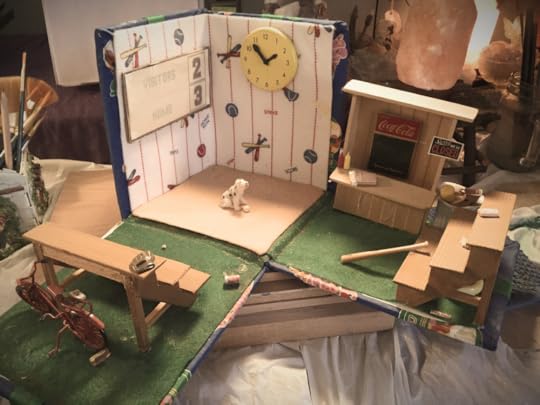 5. Hobby Collection
In one of my works-in-progress, my protagonist works part-time in a dollhouse shop. Not so coincidentally, I've been creating and collecting miniatures and dollhouses for years, so researching this hobby is child's play.
Since readers often relate more to a story when they share a hobby with a character, take a look at your collection. Do you have a passion for stamps? Coins? Dolls or comic books? Can you write a fascinating story about a fellow collector of antique perfume bottles or door knobs?
Something to muse about: Take what you know of your hobby and apply it to your writing. For example, what if your protagonist discovered a rare stamp that set them on a worldwide adventure? What if your character is so obsessed with their hobby that they are diagnosed with hoarding disorder? How does that affect his/her relationships? How would that affect their ability as a private detective?
6. Your BodyIt’s not easy looking into a mirror and telling your reflection “I love you,” even if self help guru Louise Hay tells you it’s your path towards healing.
Most of us are critical of our bodies, so it stands to reason that our fictional characters might be, too. Jot down all the things you don't like about your body and apply them as character traits. For instance, I've never liked my big ol' "Flintstone" feet. They're wide and long and they stick out like flippers. But what if I gave my antagonist those same feet? How would he cope?
Something to muse about: What do you see in your wrinkles and scars? Are they memories of pain or triumphs? How would your character feel if he/she had been born with no arms? Apply these observations to your writing!
7. The KitchenLet's say you're intent on penning a fish-out-of-water scene for your extremely spoiled protagonist, so you want her to bake a cake. Do you know the process?
First, take a look inside your refrigerator. Notice the ingredients that you would use to bake a cake, like eggs and butter. What else do you see? Is there moldy cheese in there? Green broccoli turning yellow? Crusty ketchup around the bottle cap? Can you create something beautiful from the leftovers? Or is your refrigerator full of stuff that nightmares are made from? Write about what you find because you never know when you'll want to write about the inside of a refrigerator!
Something to muse about: Get out your cake recipe because you're really going to bake that cake! Take out the equipment—the mixer, bowl, spoons, and measuring cups—and write about how they look and feel. Make the batter. Taste the batter. Does it need more sugar? Less sugar? More cinnamon?
Once you've completed your baking research, you can write a more realistic situation for your character, including how to deal with the messy kitchen afterwards!
May 24, 2021
Let's All Take a Deep Breath
Have you noticed all the headlines about mental health these days?
Prince Harry opens up about his 20-year mental struggle.
Mental health issues on the rise even as Pandemic eases its grip.
Alleged cop killer suffered mental illness after losing job, mother says.
The most common postpartum mental health issues and how to spot them.
I grew up during a time when the words breakdown and depression were shamefully taboo and anyone who showed signs of mental illness were to be shunned by polite society.
Today's a different story.
Now people are jumping aboard the mental illness bandwagon on a daily basis, eagerly sharing their anxiety tales on social media to a supportive chorus of "Really? Me, too!"
Speaking of stories, I've been doing a lot of research about depression because my protagonist in Moonwater Beach discovers that her late mother—the beloved town nurse—was secretly bipolar. It's a sobering discovery when you learn the woman who was devoted to the welfare of others was in tremendous pain.
Even writers get the bluesErnest Hemingway was an alcoholic who died from a self-inflicted bullet. Virginia Woolf suffered from depression and ended her life in a suicidal drowning. A chronically depressed Sylvia Plath committed suicide by sticking her head in the oven. I've also read that Edgar Allan Poe and Charles Dickens suffered from mental illness.
Compared to them, I'm pretty lucky. I've had my share of personal anquish but I've never struggled with major depression, although I have been sad, stressed, angry, and frustrated at times. But isn't that part of the human experience? Fortunately, my low moments do not last long because I work through them with meditation and writing.
So how can you take charge of your own mental health?
The first step is to face the stigma and realize you are not alone. Did you know that May is Mental Health Month? Here are some interesting statistics I learned about mental illness from the National Alliance on Mental Illness:
1 in 5 U.S. adults experience mental illness each year 1 in 20 U.S. adults experience serious mental illness each year 1 in 6 U.S. youth aged 6-17 experience a mental health disorder each year 50% of all lifetime mental illness begins by age 14, and 75% by age 24Fortunately, there are many options available to address mental disorder, beginning with professional treatment. Some people deal with their disorders by practicing music and art therapy, meditation, yoga, breathwork, and daily journaling.
We all have stress, but most of it can be managed by improving our diet and exercise habits. However, long-term stress can be harmful, impacting our physical and mental health.
I'm not a physician, but I do know how to breathe and that is why I am happy to share my Blue Sky Color Breathing meditation for temporary anxiety relief.
Just click the play button (below), think of the color Blue—and feel better!
https://video.wixstatic.com/video/b3bc89_ea25cae78ed44e20b89f1caba9980f1a/720p/mp4/file.mp4If you're feeling depressed or suicidal, please see a professional therapist or contact MentalHelp.net for immediate assistance.
May 10, 2021
A Writer So Brave
One of the books that affected me greatly as a teenager was Anne Frank: The Diary of a Young Girl.
You know the story. Anne Frank was a 13-year old Jewish girl living in Frankfurt, Germany when she received a diary for her birthday. Her family fled Nazi Germany to live in Amsterdam, where they remained in hiding for two years before they were discovered. Sadly, Anne died in a concentration camp at age 15.
In her diary, Anne wrote: "I see the world being slowly transformed into a wilderness, I hear the approaching thunder that, one day, will destroy us too. I feel the suffering of millions. And yet, when I look up at the sky, I somehow feel that everything will change for the better that this cruelty too shall end, that peace and tranquility will return once more."
Anne Frank had no idea her diary would be shared with the world. It became her confidante, her safe harbor where she could vent, relieve her stress, and ultimately understand herself and her world better. Had she survived the Holocaust, she might have become the journalist she aspired to be or an activist, a social worker or maybe all three. We will never know, of course.
But in penning her experiences (and her father having the insight to publish her memoir), Anne gave the world a literary treasure, a truthful account that not only reveals a horrific era in history, but offers valuable life lessons in compassion, forgiveness, and hope.

Find your courage to be authenticLike writing good stories, courage is an ability that all writers must develop. It takes courage to study the world and write what you see and hear. It takes courage to follow your heart and write your truth. You need courage every single time you pick up that pen or sit at that computer, braving the possibility of anger or retaliation for what you wish to express. These are the risks we must accept if our intention is to write to be read.
I felt I was taking a great risk while writing ,,Mad About Hue: A Memoir in Living Color. I had no genie-in-a-bottle nor mentor to guide me through my memories of pain, doubt, anger, shame or frustrations. I just winged it, and at times it was scary, as if I was performing open heart surgery on myself.
Was I worried that certain people would be upset because I wrote about them? Not really because my book wasn't written for revenge. The memories in my book were included because they were true and I had made a personal commitment to be authentic, painful or not.
I'm inspired by the courage of Anne Frank and I've wondered how I would fare if I, too, had to endure the worst of human nature. I may not be threatened by terrorists as I write, but that doesn't mean I've never felt fear. We all have. The challenge is finding ways to rise above it.In my book, Write Awake: A Conscious Path to Creativity and Change, I give examples of how writers might release their fears and find their courage:
Write a list of all your fears. Review the list and next to each fear, write about the experiences which created that fear. Think of the scene in Harry Potter and the Prisoner of Azkaban where the students addressed their fears through the shapeshifting boggart. Then review each fear from your list and associate it with something ridiculous that makes you chuckle. For instance, would you still have a fear of flying if that jumbo jet was actually a sleigh full of toys with jolly ol’ Saint Nick as your pilot? Once you are overcome with silliness, write a positive statement that would help you detox each fear and then practice saying these affirmations at least twice a day. Write something like: "I have no fear of failure because I know I am talented and can always try again" OR "I have no fear of being attacked because I am always protected and in a state of Love." Then practice saying these affirmations at least twice a day.What is happening in your world? Are there changes you would like to see? Do you have the courage to write about it?
Having courage means boldly going through every obstacle. It means having the courage to face atrocities while believing there is hope beyond the darkness. The more we practice courage, the more it is mastered!
Writing Exercise
Write and complete this sentence: As a writer, I can use my fears to ...
April 23, 2021
Writing with Crystals under a Pink Supermoon
I'm always amazed how creative I am during a Full Moon. I sit with my trusty notepad and pen and the words just flow like water.
I'm expecting to write something pretty special tonight because it's not only a Full Moon, but a SUPERmoon, and a Pink one at that.
Okay, it's not really Pink. The name originates from the pretty phlox flower that blooms in eastern North America.
According to NASA, the moon will be its fullest at 11:32PM Eastern Time and I will be ready for it! Instead of journaling or writing prompts, I'll probably just freewrite but I can't wait to see what manifests.
Usually during my Full Moon writing sessions, I'll have a Moonstone or Clear Quartz Crystal on my desk. But tonight I will be putting my Rose Quartz front and center to enjoy all the lovely energies of the color Pink—gentleness, love, and compassion.
Of course, I'm not the only book author inspired by crystals.
There’s the stone of immortality in Harry Potter and the Sorcerer’s Stone by J.K. Rowling, the Arkenstone in The Hobbit by J.R.R. Tolkien, and the Mayfair Emerald in The Witching Hour by Anne Rice.
Here in my office, I am surrounded by crystals and I can attest to their amazing energy and benefits.
Do you remember that old Star Trek episode called “The Trouble with Tribbles,” the one where those cute little furballs kept multiplying? That's kind of like me with crystals—I started with one and now I have thousands of them!
I needed an area specifically for clearing and charging my stones. I couldn't find any ideas on the internet, so I joined a crystal group on Facebook which boasted over 170,000 members. Unfortunately, no one had any examples to share of a crystal clearing and charging station, so I meditated with my beautiful Lavender Quartz crystal and guess what happened?
Meet my new Crystal Spa.
I began my setup on a table in my home office (where I keep most of my crystals), which I draped with a plush green fabric I already had. The two-tiered metal shelf is a leftover from my Aura House booth, which I purchased from a job lot. In fact, I didn't purchase anything new for this project.

Here's how it works...
The bottom level is where I clear the crystals. If they can take salt, they go into the salt or lavender bud/salt bath. Otherwise, I clear them with sweetgrass incense sticks or the sounds of the crystal singing bowl, metal singing bowl, tingsha bells or 4096 Hz tuning fork. (The stones on the mirror and small white dish are waiting to be cleared.)

Next, I charge the crystals on the top level with Selenite and under the copper pyramid. Afterwards, my crystals are blissfully clean and ready to assist!

So how do I use crystals and gemstones as writing tools?
It depends. When I was writing Inn Lak'ech, I wore Aquamarine and Larimar jewelry because the book's environmental theme was water. During my sessions writing Seaglass Christmas: A Little Blessing Mystery, I set my tiny Dalmation Stone dog figurine next to my computer, inspiring playfulness, joy, and clarity of purpose. And in my unfinished short story, Reset, my main character created a "mojo bag" of Rose Quartz, Larimar, Smoky Quartz, and Blue Lace Agate after she read an article about certain stones that could help combat the Covid-19 virus. I fashioned a similar bag and kept it on my desk as inspiration.
Sometimes I am inspired to create special jewelry, like my Creative Writer bracelet. I made it with Blue Topaz (known as "The Writer's Stone"), Carnelian (for creativity), Citrine (for confidence), and Labradorite (for imagination.)
If you're interested in working with crystals to enhance your writing, here are my favorite crystal references:
The Book of Stones —This is a huge and heavy book with great pictures of high vibrational crystals, intuitively shared by Robert Simmons and Naisha Ahsian. The Crystal Bible —Judy Hall has written numerous books on crystals, but this one is probably the most beloved by crystal enthusiasts. The Illustrated Crystallary: Guidance and Rituals from 36 Magical Gems & Minerals —Both fun and informative, this is my latest crystal book "conquest." Written by Maia Toll, there is a bonus of 36 oracle cards. The illustrations are gorgeous, created by Kate O'Hara. Song of Stones —Smadar Lorie is a gentle soul with a close affinity to the crystal kingdom. I appreciate her loving messages from the stone beings, as she calls them. Hibiscus Moon Crystal Academy —You say you want to see scientific evidence that crystals are more than just pretty things? You'll get that and more from this sparkly science educator's school and website.
Writing Exercise
Write a short story about how a clear Quartz Crystal helps your protagonist find their way through the darkness.
My Crystal Spa
Do you remember that old Star Trek episode called “The Trouble with Tribbles,” the one where those cute little furballs kept multiplying? That's kind of like me with crystals—I started with one and now I have thousands of them!
I needed an area specifically for clearing and charging my stones. I couldn't find any ideas on the internet, so I joined a crystal group on Facebook which boasted over 170,000 members. Unfortunately, no one had any examples to share of a crystal clearing and charging station, so I meditated with my beautiful Lavender Quartz crystal and guess what happened?
Meet my new Crystal Spa.
I began my setup on a table in my home office (where I keep most of my crystals), which I draped with a plush green fabric I already had. The two-tiered metal shelf is a leftover from my Aura House booth, which I purchased from a job lot. In fact, I didn't purchase anything new for this project.
Here's how it works...
The bottom level is where I clear the crystals. If they can take salt, they go into the salt or lavender bud/salt bath. Otherwise, I clear them with sweetgrass incense sticks or the sounds of the crystal singing bowl, metal singing bowl, tingsha bells or 4096 Hz tuning fork. (The stones on the mirror and small white dish are waiting to be cleared.)
Next, I charge the crystals on the top level with Selenite and under the copper pyramid. Afterwards, my crystals are blissfully clean and ready to assist!
So how do I use crystals and gemstones as writing tools?
It depends. When I was writing Inn Lak'ech, I wore Aquamarine and Larimar jewelry because the book's environmental theme was water. During my sessions writing Seaglass Christmas: A Little Blessing Mystery, I set my tiny Dalmation Stone dog figurine next to my computer, inspiring playfulness, joy, and clarity of purpose. And in my unfinished short story, Reset, my main character created a "mojo bag" of Rose Quartz, Larimar, Smoky Quartz, and Blue Lace Agate after she read an article about certain stones that could help combat the Covid-19 virus. I fashioned a similar bag and kept it on my desk as inspiration.
Sometimes I am inspired to create special jewelry, like my Creative Writer bracelet. I made it with Blue Topaz (known as "The Writer's Stone,") Carnelian (for creativity), Citrine (for confidence), and Labradorite (for imagination.)
Here in my office, I am surrounded by crystals and I can attest to their amazing energy and benefits. Of course, I'm not the only book author inspired by crystals. There’s the stone of immortality in Harry Potter and the Sorcerer’s Stone by J.K. Rowling, the Arkenstone in The Hobbit by J.R.R. Tolkien, and the Mayfair Emerald in The Witching Hour by Anne Rice.
If you're interested in working with crystals, here are my favorite crystal references:
The Book of Stones —This is a huge and heavy book with great pictures of high vibrational crystals, intuitively shared by Robert Simmons and Naisha Ahsian. The Crystal Bible —Judy Hall has written numerous books on crystals, but this one is probably the most beloved by crystal enthusiasts. The Illustrated Crystallary: Guidance and Rituals from 36 Magical Gems & Minerals —Both fun and informative, this is my latest crystal book "conquest." Written by Maia Toll, there is a bonus of 36 oracle cards. The illustrations are gorgeous, created by Kate O'Hara. Song of Stones —Smadar Lorie is a gentle soul with a close affinity to the crystal kingdom. I appreciate her loving messages from the stone beings, as she calls them. Hibiscus Moon Crystal Academy —You say you want to see scientific evidence that crystals are more than just pretty things? You'll get that and more from this sparkly science educator's school and website.
Writing Exercise
Write a short story about how a clear Quartz Crystal helps your protagonist find their way through the darkness.