Sharon Wray's Blog, page 51
April 21, 2022
Prep & Plan: Week Twenty-Four
Spring is here and while I’m in the midst of Spring Cleaning, I’m also thinking about the garden. Gardening can be a huge part of a mindful prepper’s plan to build up their family’s food pantry. But gardening could be a full time job. Regardless if you’re experienced or a beginner, there is so much to learn and it can be overwhelming. Since I am also a reference librarian who can’t help but offer free information, I’ve made a resource list of some of my favorite gardening YouTube channels and blogs. I am not affiliated with any of these channels or content creators. I’ve just used their information to help me on my journey of having a flourishing garden that offers me tons of fruits and veggies from the summer into the fall. And… these resources are all FREE!

So if gardening is something you’re interested in, or you just want to learn more, below is a list of free resources that may help you get started or improve your yield. These are not comprehensive lists, just some of my favorites that I’ve used and bookmarked.
Favorite Gardening YouTube VideosYouTube Videos for Gardeners of all LevelsHome Grown VegNExt LEvel GardeningEPic GardeningGrowVegGarden AnswerSelf Sufficient MeFavorite Gardening BlogsBlogs for Gardeners of All LevelsWilliam James & CoMiddle-Sized Gardenvertical vegBig Blog of GardeningGardening Know HowHome and HarrowThe Survival GardenerGet Busy GArdening Subscribe
 Enter your email address to subscribe to this blog and receive notifications of new posts by email.
Email Address
Subscribe
The post Prep & Plan: Week Twenty-Four appeared first on Sharon Wray.


April 20, 2022
St. George and the Red Dragon
In a few days (usually on April 23), many places around the world–especially in the UK–will be celebrating St. George’s Day with beer and traditional British food. Many people have heard about Saint George and his dragon, but there’s so much mythology and legend around this man that I decided to do a bit of research.

According to historians, Saint George was born into a noble Christian family in the later half of the 3rd Century A.D. His hometown is in a remote area of what we now consider post-WWII Turkey. At a young age, he became a solder and then an officer in the Roman Army. After a particularly brutal campaign, he was asked by senior officers to renounce his Christian faith. When he refused, George and other Christian soldiers were persecuted and martyred in 303 A.D.
After his death, he fell into relative obscurity (as far as Christian saints go) until stories began to filter back from the Middle East by the Middle Ages Crusaders who were returning to England. The Crusaders retold a story they’d heard while stationed outside Jerusalem about a Christian Roman officer named George who stumbled upon a village in Libya. Before he entered the village, Saint George met a poor hermit who told him about the horror a terrible dragon had been inflicting on the entire area.
Now some say this dragon was white, others say it was black, and still others say it was red. (Most storytellers believe it was red). Anyway, the villagers were trying to appease the dragon’s hunger by sacrificing a lamb every day… until they ran out of sheep! Then the king of the village said they must sacrifice children to prevent the dragon from destroying the village.
Every day another child was chosen until the king’s daughter, Sabra, was picked. As she was being taken to the dragon to be eaten, George showed up and was both furious and horrified. So he sent Sabra back to the palace, with her entourage, and offered to slay the dragon. Once the dragon saw Saint George, it wasn’t happy and roared with such force that it sounded like thunder. Saint George remained steadfast in the face of this huge dragon that had an enormous head, a fifty-foot tail, and a fire-breathing venom that could poison a man on contact. Unfortunately, the dragon’s scales were a sharp armor and Saint George’s spear shattered after the first hit. Then he fell from his horse. But he was able to roll beneath an ancient and magical orange tree which protected him from the poison. Once he recovered from his fall, he got up and and rushed the dragon with his knife (his only remaining weapon) out and ready.
While Saint George and the dragon fought, he discovered a patch of skin beneath the dragon’s arm and shoved his knife into the vulnerable spot. He killed the dragon immediately. That night, the villagers threw a huge feast for George. Now, every year, people celebrate George’s bravery and offer thanks to him for saving the remaining children. Although Saint George appreciated the attention, he left the next day without any fanfare. He felt that his success at killing the dragon was because he’d been working for God to protect the innocent. His leaving without any money or attention was an act of Christian humility.
Because this story became so popular in England, in 1327 King Edward III made Saint George the patron saint of all of Britain. Although Saint George was from Turkey, King Edward believed that Saint George embodied all of the character traits that he wanted his subjects to emulate. Traits like the courage to protect the innocent in the face of extreme adversity. Leadership in the face of extreme cowardice. Humility instead of prideful boasting. Today, Saint George is still the patron saint of Britain as well as Georgia, Malta, Portugal, and parts of Spain (Catalonia and Aragon), as well as Romania. He is also the patron saint of shepherds, armorers, farmers, and scouts.
Of course we know that dragons don’t exist outside of fiction. But this story is an allegory for children and adults about how important courage is in the face of extreme evil. Many people celebrate Saint George’s day with a huge feast of shepherd’s pies and beer. But others have taken the partying up a notch with fussier food and special cocktails. While I’m happy eating shepherd’s pies, I do love fancy cocktails. Below is a recipe for my favorite drink in honor of Saint George called a Red Dragon. However you celebrate this day, I hope you do so with friends and family and lots of good food. And then give thanks that dragons aren’t real.
Sharon Wray
Yields 1 cocktail
The Hungry {Romance} Writer: Red Dragon CocktailAlthough the ingredients in this cocktail sound more exotic, they can be bought in smaller bottles in your local liquor or ABC s store. If you have any trouble finding the ingredients, often the clerk at the store can help you find something similar. This is a fun and easy cocktail to make, especially to celebrate St. George's Day which usually falls on April 23rd.
5 minPrep Time
5 minTotal Time
 Save Recipe Print Recipe var print_b = document.getElementById('mpp_print_button'); var save_b = document.getElementById('mpp_saverecipe_button'); print_b.onclick = function(){ zlrPrint( "mpprecipe-container-223", "https://sharonwray.com/wp-content/plu...", "mpprecipe-design22", "1", "#" ) }; save_b.onclick = function(){ window.open('https://sharonwray.mealplannerpro.com...' + window.location.href); return false; };
  My Recipes My Lists My Calendar
 Ingredients
1 ounce passion fruit and cognac blend (for example: Alizé Red Passion)1 ounce mandarin-flavored vodka1 ounce cranberry juice1/2 ounce sweet and sour syrupIce cubes1 slice of limeInstructions
Fill a cocktail shaker with ice.Pour all of the ingredients into the shaker. Mix well for 10-12 seconds.Use an ice strainer to pour the drink into a martini glass.Add a slice of lime for the garnish.7.8.1.2223https://sharonwray.com/the-hungry-writer/st-george-and-the-red-dragon/ { "@context": "http://schema.org/", "url": [ "https:\/\/sharonwray.com\/the-hungry-writer\/st-george-and-the-red-dragon\/" ],"name" : "The Hungry {Romance} Writer: Red Dragon Cocktail","description" : "Although the ingredients in this cocktail sound more exotic, they can be bought in smaller bottles in your local liquor or ABC s store. If you have any trouble finding the ingredients, often the clerk at the store can help you find something similar. This is a fun and easy cocktail to make, especially to celebrate St. George's Day which usually falls on April 23rd.","prepTime" : "PT5M","recipeYield" : "1 cocktail","datePublished" : "2022-04-05 10:43:23","recipeInstructions":[ { "@type": "HowToStep", "text": "Fill a cocktail shaker with ice." }, { "@type": "HowToStep", "text": "Pour all of the ingredients into the shaker. Mix well for 10-12 seconds." }, { "@type": "HowToStep", "text": "Use an ice strainer to pour the drink into a martini glass." }, { "@type": "HowToStep", "text": "Add a slice of lime for the garnish." }],"keywords" : "The Hungry {Romance} Writer: Red Dragon Cocktail","recipeIngredient" : ["1 ounce passion fruit and cognac blend (for example: Aliz\u00e9 Red Passion)","1 ounce mandarin-flavored vodka","1 ounce cranberry juice","1\/2 ounce sweet and sour syrup","Ice cubes","1 slice of lime"], "image": { "@type": "ImageObject", "url": "https:\/\/sharonwray.com\/wp-content\/uploads\/2022\/04\/6.png" }, "author": { "@type": "Person", "name": "Sharon Wray" }, "@type": "Recipe"}Subscribe Enter your email address to subscribe to this blog and receive notifications of new posts by email.
Email Address
Subscribe
The post St. George and the Red Dragon appeared first on Sharon Wray.
April 19, 2022
Sarah Munro’s Violet Tea
It finally feels like Spring, and one of my favorite things to do is forage for Spring flowers to make homemade teas. And this time of year, one of my favorite teas is Violet tea which tastes great hot as well as iced. Since violets aren’t around for long, I forage for as many as I can and then dehydrate them for use later on. Make sure only to harvest the flowers. The leaves are bitter and the stems can be slightly toxic.
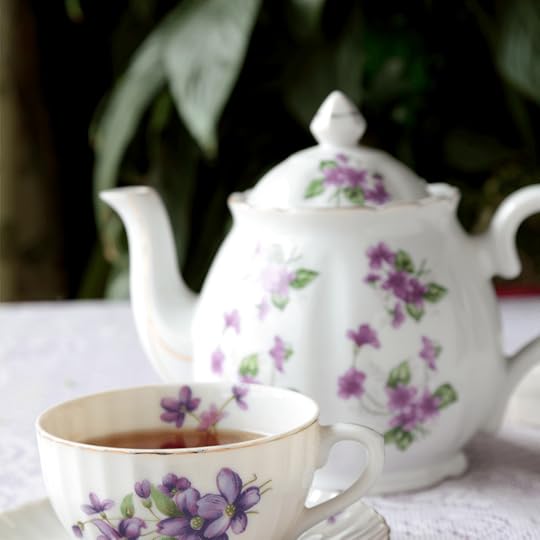
But the flowers are filled with antioxidants and Vitamins A&C. Violets also have anti-inflammatory properties and can be use to soothe upset stomachs and urinary tract infections. I’ve also made this into a very strong tea (using 4 Tablespoons instead of 2) and then used it as a gargle to soothe sore throats and it also works well as a mouthwash to help ease sore and inflamed gums. Because of these homeopathic properties, Violets have been used for centuries as a simple remedy. So Sarah Munro, (my PhD historian and heroine in book 2 of the Deadly Force series, ONE DARK WISH), has added her recipe for Violet Tea to her collection of DIY herbal recipes.
Sarah Munro’s Violet TeaIngredients:2 Tablespoons of clean and fresh violet flowers (no leaves or stems)boiling waterdash of honeyDirections:This recipe makes one cup, but you can multiply the amounts to make a full teapot.
Place the violet flowers into a measuring cup and cover with 1 cup of boiling water. Steep for ten minutes and strain into a teacup.
Add a dash of honey and enjoy! Or, if you prefer, allow the tea to cool and drink it over ice.
If you would like to enjoy this tea during off seasons, you can dry or dehydrate the flowers. Once the flowers are completely dry, store in a glass jar with a tight-fitting lid, or a reused tea tin. Just make sure that no moisture can get into the container. Store in a dark, dry cabinet and the flowers should last for up to one year. Then, when ready to drink, add the dried flowers to a tea ball and steep for ten minutes.
IMPORTANT DISCLAIMER ABOUT WILD PLANTS, FORAGING , AND MAKING HERBAL REMEDIES:I am not a medical professional and nothing written on this blog is medical advice. None of my statements have been evaluated by the FDA (I am legally required to give you this disclaimer).
It is important to do your due diligence before foraging, harvesting, and/or consuming any type of medicinal plant.
If you are taking any medications, talk to your doctor about any potential drug interactions.If you are allergic to anything, make sure whatever you are foraging is not in the same family. Example: While dandelions are typically considered safe, those who are allergic to ragweed, latex, daisies, or any other plants in the same or similar families, may not be able to consume dandelion.Always research potential side effects, dosage recommendations, and how to properly prepare and consume each medicinal plant.
Always make sure you are foraging what you believe to be. Fully prepare and study the anatomy before harvesting wild plants.
Always make sure your kitchen/work area is clean and that all materials are sterilized.
Do not forage plants from areas that have been sprayed within the past 2 years at the very least.
I am not legally or morally responsible for the health of any of my readers. Please do your own research!
Subscribe Enter your email address to subscribe to this blog and receive notifications of new posts by email.
Email Address
Subscribe
The post Sarah Munro’s Violet Tea appeared first on Sharon Wray.
April 18, 2022
A Brief History of Regency Libraries
During the Regency Period, which came first? The books or the libraries? Although it’s an interesting question, the simple answer is books. But since the English Regency was one of the more interesting times in history, it’s also no surprise that something as simple as books and libraries became more complicated.
[image error]Up until the late 18th century, book authors and playwrights were sponsored by private patronage, such as Shakespeare and Marlowe who wrote for Queen Elizabeth. But when the government decided everyone should be able to read the bible, literacy rates for all classes soared
As newspapers became popular, the publication of Robinson Crusoe in 1719 created a new type of entertainment called the “novel”. Unfortunately, during the 18th and early 19th centuries, the demand for new things to read–both newspaper periodical essays and mass-market novels–outpaced the economies of scale for the publishing houses. The cost of printing and buying books was too expensive for the average person in spite of the growing demand. It would take years before the processes of making paper, ink, and binding books would become cheap enough for all to afford.
Although the British Government supported circulating libraries, when the Regency dawned, public libraries couldn’t keep up with the growing demand. So the publishing houses came up with a brilliant idea. They funded their own subscription libraries filled with books written by their own authors. A subscriber would join a library for a small fee and would be able to borrow and return books at their own pace. These private libraries became quite popular and appeared throughout England.
While this worked well for the middle and lower classes, the success of these subscription libraries also increased the the demand for independent writers. Since authors no longer wrote for sponsors, but for their readers, they were free to write what they wanted. If a book didn’t “sell”, i.e. lend well, the authors switched genres and wrote something else. As long as the authors wrote and subscribers subscribed, the publishers were happy.
There was one downside–many people (the Aristocracy) thought that books for the “masses” were of lower quality and catered to base emotions. If one were to read, one should read to improve oneself, not entertain oneself. So it’s no surprise that those who had the means began their own collections. They could either spend the money or share books with those of a lower station.
But what about the Aristocracy? Despite the huge reading rooms seen in many of our favorite Jane Austen movies, fully stocked libraries were still an expensive luxury during the Regency. Many of the volumes filling the shelves were acquired during Grand Tours of Europe. But with outrageous taxes on papers, and travel to and from the continent disrupted by wars with France, some have even wondered if the early libraries of the great county manors were filled-in with fake books which were slowly replaced as books became more widely available and less expensive. Without proof, we can only surmise.
In 1859 the English government passed the Public Libraries Act. This law replaced most of the private subscription libraries with public libraries. But experts have speculated that without the promotion and access provided by the publishers during the Regency, many of our favorite classics, including Miss Jane’s, would never have made it into print. As a librarian myself, I couldn’t end this article without a few links of interesting library articles for further reading:
Subscription Libraries and the rise of Popular Fiction
Anonymous Signatures: Circulating Libraries, Conventionality, and the Production of Gothic Romances
Libraries in Georgian and Regency England
The Circulating Library in Regency Resorts
Subscribe Enter your email address to subscribe to this blog and receive notifications of new posts by email.
Email Address
Subscribe
The post A Brief History of Regency Libraries appeared first on Sharon Wray.
April 17, 2022
Happy Easter!
I wish you all a Happy Easter Sunday! And if you don’t celebrate this holiday, I hope you have a lovely Spring weekend. Winter is over, and it’s time to celebrate with friends and family!
[image error]Subscribe Enter your email address to subscribe to this blog and receive notifications of new posts by email.
Email Address
Subscribe
The post Happy Easter! appeared first on Sharon Wray.
April 15, 2022
The Hungry {Romance} Writer: Greatest Ham Sauce
Since I’m serving a spiral sliced ham on Sunday for Easter dinner, I’m sharing my favorite mustard-based ham sauce recipe. It takes some patience with the stirring and whisking, but I promise you it will be worth the effort. Have a happy Friday and a great Easter/Spring weekend!

Sharon Wray
Yields 2 cups
Serves 6-8 people
The Hungry {Romance} Writer: Greatest Ham SauceThis is an adaptation of a recipe originally titled "Greatest Mustard Sauce" for a charity cookbook called "Forum Feasts" published in 1968. It's a perfect sauce for ham and spring vegetables like asparagus and artichokes. My kids don't love ham, but they'll eat it with this sauce on the side!
Save Recipe Print Recipe var print_b = document.getElementById('mpp_print_button'); var save_b = document.getElementById('mpp_saverecipe_button'); print_b.onclick = function(){ zlrPrint( "mpprecipe-container-218", "https://sharonwray.com/wp-content/plu...", "mpprecipe-design22", "1", "#" ) }; save_b.onclick = function(){ window.open('https://sharonwray.mealplannerpro.com...' + window.location.href); return false; }; 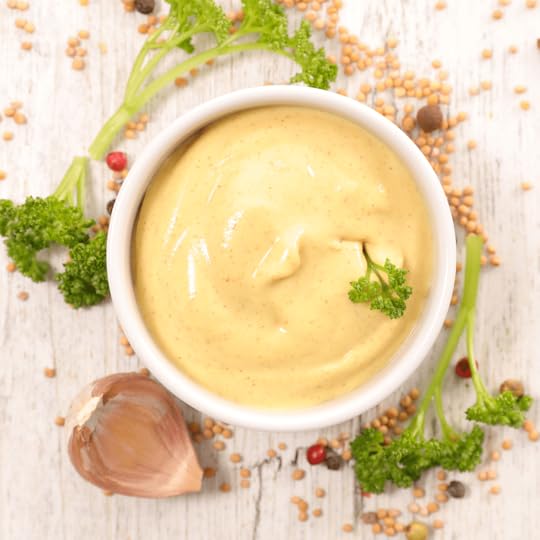 My Recipes My Lists My Calendar
 Ingredients
1 cup sugar1 rounded Tablespoon dry mustard3/4 cup cider vinegar1/4 cup water3 eggs, beatenInstructions
In a heavy saucepan, stir together the sugar and dry mustard.Turn the stove's heat to medium-low. Slowly whisk in the cider vinegar and water, mixing the liquid with the sugar.Turn heat up to medium and whisk continuously until the sauce begins to thicken, about 10 minutes.Slowly whisk in the 3 beaten eggs. Whisk continuously for 10-15 minutes, until sauce is thick and smooth.Remove from heat and serve immediately.Once the sauce cools, it will keep in an airtight container for 1 month in the refrigerator.7.8.1.2218https://sharonwray.com/the-hungry-writer/the-hungry-romance-writer-greatest-ham-sauce/ { "@context": "http://schema.org/", "url": [ "https:\/\/sharonwray.com\/the-hungry-writer\/the-hungry-romance-writer-greatest-ham-sauce\/" ],"name" : "The Hungry {Romance} Writer: Greatest Ham Sauce","description" : "This is an adaptation of a recipe originally titled \"Greatest Mustard Sauce\" for a charity cookbook called \"Forum Feasts\" published in 1968. It's a perfect sauce for ham and spring vegetables like asparagus and artichokes. My kids don't love ham, but they'll eat it with this sauce on the side! ","recipeYield" : "2 cups","datePublished" : "2022-03-15 15:46:42","recipeInstructions":[ { "@type": "HowToStep", "text": "In a heavy saucepan, stir together the sugar and dry mustard. " }, { "@type": "HowToStep", "text": "Turn the stove's heat to medium-low. Slowly whisk in the cider vinegar and water, mixing the liquid with the sugar." }, { "@type": "HowToStep", "text": "Turn heat up to medium and whisk continuously until the sauce begins to thicken, about 10 minutes." }, { "@type": "HowToStep", "text": "Slowly whisk in the 3 beaten eggs. Whisk continuously for 10-15 minutes, until sauce is thick and smooth." }, { "@type": "HowToStep", "text": "Remove from heat and serve immediately. " }, { "@type": "HowToStep", "text": "Once the sauce cools, it will keep in an airtight container for 1 month in the refrigerator." }],"keywords" : "The Hungry {Romance} Writer: Greatest Ham Sauce","recipeIngredient" : ["1 cup sugar","1 rounded Tablespoon dry mustard","3\/4 cup cider vinegar","1\/4 cup water","3 eggs, beaten"], "image": { "@type": "ImageObject", "url": "https:\/\/sharonwray.com\/wp-content\/uploads\/2022\/03\/63.png" }, "author": { "@type": "Person", "name": "Sharon Wray" }, "nutrition": { "@type": "NutritionInformation", "servingsize": "6 serving"},"@type": "Recipe"}Subscribe Enter your email address to subscribe to this blog and receive notifications of new posts by email.
Email Address
Subscribe
The post The Hungry {Romance} Writer: Greatest Ham Sauce appeared first on Sharon Wray.
April 6, 2022
April is No One’s Fool
April is one of my favorite months. Despite the rain and wind that define Spring in Virginia, April also brings flowers and random sunny days. It also brings tax season, but that’s for another blog post! Some years it’s also the month of Easter, and the 23rd of the month is set aside to celebrate St. George (the saint who slayed the dragon!).

But April also has a long, convoluted history. April is considered the first month of Spring in the Northern Hemisphere the first month of Autumn in the Southern Hemisphere. It is also the first month of the year (out of 4) that has 30 days. A long time ago, when most of the world followed the Julian calendar, it was the first month of the year before it became the second month. But now that we follow the Gregorian calendar, it is the fourth month.
One of the things I find so interesting about this month is that the origin of the name “April” has both a Greek and a Roman background.
Some historians believe that April comes from the Latin verb “aperire” which means “to open” and refers to the idea that April is the month when trees bloom and flowers open. April was also associated with the Roman goddess Venus, with her feast day being held on April 1. It’s also possible the word “April” is derived from the Greek word “Aphros” which refers to the Greek goddess Aphrodite–the Greek name for Venus.
In the ancient Roman world (before 700 BC), April was the first month of the year, and then the second month (before January and February were added). It wasn’t until 450 BC when it became the fourth month with 29 days. And then, in 46 BC, Julius Caesar gave April an extra day when he finalized the Julian calendar. Most of the world used the Julian calendar until the 16th century, when countries began to migrate to the Gregorian calendar (which is the calendar we use today). It was quite a confusing time since some countries adopted the new calendar immediately (which called for the new year to begin on January 1), while other countries waited years. It took decades before most of the world was on the same calendar again.
In the earlier calendars, the new year began with the Spring equinox which happened around April 1. So when countries began to move the new year to January 1, those people who still celebrated the new year on April 1 were called “April fools”. In 1582, when France adopted the Gregorian calendar and the new year as January 1, those who didn’t realize that the dates had changed were called “poisson d’avril” of “April fish”. This phrase means “young fish who are easily caught” which also referred to a gullible person. So, in France, when people learned that someone didn’t know that calendar had changed, they would play pranks on these “poisson d’avril”.
Many historians believe that this is the beginning of April Fool’s Day. But other historians believe that the festival of the April fool began in Ancient Rome with the “Hilaria” festival (Latin for joyful) that began in late March and ended around the second week of march. This festival was run by the cult of Cybele and was a celebration of the Vernal equinox (first day of Spring) when the weather was unpredictable and would “fool” people.
April Fool’s day really picked up in popularity in Britain in the 18th century. Events like “hunting the gowk”, where people were sent on phony errands, was followed by Tailie Day. Tailie Day included pranks played on people’s bottoms–like “kick me” or “kiss me” signs, etc.
In the 20th century, with the rise of newspapers, April Fool’s Day became more popular with the papers reporting crazy stories that some readers would believe until the next day’s paper when the prank was revealed. Of course, with the rise of the internet and social media, pranks are now all the craze. While I’ve never been a fan of pranks and jokes, I do love April’s warmer weather and and the chance to plant flowers. And as I work in the garden, I can’t help but remember that April used to usher in the new year… and sometimes I wish it still did. I hope you all have a wonderful week with lots of sunny days and short rain showers that will eventually bring all the beautiful May flowers.
 Subscribe to the blog
 Email Address
Subscribe
April 5, 2022
Sarah Munro’s Violet Vinegar
Vinegars have been around since 3000 BC. During the 17th and 18th centuries, flavored vinegars became popular due to the increase in world travel. And Sarah Munro (my PhD historian and heroine in book 2 of the Deadly Force series, ONE DARK WISH), has added her recipe for Violet Vinegar to her collection of DIY herbal recipes.

This time of year, wild violets appear in my lawn, my planting beds, and in the woods near my home. One of my favorite things to do with these violets is to collect the flower buds and add them to white Balsamic vinegar. Infused Violet Vinegar adds a lovely flavor to spring greens and salad dressings. Since violets are also high in Vitamin C, they add a nice immune boost to help ward off the Spring sniffles. This is an easy recipe to make, just make sure to only use the flowers and not the stems. The stems can sometimes add a bitter flavor. This vinegar is a great way to celebrate these earliest flowers of Spring!
Sarah Munro’s Violet Vinegar@media all and (min-width: 768px){#kt-layout-id_cabb30-2a > .kt-row-column-wrap > .inner-column-1{flex:0 1 65%;-webkit-flex:0 1 65%;}#kt-layout-id_cabb30-2a > .kt-row-column-wrap > .inner-column-2{flex:0 1 35%;-webkit-flex:0 1 35%;}}#kt-layout-id_cabb30-2a{margin-bottom:32px;}#kt-layout-id_cabb30-2a > .kt-row-column-wrap{padding-top:0px;padding-bottom:0px;padding-left:0px;padding-right:0px;}.kt-row-layout-inner > .kt-row-column-wrap > .kadence-column_a91dff-4d > .kt-inside-inner-col{padding-top:30px;padding-bottom:30px;padding-left:30px;padding-right:30px;border-color:#aa89bb;border-top-width:2px;border-right-width:2px;border-bottom-width:2px;border-left-width:2px;}@media all and (max-width: 767px){.kt-row-layout-inner > .kt-row-column-wrap > .kadence-column_a91dff-4d > .kt-inside-inner-col{padding-top:30px;padding-bottom:30px;padding-left:30px;padding-right:30px;}}Ingredients:Sterilized glass mason jar with a tight-fitting lid1/2 cup wild violet flowers1 cup white Balsamic vinegarPiece of parchment paper.kt-row-layout-inner > .kt-row-column-wrap > .kadence-column_fcb50b-01 > .kt-inside-inner-col{background-image:url('https://sharonwray.com/wp-content/upl... center;background-attachment:scroll;background-repeat:no-repeat;}.kt-block-spacer-_629adb-9a .kt-block-spacer{height:200px;}.kt-block-spacer-_629adb-9a .kt-divider{width:80%;}#kt-layout-id_fbb445-78{margin-bottom:32px;border-color:rgba(170,137,187,0.7);background-color:rgba(199,139,228,0.08);}#kt-layout-id_fbb445-78 > .kt-row-column-wrap{padding-top:30px;padding-bottom:30px;padding-left:30px;padding-right:30px;}.kt-svg-icons_7320ea-8d .kt-svg-item-0:hover .kt-svg-icon {color:var(--global-palette2, #2B6CB0)!important;}#kt-adv-heading_8a0930-fc, #kt-adv-heading_8a0930-fc .wp-block-kadence-advancedheading, .wp-block-kadence-advancedheading.kt-adv-heading_8a0930-fc[data-kb-block="kb-adv-heading_8a0930-fc"], .kadence-advanced-heading-wrapper .kt-adv-heading_8a0930-fc[data-kb-block="kb-adv-heading_8a0930-fc"]{text-align:left;font-size:35px;margin-top:0px;}Directions:#kt-adv-heading_c280de-a2, #kt-adv-heading_c280de-a2 .wp-block-kadence-advancedheading, .wp-block-kadence-advancedheading.kt-adv-heading_c280de-a2[data-kb-block="kb-adv-heading_c280de-a2"], .kadence-advanced-heading-wrapper .kt-adv-heading_c280de-a2[data-kb-block="kb-adv-heading_c280de-a2"]{text-align:left;}Fill the sterilized glass jar with the 1/2 cup of wild violets. It should fill the jar about half way.
#kt-adv-heading_c1cfed-aa, #kt-adv-heading_c1cfed-aa .wp-block-kadence-advancedheading, .wp-block-kadence-advancedheading.kt-adv-heading_c1cfed-aa[data-kb-block="kb-adv-heading_c1cfed-aa"], .kadence-advanced-heading-wrapper .kt-adv-heading_c1cfed-aa[data-kb-block="kb-adv-heading_c1cfed-aa"]{text-align:left;}Pour the white Balsamic vinegar into the jar, covering the flowers.
#kt-adv-heading_7c7614-1a, #kt-adv-heading_7c7614-1a .wp-block-kadence-advancedheading, .wp-block-kadence-advancedheading.kt-adv-heading_7c7614-1a[data-kb-block="kb-adv-heading_7c7614-1a"], .kadence-advanced-heading-wrapper .kt-adv-heading_7c7614-1a[data-kb-block="kb-adv-heading_7c7614-1a"]{text-align:left;}Place a piece of parchment paper over the top of the jar, leaving at least a 1 inch hangover of paper around the perimeter. Twist on the top or, if using a canning jar, place the metal top over the paper and twist on the ring. Do not let any part of the metal lid touch the vinegar. (You don’t want a reaction between the metal and the vinegar)
Place the jar in a dark, cool cabinet for 2 weeks. Violet Vinegar has the same shelf life as regular vinegar but once you start using it, the color will eventually fade.
IMPORTANT DISCLAIMER ABOUT WILD PLANTS, FORAGING , AND MAKING HERBAL REMEDIES:I am not a medical professional and nothing written on this blog is medical advice. None of my statements have been evaluated by the FDA (I am legally required to give you this disclaimer).
It is important to do your due diligence before foraging, harvesting, and/or consuming any type of medicinal plant.
If you are taking any medications, talk to your doctor about any potential drug interactions.If you are allergic to anything, make sure whatever you are foraging is not in the same family. Example: While dandelions are typically considered safe, those who are allergic to ragweed, latex, daisies, or any other plants in the same or similar families, may not be able to consume dandelion.Always research potential side effects, dosage recommendations, and how to properly prepare and consume each medicinal plant.
Always make sure you are foraging what you believe to be. Fully prepare and study the anatomy before harvesting wild plants.
Always make sure your kitchen/work area is clean and that all materials are sterilized.
Do not forage plants from areas that have been sprayed within the past 2 years at the very least.
I am not legally or morally responsible for the health of any of my readers. Please do your own research!
Subscribe to the blog Email Address
Subscribe
April 4, 2022
Let’s Go Camping
I know it’s April 4th, and that Camp NaNo began a few days ago. But…. whatever. I’m not worried about beginning on time or how many words I write this month. All I know is that I have so many deadlines looming, I have to write every single day. So I’m jumping into the Camp NaNo world but I’m not going to stress about my daily word count. I already know what I have to do to meet my deadlines.

Since I do have so many words to write, I’m going to structure April with Camp NaNo in mind. Meaning, I’m going to work with the same kind of mindset that I have during NaNoWriMo in November. To do that, I need to make sure that I’m taking care of myself and have set in place ways to care for my family as I try to meet my goals. One of the reasons I’m late to Camp NaNo is that I had a huge deadline last week and then had to finish my taxes. But with those two things done, I’m ready to move on.
Before I move on… let me explain what Camp Nano is about. It’s a month-long virtual writing retreat. Pretend you are hidden away in a cabin in a beautiful location (beach, mountains, etc) and all you have to do is write. You can join virtual cabins with friends who help keep you accountable. Before Covid, there were actual in-person writing retreats. But, for now, they are virtual as well. You can write whatever you want this month–a novel, short story, script, or finish your dissertation. The entire point of joining this community and expressing your goals publicly is to encourage you to write. The world is in a desperate place and needs all of our stories. But writing 50,000 words (which is the standard goal) is hard work. So, below, I’ve laid out my favorite tips that have helped me in the past to have a successful Camp Nano. And I hope they help you too!
#kt-layout-id_6bc0af-57{margin-top:20px;margin-bottom:20px;background-image:url('https://sharonwray.com/wp-content/upl... center;background-attachment:scroll;background-repeat:no-repeat;}#kt-layout-id_6bc0af-57 > .kt-row-column-wrap{padding-top:50px;padding-bottom:50px;padding-left:50px;padding-right:50px;}@media all and (max-width: 767px){#kt-layout-id_6bc0af-57 > .kt-row-column-wrap{padding-top:30px;padding-bottom:30px;padding-left:30px;padding-right:30px;}}.kt-row-layout-inner > .kt-row-column-wrap > .kadence-column_5d946c-62 > .kt-inside-inner-col{padding-top:40px;padding-bottom:40px;padding-left:40px;padding-right:40px;border-top-width:0px;border-right-width:0px;border-bottom-width:0px;border-left-width:0px;border-top-left-radius:0px;border-top-right-radius:0px;border-bottom-right-radius:0px;border-bottom-left-radius:0px;}.kt-row-layout-inner > .kt-row-column-wrap > .kadence-column_5d946c-62 > .kt-inside-inner-col{background-color:var(--global-palette9, #ffffff);}Tips for a Successful Camp NanoDECIDE ON YOUR PROJECT & GOALS
The first thing you need to do is choose your project and your writing goals and then head over to the NaNo website. Once there, you can add your project to your account (or make a new account and add your project) and let the world know what you are working on for the rest of the April.
CARRY A NOTEBOOK EVERYWHERE
You will still have a life in between all the writing you hope to do. And since the greatest ideas often come while you’re driving or grocery shopping, bring a notebook everywhere. That way when those ideas pop up, you can jot them down quickly so you won’t forget. A notebook is also great for those times when you’re waiting for an appointment (I’m looking at you, DMV!) or stuck in a Kiss & Ride line. This way you’ll never miss another great plot twist again.
TELL YOUR FAMILY
Let your family know about your project and your word count goals. They may or may not be supportive, but if you let them know you can begin to set some boundaries about your defined writing time and family time. That way everyone knows what to expect when it comes to your time and attention.
SET A DAILY WRITING TIME
Choosing a time, each day, that you’re going to write sets you up for success. It also helps get your family on board if they know that not only do you want to finish a project but that you have a defined plan–with specific times–to get it done. Boundaries really help you and your family set expectations for the month.
SET SMALLER WORD COUNT GOALS
You don’t have to write 50,000 words. You can write as many or as few words as you want. Although 50K is the standard that Camp NaNo sets, they are not in charge of you! Look at your project, and your available time during the month, and set a realistic goal. A few words are better than no words. And remember that famous line…”you can’t edit a blank page.”
CHOOSE WEEKLY GOALS
Camp NaNo can be hard on the ego and the muse. So instead of just thinking about the looming word count goal, choose smaller word count goals for the week, or decide on different goals. The whole point of Camp NaNo is to train yourself to build a writing habit. So maybe set a weekly goal of sitting at your desk every day for 30 minutes. Or another goal could be to spend some “thinking time” every day with your characters. It doesn’t matter what the goal is, as long as it helps you move forward with your writing–whether it be actual word count or just building new habits.
SET UP WRITING SPRINTS WITH FRIENDS
In Camp NaNo, you can set up virtual cabins with friends. Then you can decide on dates and times to do writing sprints for however long you want. My friends and I tend to do 45 minute sprints, but others prefer 25 minute sprints (like the Pomodoro Method). Regardless of the time you write, or for how long, it’s always so much more fun to do it with friends.
BUILD YOUR OWN CABIN IN THE WOODS
Before beginning a big project, it’s always nice to have a clean desk and surroundings. So a few days before I begin a NaNo project, I take the time to clean out my desk, wipe down my screen, dust around my computer, pick up books, journals, notes, etc. I even decide which notebook I’m going to use and sometimes I’ll set up a calendar so I know exactly what my family and other obligations are so I know when I can write.
JOIN CAMP NANO EVENTS
Check out the NaNoWriMo website for more details. The website has dates and times for virtual writing events, discussions with authors and other publishing professionals, and events with lots of emotional advice. There are “camp counselors” who run these events, and you’re welcome to reach out to them at anytime if you need help.
DON’T FORGET YOUR FIRST AID KIT
Writing for hours is hard on the body and the mind. So before I sit down, I do a few things to set myself up for success. First, I make sure I have my favorite healthy snacks, tea blends, coffee, and even water enhancers because it’s very easy to get dehydrated while you write. I also take a day before Camp NaNo begins to buy and organize my office supplies. Sometimes new markers, post-it notes, index cards, etc. can really help set the creative mood for a new project. I also purchase a few small gifts for myself that I can only open when I hit my weekly goals, regardless if they are word count goals or other habit-forming goals like I mentioned above.
PICK A WAY TO CELEBRATE
Before you begin, decide on how you want to celebrate at the end of the month. For me, I always make a dinner reservation for myself and my husband at my favorite (and inexpensive) restaurant. I have friends who meet for a celebratory lunch, and others who buy themselves something special. But choosing it at the beginning so you have something to look forward to can be so motivating when you’re stuck in the middle of the month with a bunch of messy scenes. Visualizing yourself at the end of the month, doing something you can look forward to, may just get you out of that messy middle.
Subscribe to the blog Email Address
Subscribe
April 1, 2022
The Hungry {Romance} Writer: Strawberry Rhubarb Pie
I can’t believe April is here and that in a few weeks I’ll be making Easter dinner for 8-10 people. Since I have two books out next month, I am getting my menu together now. And one of the things on my menu list is my favorite Strawberry Rhubarb Pie.

For all of my pies, I use the same pie crust recipe. Here is the recipe (it’s part of my apple pie recipe). It is super easy and fool-proof. But keeping the butter chilled is key to a flaky crust. I hope you are enjoying the warmer weather and taking advantage of all the fresh strawberries and rhubarb that are arriving at farmer’s markets and your local grocery stores. This is a super-easy pie recipe and it’s a perfect way to usher in Spring.
Sharon Wray
Yields 1 pie
Serves Serves 12
The Hungry {Romance} Writer: Strawberry Rhubarb PieThis is a basic strawberry-rhubarb pie recipe, and I always use my tried-and-true pasty recipe for the crust. It can be made up to two days ahead. But once it cools, I usually store it in the refrigerator until serving.
15 minPrep Time
1 hr, 5 Cook Time
1 hr, 20 Total Time
Save Recipe Print Recipe var print_b = document.getElementById('mpp_print_button'); var save_b = document.getElementById('mpp_saverecipe_button'); print_b.onclick = function(){ zlrPrint( "mpprecipe-container-217", "https://sharonwray.com/wp-content/plu...", "mpprecipe-design22", "1", "#" ) }; save_b.onclick = function(){ window.open('https://sharonwray.mealplannerpro.com...' + window.location.href); return false; }; 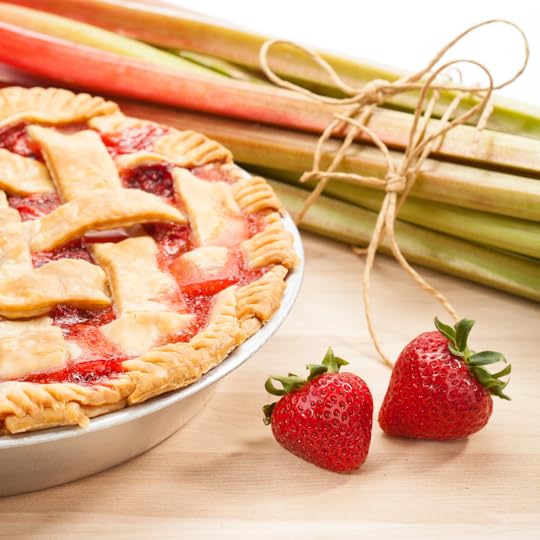 My Recipes My Lists My Calendar
 Ingredients
2 9" pie crusts2 1/2 cups fresh red rhubarb, chopped2 1/2 cups washed and cut strawberries1 1/2 cups sugar2 Tablespoons instant Tapioca pudding1 Tablespoon flour1/2 teaspoon lemon zest1/2 teaspoon fresh lemon juice1/2 teaspoon ground cinnamon1 teaspoon pure vanilla extract3 tablespoons butter, cut into small cubes1 egg white beaten with 1 teaspoon waterCoarse white sugarWhipped cream for garnishInstructions
Prepare 2 9" Pie Crusts (recipe link available in post above)Line a 9" deep dish pie plate with one 9" pie crust and place in the refrigerator.Preheat oven to 425 degrees F.In a large glass bowl, mix together the rhubarb, strawberries, sugar, Tapioca pudding, flour, lemon zest, lemon juice, cinnamon, and vanilla.Pour the strawberry mixture into the prepared pie crust.Dot the top of the pie with the butter cubes.Brush the edges of the pie crust with some of the egg wash.If using a full-cover pie crust over the top, place the pie crust on top of the filling and crimp the edges. Cut a vent hole in the center of the pie crust.OR cut the pie crust into strips and make a lattice pie crust over the filling.Brush the rest of the egg wash over the top pastry. Sprinkle the coarse white sugar over the top of the pie.Cover the edges with foil and bake the pie for 15 minutes.Decrease the oven temperature to o 375 degrees F. Bake for another 45 to 50 minutes, or until the filling begins to bubble.Remove from oven and cool on a rack.Once it is cool, serve with whipped cream.7.8.1.2217https://sharonwray.com/the-hungry-writer/the-hungry-romance-writer-strawberry-rhubarb-pie/ { "@context": "http://schema.org/", "url": [ "https:\/\/sharonwray.com\/the-hungry-writer\/the-hungry-romance-writer-strawberry-rhubarb-pie\/" ],"name" : "The Hungry {Romance} Writer: Strawberry Rhubarb Pie","description" : "This is a basic strawberry-rhubarb pie recipe, and I always use my tried-and-true pasty recipe for the crust. It can be made up to two days ahead. But once it cools, I usually store it in the refrigerator until serving. ","prepTime" : "PT15M","cookTime" : "PT1H5M","recipeYield" : "1 pie","datePublished" : "2022-03-15 12:02:35","recipeInstructions":[ { "@type": "HowToStep", "text": "Prepare 2 9\" Pie Crusts (recipe link available in post above)" }, { "@type": "HowToStep", "text": "Line a 9\" deep dish pie plate with one 9\" pie crust and place in the refrigerator. " }, { "@type": "HowToStep", "text": "Preheat oven to 425 degrees F." }, { "@type": "HowToStep", "text": "In a large glass bowl, mix together the rhubarb, strawberries, sugar, Tapioca pudding, flour, lemon zest, lemon juice, cinnamon, and vanilla. " }, { "@type": "HowToStep", "text": "Pour the strawberry mixture into the prepared pie crust." }, { "@type": "HowToStep", "text": "Dot the top of the pie with the butter cubes. " }, { "@type": "HowToStep", "text": "Brush the edges of the pie crust with some of the egg wash. " }, { "@type": "HowToStep", "text": "If using a full-cover pie crust over the top, place the pie crust on top of the filling and crimp the edges. Cut a vent hole in the center of the pie crust." }, { "@type": "HowToStep", "text": "OR cut the pie crust into strips and make a lattice pie crust over the filling." }, { "@type": "HowToStep", "text": "Brush the rest of the egg wash over the top pastry. Sprinkle the coarse white sugar over the top of the pie." }, { "@type": "HowToStep", "text": "Cover the edges with foil and bake the pie for 15 minutes. " }, { "@type": "HowToStep", "text": "Decrease the oven temperature to o 375 degrees F. Bake for another 45 to 50 minutes, or until the filling begins to bubble. " }, { "@type": "HowToStep", "text": "Remove from oven and cool on a rack. " }, { "@type": "HowToStep", "text": "Once it is cool, serve with whipped cream. " }],"keywords" : "The Hungry {Romance} Writer: Strawberry Rhubarb Pie","recipeIngredient" : ["2 9\" pie crusts","2 1\/2 cups fresh red rhubarb, chopped","2 1\/2 cups washed and cut strawberries","1 1\/2 cups sugar ","2 Tablespoons instant Tapioca pudding","1 Tablespoon flour","1\/2 teaspoon lemon zest","1\/2 teaspoon fresh lemon juice ","1\/2 teaspoon ground cinnamon","1 teaspoon pure vanilla extract","3 tablespoons butter, cut into small cubes","1 egg white beaten with 1 teaspoon water","Coarse white sugar","Whipped cream for garnish"], "image": { "@type": "ImageObject", "url": "https:\/\/sharonwray.com\/wp-content\/uploads\/2022\/03\/33-1.png" }, "author": { "@type": "Person", "name": "Sharon Wray" }, "nutrition": { "@type": "NutritionInformation", "servingsize": "0 serving"},"@type": "Recipe"}Subscribe to the blog Email Address
Subscribe