Maia Toll's Blog, page 3
March 21, 2019
Overthinking, Self Inflicted Misery, and the Way to Make it STOP for Good
While incredibly useful and adaptive, they can also be single-minded (no pun intended!) bullies.
A couple years back, I was doing a little number crunching for the business. It was one of those potentially annoying jobs that nobody else had enough time or desire to do. I had a bit of both, so I jumped into the breach.
The truth is, I love detail work. The intricate doodles in the margins of my notebooks would make a pointillist proud.
This was just more detail work, nothing particularly upsetting about it.
And yet, my brain was going to town.
It created a mantra of misery about how upset I was that I had to do this mindless number crunching. It wanted all kinds of drama around the fact that no one else had bothered to do this work. It seemed to think that I was too important and too busy to help out with this particular task.
I checked in with my body; it was fine.
I looked at the calendar; nothing else needed doing.
I glanced back at my ranting brain; it was determined to think me miserable. More dangerous than that, my brain was trying to goad me into a stress response to what was, essentially, a non-stressful situation. Stress causes high blood sugar, high blood pressure, brain fog, memory loss… why the heck would my brain want to send me there?
Addiction, dear Watson.
Yup, like many of you I’m a recovering cortisol junkie. Like many of you, I spent years mastering the fine art of overthinking myself miserable.
Our brain’s amygdala is not particularly smart; it translates shame, anger, resentment, and even our “dress rehearsals for tragedy” (a fabulous phrase I first heard on a teleconference with Brene Brown and Lissa Rankin. It’s when you think all the way through the worst possible scenario you can dredge up for any situation) as full-on stress.
Each time we turn on our stress-response, we turn off our body’s self-healing mechanisms.
Click To Tweet
Make it stop!
In the past few years, I’ve learned to leash my Bully Brain.
How?
Most importantly, realize you are more than your brain.
Your Bully Brain is a lot like a child who wants attention. Just like with a child, you can notice the ranting without reacting.
Pull in a little extra support from the plant world to tame the raving beast:
Passion Flower to calm circular thinking (if your brain feels like a gerbil on a wheel, this one’s for you!).
Rhodiola to lower cortisol levels (yup, there’s science on that).
Milky Oat to sooth the stressors of daily modern life.
Take an essential oil break:
Put a drop of your favorite essential oil on your palm. My choices: grapefruit, sea pine, or cistus (rock rose).
Rub your hands together and hold them over your nose. Inhale. Exhale. Ahhhhh.
Share this with a friend and combat your Bully Brains together!
Hugs—

The post Overthinking, Self Inflicted Misery, and the Way to Make it STOP for Good appeared first on Maia Toll.


Overthinking Yourself Miserable?
While incredibly useful and adaptive, they can also be single-minded (no pun intended!) bullies.
A couple years back, I was doing a little number crunching for the business. It was one of those potentially annoying jobs that nobody else had enough time or desire to do. I had a bit of both, so I jumped into the breach.
The truth is, I love detail work. The intricate doodles in the margins of my notebooks would make a pointillist proud.
This was just more detail work, nothing particularly upsetting about it.
And yet, my brain was going to town.
It created a mantra of misery about how upset I was that I had to do this mindless number crunching. It wanted all kinds of drama around the fact that no one else had bothered to do this work. It seemed to think that I was too important and too busy to help out with this particular task.
I checked in with my body; it was fine.
I looked at the calendar; nothing else needed doing.
I glanced back at my ranting brain; it was determined to think me miserable. More dangerous than that, my brain was trying to goad me into a stress response to what was, essentially, a non-stressful situation. Stress causes high blood sugar, high blood pressure, brain fog, memory loss… why the heck would my brain want to send me there?
Addiction, dear Watson.
Yup, like many of you I’m a recovering cortisol junkie. Like many of you, I spent years mastering the fine art of overthinking myself miserable.
Our brain’s amygdala is not particularly smart; it translates shame, anger, resentment, and even our “dress rehearsals for tragedy” (a fabulous phrase I first heard on a teleconference with Brene Brown and Lissa Rankin. It’s when you think all the way through the worst possible scenario you can dredge up for any situation) as full-on stress.
Each time we turn on our stress-response, we turn off our body’s self-healing mechanisms.
Click To Tweet
Make it stop!
In the past few years, I’ve learned to leash my Bully Brain.
How?
Most importantly, realize you are more than your brain.
Your Bully Brain is a lot like a child who wants attention. Just like with a child, you can notice the ranting without reacting.
Pull in a little extra support from the plant world to tame the raving beast:
Passion Flower to calm circular thinking (if your brain feels like a gerbil on a wheel, this one’s for you!).
Rhodiola to lower cortisol levels (yup, there’s science on that).
Milky Oat to sooth the stressors of daily modern life.
Take an essential oil break:
Put a drop of your favorite essential oil on your palm. My choices: grapefruit, sea pine, or cistus (rock rose).
Rub your hands together and hold them over your nose. Inhale. Exhale. Ahhhhh.
Share this with a friend and combat your Bully Brains together!
Hugs—
The post Overthinking Yourself Miserable? appeared first on Maia Toll.
March 14, 2019
Vision Quests, Secret Societies, and Solving the Mysteries of the Universe
I pictured a manuscript buried in the rare books room of a library in Oxford or Cambridge; or an underground society dedicated preserving the spiritual wisdom of ancient seekers; or maybe some Indiana Jones style adventure which would prove to the Powers That Be that I was worthy of being let in on The Secret. Words like “initiation” and “vision quest” would perk my ears, but ultimately, each trail led to the next dead end.
Sound familiar?
Like you, I was hearing the usual (and rather trite) truisms: “the answer lies within,” “you already know everything you need.”
Um, no?
So I continued in my search for my personal Yoda or Mr. Miyagi…
There’s another popular axiom: be careful what you wish for.
You remember The Karate Kid, right? The Kid goes to Mr. Miyagi to learn karate. The kid— Daniel— thinks karate is a good way to keep his butt from getting kicked by the neighborhood bullies. To him, karate is about being powerful through muscle strength. Mr. Miyagi has the tough job of teaching him that karate’s really about being powerful through inner strength.
So Mr. Miyagi has The Kid painting a fence. And the kid is annoyed, pissed off, ready to call the whole thing bunk and bullshit. This is the school of sage-craft that I come from, too. It’s the chop wood, carry water— or, in my case: dig roots, pluck berries— school of wisdom. And it’s frustrating as all hell.
I think about this often as I navigate the ins and outs of teaching and leading communities based on gathering wisdom. Students come searching for secrets— the secret of happiness or health or wisdom or power. What they want is a reading assignment or a lecture that will get them to this rarified place. But readings and lectures merely give information— head knowledge— which is pretty different from wisdom. Wisdom lives beneath your skin: in your heart and blood and bones. It’s body knowledge. And it’s a harder path.
Wisdom involves things like chopping wood and carrying water. Or painting fences. Or digging roots when it’s forty degrees and raining incessantly. It means taking the time to let your body assimilate the information you’ve stuffed into your brain.
When we take the time to learn with our heads and hands, we come into communion— into relationship— with the world around us. This coming into relationship is a back door to the heart and its deep well of knowing and intuition… which is the stuff of wisdom… the vision part of the quest.
Our culture encourages us to learn in a linear fashion; we do something once, and it’s “been there, done that. What’s next?”
But once doesn’t lead to mastery.
Think about it: how much more would you see if you sat in the woods every day for a year versus for an hour one afternoon?
It’s easy to do a thing once, feel mighty proud of yourself, and move on to the next thing. But think of all the sounds you never heard, the wind that never brushed your skin, the scents of spring or summer or autumn that you missed.
Which means we skim the surface of lots of stuff but rarely go deep.
To most minds, repetition = boredom. And yet repetition is a necessary component of pretty much all the Mystery Schools, from Kabbalah to Karate.
Why?
On the surface it’s about discipline. Disciplining the body and disciplining the mind. Minding your teacher even when it all feels like bunk and bullshit. But it goes deeper than that. If you can get your mind to stop chattering about how annoyed it is, how much you paid to attend this school or training or class, how your back hurts and your nose is running…
If you can quiet that chatter, something else begins to happen.
You come into your body.
You come into knowledge of the world around you.
You come into relationship with the elements pulsing under your fingertips.
And that, that space of connection, is where true power lies.
Because at heart, every school of witchery is about your will, your intent. It’s about being able to taste truth in your bones and envision realities yet to exist.
Click To Tweet
It’s about knowing yourself so intimately that you know what is not you… so when you hear a voice rising from the jumble of your being, and you know quite clearly it’s not yours, you can then look around to see what out there in the world is trying to communicate with you.
And in that moment, life is glorious.
But then the noise rises up again…
… and it’s back to chopping wood and carrying water, performing the daily discipline of communion.
Perhaps your vision quest starts right here. Take this quiz and I’ll help you find your best path back to you!
Big Hugs—
The post Vision Quests, Secret Societies, and Solving the Mysteries of the Universe appeared first on Maia Toll.
February 21, 2019
The Sacred Pause: a Simple Way to Step into Daily Magic
Sitting together in her car after our first lunch “date,” my newest friend popped the dreaded question: How do you stay so grounded? Do you have daily rituals?
I cringed. I’m a Gemini, after all— we don’t do daily anything except breathe, and even that is optional. But when you do the type of work I do in the world (back me up on this acupuncturists, massage therapists, and earth mammas) there are perceptions to either live up to… or not.
They go kind of like this:
You wake up at 5:30 AM to meditate.
You say 3 things that you’re grateful for before going to bed at night… every night.
You never eat without a prayer.
You’re vegan (or vegetarian or paleo depending on what the pre-conceiver thinks is the “right” diet).
You smile beneficently when someone treats you horridly.
You focus on the positive and only see the good in everyone, especially the person who just rear-ended you and is proceeding to scream both at you and some poor soul on the other end of his cell phone. No, you don’t maul him with your super wit. You smile beneficently, picture him in the light, and send out prayers for his highest good.
Aaaaarrgghh!I know there are people out there (and you may be one of them) who are calmed and soothed by daily routine and beneficent smiling…
…This post is for those of you who aren’t.
My husband is a daily routine kinda guy (although he has yet to master the art of the beneficent smile). He’ll happily eat the same thing for breakfast every morning.
I, on the other hand, wake up and think about what I want to eat when I want to eat, and if, perhaps, I really want brunch instead. That’s a lot of thinking.
My bully brain would happily run the entire show. Thank goodness journey work, meditation, and a gratitude practice helps me to get in touch with the rest of me.
Click To Tweet
So I’m a fan in theory. I’m just not going to promise myself I’m gonna recite those gratitudes or perform that meditation at the same time every day or even every day at all. Because, let’s face it, I’d be setting myself up for an annihilating failure and all the guilt that comes with it … and that doesn’t seem particularly beneficent.
For those of you who, like me, prefer less structure, I’m an advocate of what I think of as the sacred pause. Life is peppered with moments that align you with your heart, your breath, and the synchronicities of everyday life, but each of these moments are unscheduled surprises (don’t you just love an unscheduled surprise as well as a surprising dose of redundancy?). Pause and notice when life hands you magic: it’s that simple.
Here are the “rules” for creating sacred pauses in your life:
1. Serendipity happens. All the time. Notice. Be grateful. Take a deep breath and smile (beneficently, if you like).
2. Notice your surroundings as you move through them. Pause to smell the roses, make small adjustments in the arrangement of stones on your coffee table, wash the dishes in the sink. Notice how these pauses, and this attention to your surroundings, allow you to align your inner landscape with the outer landscape.
3. Keep candles and sage, sweetgrass and frankincense on hand. Have a bunch of essential oils or crystals or tarot cards nearby. Know where your journal is and maybe some art supplies. And then (and this may be radical for some of you!) allow these things to be used, in the moment, when you feel the need, or desire, or simply want to capture the colors of the sky in a tone poem.
Need more ideas? Check out this post!
The Sacred Pause is the moment when a tiny knock from the universe becomes more important than balancing your checkbook or checking in on Facebook.This doesn’t mean you drop everything and run off to the nearest retreat center to get your soul straight. It means that you’re aware, in the moment, of the need to notice the magic in the world or realign with yourself, so you pause to do it right then and there instead of scheduling it for the weekend or your next trip to Kripalu.
If you listen to your heart’s longings, you’ll find that your life is soon littered with little rituals everywhere.
Click To Tweet
These small gems are set within the daily: a few stones you piled by the back door because it felt right, three deep breaths of rose essential oil, hugging the oak tree in your back yard (don’t worry, no one was looking!).
Back in the car, with my new friend, I guiltily admitted that, no, I don’t wake up at dawn every day to greet the sun and sometimes I miss the exact apex of the summer solstice.
She smiled (beneficently) and said “But I bet your day is full of little moments of wonder.”
I heaved a huge sigh of relief: this one’s a keeper.
Hugs—
The post The Sacred Pause: a Simple Way to Step into Daily Magic appeared first on Maia Toll.
February 13, 2019
6 Little Questions That’ll Change Your Life
There’s a fascinating phenomenon I’ve observed with my students and, in the past, with clients: once someone signs up for a program, whether it’s for wellness or witchery, their life starts moving and shifting. It’s as if they’ve given the Universe the thumbs-up and the Universe responds with a resonant Hurrah! and gets to work.
While this sudden momentum can be uncomfortable, most folks who sign on to work with me are looking for knowledge, growth, change, and a deeper sense of authenticity. When I worked with clients, I’d ask six questions to ignite this inner-journey. These innocuous little questions would appear in a potential client’s inbox to start their energy moving in a different way:
“The result was like a huge weight being lifted off my shoulders and illumination of new and old spaces in my mind and spirit. I felt like I reconnected with past dreams and hopes and made some amount of peace with my current life transition. I cried as I read and since the reading I feel healed and energized in a very powerful way.”
Simply working with these questions is a journey in and of itself. If you’re feeling ready to shift and grow, read on!
Warning: transformation begins when you allow yourself to look deeply at your own life.
Why? Because you begin to see the gap between where you are and where you want to be. And, sometimes, you realized that you already have the tools to bridge the gap, scale the wall, or paddle the river.
So… are you ready?
Journal on these questions with an eye toward honesty and creating a rich matrix in which someone, including you, can get to know your true self.
The questions are deceptively simple:
1. Tell me about you! Just a few sentences that sketch out a day in your life: where do you live? who do you live with? what do you do all day?
As you read back through your answer, notice what you chose to say and what you chose to leave out. There are so many facets to our daily lives.
Where is your attention? Is it on the positive or the negative?
What are you avoiding or ignoring?
Do any “supposed to” sentences come up, for instance I’m supposed to sound successful or I want to sound like I have it together?
2. What are the top three wellness challenges you face?
What in your life feels out of balance or out of sorts? Are they the same things the doctor says is “wrong” with you?
I can’t tell you how often a client has a major condition that does not get mentioned here! They might have originally contacted me because they were diagnosed with fibromyalgia, but their wellness challenges are more specific and daily than a disease name.
This is your chance to step away from labels (which can feel inescapable, mysterious, or incurable) and think about how you actually feel.
You might find that when you focus on how you feel, instead of on a disease name or a situation name (like “unemployed” or “getting a divorce”) that you have a number of small, everyday problems that actually have solutions.
3. What “fixes,” solutions, or therapies have you tried in the past? Did they help? How or how not?
Sometimes we have quite a few things in our personal toolbox that have worked in the past, but we forget to use them (which is why in both Witch Camp and Medicine Keepers we keep a BOS— a Book of Self). This is a chance to remind yourself of things that have worked… and that can work again!
When I first cut wheat from my diet, I would slide back into old habits and start gradually reintroducing wheaty foods into my life. Eventually I would be eating a daily dose (or three!) of wheat and would start feeling ill. When I moaned to my mom about my horrible, recurring exhaustion, she would ask “Are you eating wheat again?” Duh. It would seem so obvious once she pointed it out.
Denial, old habits, forgetfulness, convenience. What’s your excuse for not following through with the things you know make you feel better?
The other thing this question reveals is whether you’re jumping from practitioner to practitioner and not really doing the work. Yes, you read that right— the work of wellness, of spirituality, of relationship. All of these are practices in which you must remain engaged. Going to yoga class for 2 weeks or seeing an acupuncturist 3 times is not a fair trial, for either you or them. You have to do the daily work, and that means following through on the advice of your teachers and practitioners and sticking with it (and with them) long enough to see change.
4. If you could wave a “practical” magic wand and change one thing in your life, what would it be?
And…
5. What difference would that change make in your life, emotions, and well-being?
Look at how these 2 questions link together. This is almost always fascinating. Clients would say things like not having a headache will allow me to love my job again and having a spiritual practice will help me feel connected with myself which will help me reconnect with my family.
Look at the cause and effect scenarios that you have created. Pick them apart and examine the presuppositions.
6. What else would you like me to know?
This is a lot like question number one; it shows you where your focus is, it illuminates where your attention resides. Notice any shifts between your answers in question one and their refrain here in question six.
Your attention is like a spot light— you can move it wherever you want. Where is it now? And, more, importantly, where do you want it to be?
Hugs—
The post 6 Little Questions That’ll Change Your Life appeared first on Maia Toll.
January 29, 2019
The Secrets of Devotion
This is how my studies in Ireland begin.
(Admit it: you thought I was working on a sappy romance novel! Hmmm…..)
The trip to the farmette, where my teacher Gina lived, involved an overnight flight, a transfer at Gatwick, a couple hours of airport time, and then a bus ride which took four times longer than the same trip by car. As the driver had jovial reunions with aunts and cousins at seemingly every station stop. I arrived at Gina’s exhausted and a bit disoriented, like my soul hadn’t quite caught up with the adventures of my body.
Gina sat me down in the dining room with a cup of tea and disappeared into the kitchen. She returned with a basin of water swirling with petals. Rose and calendula, lemon balm and borage… the colors formed kaleidoscope designs as she set the basin at my feet. The scent of rose geranium essential oil wafted on the steam. My eyes welled up as Gina gently removed my low leather boots, slipped off my socks, and cradled my feet as she guided them into the basin. Relaxed and drifting, the experience felt dreamlike and surreal as she rubbed my feet with oil then tenderly dried them with the ends of her waist length hair.
Gina had dedicated herself to a life of service in a way that few of us understand today.
Her patron was Brighid, pronounced Bree in Gaelic, the Irish goddess and saint (who has since been uncanonized which is neither here nor there to those devoted to her oldest, pre-Christian form). Brighid is the goddess of poetry and medicine. Elementally she is fire: the keeper of the hearth and the wielder of the blacksmith’s anvil.
My time in Ireland was sprinkled with Brighid’s devotions: on my first full day, I was sent to gather nineteen dandelion leaves and make them into a tea. Nineteen is the number of priestesses who tended Brighid’s sacred fire. On the twentieth day, her priestesses rested and Brighid tended the flame herself.
To honor this fire, Gina kept a candle burning in a lantern by the front door, the first thing you saw when you entered the house. As each candle burned down, the fire was transferred, candle to candle, the way hearth fires were kept in the old days, one fire feeding the next.
One night the flame got low as I waited for Gina to return from visiting in Kildare, an hour from home. Would she return in time to swap the candle? It was unspoken that tending the fire was Gina’s prayer and hers alone.
What would it be like to revolve your life around this type of devotion? To dedicate yourself to keeping the fire, whatever that means to you?
It’s this duty to the flame, the hint of fire on the morning horizon, that still inspires the Irish to celebrate Imbolc or Candlemas. Winter in Ireland is long and dreary. This early February holy day whispers of the earliest signs of spring. It’s a gentle reminder to notice the tightly curled fists of the witch-hazel buds preparing to unfurl; the snowdrops and crocuses poking up their heads wondering if it’s safe to reach skyward.
Here in the States, we wait to see if the groundhog sees his shadow when he leaves his winter burrow. This funny tradition is precedented by the Celtic tradition of seeing if serpents or badgers could be roused from their nests on Brighid’s Day. The lore says that the Cailleach, the mythic crone, would gather her firewood for the remainder of the winter on the Imbolc. If winter was going to be long, the sky would clear so she could gather wood in the sunlight (which, in modern America, would allow the ground hog to see his shadow). If winter was going to be short, the sky would be overcast (and therefore no shadow for our intrepid groundhog).
I often re-read my Irish journals near Imbolc. It’s the time that Brighid returns to me, and I to her.
It’s the time to remind yourself to crack open like a seed and craft a life of poetry and fire.
Hugs—
The post The Secrets of Devotion appeared first on Maia Toll.
January 23, 2019
There’s No Need to Squash Your Emotions Between Two Sesame Seed Buns
You could savor anger, lick up loneliness, and relish frustration. Roll it in your mouth and caress it with your tongue. What if you knew that tears cleanse the palette and bitter fuels the fire? What if no one ever again smiled and sweetly told you you’re “so sensitive”?
If you’re an emotional being, an out of the box thinker, or (oh, dear) both, people have probably tried to convince you that thoughts or feelings that weren’t sunshine and buttercups were not only character flaws, but a slap-down to the whole hierarchy of happiness. And we all want happiness, right?
After decades of being chastised by members of the Only-See-the-Light Brigade, you become like a Big Mac: lots of artery blocking fake cheesiness (and a healthy dose of genetically engineered meat) squished between two innocuous looking buns. You wear those buns on the outside so when you’re at a wedding and introduced to the groom’s sister’s best friend (whose perfect bob doesn’t seem to move an inch. Does anyone still use hair spray?) who corners you with “hysterical” stories about her seven year old twins, you can fake laugh while surreptitiously scanning the room for drunken waiters about to stumble into the wedding cake or senile great aunts who need to be escorted to the bathroom. You become Olympic caliber at faking it in social situations. Which actually isn’t so terrible.
Sometimes we need a brave face until we feel brave or a smile until we’re in a safe space to work through our sorrows and fears.
And sometimes we need to suck it up and look at pictures of two kids we’ve never met, will never meet, and, if we’re being honest, couldn’t care less about.
The emotional suicide isn’t in the fakery (though some will tell you it is). The emotional suicide comes later. It comes when you berate yourself for not feeling what you think you’re supposed to feel whether it’s the joy of being at a wedding or actual interest in a stranger’s kids. When you tell your psyche it’s wrong or bad or flawed for not seeing every person and situation surrounded in pink light and dancing puppies. When you alter the truth of your experience to match the expectations of the people around you and jerry-rig your own emotions if no one else around you appears to be feeling the same thing.
(Appearances can be deceiving.)
News flash? Everybody (except maybe the Dalai Lama and a shaman I hung out with in Peru) has emotional baggage: hungry ghosts waiting to be acknowledged. When you expose yours, the people around you suddenly feel their own rage, or insecurity, or sorrow, or envy. Your emotions remind them of what they’ve stuffed down, what they think they’re not supposed to feel. So they ask you, through word or gesture or by making their face look like granite, to just give them the Big Mac, thank you very much, no need for real food here.
But here’s the truth:
There is no light without shadow,
No day without night,
No true joy without acknowledging the reality of what it took to get you there.
Any newborn baby knows this. It’s our very first lesson as we come screaming into this world, the birth canal mashing your face and smashing your bones so in your first out-of-the-womb appearance, you sport a pointy Star Trek head and a shih tzu nose.
But what if…
You do not have to be good.
You do not have to walk on your knees
For a hundred miles through the desert, repenting.
You only have to let the soft animal of your body
love what it loves.
Tell me about your despair, yours, and I will tell you mine.
Meanwhile the world goes on.
Meanwhile the sun and the clear pebbles of the rain
are moving across the landscapes,
over the prairies and the deep trees,
the mountains and the rivers.
Meanwhile the wild geese, high in the clean blue air,
are heading home again.
Whoever you are, no matter how lonely,
the world offers itself to your imagination,
calls to you like the wild geese, harsh and exciting —
over and over announcing your place
in the family of things.
— Mary Oliver (1935-2019), Wild Geese
I’ve lingered on these words for years You do not have to be good… You only have to let the soft animal of your body love what it loves.
You can feel your own feelings. You can relish being an emotional being. How much freedom is there in that simplicity?
Having permission to feel lets the emotions come and go, washing through you instead of sticking around becoming hungry ghosts demanding to be heard.
Give yourself permission. Savor your anger and caress it with your tongue. Taste everything: joy, longing, love, frustration, even despair and loneliness. Allow your feelings to nourish you, to remind you of the magic of being alive. Let them wash through you like water, leaving no ghost behind.
And if you don’t feel much while delivering a Big Mac to a stranger at a wedding, allow that to be okay.
Hugs—
The post There’s No Need to Squash Your Emotions Between Two Sesame Seed Buns appeared first on Maia Toll.
December 21, 2018
Guide to the Darkest Nights: Calling in Your Best New Year
… but for those of us who are staying home by the fire to dream in the New Year, the snow lends a certain surreal softness.
With the edges blurred, it’s a easier to envision possible futures. Are you ready?
For those of you who have been following along with the Guide to the Darkest Nights series (Finding Joy and Burn Your Past), you’ve been sorting and sifting for the past few weeks. Hopefully you’ve been asking yourself the important questions like what is the song of my heart? And what makes each breath taste like fairy dust and chocolate stars?
Or maybe you’ve stuck with less flowery prose and asked How do I want to live this one beautiful life?
Maybe you’re beginning to see the shape of your desires and have a word or phrase, a color, or a feeling that you want to guide you as you move into the new year.
Maybe your secret heart knows exactly what you want but, because you can’t see how to get there, you’re scared to admit to the wanting.
It’s time to give your intentions, and hopes, and dreams, legs in the world.
Your head will want to lead in this. It’ll want to choose a dream that’s practical and achievable. It doesn’t want yet another failed New Year’s resolution.
But we need to ask the head to hush; this is actually a job for the heart.
Get heart-centered. If you don’t remember how, read about using rose to connect with your heart here.
Then pull out everything you’ve collected over the past few weeks, all the words and pictures and poems and songs that have tugged on your heart strings, made you smile, made you feel settled and calm or elated and ready to fly.
Now is the time for discernment, for clearly saying: this, not that.
I find this easier if you divide your life into sections. I usually come-up with 6. These should be the 6 parts of your life that are most important to you. My 6 might not be your 6, but usually somewhere in everybody’s 6 are relationships (friends, family, life partner), work, and home life. Other things that you might include: travel, exercise, leisure, creativity, and learning.
After you have your 6, spend a little time thinking about where you are now. What’s working? What isn’t?
Then start looking through your collection of pictures and words. Sort through and find what feels right. This is where discernment is key. If you’re thinking about leisure activities and you’ve pulled out a picture of a woman ballroom dancing, ask yourself Do I want to dance? Or perhaps wear a gorgeous dress? Or maybe design the gorgeous dress? Or sleep with the woman in the gorgeous dress? Or go watch a ballroom competition?
A picture can appeal to you for a lot of different reasons. Dig in! Find exactly what pulls you toward each photo or poem or word you’ve chosen.
Dream big! No use in playing small. This isn’t about what you think you can achieve. This is about your heart’s greatest hope. But be discerning: do you really want the actual castle in Scotland or do you want it’s gorgeous formal garden or a house with worn stone walls?
Now the fun begins! After you’ve worked through your 6 categories and sorted what you want for each, start collaging them. If you were collecting physical things— magazine clippings and printed poems— you’ll work on a physical collage. If you collected things online, you’ll be doing a virtual college and will need an app like Canva or PicMonkey. If you’ve been working in your head, begin creating in a way that feels good to you today.
Once you’re done creating, do a little ceremony to begin calling this vision to you. Burning something yummy like sweetgrass or cinnamon can ritualistically call a dream forward or offering a prayer or reiki can ignite the energy.
Hang your vision board where you’ll see it everyday (print it if you created it online). Don’t over think what you need to do next, just hold the images and words and colors in your heart and smile at it every time you walk by.
You might find that by next year your board feels completed and you’re ready to make another!
My final bit of New Year’s ritual: when I wake up on New Year’s Day, I make a list of everything I am grateful for from the year past.
And then I begin the year in the way in which I want it to continue: with good food, or a walk in the woods, friends by the fire, or a good glass of wine. Use your imagination and walk forward with intention!
Wishing you light in the darkness and the happiest of New Years.
Hugs—
The post Guide to the Darkest Nights: Calling in Your Best New Year appeared first on Maia Toll.
December 14, 2018
Guide to the Darkest Nights: Burn Your Past
As the nights get longer, I find myself whispering dreams and knowings, letting them surface in the gentle dark. Things which can’t yet bear the light of day, can find their way to the surface of my being where I can begin the tentative work of exploring and holding and breathing them in.
I’ve always loved and celebrated these darkest nights.
When I lived in Beacon, NY, just a short walk from the Hudson River, I would hold a solstice vigil every year.
There were fairy lights on the porch, holly adorning the doorways, and the mingled scents of soup and baking bread wafting from the kitchen. I lived on a quite street with few lights, so the house became a twinkling and magical space, a boat we boarded to carry us from one sun cycle into the next.
It was always an unusual gathering, quiet and contemplative. We spoke in hushed tones and somehow, together, drew into our deepest hearts.
Inside the house there was only candlelight and, in the center of the living room, a huge slab of bluestone dragged in from the garden. Once that massive slab settled on the living room floor it became both altar and fireplace, the center we gathered around. Perched on pillows and wrapped in blankets, we’d share our stories from the year past; each lighting a candle and sticking it to the huge stone as our turn came to speak.
In ancient times it was believed that the year died as the sun set before the longest night. The new year was born when the sun arose the next day. In between was a void, an interstitial time.
So as the old year unwound and we entered the dark cave of the night, we would write down what we wanted to release from the year past. These papers were burned, sending the things written on them to ash and dust.
We sat up all night, awaiting the dawn, awaiting the birth of the new year, which we greeted with ruckus cheers and kitchen-drums made from pots and wooden spoons. Then it was the 84 Diner for breakfast, where we set our intentions for the year to come.
The Winter Solstice season is a time to do our inner-work.
Click To Tweet
And it is a season: while the astronomical solstice happens at a specific time, there’s about a ten day period, five days on either side of the moment on the solstice, when we are in the energetic stillness of the solstice.
For the past two weeks (if you did homework from step #3 of the darkest nights guide post) you’ve been noticing things that don’t serve you, friendships that don’t work, thoughts that bring you down. You’ve noticed the piles on your desk, the laundry stacked on your dresser, the dead flowers in the garden that need to be cut-back.
What comes after the noticing?
Setting the energy for the year to come!
Step #1: Do the physical work. Spend some time cleaning, straightening, and organizing. As you clean your bathroom, clean thoughts from your mind that don’t serve. As you straighten your living room, nudge your thoughts into clarity and alignment. As you organize your office, put structure on your life so that in the year to come you have space and time for dreaming and creating.
Step #2: Write down everything you don’t want to take into the new year. You don’t need to over think this. Just get it down on paper and out of your body. You can let it burn now or save it for Solstice night.
Burning Tips: A fire pit or grill is great for this. I’ve also used a kitchen skillet (not one with non-stick coating) set on the pavers of my back porch. An abalone shell is a magical choice because the inside stays pearly and soot-free when you burn in it.
The plant world can lend assistance to your burning ritual:
White Sage or Garden Sage for cleansing and clearing old patterns.
Frankincense and Myrrh for peaceful death of all that doesn’t serve our highest good and the highest good of the planet.
Next week I’ll reveal the final step to bringing sacredness to the solstice season. Stay tuned!
Hugs—

The post Guide to the Darkest Nights: Burn Your Past appeared first on Maia Toll.
December 7, 2018
It’s Easier When You Just Let Go
There was no master plan.
I didn’t visualize herb shops in two states, a couple of books, and a vibrant online community (online??! says ten-years-ago me, that’s crazy-pants!).
The year destiny wrapped me ‘round her little finger and tugged my life into a new shape, I was happily renovating my 1870’s Sears and Roebuck kit house, spending evenings rocking on the wrap-around porch, and making gluten-free mulberry-peach pies with berries fresh from the trees in the back yard. I loved my house somethin’ fierce and swore they’d carry me out in a coffin.
I was 33. Thirty-three is three 11’s, the number of visionaries and dreamers, ideologues and spiritual seekers. Think about your own thirty-third year (and if you’re not yet there, pay attention when it comes!).
I hit my thirty-third birthday and life got officially weird.
It began slowly—a roommate moving in with her boyfriend, another deciding to return to New York City—then the dissolution began accelerating toward an unexpected, unplanned, and unforeseen ending.
Perhaps who I was becoming was written in my DNA and this transformation was always there, coded into my subconscious. But my conscious self? She was broadsided; it felt like her life was falling apart. A job suddenly ended, a relationship imploded… the Universe obviously had a bone to pick.
But then something magical happened: she changed the way she was thinking.
She stopped thinking this was being done to her and started believing this was being done for her.
Click To Tweet
She began to understand that just like the trees, we humans have seasons and she was in a season of death.
So she did something strange and scary: she stepped willingly into the endings, allowing herself to be carried forward into the unknown.
This is what I call A Butterfly Transformation: it’s not the gentle shedding of snake or the maturing which takes tadpole to swan. It’s the big kahuna, the change which catalyzes a new way of being.
My current beautiful, magical life, began with willingly stepping into the cocoon and embracing the vortex of change.
I talk about it all right here and offer you a roadmap for handling change in your own life:
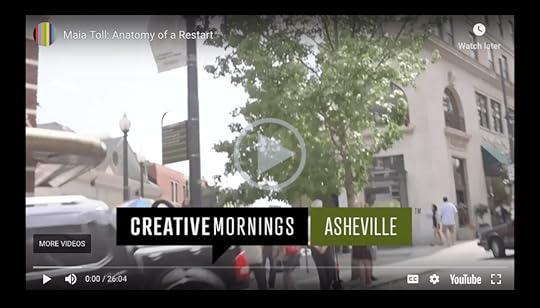
This current magical chapter began with no plan, no intention, no visualization. Sometimes you have to trust enough to let every bit of your old life dissolve to goo so you can find your wings.
Big hugs—
The post It’s Easier When You Just Let Go appeared first on Maia Toll.