
Daley Downing's Blog, page 28
March 11, 2018
A Discussion on Writing Spiritual Journeys (Part 2)
[image error]
Hello again! So, today I’m finishing up the discussion post I started last week, delving into how we authors can effectively incorporate our faith into our work without seeming irritating, preachy, or off-putting to readers. But today I’d like to take this post in a slightly different direction.
Many of us who write with a certain spiritual or religious message or theme in mind are drawing on the faith we grew up in. For lots of people the world over, religion is as much a part of who we are, in terms of heritage, as our eye color and height.
But the religion we’re born into may not be the one we embrace our entire lives. I’m not here to debate conversion experiences. I’m more interested in addressing covering this topic compassionately and objectively in fiction.
Yes, that’s right, I said objectively. If you’re writing a fiction piece that includes a character or characters that have changed their spiritual beliefs and practices, your focus needs to be so much more on the characters’ tale than your own personal testimony. The reason for this tactic is, again (vitally), not turning off readers who may not agree with your beliefs or worldview, but still want to read your fiction.
[image error]
As someone who came from a generic Christian background (as far as morals and traditions went), then spent a lot of time researching other religions, I think this is a big problem among Western “Christian market” publishers. As I mentioned before, I don’t like the way Christian novels are geared specifically towards people who are already churchgoers. That turns fiction that should be showing non-believers the beautiful teachings of Jesus of Nazareth into its own little niche culture. A niche that outsiders don’t necessarily feel comfortable jumping into.
And that feeds into the even bigger problem the modern Church already has, of people seeing us as a narrow-minded, unfriendly, keep-to-ourselves, stuck-up sort. That hardly teaches the world that the Savior came to die for everybody.
When I was young and exploring (and by the way, there’s nothing wrong with that), I came across a variety of people of a variety of religions. Some of the churchgoers were horrible, hypocritical, and very prejudiced. Others were awesome, warm, caring and tolerant. Some of the people I met from “fringe” or minority religions were very tolerant towards Christians; others thought the Church had committed too many terrible crimes, and weren’t about to forgive that. The biggest takeaway I got from all this was that the world in general has become so caught up in who gets the Earthly power and control and authority, that they no longer are concerned with matters such as a Creator, our purpose here, and can we communicate with that being.
[image error]
Since that was what I was looking for, I found myself much more drawn to reading from the source (rather than getting stuck in the political plays). I read up on the pantheons from ancient Greece and Rome and Egypt and Britain, on Buddhism, Hinduism, and Judaism. I was an equal opportunity researcher. I found some things I thought were really wonderful (like the idea of personal deities or saints that would take care of your specific needs in finances, health, etc. — indicating that the belief in a merciful, benevolent divine being is not sold simply by televangelists). Other stuff I wasn’t too fond of (the practices of animal sacrifice, for example).
Anyway, as I went, I discovered there are a lot of issues with mistranslation, history being written from only one point of view, and traditions shared between a number of cultures, and that all of this has created a hodgepodge of what we today call Christianity. These days, there’s no such thing as “pure Christianity” — unless your only goal is to follow the teachings of Jesus in the New Testament.
Not that this is a bad goal. Not at all. However, human beings have certainly distorted what’s “acceptable” (forcing Jews to convert, when they’re stated in your own holy writings as God’s chosen people, is just not cool), and what’s “real” (the ongoing debate on whether miracles still happen is raging somewhere as we speak), and it’s quite unfortunate.
[image error]
What I’d like to see much more of in fiction penned by Christian authors is a respect for other religions, a tolerance for characters who haven’t been “saved,” and a true love (not condemnation) portrayed for the homeless drug addict your narrator passes on a street corner. Remember, folks, Jesus went to dinner with prostitutes and happily hung out with non-Jews. He treated everyone as worth his time and he listened to them. He appreciated their belief in him more than their social class or status. Too many people who go to church every week, always tithe and never miss a Bible study — in real life and fiction — are never seen at a soup kitchen, an animal shelter, or bringing dinner to the Muslim family down the street.
If we feel that fiction is a great tool for allegories and encourage deeper thinking on spiritual matters, then let’s do that. Let’s include characters from different religious backgrounds, do our research and present non-stereotyped, healthy, loving portrayals. Let’s validate someone’s worth as a person from a non-Christian, non-monotheistic background, while we hope to show that a God they’ve never heard of loves them and wants to help them.
[image error]


March 7, 2018
March Mini-Reviews
[image error]
Well, it’s a winter wonderland out there! At least for me — and if you don’t care for the snow and are ready for spring, then my apologies. Not too sorry, though — it looks wholly amazing, and I am once again awed by the splendor of Creation.
So it’s time for another round of mini-reviews! I’m already off to a raring start with reading this year (I guess setting my Goodreads challenge at 25 was laughable?!), which means I have more reviews to give!
Let’s start with a bit of nonfiction for a change — this I actually read years ago, but I’d forgotten how well-written it is, and my husband stumbled across it in a largely- unrelated Google search. So I decided to see if our local library still had it.
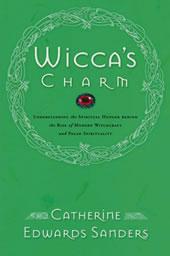
Wicca’s Charm is an excellent, objective, and compassionate account from a Christian journalist who spent years researching the modern interest in ancient polytheism and the sudden surge in the practice of nature religions in the late 20th century. She never judged the many people she interviewed for their personal beliefs and customs, and while she found herself drawn deeper into her own faith, she also clearly saw a lot of the ways that the Church has let down so many of the people it’s meant to be building up. I highly recommend this one for anybody interested in bridging the gap between specifically Christian believers and those who are following non-Christian religions.
The next on this list will start a bit of extended whining. Sorry…
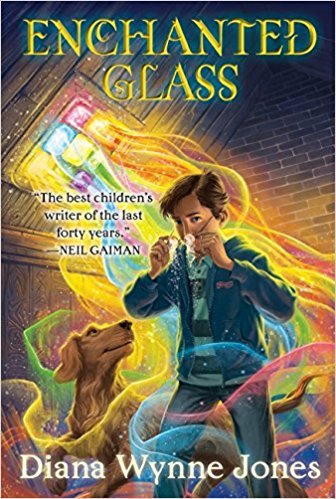
I wanted to enjoy this. Oh, did I ever hope to open the cover and be swept away into a tale of magic and modern legend. Sigh. I’m afraid Enchanted Glass didn’t do it for me. Maybe I was still a little hung over from the anesthesia? But I had a very difficult time following the plot, and constantly got bogged down by the extremely similar names both the protagonists had (Aidan and Andrew), and felt frequently confused by the roles the secondary characters actually played. The housekeeper, Mrs. Stock, particularly was so irritating to me I wanted to chuck something at her, and began skimming the scenes she was in. And then the ending made NO sense to me, and I twisted into a bundle of discontent.
Unfortunately, my malcontent only continued with The Night Circus. Trust me, I’m aching, too…

After hearing such great things about this novel, it’s been on my TBR (admittedly near the very bottom) for quite a while. I got to page 50 and just couldn’t get into the style. The prose felt neverending, and not really enlightening as to getting the plot going or establishing the character relationships. I struggled on as long as I could, then finally threw in the towel about halfway. When I had yet to reach any actual night circus action. (The auditions for a new illusionist don’t count, sorry, folks.)
At least I had saved my re-read of Shiver until now (after ordering it at Christmas). This will definitely perk me up.
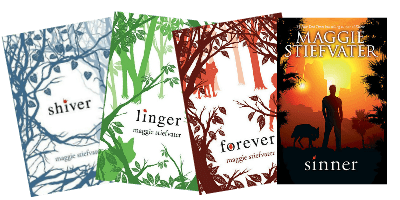
I read the whole trilogy (minus the “extra” wrap-up, Sinner) a few years ago. Recently, I decided it was time to enjoy The Wolves of Mercy Falls all over again, so I bought the first book. A few weeks ago, White Fang was literally moping (yes, quite literally — sorry, dude) over the fact he was AGAIN at the end of his TBR. (I swear he must be sacrificing cans of tuna on a scratching post altar under the full moon to a cat god who grants the power of speed reading, because he went through the 8 books I got him at Christmas in NO time.) Anyway, I handed him my copy of The Scorpio Races — and the rest, as they say, is bookdragon history.
So he has now completed all 4 of the Mercy Falls tales, and he is IN LOVE with the series.
No complaints with that. But what do I give him now?!
If you guys haven’t read “the other Maggie Stiefvater series,” what are you waiting for? The Wolves of Mercy Falls has definitely been eclipsed by the phenemeon The Raven Cycle has become, but I find the writing and plot and characters in Mercy Falls far superior. The protagonists are SO easy to root for, and I love the dynamics between the secondary characters in this quartet.
Well, that’s all for today! I’ll be back probably next week, as I put aside blogging for a bit in the pursuit of attacking fiction drafts (most likely with a flamethrower, or a live dragon). If you’re new around here, don’t forget to check out some of my more recent posts and some of my readers’ favorites! (Links are all in the sidebar.) Happy Wednesday, everyone!
[image error]
March 6, 2018
A Discussion on Writing Spiritual Journeys (Part 1)
[image error]
I’m part of an author community that prides itself on following a particular set of morals and ethics in their lives and in their writing. I’m not even going to debate the validity of that. What I’d like to start discussing today is this:
When you want your work to reflect certain spiritual values you have, what’s the best way to go about it?
There is a major issue these days with the faith-based publishing industry being just that — religious, even zealous, literally preaching to the choir, and not even attempting to reach people who don’t share your beliefs.
I like to think of myself as a pretty tolerant person. I do subscribe to a set of spiritual beliefs and try to practice them on a daily basis. I won’t deny that I believe what I believe, and that I find it extremely important. However, I want people who randomly come across my books on Goodreads or Barnes & Noble to feel that I’m approachable. That my work, while it does focus on Judeo-Christian lore and values, is approachable, even if they never go to church. Honestly, I don’t care if they alter/maintain/develop any spiritual views after reading my books. That’s not what I’m here for.
[image error]
But my hope is also that people who may be spiritually seeking might take away something about the messages of love, grace, mercy, and redemption that I include in my writing.
So, we come back to the beginning point: How do we, as authors and Christians, portray these concepts in our fiction, without seeming to do so from behind a pulpit?
Here are some crucial points I’ve determined over the years of being a reader, a writer, and now an author:
1. Don’t act superior. Meaning, don’t give the impression that your Christian characters (or Christian-esque, if your fiction has an allegorical religion) are “better” than those who aren’t. You’ll definitely send non-religious readers packing. Also, please don’t make your Christian characters perfect — stunningly beautiful, intelligent, excellent job, happy family, can stand in for Superman during a city-wide emergency. Not only is this totally unrealistic, it’s very discouraging. Readers like characters they can relate to — fictional people who drop pens, forget to feed their cat, cheated on their diet, skipped that math class, swore when they sprained their ankle. People who need the compassion of a Savior.
2. Don’t indicate a religious conversion will solve all of a character’s problems. Again, this never happens in real life. Plenty of people who go to church and pray and help old ladies across the street suffer from financial concerns, sickness, unemployment, addictions, have been divorced or broken up with their partner, lost a pet, or can’t find decent parking ever. And, once more, including bumps in the road in a fictional life makes for characters we can connect to — and if we see their faith help them through some of life’s crap, we might even want that aspect for ourselves.
[image error]
3. Make sure your character’s faith is at work in your pages. A narrator who tithes 12 and a half percent, never misses a Bible study, only exclaims, “Oh, drat,” when a deer runs into their car — and then is rude to shop clerks, berates a jaywalker, tells someone whose dog accidentally got off-leash they’re an idiot… Well, this type of narrator will make people throw your book at the wall. Readers will want to know more about a protagonist who apologizes to the jogger they yelled at the day before, who dumps a guy by text and can’t sleep afterwards, who buys lunch for a Goth kid that lost their wallet.
4. Embrace diversity. This is one I see a lot of Christian publishers edging away from, because the term “diversity” has gotten misaligned as a politically-hot-button issue, rather than the modern way we say “tolerance.” It goes directly against one of the instructions in the New Testament, to bring the good news of Jesus’ resurrection to people all over the world. That means different countries, different races, different religions, cultures, all of it. Even folks that think putting mayo on fries is an acceptable practice should hear the Messiah’s message.
These are just suggestions, remember. Ultimately, I can’t force anyone to write their story a certain way. But it’s been my experience that most non-Christians won’t read preachy Christian literature — and therefore could be missing out on the really important stuff.
[image error]
As a younger reader, at a point in my life when I wasn’t really sure what I believed spiritually, I was intensely dissatisfied with people who claimed Christians “shouldn’t” read fantasy, “couldn’t” learn about ancient religions or polytheistic cultures, and that basically everything that wasn’t specifically “Christian” was “wrong.”
All of this is a load of bunk. Setting yourself apart from the majority of readers in today’s Western society will not bring them the love and mercy of anyone.
This doesn’t mean I’m encouraging compromise on our part. Not when it comes to your morals and values. If you find it necessary to write text in which no one swears out loud, never graphically explains their sex life, and isn’t gratitiously violent, go you.
But don’t avoid the tough subjects, either. Christian-themed novels need conversations on racism, prejudice, bullying, child abuse, committing crimes, sexual misconduct, eating disorders, drug use, self-harm — all without being condescending to the characters who are going through it.
We are all human, we all make mistakes, and we shouldn’t act like we’re better than someone who’s still struggling with the same burden we once bore. That is absolutely not the reason Jesus literally took up His cross for us.
So, that’s it for this time. Next time, I’ll be digging deeper still, into writing from the perspective of someone who wasn’t always a Christian, for believers and non-believers alike.
[image error]
March 4, 2018
February Recap/March Look-Ahead
[image error]
Good morning! So, now that things have finally calmed down a bit and my life makes more sense, I can focus on mundane stuff like monthly recap blog posts.
As most of you are probably aware, my February was a rather intense mix of pain, suffering, struggling, despair, and a little bit of hope.
Okay, yes, I’m dramatizing, somewhat. But there were a lot of issues of valid concern that came to a head last month. Since this past summer, I’d been dealing with unexplained pain that came and went, and eventually it became constant and was growing worse. After seeing three different doctors — a primary care physician, two radiologists, and an OBGYN — finally a cause was suspected, and actual treatment planned out.
So on March 1st, I went under the knife (well, the laser and a very small actual knife — my incision is tiny, it’s amazing) to find out what was really going on. The bloodwork and ultrasounds I’d had ruled out a few things, but still hadn’t concretely established what was wrong, so the doctor needed to get a physical eye on my insides. It wasn’t terrible, it wasn’t great, but the anesthesia worked well, so I honestly don’t remember being in any discomfort during the procedure.
Afterwards, although sore, I started feeling better almost immediately. The blockage that had been created in my abdomen by endometriosis building up for probably months was at last gone. For the first time in ages, I am not in pain. I’m still a little tired (understandably), but I know that finally, finally I am on the road to healing.
[image error]
Because of doctor’s appointments and managing pain, not a lot of other stuff was accomplished in February. I was able to make some progress on Volume 3 (so, yes, it is coming along!), and I got a fair amount of reading done (especially at those times when I literally didn’t have the energy to do anything else).
While I was lying down more than usual, I did make some executive writing decisions.
My initial plan for How To Be A Savage is getting put on MASSIVE hold. Although I really like the concept, I simply don’t have the time this year to attempt starting it. I may actually scrap it altogether. After Volume 3, there’s Volume 4 to finish, and the field guide needs a bunch of work, and I promised White Fang we’d get started on our collaboration project this summer. And since it’s already March…
Also, I changed my mind about not writing a separate prequel for the series. Originally, I had considered it, thought about releasing it as a collection of short stories, debated making it part of the field guide, then basically had a meltdown over the whole idea. In the end, I opted to add a novella prequel to my ever-growing list of WIPs. Just, most likely not in 2018.
And I am not putting another addition on my TBR for the rest of the year. I have several library selections checked out right now, and there are such things as renewal limits, and fines. Somehow I’ve managed to get nearly halfway through my Goodreads challenge already, so there’s no shame whatsoever in slowing down.
[image error]
When you have a dilemmia with your health, it tends to put certain things in perspective. That has definitely been the case for me. As concerned as I am about promoting my books, because while sales aren’t everything, they are important, marketing is not more crucial than my well-being. So, since I need to take a break from the social media grind and concentrate on the actual creative process right now, I will be doing that, and leaving my sales in the Lord’s hands (which, truly, is where they always are, anyway).
My immediate treatment will hopefully only be medication, and they’re going to see how that goes. But there may still be an adjustment period to that, and plans may not work out. I’m optimistic, yet I remain practical and prepared for things to change, too.
My boys need me as well, and these last few weeks, worrying about how they’d fare if something serious happened to me, has been agonizing.
So, I officially don’t care about having an Instagram account, starting a YouTube channel, or putting together a newsletter. I’m grateful to have the loyal supporters I do on WordPress, Twitter and Goodreads, and won’t freak out if those numbers only climb slowly. Now is not the time to put myself under more pressure.
[image error]
Winter is hanging on, but now spring isn’t too far away, and I’m happy to have made it through this season.
I’m looking forward to what comes next, small potatoes and all.
[image error]
March 2, 2018
In Which I Become An Episode of a Medical Drama
[image error]
But it was an episode that ended with Patrick Dempsey coming out to the waiting room to announce all was well.
Okay, not really Patrick Dempsey (but wouldn’t that have been cool if Derek Shepherd of Grey’s Anatomy had been my surgeon? which wouldn’t have happened, though, as he was a neurosurgeon and I had a GYN issue…anyway…)
But, yes, everything went well. Sure enough, there is nothing wrong with my stomach or digestive system. All the pain was being caused by a blockage in my uterus, which was pressing against other organs and creating pain.
Today I feel a lot better than I have in months. Literal months. No bloating, no indigestion. Yes, I am sore from the incision, and my throat hurts from the breathing tube, and my muscles are stiff and achy after the anesthesia wore off (which they warned me would happen).
I’ve been able to keep down some soup and crackers and tea, and I’m still tired, but I have a flat stomach for the first time in easily six months, and my side doesn’t hurt for the first time in nearly a year.
The official problem is endometriosis, which is a bit tricky, but treatable. Most likely, there will be further treatments, maybe another operation in the future if the initial treatments don’t take. But for the moment, I am certainly healthier than I was.
[image error]
I made it through the worst part so far; recovery will be a walk in the park compared to all the suffering of the last many weeks. Last night I could actually lie in bed in almost any position I wanted and be comfortable. This is a huge stride in the right direction.
Today is a snow day here, as we received the latest blast of snow and ice. Nothing really serious for our area, which is great. Muffin is at grandma and grandpa’s, probably playing in the snow. White Fang is bingeing library DVDs.
Outside it’s white and beautiful and cold, and quiet.
[image error]
I still have a ways to go. There are things that may happen in the future that will still create problems. Hopefully not, but I remain realistic. Though optimistic, as I now have a concrete reason for what was going on, and since it’s finally been isolated, and there are options for treatment. I no longer have to wait and wonder and suffer.
The anesthesia took effect pretty quickly, so I remember absolutely nothing after being wheeled through the surgical registration area. I have to say, I almost wanted to overhear something about the conversation between the doctors and nurses during the procedure. Or at least experience some cool trippy dreams while being under.
(Kidding, by the way. Mostly. Don’t do drugs, kids.)
Here’s what I do remember before I woke up: I was with the Doctor (10, for those of you wondering), and he had this box, and it had something important in it, and we were running up a mountain, towards where the TARDIS was parked. Hey, I’ll take that, too.
[image error]
For all of you who have been monitoring my progress and keeping me in your prayers, thank you. Don’t sign off just yet, however, as I have a feeling we’re not quite to the end of this.
But today I feel like I’m at the start of a new beginning, and it’s been a long time coming.
And I am grateful.
[image error]
February 27, 2018
Guest Post: Kyle Robert Shultz on The Magic Elephant in the Room
[image error]
Good morning, all. Today we will be joined by Kyle Robert Shultz, the #ShultzWithoutaC author of the Beaumont and Beasley fantasy series. Given that Mr. Shultz is spiritually and morally a churchgoing Christian, some may be surprised that he writes fantasy fiction, chock full of storybook magic, witches and wizards, and mythological creatures. All of this was part of what drew me to this author’s writing in the first place. As someone who believes in Jesus of Nazareth as a divine Savior, and tries to follow his teachings in everyday life, I got very fed up with being told that one cannot attend church on Sunday and read fantasy Monday through Saturday. With popular authors such as Ted Dekker and Carrie Anne Noble breaking this mold (and C.S. Lewis and J.R.R. Tolkien never being off the bestseller lists in the past decade), I was very interested in connecting with like-minded writers in the indie publishing camp. So I asked Kyle to write about this subject for today’s post, and I’m actually going to use it to lead into a 2-part discussion on the topic later in March. So enjoy, and have a great day, everyone!
[image error]
The Magical Elephant in the Room by Kyle R. Shultz
In my experience, Christian writers of fantasy don’t like to discuss the thorny subject of magic. We either use it in our stories or steer clear of it, but we’re not inclined to get into a big debate about the ethics of *Anthony Head voice* SOSSERY. The conflict over the subject has been going on ever since Harry Potter first become popular in the 1990s. Much of the furor and book-burning has died down since then, but even today, if you write a novel that heavily features magic, you’re likely to get a review from a Christian reader which at least mentions it as a potential problem.
So, since this is still a relevant issue in 2018, I say we stop tiptoeing around it and and tackle it head on. Ready? Here we go. The basic argument from Christians against fictional magic is as follows:
Real-world magic is wrong, according to the Bible (Leviticus 19:31, Deuteronomy 18:10-12, Galatians 5:20, Revelation 21:8).
The Bible also tells us to do nothing that would cause another to stumble and commit sin, even if what we are doing seems innocent (Romans 14:21).
Therefore, reading and writing stories involving magic is wrong because it might encourage someone to engage in real-life sorcery.
If we don’t accept the idea that real-world witchcraft is real or dangerous, than this argument is invalid. However, I don’t ascribe to the doctrine of cessationism. I believe that the supernatural forces described in the Bible–both good and evil–are just as real today as they were in ancient times. The Bible passages regarding witchcraft specifically refer to the practice of communing with pagan gods, similar to both the medieval notion of consorting with demons and the modern concept of neo-paganism (i.e. Wicca). These practices are not only idolatrous; they’re potentially harmful to the soul.
That being said, however, we need to get some definitions straight. Magic as defined by the Bible refers to both witchcraft (invoking pagan/demonic entities) and divination (foretelling the future through means other than consulting God, such as astrology). The definition of fictional magic is a lot broader. It’s a force that the characters harness to achieve their goals and to do things impossible in the natural world. Fictional magic may or may not bear similarities to the sorcerous practices that the Bible describes. The magic systems in the works of J.K. Rowling or Brandon Sanderson, for example, are generally no more demonic in nature than the metric system. They’re mechanical rather than spiritual. On the other hand, there are fictional works which veer too close to promoting actual paganism–Buffy the Vampire Slayer being one of the strongest examples.
[image error]
Where, then, does this leave the Christian author? Presumably, due to our beliefs, we won’t be writing something that reads like a recruitment pamphlet for Wicca. But all the same, is it wrong for us to be writing about characters who cast spells, especially if we present such characters in a positive light?
The core of the problem lies in the reader’s awareness of the divide between fiction and reality. If an adult reader attempts to summon a demon into his or her living room after reading Harry Potter, Mistborn, or even the Bartimaeus Trilogy, the fault lies more with the reader than the author. It shouldn’t be the writer’s job to repeatedly remind adult readers that fiction is fiction. Child readers are another issue altogether, since young children don’t necessarily have the same grasp on what should and should not be mimicked. I have, in the past, been surprised by the level of occult content in books directed at younger readers, such as the Gatekeepers series by Anthony Horowitz or the Demonata books by Darren Shan. (That’s not an actual critique of the books, as I haven’t read more than a few pages of them–I’m just naming them as examples.) But while there are sometimes murky philosophical waters to be navigated in the Harry Potter novels, as well as occasional content that might be too frightening for some children, I still maintain that it’s highly unlikely the series will lure children into actual occult practices–especially if their parents have clearly explained the differences between real and fictional sorcery.
Assuming that actual paganism is not being endorsed, I don’t believe there’s a conflict between Christian faith and writing magic-heavy fantasy. Integral to the fantasy genre is the concept of other worlds, very different from our own. In this world, magic is dangerous and should be avoided. But in fiction, we journey through a vast multiverse of worlds where magic is not inherently evil. The stars in C.S. Lewis’ Chronicles of Narnia are sentient beings whose patterns inform centaurs of future events; our stars are not. The Potterverse contains people biologically capable of casting spells using wands and faux-Latin incantations, our universe does not. There is no reason for such distinctions to become muddled.
Furthermore, I don’t think Christians should act on a blinkered understanding of Biblical teachings about paganism to single out those who read or write books involving magic. Getting on that soapbox can damage the cause of Christianity by turning away non-believers who have an innocent love for the fantasy genre. What magic represents for many people is a power beyond the physical world; beauty and glory bursting in upon dull and colorless reality. To condemn this is to deny the very thing that we, as Christians, are meant to be offering those outside the faith. Let us not, in the effort to save people from some nebulous occult threat, steer them away from all the wonder of fantasy–a signpost on the way to embracing a very non-fictional God.
[image error]
February 22, 2018
The “What If” Fantasy Tag
Hello all! So, I’ve been tagged by The Kyle Robert Shultz (yes, that really is his official title) to do this tag, which will be fun, since I hardly need an excuse to wax lyrical about my favorite genre, fantasy!
1. Your car breaks down in the middle of nowhere. The cast of the most recent fantasy book you read comes to your assistance… who are they? Will they be helpful?
That would be Skylar, Gilbert and Aldwyn from “The Familiars.” Yes, they actually would be helpful in this situation, although they’re from a world that doesn’t have cars, and even with all of them being animals, since they’re magic, and they love to help people. So they’d find a way to get my non-magic transportation up and running.
2. You go to bed one evening and wake up in the lair of the villain of the last fairy tale you read; where are you and how do you plan to get out?
Hmmm…that would be the Shifting Fortress from book 3 of “The Familiars.” (Since the villain in book 4 didn’t actually have a lair.) Getting out would be really hard, as the Fortress transports itself from place to place. I guess I’d have to team up with Skylar, Gilbert and Aldwyn and have them rescue me.
3. You are transported into a fantasy realm and given a mythical creature as a companion and best friend… which mythical creature do you get?
What’s the criteria for this? Who would be assigning the creature, and based on what? Okay, I’m probably overthinking it. If someone else was giving me a companion, though, it would probably be something like a griffin or a small dragon. (I’m not even sure how I came to that conclusion, with the non-existent qualifications. See, this is why I need to know!)
4. In a strange series of coincidences, you end up needing to take the place of your favorite fantasy hero or heroine. Who are you?
Okayyyy… I am either Almathea of “The Last Unicorn,” or Susan Sto Helit of “Discworld.” Because I have wanted to be Almathea since I was about 7 years old; and when I first read “Soul Music” several years ago, I decided it does not get any better than your grandfather actually being Death and being called in to learn the family business.
5. To go along with question #4, now that you are that character, is there anything you would do differently than that character, now that you are running the show?
As Almathea, I think the only thing I would’ve done differently was to kill King Haggard earlier, and turned the Prince down quicker, so that I wouldn’t have gotten sidetracked from my all-important mission of saving the other unicorns so easily. As Susan, I think I’d probably be a little nicer to the Death of Rats in the beginning.
6. If you were yourself in a fantasy novel, what role do you think you would play in the story?
I’d better become the queen of all things, but have a super-extroverted and energetic assistant to carry out all the major tasks — like, you know, running the world — so I’d have plenty of time to wander my castle accompanied by my pet talking ocelot, hiding from people and acquiring the best library on the planet. Oh, but still get to tell people what to do when they came to me for advice — which they would, of course, because I’m the wise and lovable autistic queen.
7. One morning, as you are going about your daily business, you pick up an everyday item and a voice booms in your head with prophetic words about your future. What object is it, and what is your prophecy?
A book. The prophecy is that I’ll discover a far more beautiful world than I ever thought existed.
8. You are transported into a magical realm and turned into a mythical beast…what beast/fantasy creature do you want to be?
I am a unicorn. This is a fact, for those of you who doubt it. I actually spend my free time galloping through pixie-filled meadows and healing injured stray cats with my horn.
9. If you could read your way into any fantasy realm, but the catch is that you can never leave, would you? Which realm would you choose?
Hmmm, this is a tough one. I’m not sure I’d like not having the option to leave. If I was in magical creature form, it’d probably be easier to stay indefinitely. And in that case, I’d have to say “Warriors,” or the Afterverse of the “Beaumont and Beasley” series.
10. As you are going about your normal day, you discover that you have a magical power. What is it?
To see into the future. And not just that, but the ability to make people believe me that I really do know what’s coming and how to change it.
February 19, 2018
Interview: Indie Author E.B. Dawson
[image error]
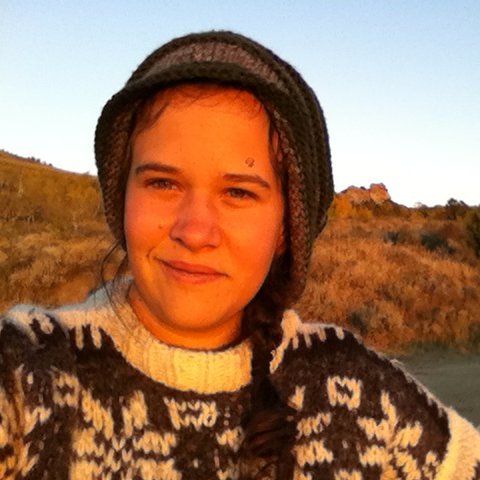
Today we’re being joined by the lovely E.B. Dawson, who’s going to share with us some of her writing goals for this year, her journey so far, and a few insights into why her cat is awesome.
Can you tell us a little about each of your published works?
In a nutshell, The Creation of Jack is a scifi series about overcoming brokenness. The first book, Out of Darkness is about a girl choosing her own path despite being manipulated and abused. The sequel, Into the Void shows her taking on responsibilities and eventually confronting her past. There is a lot of action, adventure, and fun futurist science in these books, but they really center around the characters and the complex emotional dilemmas they face.
The Traveler, on the other hand, is the first in my new fantasy trilogy Lost Empire. It’s about a young woman who discovers she can travel to another world in her dreams, and the physical/political dangers that result.
What inspired your completed books, and what are things you’re still hoping to write about?
Great question! These three books have all revolved around very personal issues for me, including: identity, PTSD, cross cultural colonization, and overcoming victimization. Although the circumstances are very different, Logan’s emotional journey is very much my own, and her emotional victories are my emotional victories. The Traveler, was just a chance to raise some interesting questions about international relations while having a remarkable adventure.
What do I still want to write about? Every day I seem to come up with more stories I want to write. I like examining all types of characters at their breaking point. I love posing difficult questions about morality and making the reader examine their own choices. But I also just like to have fun and let my imagination run wild. I would love to write a space opera and maybe a more traditional fantasy (The Traveler is a bit of a scifi crossover). But in all honesty, I really want to write literary fiction someday. I don’t think I’ll quit speculative fiction any time soon, because it’s just too much fun. But literary fiction and contemporary fiction are on my list.
You’ve traveled a lot. What’s the most interesting place you’ve been to?
Don’t make me choose! The world is so big, I still feel like I haven’t even chipped the surface. I’m going to pick two of my favorites:
Foz du Iguacu in Brazil is just awe inspiring. I love waterfalls, so this place is like paradise for me. I was lucky enough to go 3 times.

Borobudur in Indonesia is pretty impressive. There is so much history there.

As a proud cat parent, sing a few praises of your furry baby.
Maximus is the best companion. He is not a fussy cat. He loves belly rubs. He does parkour sometimes. Sometimes he likes to go off and be independent and chase the neighbor’s chickens. Sometimes he likes to cuddle my feet while I’m reading. He’s just a sweetheart. And if he doesn’t know where you are in the house, he will play Marco Polo with you until he finds you.
You’re an indie author who also has a day job. Tell us a bit about who you are in your other life.
Oh boy. I work for a non-profit that seeks to reach underprivileged and at-risk youth. We bring inner city kids and foster kids up to a camp in the mountains. And more recently we are launching mentor programs in the inner cities to support these kids in their day-to-day lives. It is so much work, but I love it. You wouldn’t believe what our kids have to deal with on a daily basis. We get to love on them, support them, mentor them, and show them a different way to live their lives.
You recently spearheaded the start of a new indie authors’ collective called Phoenix Fiction. Give us some more details!
I did, indeed. Because I am a mad woman who loves the indie author community! I love the fact that traditional publishing is feeling the heat from indie authors. I think indie authors have unique voices, and are perfectly capable of writing the same (if not better) quality books as traditionally published authors. But it can be really hard to attract readers in a sea of indie authors, especially when you do all the marketing yourself. Most people find new books because of the recommendations of family and friends. This marketing collective is another way to do that.
We have six authors, with a very similar writing philosophy who have banded together under a sort of “brand umbrella.” Not only do we support each other and help market for each other, but it’s an opportunity for our fan bases to cross over. The odds are that if a reader likes one of our author’s books, they will like books from our other authors. So our website is a virtual goldmine for our particular brand of speculative fiction.
It’s been going really well so far and we are looking forward to growing and offering some exciting, exclusive content for our fans.
Who are your favorite authors (traditional and indie, from your past and your present)?
You didn’t give me a limit, so I’m gonna go crazy!
C.S. Lewis, J.R.R. Tolkien, and Lois Lowry have all been huge influences on me as far as fantasy is concerned. I also love G.K. Chesterton, L.M. Montgomery, and Charles Dickens. Some of my favorite science fiction authors include Orson Scott Card and Ray Bradbury. If you put ALL of those authors together, you will have a taste of my writing style!
I love all of the indie authors on Phoenix Fiction (Kyle Robert Shultz, J.E. Purrazzi, K.L. Pierce, Beth Wangler, and Hannah Heath). Other indie authors I really enjoy include Nate Philbrick, Annie Douglass Lima, our very own Daley Downing, and Bethany Jennings.
What will 2018 bring your readers?
I am so excited for 2018! I cannot give you firm dates on anything, but I’ll share them in the intended order:
I have a stand-alone, dystopian short story coming out this spring.
The Creation of Jack Book 3 will hopefully be out by summer!
I have three Lost Empire short stories set to release over the summer, in anticipation of book two.
Lost Empire Book 2: The Citizen will come out in the fall.
Another stand-alone short story is slotted for late October.
Links:
Out of Darkness: http://amzn.to/2oqxJYX
Into the Void: http://amzn.to/2AZRGeQ
The Traveler: http://amzn.to/2zh6bsd
Website: http://www.ebdawsonwriting.com
Twitter: https://twitter.com/ebdawsonwriting
Facebook: http://www.facebook.com/ebdawsonwriting/
PFW: http://phoenixfictionwriters.com
February 18, 2018
Mid-Month Mini-Reviews: Catching Up
[image error]
Good morning! This post sets out to do just what it says on the tin. My TBR has done an interesting thing, and actually increased itself through various turns of coincidence, fate, or maybe I ticked off a leprechaun and he decided I was going to be out of luck. I had it well under control. Then a few things happened…
First, I was at the library (in fact not getting a single book for myself, only picture books for Muffin and DVDs for White Fang), and the librarian suggested I read this nonfiction research book on linguistic studies — Thirty Million Words. Now, I appreciate her thinking of me, since she knows I have kids with speech difficulties, and I am interested in finding out what research is being conducted in this field. The one little hitch, however, is that now I have a lengthy, wordy, scientific-y title added to my TBR. With a time limit. Because she wants me to participate in the book club she’s forming to discuss this work. Hey, cool! Seriously. (Except for the time limit part.)
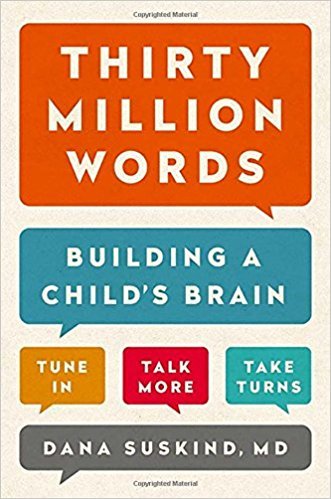
So, I have begun reading Thirty Million Words, and it does promise to be an engaging, in-depth discussion on speech and language development. It will just take me a little while to make some progress…
Last week, I was preparing to dive into Thirty Million Words, when White Fang shoved his school library selection at me and declared, “You need to read this!” The latest in a long line of titles that has made him react this way. Since he needs it for a school project, I had to read it fast and get it back to him. (Hey, at least I got to add another completion to my Goodreads challenge!)
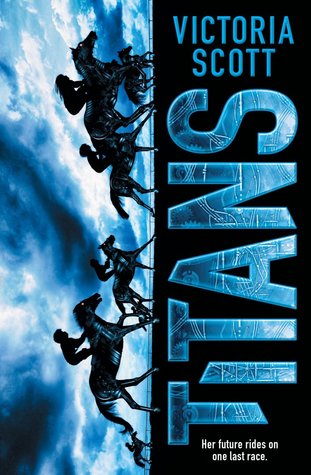
It’s called Titans, and it’s a YA novel that I’d never heard of. White Fang picked it out for his independent reading at school because he just finished The Scorpio Races at home, and therefore noticed this cover. He said both titles had some elements in common, but largely were very different stories, and he loved them both. I concur with the first part. I’ve read some reviews that unfairly slammed Titans as being a “direct ripoff” of The Scorpio Races, and that just isn’t true. There’s no romance in Titans, the narrator has sisters instead of brothers, and living parents, and it’s set in more or less 21st century Detroit, Michigan. Yes, Titans focuses on an unorthodox horse race (the horses are made of metal and are basically machines), and there’s a lot of money at stake for the narrator, who’s hoping to save her family from eviction. But that’s where the similarities to The Scorpio Races end.
Titans incorporates a lot of the culture of horse racing we know today in the Kentucky Derby and the high-end circuit, with all the gala and pagentry on and off the course, as well as including several secondary characters that are nothing like the residents of the island of Thisby. And the narrator doesn’t have any love interests, rather she has a solid, female best friend who wants to be a fashion designer. Their relationship is so refreshing to see in a YA work, because there’s absolutely no chance of a guy coming between them, and Astrid and Magnolia are loyal to each other to the end. I totally applaud the author for that.
My personal quibbles with Titans were based on pacing and style. I just felt there were too many scenes that seemed to be included simply to draw out the spaces between the action and moments of important character growth.
Anyway, I pushed through it, and I did appreciate the climax and conflict resolution. So I’d still recommend it.
The other fiction I’ve been carrying on with is the Midnight, Texas books.
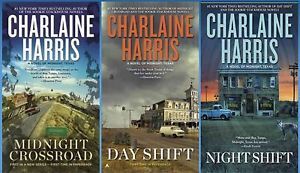
I usually don’t read paranormal romance-ish novels, and I was not a fan at all of the True Blood TV series, but I did watch the adaptation of Midnight, Texas, and enjoyed it enough that I figured this trilogy was worth a go. Don’t judge a book by its multimedia versions. I liked the writing much better than the screen portrayals. The characters were great, the style was casual and relaxed, easy to get into the narrative and follow the motivations and plot. And — a major twist for this genre — the language was PG-13 for most of the pages, there was very little sexual reference, and even the violence was toned down. That was a pleasant surprise for me, as I’ve practically stopped reading adult fiction because of these factors.
Warning: This series won’t be for everyone, as there is a gay couple, mention of polytheistic religions, and some very unpleasant stuff with serial killers, vampires, white supremacists, and even demons. Although I was so floored by how ungraphic the author kept most of her writing on these subjects, and I thought that the ethical and philosophical debates she presented regarding people’s moral and social choices were appropriate for the content, not soapbox-y, and in some cases intensely heartstring-tug-y.
So, while I know some of you won’t give this series a second glance, I really enjoyed it.
White Fang is on a Stiefvater kick. A couple weeks ago, he had nothing new to read (I know, what travesty), so I offered him my copy of The Scorpio Races. I think I’ve created a fanboy…
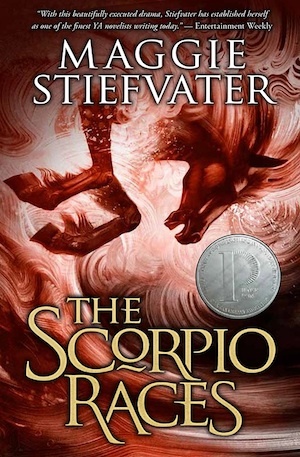

He got all teary-eyed on the last page, and when I mentioned Maggie Stiefvater has written several other books, his face lit up. He’s now devouring the first in The Wolves of Mercy Falls, and I’m sure it’s only a matter of time before he’s onto the next…
On an unrelated note, I am getting ready to have exploratory surgery to try to nail down the cause of my health issues. This isn’t a major operation, but it still will require some down time, so if I temporarily vanish in early March, this will be why. I’m trying to schedule out some posts, so it won’t seem that I’m actually gone for very long.
Also, there is a slim chance (since all the other tests are showing I’m in generally good health, apart from the unexplained pain in my side that comes and goes) that they’ll uncover something not great with this procedure. Yes, my saying this is mostly being paranoid and anticipating the worst. Still, right now not everything horrible has yet been ruled out, so I’d appreciate any prayers you might offer up on my behalf…
February 16, 2018
How to Avoid Book Blogger Burnout
[image error]
Book blogger burnout is a very real thing.
It seems almost like a silly, made-up syndrome, because you can’t qualify it with physical symptoms, or point to a tangible experience and say, “This was when my burnout hit.”
Also, we’re talking about reading, and how could that be stressful or traumatic, right?
Unfortunately, it’s a sign of the times.
Just a few years ago, book blogging was an exciting new way to connect with others in your literary fandoms, and maybe even start establishing a name and reputation for yourself if your ultimate goal was to get paid to write book reviews.
It all sounds like fun. It should be. It’s a crying shame that too many bloggers in recent months are either going on an indefinite hiatus or shutting down their blogs entirely — because it is far from fun anymore for them.
I can certainly understand if life gets to be too much — maybe you’ve just changed jobs, moved house, gotten married, had a baby, gone on vacation, been ill. When a member of the community announces they’re taking a break, we know we’ll miss them, but we also support their need to take care of themselves.
But when somebody says they’re leaving the scene because they’ve simply been treated badly by random other bloggers, reviewers, and sometimes even authors, that just isn’t right.
So, here are some thoughts on how to avoided the dreaded burnout.
Don’t put too much on your plate. Set limits about how much you plan to read/review in a month. There is no reason to aim for the moon.
Also don’t worry about setting a new world record when it comes to your general TBR. Yes, absolutely, make a note of a book you think you’d really like to read. But don’t you dare fall into that trap of Feeling Left Out if you know a hyped new release just won’t be your thing.
Oh, and put up boundaries for requesting ARCs — and stick to them. The less reviews you have to write with an actual deadline, the better for your stress level.
Take a relaxed attitude towards criticism. Yes, some of these really nasty arguments in the comments section can be upsetting. And I’m not saying this behavior (the people who rip your head off because you posted a negative but respectful post on one of their favorite titles) is acceptable or should be tolerated. But it is VERY important for those of us on the receiving end to form a measured, mature, appropriate response. Remember, you have every right to block people from your site, not reply to their comments, and refuse to be dragged into this ridiculousness.
This goes for indie authors who are also book bloggers as well. Yes, getting a harsh review of your book is gutting. But it is freedom of speech, and if you feel everyone should have it, doesn’t that include the people who don’t share your opinion on subjective things, like reading material?
Shake up your TBR a little. If you feel a “reading slump” coming on, try switching genres, category (say, non-fiction instead of fiction), or age group (adult over YA, or MG instead of adult).
And don’t impose unrealistic deadlines for finishing selections. If, for example, Christmas is right around the corner, and you know you’re going to be busy, throw time frames out the window.
No matter how many subscribers you have, no matter how many people you think might be pacing their kitchen floor awaiting your next post, NOTHING is worth putting your own sanity or health at risk.
To heck with the idea of trying to read all the books of ever. Yup, that’s right — I promise you WILL survive if you don’t get to read every single title published in your favorite genre or by your favorite authors.
This goes back to limiting your TBR, too — there is nothing wrong with only adding to it books you really think you’ll enjoy. Forcing yourself to finish hyped titles that contain all the content/tropes/agendas you’re hoping to avoid creates nothing but frustration.
Don’t feel pressured to join every social media site in the world. In theory, your blog/website will get more traffic with greater exposure. But what about those of us that don’t take enough photos to have an Instagram account, hate the idea of appearing on camera for YouTube, and don’t understand the way Tumblr works? Remain true to what’s most effective for you.
Above all, have fun.
What do you think, fellow bookdragons? Are we putting ourselves under too much pressure? How can we support each other and keep the climate of this community a positive one?
Daley Downing's Blog

- Daley Downing's profile
- 36 followers

